
O, I got a zoo, I got a menagerie, inside my ribs, under my bony head, under my red-valve heart—and I got something else: it is a man-child heart, a woman-child heart: it is a father and mother and lover: it came from God-Knows-Where: it is going to God-Knows-Where—For I am the keeper of the zoo: I say yes and no: I sing and kill and work: I am a pal of the world: I came from the wilderness.
-Wilderness, Carl Sandburg
After four awesome days of SCUBA diving at some of the best sites in Belize, it was officially time for the four of us to get back on the ferry that would take us from Ambergris Caye all the way back to Belize City. In some ways this felt like an ending, but just as our island time was coming to a close, we were embarking on another adventure into the rainforests of the Cayo District.
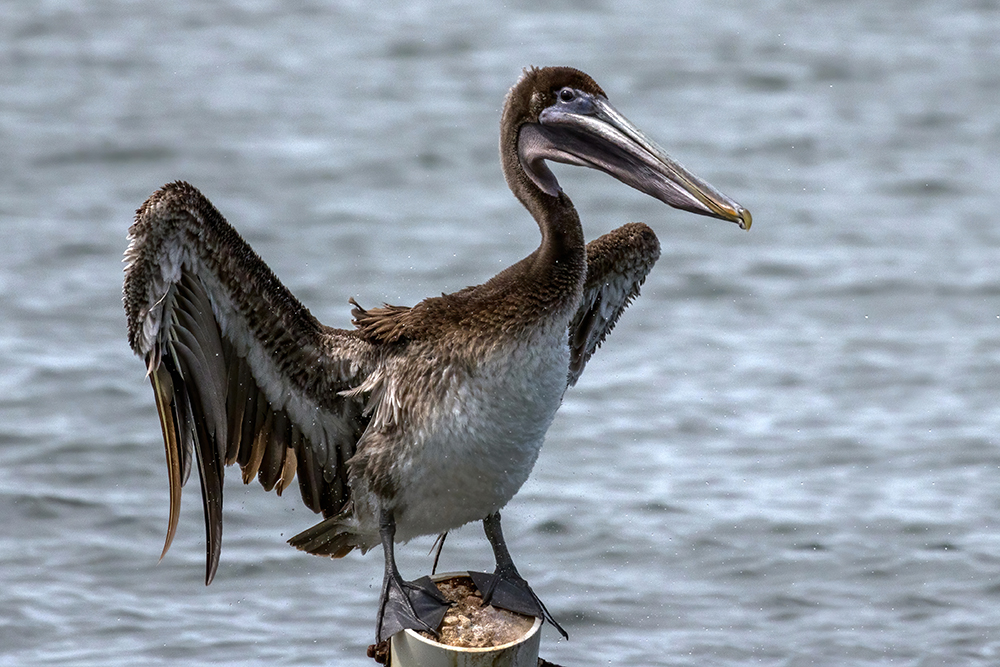
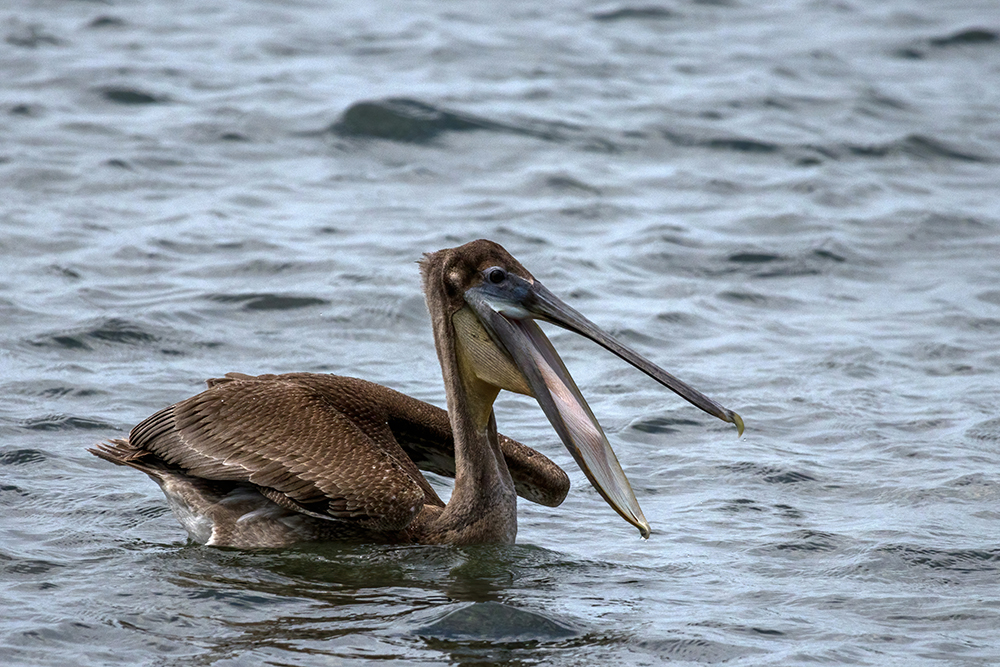
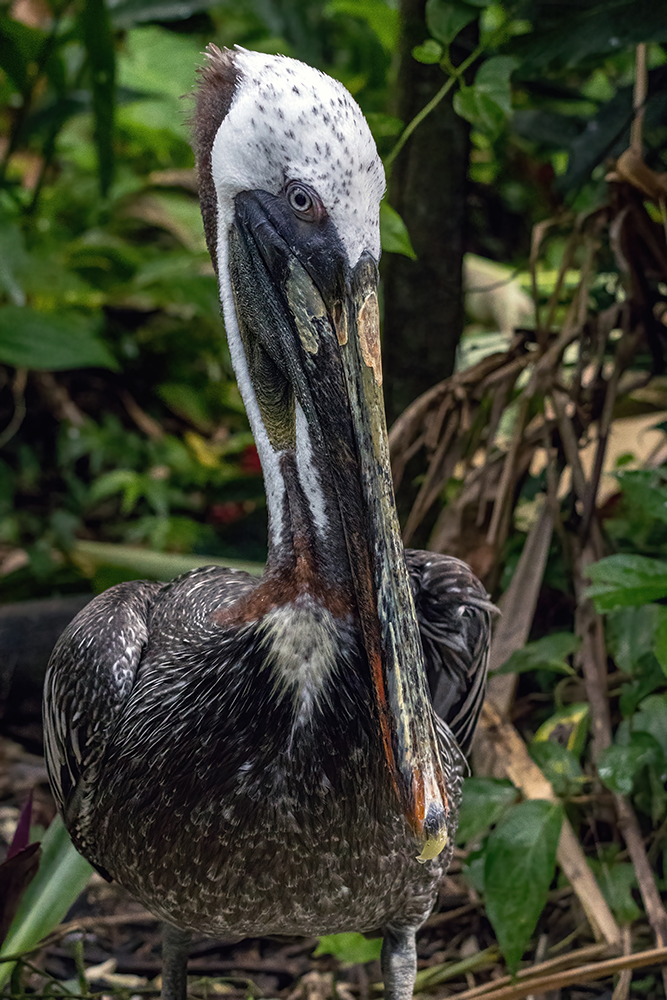
So, with seven more action-packed days ahead of us, we boarded the earliest water taxi of the morning and rode back to the mainland, watching brown pelicans diving for fish under the light of a radiant sunrise from our window seats.
We reached Belize City by late morning, picked up our rental car, and started driving. The blue waters of San Pedro were now behind us and in their place was luscious forest, begging to be explored. It would take a couple of hours on the road to get to the Mariposa Jungle Lodge, where I’d reserved us a cabana for the week. But we weren’t planning to go directly to the lodge; there were a couple of detours to make along the way.
Our first destination was about an hour away in the wrong direction, but it would be worth the extra driving if we managed to get a close encounter with one of Belize’s most famous wildlife species, the black howler monkey. In Belize, howler monkeys are known as baboons, and they are easily the loudest creature that can be found in the Central American rainforest. As I watched green scenery roll past the windows of the rental car, I recalled waking up to the haunting, distant roars of howler monkeys during a stay in the Peruvian Amazon. I hoped that this would be the day I would finally hear that sound again.
Upon arriving in the little village of Bermudian Landing, we pulled into a grassy parking lot near a sign that advertised monkey tours. A puppy bounded over and greeted us the second we stepped out of the car, her owner following close behind. The man was named Shane, and he was the founder of Belize Ecolution Adventures. Shane is an organic farmer who knows a lot about the local plants that can be found in Belize, and also knows how to find the howler monkeys that inhabit the forests that surround his farm and gift store. He knew exactly why we’d stopped by without us even having to ask, and he started right in on a plant and wildlife tour.
Shane led us out into the forest in search of the local family of black howler monkeys, and along the way he taught us about all of the useful and interesting plants we encountered. We sampled Belize blackberries, which were sweet and delicious, smelled the pungent flesh of a noni fruit, and had the chance to eat jackass bitters leaves. The latter was the most intensely bitter flavor I’ve ever experienced. It was so overpowering that I wanted to spit it out, but Shane made sure we each finished our leaf, saying that the plant is good for regulating blood sugar.
We also learned about the history of the Bermudian Landing community and how it relates to the wider history of Belize, and stood under the shade of a towering mahogany tree, the national tree of Belize. A mahogany is featured on the flag of Belize, along with the national motto “Sub Umbra Floreo,” which means “Under the Shade I Flourish.”
As we were walking, we could see worn down trails snaking along the ground that had been made by leaf cutter ants. It was hard to imagine how something as small as an ant could have such a massive impact on the forest, tramping down paths that were so clean they looked like miniature roadways. But then we encountered a colony of ants parading across the trail in front of us, and it suddenly made sense.

Hundreds upon hundreds of ants scurried across the forest floor, carrying leaf snippings that greatly outsized their little bodies. These ants can carry loads that weigh up to twenty times their own body weight. The collected leaves are used to cultivate a fungus that the ants eat, which means these ants are actually farmers.
They all stayed in a militarily neat line until Shane said “Watch this,” and ran a finger through their path, interrupting the sand. He explained that the ants find their way based on pheromone trails. Once he interrupted the pheromone trail, the perfect line of ants descended into a scene of miniature chaos. The ants all started to pile up on top of each other, trying to figure out where to go, until the situation gradually resolved itself as more and more ants made it though the obstacle, rebuilding the pheromone trail. I couldn’t help but feel fascinated by the complexity of this microcosmic society.
Eventually, we reached an area where Shane thought the howlers might be, based on information he’d gotten from some of the other members of the community. He started to look for signs of the monkeys, and once he figured out their general location, he was able to climb a tree and coax them over so we could get a closer look.
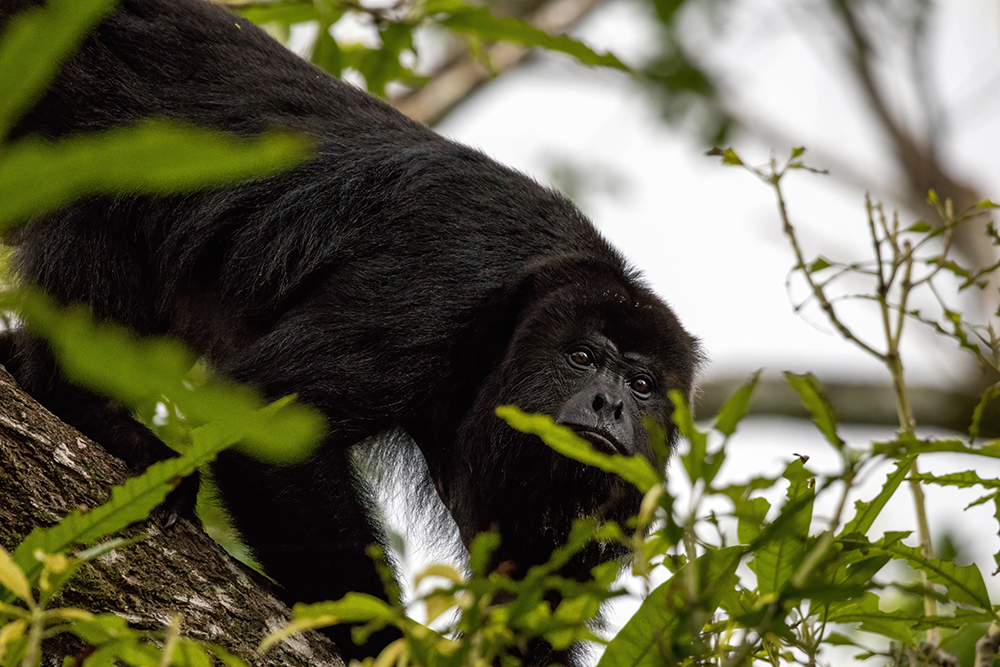
A young female came down to a branch that was just inches from our faces, and we got a great look at her before she leaped back up to the tree tops. Then we followed her through the jungle until we reached a clearing where a few more monkeys were hanging out. The male of the group was less than pleased to see us, and he made it known by belting out a powerful roar, while the rest of the family kept going about their business of eating fruit from the tree tops.

This was much closer than we’d gotten to the beautiful red howlers in Peru, and I was so happy to be able to clearly see the monkey’s expressive eyes.
The funny thing is, I used to think monkeys were creepy. It was on that trip to Peru when I first saw them in the wild, that my mind was completely changed. A close encounter with a squirrel monkey flipped some switch inside my brain, and I have absolutely loved monkeys ever since.
I was more than happy to watch the howlers until they retreated back into the trees, and it was finally time to trek back to where we’d started. We parted ways with Shane, and got back on the road with just enough time to make one last stop on our way to the Mariposa Jungle Lodge. Another 45 minutes on the road brought us to the Belize Zoo, which was reputed to be the best small zoo in the world. Whether that was true or not, we were about to find out.
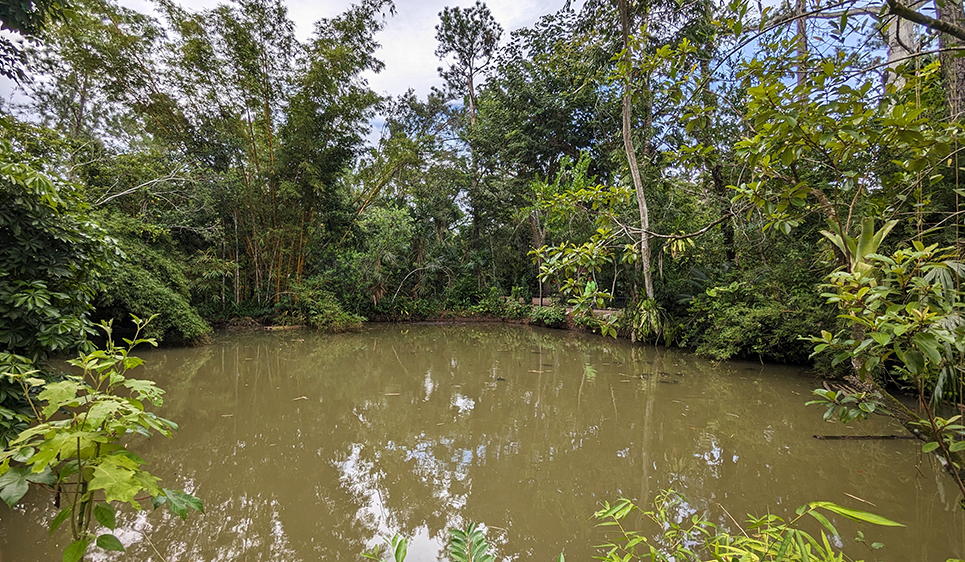
It was rainy when we first arrived at the zoo, but that didn’t phase us. We fished our rain jackets out of our luggage and went to the entrance station to buy our tickets. Once inside, we found ourselves in a setting that could have just as easily been a botanical garden as a zoo. Tropical flowers in vibrant colors adorned the walkways, and the animals’ enclosures blended seamlessly into the rainforest.
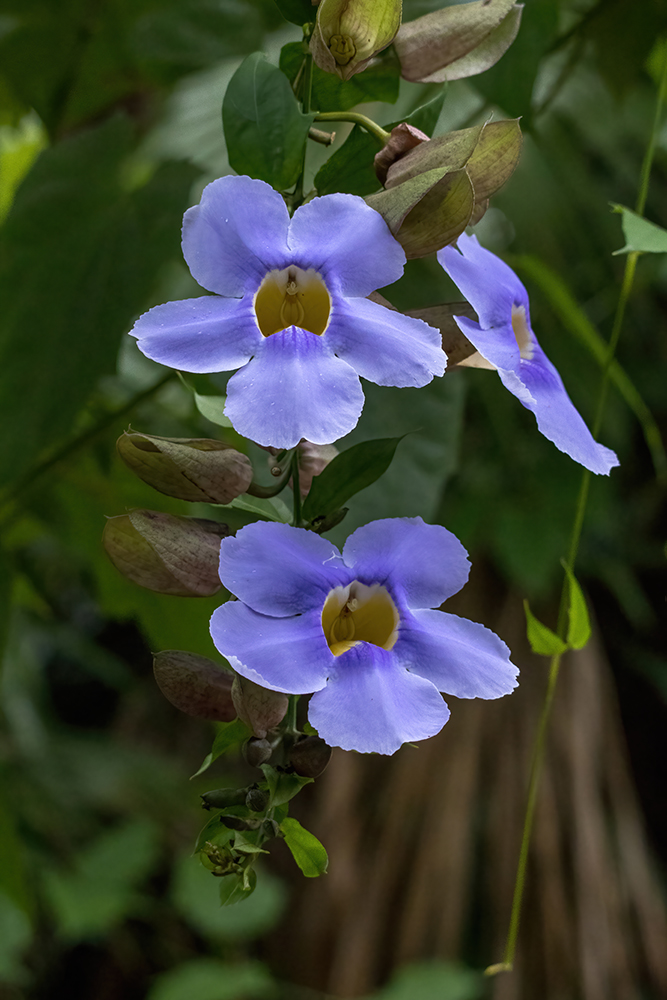
There were so many animals we knew we wanted to see, so we started walking around, taking note that other than us, there seemed to be only one family of four visiting the zoo. Never in my life have I been to a zoo with only eight total visitors. This added to the serene illusion of being in the jungle instead of a popular tourist destination, and we ended up having a nice conversation with the family and getting a great restaurant recommendation from them.
But the best part of the Belize zoo was the animals (duh)! It didn’t take long for us to realize that the zoo was absolutely worthy of its claim of being the best small zoo in the world. All of its residents are native to Belize, and were saved from various situations like the illegal pet trade, or being orphaned in the wild. Each animal had a sign with its name, and the story behind how it had come to be rescued.
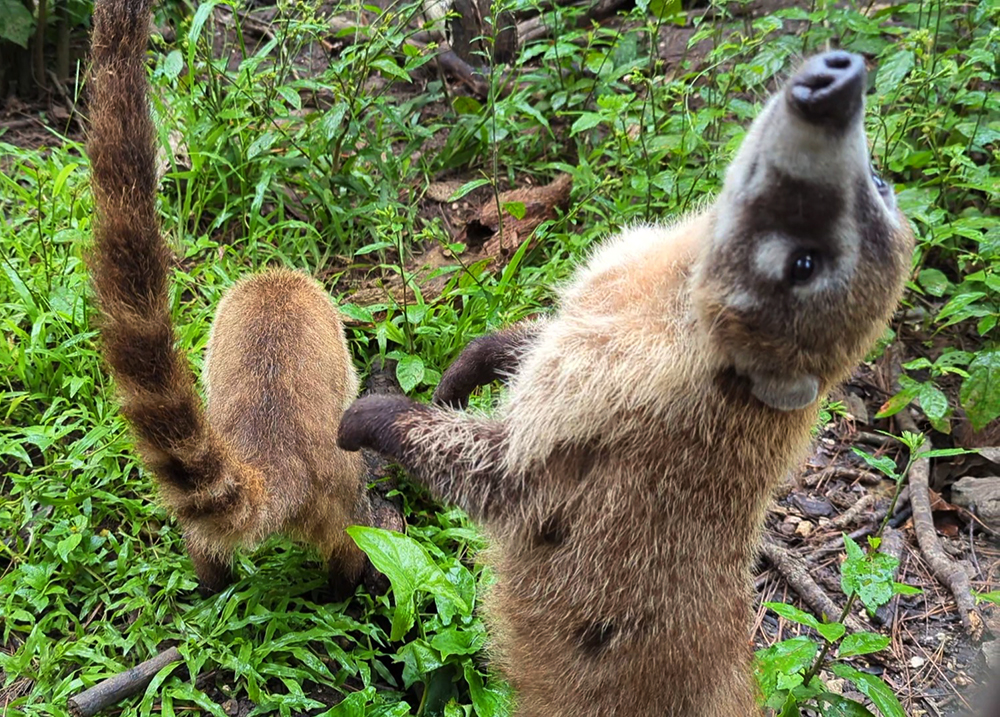
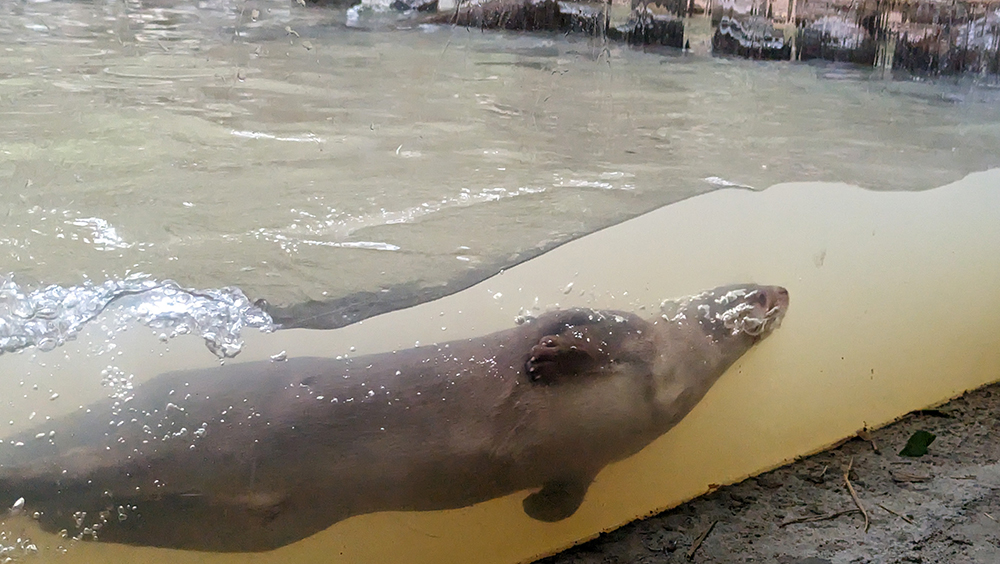
The animals didn’t seem to mind the rain any more than we did. In fact, they were all very active, and shockingly interested in us when we approached their enclosures. Coatis stood on hind legs to greet us, turtles swam up to the edge of their pond, and an otter seemed captivated by the bright yellow (the same color that the zookeepers wear) rain fly Bonnie had put over her backpack.
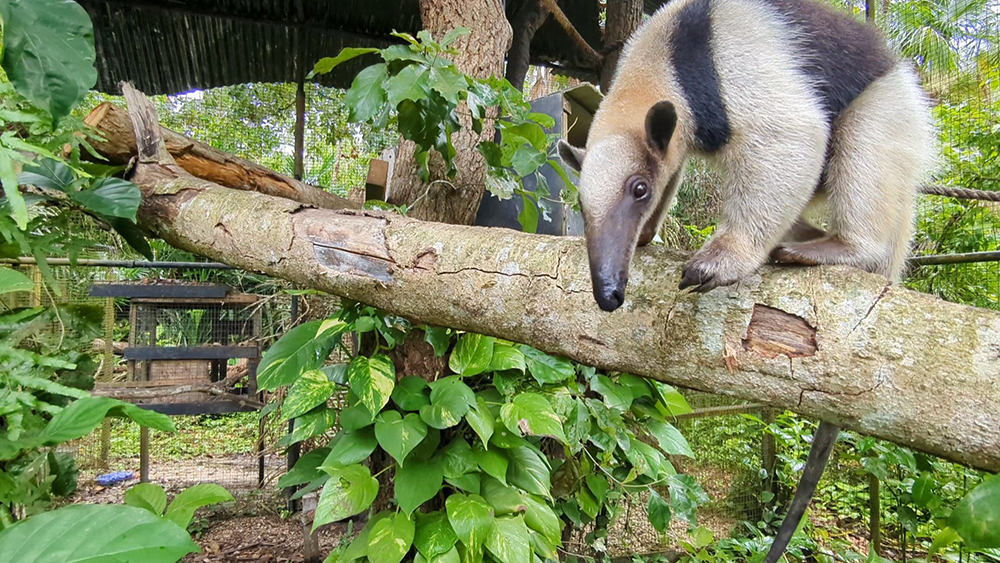
Archie the northern tamandua anteater was probably my favorite animal at the zoo. He was found orphaned on a farm in 2020, when he was only about four days old. He imprinted on humans because he was raised by zookeepers from infancy, and it was obvious that he was way too comfortable around people to ever survive in the wild. He greeted us enthusiastically when we visited his enclosure, sniffing us with his adorable, long snout, and trying to lick our fingers. He really brought giant smiles to all of our faces.
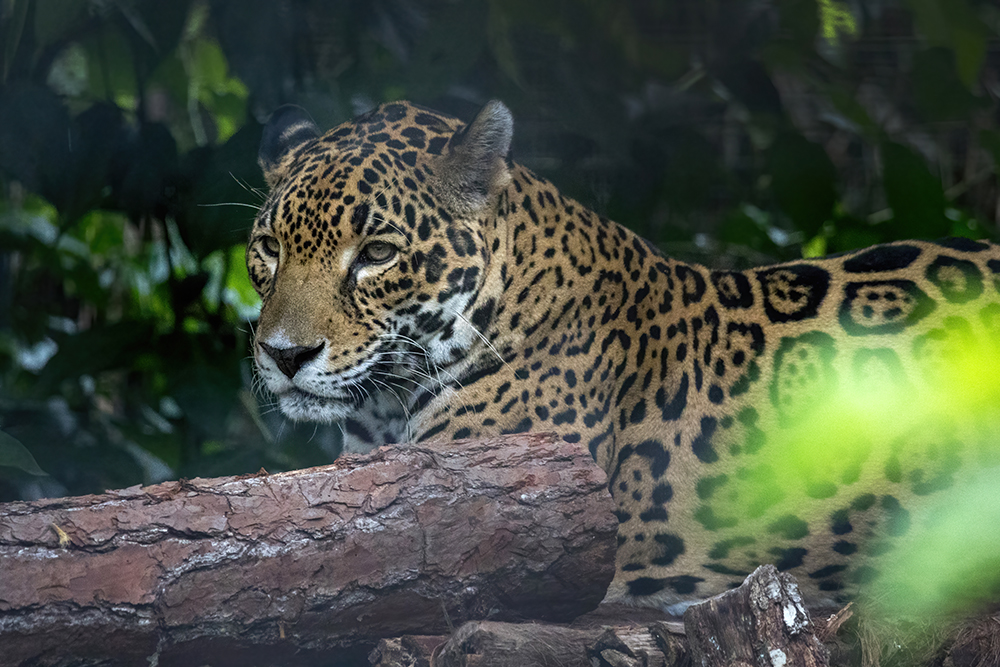
It was also awesome to get to see the zoo’s cats. There are five species of wild cat that live in Belize: mountain lions, ocelots, margays, jaguarundi’s, and of course, jaguars. The Belize zoo houses individuals of each species, but I was the most excited to see the jaguars.

They were downright mesmerizing, and we happened to arrive at their enclosures close to feeding time, so we got a really good view of them as they approached the edge of their cages for food. We saw two jaguars, each with their own, very large enclosure, where they could easily disappear into the trees. In fact, we revisited the jaguar area a few times, and we couldn’t always find them. But once the zookeeper arrived, they appeared seemingly out of nowhere and we got a great look at their beautiful spots and haunting eyes.
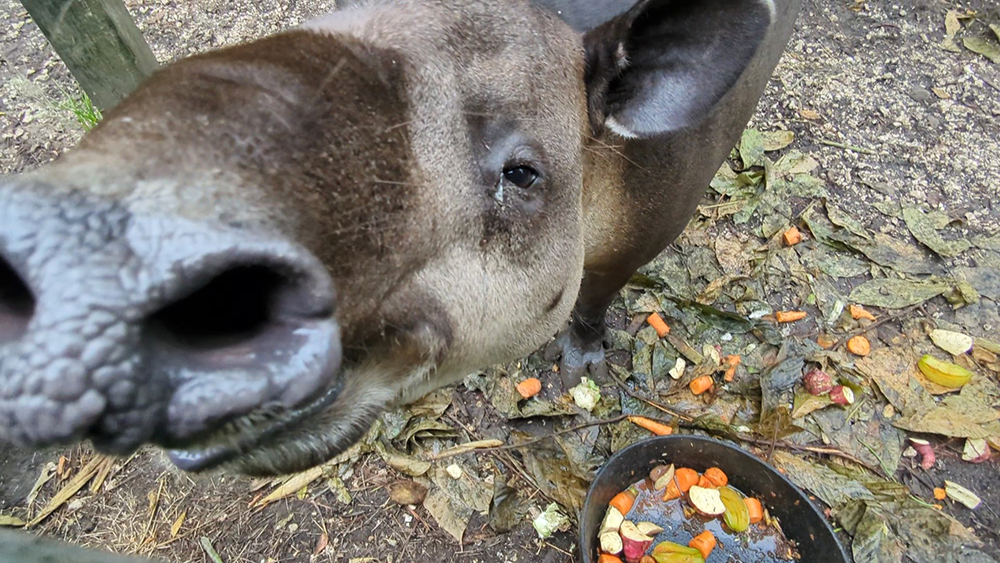
We were pushing up against the zoo’s closing time when we made it out to see the last species we were very excited for, the tapir. The Central American, or Baird’s Tapir, is the largest mammal that is native to Central and South America, and the national animal of Belize. We found three tapirs in total-I couldn’t really tell if there might be more because their enclosure is massive, and they can easily find places to hide. The three we did see gave us appraising sniffs (A.K.A The Flehmen Response) with their elephantine trunks, an experience that I won’t soon forget.

The zoo was officially closed by the time we left the tapirs and finally made it back to our car. By this point we’d all suddenly realized that we hadn’t eaten anything since our breakfast of fry jacks all the way back in San Pedro. We stopped off at Amigos, the restaurant recommended by the family we’d met, and had a delicious dinner before continuing on to the Mariposa Jungle Lodge. It was dark by the time we made it there, and we were all grateful when we finally collapsed into our comfortable beds inside our luxury cabana. It seemed early to be going to sleep, but between all of the day’s travel and fun activities, we were more than ready to crash. We would need to up bright and early for the tour we had scheduled the next morning anyway, so we drifted off to sleep, eager for our alarms to ring the next morning.





 birdsoftheairtravel.com
What fantastic experiences you have. great photographs of the wildlife. Thank you.