Tell me, O Octopus, I begs
-The Octopus, Ogden Nash
Is those things arms, or is they legs?
I marvel at thee, Octopus;
If I were thou, I’d call me Us.
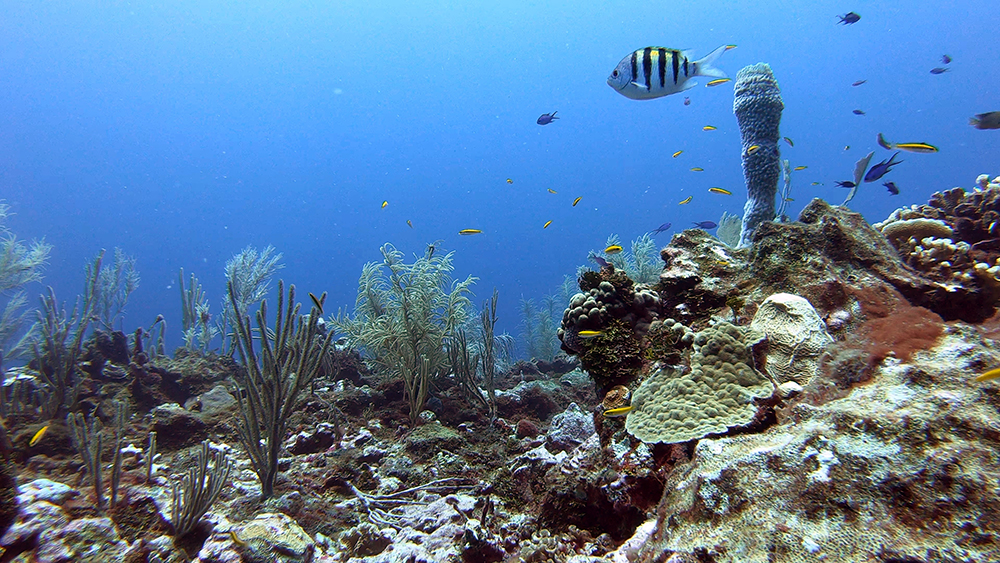
Ever since Vince and I began our SCUBA diving journey five years ago on a trip to Indonesia, I have been completely hooked. Growing up on the shores of Lake Michigan made me an avid swimmer for most of my life, so it really wasn’t a surprise that I would become obsessed with the sport. I love the feeling of weightlessness underwater, vibrant coral reefs, and most of all the myriad of weird and wonderful sea creatures we find along the way. Diving gives me a feeling of being part of our natural environment in a way that nothing else does. Over the years, I’ve been working on constantly trying to improve my buoyancy control and my proficiency with moving underwater in SCUBA gear, and I’ve found that as I’ve grown more comfortable, my wildlife encounters have also improved significantly as a result. I’m constantly interested in gaining experience and learning from other divers so I can improve my own skills, so when I started planning a vacation to Belize, I took it as an opportunity for Vince and I to further our dive training with an advanced open water course.
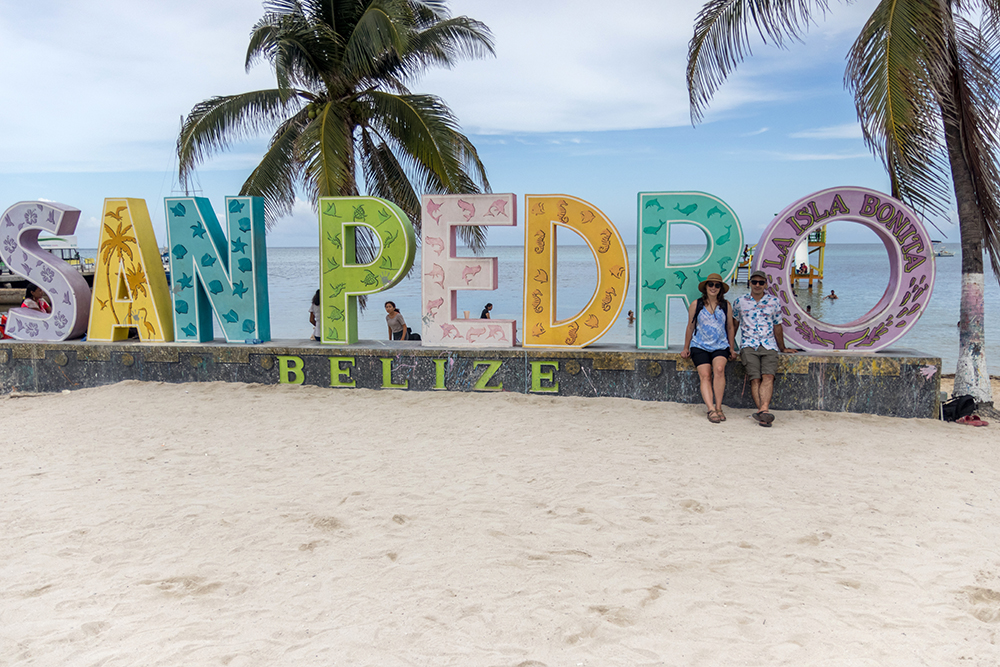
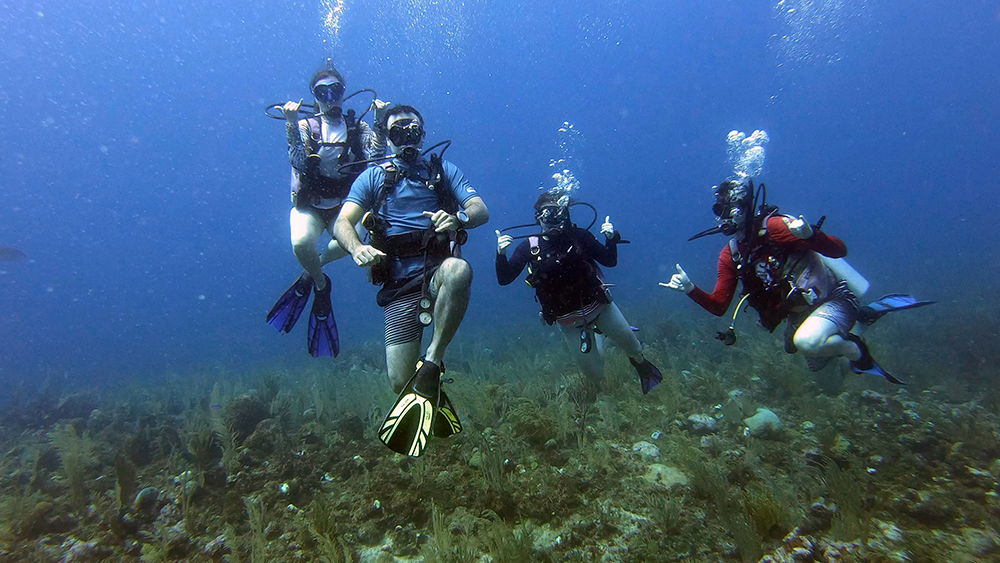
Belize has a reputation as being one of the best diving destinations in the Caribbean. Boasting the longest unbroken barrier reef in the western hemisphere, iconic dive sites like the Great Blue Hole and Hol Chan Marine Reserve, and healthy populations of nurse and Caribbean reef sharks, Belize seemed like the perfect place to spend a week exploring underwater. Our friends, Bonnie and David, decided to join us and signed up for an open water diving course with the same dive center I’d picked out, SCUBA School and Family Dive Center. Bonnie and David have done a few discover SCUBA dives over the years, and they were finally convinced that they wanted to get a certification. So the four of us hopped on an early morning flight, and after two flights and a ferry ride, we stepped onto the dock at San Pedro before dinner time.
San Pedro is the biggest tourist hub on the island of Ambergris Caye, which is the largest island in Belize and is perfectly located for easy access to diving on the Belize Barrier Reef. We dragged our luggage the short distance to the San Pedro Holiday Hotel, and checked into the beachfront rooms we’d reserved there. It was nice to have arrived to so early in the day because it gave us time to touch base with the dive shop, go shopping at a nearby grocery store, and then sit on our balcony watching frigatebirds fly overhead as palm leaves swayed lazily in the breeze.

We got plenty of sleep our first night and began our respective SCUBA courses the next morning, feeling well-rested. Vince and I were on the dive center’s boat for our morning dive, and Bonnie and David stayed back at the hotel’s beach to do their initial skills lesson in shallow water.
Vince and I listened to a briefing from our instructor, Josh, as the boat zipped off to our first dive site. The PADI Advanced Open Water course requires five adventure dives: deep dive, navigation dive, and three elective dives of the student’s choosing. This morning, we would be embarking on our deep dive, with a plan to descend to one hundred feet, which was significantly deeper than we’d ever gone before.
Deep diving requires an added level of caution for a few reasons. Risk of decompression sickness increases as you go deeper underwater, so you have to be more conservative when planning for such a dive. This means spending less time at the deeper depths, and allotting more time for your five meter safety stop. You also consume air faster at depth, which can make your dive time even shorter. Lastly, gas or nitrogen narcosis can occur starting at depths of around a hundred feet. Gas narcosis, slangily known as “getting narced,” is caused from breathing compressed gas at depth. It can manifest differently for different divers, and even differently for an individual diver on different dives, causing cognitive impairment that can range from mild to dangerous if a diver gets too confused underwater. I’d never been narced before and had no idea how my mind might react to it, so I did feel a bit apprehensive as we jumped into the water and started our descent.
It always amazes me how easy it is slip underneath the water and glide slowly downward until any glance upward feels dizzying as I realize how much water now stands between me and the surface. A common misconception that I’ve noticed when I talk to non-divers about diving is the idea that diving gets more difficult or uncomfortable with the added pressure of going deeper. In reality, I don’t feel any different at a hundred feet than I do at fifteen, so it was a quick and easy process to pass by our former sixty foot limit, and find ourselves at a sandy bottom with towering canyon walls on either side of us.

We stopped at a hundred and one feet, where Josh had us compare the readings on our dive computers. It’s standard for a group of divers to follow the plan of the most conservative computer. This usually ends up being mine because it’s old and old computers tend to be more conservative than newer ones. We also looked at a color chart Josh had brought along so we could compare the differences in the colors of the reef throughout the dive. The deeper you go, the more color gets swallowed up by the blue tint of the water, to the point where even things that might be bright red closer to the surface, turn to dingy shades of dark green and blue. If I was narced, it wasn’t noticeable, so that worry evaporated as we turned the dive and started a meandering ascent.
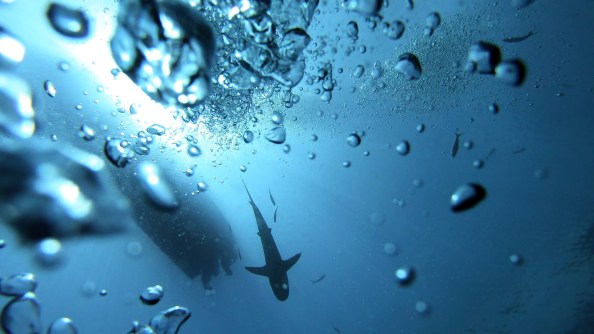
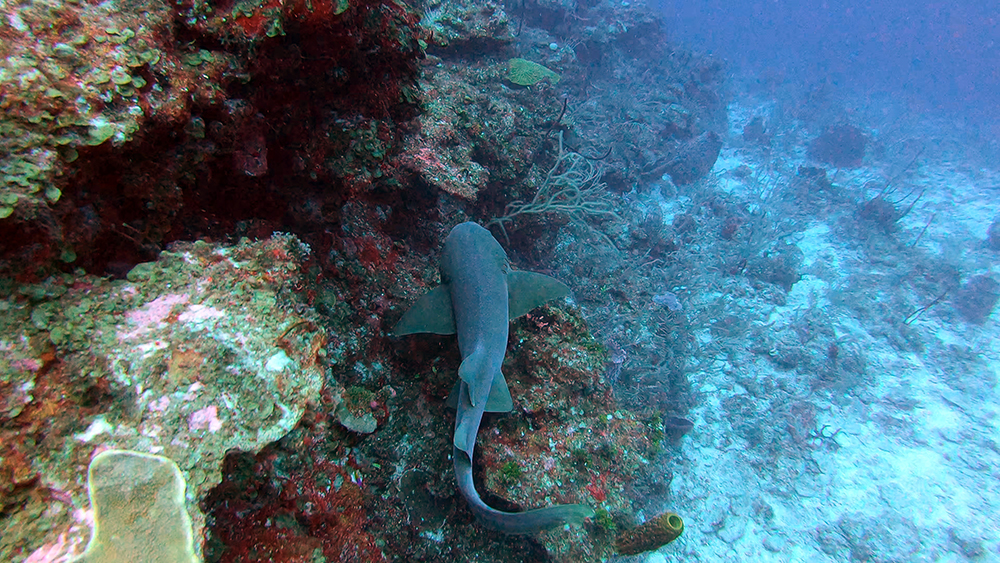
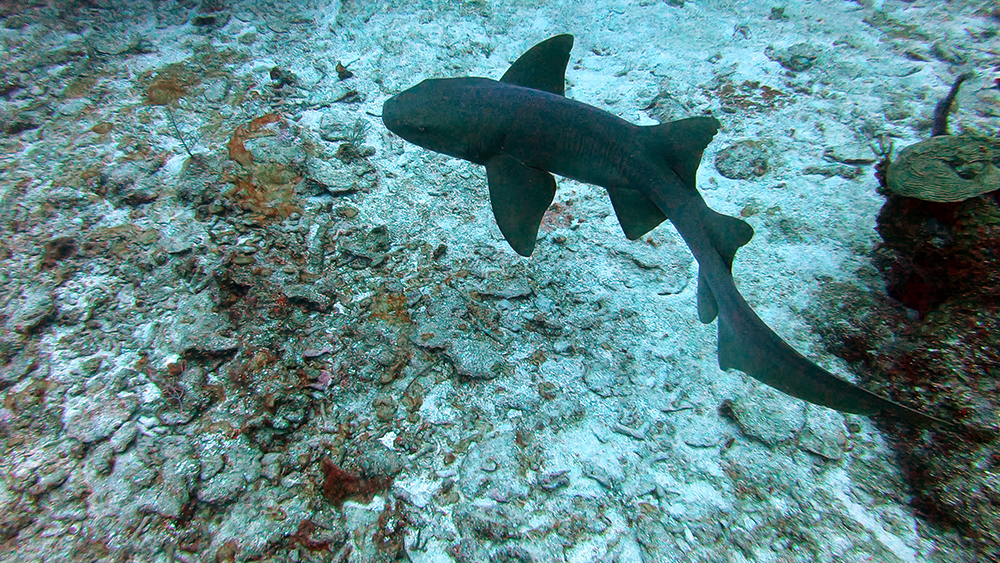
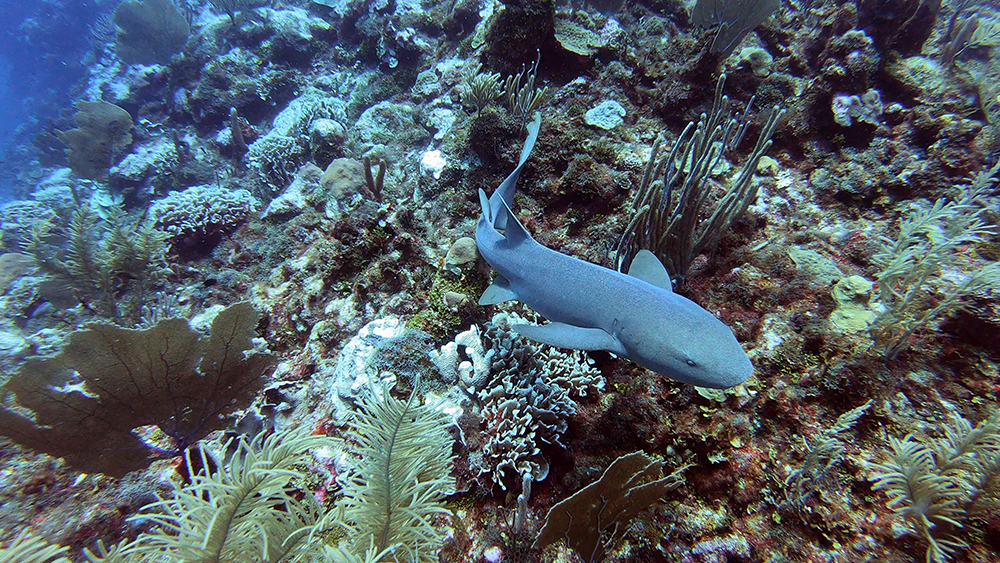
Of course while doing all of this learning, we were also keeping our eyes open for wildlife, and we got to have our first ever encounter with a nurse shark. The shark swam right up to Josh and performed a few acrobatic maneuvers around him, clearly accustomed to the sight of SCUBA divers.
We slowly ascended back toward the surface, taking our time so that more nitrogen bubbles would dissolve out of our systems before we resurfaced. As we neared the end of the dive, we caught sight of a Caribbean reef shark, which glided gracefully through the water until it dissolved into the distant blue haze.
I had been somewhat nervous about how the deep dive would go, so I felt relieved when we surfaced and climbed back into our boat. Everything had gone completely smoothly, and we were now one step closer to our certification.
Back at the hotel, we got to touch base with Bonnie and David before our next dive. They had finished their confined water training and we ready to do their first open water dive later in the day. Vince and I got to spend our hour-long surface interval eating watermelon and drinking water to stay hydrated, along with doing more training for our upcoming compass navigation dive. Josh showed us a couple of methods of reading a compass underwater and how to use the headings to navigate underwater.
Once we’d successfully demonstrated the compass skills on land, it was time to take it to the water so we got back on the boat and rode out to another dive site. Once we reached a sandy bottom, it was time for me and Vince to strike out on our own. We left Josh behind, with the goal of navigating in a large square, which if we did it right, would bring us back to the same spot where we’d started.
Vince took the compass first and I counted our 25 kick cycles to time when we would turn. After two legs of the square we switched, and I used the compass while Vince counted kicks. At the end of the square we ended up back at the sandy patch we’d set out from, where Josh was waiting for us.
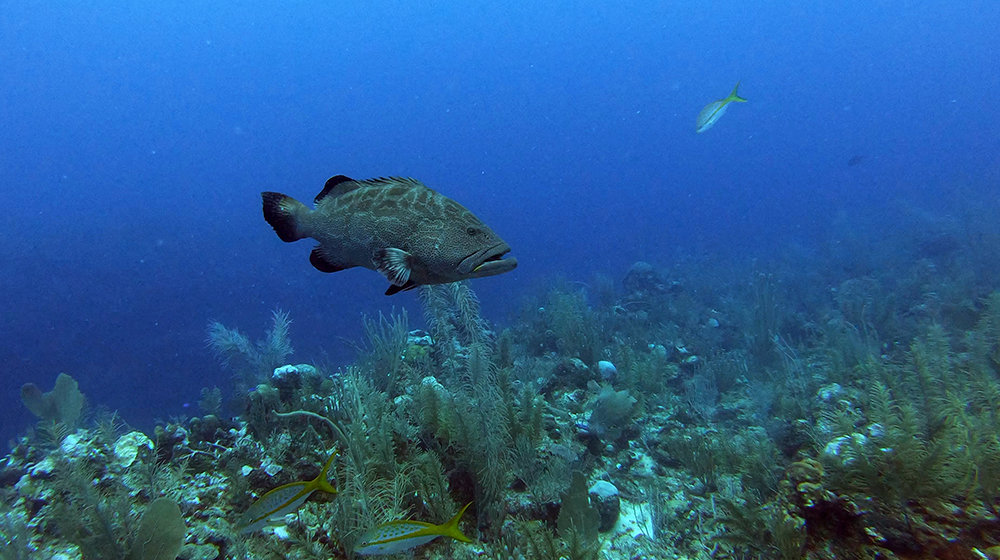
With the skill portion of the dive behind us, we got to spend our remaining time exploring the reef, our coolest find being a huge grouper.


The navigation dive would be our last dive for the day, and afterwards we changed from bathing suits to street clothes, and grouped back up with Bonnie and David to explore San Pedro town, stopping at a nearby chocolate boutique, a smoothie stand, and a souvenir market before finally landing at an iguana sanctuary that we’d noticed on Google Maps.
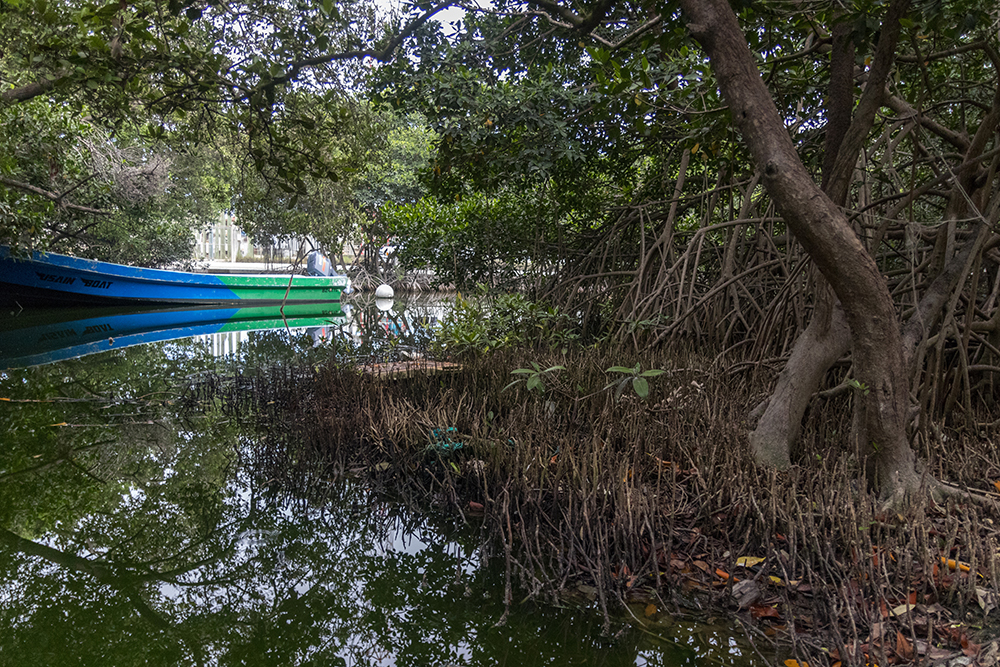
I was surprised to find that the Iguana Eco Sanctuary was located in a mangrove forest that seemed to appear out of nowhere. One minute we were on a busy street, and then next we had disappeared into the forest, and could forget that the city was just a matter of steps away from where we stood.

We met Calvin, the sanctuary’s owner, and he showed us around the property, pointing out a few iguanas lounging high up on tree branches. I was excited to see them, but he said we should come back on a sunnier day because there would be many more iguanas wandering the property if it was hot outside. I personally thought it was absurdly hot outside, but apparently it just wasn’t good enough for iguanas, so we decided to try again the next day and see if we had better luck.

The rest of our evening was spent wandering around San Pedro. We noticed a waterslide out in the ocean while walking through a beachside park. Vince and David were eager to give it a try, so the four of us returned to the hotel, which was only a few buildings further down the beach, and changed back into our bathing suits. Apparently we were the only adults that wanted to go down a waterslide, but there were plenty of local kids out for a swim and they were all eager to show off by doing flips off of the end of the slide (an activity that was supposedly forbidden according to a sign at the water’s edge). After drying off, we ended our day by going out for dinner and drinks at Palapa Bar and Grill to celebrate David’s birthday.

The next morning we woke up to a surprising amount of commotion on the beach. Random people kept trying the doorknob to Bonnie and David’s room early in the morning, and when we did step outside for the day, the beach was full of people and boats.
After asking around, we found out that our beach had been turned into a movie set for the day. The movie is called Blood Knot, and it stars Michael and Cameron Douglas. At first I was a bit confused that an American production could be filming due to the ongoing SAG-AFTRA strike, so I looked into it, and found out that there is a long list of productions that have signed interim agreements with SAG which allow them to keep filming. Sure enough, Blood Knot is on the list. We also found out that the room next to Bonnie and David’s was being used as a dressing room, hence all of the random attempts to open their door that morning.
David made a futile attempt at getting us all cast as extras in the film, but nobody seemed the least bit interested in our clear and obvious talents, so in the end we resigned ourselves to proceed with our plans of finishing up our SCUBA courses. We’d be doing three dives instead of two, and would all have new certifications by the of the day.
Josh had the day off, so Vince and I joined up with MJ, the instructor Bonnie and David had been working with. Once we got to our first dive site, the five of us descended together and stopped at a sandy bottom where Vince and I got to watch reef sharks cruise past us while MJ did a straight-line navigation skill with Bonnie and David.

When the trio returned it was time for me and Vince to practice peak performance buoyancy. First we swam through a large square made of PVC pipe with the goal of not touching it at all. That was easy, so we did a second pass through it while MJ moved it up and down to make the skill more difficult. Finally, we hovered above a line of spikes MJ had placed on the sandy bottom, using breathing control to lower down and touch our regulators to each spike. When it was my turn, I noticed a little crustacean staring up at me from its burrow in the sand right next to one of the spikes. I let out a little squeak of delight, but quickly remembered that I should be focusing on the skill, not looking for marine life. I continued moving down the line until I’d tapped every spike and that completed the skills section of the dive.

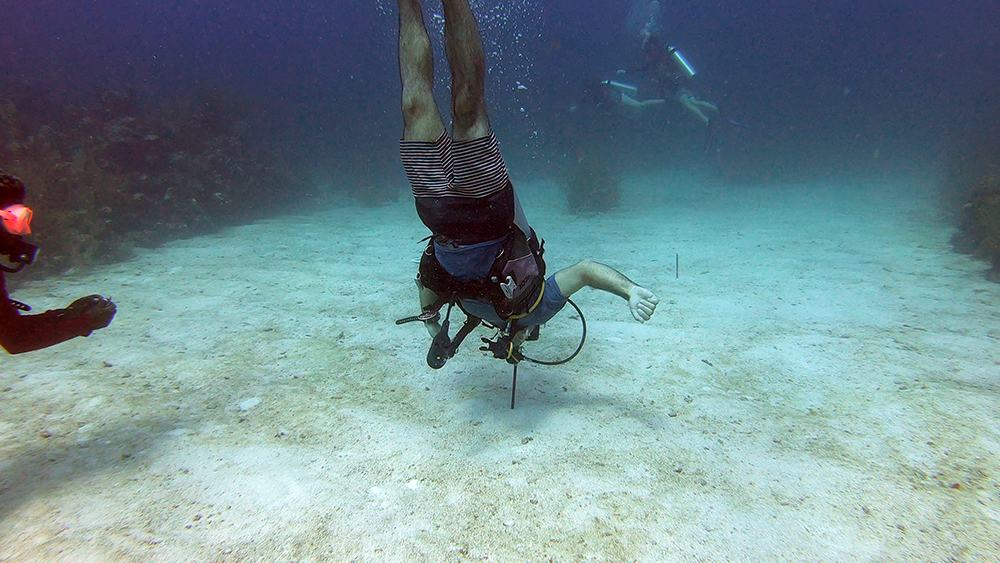
The rest of the dive was a relaxing glide over the reef where we saw another nurse shark and grouper. Reef sharks swam below us during our safety stop, and I kept thinking how awesome it was that we’d seen so many sharks already. Little did I know that our shark encounters were only going to get better over the next few days.
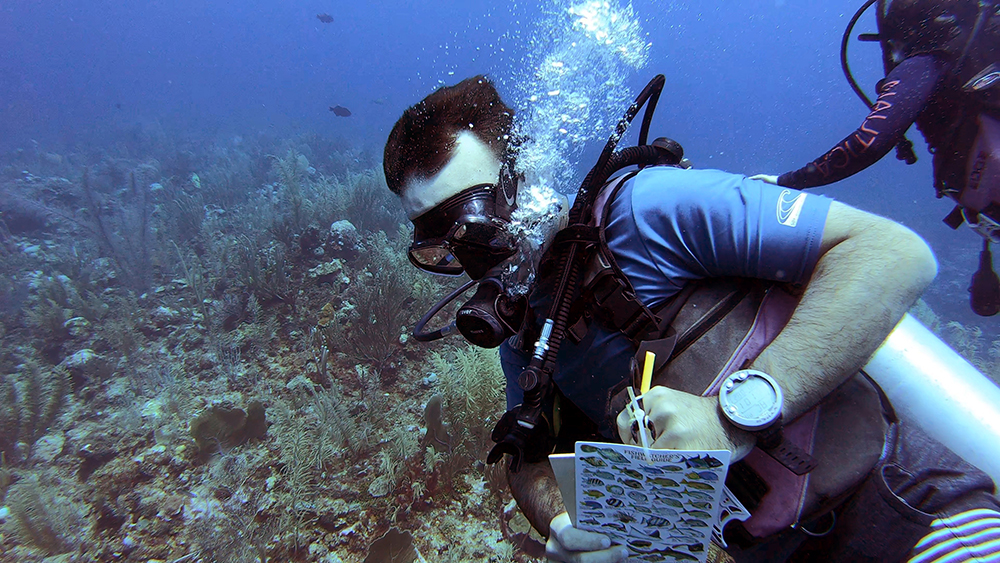
During our surface interval, MJ briefed us on the plan for our next dive. This would be Bonnie and David’s fourth and final dive for their certification, and Vince and I would be practicing fish identification. We would be diving with another instructor named Esrom this time, and as the boat sped away from shore, I sectioned the underwater slate MJ had provided me into three different categories of fish I wanted to find.
This time the sharks started making an appearance before we’d even gotten into our gear. Just as our captain stopped the boat at a mooring line, a reef shark swam right next to us, it’s dorsal and caudal fins breaking the surface of the water. My heart started pounding and for a few seconds I couldn’t tell if it was out of fear or excitement. I’ve never felt afraid of a shark while diving before, but the idea of dropping in above them was more intimidating to me than swimming next to or below them.
My momentary unease evaporated once I was down at sixty feet, looking upwards at a graceful dance of sharks gliding through the water with ease amidst shafts of ethereal sunlight.
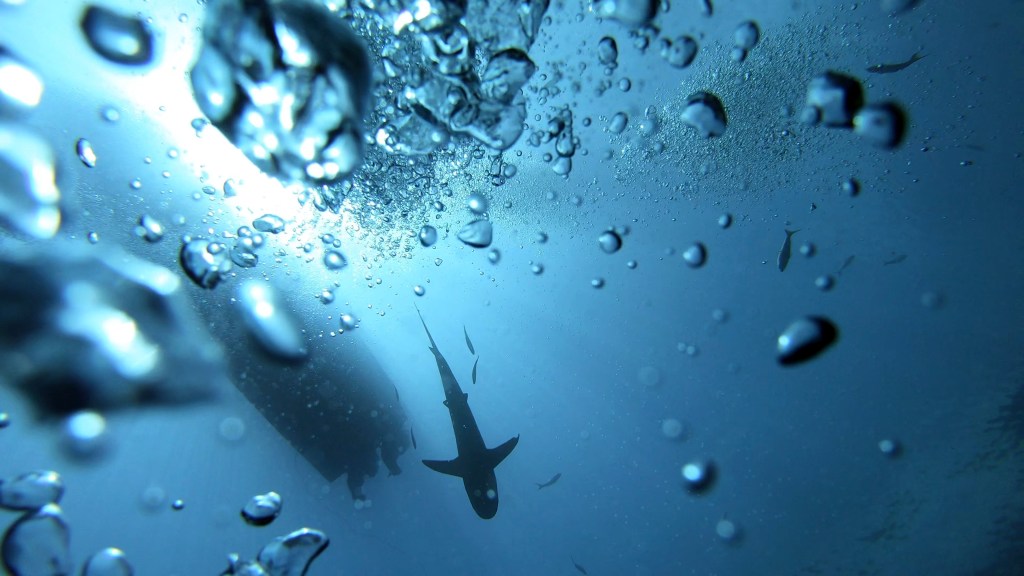
In a sense, this ended up being the perfect dive for fish identification because we saw more species than we had on any dive up to this point. Reef sharks moved in and out of view, and a large barracuda greeted us once we hit our max depth. Parrotfish, tangs, and triggerfish dashed around the reef looking for food, and a nurse shark and large black grouper followed along with us throughout the entire dive. The grouper hovered nearby at all times, while the nurse shark looped around alongside and below us, dashing between divers, and giving us all equal attention. The only downside of all of the action was that I was struggling to frantically jot everything down on my slate, and film everything at once. Eventually my slate was completely full, and I started trying to squeeze more words in between lines.
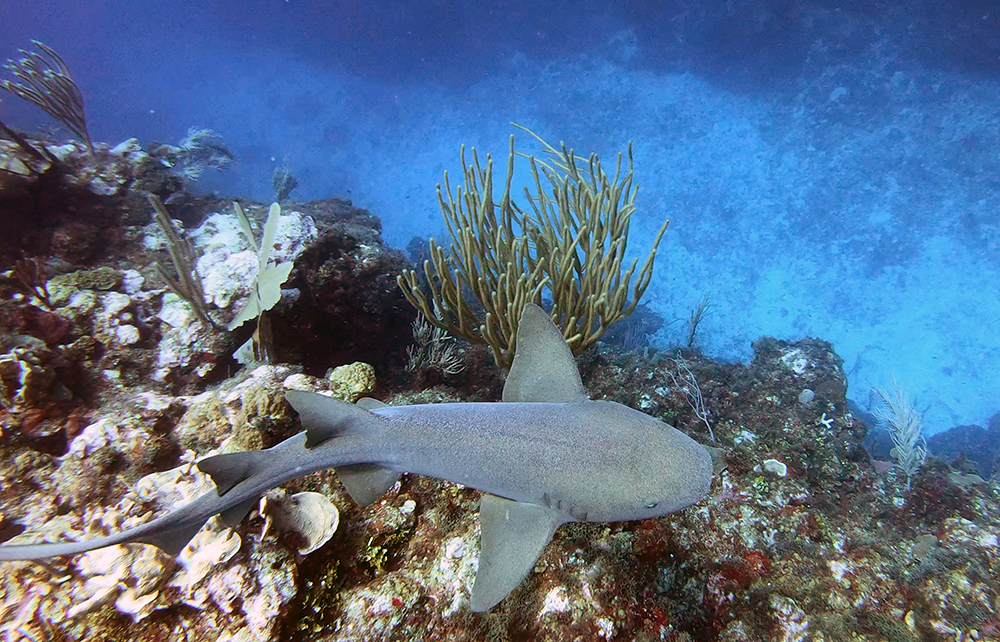

Save for maybe two or three notable exceptions, diving is always fun for me, but there are some dives that just pack a much bigger punch than others, and this was our first (but not the last) one in Belize that really wowed me.
Once we’d resurfaced and rode back to the dive shop, all four of us got certificates of course completion, although Vince and I still had one dive left before we were actually done. Then we changed and got dinner at a nearby Salvadoran restaurant where we got to try pupusas for the first time.
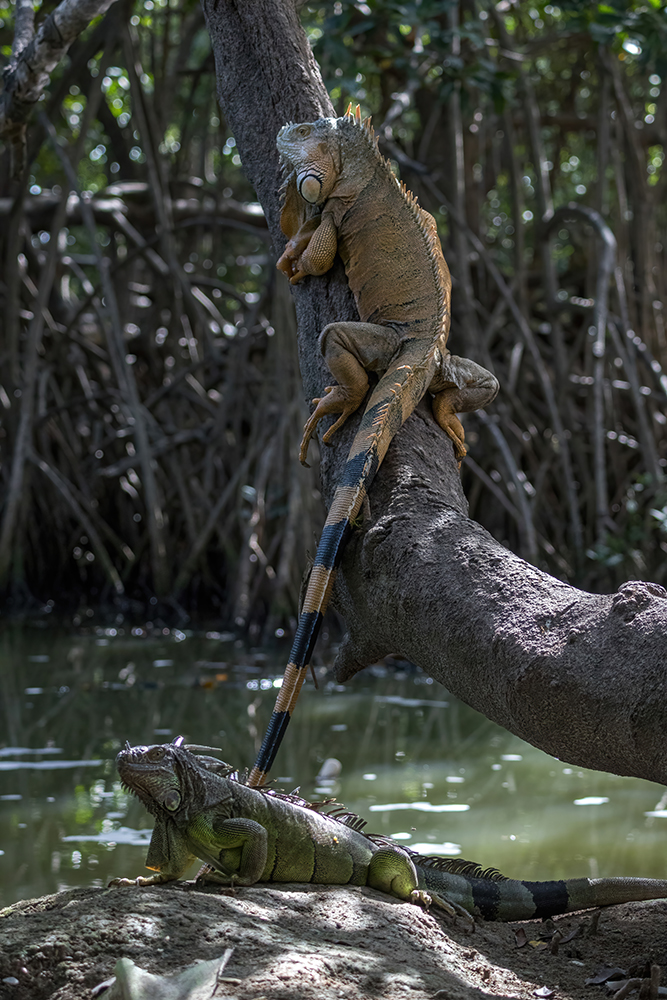
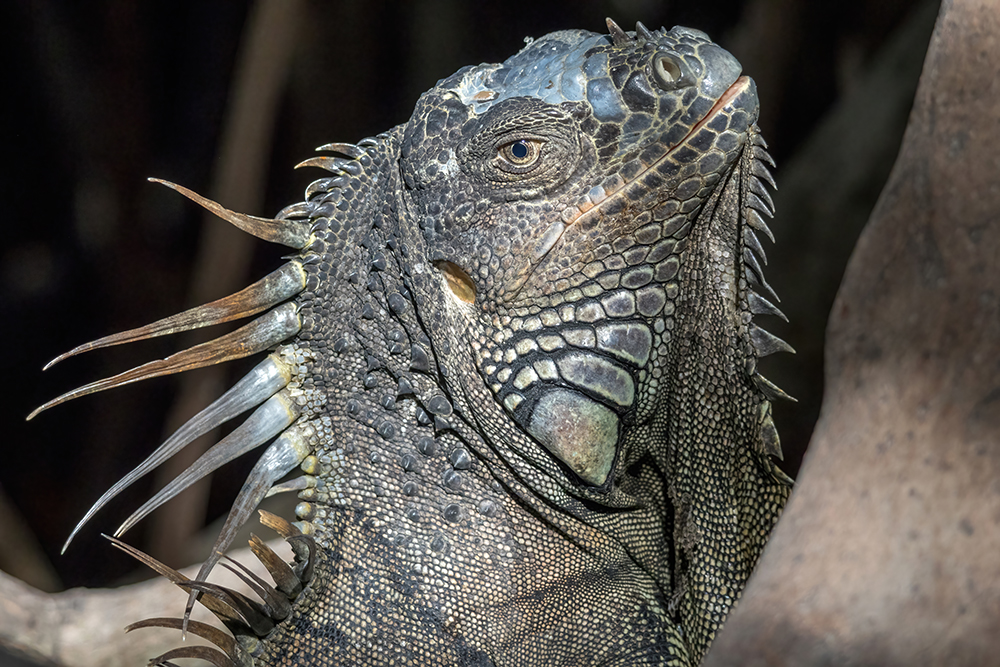
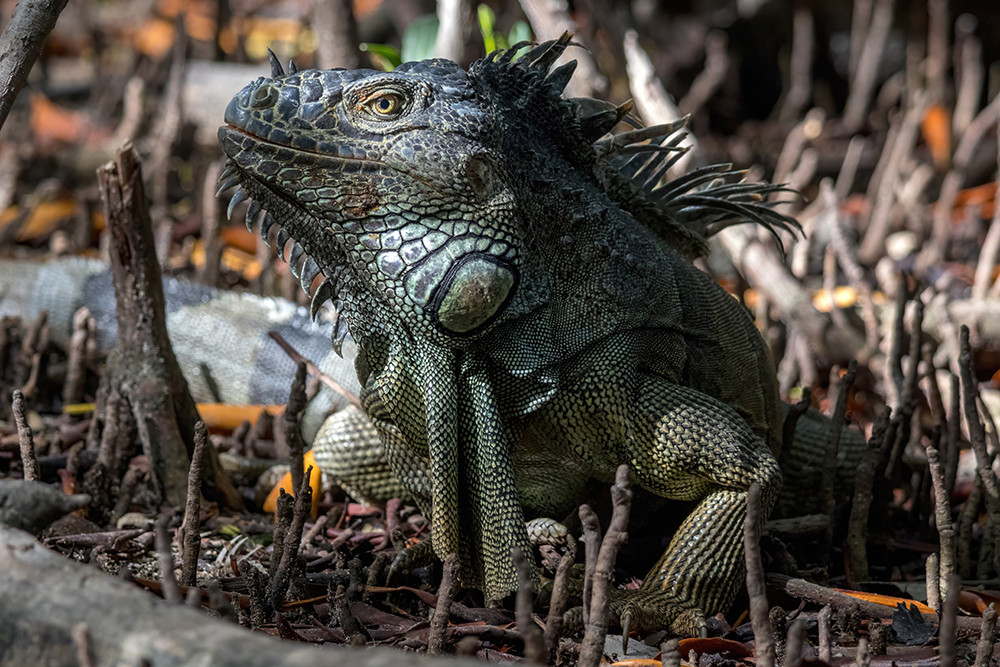
True to our promise of the previous afternoon, we returned to the iguana sanctuary to find that there were indeed many more iguanas than we’d seen the day prior.

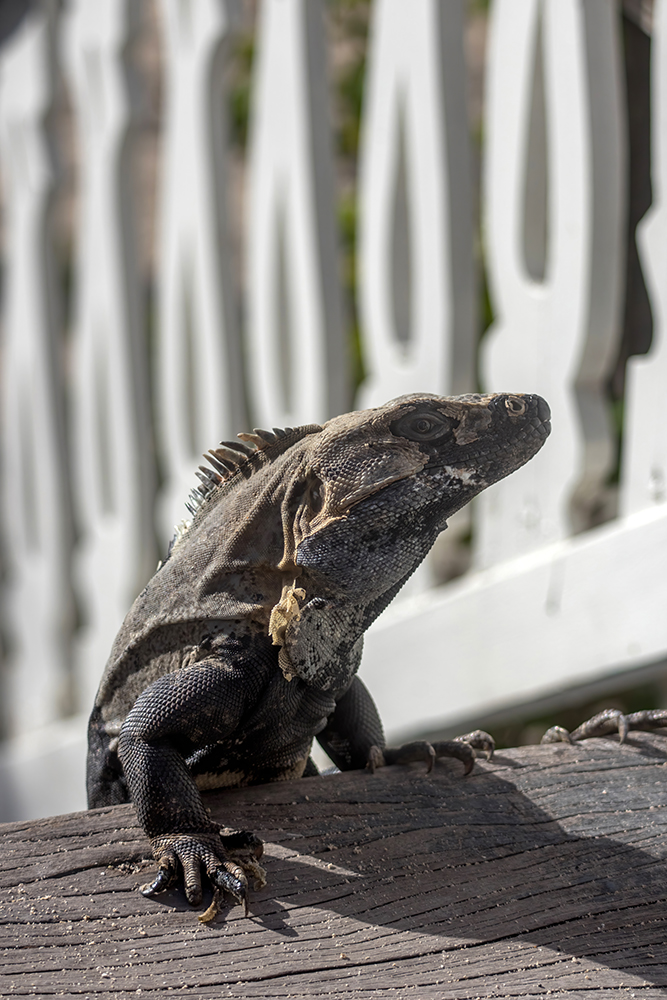
I was so glad we’d listened to Calvin’s advice to try another visit. The green iguanas were beautiful to see up close where I could see the complex variation in the colors of their scales. The green iguana is native to Belize, and has been an important symbol as far back as the Mayans who incorporated them into their religious beliefs. Unfortunately these gorgeous lizards are locally threatened, so they are now protected under Belizean law. More than one person told us that their local nickname is “bamboo chicken” because apparently their meat is quite tasty, although it’s now illegal to hunt them.

Now that we’d seen a much more satisfying amount of iguanas, it was time to return to the dive shop for our last dive of the day, or rather, the night. Esrom met us on the dock just before sunset, and we sped off towards a shallow channel as golden light washed over the waves. Once we arrived at the site, we watched the sun go down behind the now distant buildings of San Pedro while Esrom handed out dive lights and reminded us of how to use them to make hand signals, and to not blind each other by shining them directly at anyone’s face.
Dusky light was still filtering through the water when we rolled overboard, but before long, we were surrounded by darkness with only our lights to find our way. Tuffy Channel was a shallow dive site, which I was happy about because it meant we would have more time underwater to look for marine life. Night time brings out a whole different array of creatures than what we had been seeing in the day, and I was hoping that we would be lucky enough to see an octopus.
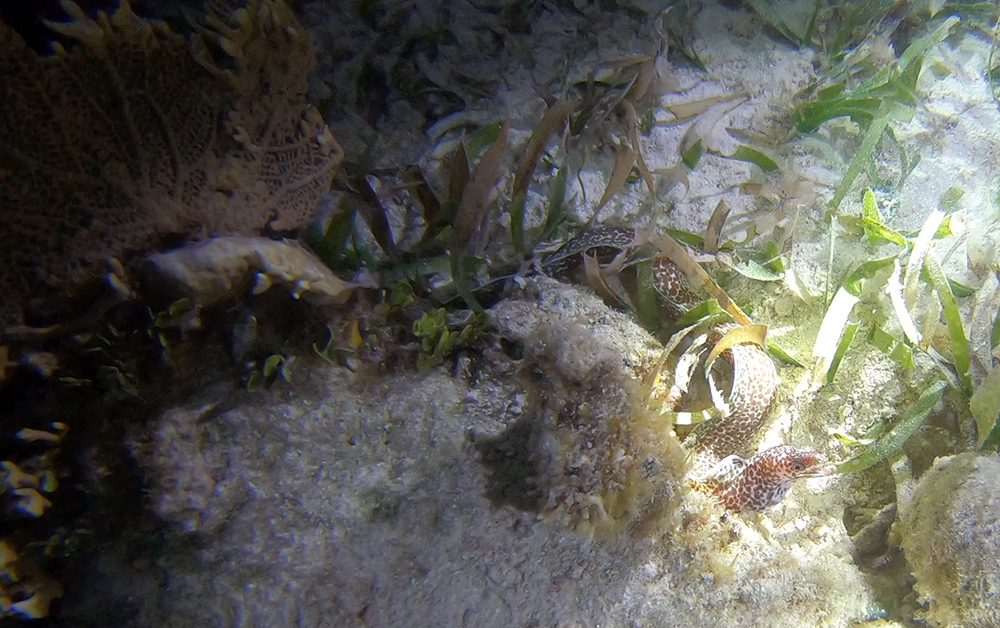
At first we didn’t find much, but gradually we stared to notice more creatures. Esrom found a tiny octopus that had taken up residence inside of an empty conch shell, but it was resolute on staying hidden deep within the shell so it did not constitute a satisfactory octopus sighting by my standards. Soon after that, someone found a spotted eel, and then an adorable little squid. Not the exact cephalopod I was hoping for, but still a welcome sight.

We saw a slipper lobster, and then a porcupinefish, who seemed to love the attention of my camera.

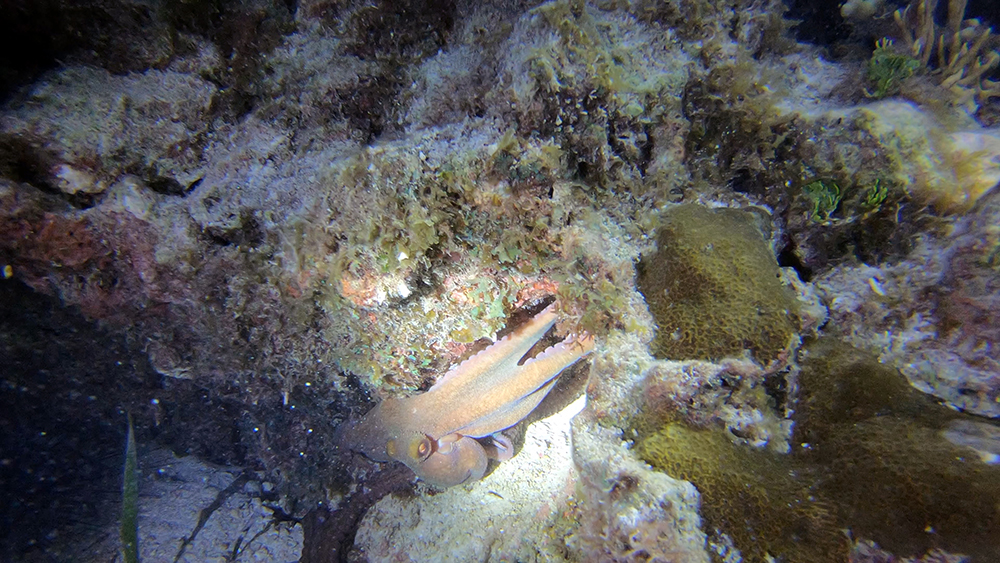
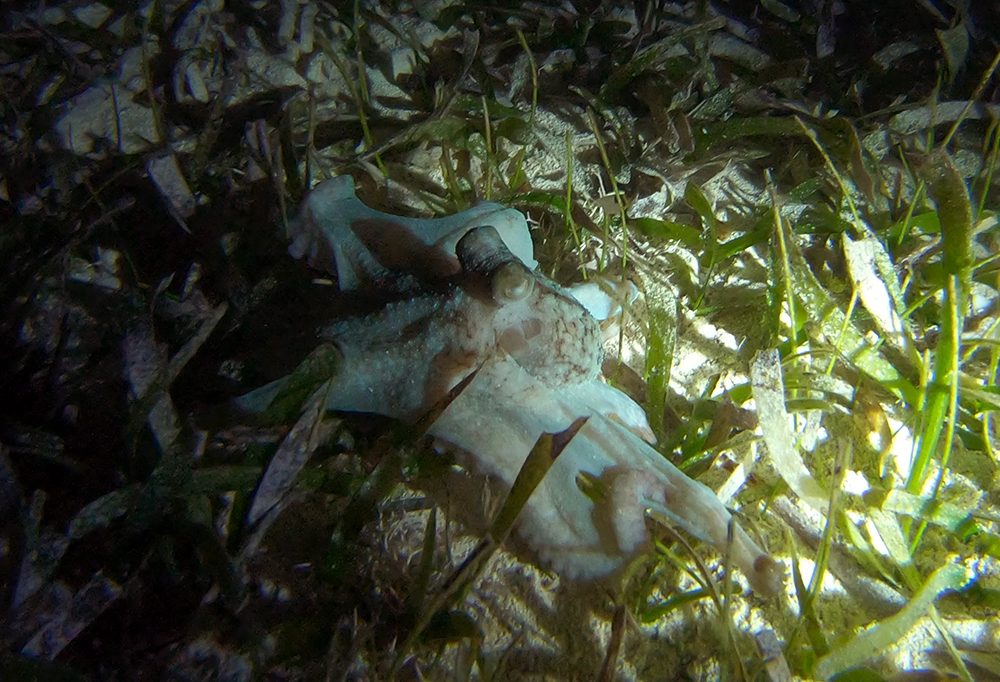
Unfortunately for the posing porcupinefish, I was quickly distracted by Esrom circling his light to signal he’d found something. I quickly abandoned the porcupinefish and swam over to join Esrom, who was aiming his light at a neon colored blob that had affixed itself to the underside of a rock. I squinted at it for a second before realizing it was an octopus!

This technically was not my first octopus sighting, but the one Vince and I saw in Saudi Arabia was intent on doing its very best impression of a rock, so I was really excited to see one displaying brighter colors like this.
Octopuses have the ability to change the texture and color of their skin at will because of specialized cells called chromatophores. Each chromatophore contains a sac filled with a different pigment, and the octopus is able to expertly manipulate these sacs to alter the apparent color of their skin. This gives them excellent camouflaging abilities, so an octopus that wants to look like a rock is going to be very tricky to find. This particular octopus, however, was displaying just how brilliant their skin can be by attempting to look like coral.
Eventually it slinked away, disappearing into a crevice, but the excitement wasn’t over because Esrom quickly managed to find another Octopus. This one was smaller and was displaying sandy colors, perfect for blending in with the ocean floor.
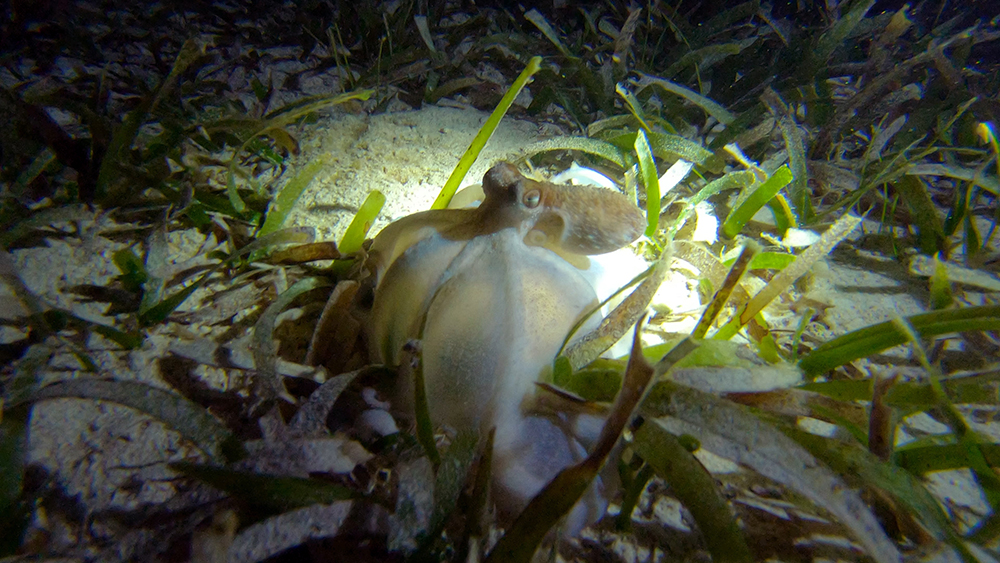
The dive was nearing an end after we left the final octopus, but we still spotted a few more neat critters along the way like this spotfin porcupinefish and spotted trunkfish hanging out together.
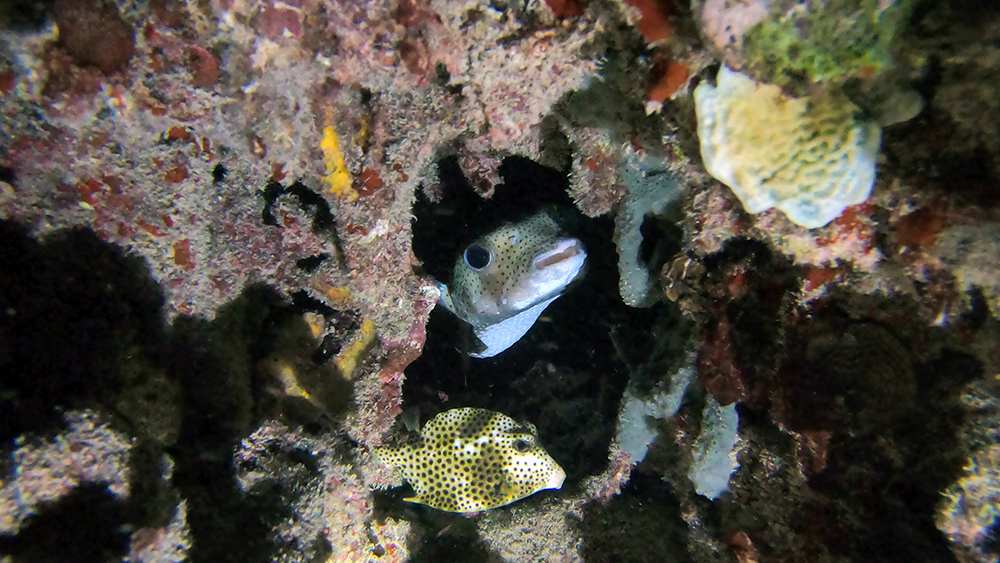
Just before we surfaced, a spotted eagle ray cruised overhead, which was the perfect way to end a fantastic dive, and the conclusion to me and Vince’s advanced open water course. I spent the boat ride back to the hotel grinning from ear to ear and incessantly chattering about all of the wonderful critters we’d seen on the dive. Night diving really is a totally different experience than diving during the day, and I was happy to have gotten to try it for a second time.
With all of our coursework wrapped up, we could now look forward to two more days of diving just for the fun of it. The next couple of days would take us to some of the most iconic dive sites in Belize, and a paradise island teeming with wildlife!










 birdsoftheairtravel.com
We used Scuba School too, not for classes but we went with them for 3 or 4 days of diving. Belize is a great place for diving isn’t it?! Did you do Great Blue Hole? Maggie
That’s awesome! They were great! Yes, went to the blue hole, and Hol Chan, it was spectacular
What fun! You must have a specialized camera for the underwater shots. They’re great. Octopus is a favorite of mine, too!
Thank you! I just have a GoPro, but I’d love to upgrade to something more hefty someday.