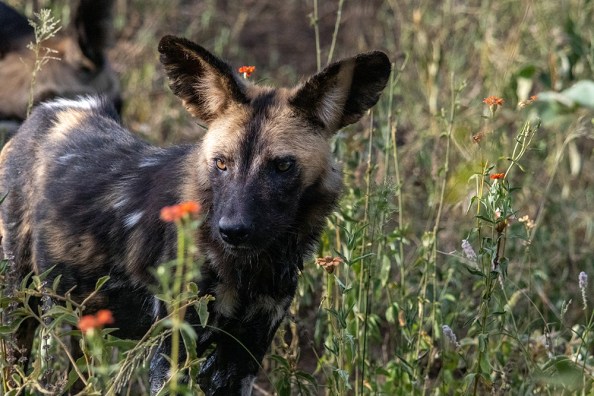
The wild dogs cry out in the night
As they grow restless longing for some solitary company~Toto, Africa
Aside from seeing lemurs in Madagascar, spending two days in Kruger National Park was my next most highly anticipated stop on our tour of five different African countries. We’d visited South Africa several years ago with many of the same companions that had joined this trip. That had been my first time on the African continent, and South Africa holds many cherished memories for me. Cape Town is still my favorite city I’ve ever visited, and I think that Africa became my favorite continent to travel to the moment I first saw a couple of young elephants play fighting in a pond in Pilanesberg National Park. Someday, somehow, I’d always known I was going to return to South Africa, and now it was finally happening. My excitement was so great that I didn’t even notice how early it was when Vince and I left our chalet at the Crocodile Kruger Safari Lodge, and walked out into the darkness to meet our guides from On Safari Africa.
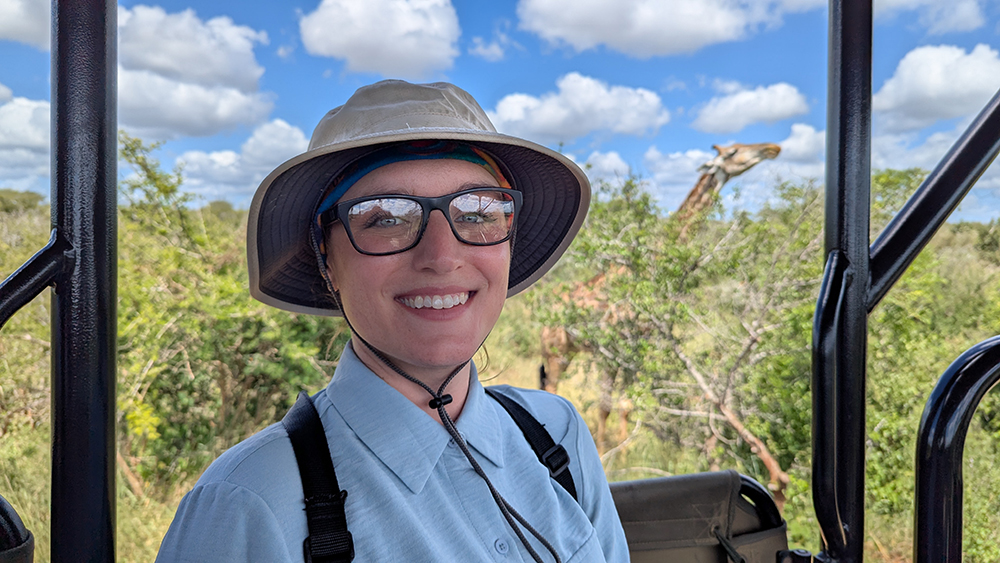
Our group had to divide into two separate safari trucks. Vince, Caleb, Anna, Meagan, Travis, and I hopped into one vehicle, where we each had an entire row of seats per couple. Our guide and driver took her place in behind the wheel and introduced herself as Thabi as she peeled out onto a dirt road, headlights sending shadows skittering through the trees on either side. It took about thirty minutes to reach the Crocodile Bridge entrance gate of Kruger National Park, and as we rode across the Crocodile River, the first rays of morning light were piercing the horizon. After checking in at a ranger station, our two trucks set off into the park.

Everyone had their eyes peeled, eagerly scanning the landscape for any sign of wildlife, and of course, we began seeing common species like wildebeest and baboons right away. But the real excitement came when Thabi got a tip from another driver about a nearby cheetah sighting. We raced over to the cheetah’s last known location, where we found a couple of other vehicles parked, with all of their passengers training their binoculars at a small, rocky river. I squinted into the sunlight, but couldn’t see anything. Apparently the cheetah had disappeared behind some bushes around where a lone hamerkop was now wading in the creek.
Eventually the other vehicles gave up and left, but Thabi had a feeling that the cheetah would make another appearance, so we waited a bit longer. Sure enough, a few minutes later, the cheetah emerged from the opposite side of the river from where we thought she was, and a fluffy cub followed along behind her!
The mother and cub stalked through dusty, tall grasses, scaring up a nearby herd of impalas who sprinted away when they saw the pair approaching. The cats were quite far away from us, so I couldn’t get any good pictures and opted to film the encounter instead. When they vanished into the grass, Thabi once again had an inclination as to where they might reemerge, so she raced over to another road and we sat in wait. Once again, she was right. Within a few minutes, the cheetahs reappeared and walked through a field until they found a shady bush to lie beneath. Even though it was early, the day was already growing hot, so Thabi thought they would probably sit in the shade, out of sight, for a long time.
While it may not have been the best cheetah sighting of all-time, it was still a cheetah sighting, and it seemed like a good omen for things to come. In fact, shortly after we left the cheetahs, Thabi got word that some other guides had spotted a pack of painted dogs nearby. This would be a truly exciting find, she sped off towards their location, blowing past lots of giraffes, wildebeest, and zebras in favor of getting to the dogs. There are only about three or four hundred painted dogs in Kruger national park. Compare that to 1000 leopards, 1600 lions, and 1800 white rhinos, and that puts some perspective on how rare the painted dogs are. This is why we had to pass up stopping to look at all of these more common animals.
At first, all I noticed were a couple of hyenas when we arrived at the spot the pack had been sighted. But then I saw a flash of mottled fur, and turned my head just in time to see a few painted dogs melting into the bushes and out of sight. It was just a few seconds, but I was so excited to catch a glimpse of them. Painted dog were one of the two species I most wanted to see in Kruger, along with leopards. A leopard would finally complete my set of the coveted “Big Five” safari animals. This list is comprised of the five most dangerous animals to hunt which are lions, elephants, leopards, rhinos, and buffalo. I’d already seen four of them on other trips, but leopards had thus far eluded me. While I was happy to express that I hoped to see a leopard, I hadn’t even bothered to tell anyone, save for Vince and Caleb, that I was secretly hoping for painted dogs. It just seemed too unlikely. And yet, we’d seen them, If only for a moment.
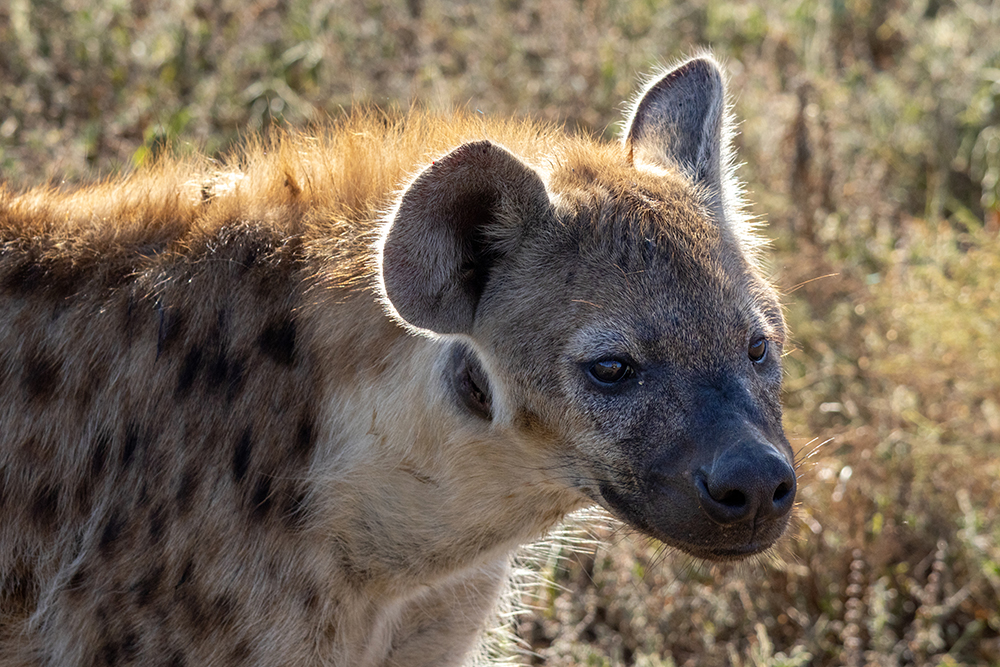
The dogs were gone, but the hyenas stuck around for a few more minutes, as Thabi explained that they like to follow the painted dogs around to scavenge any leftovers they might leave after a hunt. These two hyenas were the youngest ones I’ve ever seen, and as such, they were actually quite cute compared to some of the older, gnarlier looking hyenas I’ve encountered.
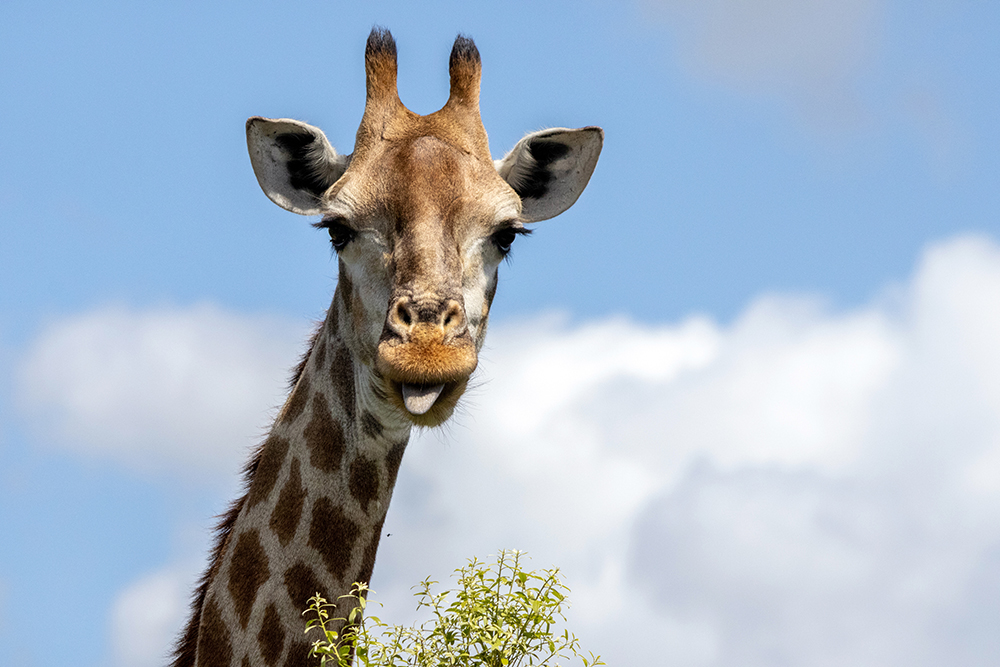
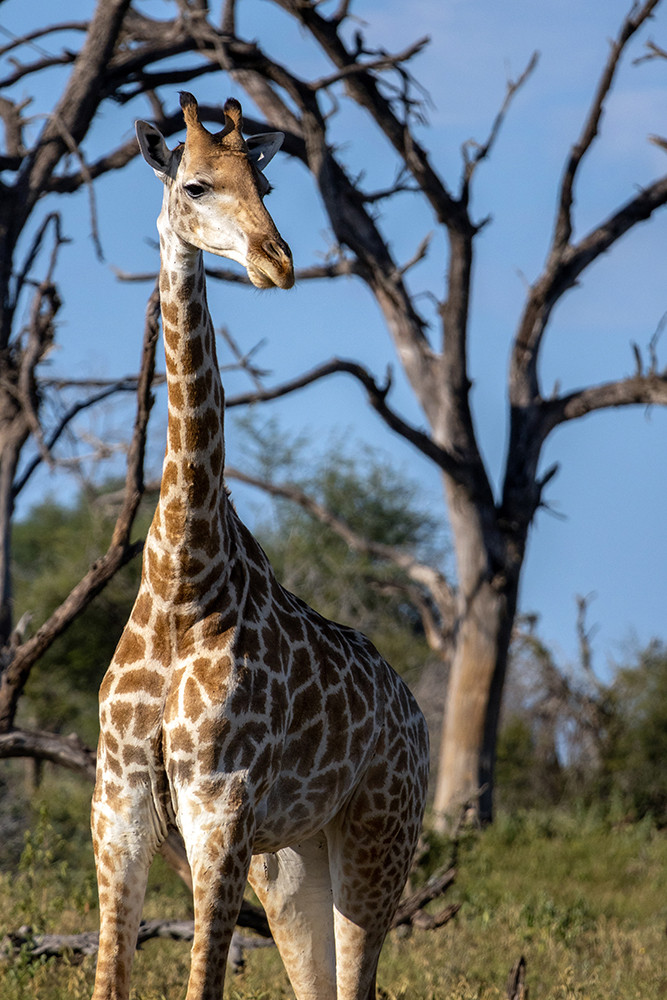
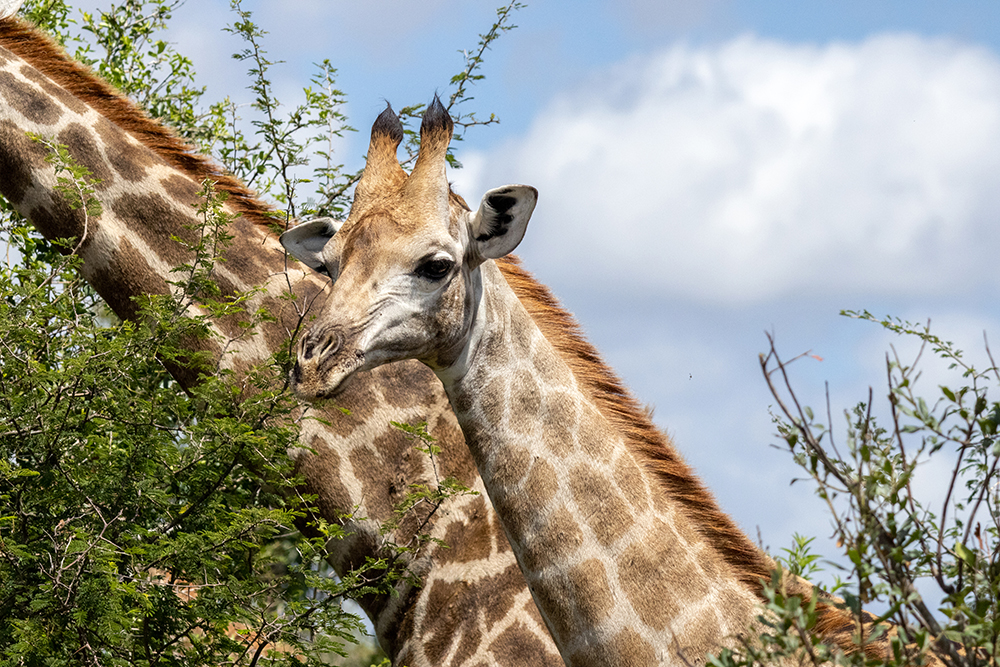
Also nearby were several giraffes, one of them a big male who was desperately checking every female he encountered to see if she was ready to mate. We watched as he attempted to initiate with at least five different females, each one rebuffing his advances in succession. It would have been amazing to get to witness giraffes mating, but alas, luck was not on our side any more than it was the male giraffe’s.

Eventually, the big giraffe lumbered off into the distance, following closely behind yet another unreceptive female, and we drove back to Crocodile Gate to take a bathroom break and buy snacks from the gift shop. Then we got back on the dusty road, ready to search for more wildlife. It was still late morning, but it was already oppressively hot out. I knew that this meant animal sightings would potentially be sparse. Heat like that drives animals into the cover of shade just it does people, but I was still hopeful that we would get some good encounters in, and it didn’t take long for us to run into a long parade of elephants crossing the road. They were headed towards a river we’d crossed a few minutes earlier, which seemed like a great idea to escape the heat. I might’ve even felt tempted to join them if we hadn’t also seen a nile crocodile lurking in the murky waters.

These elephants were the first Big Five animal we’d encountered in Kruger so far, but we’d seen rhinos the previous day in eSwatini. Now we just had to look for a lion, leopard, and buffalo if we were going to complete the big five in one trip.
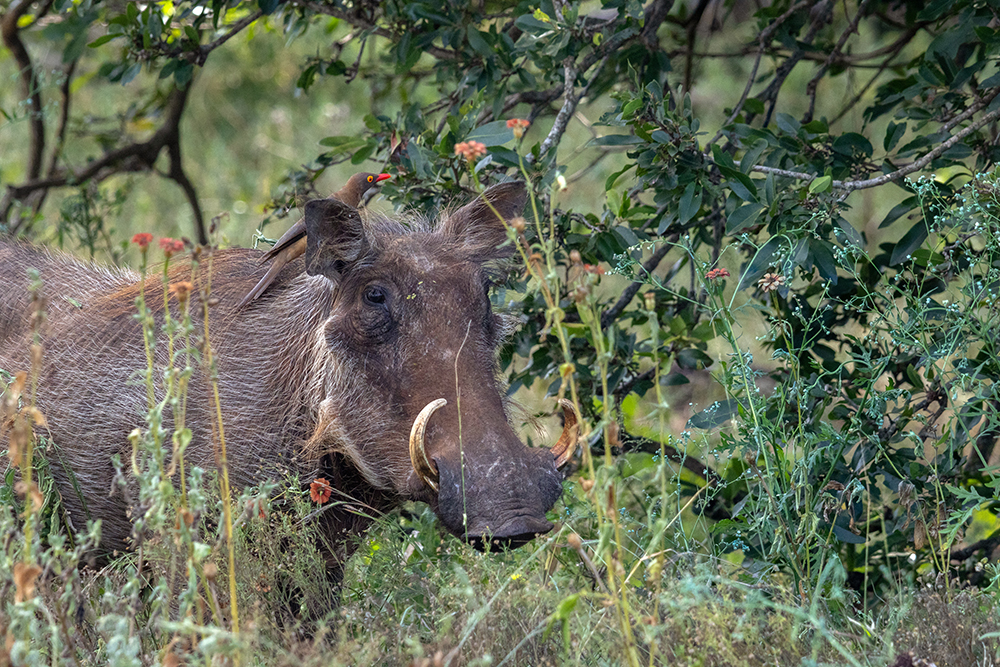
Once the last baby elephant tottered across the road, we pushed deeper into the park, encountering a lot of grazing animals congregated around small watering holes. It did seem that most of the big game animals were hiding from the heat, so the most interesting sightings along this stretch were a family of warthogs hiding in the shade, and fluttering, jewel-toned lilac-breasted rollers perched alongside the roadway.
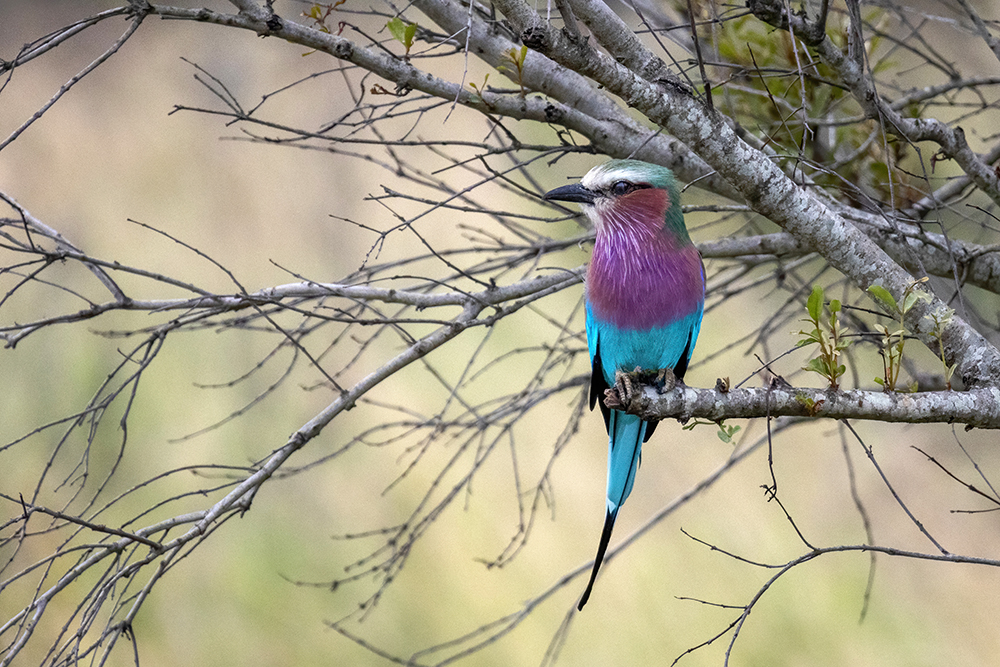
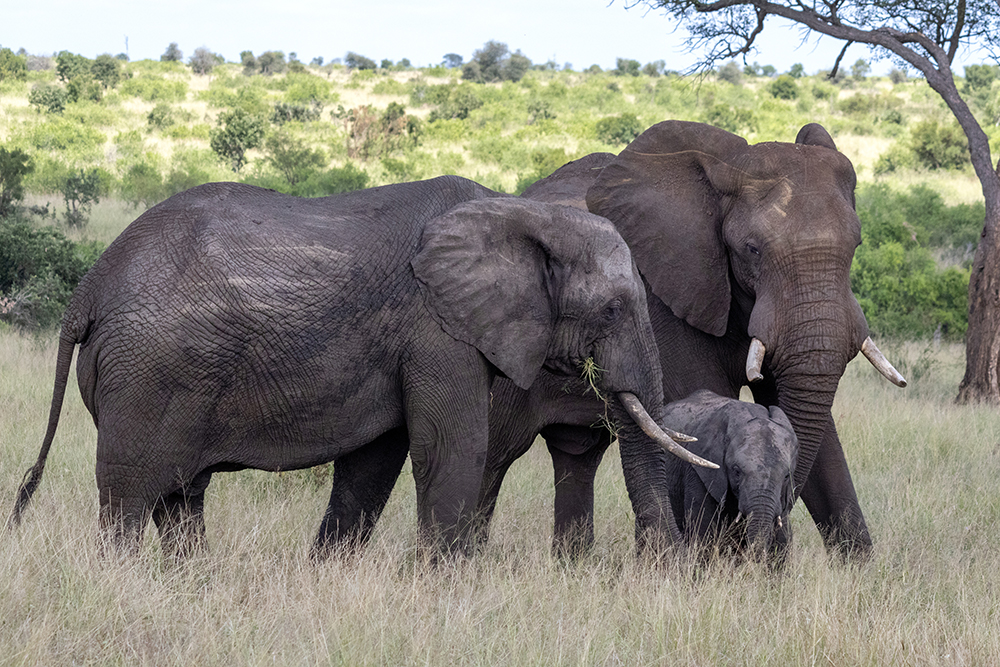
Soon, however, we came upon another herd of elephants. This family had the distinction of having both the smallest and largest African elephants I’ve ever seen among their ranks. There were a couple of very young, very precious babies in the herd, who walked alongside their mothers, never straying too far.

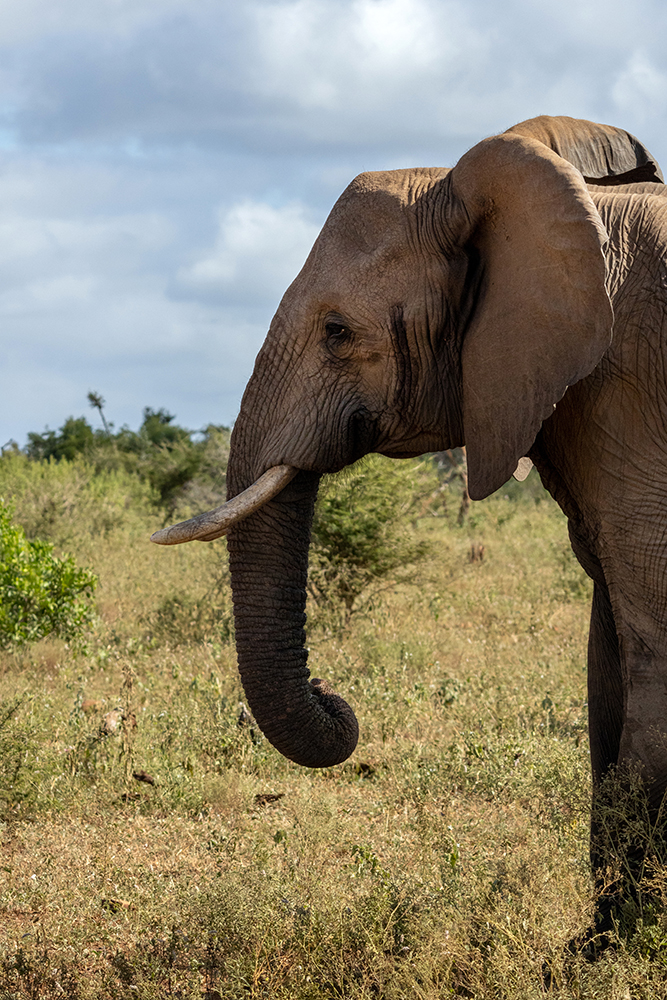
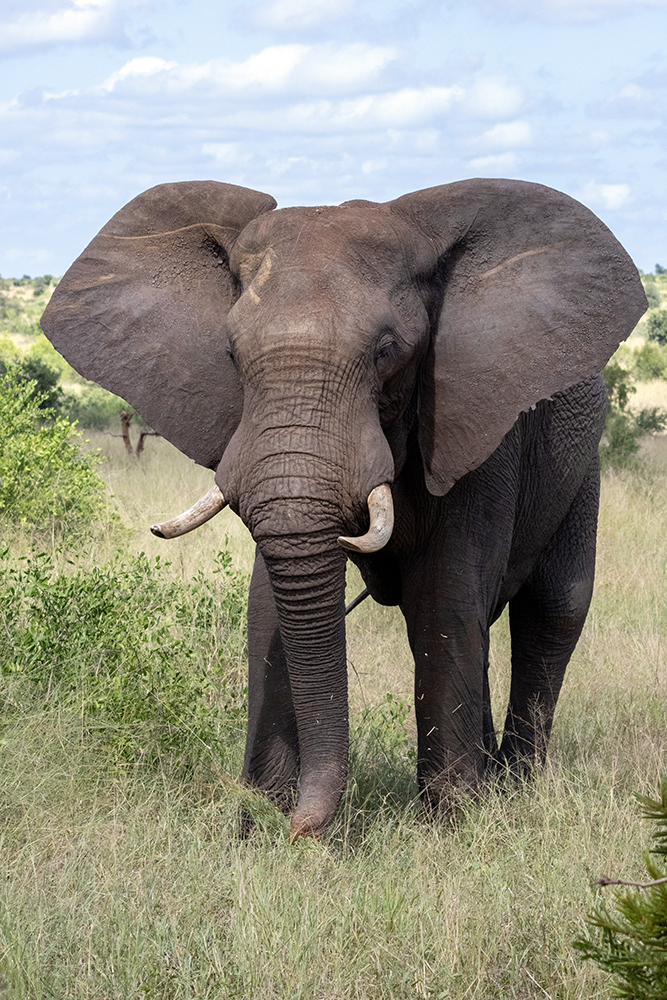
But a huge bull elephant stole the show. He and a younger bull stuck to the outskirts of the herd, fanning themselves with their ears to cool down. The big male’s tusks were both broken off, and Thabi estimated him to be at least forty years old.
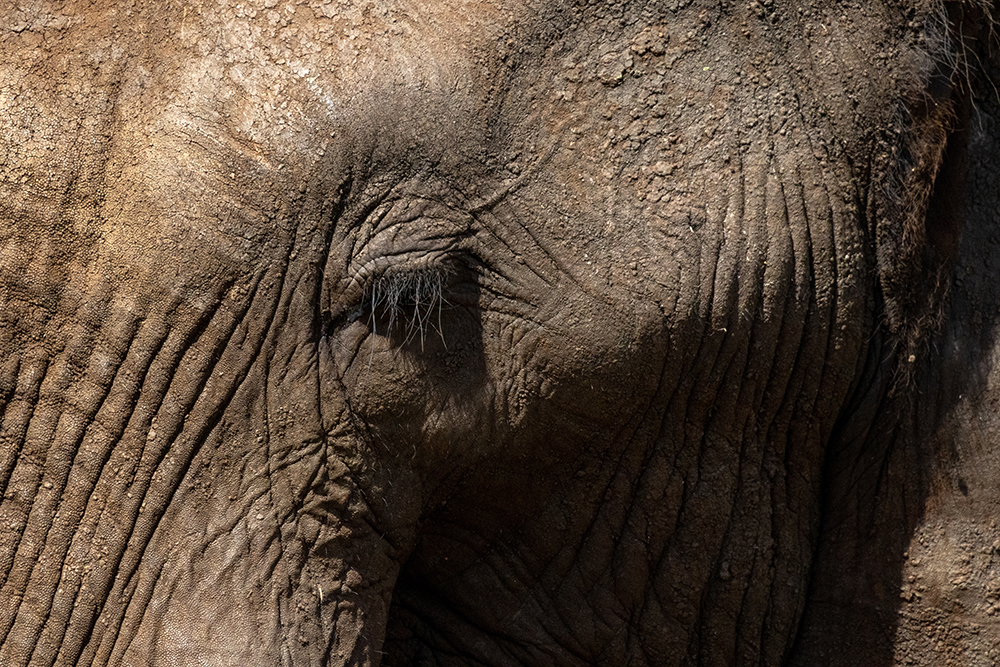
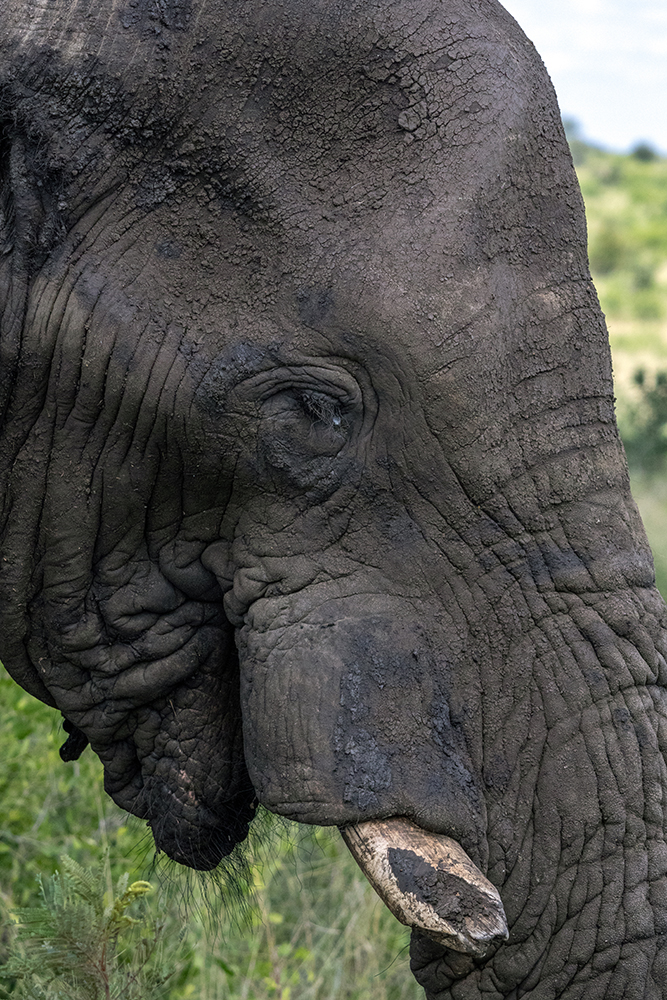
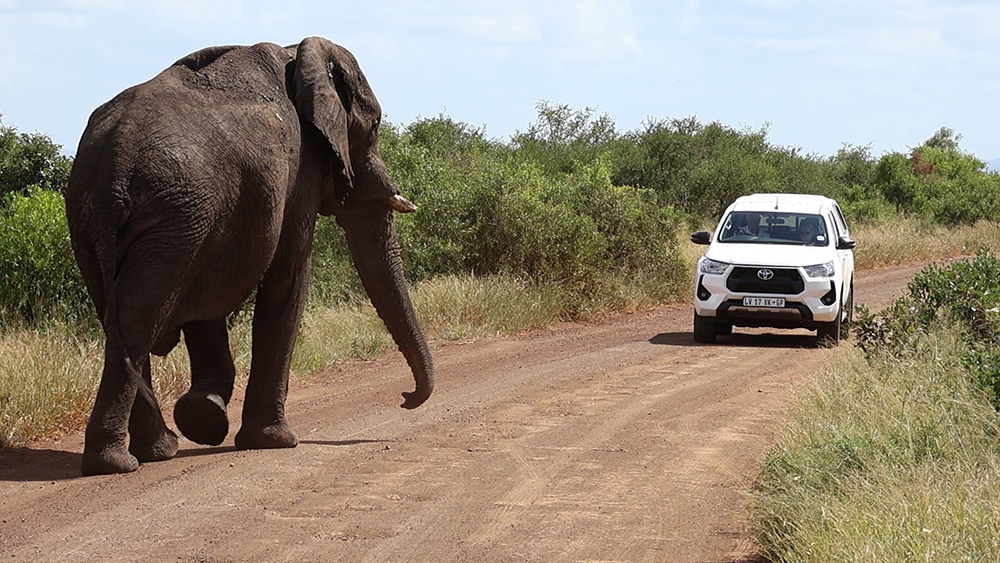
He was so big that I couldn’t even get him into frame with my camera because he was too close to us, so I opted to zoom in on details of his face. It was awe-inspiring and a little overwhelming to be right next to such a majestic elephant. I think the best shot I got that really captured how big he was is this still that I pulled from a video I took when he crossed out into the roadway and tromped towards this SUV. Of course, the driver of the vehicle kicked it into reverse expeditiously as the behemoth approached. The elephant towered above the roof of the vehicle, and would have easily totaled the SUV (and probably its passengers) if they hadn’t made way.
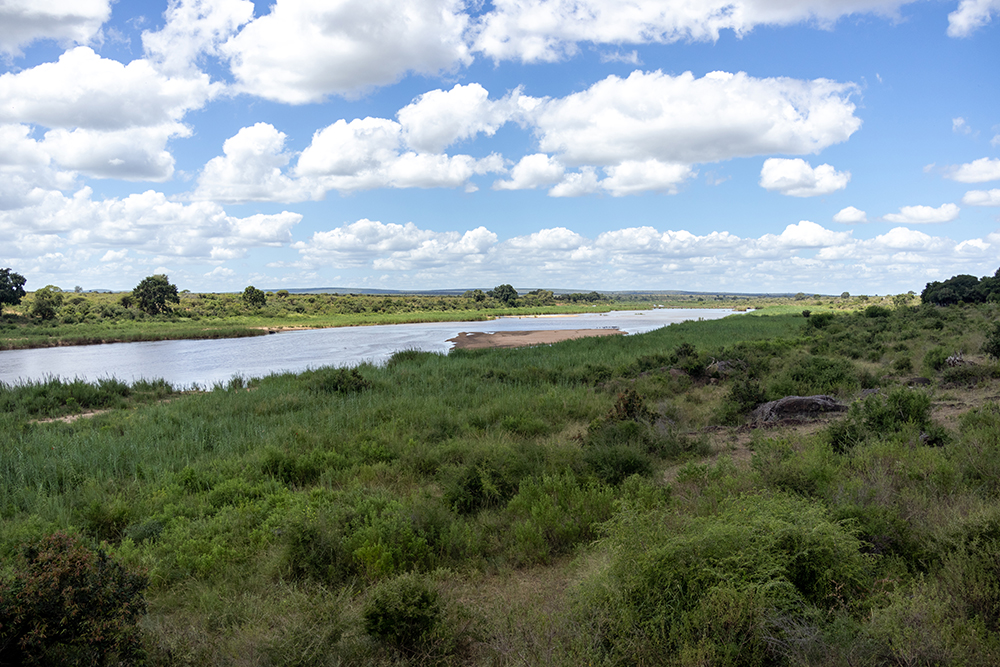
After this, we left the elephant herd, and drove to a photography blind that overlooked a river. Our drivers had stopped on the off chance that we might see a leopard there, but all we ended up getting was a chance to stretch our legs with a peaceful view of the water. A small bird with stilted legs hopped across lily pads while some sort of catfish gaped its mouth at the surface of the water. But there were no leopards in sight.
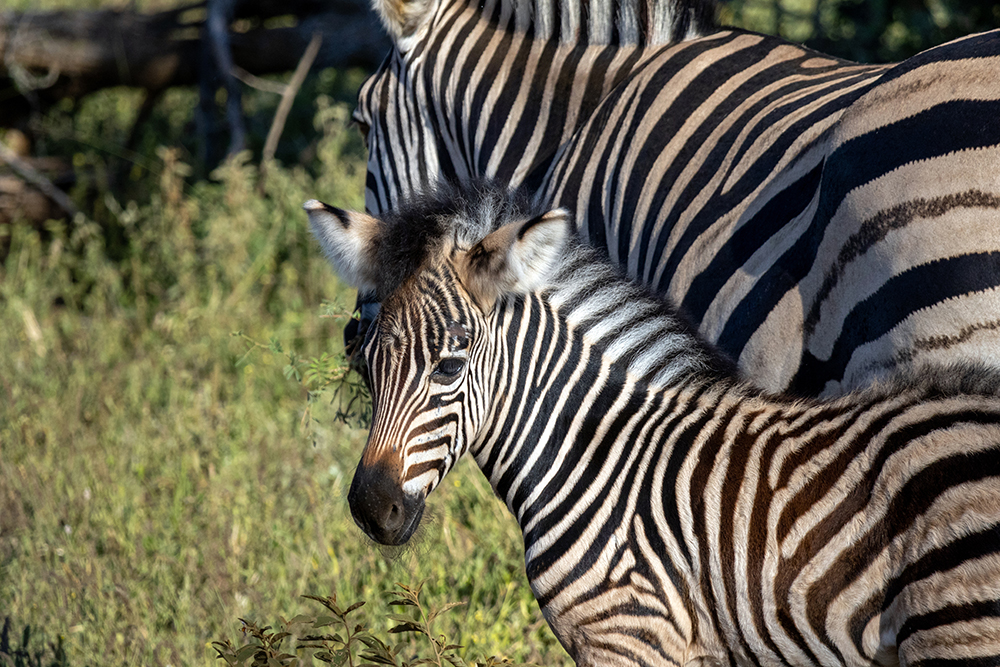
Back on the road, we encountered more species of grazing animals like waterbucks, zebras, and more giraffes. We even saw a couple of kudu and a steenbock before we stopped at Sunset Dam to look for hippos and crocodiles.
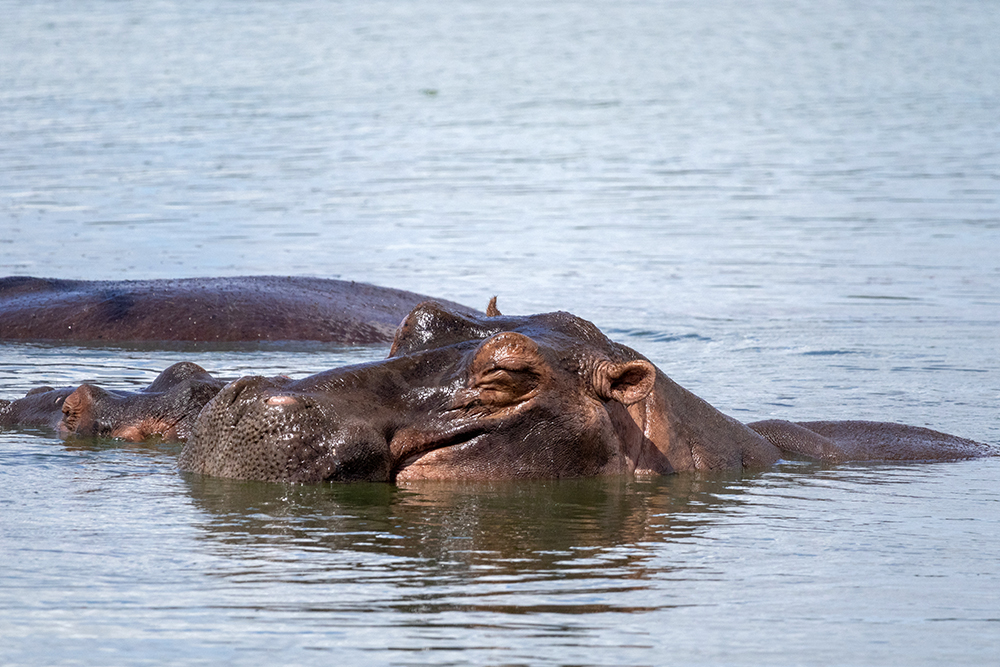
This location didn’t disappoint. The noxious looking, green water (a side effect of it being filled to brimming with hippo scat) was full of hippos, who were lazing about and avoiding the heat of the day. Hippo skin may look tough, but it is actually very sensitive to sunlight. Their skin secretes a brownish red, oily liquid that protects them from the sun, as well as acting as an antiseptic. It also moisturizes their skin, which is highly susceptible to drying out in direct sunlight. So it made sense that they were keen on staying submerged in the water on such a hot and sunny day.
Along with the hippos, we got to see a few nile crocodiles, and several species of birds including blacksmith lapwings, a three-banded plover, an African spoonbill, and white-faced whistling ducks. So this was a great location for bird watching as well as seeing larger wildlife.


By now it was past lunch time. I probably could have gone the whole day without food if it meant seeing more animals, but not everyone is as single-minded as I am in that regard, so it was time to head to the Lower Sabie Rest Camp to eat. Along the way, we spotted a couple of buffalo wallowing in the Sabie River, bringing our Big Five count up to three. Thabie also found an African fish eagle in a tree, and we stopped for a lone elephant eating brush alongside the road.

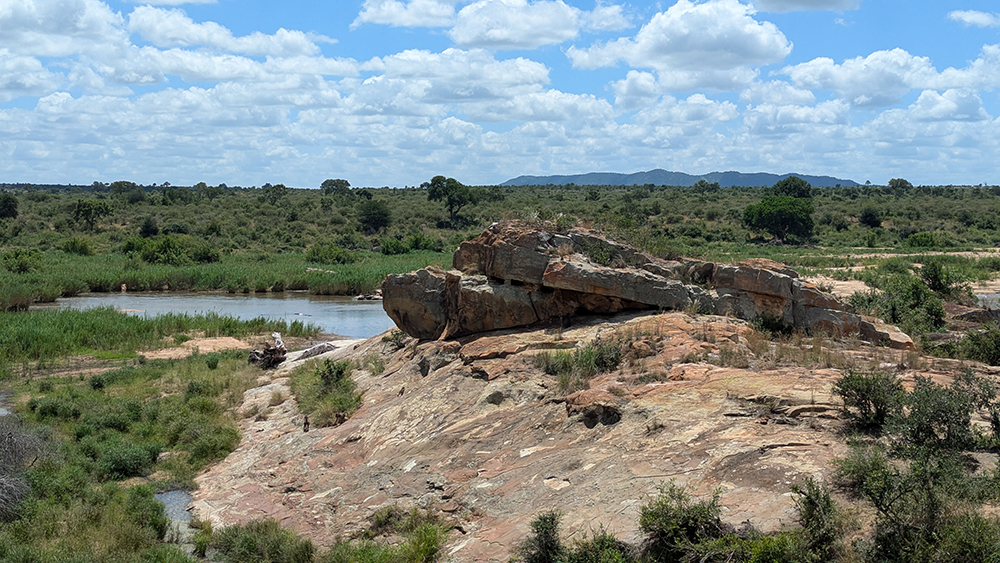
Leaving the elephant, the drivers took us to a rocky area that put to mind of Pride Rock from The Lion King. I think the hope was that we would see cats here, but there were only a handful of baboons.
With no cats in sight, we proceeded to the restaurant, which was at a lovely location overlooking the Sabie River. The menu had lots of enticing offerings, and I went in for a couple of icy spritzers to help refresh me from the day’s heat, along with an open-faced, vegetarian sandwich.
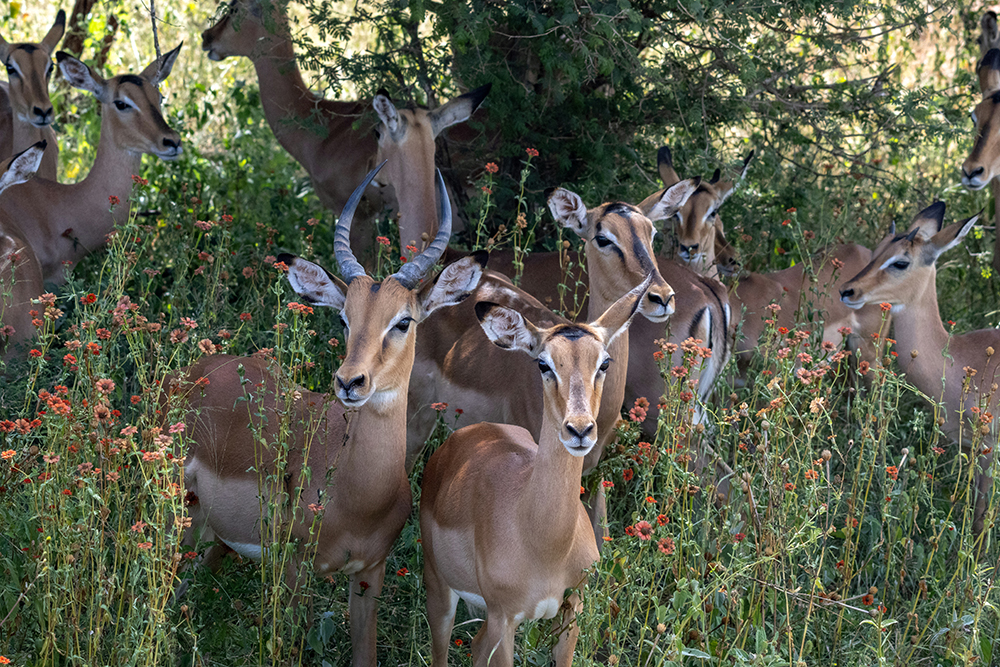
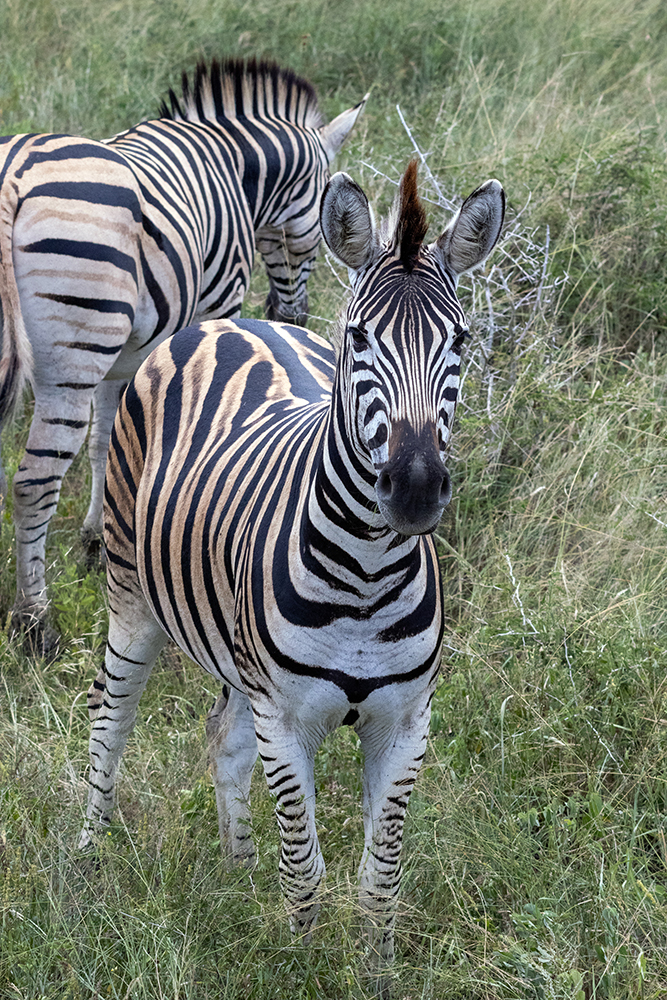
After lunch we got back on the road and started the return drive towards crocodile bridge. By now, most of the animals we encountered were hiding in the shade of trees and bushes, and most of what we found were common grazing animals like impalas and zebras.
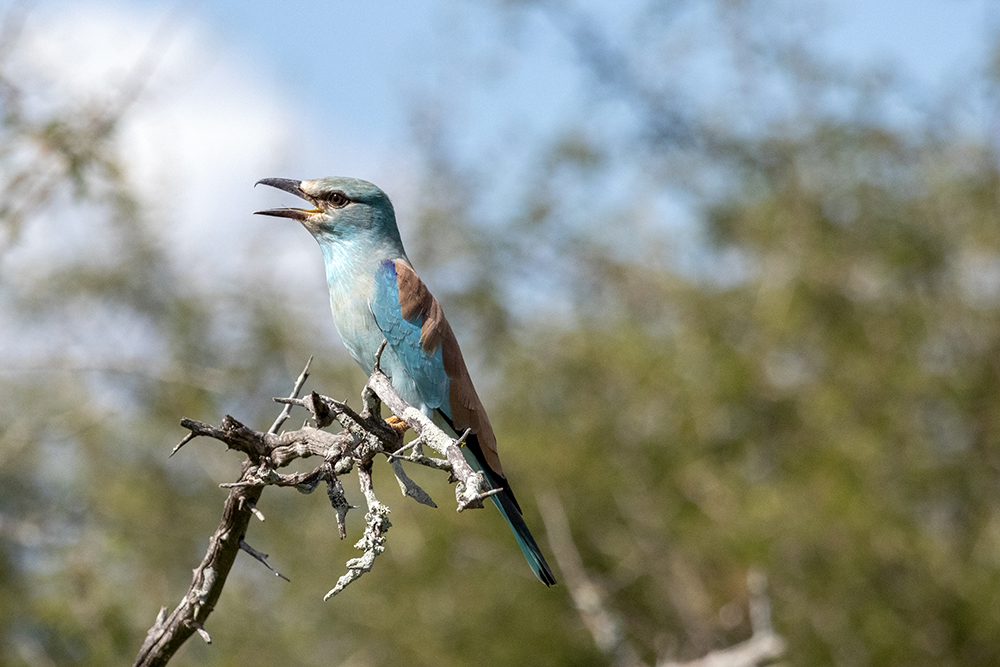
One notable species from the return drive was a European roller. This is the only type of roller that breeds in Europe, and it migrates to Southern Africa in the winter, so it was a nice treat to get to see one in its winter range. This was the only European roller we saw, unlike its relative, the lilac-breasted rollers, which were plentiful alongside the road.
But my absolute favorite sight on the drive back to the park entrance was actually a dung beetle. This might seem like a weird thing to get excited about, but this was my first time ever getting to see a dung beetle in real life and not just on the Discovery Channel, so I was actually quite geeked. These beetles roll up feces into a ball shape and then they roll it away to bury in the ground where they can either keep it as a food store, or lay eggs in it. In the latter case, the feces will be a food supply for beetle’s larvae and they will grow and pupate inside of it. And if that isn’t fascinating, then I guess I don’t know what is.
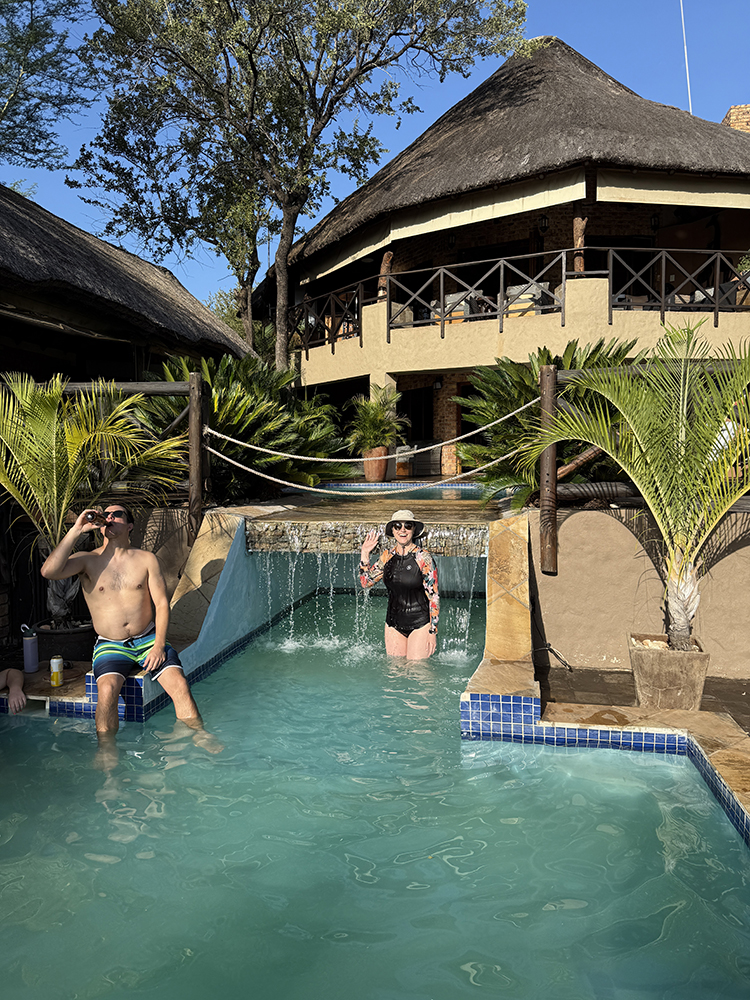
When we neared the park gate, a final herd of zebras ushered us out of the park for the evening, and we rode back to the Crocodile Kruger Lodge in time to get some relaxation in before dinner. The lodge has a double-tiered swimming pool, which was the perfect place to cool off and refresh ourselves after a hot and dusty day on the road. A family of warthogs grazed on the lawn nearby, adding to the ambiance as we basked in the pool’s waterfall.

Later, a few of us decided to dry off and take a quick walk before dinner. It felt great to stretch my legs, and we even saw more wildlife bathing in the Crocodile River just outside of our lodge’s grounds. We ended up seeing and elephant, hippo, waterbuck, and a herd of jumping impalas as we walked. Then we returned to the lodge in time to watch the sunset over the river and get cleaned up for a special group dinner.
At dusk, the sound of drums rang out throughout the grounds, signaling that it was time to head over to the lodge’s boma for dinner. We all got to enjoy a potluck style cookout together, which was a really nice way to spend our last evening at the lodge. After dinner, there was a performance and several of us got to get up and dance with the performers. The night ended with ice cream for dessert before we all turned in to get some sleep.

The next morning, we were up before the sun again, and eager to get back into Kruger to look for lions and leopards. As we drove through the darkness, I could already tell that it was going to be a really beautiful day. It was much cooler than the previous morning, and as we entered the park, a herd of impalas raced alongside our trucks, backlit by a glorious sunrise.
Thabi got a message about a nearby lion sighting shortly after we entered the park, and she raced over only to find that they’d already left the area. She and our other driver regrouped to make an action plan for the day, a conversation that ended with Thabi emphatically declaring, “I’m going to Malelane, I’ll find my own!”
I didn’t know what Malelane was yet, but I definitely liked her determination. Our trucks tore off down the road, bound for Malelane, but we all still kept our eyes peeled for any signs of wildlife along the way. Shortly, we came upon a tree that had a few different species of vultures perched in its branches, a sight that could indicate something was dead nearby.
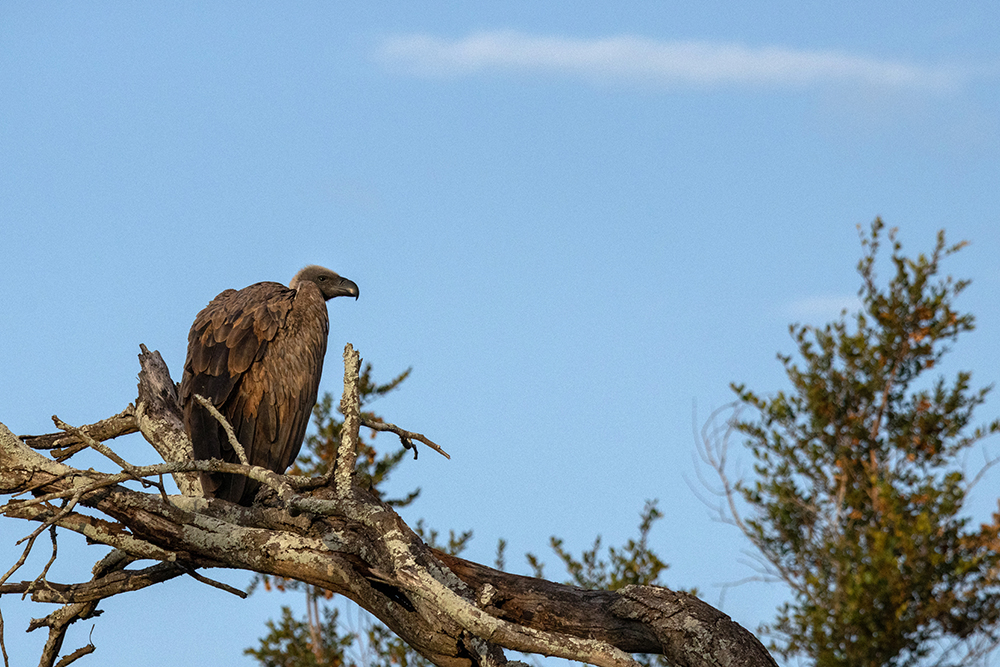
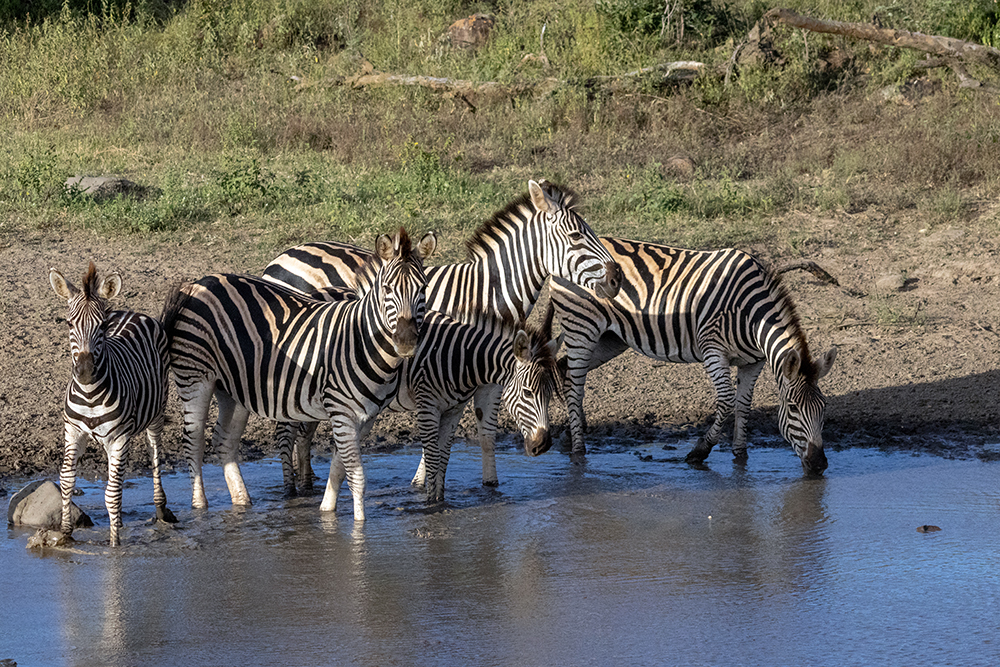
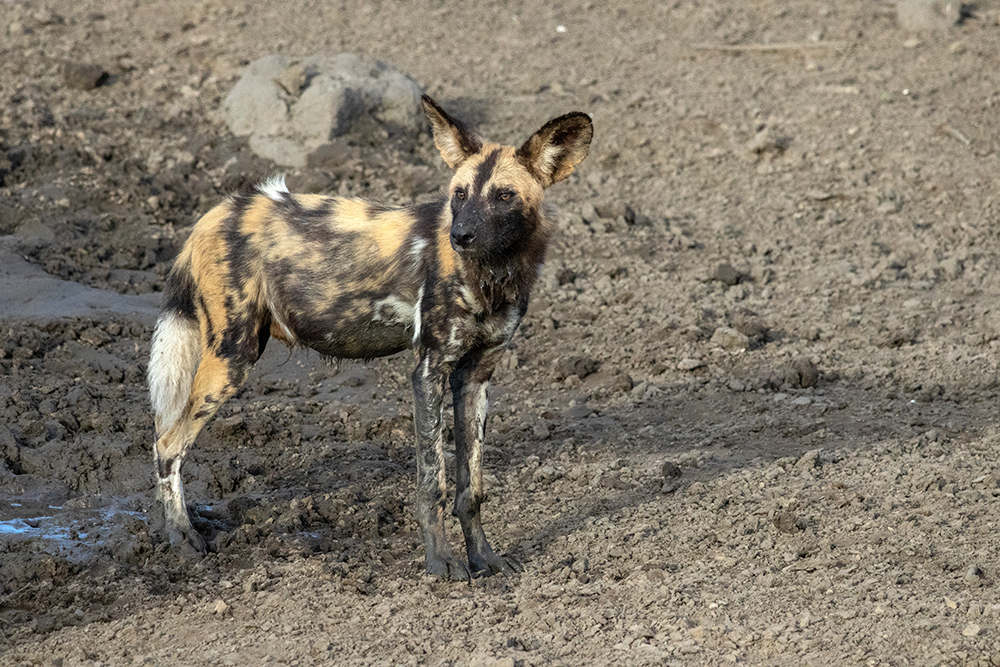
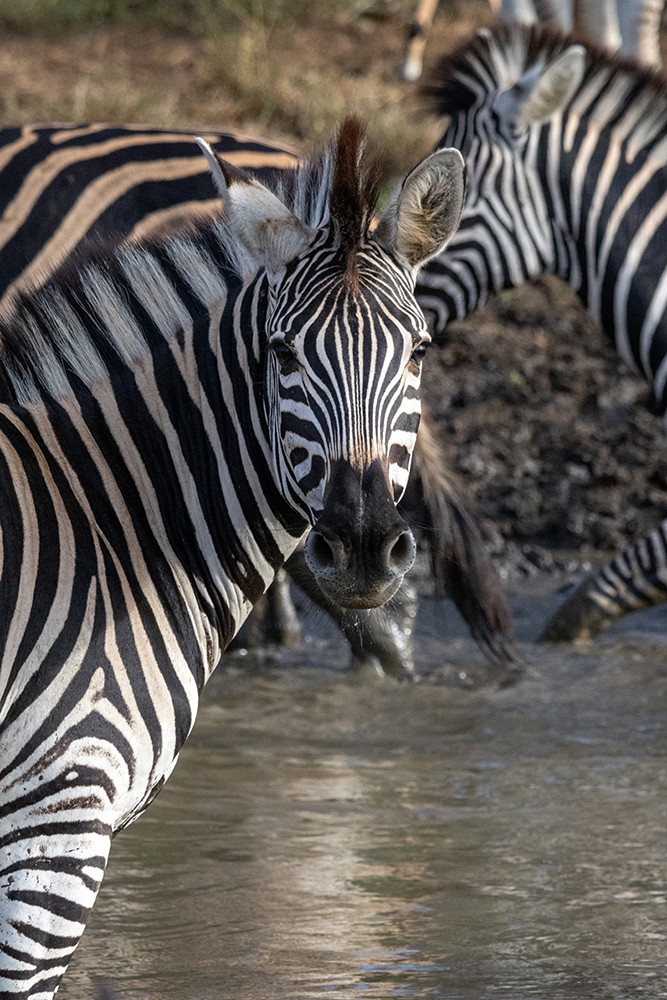
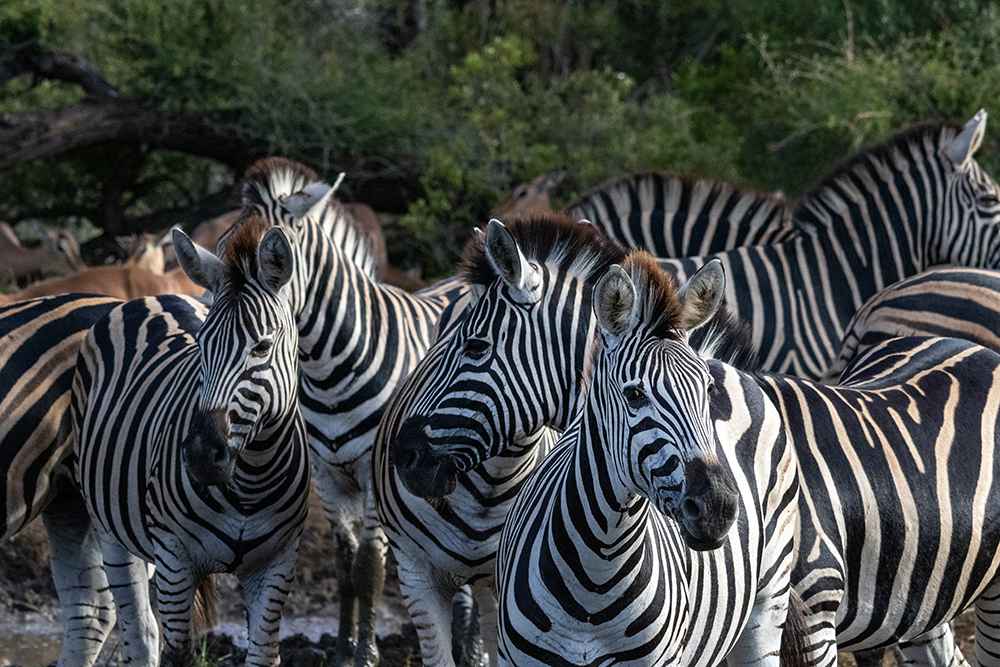
Sure enough, as we sat looking at the vultures, a couple of painted dogs came trotting out of the bushes and walked along the road for a little bit before disappearing back into the tall grass. This was already a much better encounter than we’d had the previous morning. I was really excited about it, but Thabi had an idea of where she thought they might go next so she pulled the jeep over to a spot where we had a view of this water hole. By now I was learning to trust Thabi’s instincts on what an animal would do next, so I posted up with my camera trained at the water hole as a herd of zebras galloped over to take a drink.

All of the sudden, the zebras became more alert and backed off from the water a bit, their ears perked and their eyes trained on a patch of nearby bushes. I turned around to see what they were looking at and sure enough, there were a couple more dogs, and these ones had brought friends with them.
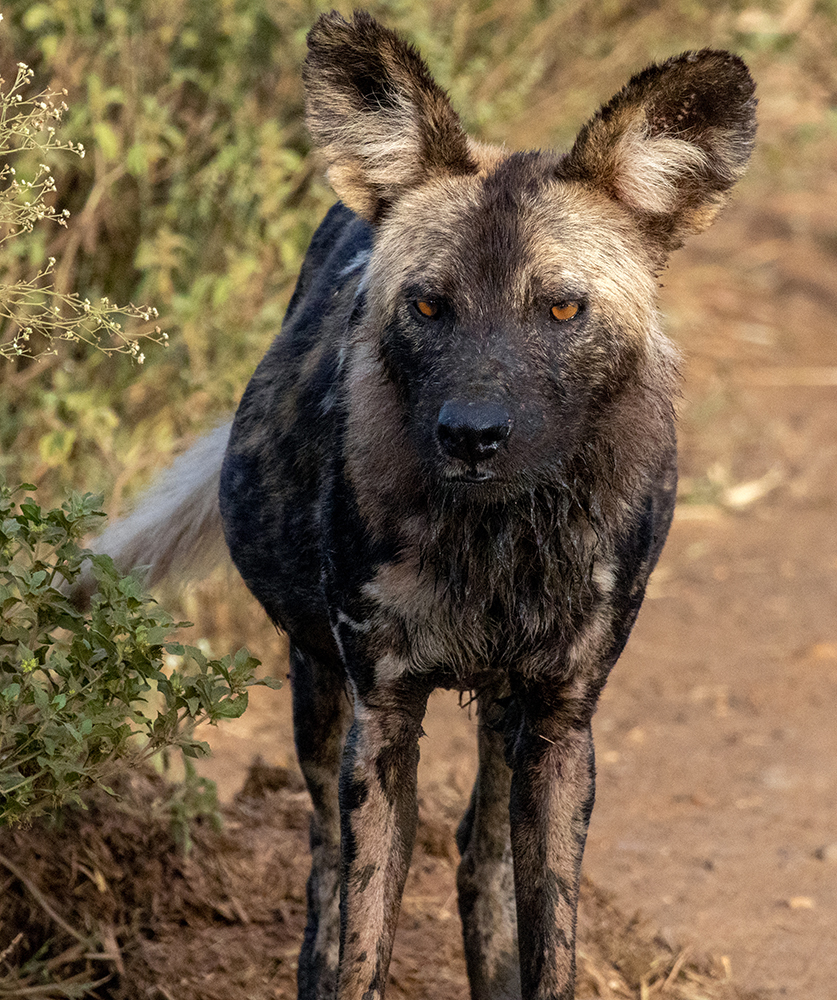
The pack raced over to the water hole and laid down in the mud to get a drink as the zebras watched on rather warily. They had good reason to be on edge. Painted dogs, also known as African wild dogs or painted wolves, are apex predators. They are highly successful hunters, so a prey species would be wise to be on high alert while sharing a water hole with a whole pack of them. The only other wild animal that poses much of a threat to the dogs is lions. They have been known to hunt the dogs, but not eat them which is an indicator that the point of this behavior is to reduce competition.
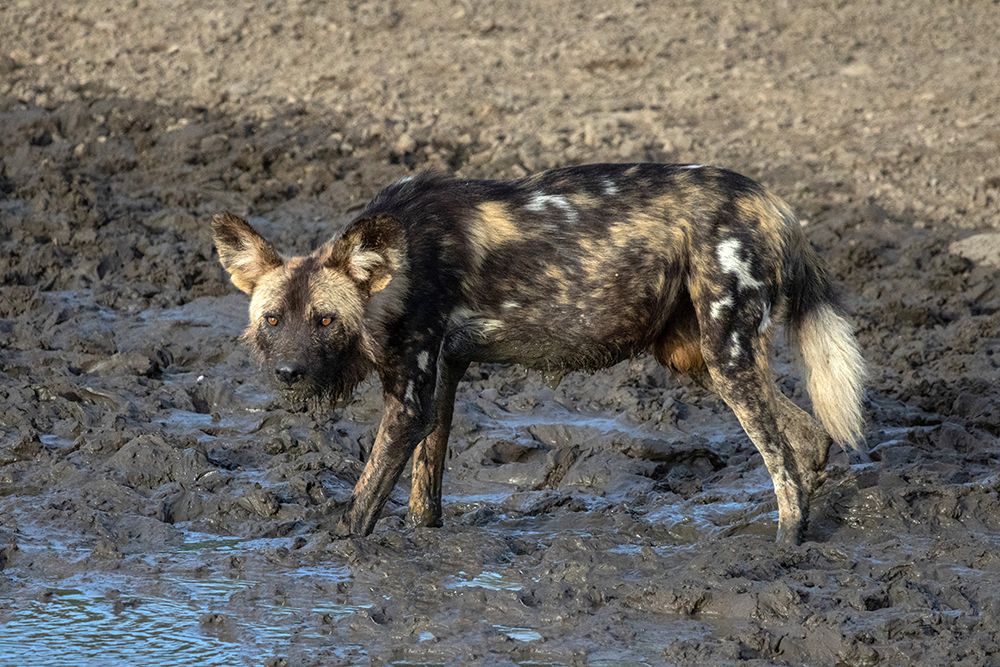

As I mentioned before, painted dogs are rare. In fact, they are an endangered species, and their main threats include human activity, and diseases such as rabies. Painted dogs can also die of stress cardiomyopathy (broken heart syndrome) if they get separated from their pack. With only a few hundred of these amazing animals in Kruger, it was so special to get to spend time with this pack. We watched as they waded into the muddy water, and played around with each other like they were nothing more than a bunch of adorable puppies (it’s crazy how viscous these animals are when they look so much like a normal, domestic dog). We even got to see the pack’s dominant pair mating. I could tell this was a special experience because Thabi pulled out her cell phone to get pictures of the act. She explained that even she had never seen the dogs mate before.
At the risk of venturing into the realms of anthropomorphization (that’s a tough one to spell), it actually seemed like the pair had genuine affection for each other. They stuck by each other’s sides the entire time we spent with them Dominant pairs like this are typically pack leaders, and the only two members that will breed, and these two were certainly doing their due diligence in that department. In fact, it looked like the female might already by pregnant, but that didn’t stop them from trying for more.

When they’d had their fill of water, the dogs trotted back into the tall grasses, and we followed them over and watched them for a while longer. Soon, a large male warthog entered the scene, but when he noticed the dogs, he stopped dead in his tracks. He looked like a tough animal in his own right, but the second a dog perked its ears towards him, he took off running in the other direction. It was fascinating to see how much fear the dogs inspired in other animals. For a second it looked like the pack might give chase, but instead they lost interest and eventually moved back into the bush where we could no longer see them.

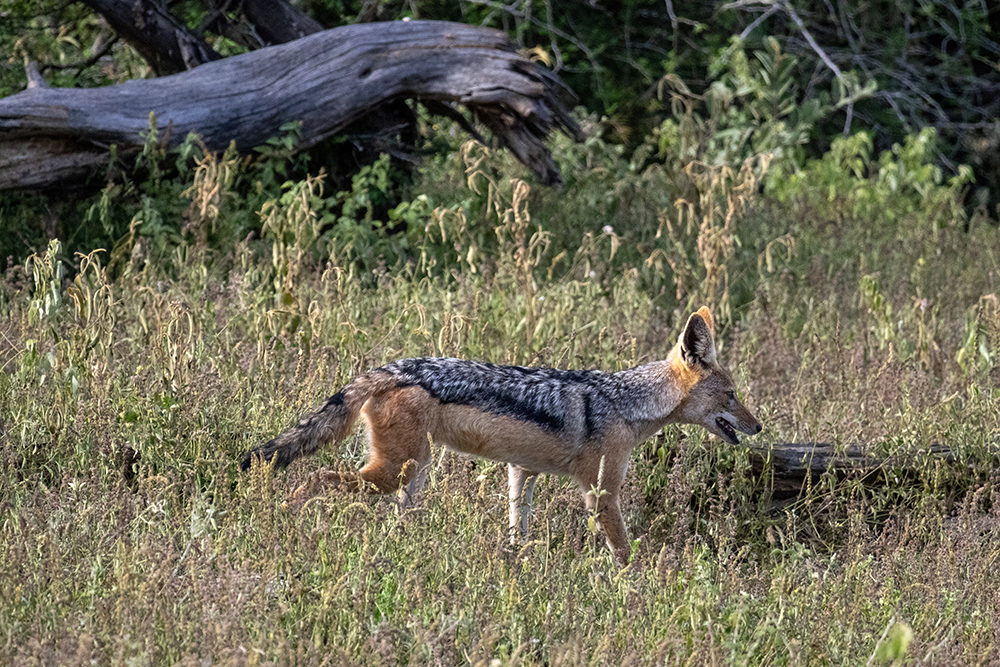
The dogs may have left, but when we drove a short distance down the road, we encountered an entirely different commotion in their wake. It turned out the pack had hunted an impala earlier, and now all of the scavengers in the area had descended upon a little clearing to pick the remains clean. Vultures skulked around, hopping through the tall grasses as jackals dashed across the scene carrying strips of flesh. It was very neat to get to see jackals because they are mainly nocturnal. I guess this feast was more enticing than sleep.
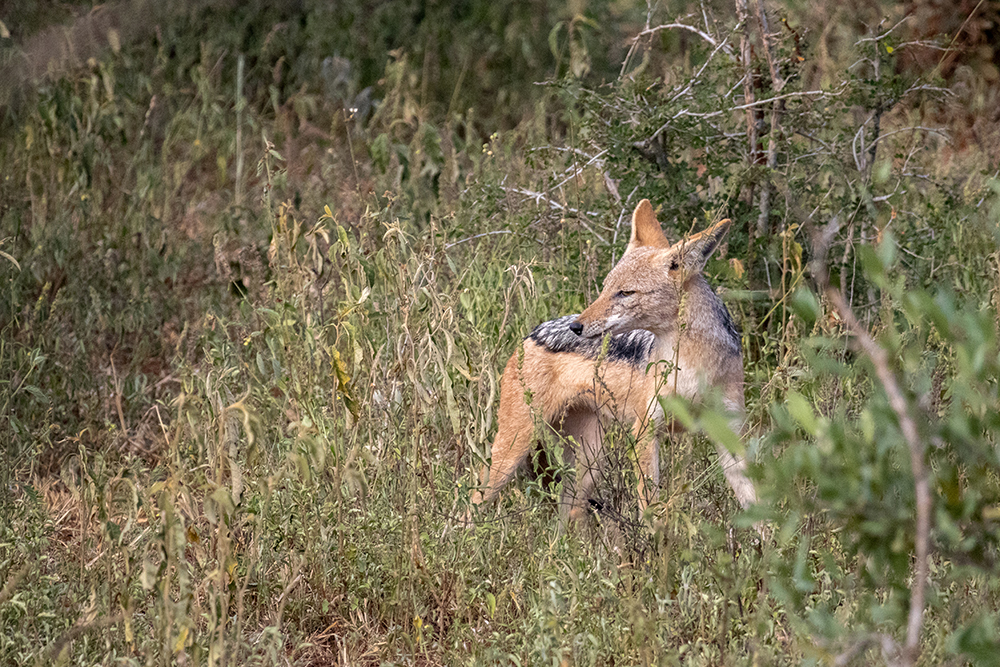
As the feeding frenzy continued, we could hear the visceral sounds of bones crunching somewhere nearby. Thabi explained that the crunching sound was coming from hyenas, who have terrifyingly powerful jaws. She also said that their scat is actually white because of all the calcium in the bones that they eat.
It felt like we’d stepped straight into a scene from a documentary on Animal Planet as we watched the animals size each other up, and try to move in on the different species’ portions of the impala, all set to a score of grinding bones in the background. Thabi pulled the truck forward a bit to see if we could find the hyenas, and sure enough, they were in the next clearing over, and one of them was gnawing on the impala’s fleshless skull.
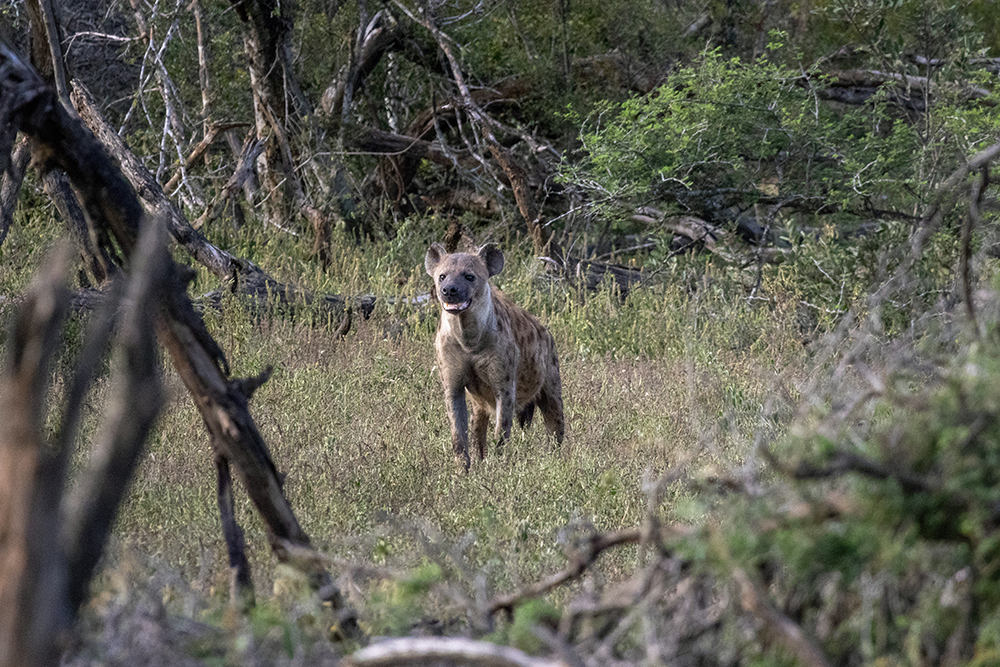
The hyenas were easily the most imposing animals involved in this. I’ve never seen their powerful jaws in action like this before. One of the jackals was pushing its luck and venturing closer and closer to the hyenas, which didn’t look like a great idea considering the size difference between them wouldn’t leave the jackal with much of a chance if a hyena decided to attack.
All in all this series events from finding the painted dogs to watching the scavenger smorgasbord was easily the most exciting part of our two day safari for me. It was equal parts awesome and gruesome, and was sort of raw wildlife experience that really puts into perspective the realties of survival for these amazing animals.
None of us wanted to tear ourselves away from the amazing scene, including Thabi, but in the back of our minds, we all knew that our time to find cats was ticking away. It was time to move on towards Malelane. There were still lots of animals to be seen along the way. The weather was indeed shaping up to be much more tolerable than yesterday, which meant that there was more wildlife out and about along the road. We stopped at a water hole that was becoming more of a mud pit and watched as a few members of a zebra herd chanced getting stuck in the mud to get a drink of water. They sank up to their bellies just to get a drink, a move that could cost them their lives if they were to get stuck in the mire.
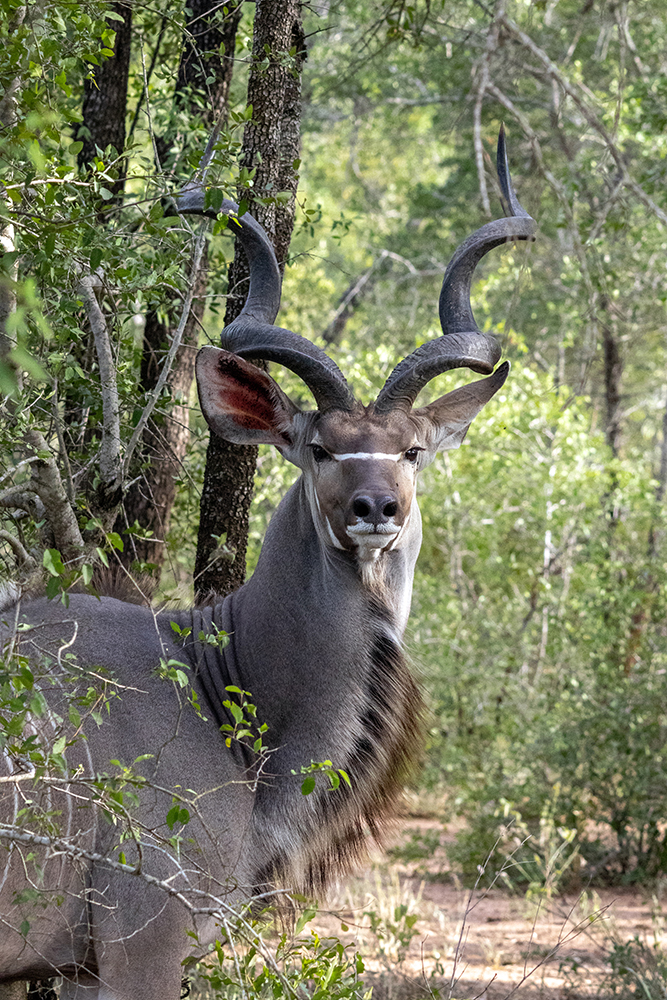
We also got a great view of a couple of kudu, and a waterbuck. Both of these are types of antelope with really incredible horns. Kudu horns are especially impressive to me because of their spiral shape.

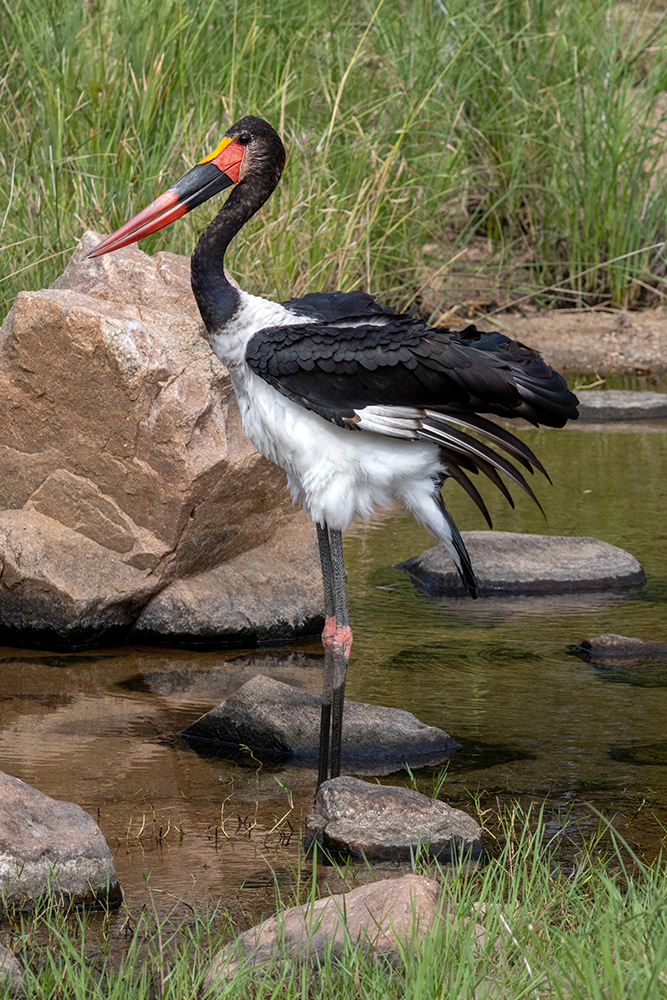
Also of note was a saddle-billed stork, a very tall species of stork with a striking and colorful bill.
The scenery became increasingly beautiful as we entered the Malelane section of Kruger. We were surrounded by distant mountains that looked blue in the brilliant midday light. There were also a lot more rock formations alongside the road, and every time we passed one, I kept my eyes peeled for lions because they seemed like an amazing spot for a cat to lie in the sun.

There were no cats in sight however, but we did come across a couple of rhinos, so now we had seen three of the Big Five in Kruger. Unlike eSwatini, South Africa has a bigger problem with poachers hunting rhinos, so the rangers at Kruger have preemptively cut off all of the rhino’s horns. Rhino horns are mostly made of keratin, which is the same protein that makes up our finger nails and hair, so they do grow continuously throughout the animals life. Because they grow back, poachers will still go after the rhinos just to get the small bit of horn that’s regrown. As of the time we visited, over thirty rhinos had been poached from Kruger National Park in 2025, and sadly, I’m sure that number has continued to rise.
Around this time, Thabi got a call about a lion sighting, so we raced off to hopefully catch up with them. By the time we arrived, there was still one male lion lounging under a bush, bringing our Big Five count up to four. Now all we needed was the elusive leopard. This lion seemed content to lounge in the shade of a bush, and as he languished, a bold herd of impalas decided to sneak across his line of sight. This seemed all-too risky, but they got lucky this time because the lion was not interested in them in the slightest (we would soon find out why).

The lion sat in the shade facing away from us for so long that I thought he wasn’t likely to move, but Thabi’s experience told her otherwise. She explained that he didn’t look that settled to her, and that she wanted to wait and see if he would get up. Sure enough, after several minutes, the lion stood and walked around behind the bush until he emerged on the other side. Then he scent marked the bush, and stalked away into the forest. Once again Thabi’s instincts were spot on, and it was really great to get to see his face.
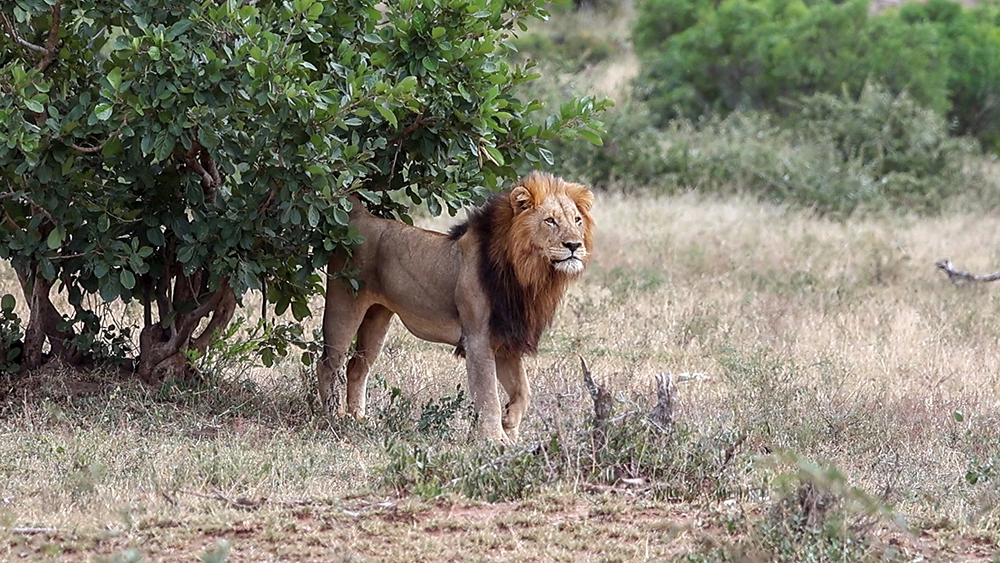
With the lion gone, there was no reason to stick around, so we started driving again. A little ways down the road, we found a tree that was absolutely tree filled with vultures. Somewhere in the underbrush below them were the remains of a buffalo that the lions had hunted the previous day. This explained why the male we saw wasn’t interested in the impalas that crossed his path.

There wasn’t time to get sucked into another scavenger feast though, because at this point, we really had to get serious about finding a leopard. The guides had received two tips about different leopard sightings in the area. After a bit of discussion, they decided which one they wanted to go for and we were off. There was no stopping for common animals along the road now. Zebras, antelopes, and even elephants were left at the wayside as we motored towards where one of the leopards might be.
Eventually we saw a group of Jeeps parked on the shoulder of the road, which could only mean there was something cool nearby. I squinted into the trees and my naked eye caught sight of a patch of patterned fur among the branches. I lifted my camera to get a better look, and sure enough, there was a leopard lounging on a sturdy branch!
She was too far away to get any great photos, but she was so beautiful! Six years after my first African safari, my Big Five was finally complete. For that matter, so was everyone else’s! The leopard stayed on the branch for a while, and then she sat up, scratched her neck for a minute, and then stood and balanced across the branch to climb down from the tree. When she was out of sight, everyone in both of our trucks cheered and chanted “Big Five! Big Five! Big Five!”
This was the only time I’ve ever seen all Big Five animals in one trip. With the addition of the cheetahs from yesterday, and the wild dogs and jackals from that morning, it was clear that Kruger was a really fantastic place to see some of Africa’s most incredible wildlife in a short span of time.
After the coveted leopard sighting, we knew that our time in South Africa was quickly barreling towards its end. We drove around for a while, looking for the other leopard that had been spotted in the area earlier, but we couldn’t find it.
On our way out of the park, we discovered one last herd of elephants hanging out in a small river. The babies rolled around on the river’s sandy banks and one elephant kept sucking water into its trunk and then blowing it back out. This was a really nice send-off to end our two-day safari.

After this, we left Kruger, and met back up with our driver from Tours Maputo for a few hours drive back to Hotel Cardoso in Maputo. This marked the end of the trip for all of our friends as they would be flying back home the next morning. Vince, Caleb, Anna, and I were staying in Mozambique for a couple more days though. We were going to cap off this incredible adventure with some time SCUBA diving and relaxing in the beach town of Ponta do Ouro. It was hard to believe such an epic vacation was finally nearing a finale, but I was still excited for what was to come over the next two days!
You can see more details of this amazing destination on my YouTube channel!












 birdsoftheairtravel.com
Lovely post and photos. We are going to South Africa in Sept and will be spending 5 days in Kruger before going to eSwatini and one other SA park. We hope to be as lucky as you and see many wild animals. (Suzanne)
Wow that will be an amazing trip! With five whole days in Kruger I’m sure you’ll get some fantastic wildlife sightings!
Fabulous post with great photos. So good to read of your journeying to see such a range of wildlife.
Thank you!