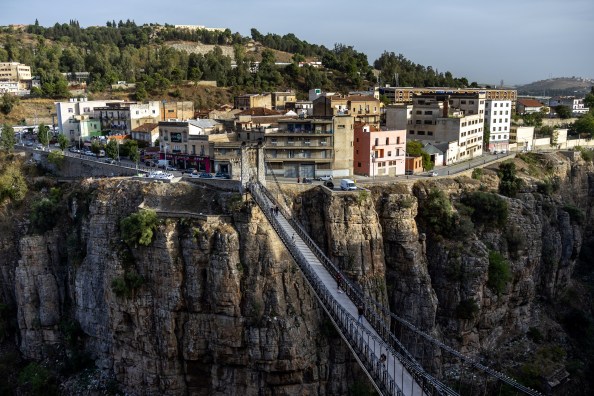
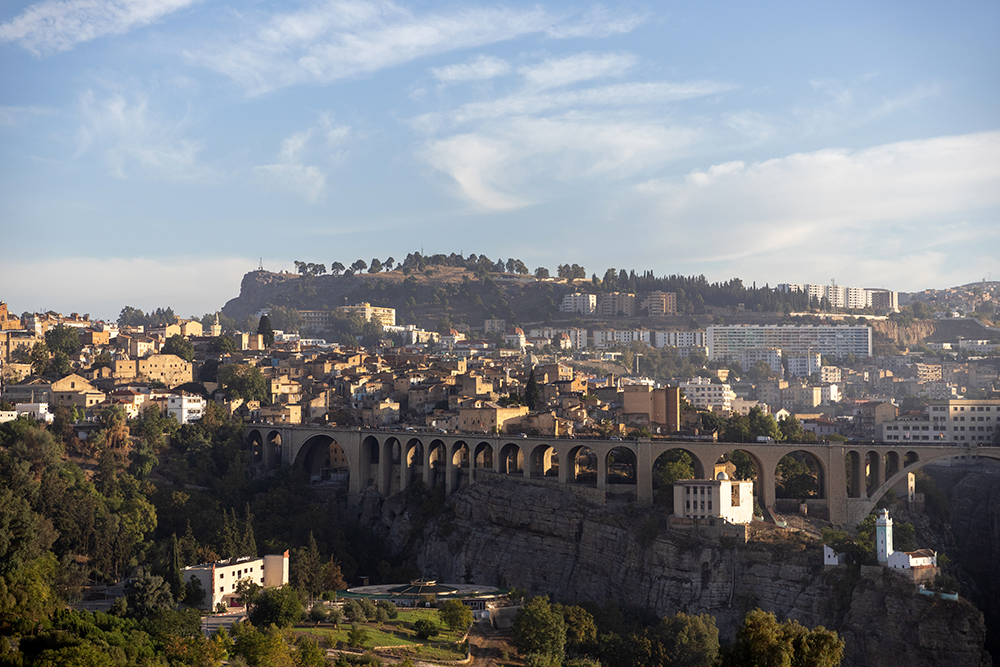
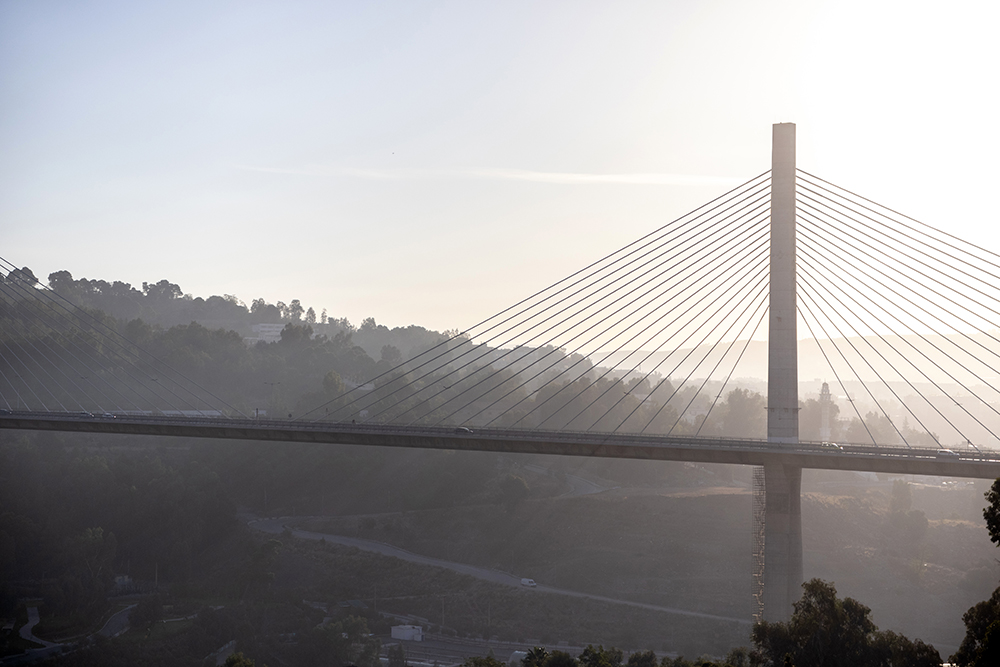
Pale morning light bathed the scene below my balcony at the Protea Hotel in Constantine, Algeria. This was the last time I would see the view from me and Vince’s room there, and I wanted to look at the dramatic gorge spanned by multiple bridges one last time before we set our for the day. The city was just waking up far below my perch, and cars were beginning to trickle out onto the streets and across the bridges, just as I checked the time and realized I had to get going.
I went inside to pack a few last minute items into my suitcase, then Vince and I caught an elevator down to the hotel lobby, where we met up with our friends and our Izelwan tour guide. This would easily be the busiest of our nine days in Algeria, so we were all eager to get moving. We towed our luggage directly out to our waiting sprinter van, and then loaded into the vehicle, bound for the Cirta Museum, our first stop of the day.
It was a short drive to get to the museum, and soon we were entering through a courtyard filled with a jungle of leafy plants. The Cirta Museum, named for the original name of Constantine when it was the capital of ancient Numidia, is focused on fine art, archeology, and ethnography. We’d seen a lot of archeological artifacts by this point in our trip, so I was immediately drawn in by a gallery filled with paintings. Most of them depicted the city of Constantine and it’s famous gorge. The images were beautifully rendered, and captured the ethereal quality of light dancing on cliff faces. I knew that later in the day, we would get to see the contemporary version of many of these scenes in real life, and I could hardly wait.
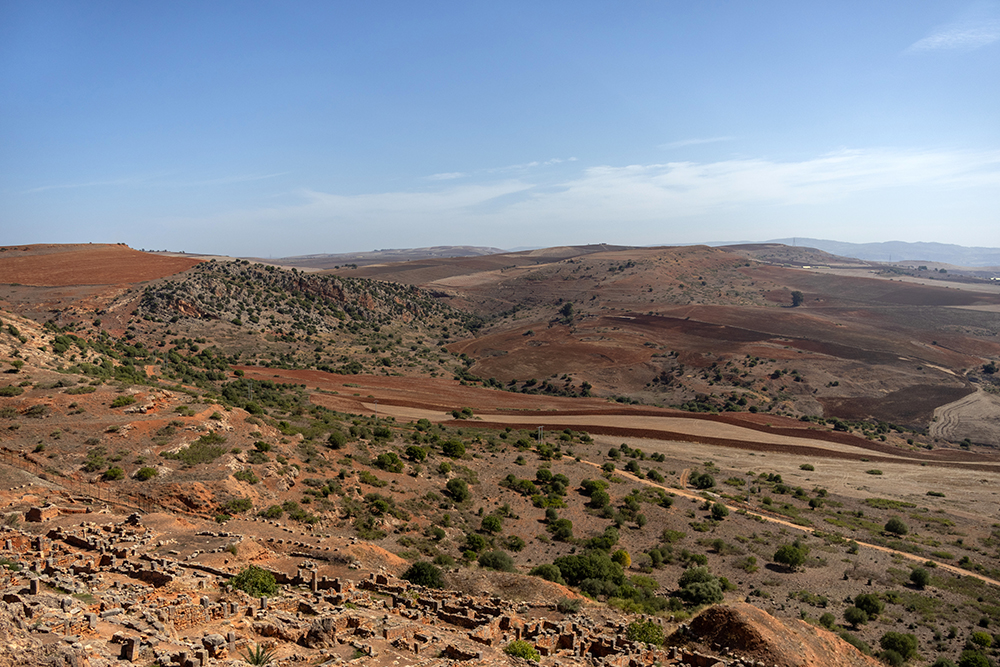
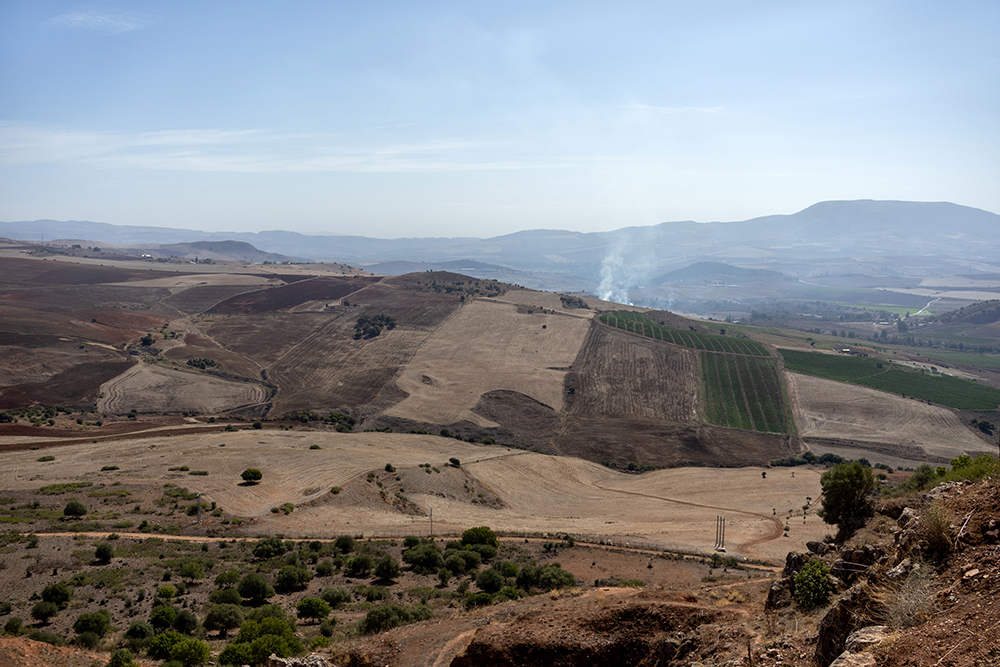
It didn’t take us long to tour the museum. We tried to make our visit somewhat quick because we knew there was a lot more to see that day, starting with an hour’s drive out of the city to the archeological site of Tiddis. Along the way, we drove through rolling mountains and hills that became ever redder in color as we drew further from Constantine. When we finally arrived at the site, we had left the city well behind. It now felt like we were deep in the wilderness despite a few nearby buildings and some farm fields in a valley below our mountain-top vantage point.

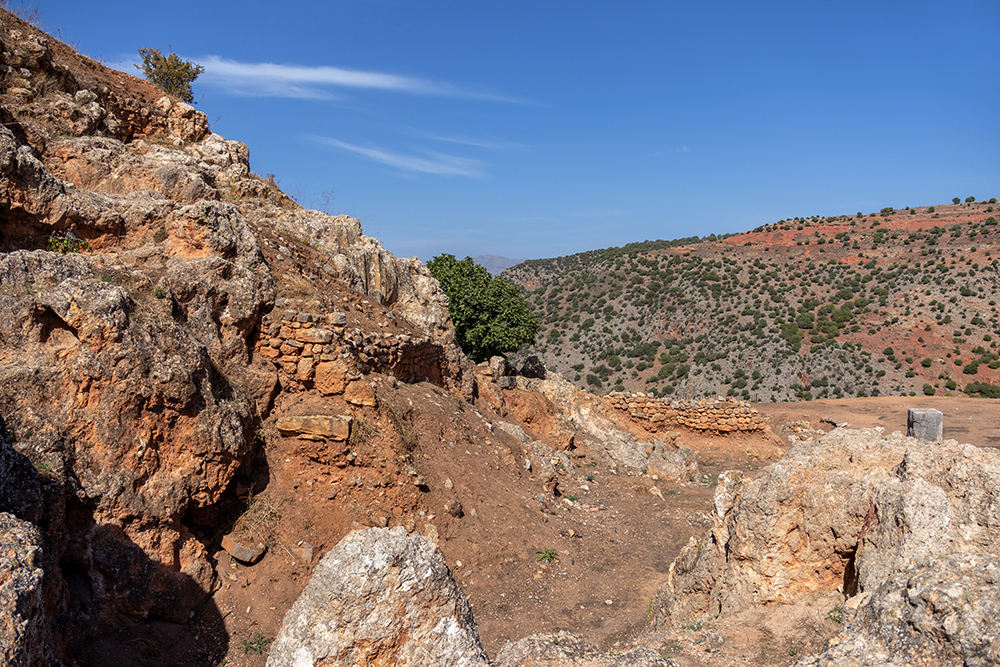
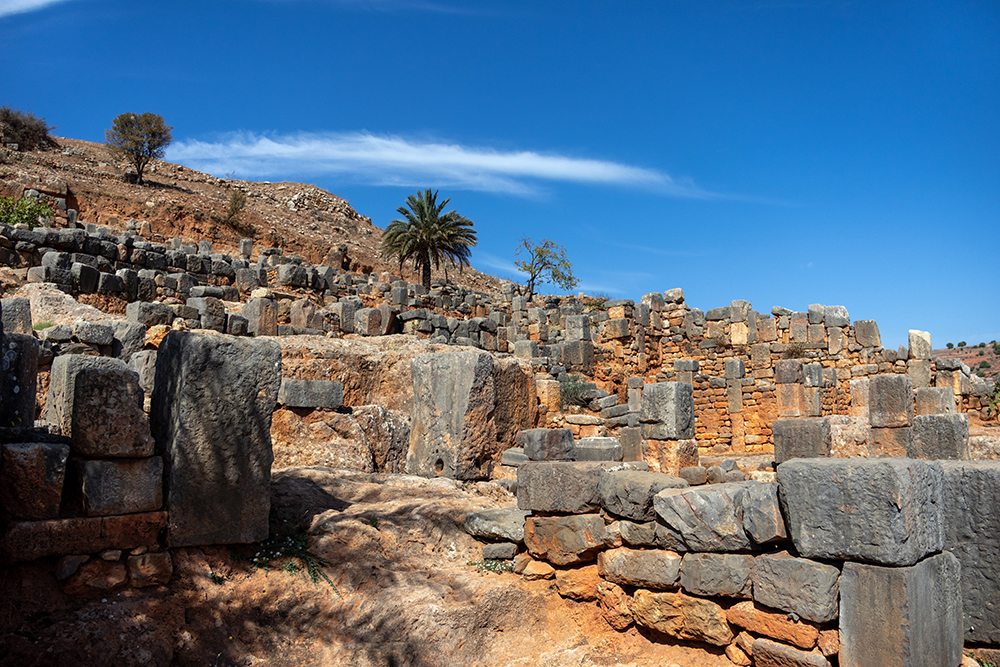
We were immediately met by a site guide, who led us up a dusty, red path towards a hillside scattered with matching stone ruins. As we walked, he explained some of the vast history of Tiddis, which has a Mithraic sanctuary that dates all the way back to the 4th Century BC. Pottery remains found at the site show that a small, straggling group of Christians inhabitated it as recently as the 11th century AD, meaning that Tiddis’s ancient history spans more than a thousand years.
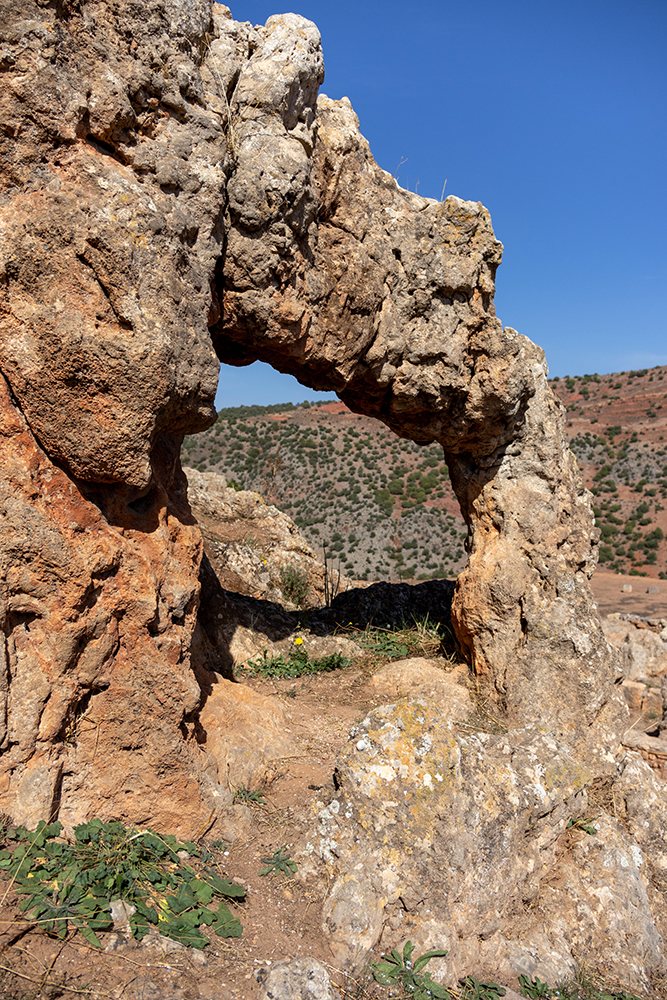
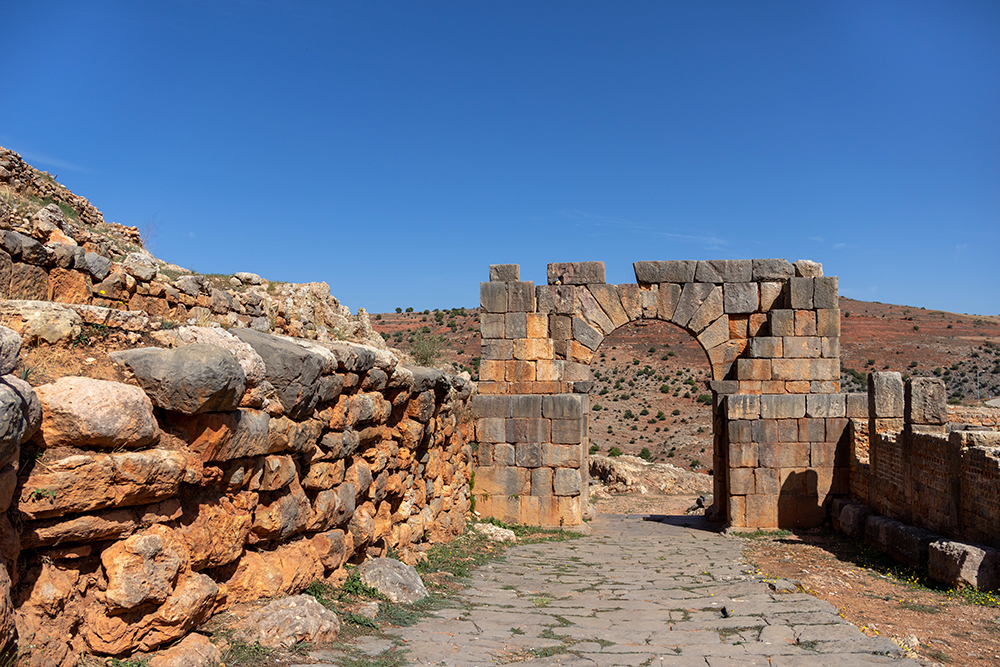
Just like the other three ancient Roman cities we’d visited so far on the trip, Tiddis had its own unique qualities. The stone ruins blended in with the rocky terrain, and we were able to jump around on some craggy areas of the mountain as we hiked upwards through the ruins. Palm trees dotted the hillside, and stone archways stood in excellent condition compared to the rest of the crumbling buildings at the site.

We walked up to the top of the mountain, where we found the city’s Roman baths beneath a set of cisterns. Our guide explained that the tanks were built with three separate compartments inside in an effort to combat the force of the frequent earthquakes that occur in Algeria. The idea was that if there were three chambers in the water tank, then one or two of them could break without the water pouring out and flooding down the mountain.
The cisterns were our turn around point for the tour. From there, we retraced our steps downhill, under the stone archways, and back to the van. It was time to return to Constantine to continue our day at the Palace of Ahmed Bey.
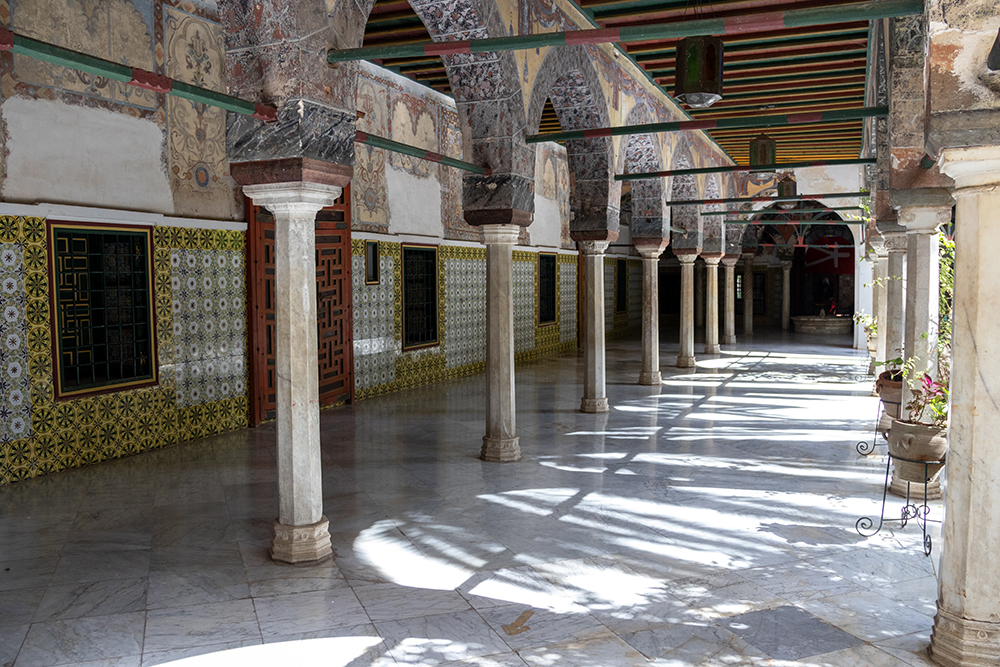
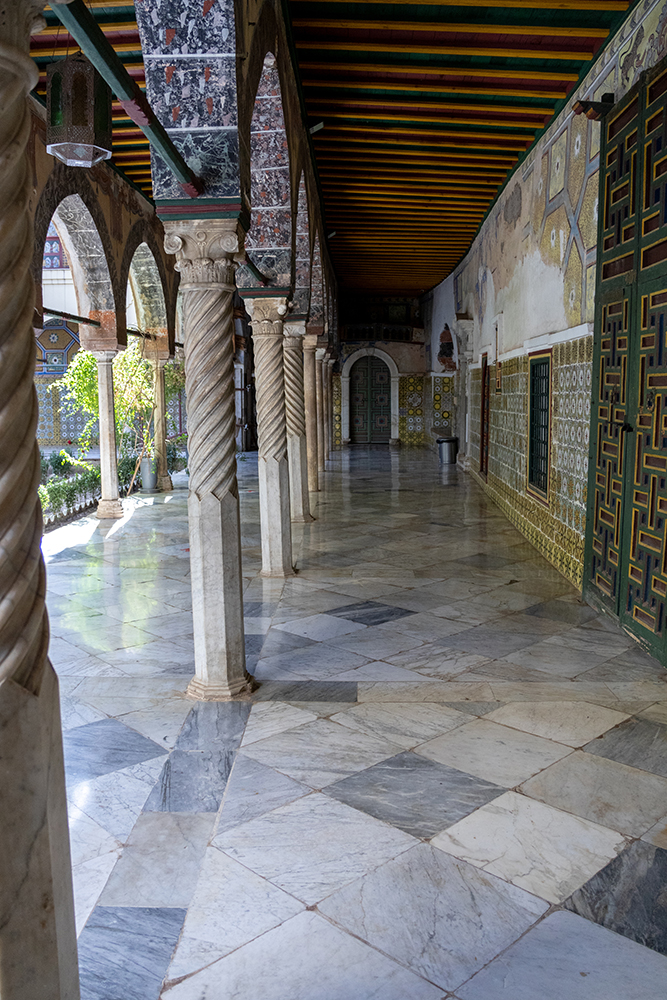
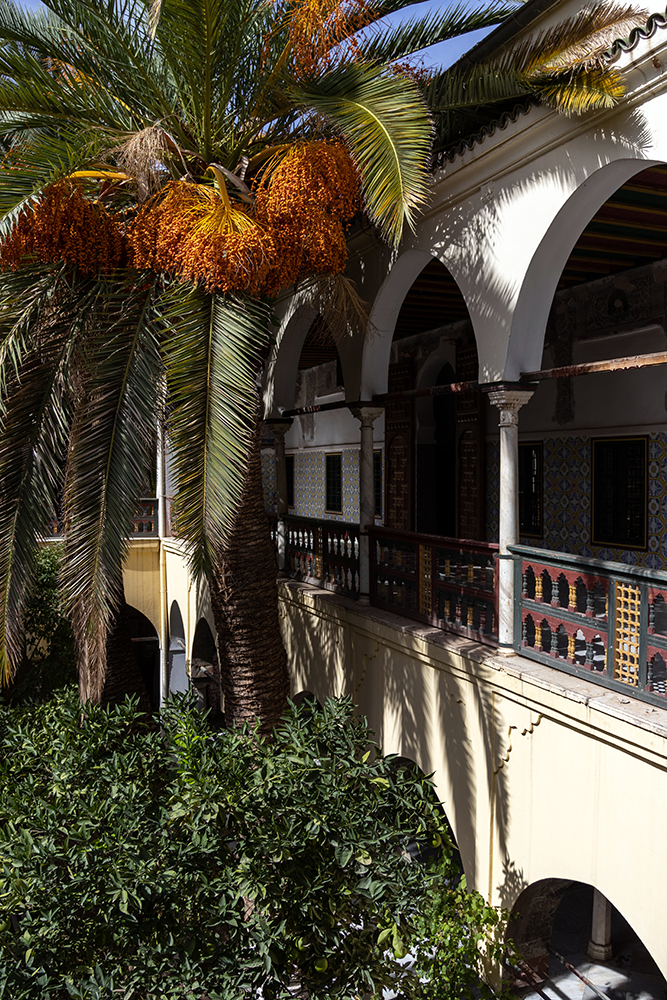
Within another hour, Nadir was expertly maneuvering the sprinter van along a narrow street and into the parking lot of the palace. A site guide joined us as the entrance door and began information about the palace’s unique combination of architectural styles. It was built between 1825 and 1835, for Ahmed Bey ben Mohammed Sherif, who was the last bey of Constantine before it fell to French colonial rule a mere two years after the bey moved into his palace. Because of this, parts of the palace were updated under French control, resulting in an interesting mixture of Ottoman and French colonial architecture. Our tour would be of the Ottoman portion of the palace, as the French colonial portion is used as offices today. There are also some Roman ruins under the site, and our guide promised to show us some at the end of the tour.
I personally couldn’t have been happier that our tour would focus on Ottoman architecture because I am a huge fan of Ottoman tile work. I love all of the patterns and bright colors, and the care and detail that went into every element of design work.
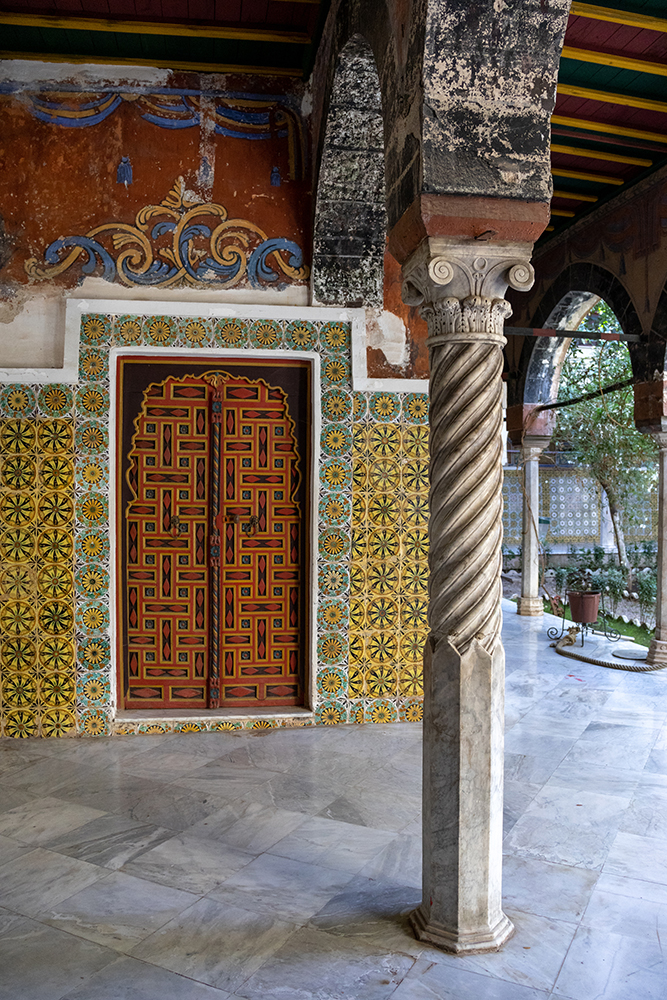
So we wandered through the corridors, gardens, and rooms of the palace, stopping every so often for our guide to explain the history of the palace. Of particular note was a series of painted walls that depicted the bey’s travels throughout North Africa, Istanbul, and Hejaz. At the end of the tour, we got to see a small excavated section of Roman ruins behind the palace, but compared to all of the beautiful ruins we’d seen over the past few days, this was a bit underwhelming.
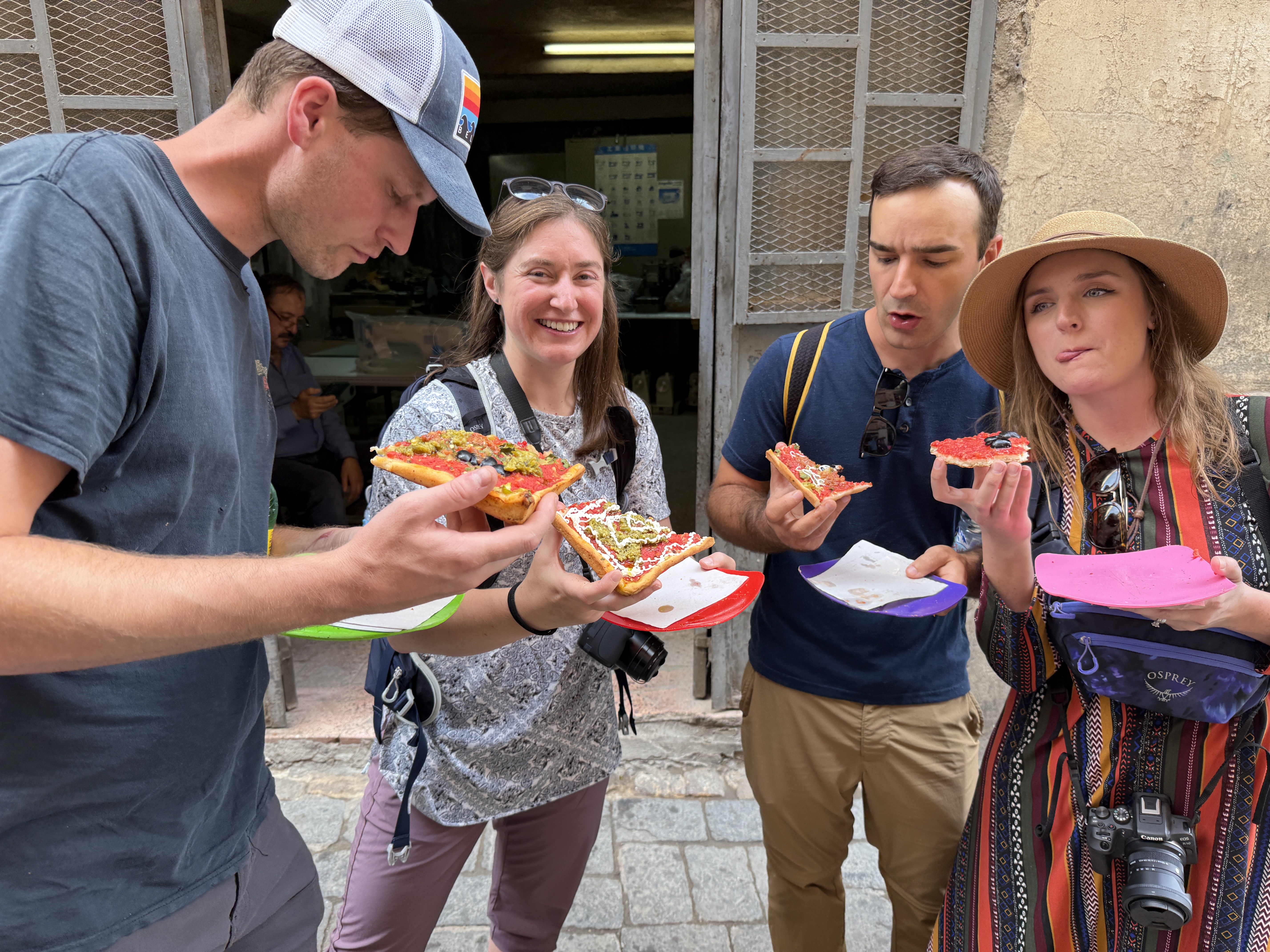
By the time we left the palace, I was desperate for food and water, and I was starting to get a little cranky. This was surprising to me because we’d been so well-fed on this trip that I hadn’t had a chance to feel hungry at all up until now. But lucky for me (and everyone who had to be around me), I didn’t have to wait long for lunch. Our guides led us into a narrow street just around the corner from the palace, where we found a little bakery that was serving traditional Algerian square pizza.
This is a popular and affordable street food in Algeria, and we each ordered a slice to start with. The pizza was made of a huge rectangle of flatbread with tomato sauce, olives, and sardines on top, and there were bottles of different sauces to add to it, with varying degrees of spiciness. A single piece of pizza would be plenty of food to tide me over, and it only cost 40 Dinar (about 20 cents USD)! We each ordered a slice and added our preferred toppings, and I also bought a couple of bottles of water. Within minutes, I was feeling like myself again, hanger averted!
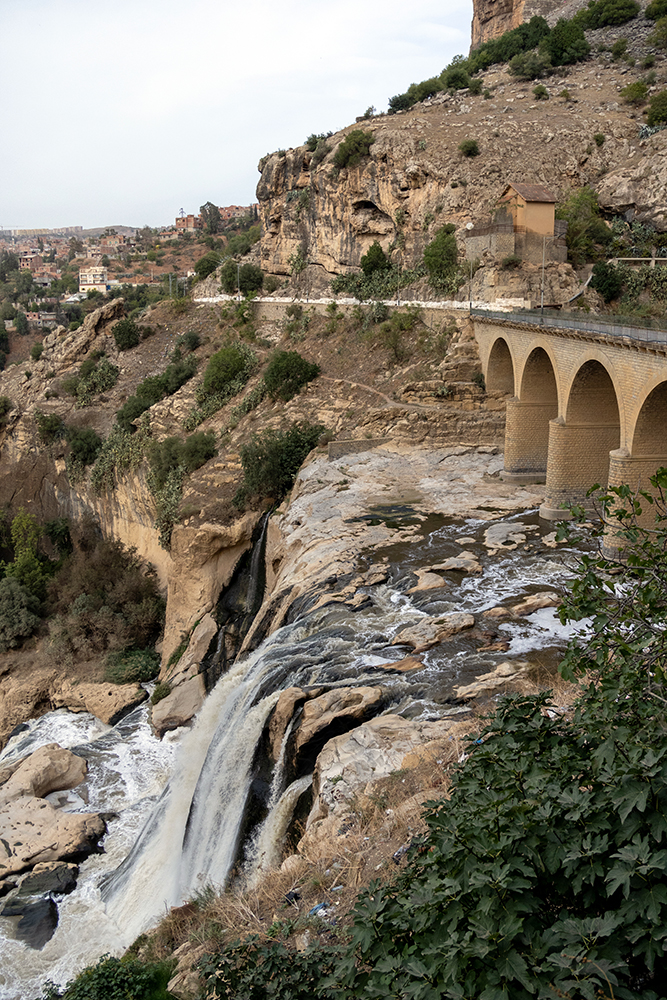
With my renewed energy, I was ready to tackle the rest of the day, which was only halfway over at this point. Next, Nadir drove us down a winding road towards the bottom of the gorge that surrounds Constantine. I craned my neck upwards, looking out the window at sheer cliff faces alongside the road as we descended deeper into the canyon. Nadir parked the van when we arrived at Falls Bridge at the bottom of the gorge.
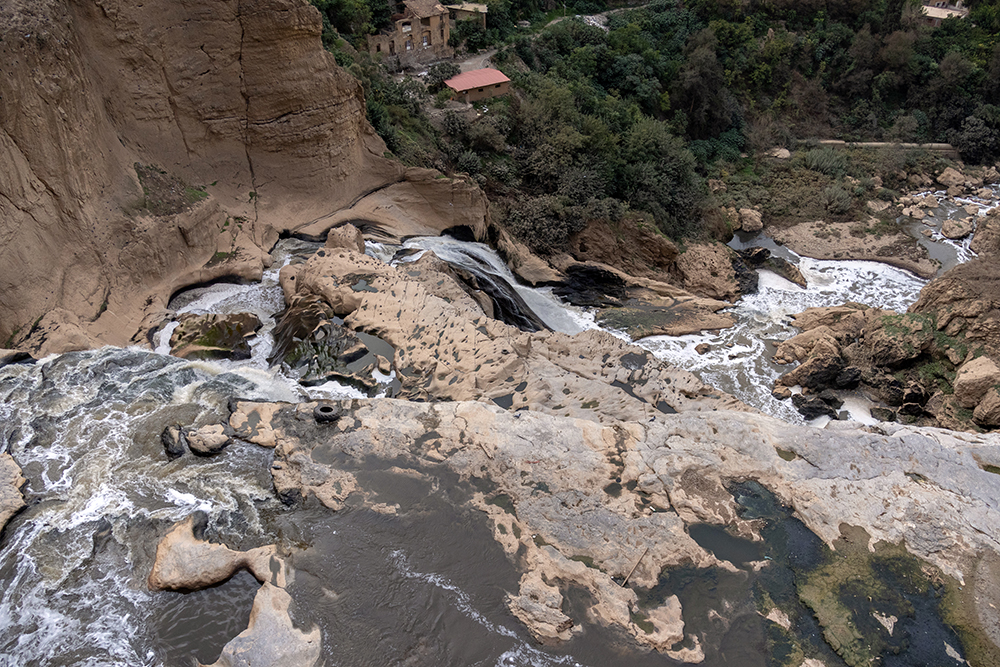
We all hopped out onto the street, being careful to watch for cars, and crossed the road to get a look at a tall waterfall that was cascading over a cliff. The water wove downwards in a winding path around sand colored rocks. This was undoubtedly the most beautiful natural landscape we’d visited so far in Algeria.
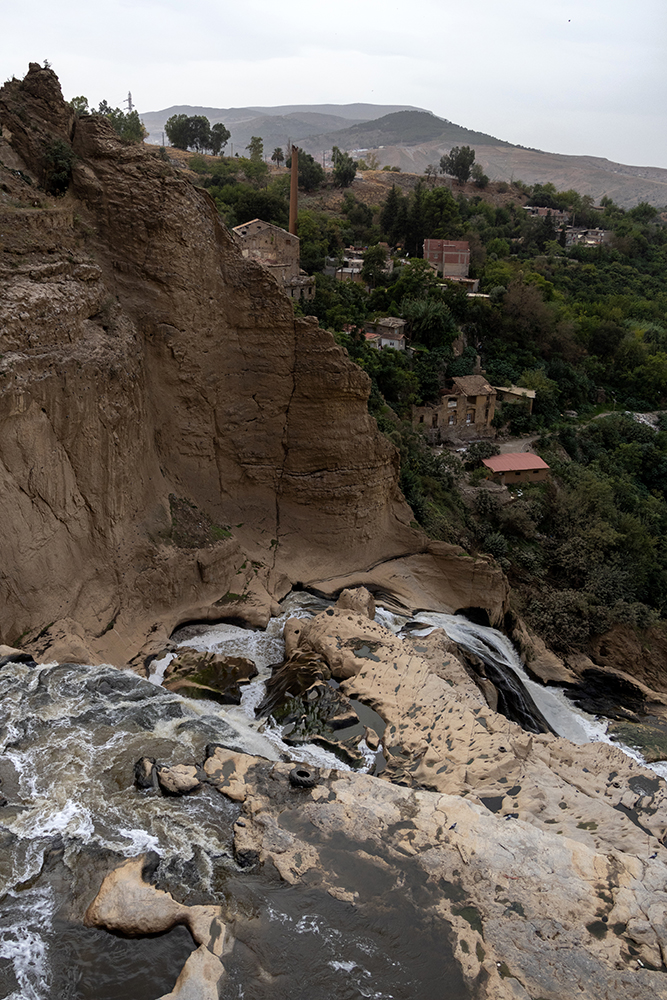
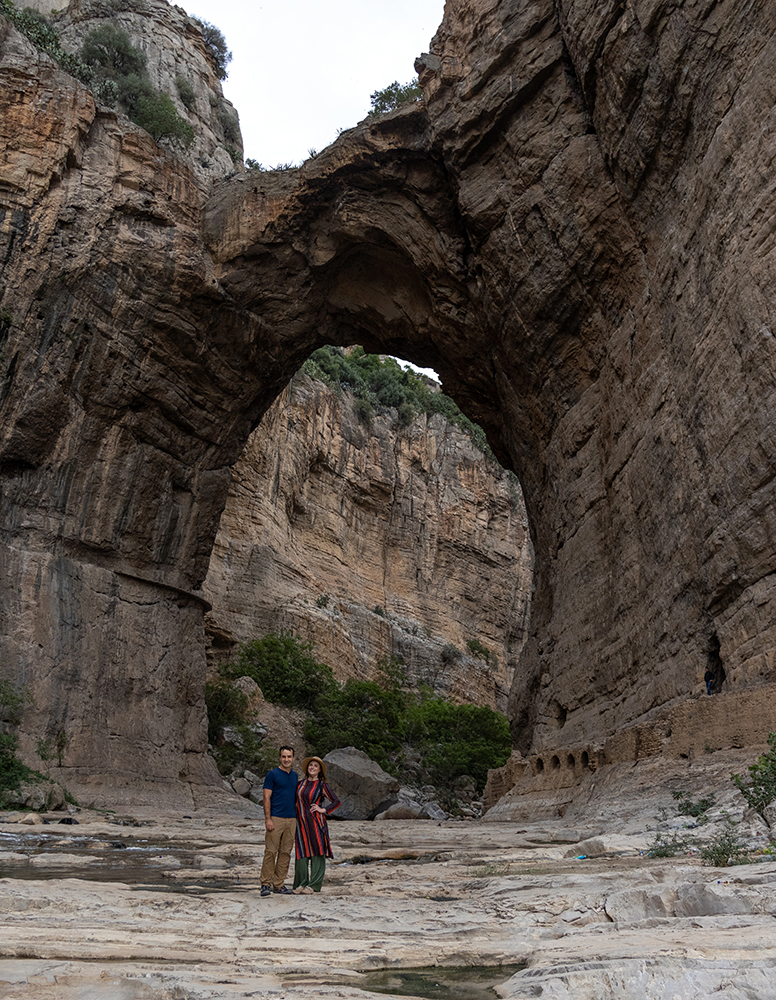
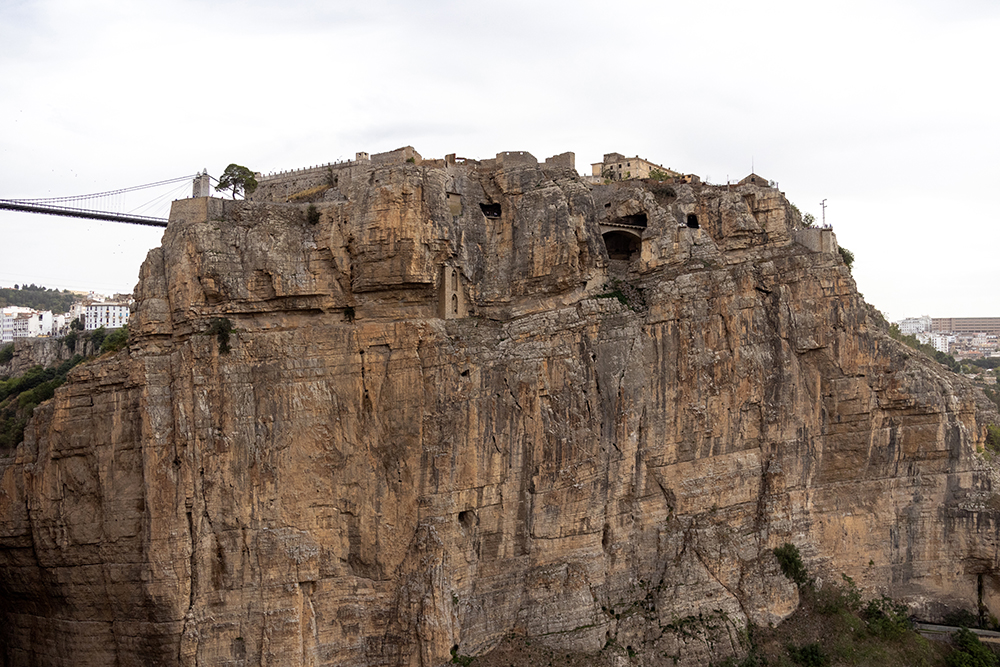
And the waterfall wasn’t even the best part! Across the bridge was a view of the towering gorge, where a natural arch spanned over the Rhumel river far below the Sidi M’Cid bridge. Pigeons swooped overhead in what looked like a choreographed dance in the sky, and I knew that all the way up at the top, people were going about their day in the bustling city.
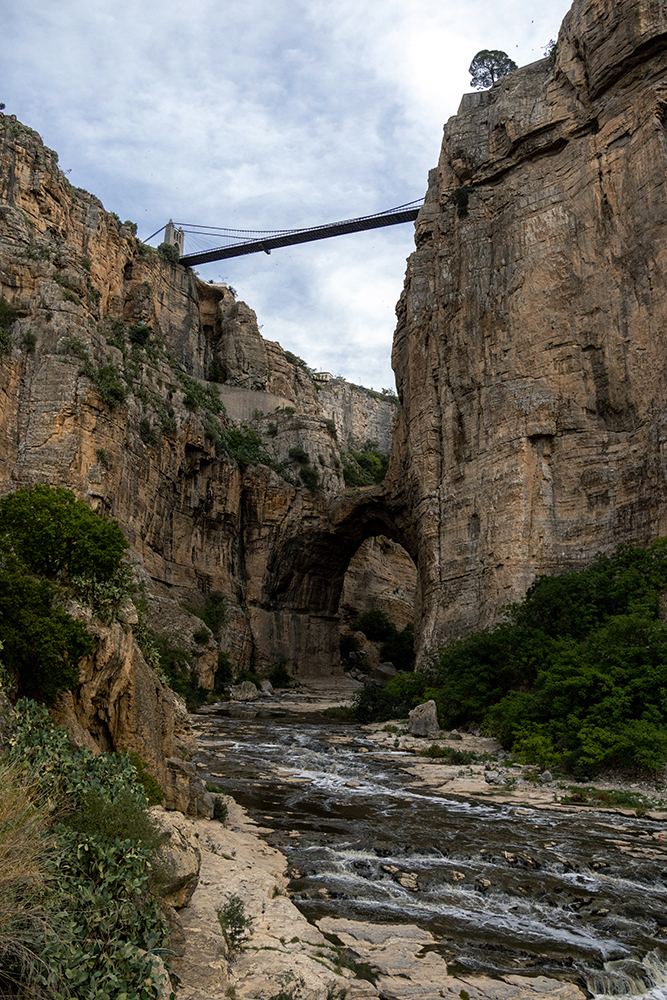
We got to walk a little ways upriver, keeping to the righthand side of the canyon until we were just below the natural arch. Along the way, we saw the entrance to an old, out of use elevator that used to take passengers down to the bottom of the canyon from the top. Across the river, we could see a trail of hanging bridges built into the rock wall. They were in disrepair, and definitely not safe to walk on anymore, but I can imagine that would have been a very fun hike when it was operational.
The trail we were on, started to get sketchy once we reached the arch, so we turned around, and went back to the van. Now it was time to drive back up to the other side of the canyon. The road back up was even more scenic, and we passed through some long tunnels carved from the cliffs, and stopped at an overlook to take a few photos along the way.

When we reached the top of the canyon, Nadir dropped us off at Monument aux Morts, a World War I memorial that was constructed from 1918 to 1930. From there, we walked downhill towards the Sidi M’Cid bridge. The views along the way were spectacular. There was something amazing to see in every direction as we approached the famous bridge, and crossed over it back into the city of Constantine.
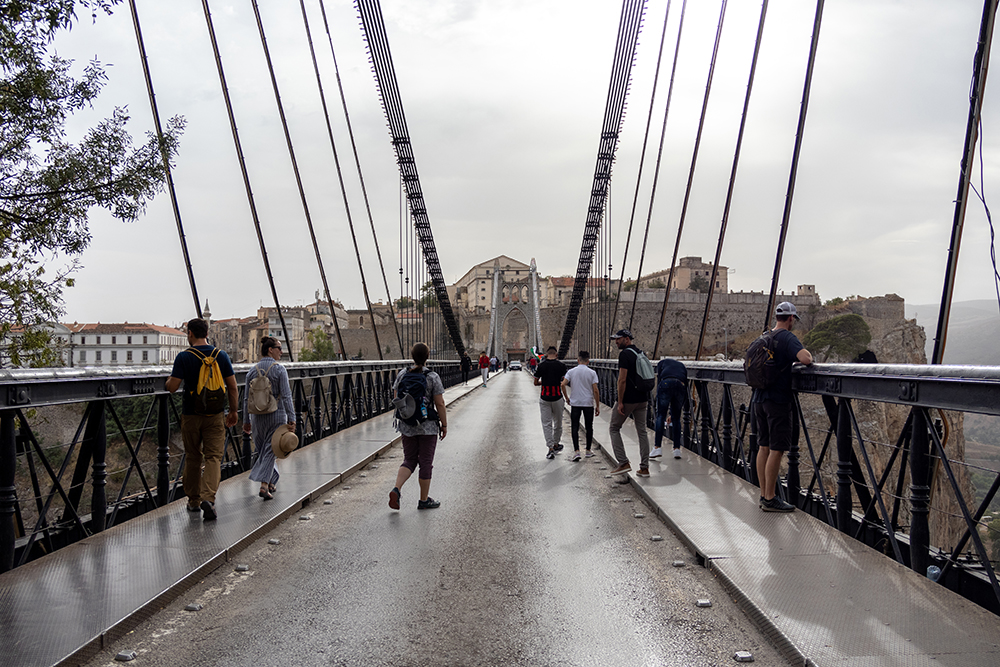
We were on the same level as the flock of pigeons now, and I watched them flow around the bridge as I looked over its edge in both directions. The falls bridge was now visible again, but it looked miniature and almost unreal from this new vantage point.

On the other side of the bridge, we got to walk right up to the edge of the gorge, where only a knee-high stone guard rail stood between us and a sheer drop-off. As I peered over the edge into the dizzying expanse below me, I couldn’t help but feel a little light-headed at the sight of jagged cliff faces leading down into the chasm.
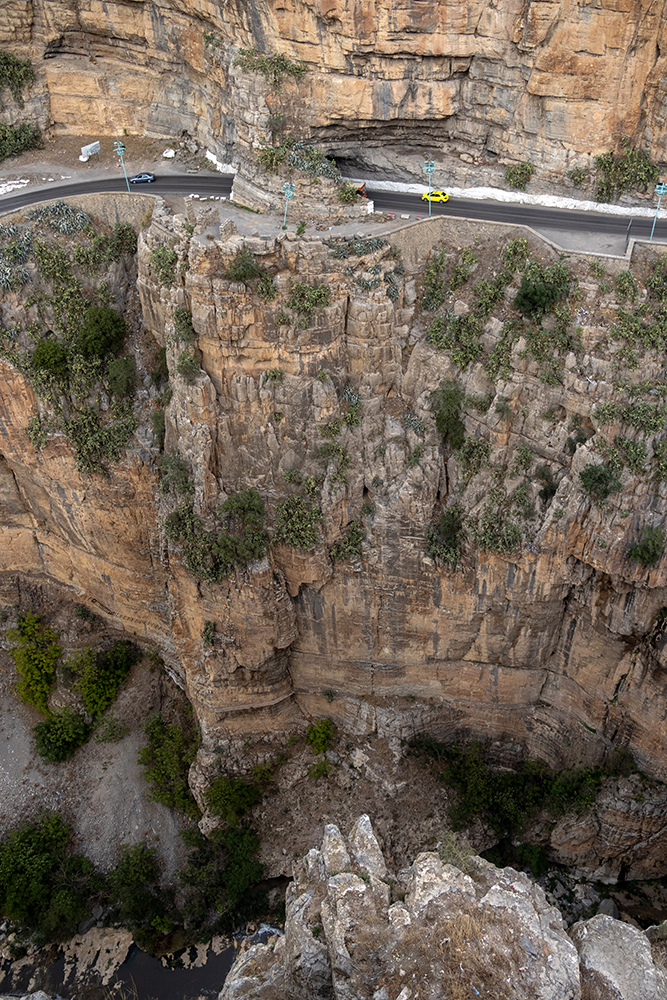
From there, we got to walk through one of the tunnels carved out of the cliff, and visit a couple more viewpoints before turning around to walk further into the city.

The streets grew more crowded as we entered the city, and soon we found ourselves in a bustling market, where our guide gave us some time to shop for souvenirs and snacks. Rachel bought a beautiful dress, but for the most part, we were all saving our souvenir shopping for the next day when we would be in the Saharan city of Ghardaïa. So instead of shopping for trinkets, the rest of us opted for some gelato and local candies.
I enjoyed the sights and sounds of the market as we meandered through the busy streets until we reached another edge of the gorge. From here, we took a packed elevator down to the Bab El Kantra Bridge. This particular bridge has had multiple iterations over the years as Constantine changed hands between different regional powers. The modern concrete bridge shook ever so slightly under our feet as we walked across, admiring even more gorgeous views on either side of us.
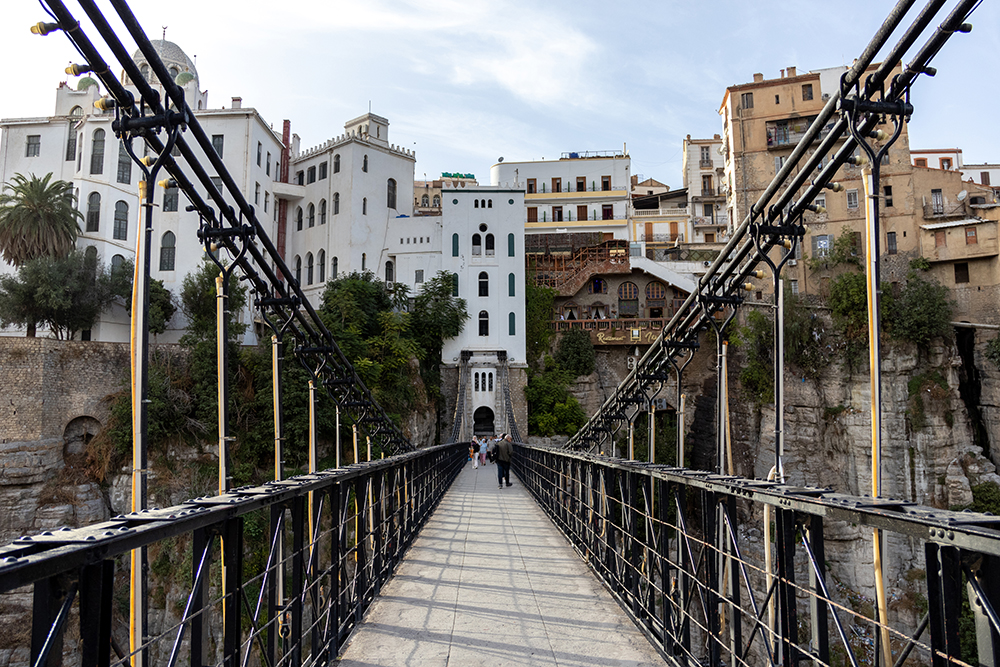
After we crossed the bridge, we re-crossed it and rode the elevator back up to the top, where we took a break in a coffee shop the overlooked the bridge and the gorge. We all ordered various refreshments -I went for a piña colada mocktail- before continuing on our tour. Yes, there was still more to see in Constantine before the hard deadline of our upcoming flight to Ghardaïa.
Our guide led us through the streets, this time walking at a faster pace because it was nearly sunset. Eventually we stepped out onto a street that was actually big enough to accommodate vehicle traffic. Nadir was waiting for us with the van, and he drove us the remainder of the distance to the Emir Abdelkader Mosque.
It was nearly dusk by the time we arrived, which meant we wouldn’t have much time to visit the mosque because the evening call to prayer was just beginning. Rachel, Bonnie, and I grabbed scarves from our bags and wrapped them around our heads, and I dug a spare tunic from my suitcase for Bonnie to put on over her clothes. With that, we were ready to go inside. I looked upwards at the mosque’s tall minarets as we hurried up the entrance steps and took off our shoes.

Once we were inside, we stood in the back for a few minutes as the call to prayer began, echoing off of the elaborate, arched ceilings. The Emir Abdelkader Mosque is the second largest mosque in Algeria (it was once the largest before the Great Mosque of Algiers was opened in 2019). Its interior was even more beautiful than its exterior, and we got to linger for a few moments admiring its architecture before quietly exiting back to the steps.
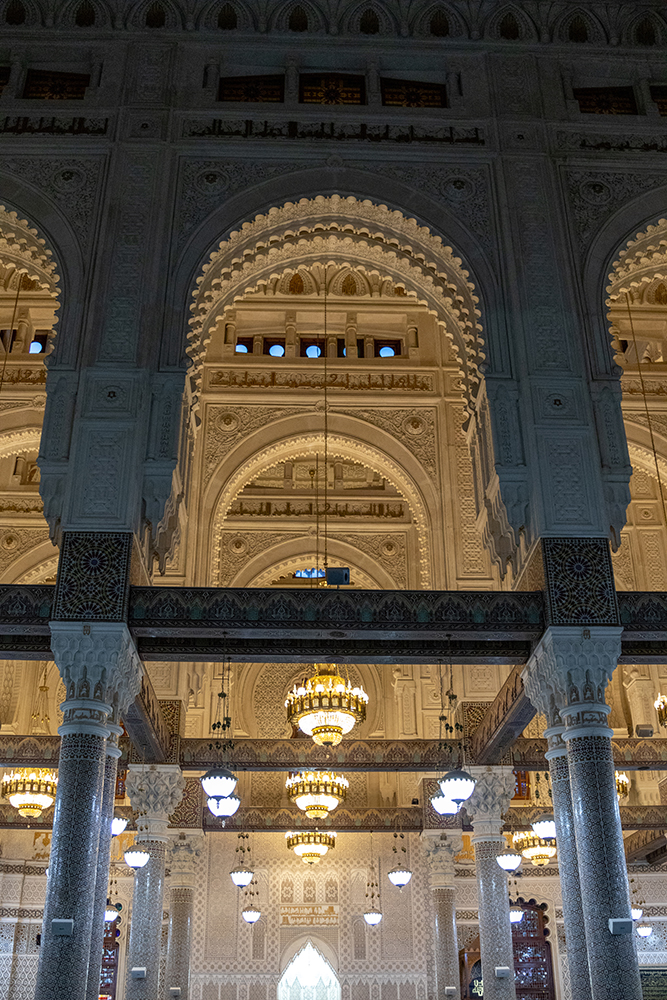
With that, we’d managed to see every item on our itinerary for the day, no small feat considering we’d travelled about seventy miles, and managed to see eight distinct locations in and around Constantine! Now all that was left to do was stop for dinner, and then head to the airport for our late flight to Ghardaïa. I was completely exhausted by the time we finally checked into the Hotel Belvedere, about 670 miles from where our day began. It was with relief that I finally fell into bed and closed my eyes. The next day would be another busy one, and although I was tired, I was also excited to wake up in the morning and start all over again in another amazing city!








 birdsoftheairtravel.com
So many beautiful photos. I’ve never been to Constantine, Algeria, but it looks like a wonderful place to explore especially as you can gaze over the Rhumel Gorge and walk over one of the six bridges. Thanks for sharing, and have a good day 🙂 Aiva xx
Thank you! I highly recommend visiting if you get a chance, definitely worth it!
🥰🥰🥰
What wonderful countries you visit and experiences you have. But boy those heights! Incredible to think of people building in such places all those years ago.
Yeah the heights in Constantine definitely made me feel a little dizzy!