At 12:09 am EST on July 19, a faulty software update caused the largest IT outage in history. Across the world, computers running Microsoft Windows displayed a blue screen of death while major industries everywhere scrambled to cope with the ensuing chaos. Meanwhile, I was asleep in bed, blissfully unaware of the unfolding crisis. When I finally did wake up at 4:30 am, there was no time to look at the news. I had just enough time to get ready and grab my packed bags before my brother pulled into me and Vince’s driveway to drive us to the airport. At 6:30 AM on July 19, Vince and I stepped into an unexpected scene of mayhem at our city’s mid-size airport.
Bags were piled up by barely functional check-in kiosks. Airline employees raced from passenger to passenger, frantically trying to get boarding passes printed and luggage checked. Our normally stress-free airport felt more like Chicago O’Hare as lines formed and agents struggled to help customers as quickly as possible.
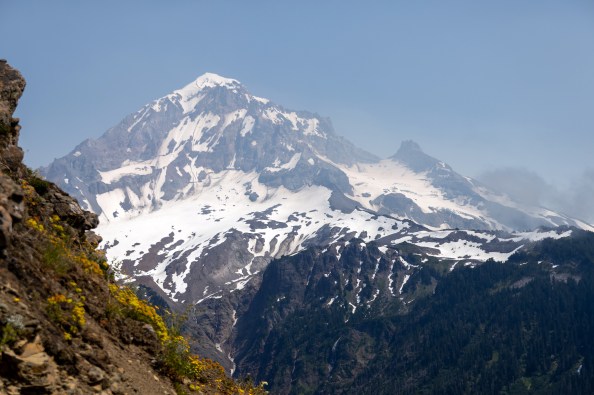
The following hours passed with an odd mixture of periods of confusion and stress, followed by long interludes of boredom. Our first flight was delayed, causing us to worry we might miss our connector. When we landed in Chicago, we were relieved to learn that our second flight was also delayed. By the time we finally approached our destination, Portland, the view of Mount Hood from my window seat was as much as relief as it was spectacular.

When we finally arrived in Portland, hours behind schedule, our rental car company was backed-up too. Only later that day did we learn that we were amongst the luckiest people trying to fly. We arrived at our destination, our friends Amy and Andrew’s home, just in time for dinner. We were late and exhausted, but we’d still made it there on the same day. I would feel grateful for this after a good, long sleep. In the meantime, we spent what was left of our evening catching up with our friends and making plans for how we would spend the next couple pf days together. The beginning of our trip was undoubtedly rocky, but now it was time to shake it off and have some fun in the stunning nature that surrounds Portland.
After a much needed night of sleep, we were up and ready for a hike at Silver Falls State Park, the largest state park in the state of Oregon. Amy had picked out a hike on the Trail of Ten Falls for our first day in the area. As its name would suggest, the trail passes by ten waterfalls, although we planned to do a slightly abbreviated loop that would only cross paths with seven of them. We loaded water, a picnic lunch, and our day packs into Amy and Andrew’s SUV, then we made the hour’s drive to the park.
The large parking lot was already filling up by the time we arrived at the trailhead. Silver Falls’s proximity to Salem, Portland, and Eugene make it a popular destination, especially on a Saturday, which happened to be the day we were there. Andrew drove around until we could find a parking spot. Then we tossed on our day packs, grabbed our trekking poles, and hit the trail.
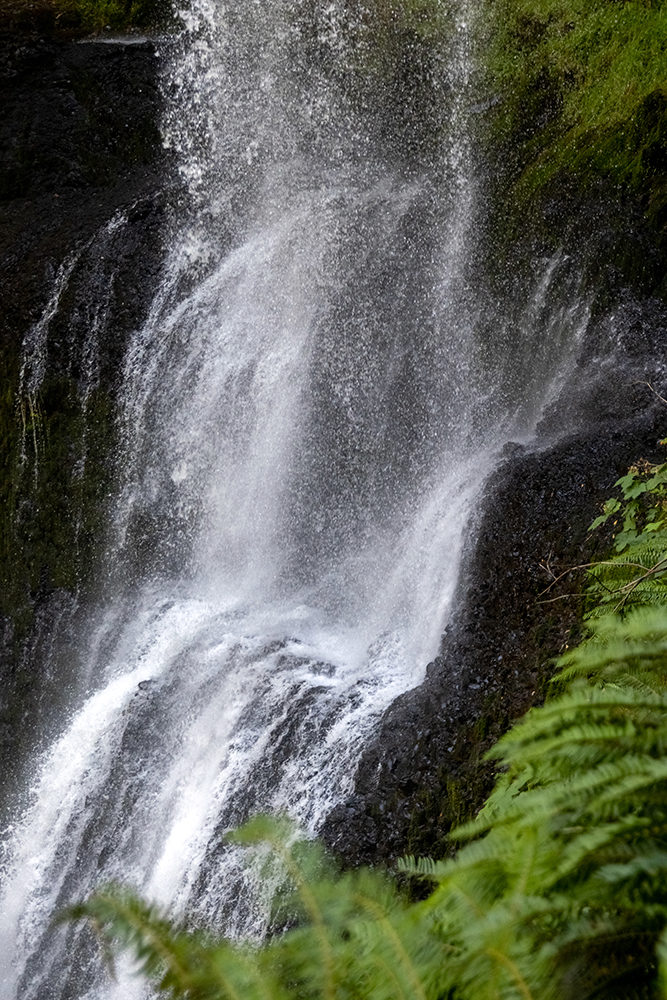
It didn’t take long to find the first of the seven waterfalls. The overlook of South Falls was right at the beginning of the hike, so we were immediately treated to a view of powerful water cascading off of a 177 foot drop over a cliffside made of basalt columns.
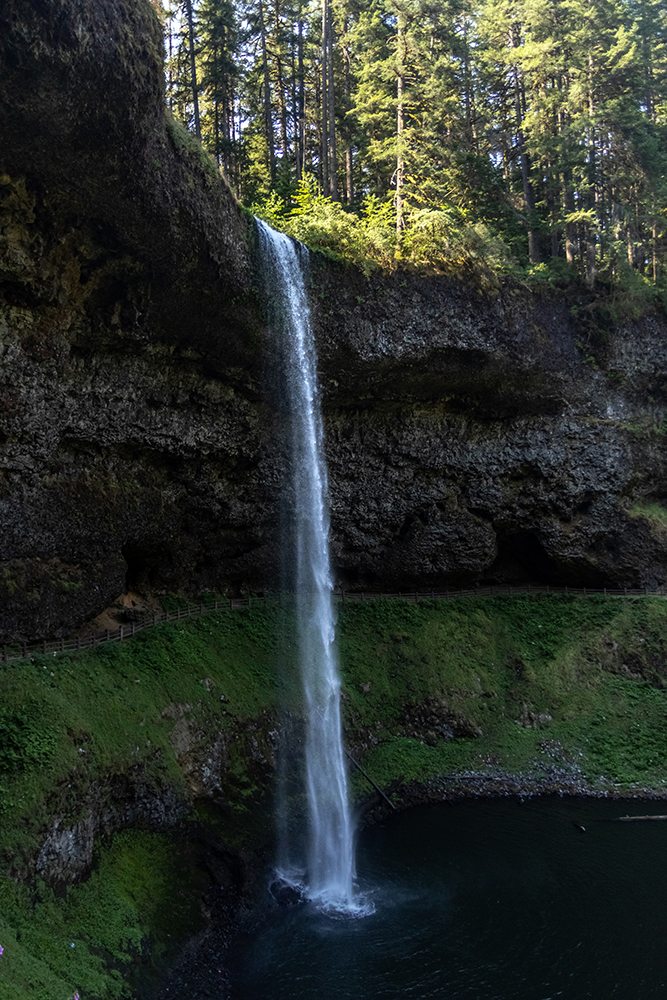
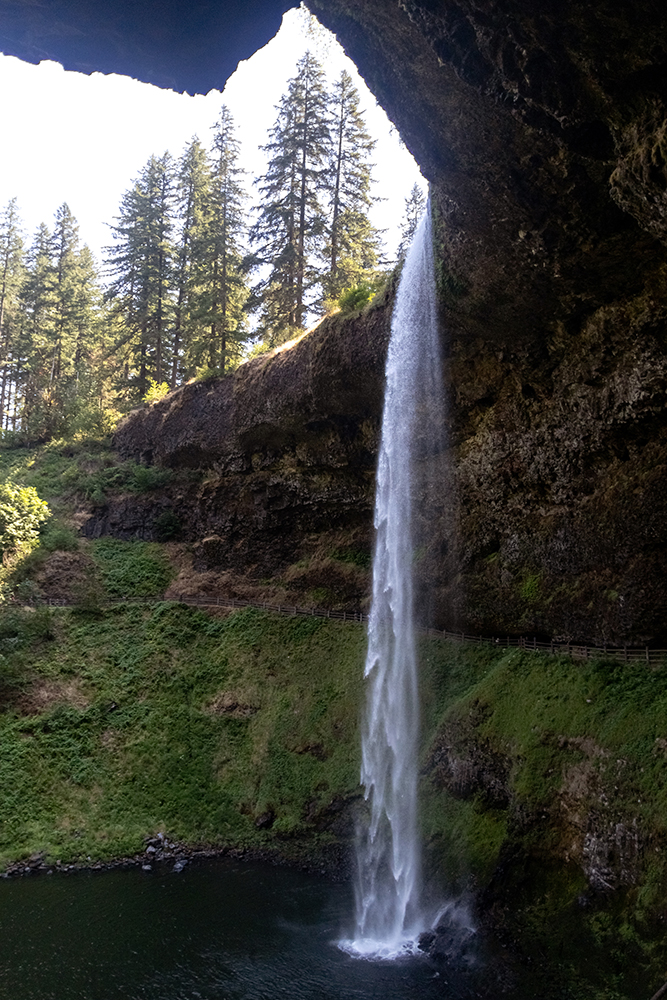
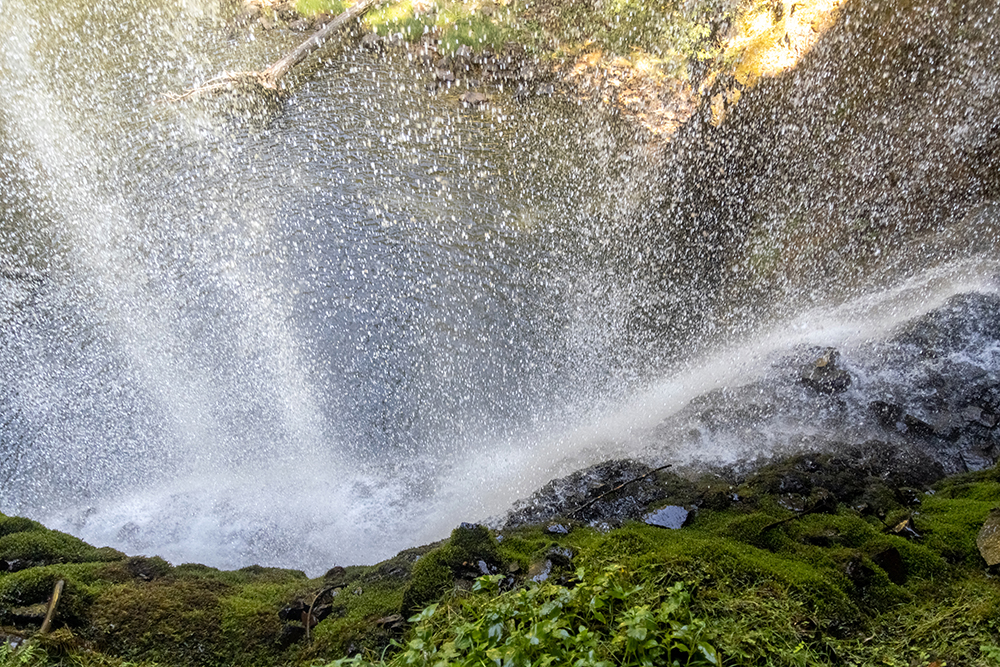
We hiked downhill until the trail veered off to pass behind the waterfall, where mist rising from the falls cooled the air around us like natural air conditioning. This was definitely one of my favorite waterfalls of the entire hike, and I really loved getting to walk behind it.
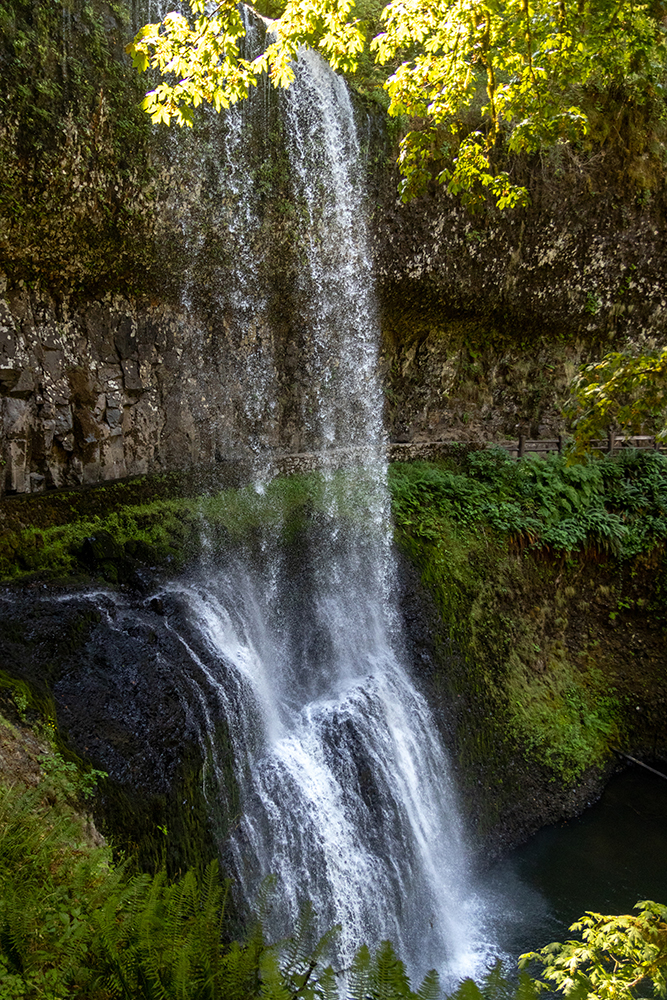
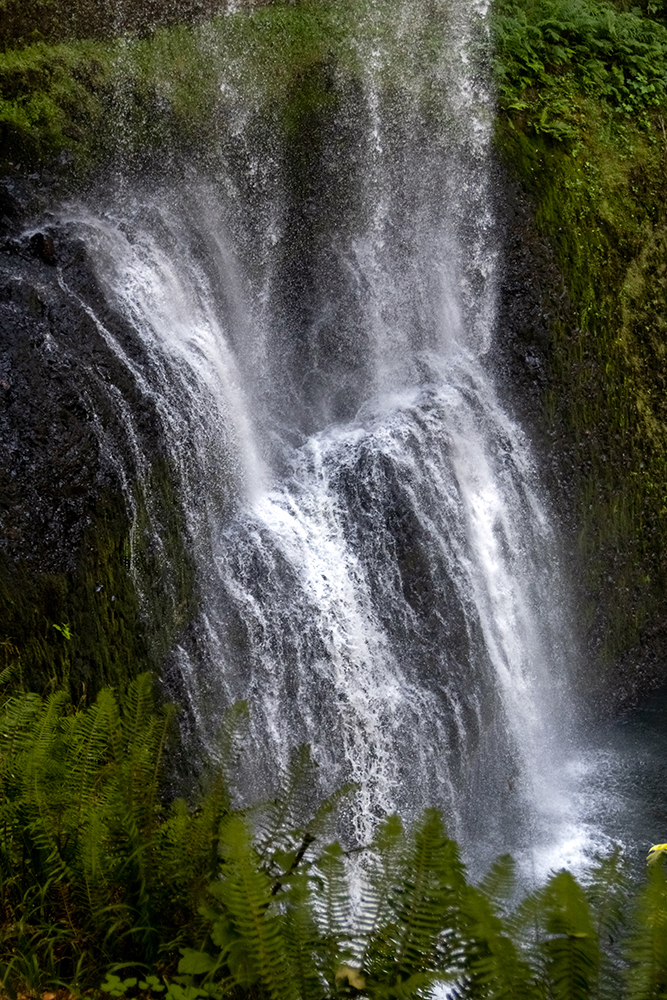
After South Falls, we followed a peaceful creek as sunshine beamed down on us, illuminating moss-covered tree branches. It took a lot longer to get to the next waterfall on the trail, Lower South Falls. At 93 feet, it was a lot shorter than South Falls, but it was still just as beautiful. It fanned out in a wider stream and landed in lacy rivulets in the creek below.
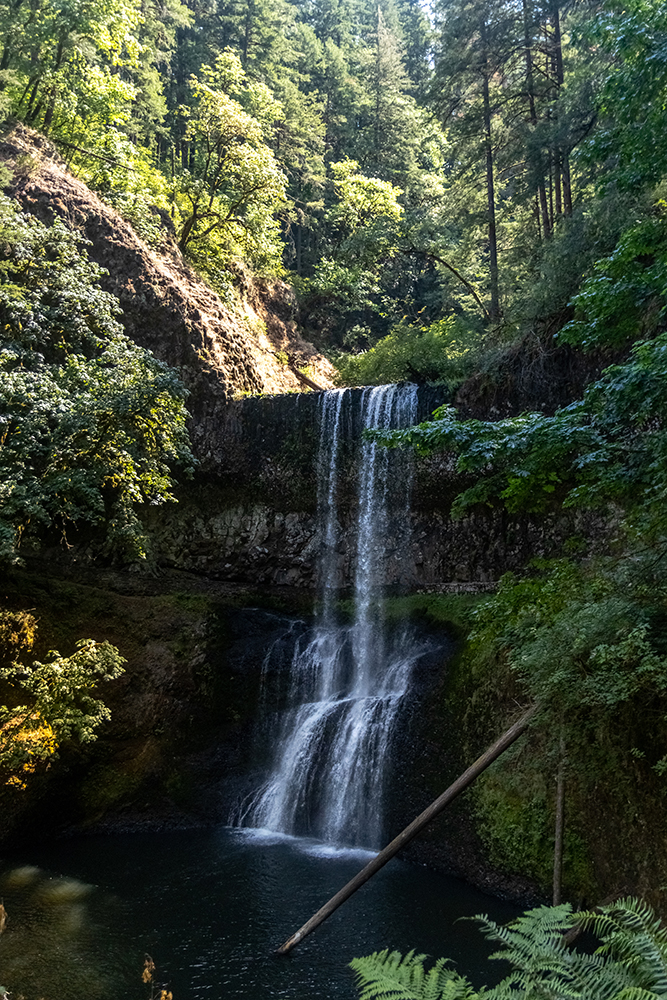
The trail crossed behind this fall as well, and the water was so close that I could have almost reached out to touch it.
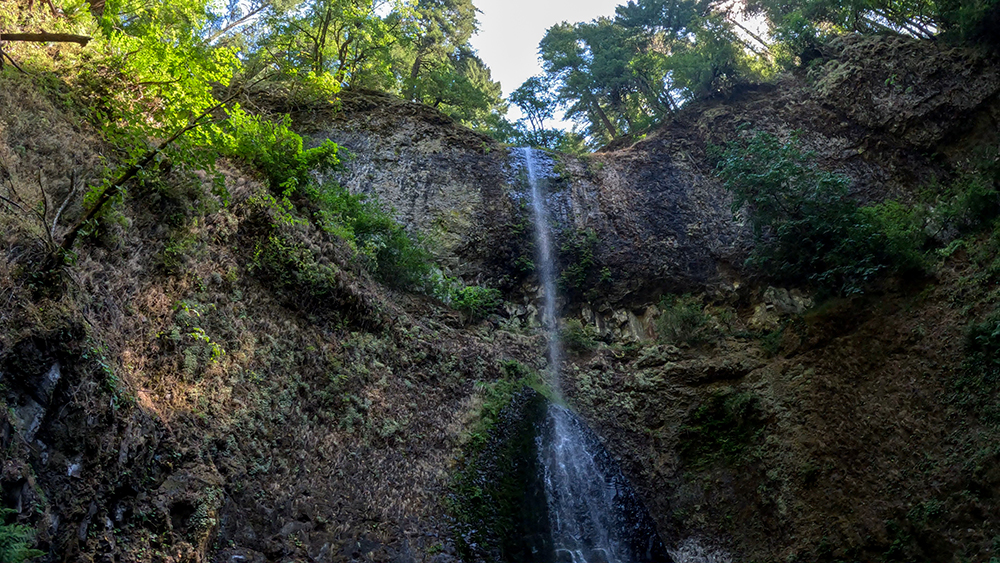
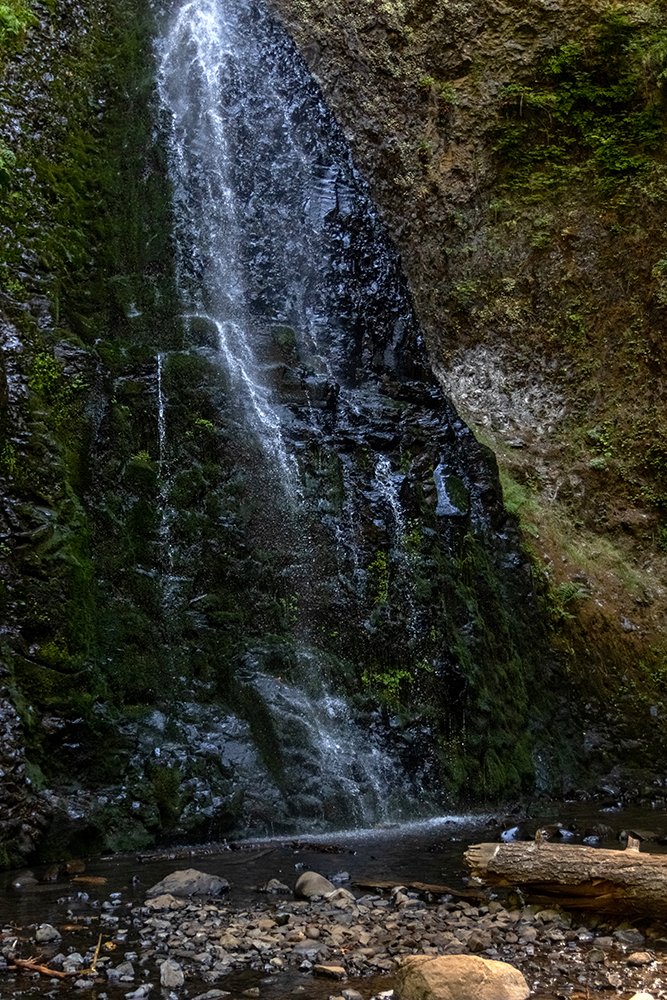
Not far from Lower South Falls was Lower North Falls. This one was a bit dry and much shorter than the previous two. It was also slightly obscured by trees and bathed in harsh sunlight, so I didn’t bother taking too many pictures of it. Instead I just enjoyed the ambient sounds of flowing water, which followed us even as we ventured off down a little offshoot trail to see Double Falls. At 184 feet, this is the tallest waterfall on the Trail of Ten Falls.
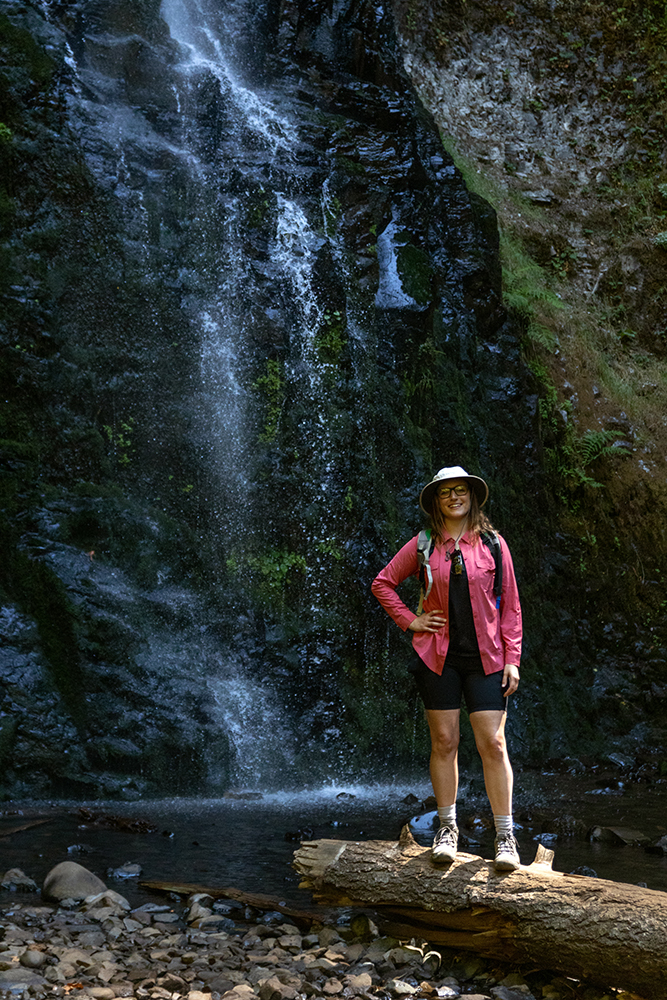
The narrow trail that led to the base of Double Falls opened up to a view of a dizzyingly tall basalt cliff with a thin stream of water running down two tiers of rock. Even though the fall was a bit dry in the mid-summer heat, this still ended up being my favorite one of the day. I liked that it was tucked back off the main trail a ways because it made the area feel more secluded. We got to walk right up to the base of the waterfall, where we craned our necks upward to look up at it.
After Double Falls came Drake Falls. This was the smallest waterfall on the trail, and it was a bit hard to see behind a veil of mossy tree branches so once again, I didn’t take many pictures of it. We only stopped for a minute or two at Drake Falls before continuing along the trail.
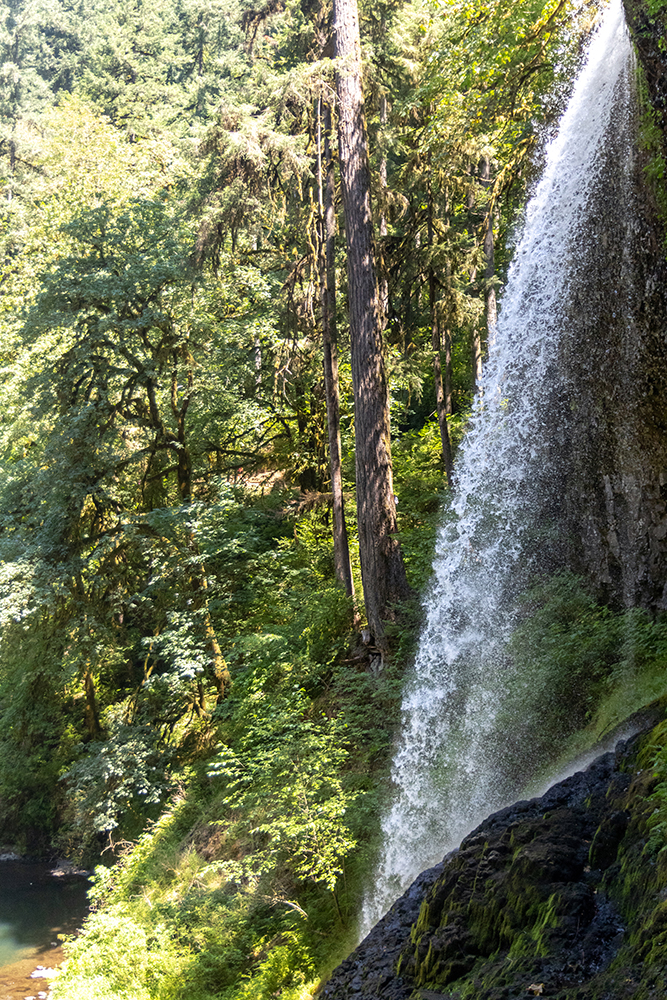
Before long, I could hear the water crashing down from Middle North Falls. Not long after that, the fall become visible behind a stand of tall trees. We followed another offshoot to walk behind Middle North Falls, enjoying the feeling of its mist as we crossed beneath it. On the other side, a vibrant rainbow arced through the mist at is base.

We crossed back under the fall to return to the main trail, and kept hiking until we reached the seventh and final “waterfall” that we would see on our shortened version of the hike. This one was called Winter Falls, and it was immediately apparent how it had gotten its name. In the middle of summer, Winter Falls is nothing more than a slightly damp cliff. We took a quick snack break on a bench below Winter Falls, then we pushed through the rest of the hike, which was mostly uphill from there.
When we arrived back at the car, we collected our lunch and ate on a picnic table in the shade of some towering trees. Then we packed up and drove back to Portland, where we hung out at Amy and Andrew’s house until evening.
As dusk approached, we set out once again, driving a short distance to the Tualatin River National Wildlife Refuge. This was the perfect time for another short walk because the heat of the day had broken and the weather was cool and comfortable. We were also sure to encounter some wildlife since dawn and dusk are the best times to look for wild animals.
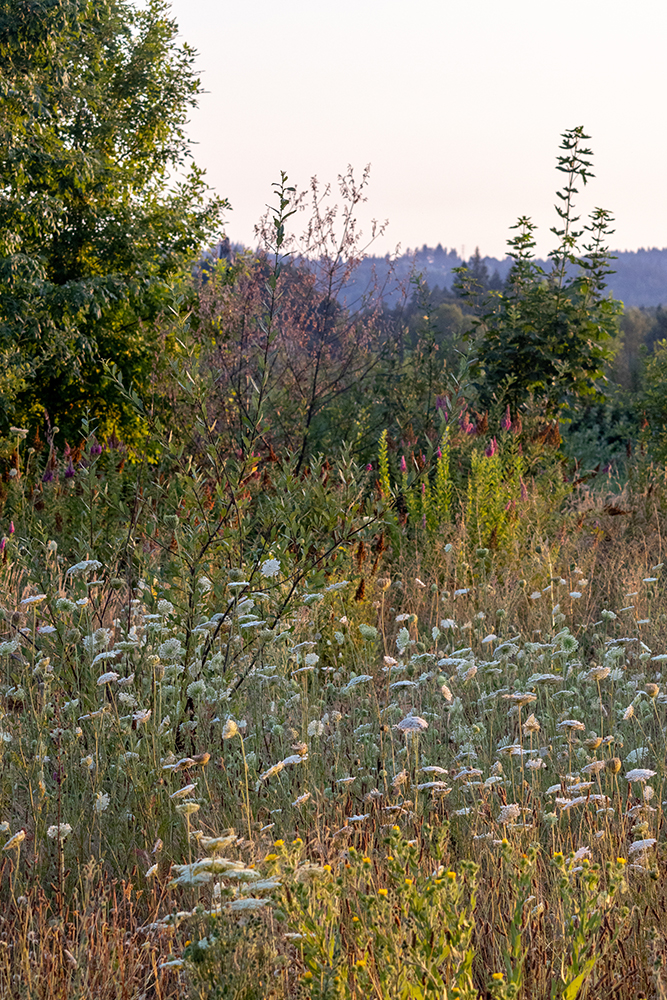
The short trail was lined with Queen Anne’s Lace (wild carrots) that glowed in the soft, orange light of the sunset. I ran my hands over their soft flowers as we walked, until eventually we came upon a small lake. There were lots of Canada geese and mallard ducks floating on its placid water. These are very common, not very exciting species throughout the US, so we weren’t too interested in them, but we did spot something significantly more intriguing swimming through the water. A small, furry head poked up above the surface, leaving a rippling wake behind it as it moved. None of us could agree on what the creature might be. It looked too big to be a muskrat and slightly too small to be a beaver. After much discussion, we decided it was probably beaver. After all, Oregon’s nickname is “The Beaver State” so it must have beavers.
With that settled, we followed the trail of Queen Anne’s Lace until we came upon a small creek. A couple more of the mystery mammals were swimming in it, and they were much closer to us this time. From this distance we could tell that they weren’t muskrats or beavers, but were in fact invasive nutria.

Until this point I was unaware that Oregon had a nutria problem. I knew that they run rampant in the swamps of Louisiana, leaving behind a wake of destruction, but I had no idea they’d made it so far north. So I did a bit of research after we left the refuge to find out how they got there. It turns out that the nutria in Oregon were initially imported from Argentina during a nutria breeding boom during the 1930’s and 40’s. Breeders would sell pairs of nutria and nutria pelts, but eventually the market became oversaturated and collapsed, and many breeders released their animals into the wild. Nutria are voracious plant eaters, and like most rodents, breed faster than they can be culled. It didn’t take long for the animals to multiply and wreak havoc on wetlands and crops. Interestingly enough, when Vince and I were in Argentina last year, we learned that they have a similar problem with invasive beavers that were imported from north America for similar reasons.
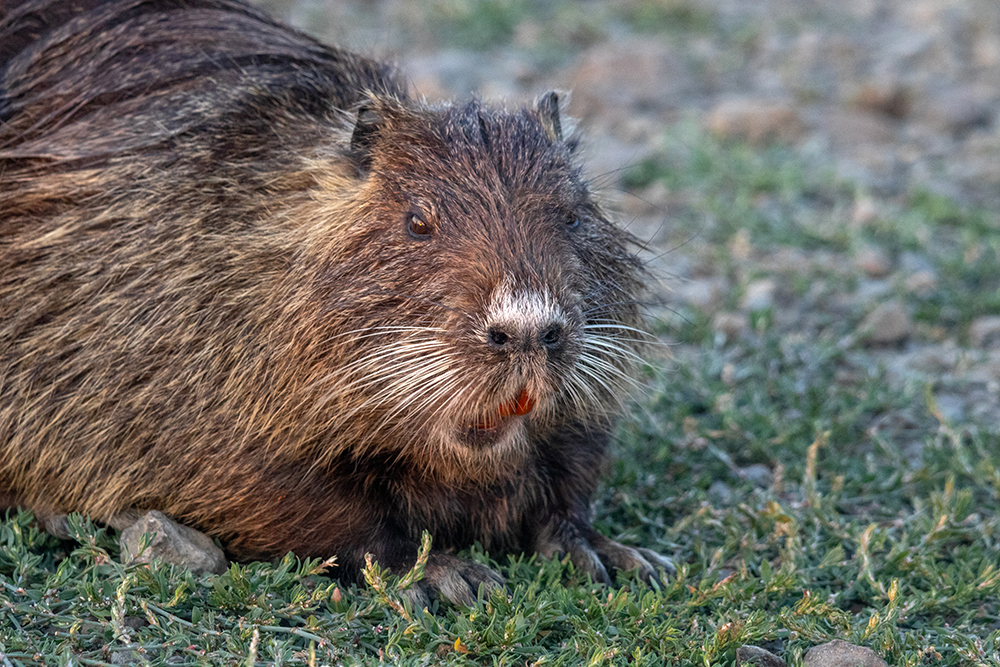
As we watched the nutria, they began to do what they were best at, which is making more nutria. Around this time, we decided we would move on in search of some native wildlife species, and we soon found a surprising one.
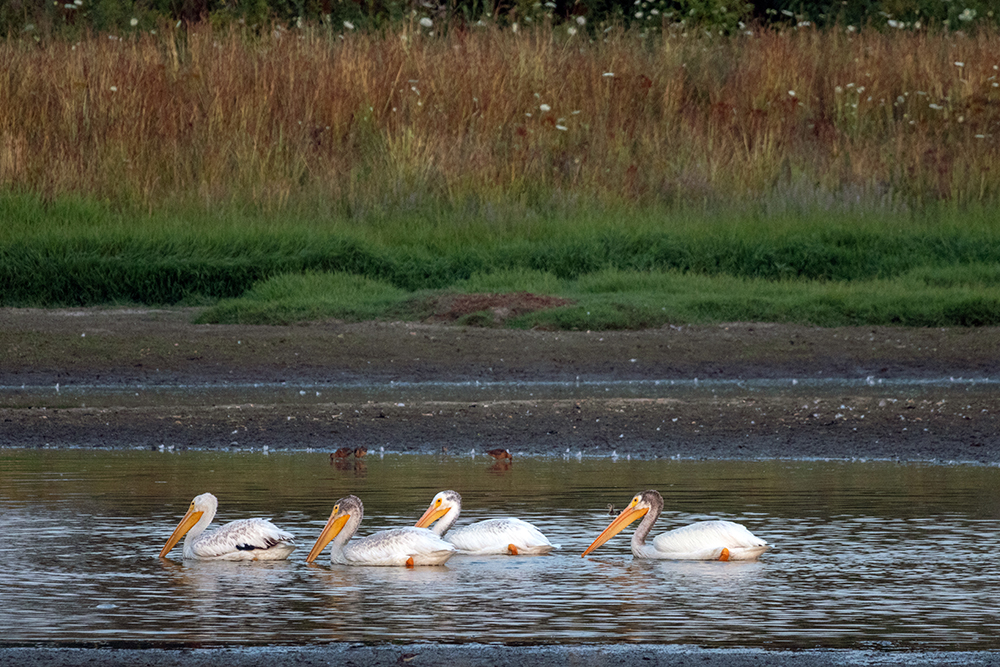
There was a large flock of white pelicans swimming through a lake whose waters reflected the brilliant sunset. Unlike brown pelicans, who live on Oregon’s coastlines, white pelicans stick to shallow, fresh waters in the State’s interior. They’ve become more common near Portland in recent years and have been staying later into autumn than they used to. The northwestern US is summer breeding ground for them, and they migrate south during the winter.
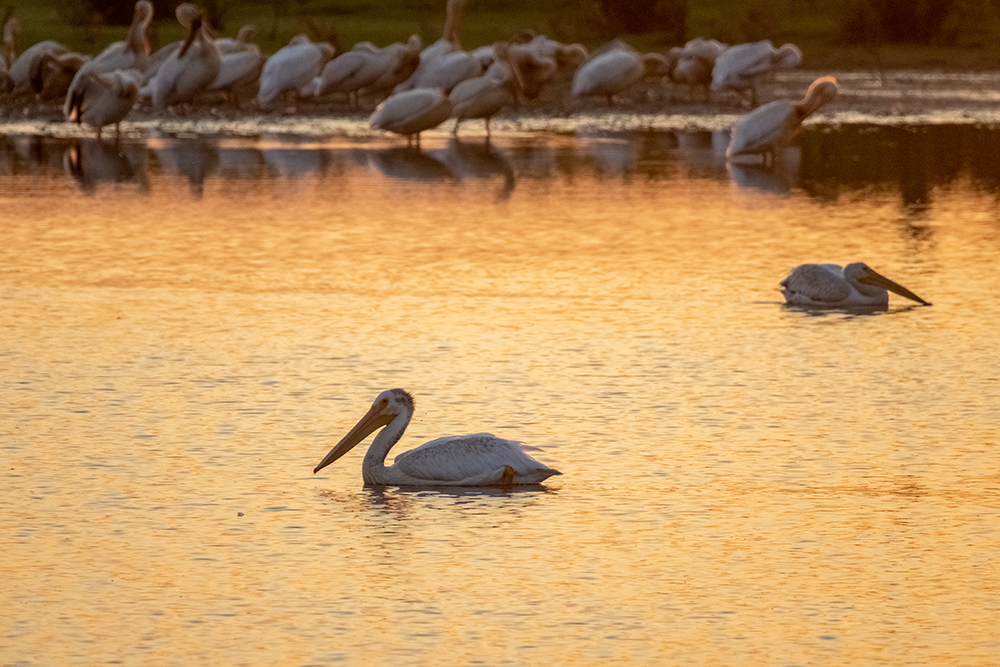
It’s always a treat to see pelicans. I find it fascinating to watch their mouths expand when they feed, and the see how gracefully they soar through the air, almost in defiance of how large they are. They occupied most of our attention after we spotted them, but there were plenty of other birds to be found nearby.
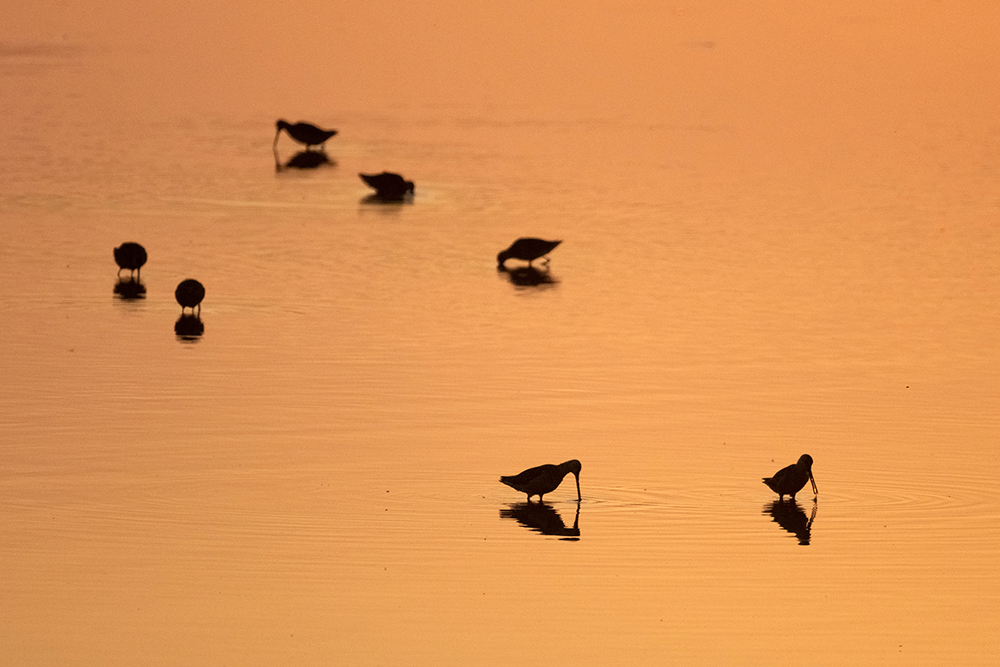
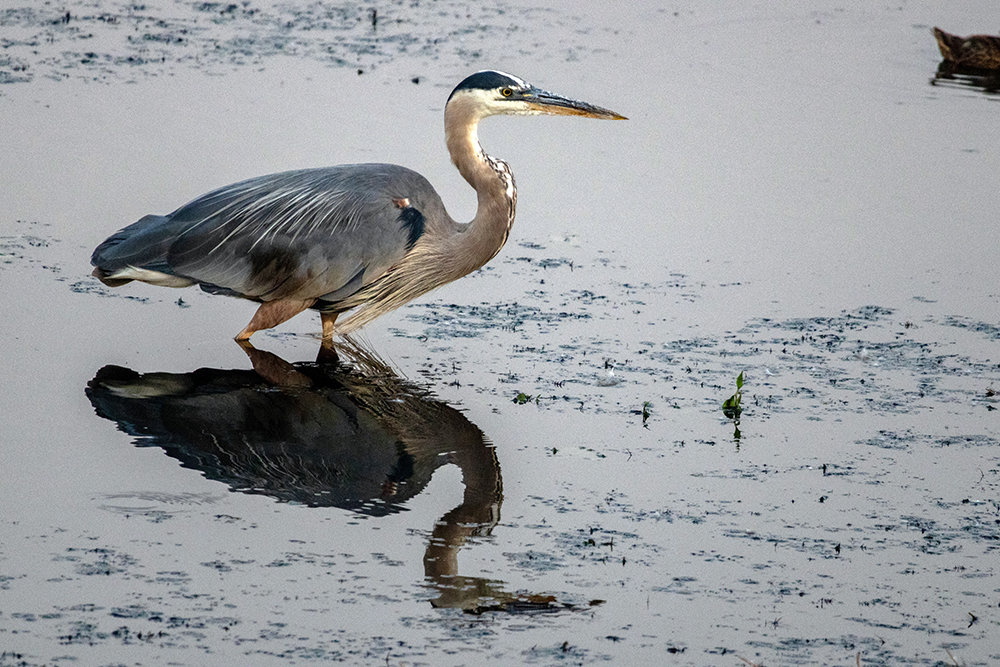
Great blue herons peered down at us from the white skeletons of dead trees that stood tall in the water. A barn swallow swooped in a wide circle around us before landing on a fence post. A flock of sandpipers of some sort waded in the shallow water, silhouetted against the sun. There were birds in every direction we looked.

Suddenly, a graceful shape soaring through the air caught our attention. It was a bald eagle, and it swooped down to land on the shore of a pond. Once it was on land however, the eagle’s grace all but evaporated. It awkwardly hopped from foot to foot on the muddy bank in search of food. We got to watch it catch some sort of crustacean before it took off again to circle in the sky.
In front of where the eagle had landed, a smaller group of pelicans gathered to feed. This was amazing to watch, and we stayed there, spying on the pelicans and the eagle until it was time to leave the refuge.
The park closed at sunset, so with the last straggling rays of the sun’s light, we made our way back to the parking lot. Everyone was thrilled with such a successful evening of birding. We had to force ourselves to stop talking about nutria and pelicans after a while because we still had to make plans for the next day before going to bed. We discussed it for a while, came up with some ideas, and then turned in for the evening.
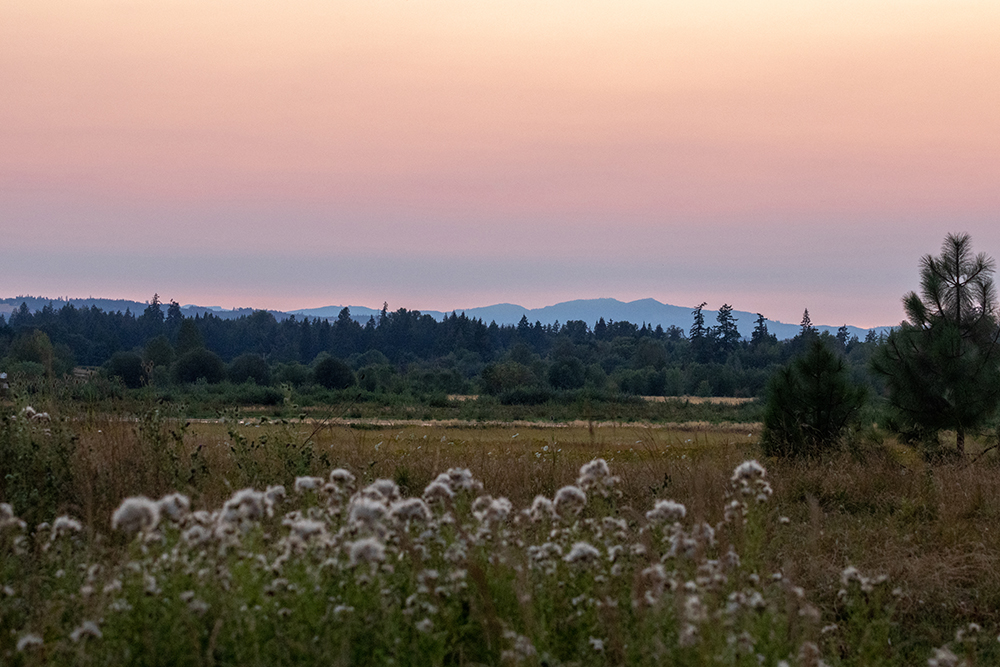
In the morning we set out on a longer day trip to Mount Hood National Forest. Amy knew that I really wanted to see wildflowers in front of a mountain view, and she had picked out the perfect hike to achieve that goal. It took two hours to drive out to Mount Hood, but when we arrived we were happy to find that the view of the mountain was clear despite some nearby wildfires. We caught just a couple of glimpses of the snow-peaked mountain through the trees on our drive up to the trailhead. Bright pink foxgloves lined the roadside until we parked the car in a dusty lot at the entrance to Top Spur Trail.
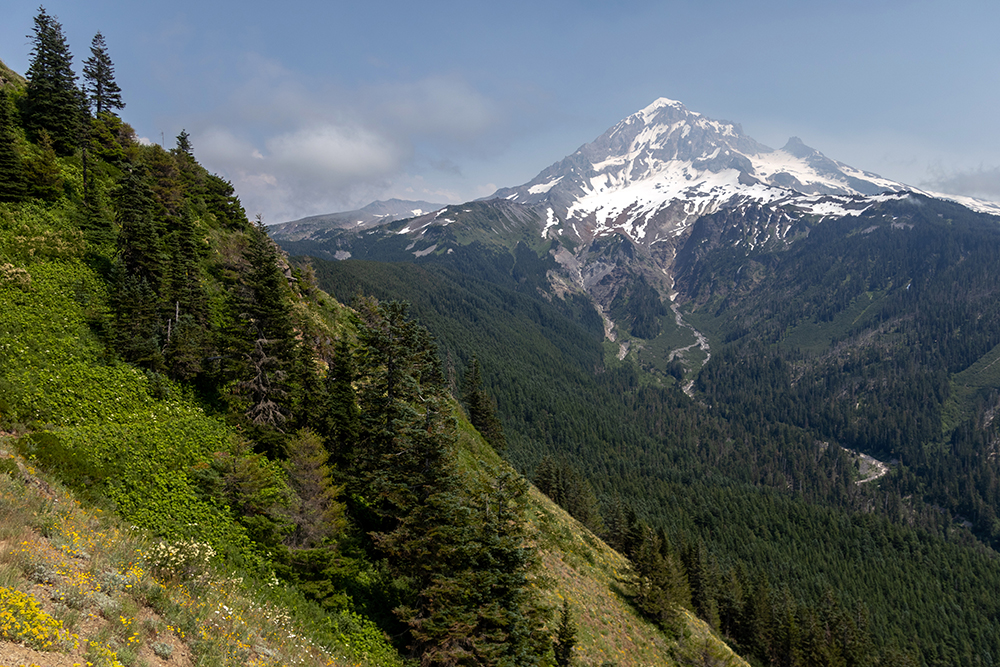
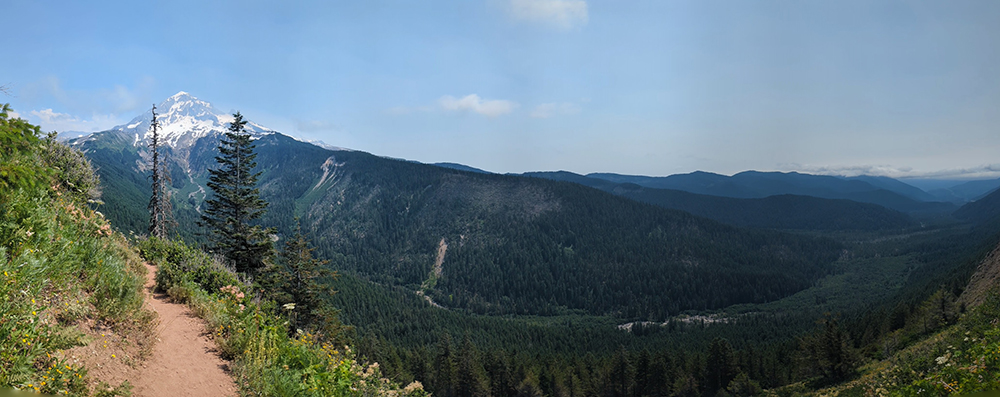
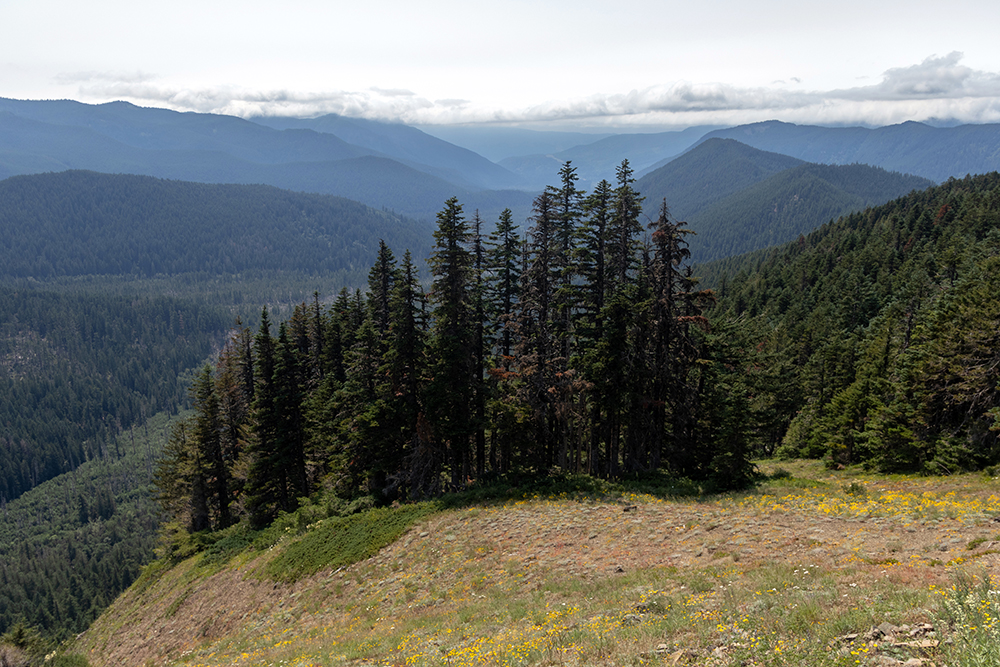
This short hike promised to have some really rewarding views for a relatively low effort. We climbed uphill through a forest of tall pines until the trail leveled off and met up with the Pacific Crest Trail. From there we followed the PCT until the forest opened up, revealing a sprawling river valley far below us. After we’d walked a bit further, the towering form of Mount Hood emerged from Behind the hillside that we were currently traversing.
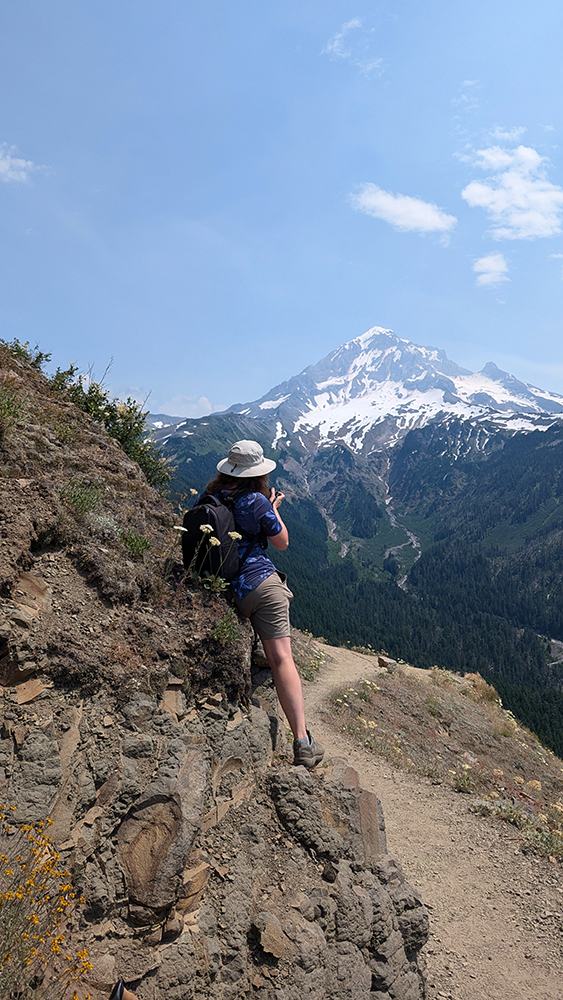
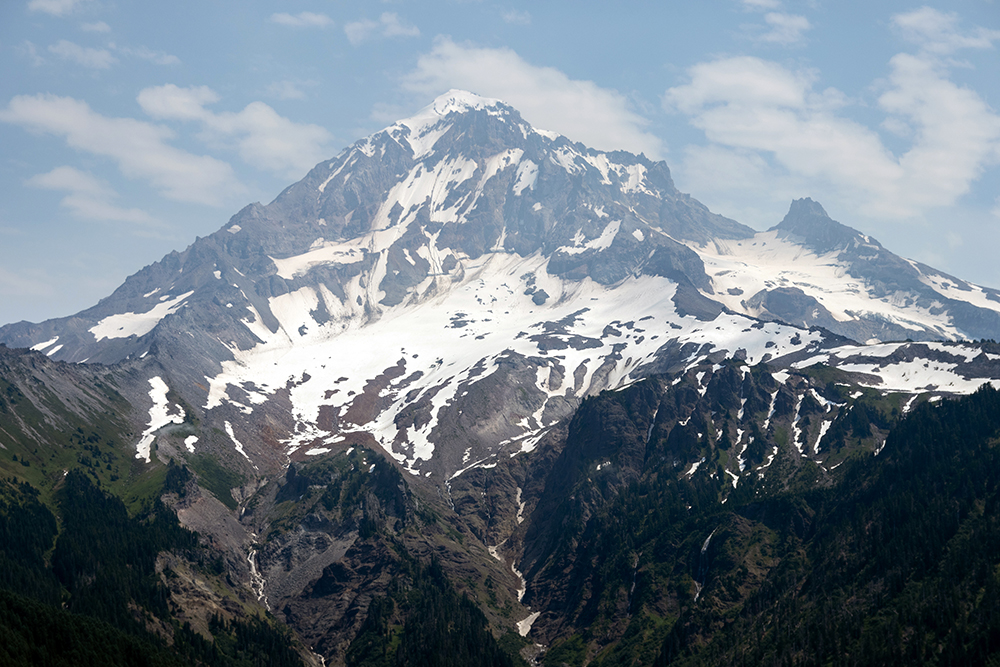
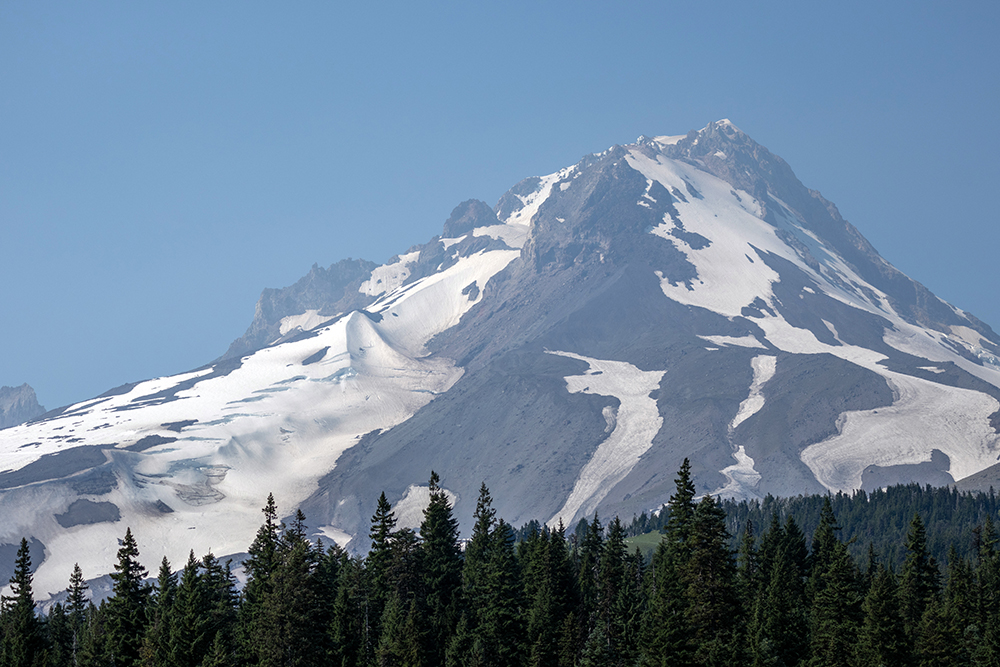
This was by far the most stunning view of Mount Hood I’ve ever seen. Last time we were in Oregon, it rained for most of our trip, and we only got some quick views of Mount Hood on our very last day. But this put those views to shame. Yellow and white wildflowers swayed in a gentle breeze, framing the backdrop of Mount Hood’s snowy peak to perfection. The sky was a dusty blue, and slightly hazy from the wildfires, and the forest and valley below us were deep, vibrant green. It looked as though the saturation had been dialed up on the entire scene. This was one of those rare occasions when real life looks like its been edited to perfection in Photoshop.
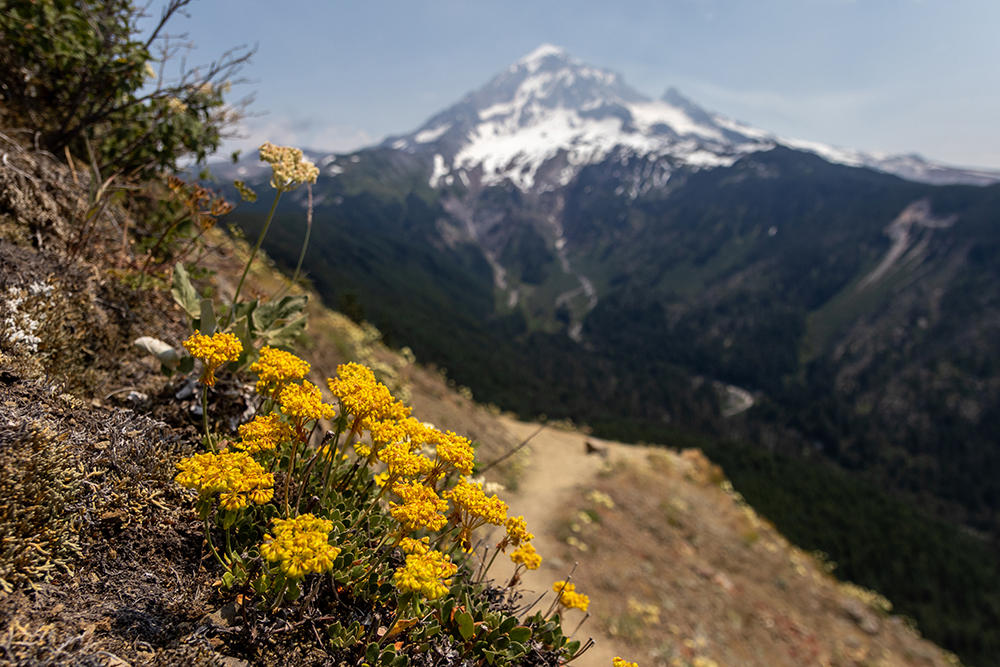
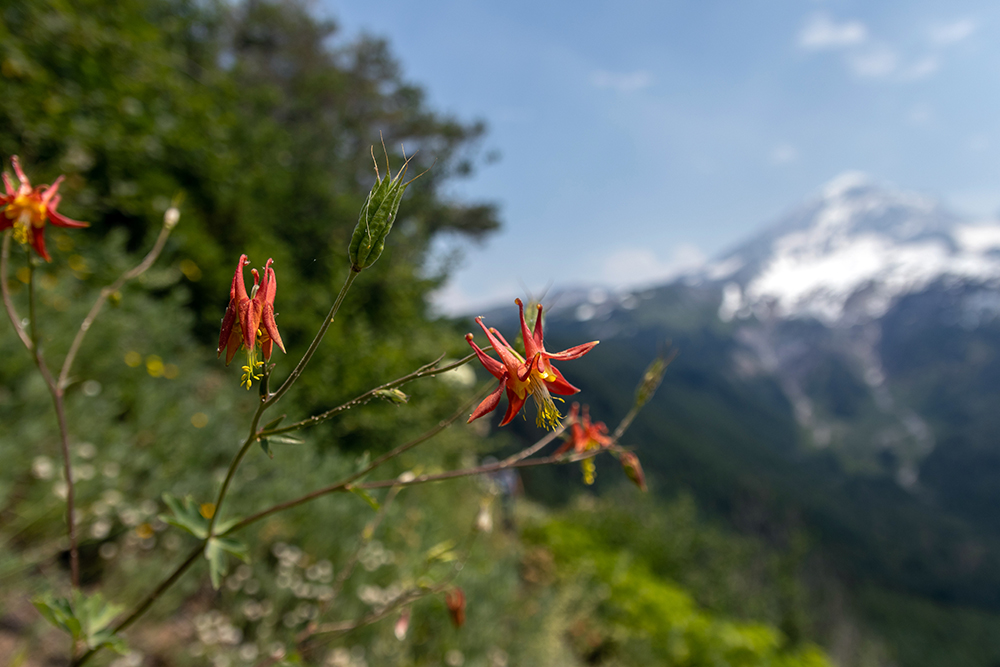
I bounded off down the path to take some pictures of the wildflowers, and when the others caught up to me, I could tell that Amy was excited that I was enjoying the trail she’d chosen. She had good reason to be proud because it truly was spectacular. It’s not often that you get such fantastic views on such an easy hike, and I was loving every second we spent there.
Wildflowers brushed at our ankles as we continued along the path, stopping frequently just to take it all in. Mount Hood is the highest mountain in Oregon, and is an active volcano in the Cascade Volcanic Arc. This range also includes other notable volcanoes such as Mount Rainier, Mount St. Helens, and Mount Mazama or Crater Lake. The most recent catastrophic eruption in the Cascade Volcanic Arc was when Mount St. Helens famously erupted in 1980, but Mount Hood has had volcanic activity in the last 1500 years, and still has potential to erupt again. Odds are low that it will happen within the next few decades, but scientists still monitor the mountain for signs of potential activity. For now though, Mount Hood is an outdoor enthusiast’s playground; an ideal destination for skiers, climbers, and hikers & backpackers.
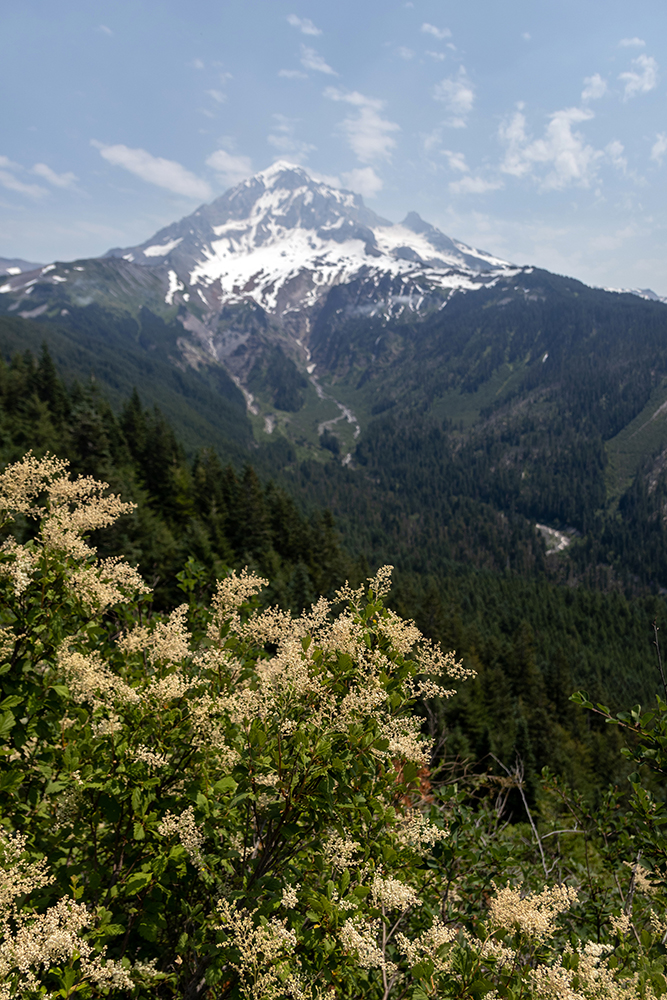
We kept walking down the trail until it reentered the forest. From there, we could keep hiking for several more miles to get to another viewpoint, or turn around and head back to the car. None of us were prepared for a much longer hike, so we decided to turn around and retrace our steps. That meant that we got to enjoy the same amazing view one more time on the return trip. This really was the most perfect day you could ask for in the mountains, and I kept turning back to look at Mount Hood every few minutes until we made it back into the forest once again.
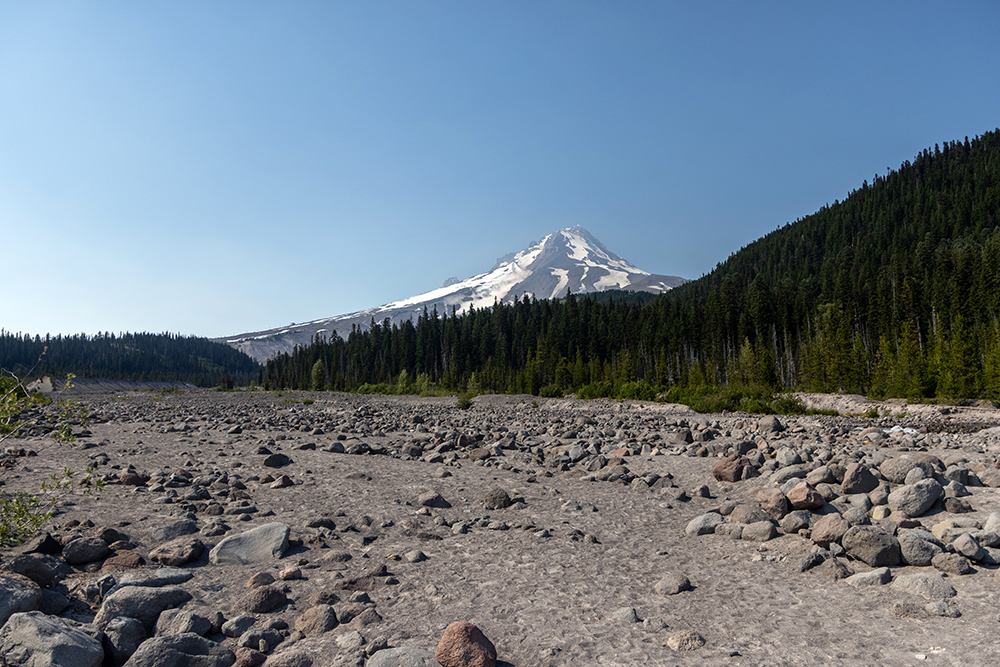
It was a quick hike back to the car from there, and when we arrived, we decided to drive around the mountain to check out one more scenic viewpoint for the day. Andrew drove us over to White River Sno Park, a popular access point for cross country skiing and sledding in the winter time. On this summer afternoon, we had the park to ourselves though, and we enjoyed a beautiful view of the babbling White River as it flowed down from the snow fields of Mount Hood.
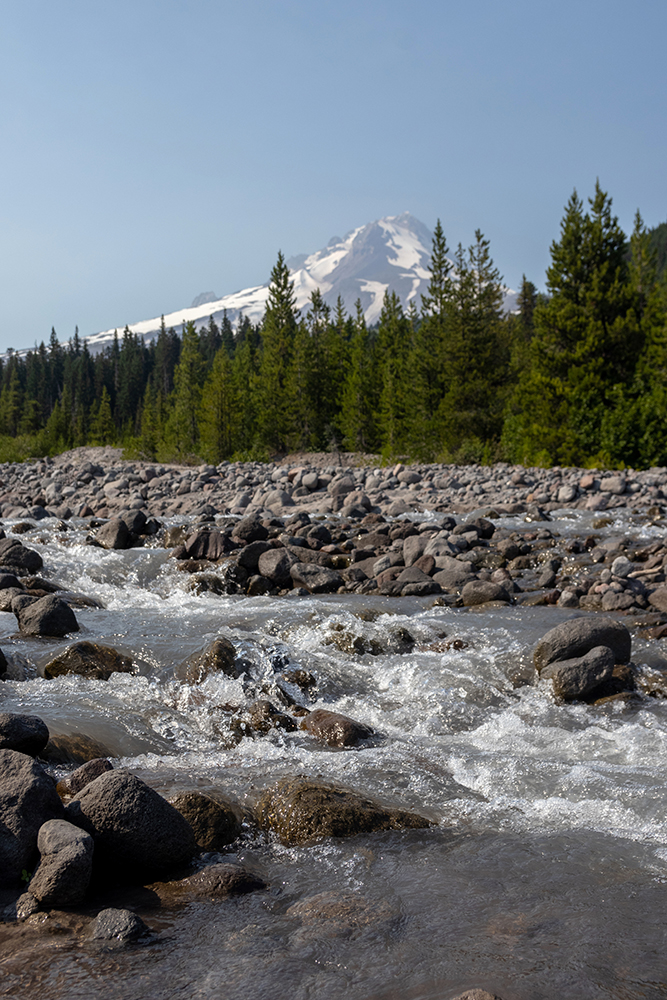
The river drowned out all other sounds, creating a peaceful atmosphere as we enjoyed the end of our second day in Oregon. Vince and I would have to say goodbye to Amy and Andrew the next morning. We would be driving north to visit some more friends in Seattle, and they would be going back to work for the week. But thankfully, we would see them again in a few days since we’d have to catch our flight home out of Portland. In the meantime, we enjoyed one more evening with our friends. We were sad to have to leave, but we were also excited for the adventures to come on our five days in Washington!




 birdsoftheairtravel.com
Once again, another gem of a story. Enjoy following your travels to places I hope to visit sometime. Good memories of our time together in South Africa.
Best, Jerry and Pam Hunefeld
Thank you Jerry and Pam! It’s always great to hear from you, and I hope I’ll see you on a Percussive Tour again sometime!
Your photos are beautiful and so is Oregon. While I haven’t been to this corner of the world yet, it lingers very high on my travel wish list as it is a perfect place for outdoor enthusiasts. And of course, not to mention it is a postcard-worthy Pacific Northwest destination with a wide variety of landscapes to capture in pictures and just as many activities to enjoy. Thanks for sharing, and have a lovely weekend 🙂 Aivaxx
Thank you so much! I hope you make it out there sometime. The Pacific Northwest is definitely one of the most beautiful regions in the US; I could keep going back again and again!
🥰🥰🥰