There is nothing—absolutely nothing—half so much worth doing as simply messing about in boats.
-Kenneth Grahame
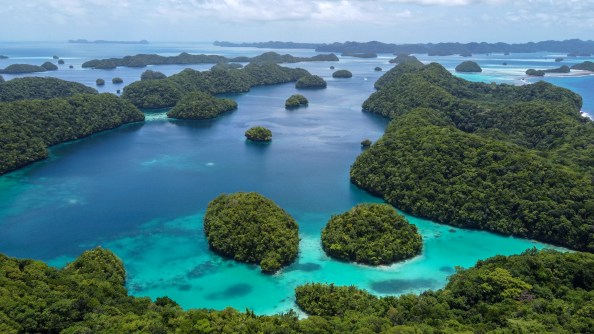
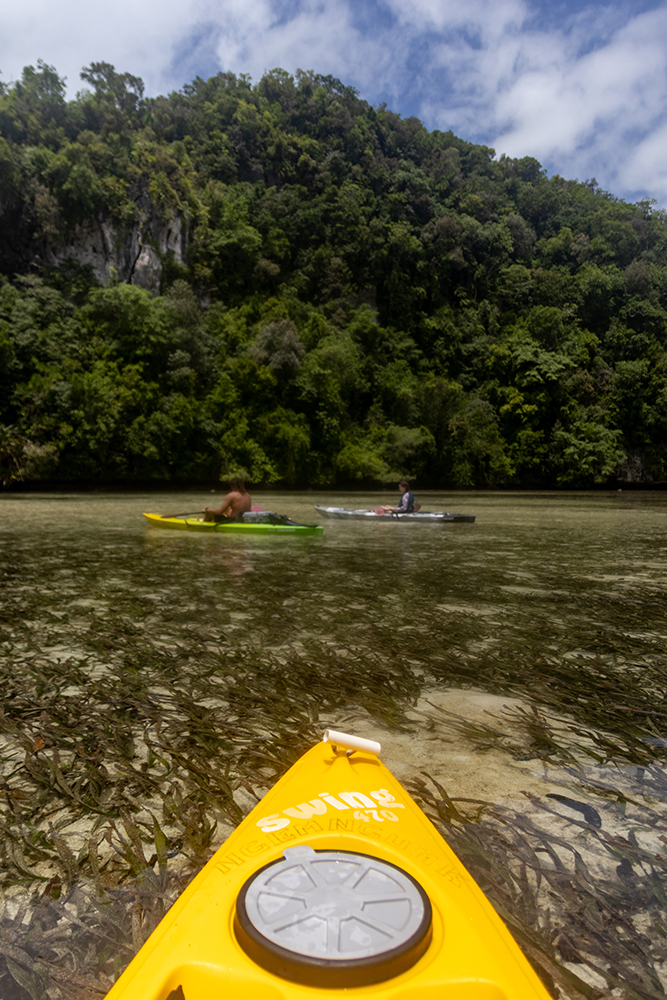
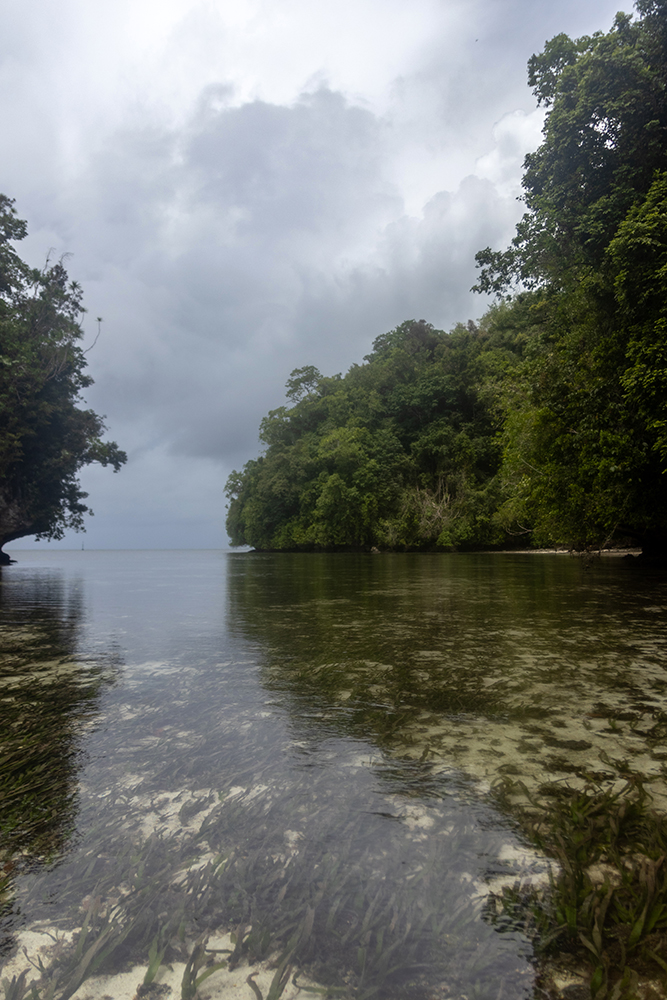
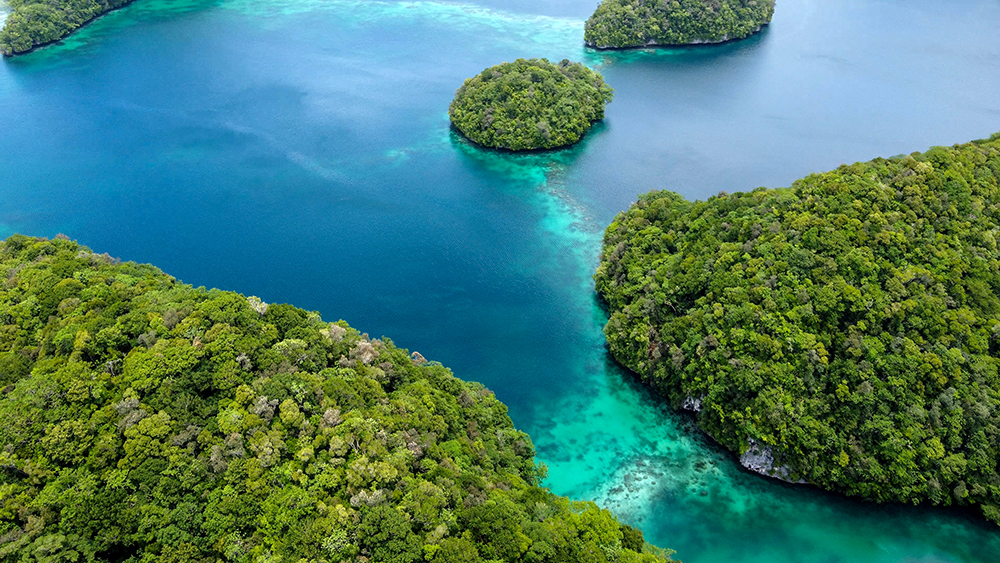
Rhythmic splashes of paddles were the only sound to disrupt the awed quiet of an early morning as sunlight shimmered off of the emerald green waters of Palau’s rock islands. Above me, limestone cliffs crowned with lush, leafy trees rose from the sea. I inhaled a deep breath of warm, salted air. The humid morning smelled verdant underneath the overpoweringly fresh aroma of salt water. Suddenly, a high pitched, trilling whistle broke the silence, echoing down from the tree-topped stone and bouncing around the emerald bay I floated in until it felt like I was drowning in the sound. It was alien, and almost electronic, like the feedback of a microphone held too close to a speaker. I looked around at my companions to see their reactions to the unnatural noise, but they seemed as nonplussed as I was.
Our guide, Finn with Paddling Palau, quickly jumped in to provide an answer. The eerie sound was the call of a common cicadabird. Found throughout the tropical regions of Australia, eastern Indonesia, and Papua New Guinea, the cicadabird gets its name from it’s insect-like call. I squinted my eyes at the trees to see if I could find the loud little bird, but the sound echoed so much that it could have been coming from anywhere. I quickly gave up and resumed paddling through the warm waters of Risong Bay as Finn led the way.
We had come to the Rock Islands for a full day of kayaking, snorkeling, and learning about the local ecosystem, and although the tour had just begun, Finn had already proved himself to be an extremely knowledgeable guide. As we paddled, he provided a wealth of information about the Palau’s ecology, history, and wildlife, all staged in front of a backdrop of some of the most beautiful islands on earth.
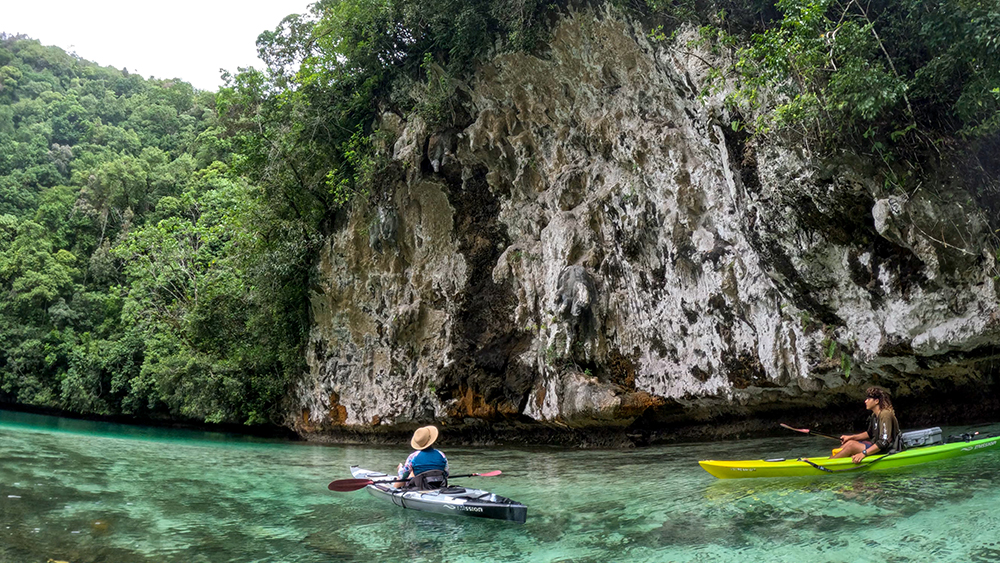
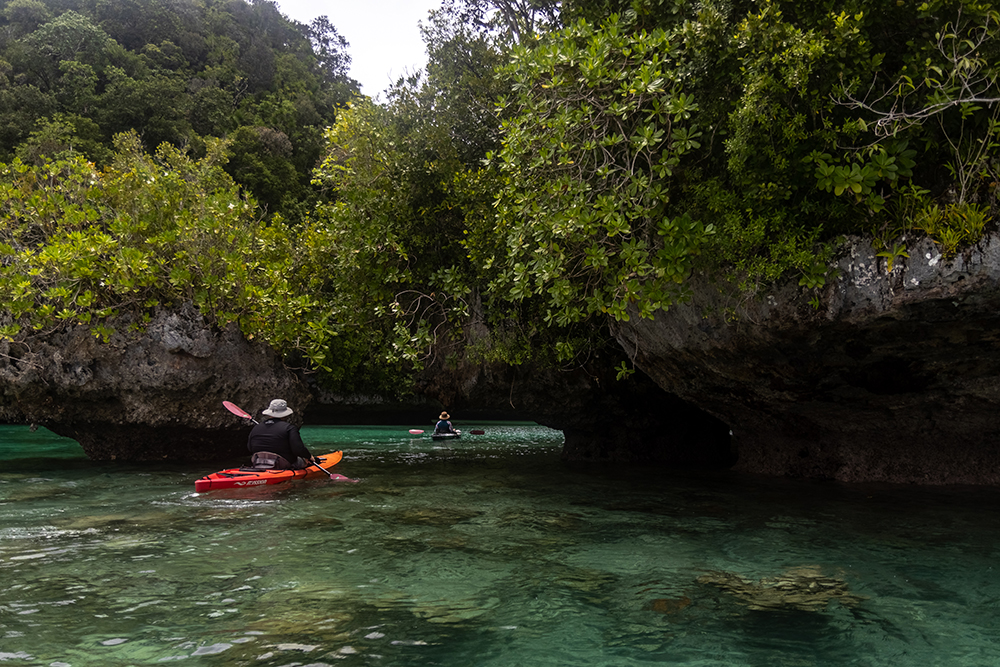
I was still pinching myself, trying to believe that we were actually in Palau, the top country on my travel wish list for about a decade, as we paddled toward a long tunnel at the base of one of the limestone islands. The cave served as a gateway to a shallow bay where juvenile blacktip reef sharks grow, safe from the predators of the open ocean. We propelled our kayaks into the tunnel, and were forced to lean backwards so our heads wouldn’t scrape against the rocky ceiling. When we were through, we found ourselves in a much shallower bay with brown seaweed flowing below us. The bay was fringed by a thicket of mangrove trees, and this is where we began our search for the baby sharks. Nobody made a sound as we peered into the shallow water, trying our best not to scare the notoriously shy creatures. Our efforts turned out to be in vain, and we had to move on. There may not be any blacktips for us to see, but there were still lots of items on the day’s agenda, and we had to time everything in accordance with the tide.

Next we stopped off in a cave where crocodiles can sometimes be found. Once again, we had no luck, but it was very cool getting to float into the dark cave, and then turn around to see light filtering in from the bay beyond its opening. This was also a great spot for to get a quick group photo before pressing on toward our first snorkeling spot.

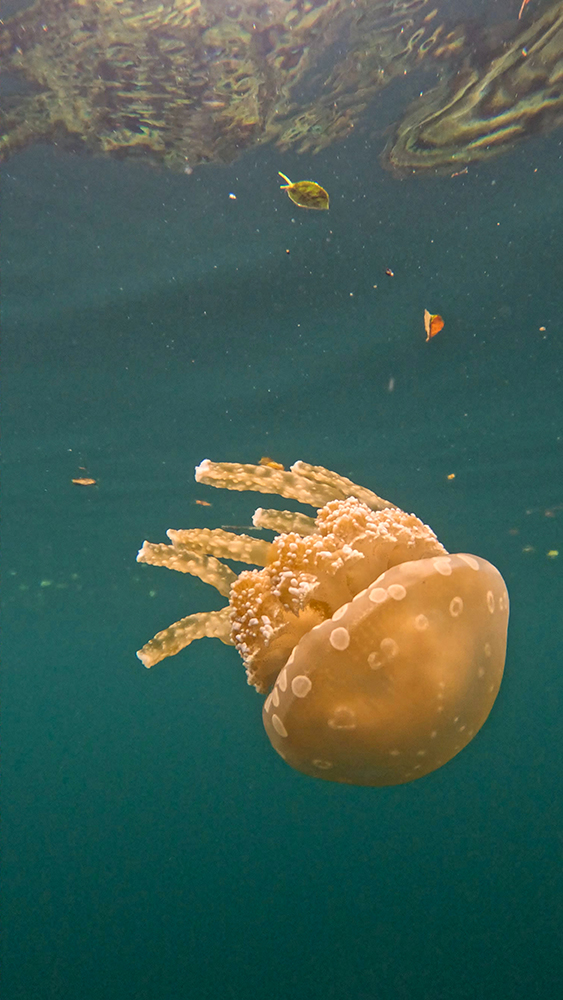
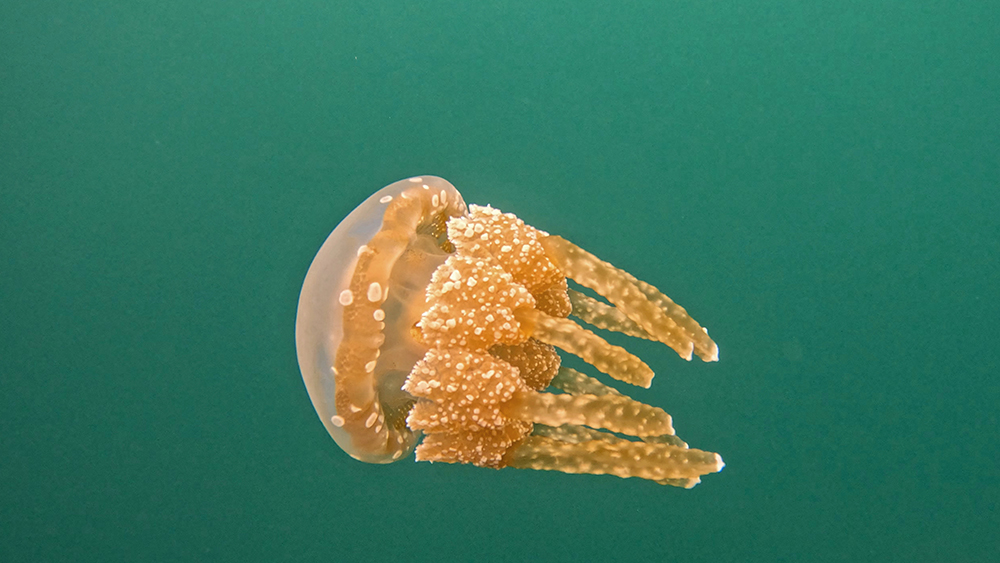
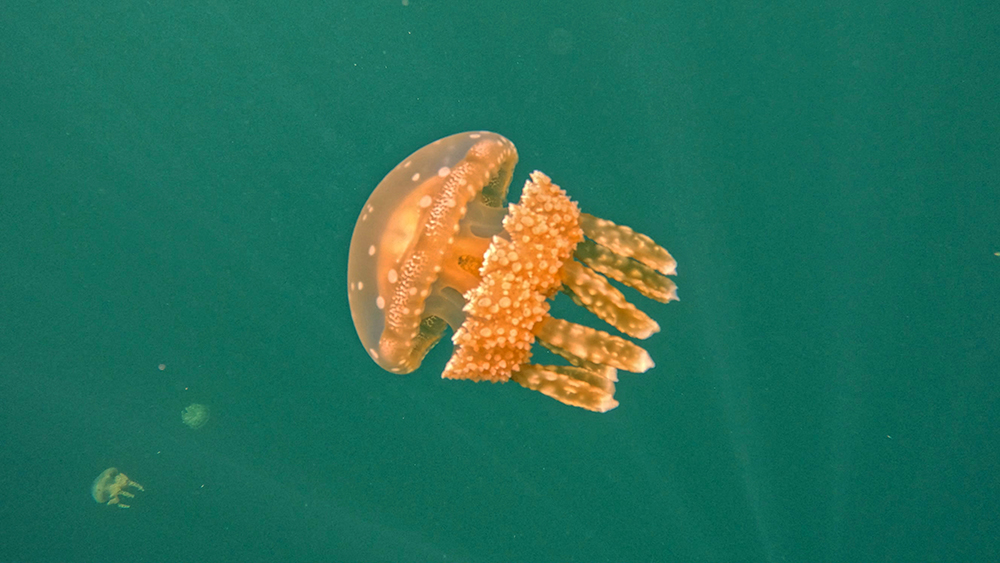
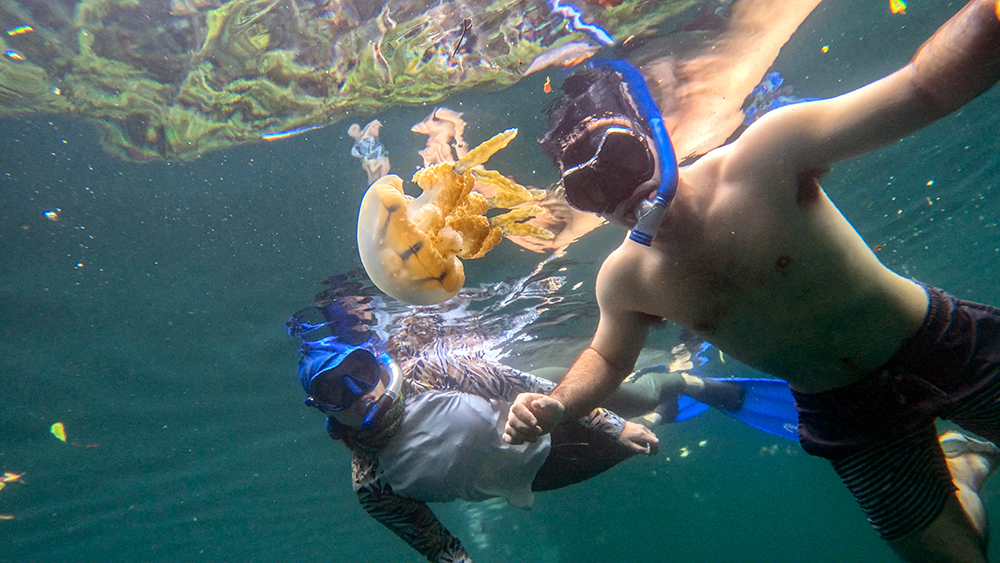
This time as we paddled, Finn started to point out a handful of golden shapes floating just under the surface of the green water. I peered over the edge of me and Vince’s kayak to find a watery vignette of the most beautiful jellyfish I’d ever seen just before it sank out of site, disappearing into the depths of the bay. It was a Mastigias Papua, a stingless, lagoon dwelling species of jellyfish whose range extends throughout the Indo-Pacific. The Mastigias Papua is a relative of the Golden Jelly, a subspecies that is found only in the marine lakes of Palau.
In fact, the lake where the Golden Jellies live is one of the main tourist attractions in Palau. Until 2019, millions of jellyfish floated in the lake’s waters, until a La Niña made the water too warm for them, and caused them to reproduce in smaller numbers than usual. I’ll go more in depth on the Golden Jellies in my next post about our visit to the Jellyfish Lake. The reason I’m mentioning them now is because Finn was looking for a good spot for us to swim with the Mastigias Papuas. Since we wouldn’t get to see the lake at max occupancy, he wanted to make sure that we got to swim with Palau’s other stingless jelly to make up for it.
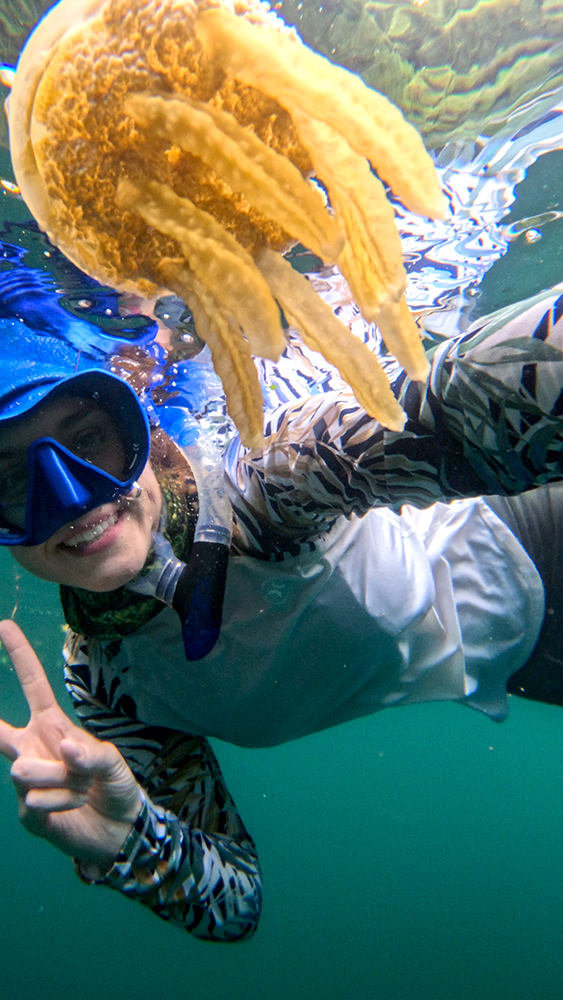
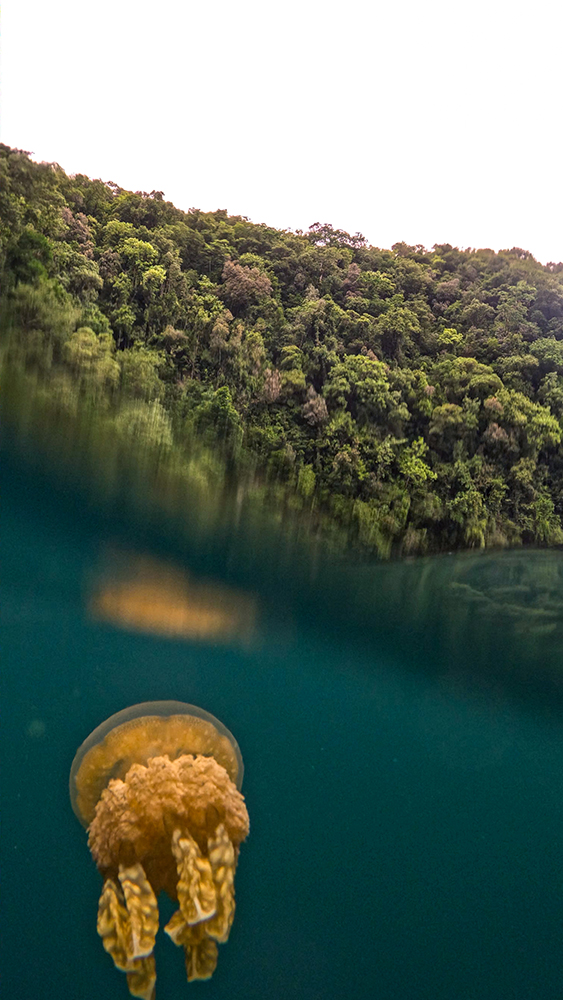
Once we started seeing the bobbing forms of the jellies with some frequency, Finn told us we could put on our snorkel gear and get in the water. I pulled on my mask, snorkel, and fins, and slid over the side of me and Vince’s tandem kayak into the refreshing lagoon. All around me, the tentacled forms of jellies floated up and down, as though they set to move on half speed while the rest of the world continued on at a normal pace. The milky lagoon water looked like an infinite, green abyss, with no discernible bottom or sides, adding to the illusion that the jellies were living in suspended animation.
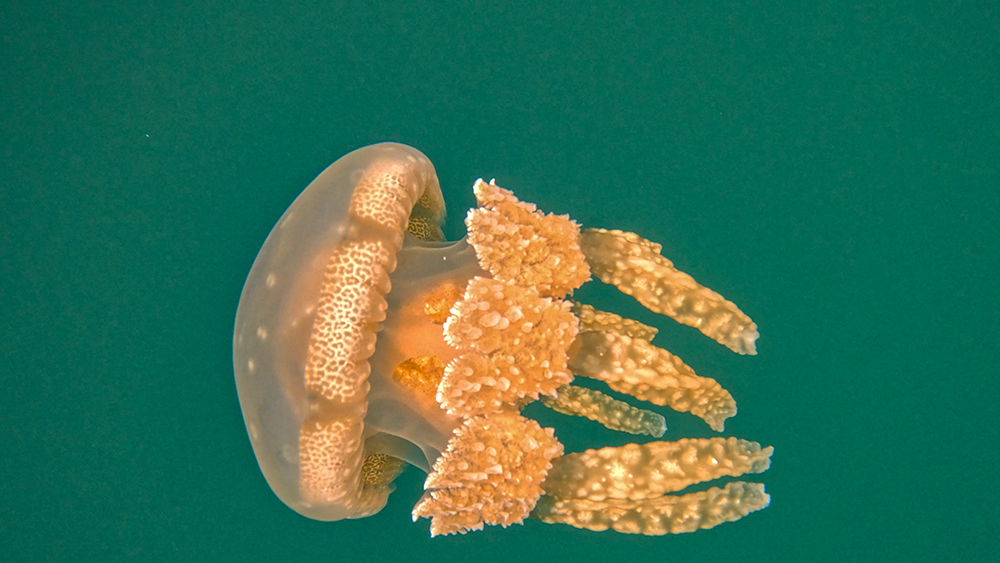
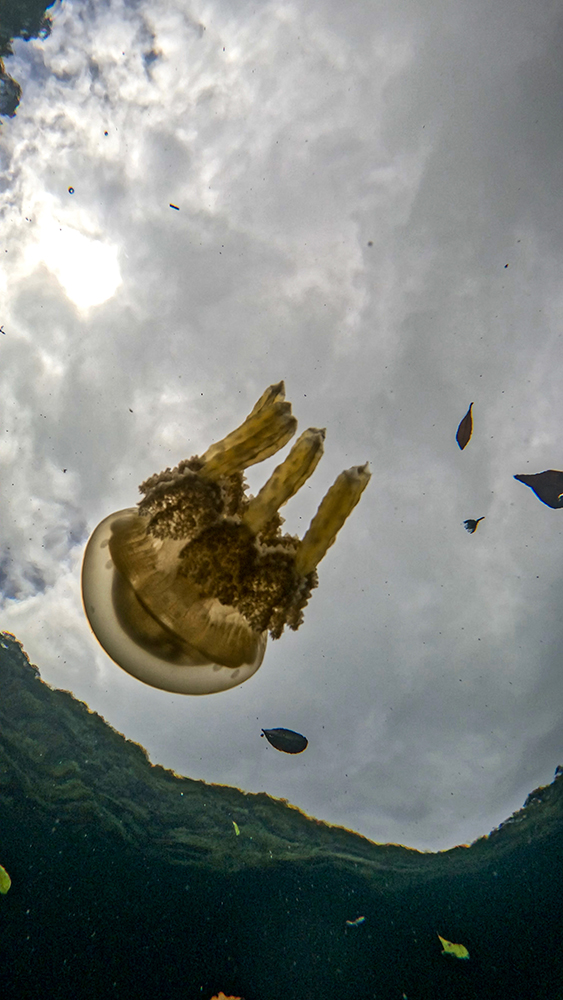
It was impossible to swim without accidentally bumping into jellies, so it was a real relief not to have to worry about getting stung. We spent the better part of an hour diving down to swim below the jellies and look back up at their silhouettes against the sky, and just floating and staring at the ones near the surface. Up close, I was fascinated by the array of patterns an textures throughout their bodies. Some had blue spots, while others were entirely made of shade of orange. Their tentacles pulsed as they moved slowly upwards or downwards, rising and falling in and out of the murky depths.
Everyone had worked up an appetite by the time we finally decided to get back on our kayaks and continue on to the next segment of our tour. We paddled back through the maze of islands we’d navigated that morning, and tried one more time to find juvenile sharks (a couple members of the group got a very brief glimpse of one). Then we exited through the rock tunnel. Tide had fallen significantly, and we didn’t have to duck as we glided through this time. After a short paddle around the exterior of a couple of islands, we found the speedboat that had had transported us from Koror early that morning, along with captain RD waiting for us with bento box lunches.
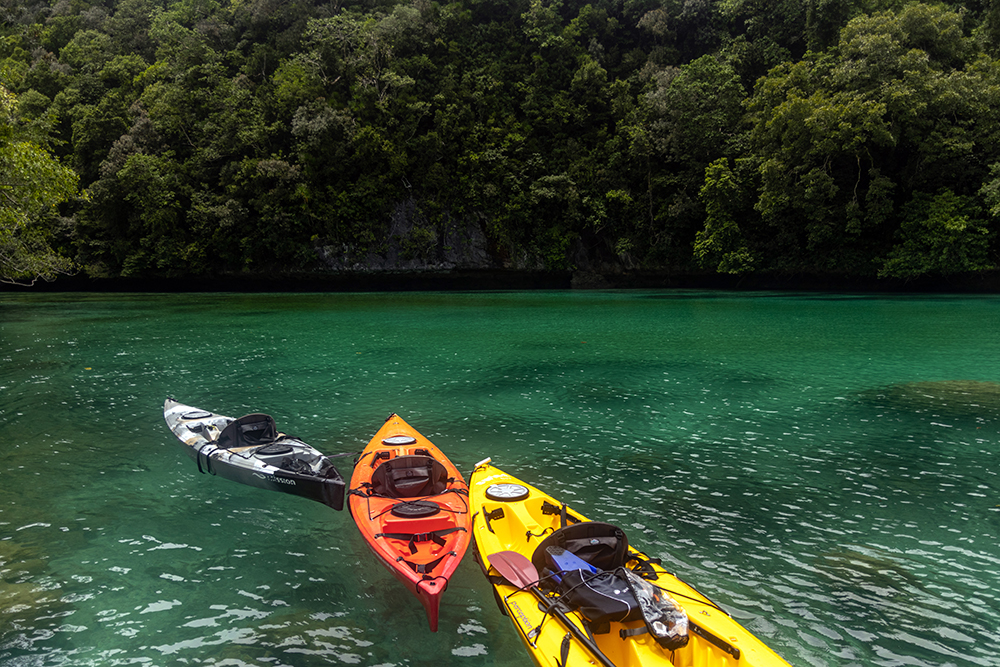
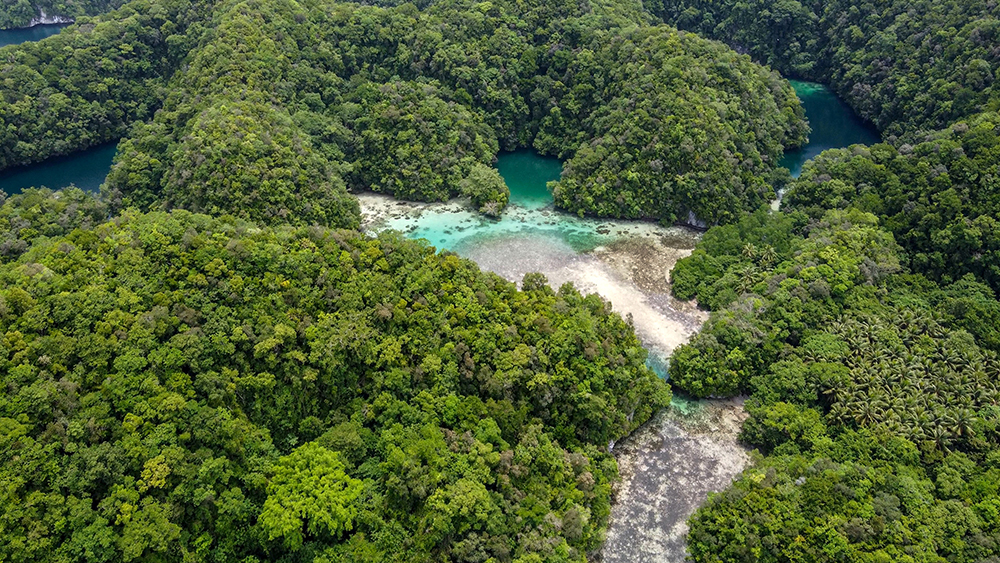
The speedboat was parked in another tranquil lagoon, and we tied off our kayaks, and climbed aboard to enjoy our lunches, Aloha juices, and a pack of peanut butter Oreos that Finn had packed. I swear, being outside and exercising enhances the flavor of any food you eat afterwards, and this was no exception. Lunch was downright delicious, and the view we got to enjoy while we ate was lovely. Vince even fired up his drone to get an aerial view of our surroundings. We didn’t have time to do a scenic plane ride over the rock islands (another very popular tour in Palau), so it was cool to get to see the islands from this perspective through his control screen.


After lunch, it was time to get back on the water. Finn challenged us to try to find a nearby WWII shipwreck without his help, and Vince and I were the first to spot it. We floated in the shade while Finn taught us about Palau’s WWII history. He told us about the brutal Battle of Peleliu (the US military used the codename Operation Stalemate II for this offensive) which lasted from September to November of 1944. American forces greatly outnumbered the Japanese on the island, where the Americans were trying to capture an airfield. The Japanese however, had built very effective fortifications on Pelelui, resulting in what was projected to be a four day battle dragging on for over two months. By the end of the siege, both sides had suffered heavy losses, causing many to question if the operation was worth the excessive casualties it incurred.
We all pondered the shadowy remains of the wrecked ship in somber silence after Finn finished telling the story. The gruesome history that unfolded in the area seemed utterly incongruous with the peaceful, natural paradise that Palau’s Rock Islands are today.
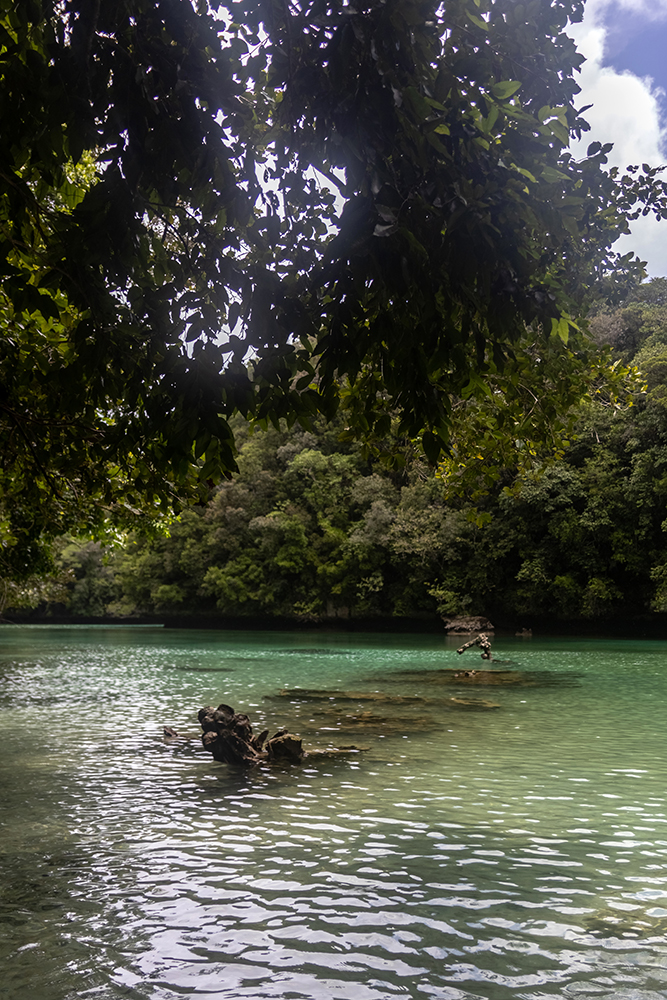
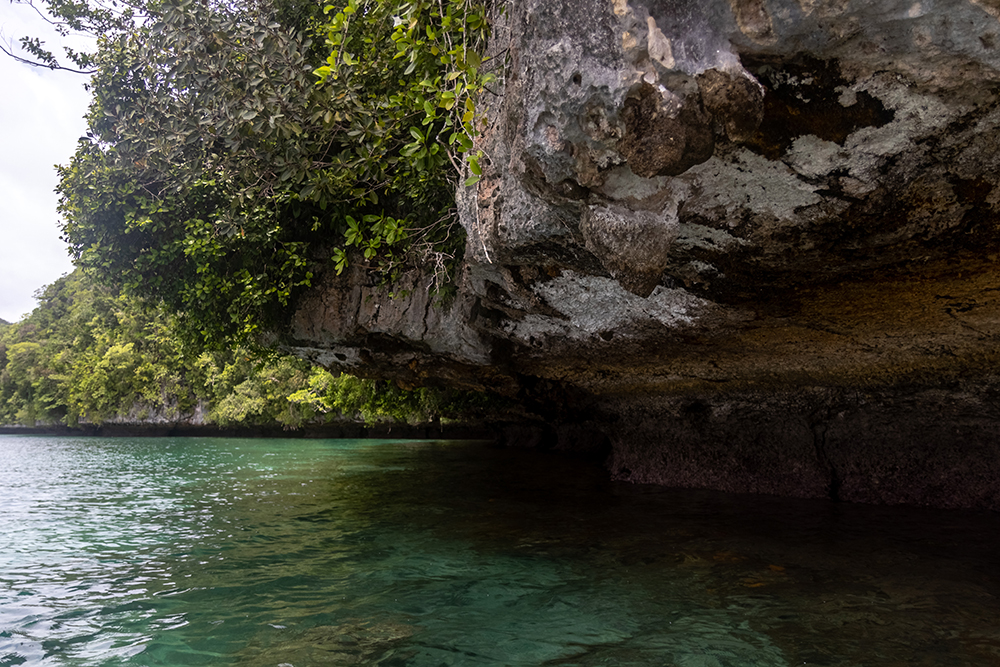
Our subdued mood dissipated as we resumed our paddle, exiting the protected bay to travel along the outside of a large island. Sea birds swooped and glided above the ocean’s surface around our boats, and Finn stopped to point out a rock covered in Chitons (mollusks that look like they are wearing tiny suits of armor). We pulled up closer and watched them move, ever so slightly, atop the jagged limestone. Then we cruised along underneath an overhanging cliff with scraggly tree branches spilling over its edge, until we rounded into another protected bay. RD was there waiting for us with the speedboat, but we still had one more bay to explore before it was time to board the boat and return to Koror.

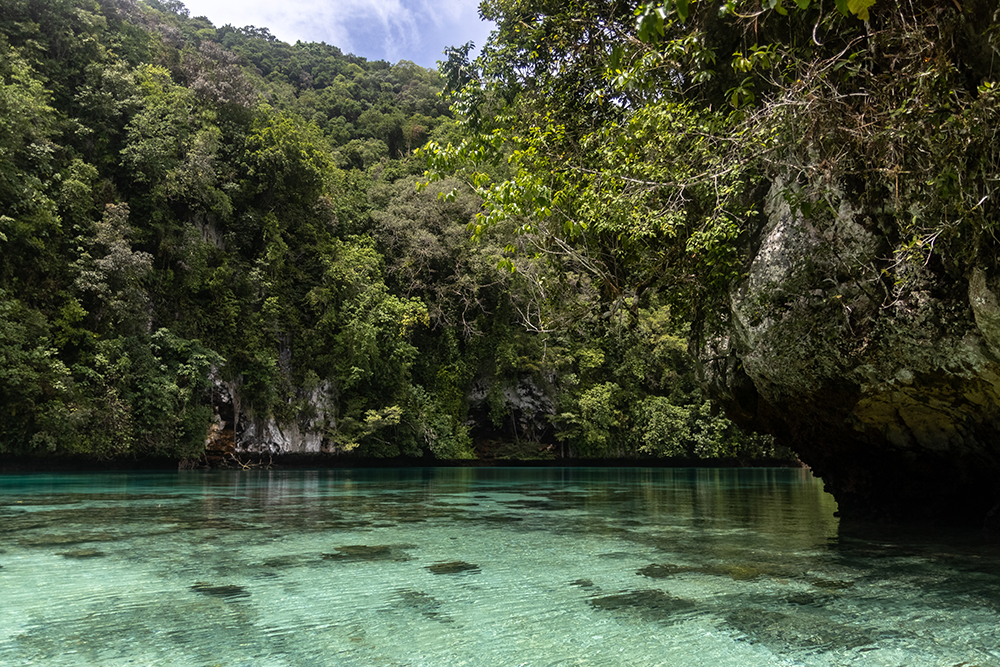
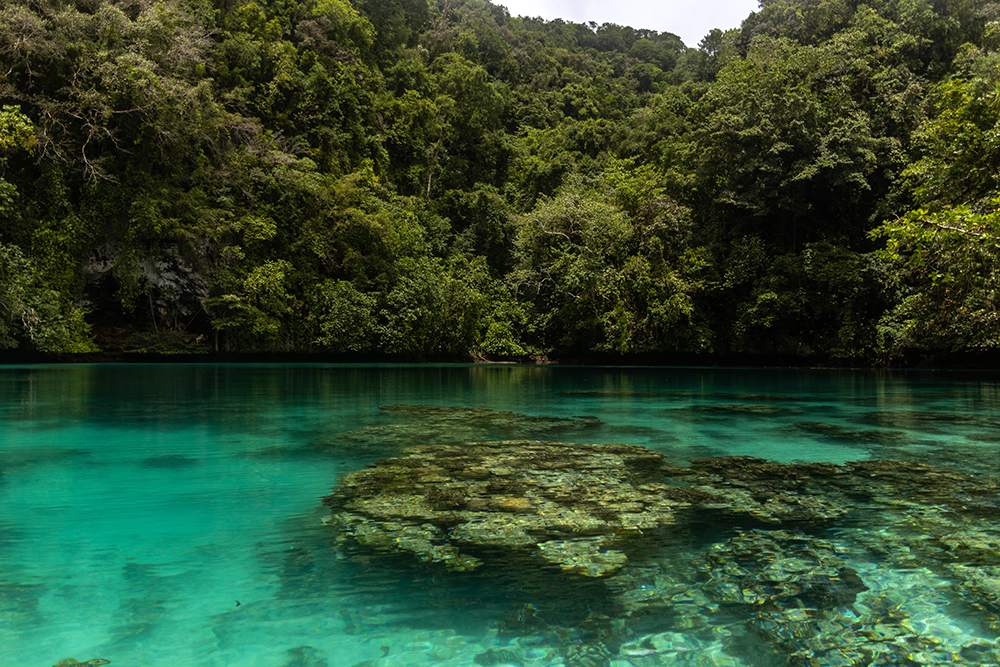
RD was anchored at the entrance to a bay known as Mandarin Fish Lake, named such because it is one of the best places in Palau to find the colorful and elusive Mandarin Fish. The bay is fed by a natural spring, that flushes sediment out into the open ocean as the tide recedes. This leaves behind crystal clear waters that are ideal for snorkeling and diving, but Finn wanted us to enter the bay on our kayaks before we jumped in to snorkel.
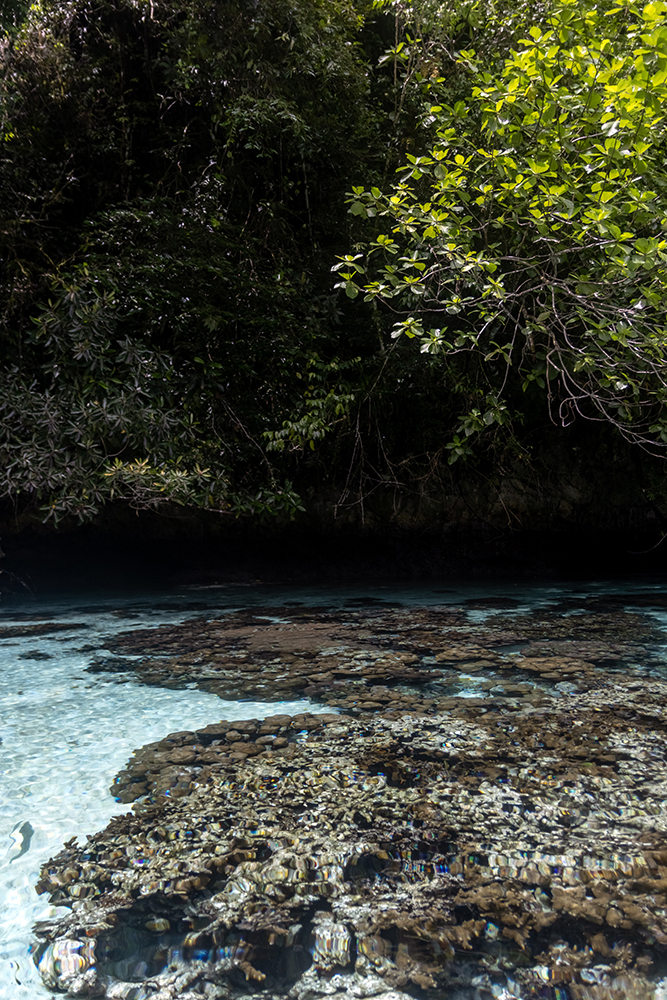
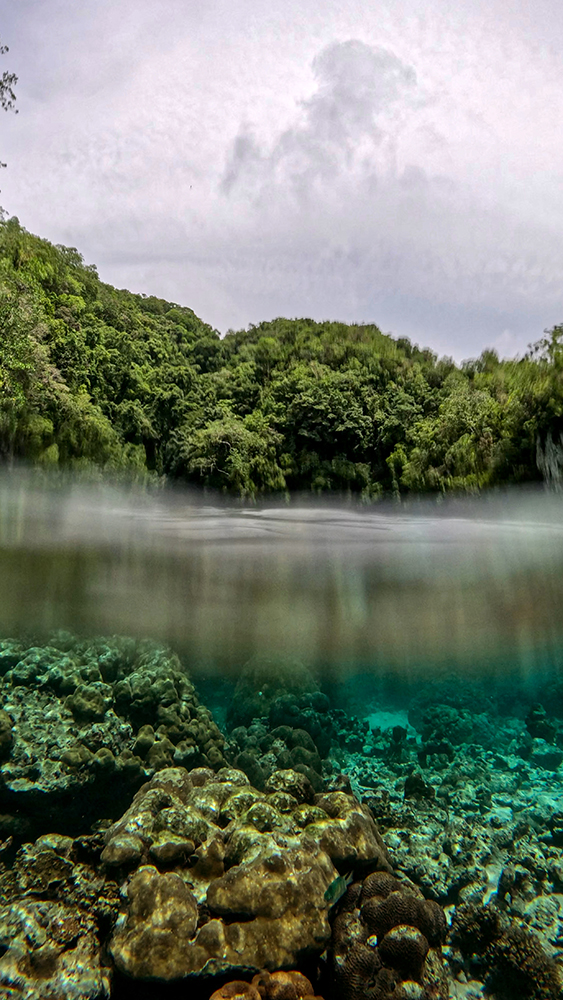
He led us around a large rock that blocked our view of the hidden bay, and into its dazzling waters. It was as though we were floating on a sheet of glass. The water was so clear that we could see minute details of bulbous coral heads just below the surface. I glanced over at Rachel, who had risen to use her kayak like a stand-up paddle board, and had to do a double take because it looked like she was hovering in mid-air.
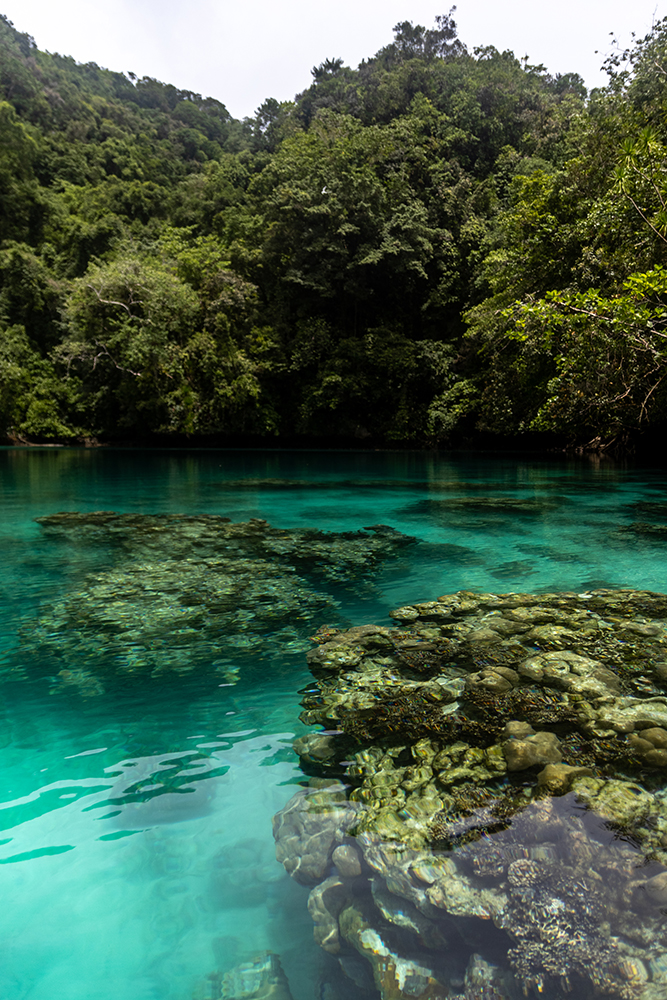
Everyone’s heads were panning around in awe at the crystalline lagoon. I tried to absorb every last detail of the scene as Finn showed us the source of the flowing spring water that had created the natural aquarium. He pointed to different areas of the bay, detailing the best places to look for Mandarin Fish. He also pulled out a picture of another colorful species, the Pajama Cardinalfish, and told us to look for them on branching corals. Then we paddled back to the speed boat, left our kayaks with RD, and pulled on our snorkeling gear again.
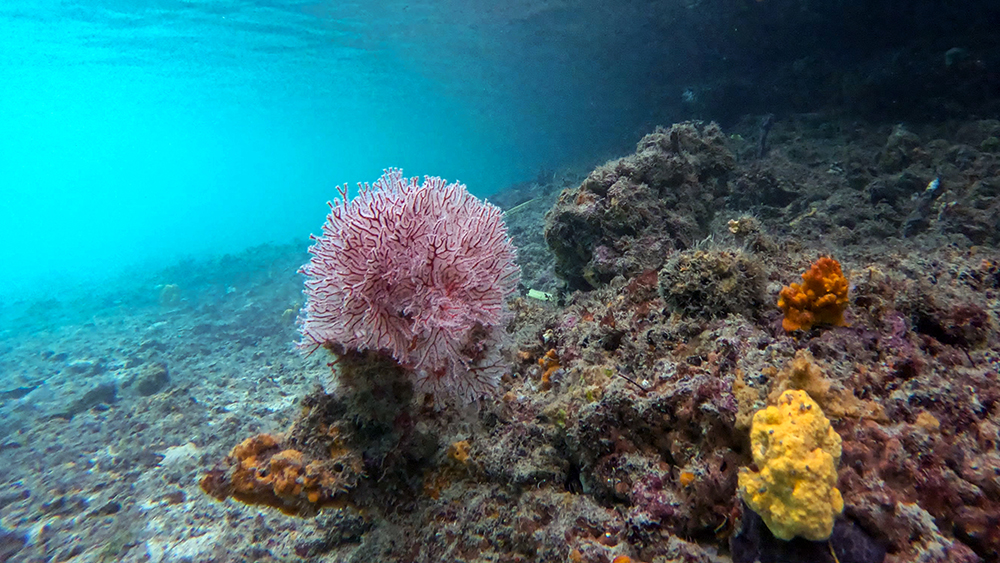
Visibility under the water was as good as it could possibly be. Sunshine gleamed through the perfect, still lake, illuminating corals and darting fish. I moved slowly, trying my best not to scare anything away from me. With such perfect visibility, and my own shadow rolling over the reef, it was easy to startle fish into hiding. I saw several gobies and giant clams as I explored the the large coral heads. Then I swam around a maze of mangrove roots and made my over the slightly chilly area where the spring fed into the bay. Here I found schools of fish, including little needlefish, swimming at the water’s surface, and an adorable little flatworm that wiggled about erratically.

Next I floated above a patch of branching corals, and sure enough, I found a school of Pajama Cardinals! They had green heads with large, red eyes, and a black stripe that bisected them from their dorsals to their pectoral fins. Then they were covered in bright red polka dots from the black stripe all the way to their caudal fins. Although they were some of the most festive looking fish I’ve ever seen, they were also quite shy. I floated over them for a while, just to get short glimpses as they darted in and out of nooks and crannies in the coral.
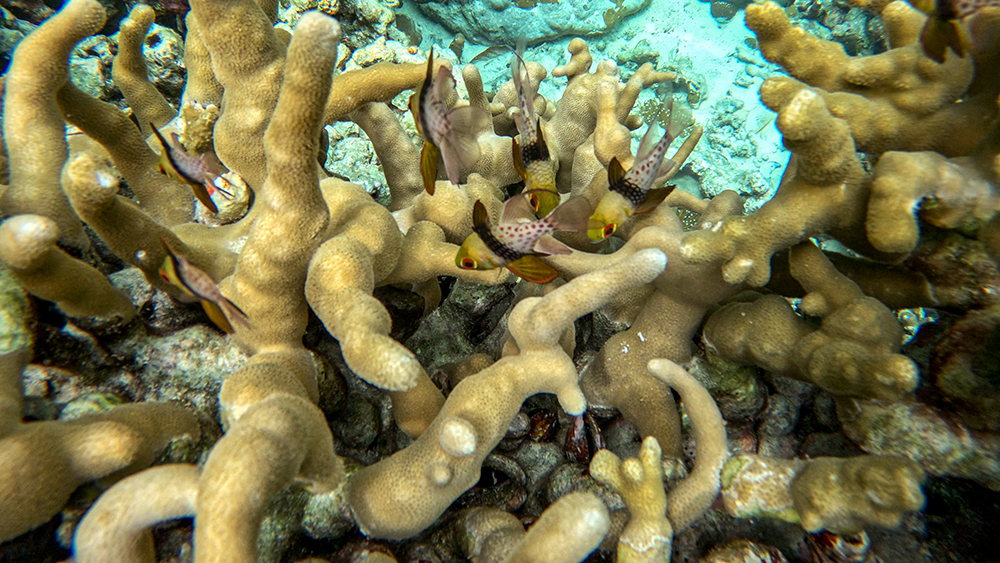
After watching the pajama cardinals to my satisfaction, I swam off in search of my companions. Of course, I still kept an eye out for any neat sea creatures along the way, which I found in spades.
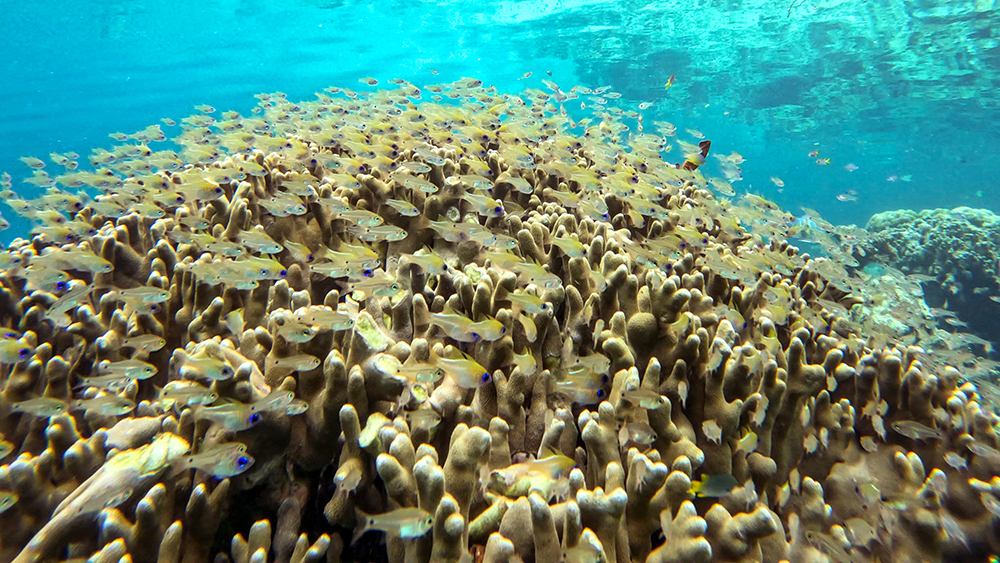
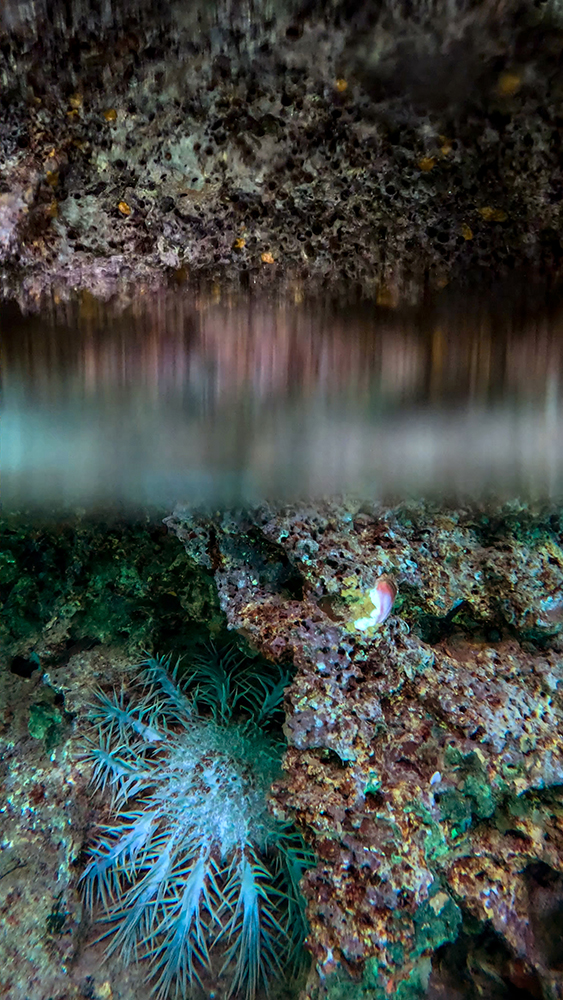
After getting sidetracked by several distractions, I finally found the others gathered around a huge starfish that was covered in spikes. I recognized it as a crown-of-thorns starfish (easy to see where that name comes from), but Finn relayed a lot of interesting information about it that was new to me. For starters, its spines are venomous and cause severe pain if you happen to be unlucky enough to receive a puncture wound from them. The starfish also prey on hard corals, and although they are native to Palauan waters, their numbers have been booming lately, putting them out of balance with the ecosystem. They can easily wreak havoc on a reef, and Finn was alarmed to see that one of them had made it this far into the lagoon. After Jared and I got our fill of pictures of it, Finn found a long stick, and removed it from the water so that it couldn’t feast on all of the precious coral in the lake.
Soon we realized that the day was waning and it was almost time to return to Koror. The problem with this was that none of us had found a Mandarin Fish yet. All five of us fanned out to do one last sweep of the lake, and miraculously, Rachel managed to spot one! She excitedly called everyone over, and pointed to a hole where the Mandarin Fish had hidden. With bated breath, we all hovered in place over a large coral, waiting for it to reemerge. After a couple of minutes, a tiny, oddly shaped fish in hues of sapphire blue, cadmium red, and emerald green hovered into view.
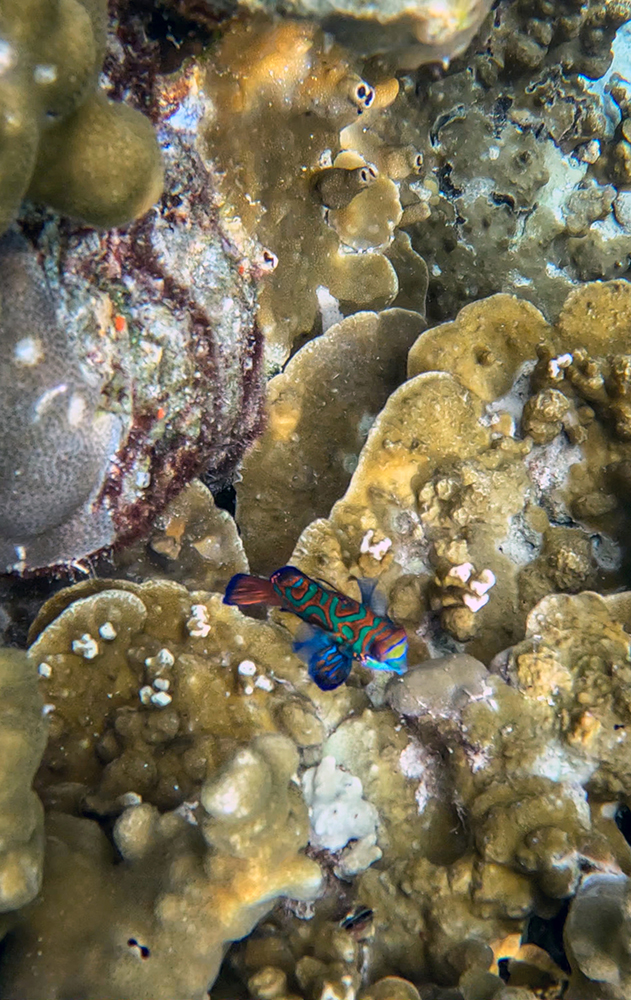
Its pectoral fins flapped so rapidly that they looked like two blurs on either side of the fish’s body. It’s movements were hummingbird-like since It would hover in one place with its fins flapping wildly.
With this find, we’d officially found everything we’d set out to see in Mandarin Fish Lake, so it was time to start swimming back to the boat. We were all ecstatic at seeing what was hands-down the most colorful fish we’d ever encountered, and everyone was grinning happily when we finally climbed up the boat’s ladder and RD revved the engine. He and Finn had already loaded our kayaks up, so he was ready to start the journey back to Koror.
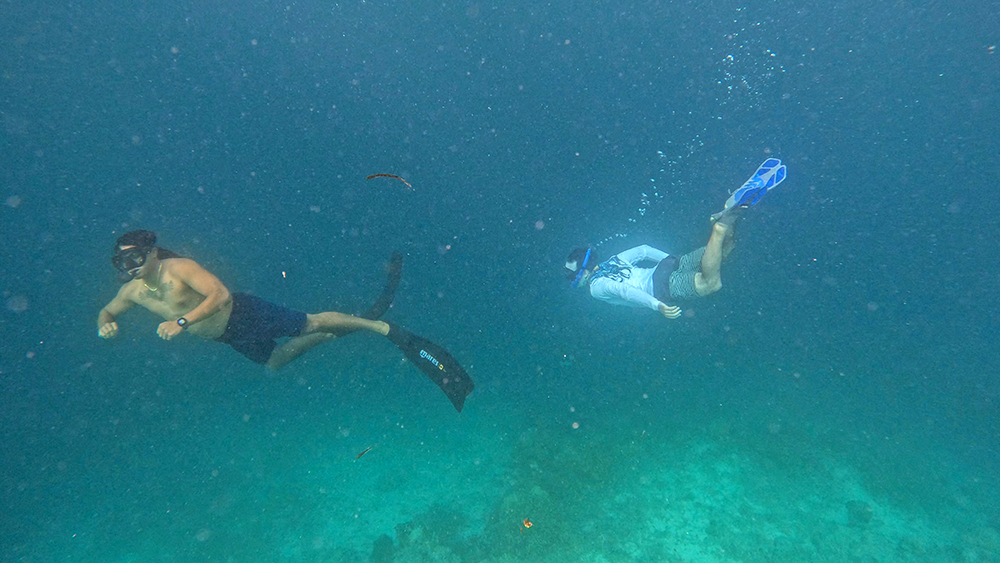
The sun was moving lower in the sky as we sped around twisting corners through the rock islands, but we still had time to stop at one last snorkel site along the way. RD stopped the boat in a channel near Koror, and we all put on our gear one last time while Finn explained that this would be a drift snorkel, and to stick close to him. He jumped into the water with a small buoy attached to a rope so passing boats would be able to see us. The four of us followed him in, and then floated behind him on a wild ride through a ripping current. The swim was a lot of fun, and a little exhausting, and we were all thoroughly worn out by the time RD picked us up again at the end of the snorkel.
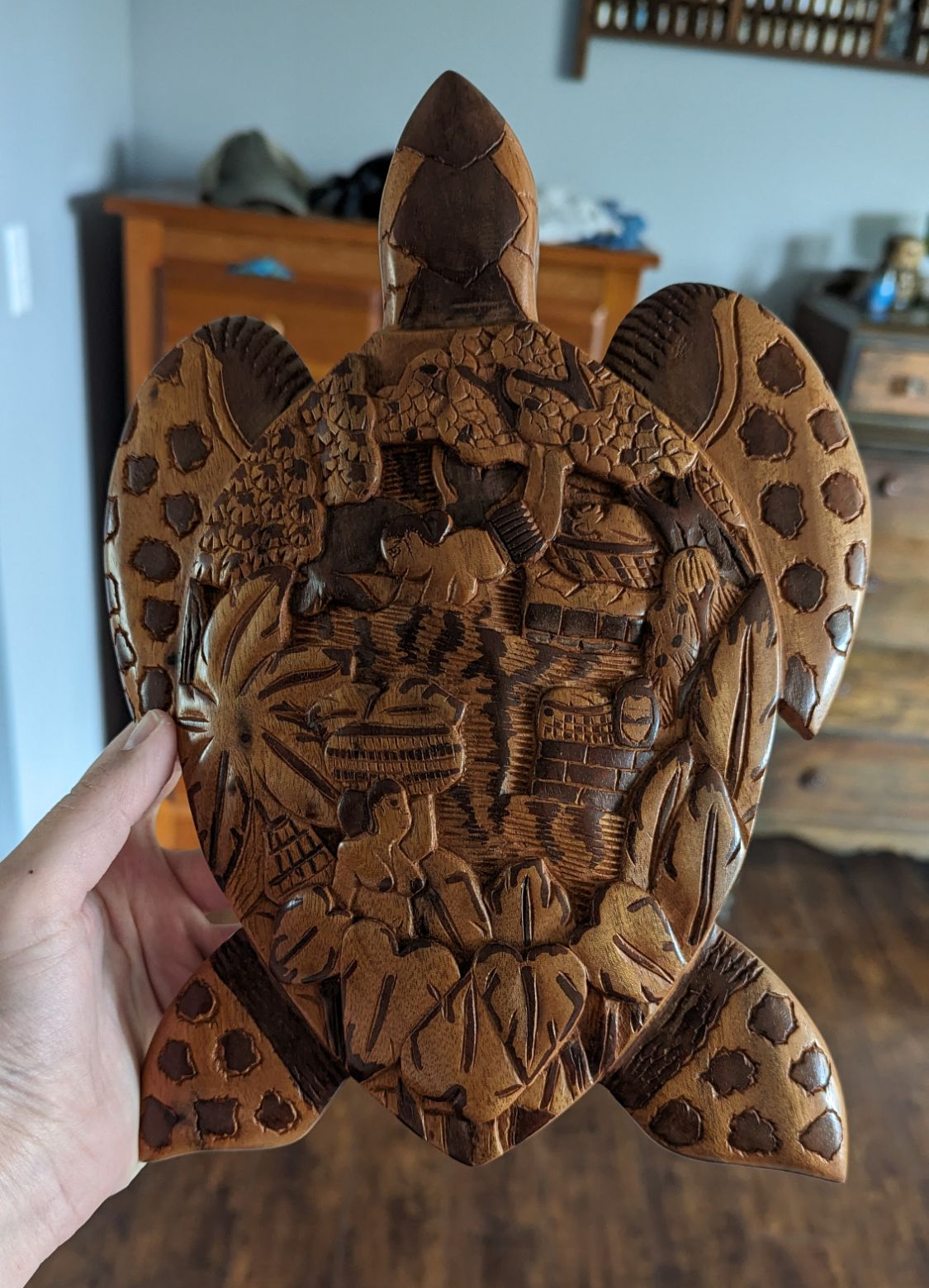
It was a short ride back to Paddling Palau’s headquarters after that. When we arrived, we said goodbye to RD, and then Finn drove us back to our hotel, stopping at a store along the way so I could buy a carved wooden storyboard. I selected a turtle carved with the legend of a young woman that turned into a dugong because she ate the wrong food shortly after giving birth to a baby. I think it’s one of the most beautiful souvenirs I’ve brought home from my travels.
After that, Finn dropped us off at our hotel and we said our goodbyes for the day. Finn would be picking us up for one last tour bright and early the next morning. Our first day with him had been astounding, and we were all highly anticipating the next day’s journey. I, for one, couldn’t wait to fall asleep just so that it would feel like morning would come sooner!









 birdsoftheairtravel.com
So many beautiful and colourful photos from I place I hope to visit one day! Thanks for sharing, and have a good day 🙂 Aiva xx
I am happy to live vicariously through your wonderful underwater adventures. Such wonderful places and adventures to have. Thanks for sharing.
What an amazing experience!? I can’t believe the clarity of the waters. I am very envious. Mel
It was truly a once in a lifetime experience! Palau is unbelievably beautiful!
That comes through very clearly…