I’d be lying if I said I felt prepared to spend a day blistering in the Micronesian sun after our previous day of exploring the shipwrecks beneath the waves in Chuuk Lagoon. Swimming in the ocean is the best way to escape the sweltering heat of the day in tropical climates, and I knew that today’s tour was sure to be a hot one. But Vince and I needed a day off of diving before an upcoming flight, and Weno is a beautiful island with plenty of sights to see, so it made sense to spend our last day there on solid ground.
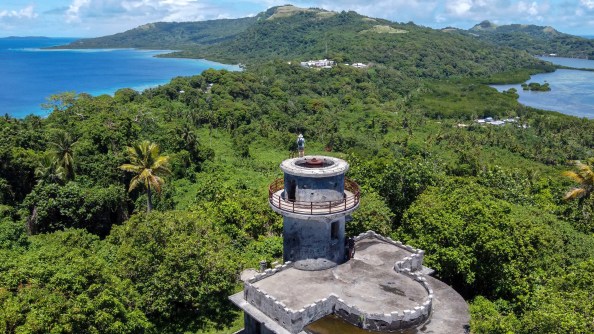
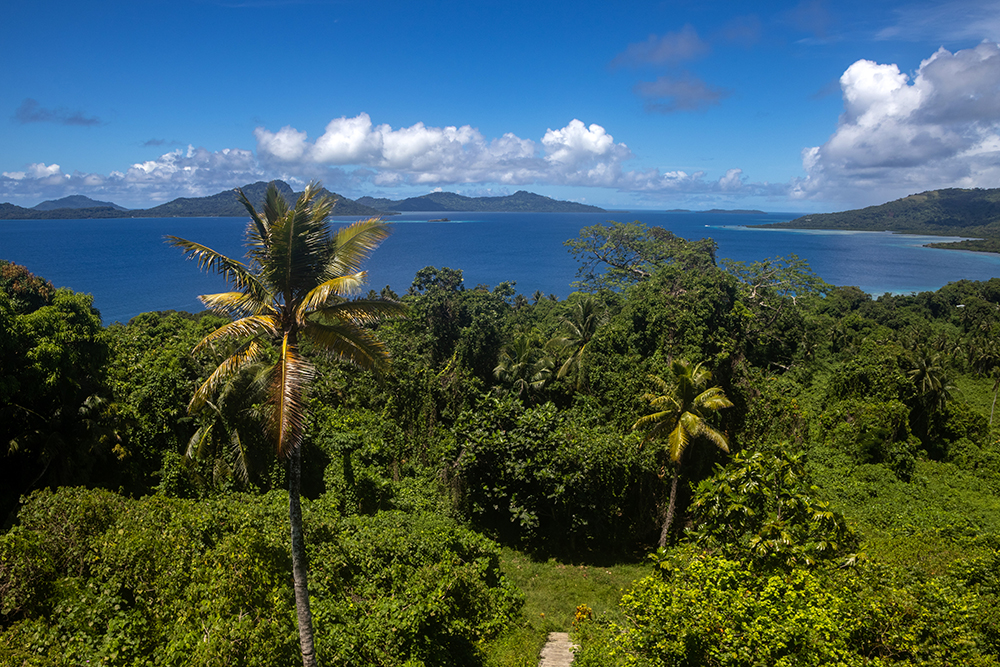
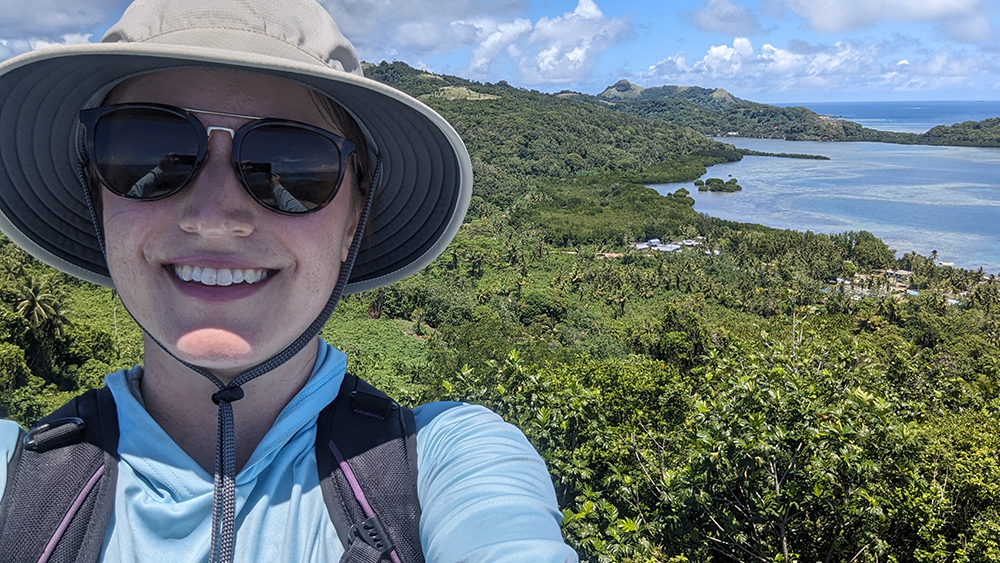
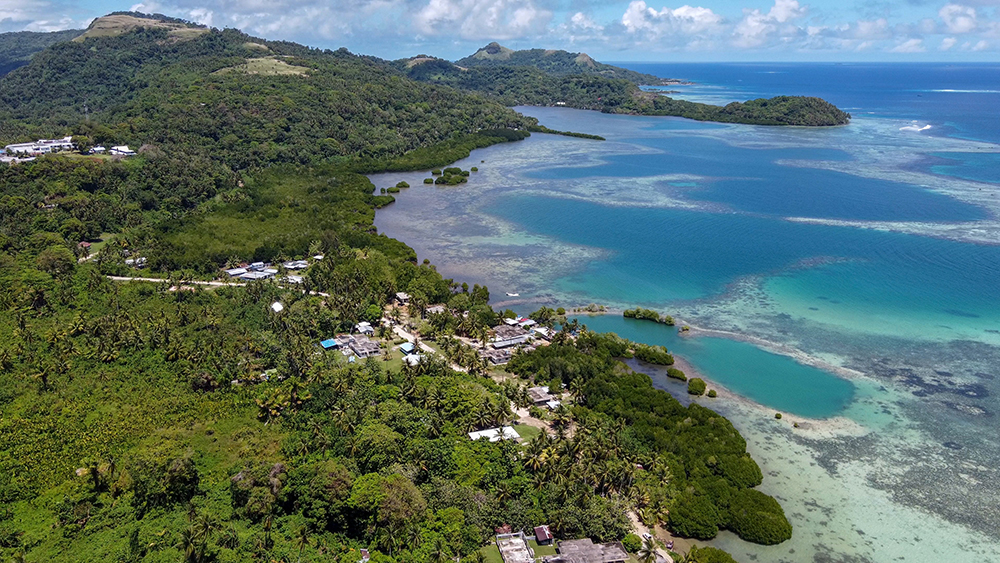
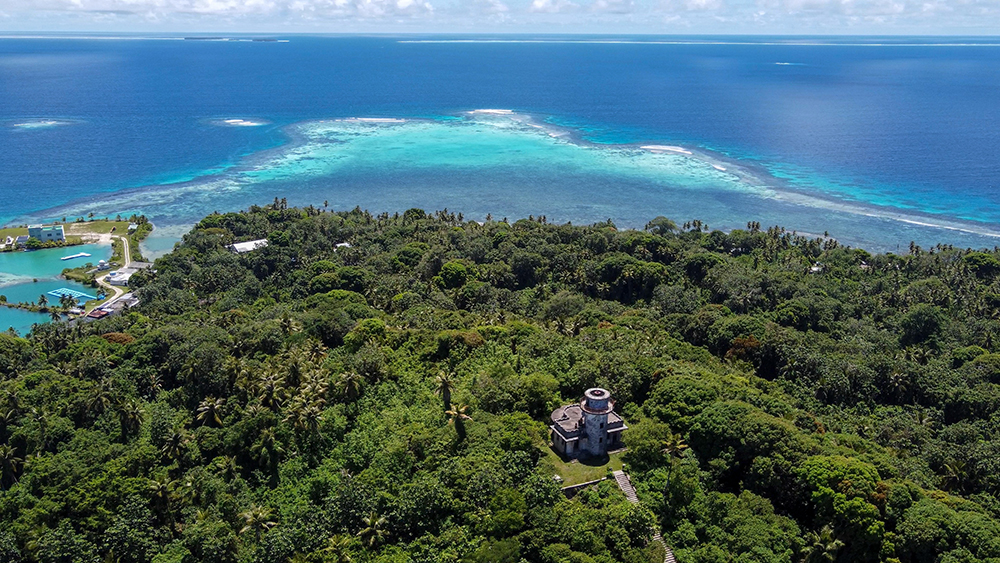
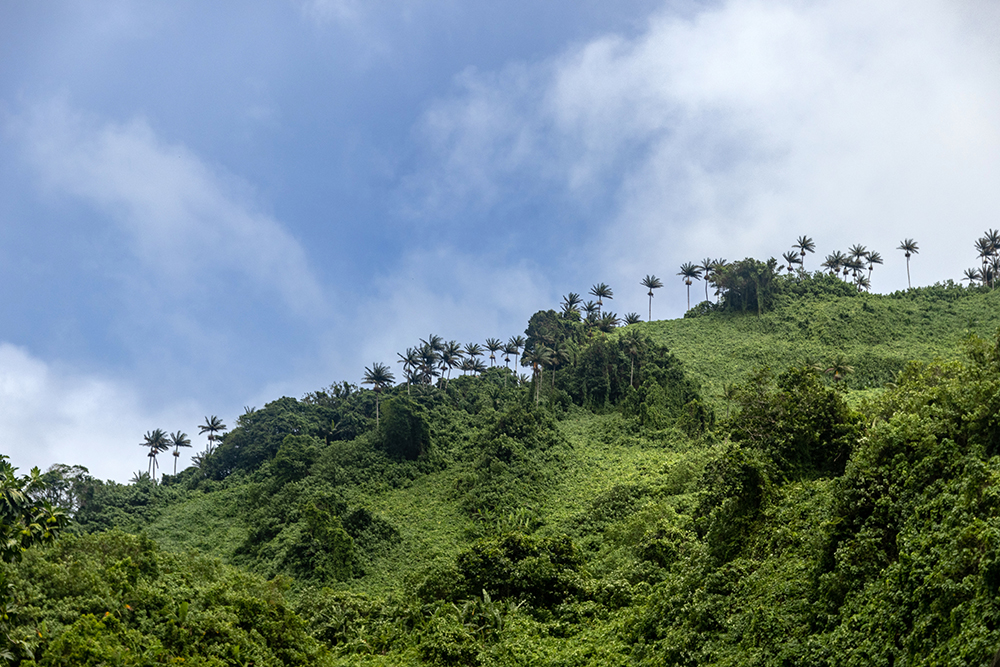
Jared had arranged our day tour with Chuuk’s director of tourism, and our guide, Mickey picked us up from the Blue Lagoon Resort first thing in the morning. We all hopped into his SUV, and Mickey gave us a wealth of interesting information about Chuukese history as he drove us towards the complete opposite side of Weno Island. Just as the seabed of Chuuk Lagoon still bears the remnants of Japanese occupation, Weno Island itself still has structures and artifacts left behind from the second World War. Our plan for the day was to visit a handful of these locations, and the first stop was a an old Japanese lighthouse that sits atop a hill overlooking an impossibly green mountain and sparkling turquoise bays.
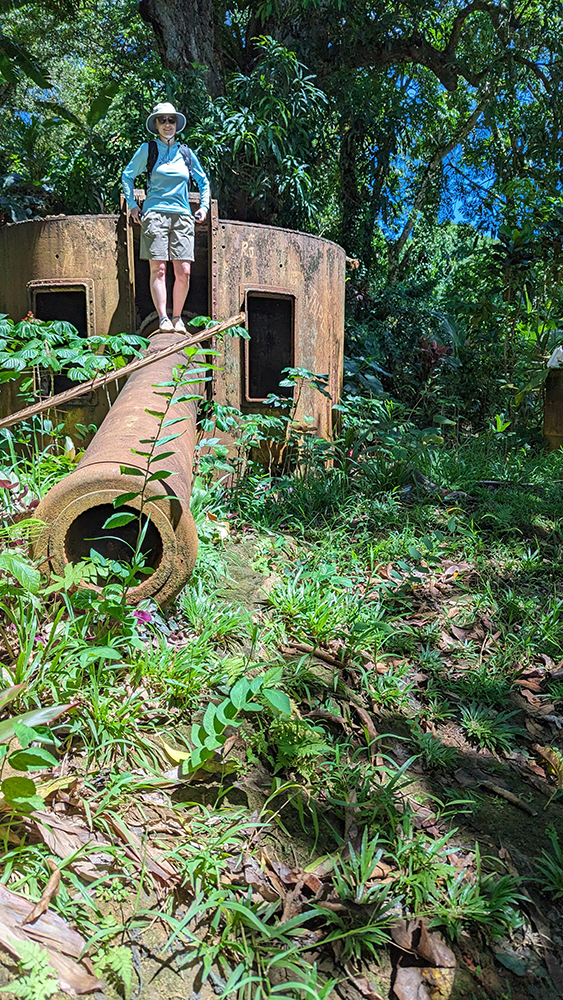
In order to reach the lighthouse, we had to pay an admission fee to the family that owns the land, and then take a short, uphill hike through the forest. Despite the early hour, the day was already sweltering, making the hike feel difficult even though the terrain was easy enough to cross. We hiked passed dense foliage, asking Mickey about interesting plants we encountered, until we came upon a pair of rust-covered Japanese guns.
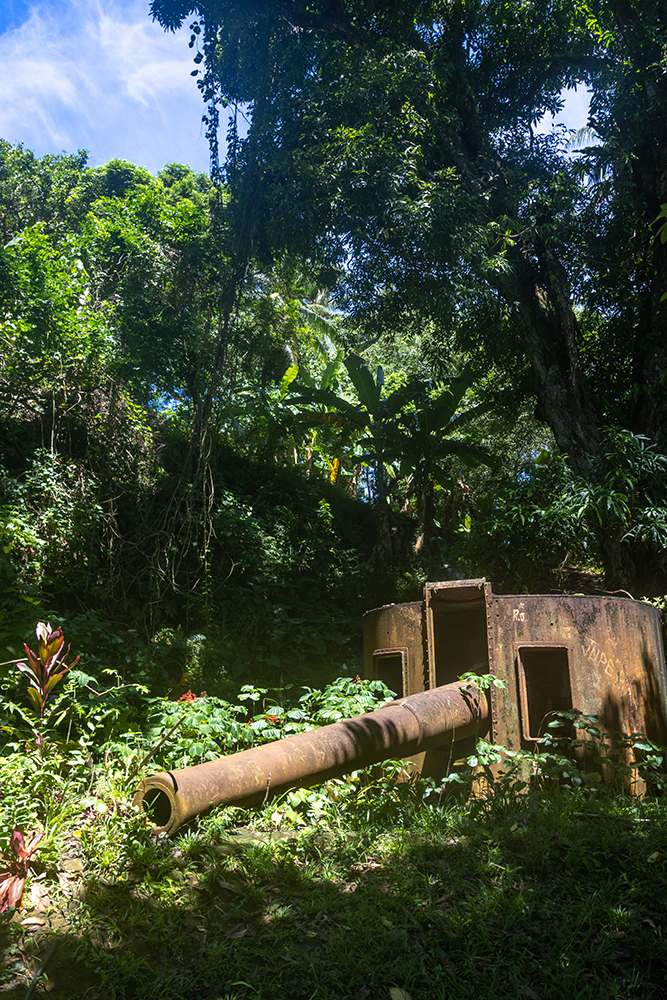
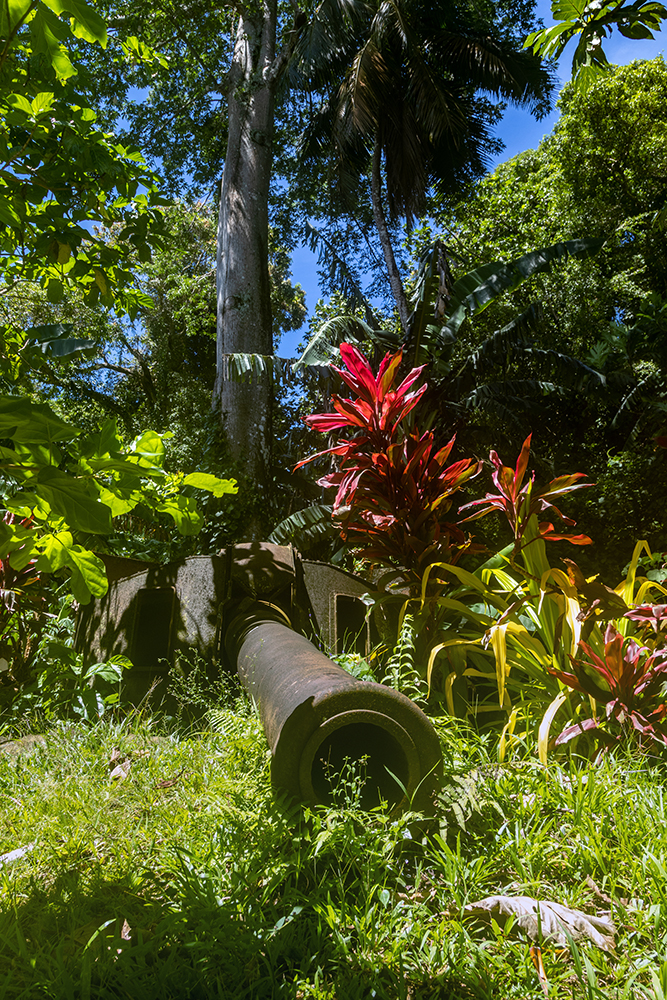
Mickey explained that the Japanese clear-cut the forest on this hill so that the guns would have a clear shot all the way out to a break in the outer reef of the atoll. This was an entry point for ships to come into Truk Lagoon, and was heavily guarded. We took turns balancing across one of the guns so we could peer inside and check out its mechanics, then we continued our hike uphill toward the lighthouse.
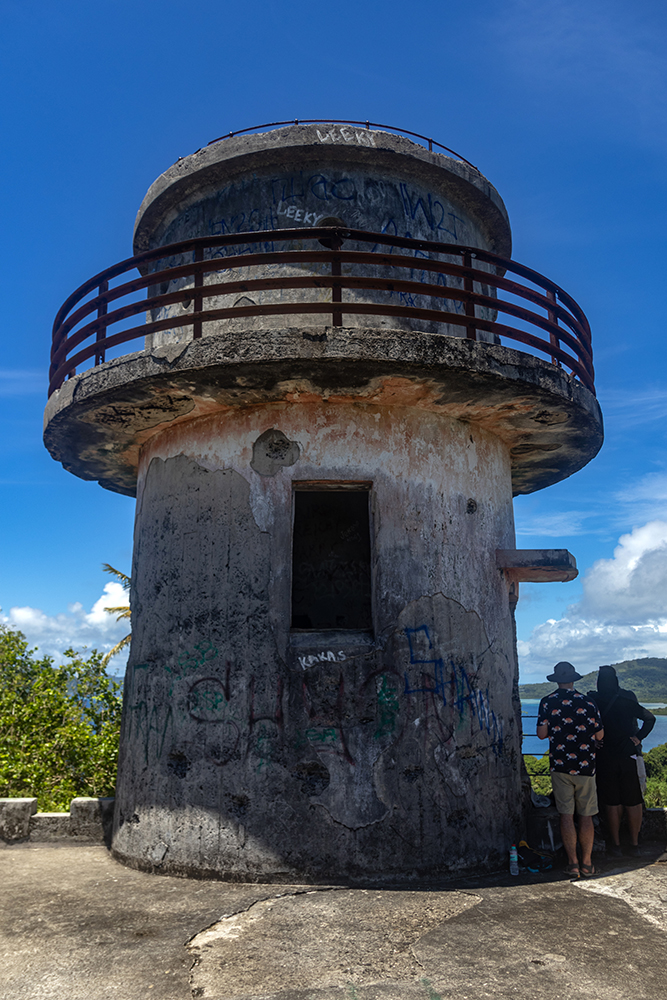
Once the lighthouse was finally in view, we just had to make one last dash up a long stone staircase to reach it. I decided to just get the climb over with as fast as possible and jogged up the steps. Then I sheltered in the shadow of the lighthouse while I waited for everyone else to finish walking up.

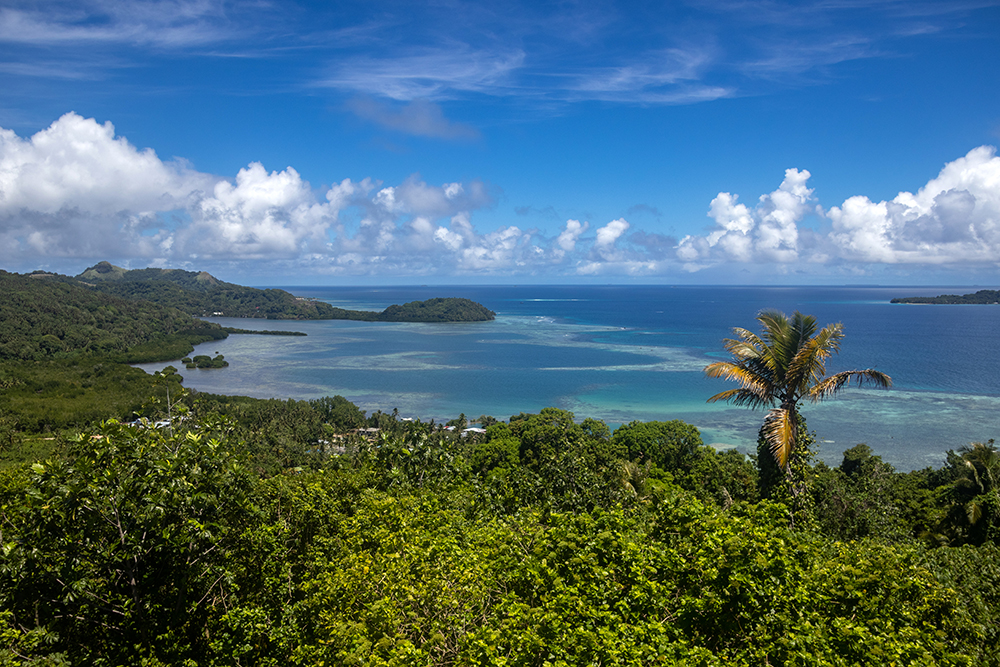
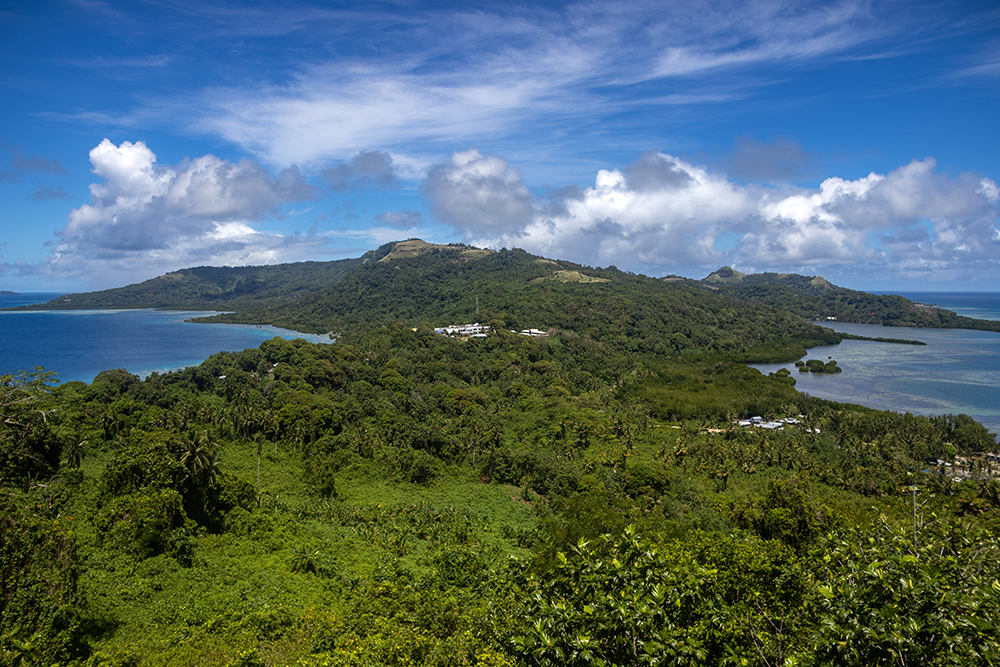
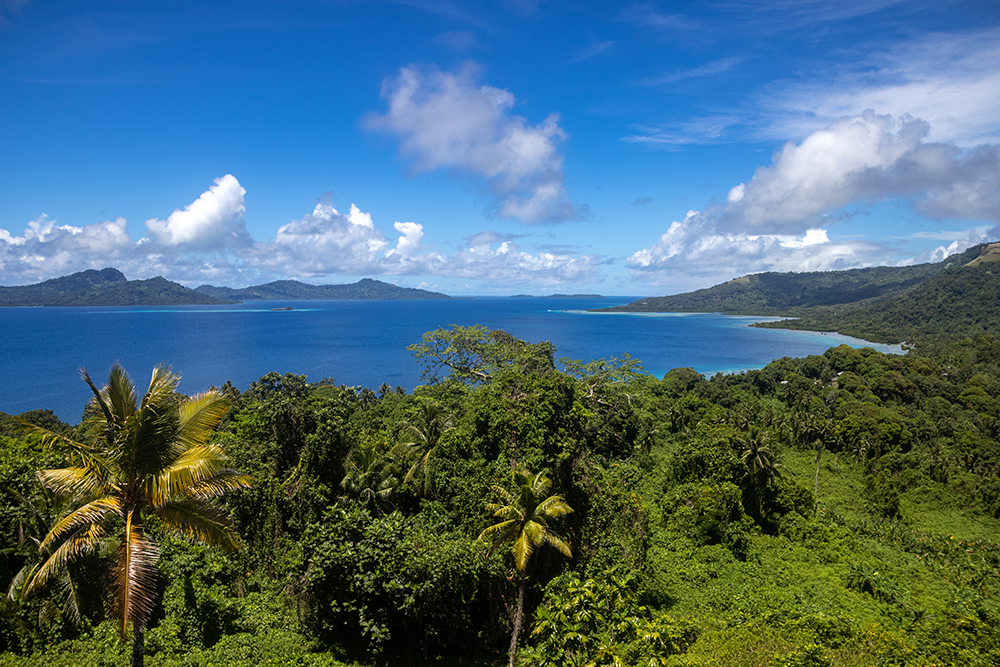
The temperature at the top of the hill was much more bearable, and a strong breeze cooled our sweaty skin as we went inside the lighthouse and started climbing up a winding staircase. When we stepped back outside onto the catwalk, we were met with a panoramic view of Weno Island and Chuuk Lagoon. I stared at the horizon, utterly dazzled for a few moments, before I noticed a rusty ladder leading up to the very top of the lighthouse. I climbed up, cringing as the ladder wobbled. A couple of bolts were missing near the top, and I climbed past them as quickly as possible, feeling relieved when I had my feet on solid stone again.
Thankfully the unobstructed panoramic view made this last little climb up a rickety ladder totally worth it. I could see everything from my high perch. Green mountains rose from the sea, and patches of reef surrounded the island. Beautiful white and red birds flew gracefully above the tops of palm trees that swayed gently in the breeze. It really was a spectacular sight.
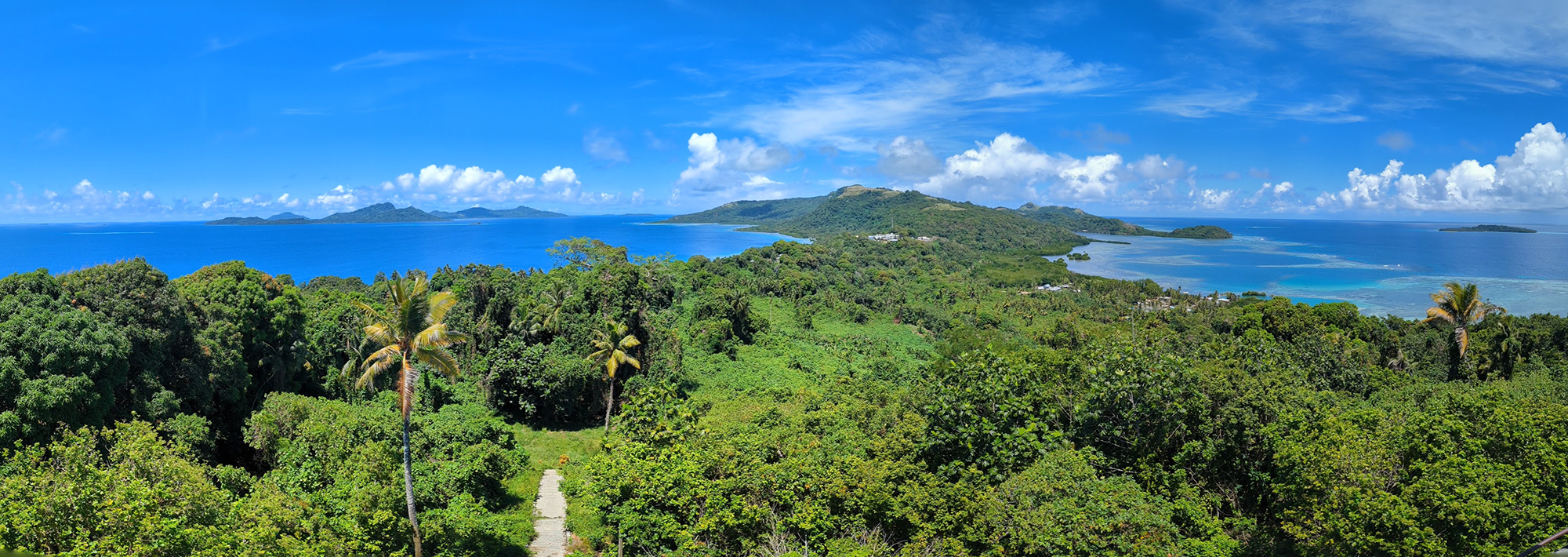
Vince and Jared decided this would be a great place to get some aerial footage with their drones, and they kept flying them around me as I took plenty of my own pictures. Eventually, I sat down, dangled my feet over the edge of the lighthouse, and just enjoyed the view and the refreshing wind for a while.
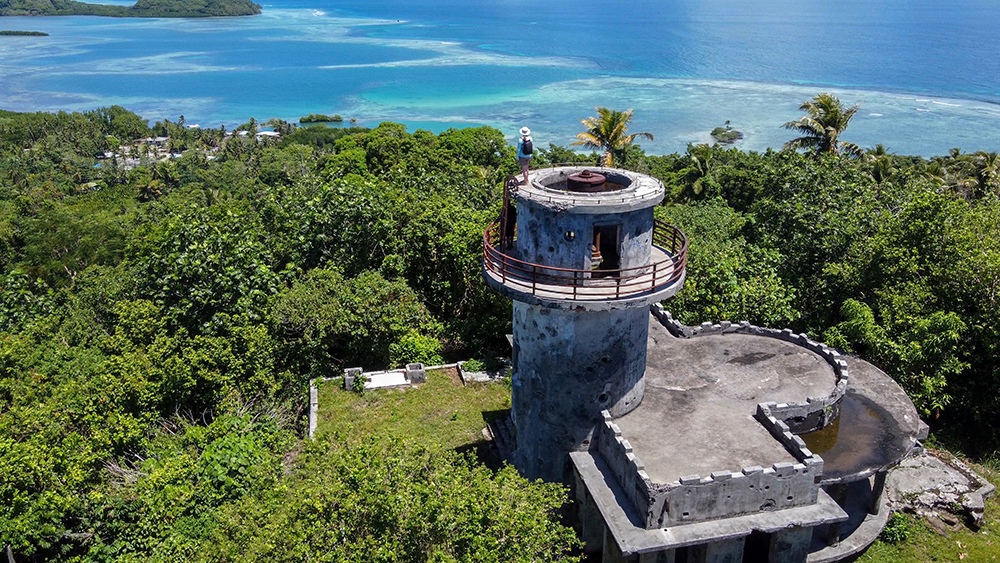
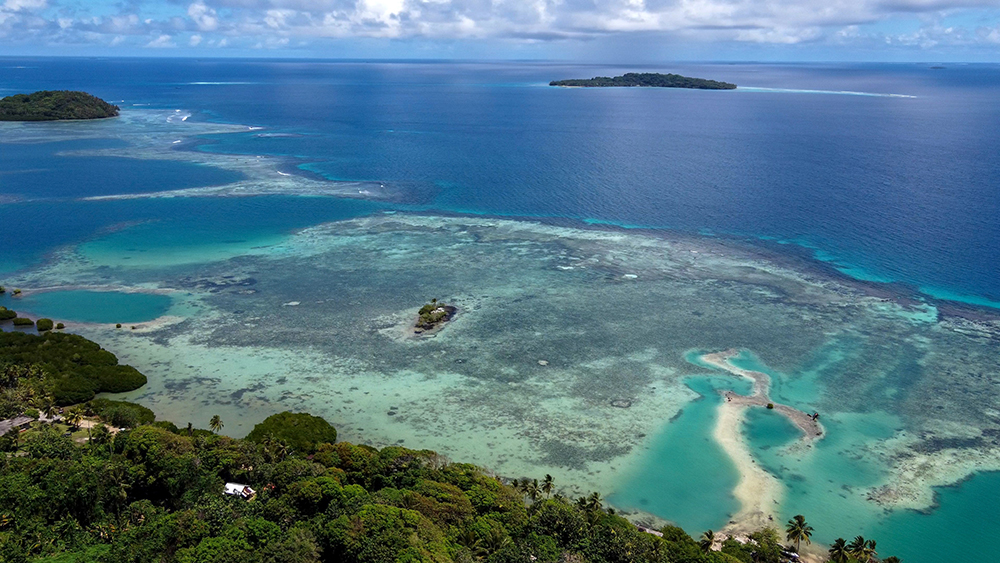
Eventually we decided we were ready to move on to the next stop on our tour, and we started back down the winding staircase. We stopped halfway down to walk out onto the flat roof of the lower section of the lighthouse. The vibrant little red birds that I’d been admiring were flitting around, and one of them paused on a branch just long enough for me to get a picture of it. Now that it had stood still for long enough, I was able to use my photo to identify it as a Micronesian Myzomela, which is a member of the honeyeater family.

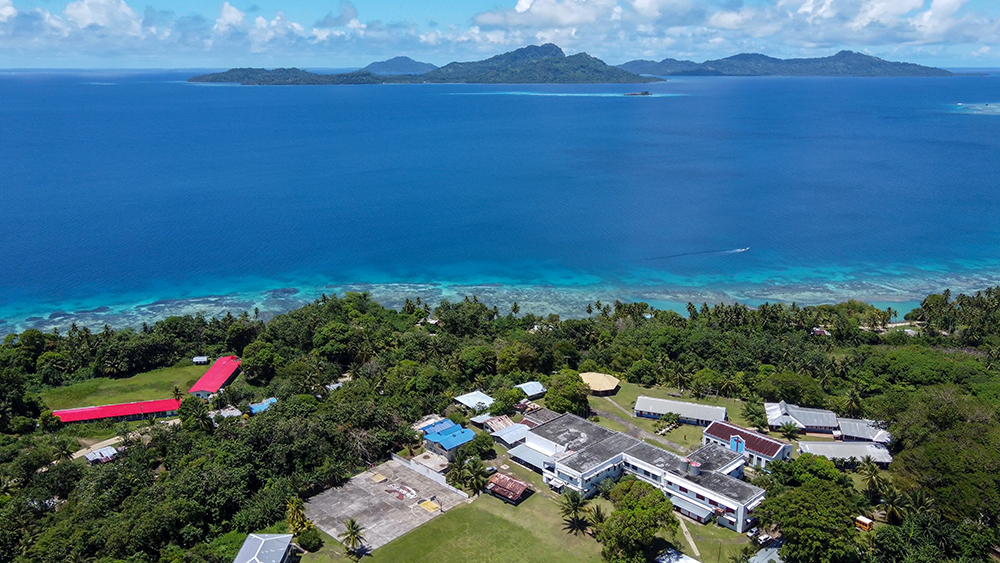
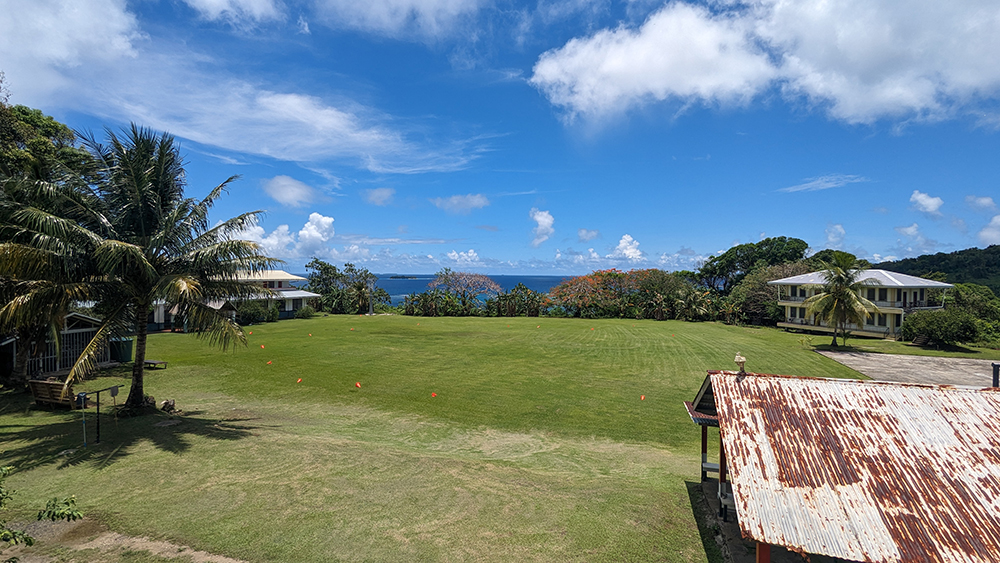
After the bird flew away, I was ready to continue our descent. We retraced our steps all the way down to Mickey’s SUV, and then he drove us a short distance to Xavier High School. Xavier is known as the best high school in all of Micronesia, and has produced many of Chuuk’s leaders. Students come from all over Micronesia to study here, including students from Guam, Palau, and the Marshall Islands. Interestingly, the high school building was constructed as a communications center for the Japanese military, and was bombed during WWII.
The first thing we noticed about the school was that its walls were at two and a half feet thick, and all of the building materials were heavy metal and concrete. It really was a fortress, which explains why it’s still standing despite the bombing.
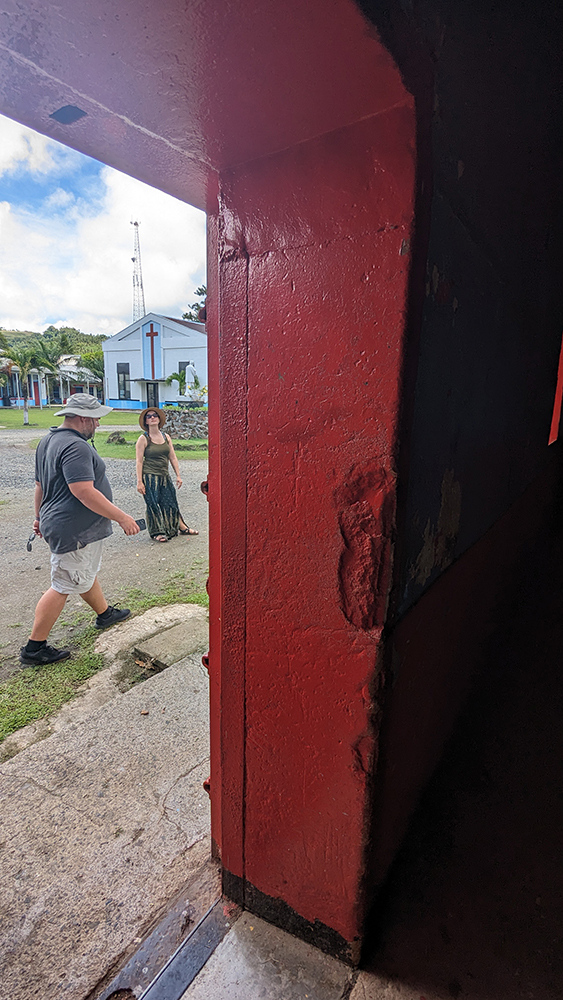
Mickey led us into the gymnasium to show us a bomb hole in the ceiling, and then brought us up to the roof where were got a view of the school grounds, and got to see the patch job that covers up the bomb hole from above.
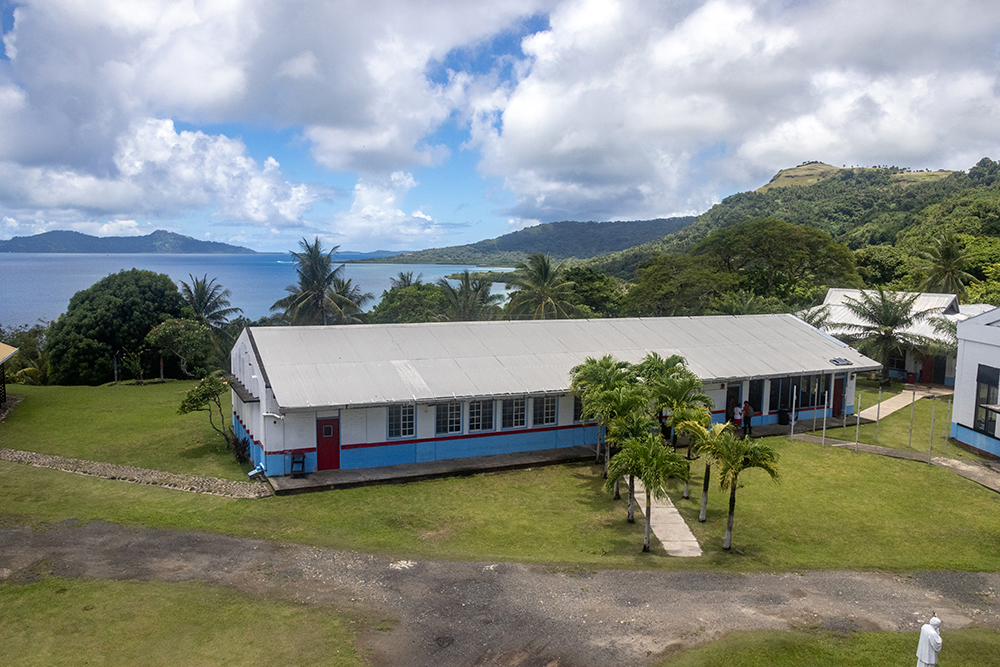
We also got to walk around the hallways, see a few classrooms, and meet a couple of teachers while we were there. One wall had framed lists of every students from every graduating class dating all the way back to when the school was first found in the 1950’s. There was one graduating class that only had two students!
Touring the school was far more fascinating than I had imagined, and we all agreed it was a highlight of the tour. After we left, it was time for lunch, and Mickey drove us into town to buy some food from a local market. Then we drove to the trailhead of our last destination and had a picnic on the hood of the SUV. Mickey said a prayer for the meal in Chuukese, and then we dug in. I had picked out a salad because I hadn’t eaten a fresh vegetable since leaving home a week earlier. It was amazing.
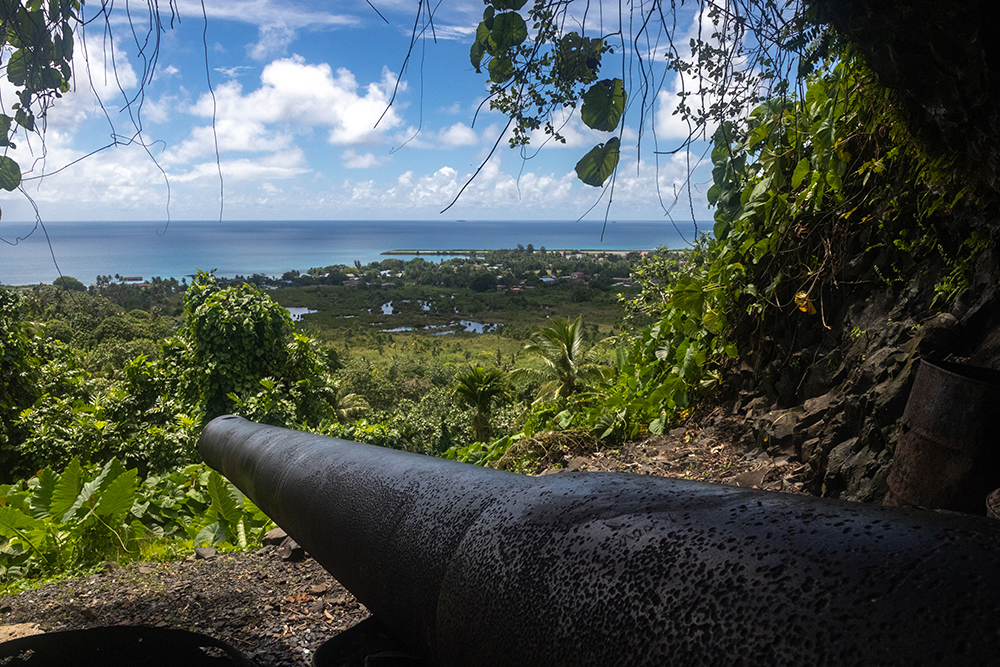
We scarfed down our lunch, and then packed up all of our trash and started walking towards the Nefo Artillery Cave. I was expecting a similar hike to one we’d done that morning, but this walk turned out to be very short. Within a few minutes, we were at the mouth of a tube-like cave that once housed Japanese soldiers. We went inside, using our cell phones for light until we came to another opening. Light poured into the cave, illuminating the silhouette of a large gun that is still aimed out towards the lagoon eighty years after the war ended.
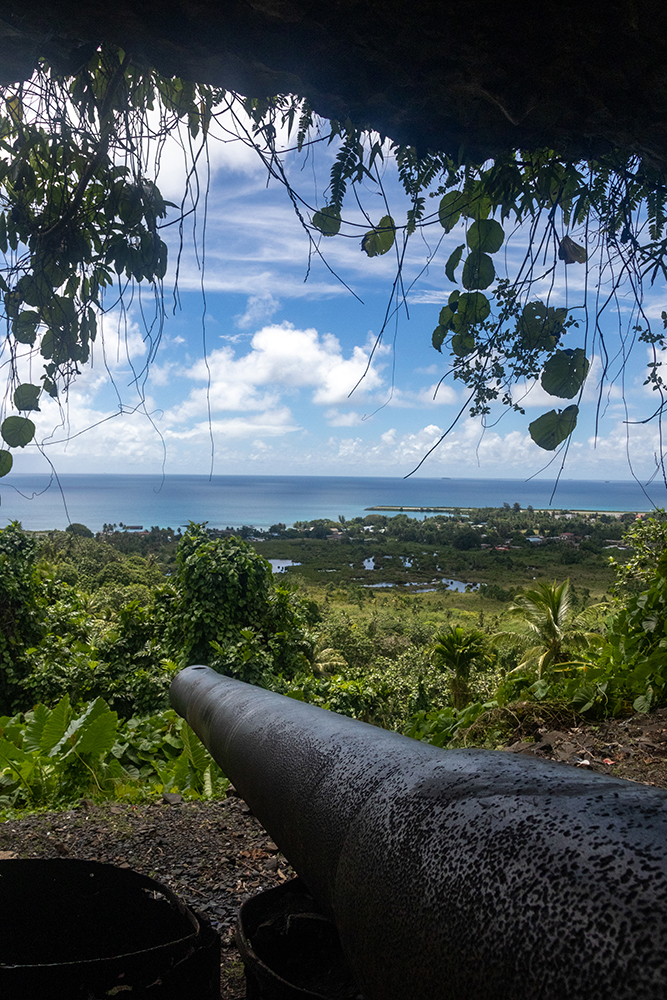
The view beyond the gun was just as beautiful was of a verdant hillside leading down to the lagoon. The hill was covered in large elephant ear plants that looked like they belonged in a botanical garden. We hiked a short trail along the hill until we came to another cave entrance, this one guarded by a door that was built into the side of the mountain.
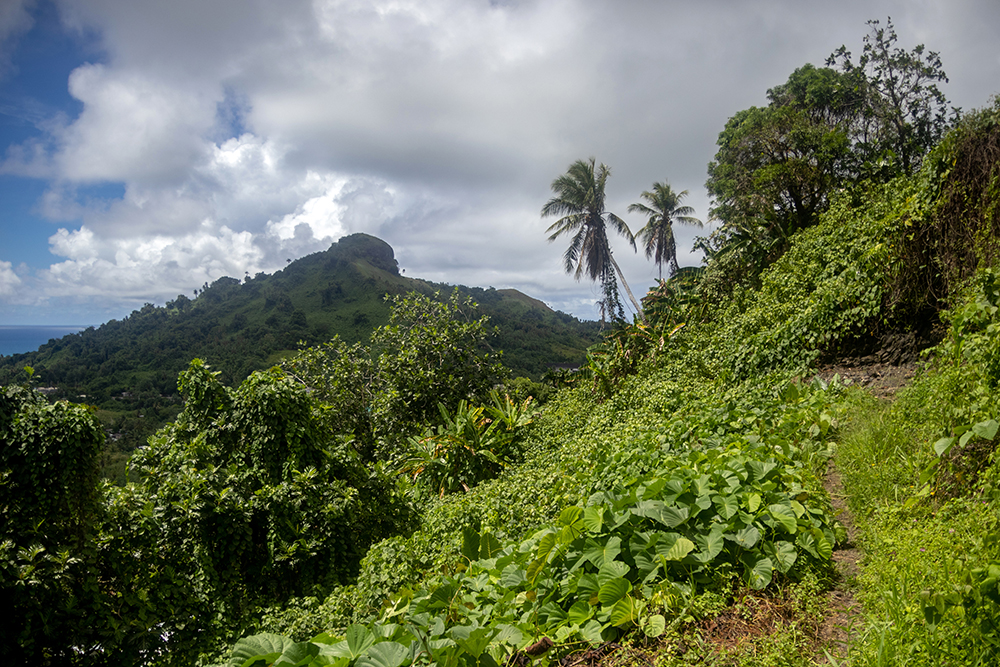
Mickey led us through the door and into an even darker tunnel, which was filled with litter. As we walked, our boots kicked at eighty years worth of cans, papers, and plastic products util we saw the faint glow of another opening. This exit point dropped us off very near the SUV, and once we got inside, it was time for Mickey to drive us back to the resort.
Along the way, we asked him if he knew of any way to get out to Etten Island, an old Japanese airstrip where Vince and I had spent our surface interval between dives the previous day. Mickey said he had a boat and he could take us out there. He just had to get gas, and then he would meet us as the resort’s dock in about an hour. This was very exciting for all of us because everyone was eager for a swim after sweating on land all day, and now we would get to see some more plane wrecks around the shores of Etten.
When Mickey dropped us off at the BLR, we all changed into our bathing suits, and packed up or snorkeling gear. We went outside to wait at the beach, and Mickey pulled up in his boat a short while later. We all hopped aboard, and sped off in the direction of Etten, passing by several other islands along the way. One of the islands in the lagoon, was what the Japanese military used as their capital , and another one was where an American spy lived while he gathered information to send back to the US military.
We arrived at Etten after about twenty minutes of cruising past gorgeous, mountainous islands, and everyone started searching for the yellow buoy the marked the fighter jet wreck we wanted to see. It was much more difficult to find while bobbing out on the waves than it had been to see from shore the previous day, but eventually I spotted it, and Mickey pulled the boat over to it so we could get in.
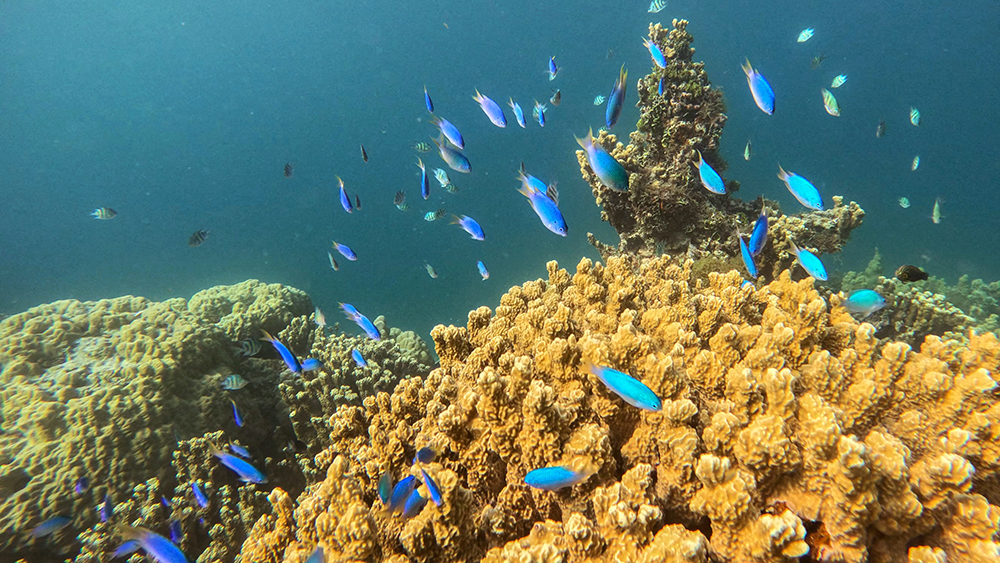
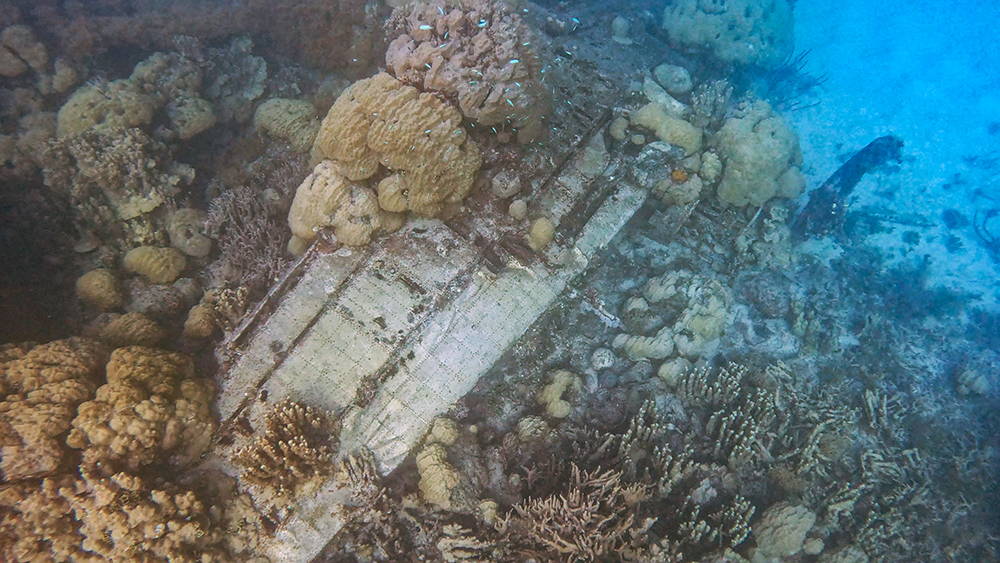
I jumped into the water, which felt absolutely amazing after a long day in the heat, and was able to locate the wreck quickly. It lay at the bottom of the lagoon about twenty to thirty feet below the surface, covered in large hard corals.

I’ve never been very good a free diving, but I’d been practicing so much on this trip that I felt like I might be able to dive down to the plane on a breath hold. I took a deep breath, and dove towards the wreck, kicking my fins in long, powerful strokes. To my utter shock, I managed to get down and swim over the top of the jet’s wing before turning and making a calm ascent back to the surface. This was by far the deepest I’ve ever managed to get on a free dive, and my lungs were happy to receive some fresh air when I resurfaced. I sucked in a deep breath, feeling quite proud of myself.
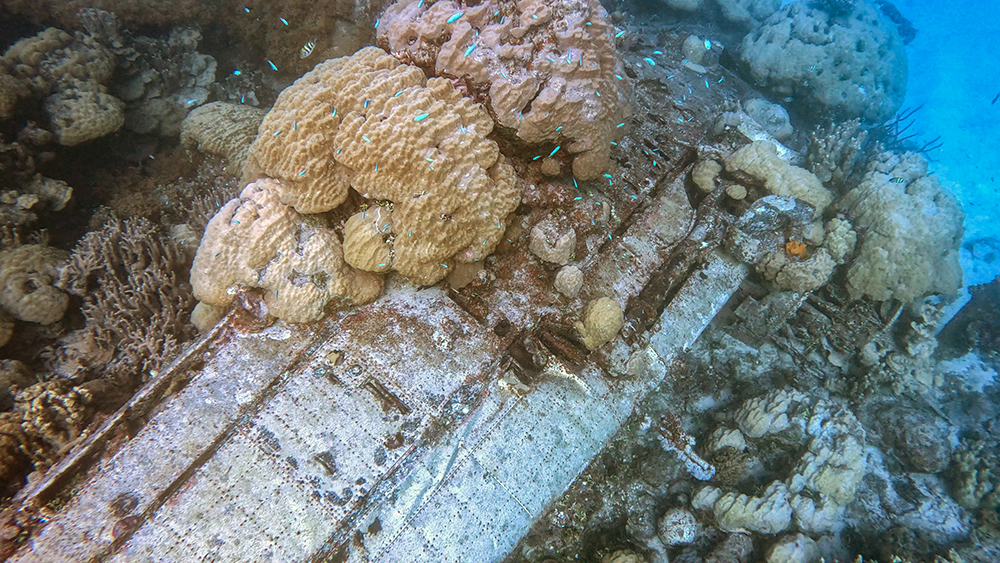
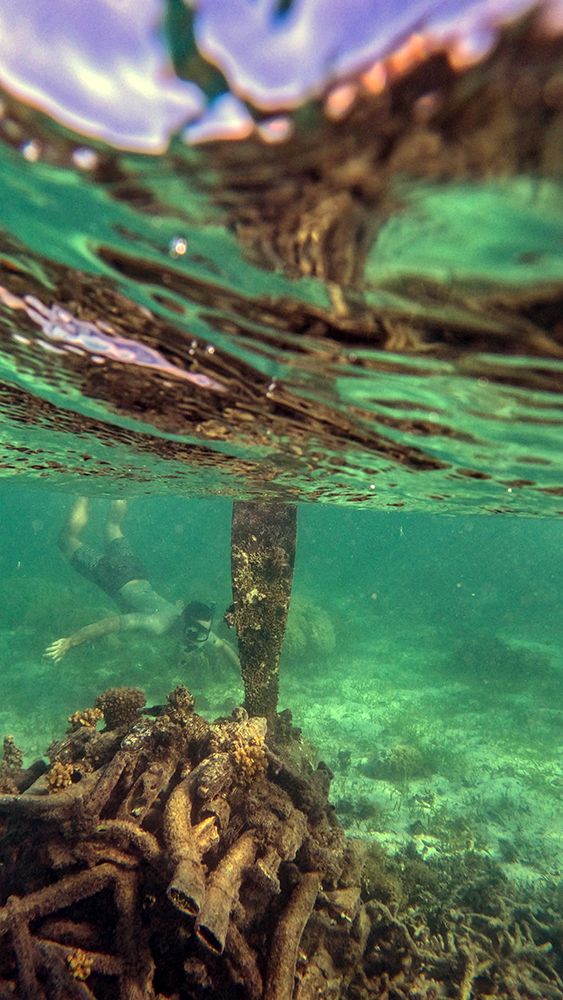
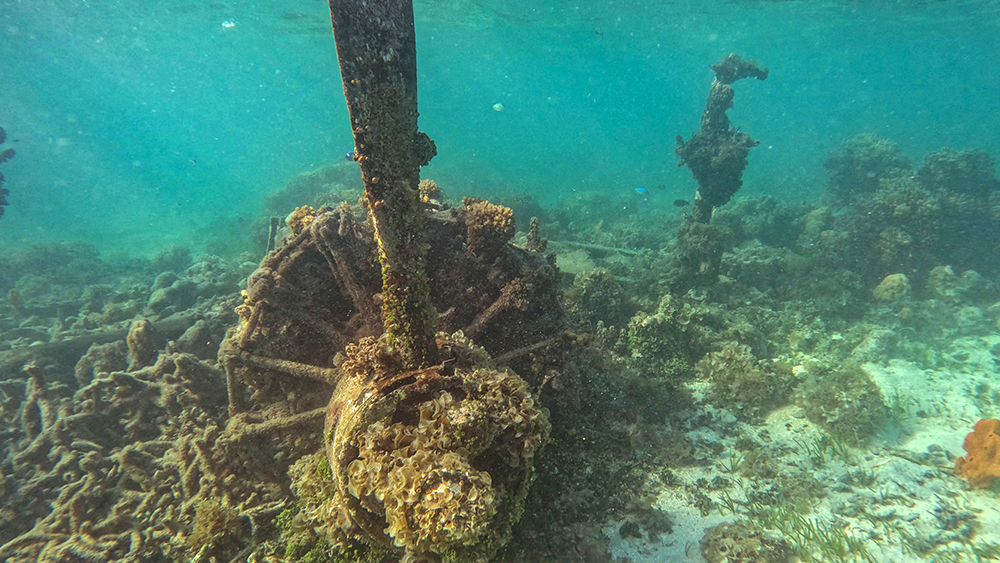
Vince and I made a few dives down to the wreck, but with it being in such deep water, we didn’t feel the need to stay there for long. After we all felt like we’d seen enough, we heaved ourselves back over the side of Mickey’s boat, and went around to the other end of the island in search of another plane wreck. There was no buoy to mark this one, so even with five pairs of eyes searching, we weren’t having any luck. Thankfully there were a handful of kids on shore waving at us, and we called out to ask if they new where the plane was. All of their hands shot out at once, pointing in the same direction, and we could vaguely make out a propeller sticking out above the waves. We waved a thanks to the kids, and then got back off the boat to swim over to the plane.
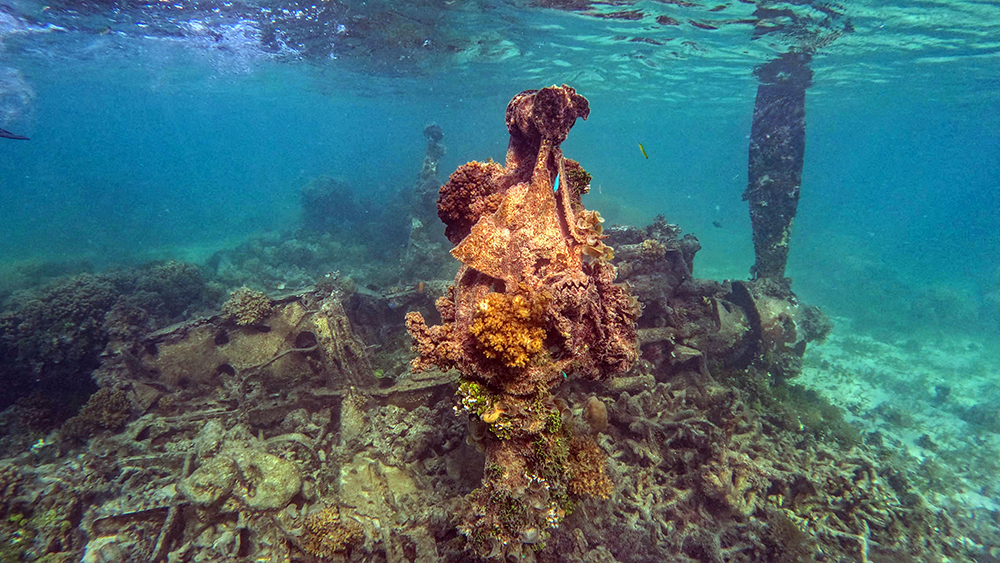
This one was in much shallower water, no free diving required, and was in a more advanced state of disrepair. We could see lots of mechanical bits, and the propeller sticking up above the surface made for dramatic pictures.
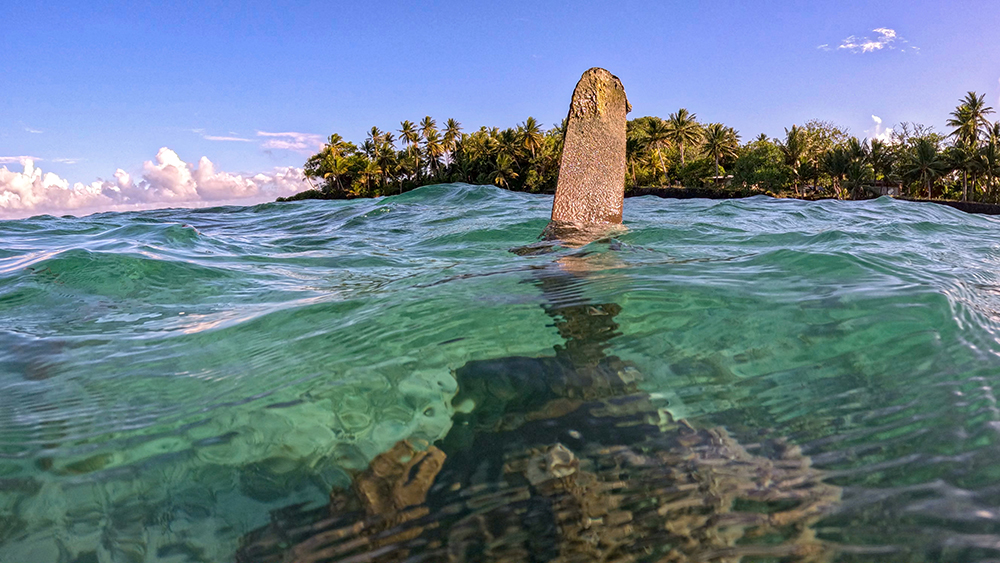
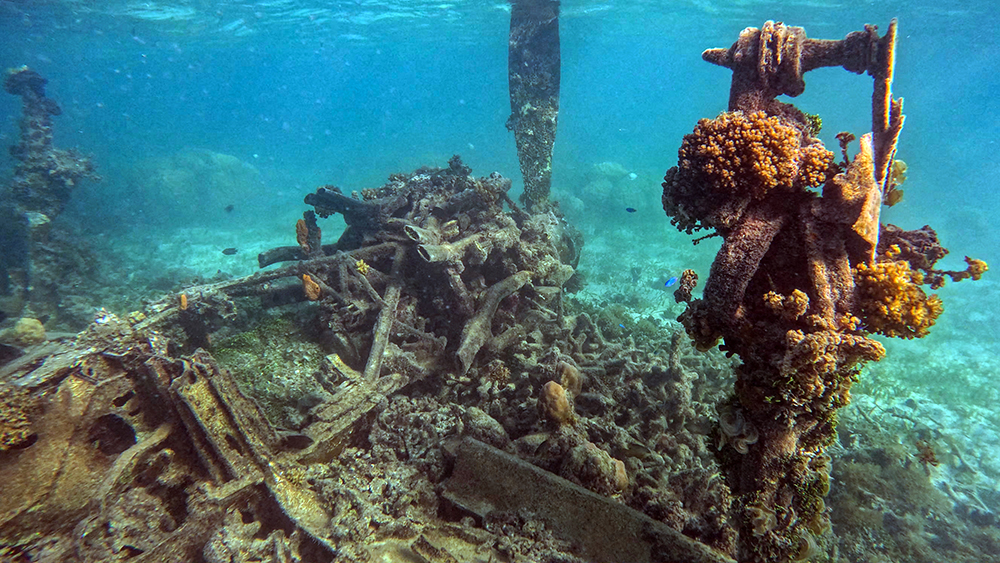
I’m not sure that I liked this wreck better, but we did stay here longer because it was an easier place for all four of us to snorkel. We poured over every detail of the jet, and then fanned out and explored some of the surrounding reef before meeting back up at the boat, and jetting off back to the BLR. We arrived back on shore just in time to catch what we thought would be our last Chuuk sunset.

Then we went inside to eat what we thought would be our last dinner at the BLR’s restaurant. We had an afternoon flight booked for the next day. Our plan was to fly to Guam, and spend our five hour layover at the Thursday night market before flying on to Palau. We turned in early so that we could get some packing done, and woke up the next morning to spend one last relaxing half day at the resort.
Everything seemed perfect when we got an early breakfast. We ate our fill, then paid a visit to the resort’s museum which is full of artifacts that have been salvaged from the wrecks in Chuuk Lagoon. After that we checked out a couple of paddle boards and a kayak, and spent the rest of the morning goofing off in the warm waters of the lagoon.
When the time came, we all went inside to shower and get ready for a long day of flying. We finished packing, checked out of our rooms, and boarded the hotel’s shuttle to the airport. Just as we were at the United desk to check into our flight, an announcement came over the PA system saying that our plane would have a six hour delay leaving Pohnpei. Thankfully, the shuttle van hadn’t left yet, and the driver and BLR employee, Lin, who had escorted us to the airport were ready to take us back to the hotel to wait out the delay.
This was a major wrench in our plans. Unless a miracle happened, we would not be making our flight to Palau that night. Fortunately, we hadn’t planned anything major for our first day there, just in case something like this happened. So we just had to figure out what to do for an unplanned day in Guam. We got to work looking up things to do while we waited in the air-conditioned hotel lobby. Once we had a satisfactory plan, we went out to the beach and pulled up the latest episode of survivor, which we watched in front of our real last Chuuk sunset.

After sunset we grabbed our real last dinner in the BLR’s restaurant, and then Lin and the driver gathered us all up for to return the airport. Lin gave Rachel and I flower crowns, which was so sweet of her, and really helped to brighten the mood of what had turned into a somewhat stressful day.

Despite the stress, we were all in good spirits as we made our way back to the airport. We spent the evening chatting with other passengers at the gate until our flight finally arrived, and everyone started boarding. Once aboard, it really as officially time to say goodbye to Chuuk. Our time on Weno had been fantastic. I loved exploring the wrecks in the lagoon, and getting to learn so much about the island’s history along the way. I was sad to leave, but we still had Palau to look forward to, and we were planning to make the most of our unexpected day in Guam!



 birdsoftheairtravel.com
Thank you, Kaiti, for another brilliant and colorful account of your exotic travels. Your photography is wonderful (Oh, that sunset!), and as always, brings your adventures to life.
Joanna
Thank you Joanna! Chuuk sunsets were some of the best I’ve ever seen! The perfect way to end a day!
Yes, Kaiti, I could see it from your post!
Joanna
This is such a wonderful post with so many beautiful and colourful photos, Kaiti! I hope you had heaps of fun exploring the shallow, vast and beautiful turquoise waters of Chuuk Lagoon and seeing its many shipwrecks. Thanks for sharing, and have a good day 🙂 Aiva xx
Thank you again! Visiting Chuuk was a dream come true; a real diver’s paradise!