After leaving the Marshall Islands, it was time to move on to the second stop on our Micronesian vacation, the state of Chuuk in the Federated States of Micronesia (FSM). Collectively, the FSM is made up of over 600 islands that are divided into four states, Pohnpei, Chuuk, Yap, and Kosrae. Each state is rich in natural beauty and local culture, but we chose to visit Chuuk because of its unique SCUBA diving and because we would be able to experience most of its major points of interest during our short stay. We had about three total days to spend there (two full days and two half), which should be just enough time to keep us busy without feeling like we’d missed out on anything by the time we had to leave.
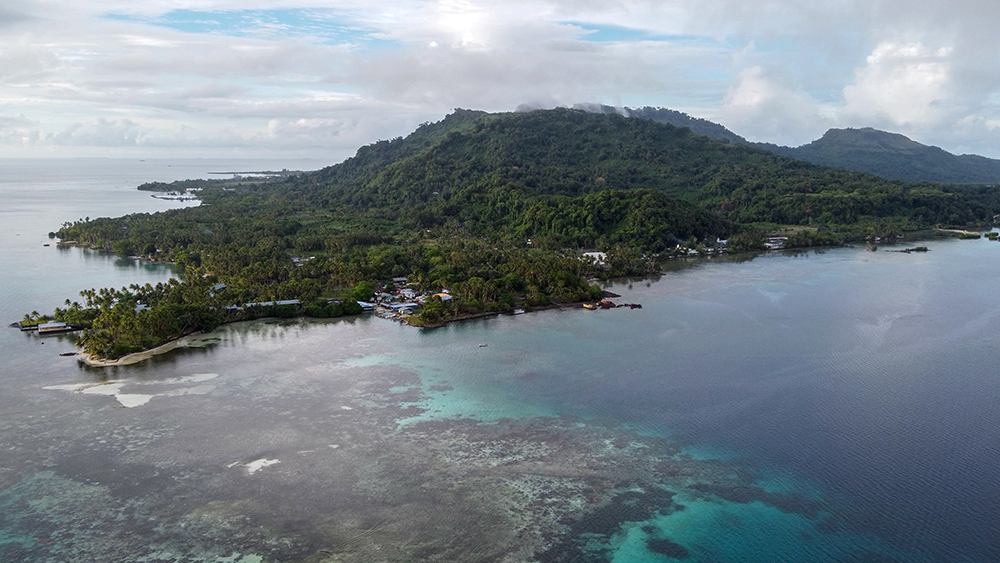
We landed in Chuuk in the midst of an afternoon rain shower, and quickly made it through passport control to meet up with our hotel shuttle. I watched palm trees and green mountains pass by through the drizzly van window as we slowly rode over bumpy roads to the southern tip of Weno Island.
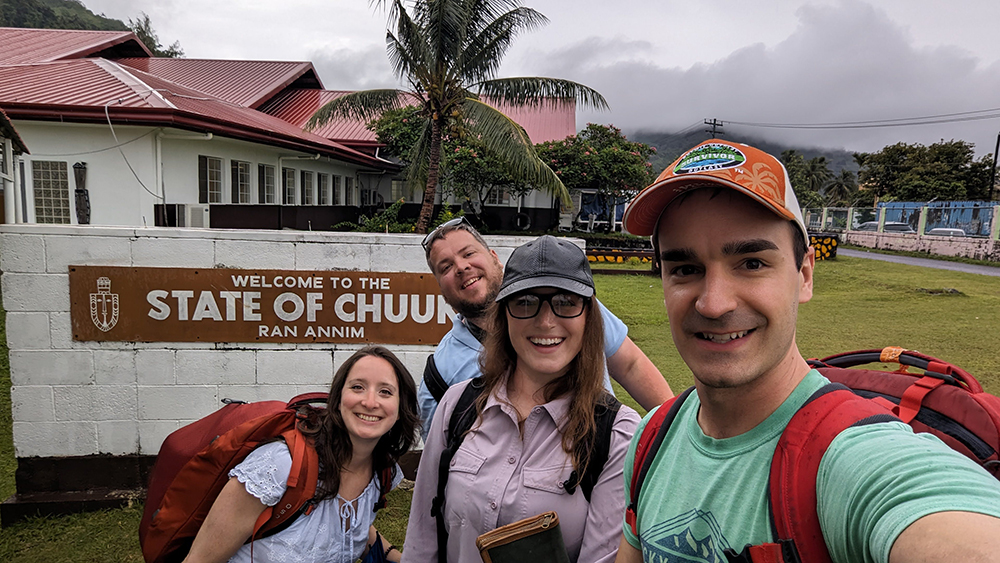
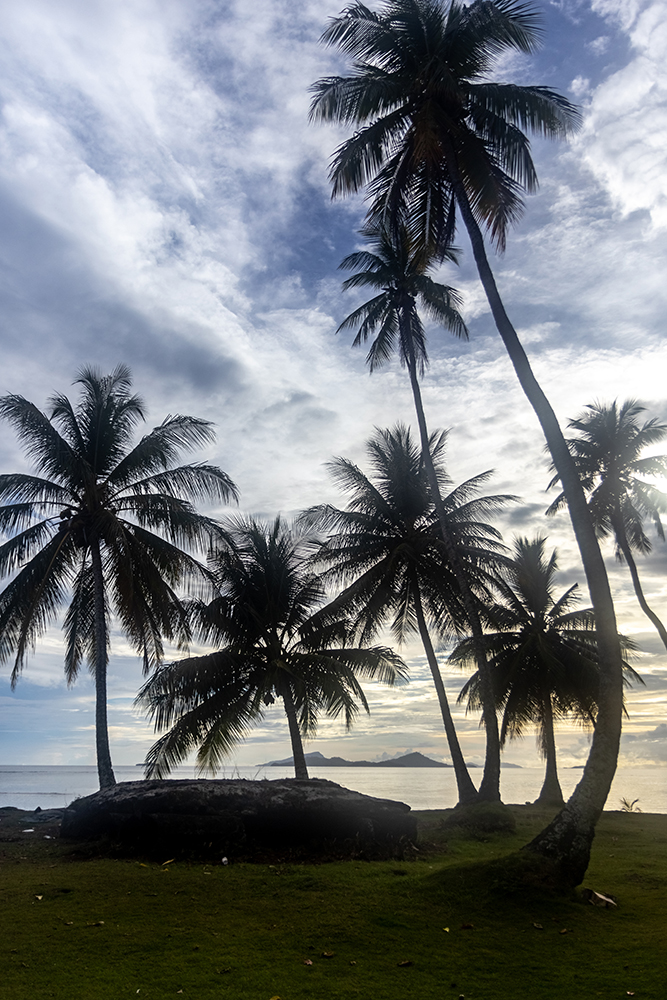
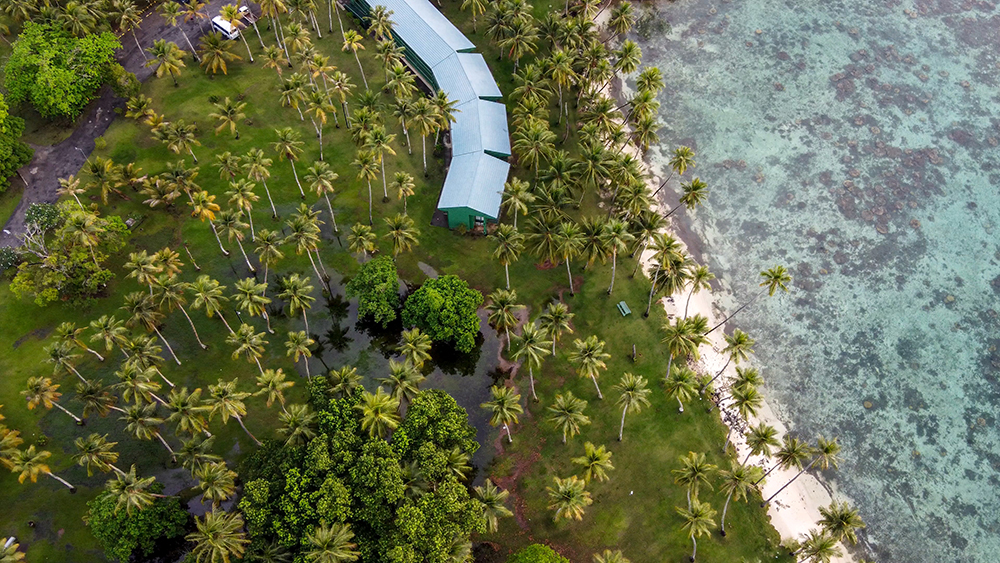
It was still raining when we arrived at the Truk Blue Lagoon Resort, where we checked in at the front desk, and then dropped our luggage off in our ocean view rooms. The resort’s grounds were dotted with tall palm trees that swayed in the breeze in front of a view of Chuuk Lagoon. Even in the rain, it was an inviting scene, but we still had some business to take care of before we could go out and enjoy the resort.
The first item on the agenda was to stop into the BLR dive shop and put our names on their schedule for the next day. Vince and I signed up for a three tank dive, and Rachel and Jared for a half day snorkeling tour. I felt a little sheepish as I wrote “43” under the “number of dives” column on the sign up sheet. A quick glance at the rest of the list had revealed that every other diver on the page had over a thousand dives under their belts. Vince and I were by far the least experienced divers on the island, but I was still brimming with anticipation to get in the water.
After everything was settled with the dive shop, we walked down the road a little ways to pick up some snacks from a nearby convenience store. While we were there, Vince and Jared asked the shop owner if they could buy some betel nut to try, and the owner taught them how to prepare it by rolling it up in a betel leaf along with lime and a filterless cigarette. Betel nut is the fruit of the areca palm tree, and is chewed as a stimulant drug throughout much of Southeast Asia and Micronesia. It has quite adverse health risks if used over long periods of time, the chief of these being oral and esophageal cancer, tooth damage, and lesions in the mouth. It’s also highly addictive, so I think it’s safe to say the best thing to do when it comes to betel nut is avoid it entirely, but the guys were keen to try it once while we in Micronesia. Rachel and I abstained from this little adventure, while the shop owner and his family erupted in giggles as the guys clumsily rolled up their betel nuts and shoved them into their mouths.
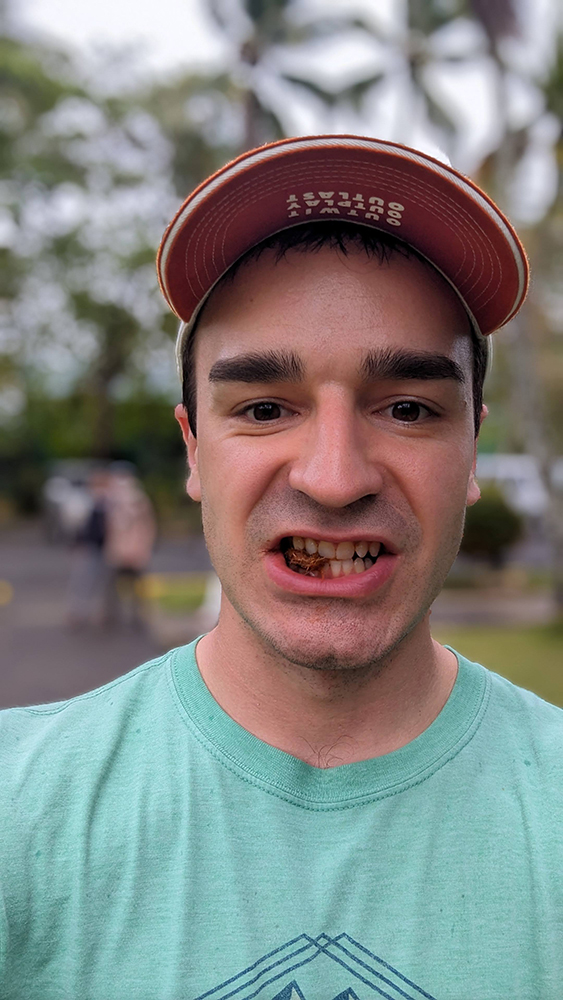
They spat out red oozing liquid all the way back to the hotel, and jokingly tried to kiss Rachel and I as we cringed away from them.
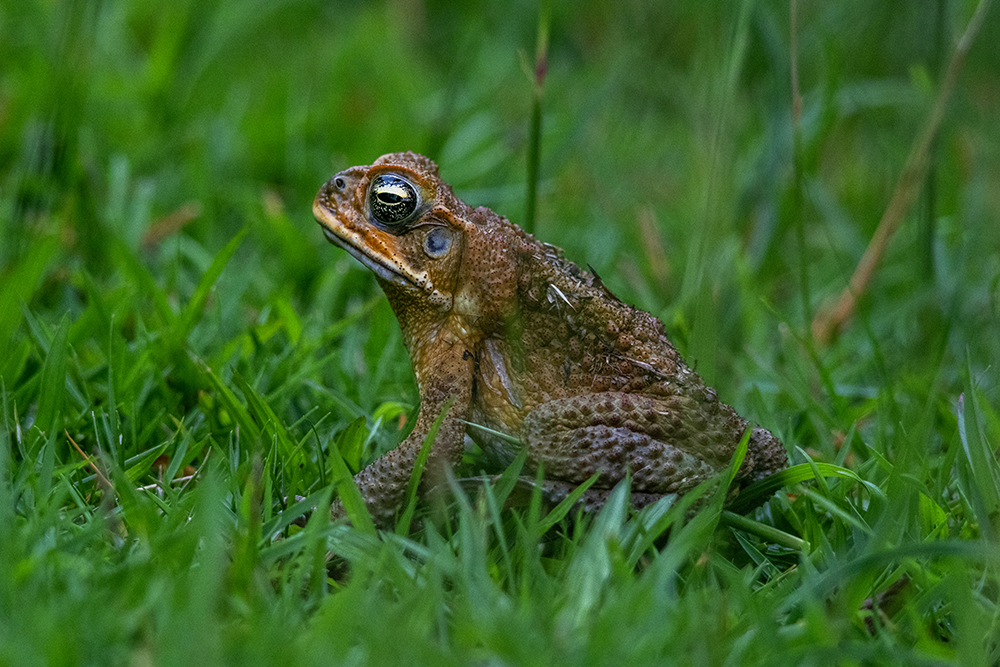
The rain had mostly cleared up by the time we made it back to the BLR, so I dragged Vince out to the beach to explore the grounds and take some pictures of the sunset. My sandaled feet squished through newly formed puddles in the lawn as we walked beneath the towering palms, dodging cane toads and crabs every few seconds.
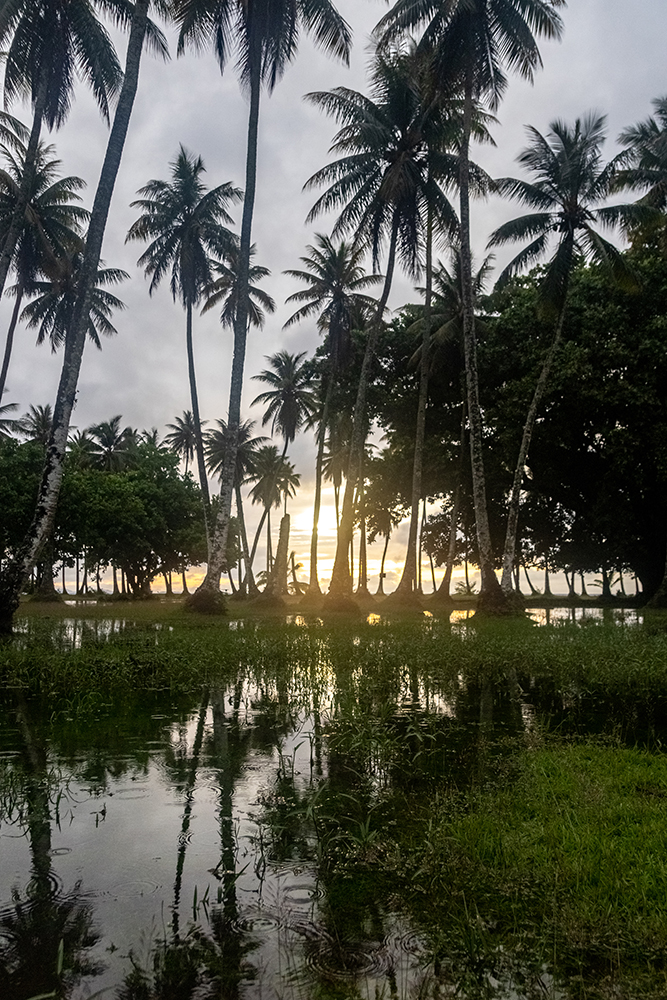
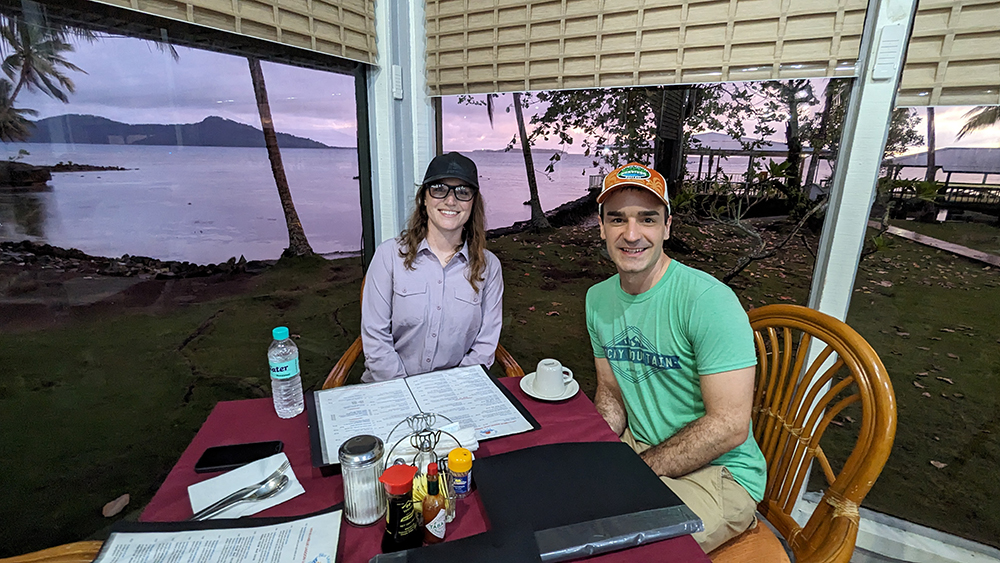
Later that evening, we ate our first meal at BLR’s restaurant as the after burn of sunset glowed through the the dining room’s large windows. Then we went to bed, eager to explore the underwater world of Chuuk Lagoon the next morning.
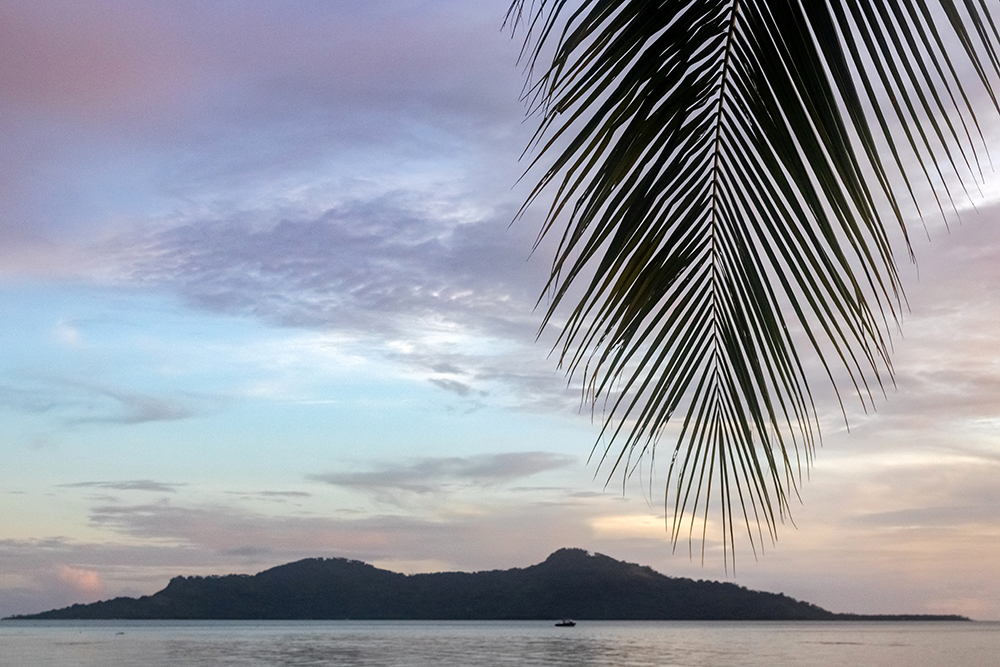
When morning finally arrived, Vince and I got up early and walked over to the dive shop to collect all of our gear for the day. Then we boarded one of the shop’s several boats, along with one other couple, our captain, and divemaster, Rio. Our captain steered the boat out into the lagoon and I enjoyed beautiful views of lush islands rising from the water as we made the twenty minute ride out to our first dive site, the wreck of the Fujikawa Maru.
I mentioned before that the diving in Chuuk Lagoon is unique, and that is because there is an entire fleet of WWII era Japanese ships and planes resting on the sea floor. Many of these vessels were sunk during Operation Hailstone, a massive attack conducted by the US Navy on February 17-18 of 1944. The Fujikawa Maru is widely considered to be the best dive site in Chuuk Lagoon, and is also often listed among the best wreck dives in the world.
Rio gave us a quick dive briefing as we floated on the surface above the wreck. He told us the ship was lying vertically in the water, and that we would descend to the wreck and then take turns going into the engine room. He also told us to look out for disassembled planes when we entered the cargo bay.
I peered over the side of the boat, and saw a yellow buoy attached to a mooring line just below the surface. The line led down to the looming shadowy shape of the Fujikawa Maru. It suddenly it occurred to me that this would be my first real wreck dive; real in this context means it wasn’t sunk specifically for the purpose of SCUBA diving. As soon as I realized this, Rio gave the ok to enter the water. I rolled backward off of the boat, and with that my first real wreck dive had begun!
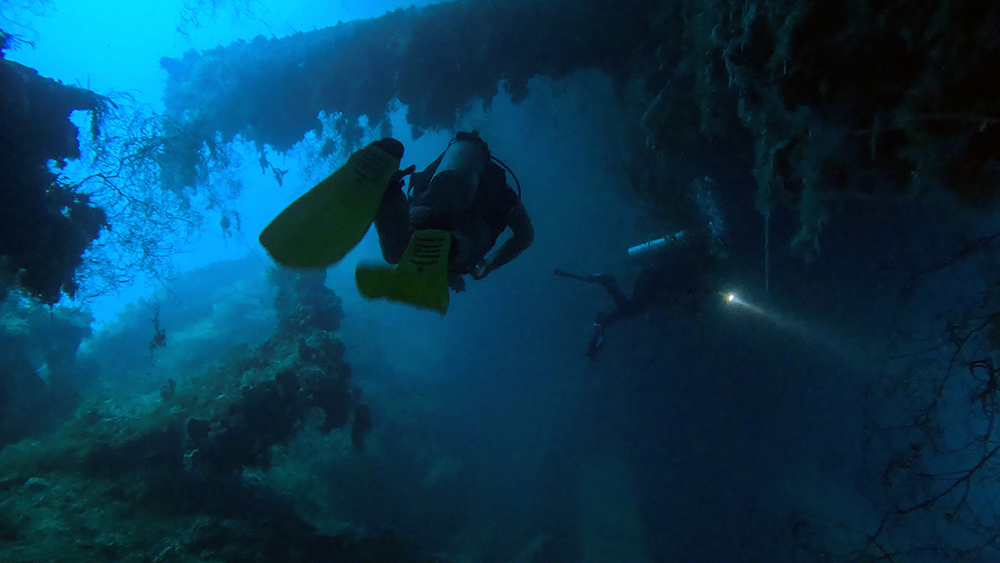
I exhaled deeply as we sank towards the wreck, my emptying lungs aiding in the descent as the hull of the Fujikawa Maru, now covered in bright corals, seemed to rise towards me. Within a minute, we were floating a few feet above the ship, and Rio took the other couple into the recesses of the engine room, leaving me and Vince to look around on the deck for a few minutes as we waited for our turn.
When it was our turn to go inside, we entered into complete darkness, and Rio used his dive light to point out interesting artifacts.
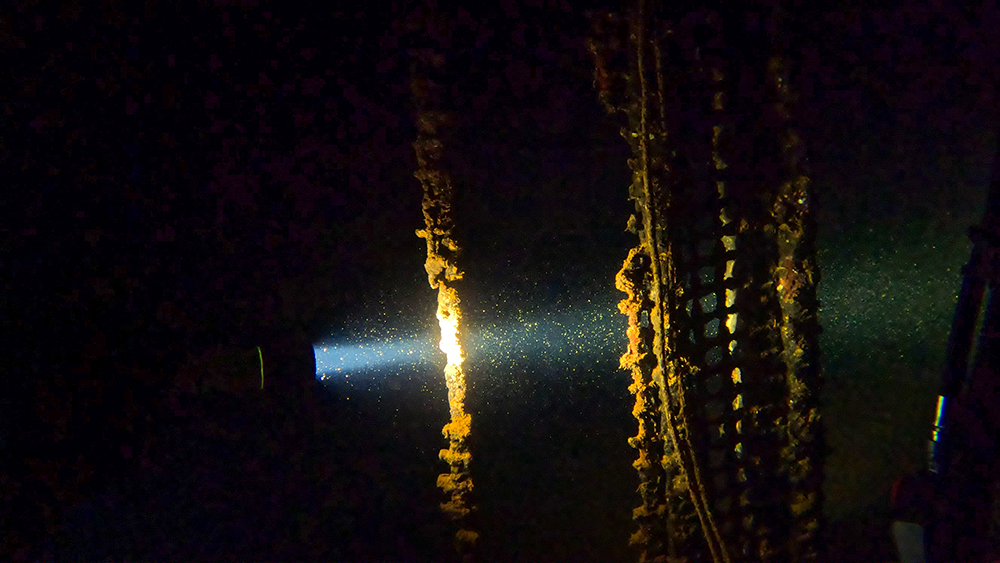
After leaving the engine room, we swam across the deck until we reached the entrance to one of the cargo holds. The Fujikawa Maru was a Japanese cargo ship that was built in 1938. In 1943, the ship was hit by a torpedo fired from a US submarine, and sent to Japan for repairs. Later that year she was hit again by aerial torpedoes fired from a US aircraft carrier. In February of 1944, she was in Truk Lagoon (Truk was the Japanese name for the atoll), undergoing more repairs, when the US Navy launched the Operation Hailstone strike. The Fujikawa was sunk to the bottom of the lagoon along with 46 other vessels and over 250 aircraft.
The word Maru is often used to indicate merchant ships in Japanese ship naming conventions, and when the Fujikawa Maru sank, she was carrying a cargo of disassembled Mitsubishi fighter planes in one of her holds. We descended between a couple layers of coral-covered metal beams to access the hold, and once we were inside, we found one of the wingless planes.
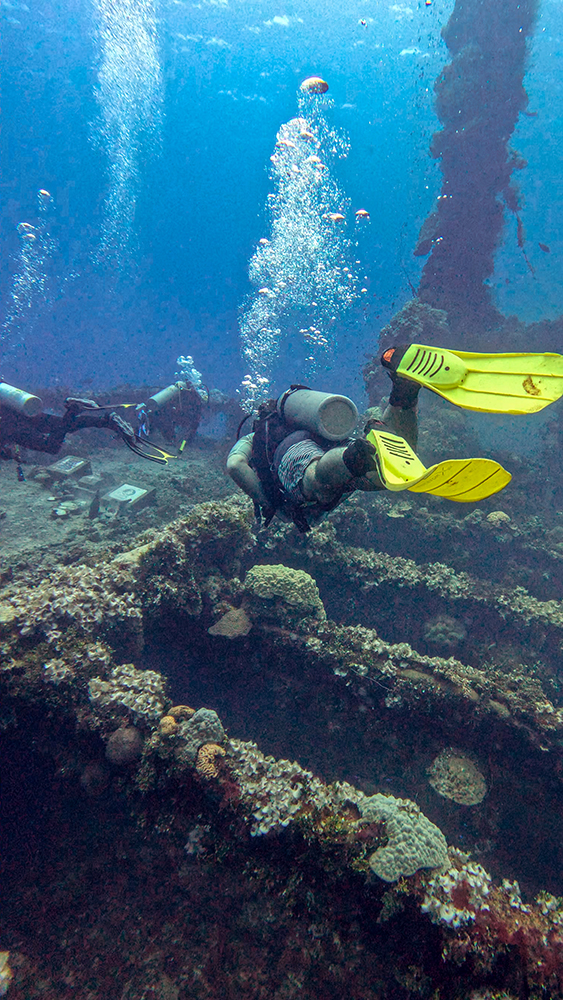
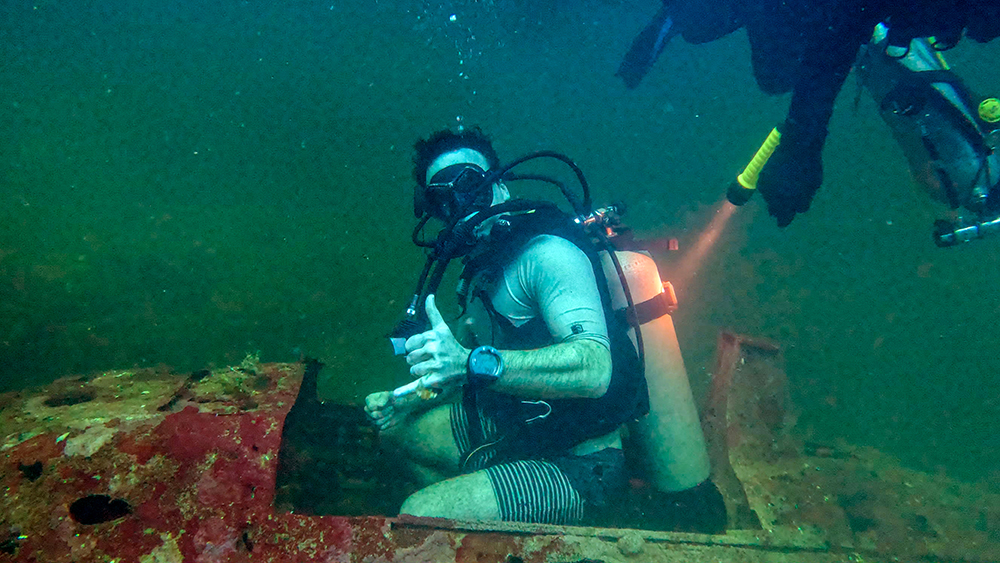
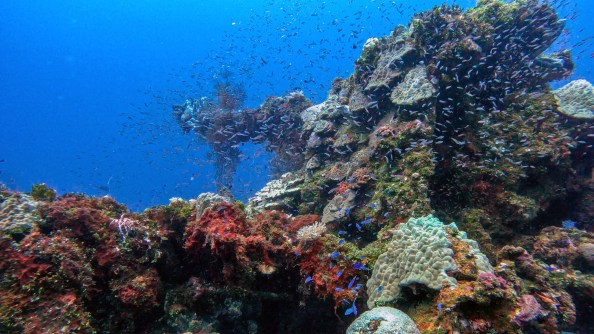
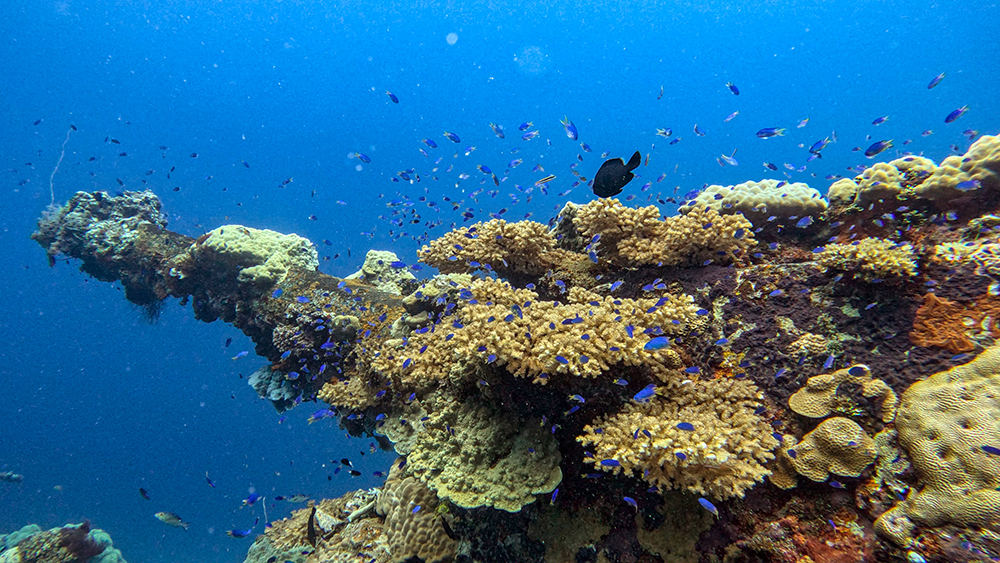
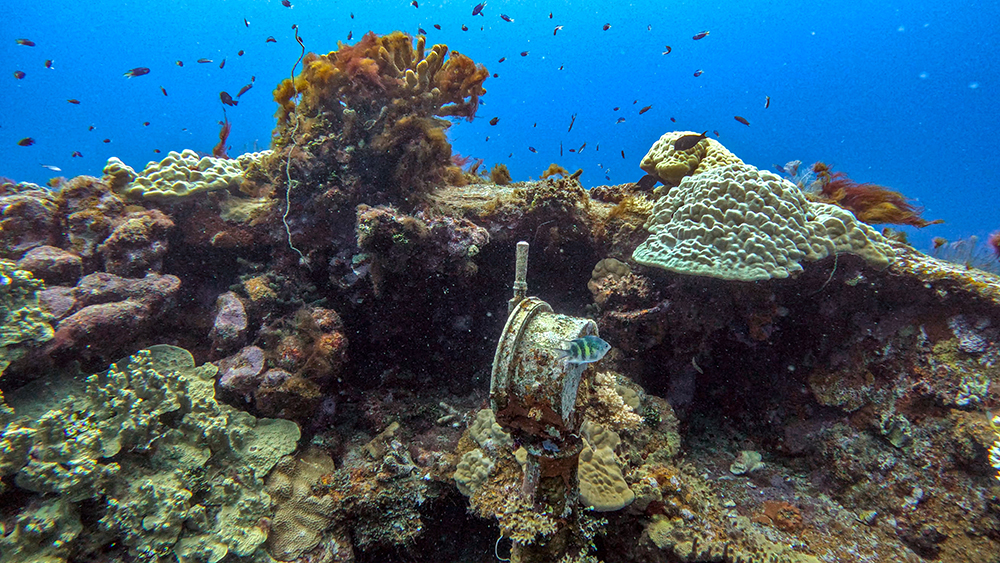
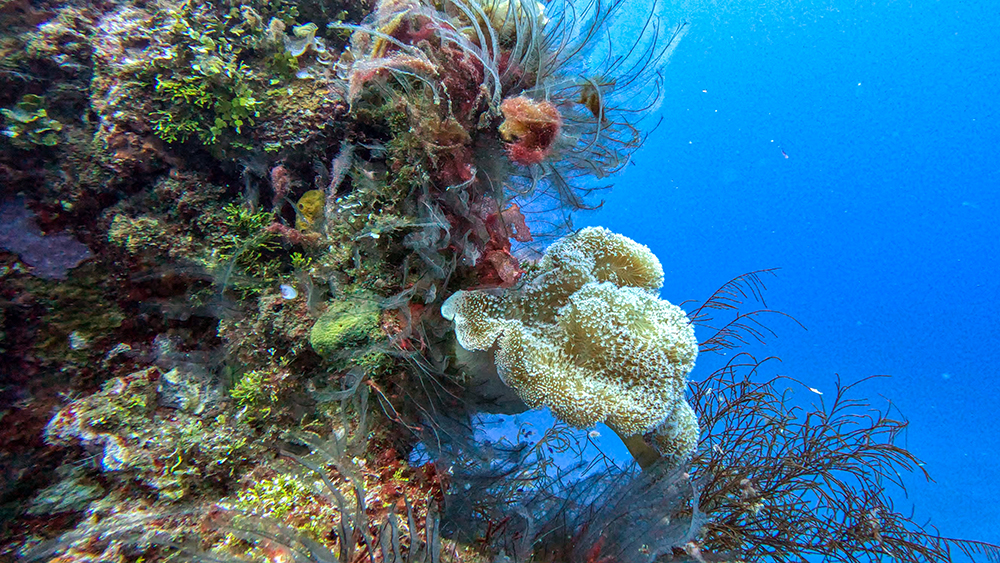
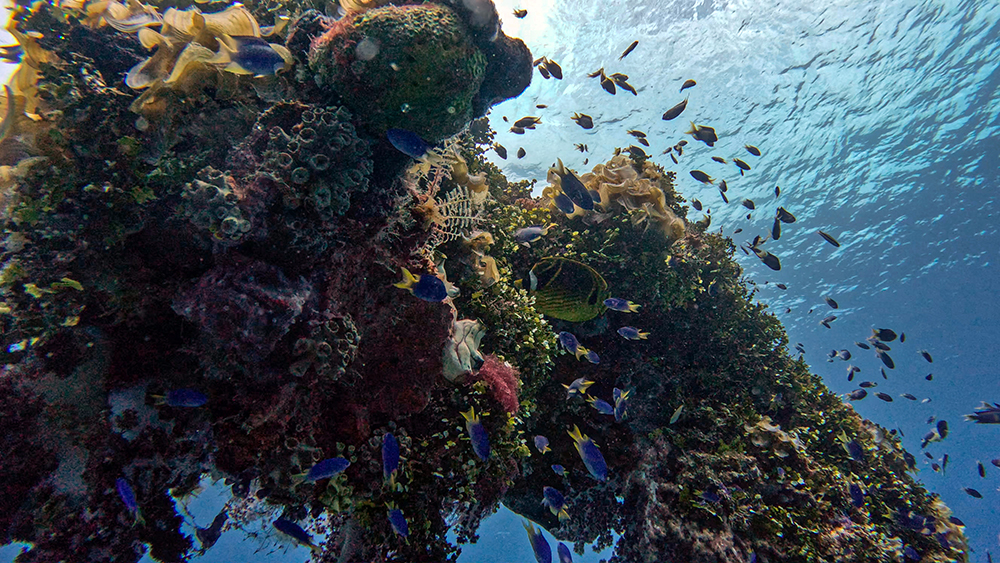
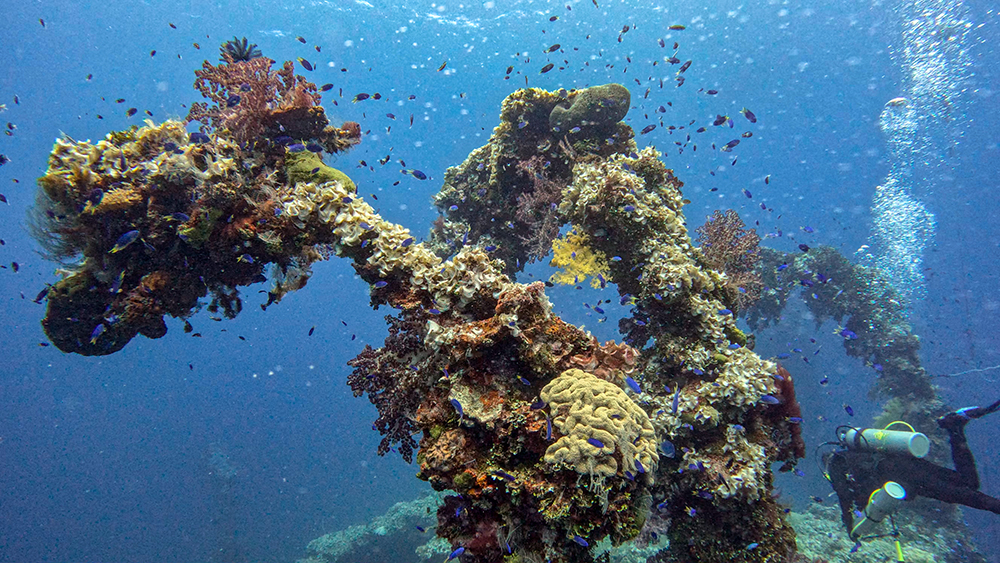
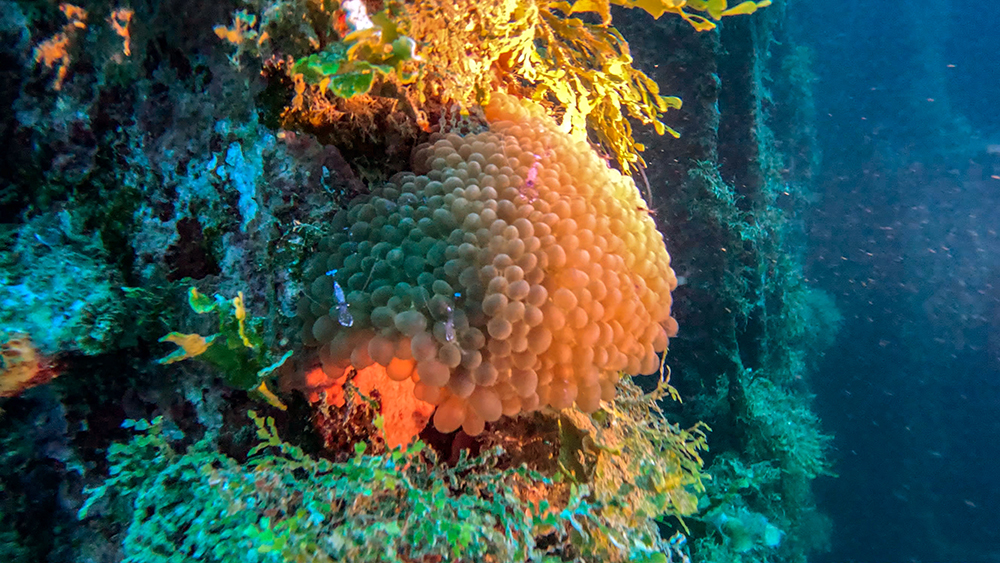
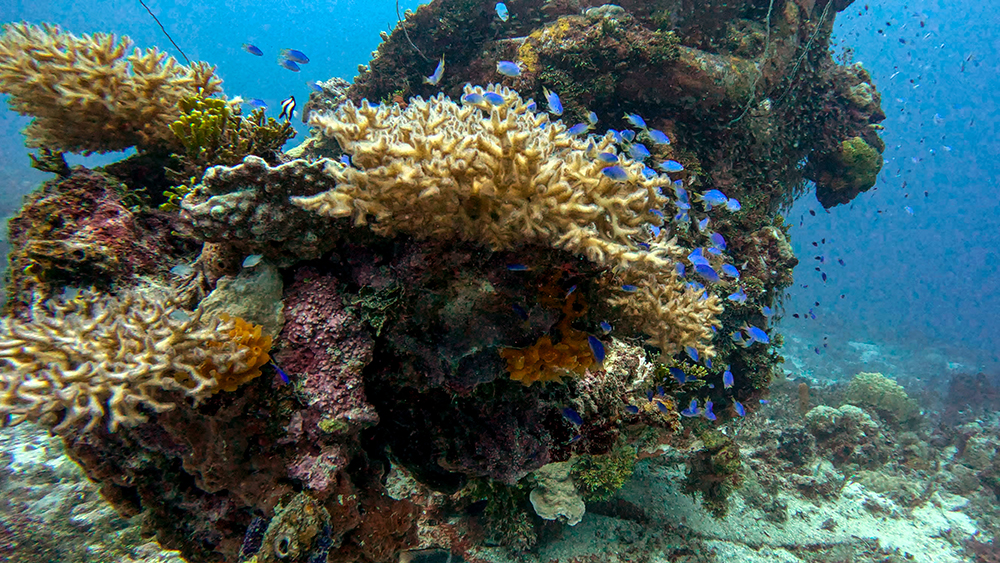
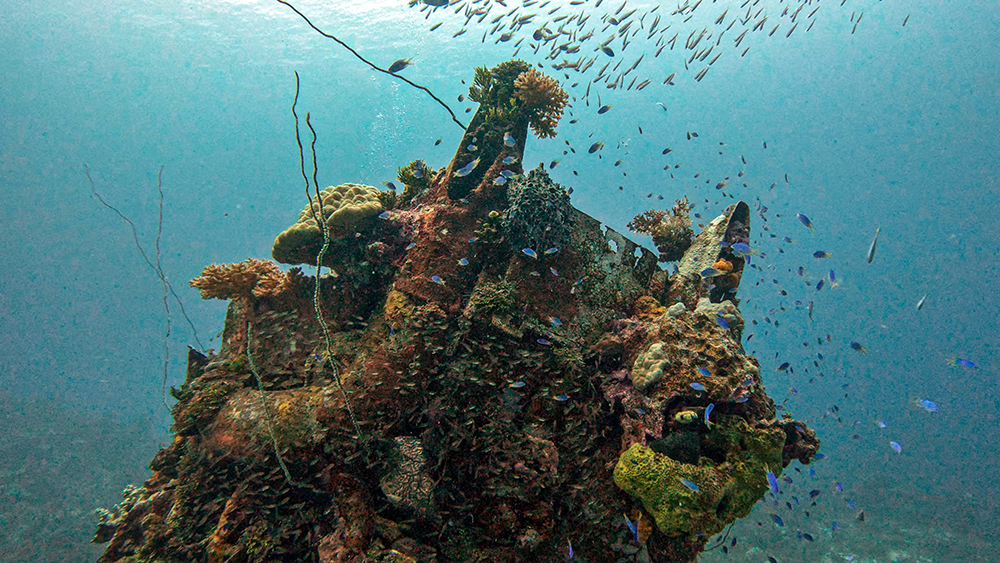
But my favorite part of the dive came when we left the cargo hold, and got to explore the beautiful coral reef that has formed on the outside of the ship. There were lots of luscious anemones, colorful soft corals, and mesmerizing schools of tiny fish.
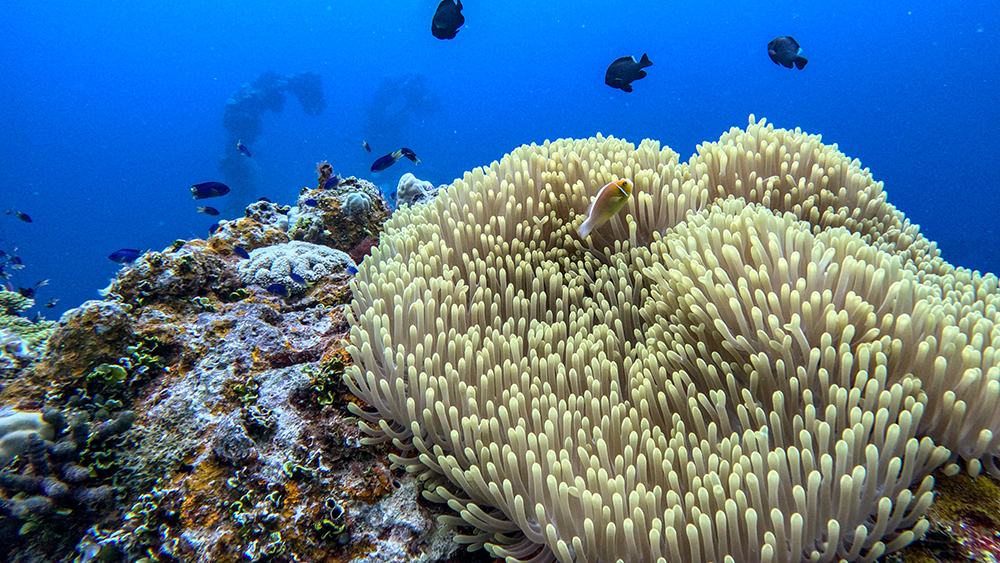
The Fujikawa’s guns seemed to be congregation points for the most fish, and I loved watching them all move in tandem, darting away from the perceived threat of us divers. They were also the most visually appealing aspect of the dive to me. It was an eerily beautiful juxtaposition to see so many fish and colorful corals all gathered on their imposing silhouettes. These symbols of violence and war are now teeming with vibrant life.

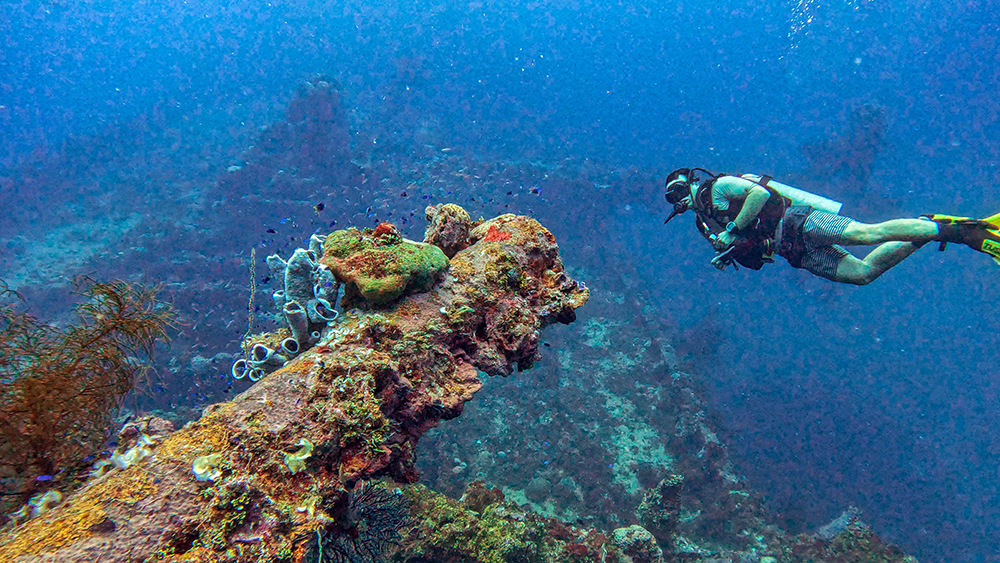
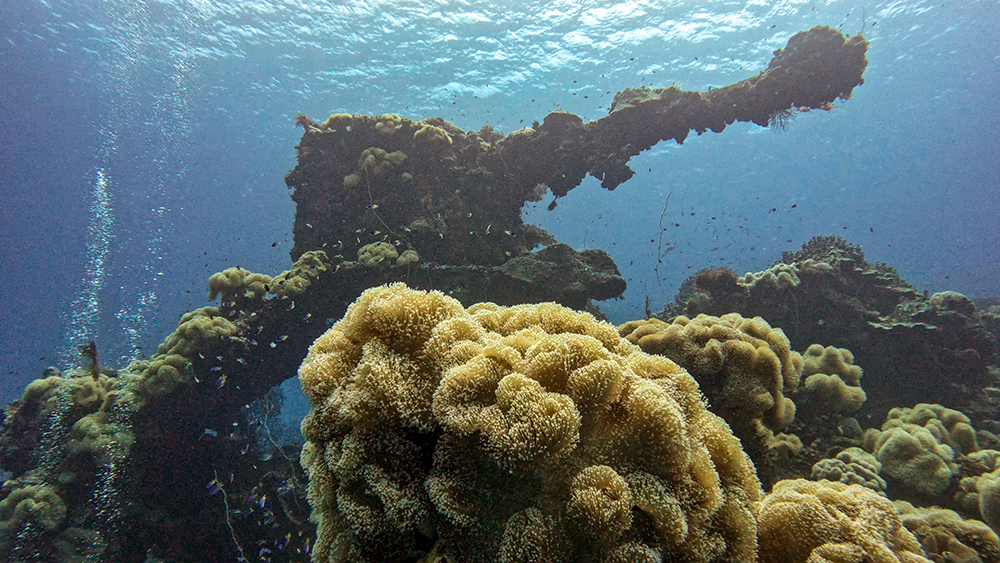
True to its reputation as the best dive site in the Lagoon, the Fujikawa would end up being my favorite dive of the day, and when it was finally time to leave her hull and return to the surface, I found myself wishing that I could dive her a few more times. But we still had two more amazing sites to visit that day, so I didn’t lament the end of the first dive for long. When we reached the surface, we climbed into the boat, and zoomed off to take a surface interval on nearby Eten Island.
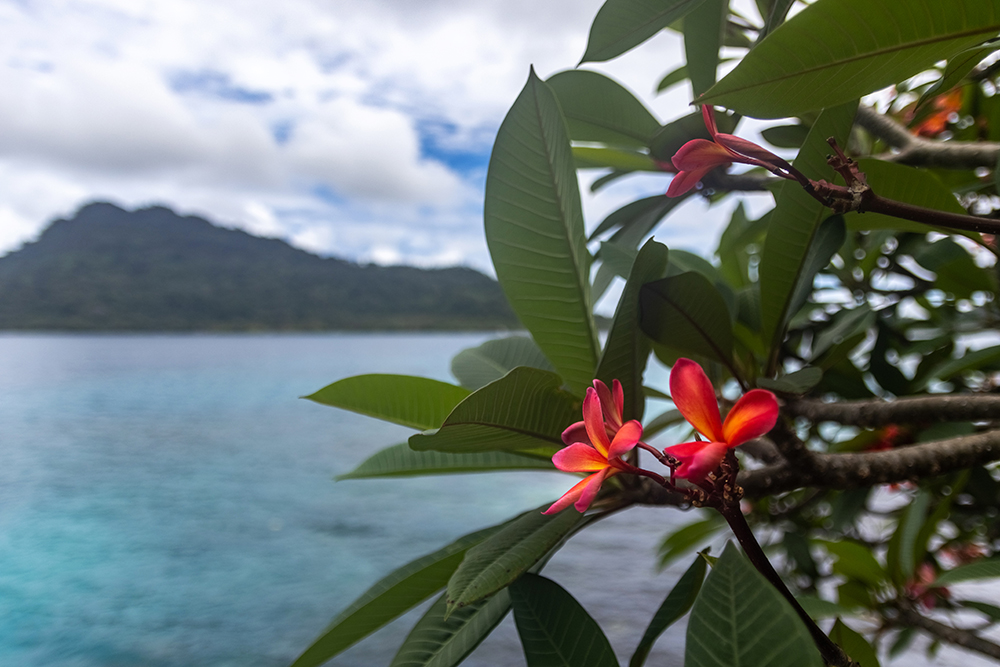
Eten was used as a runway during Japanese occupation, and the scars of this history surround the island to this day in the form of several fighter plane wrecks that crash landed in the surrounding waters. Vince and I didn’t get the chance to go out and snorkel any of the wrecks during our break, but I did make a mental note of a yellow buoy bobbing a short distance from shore, just in case we found an opportunity to return to Eten during our stay.
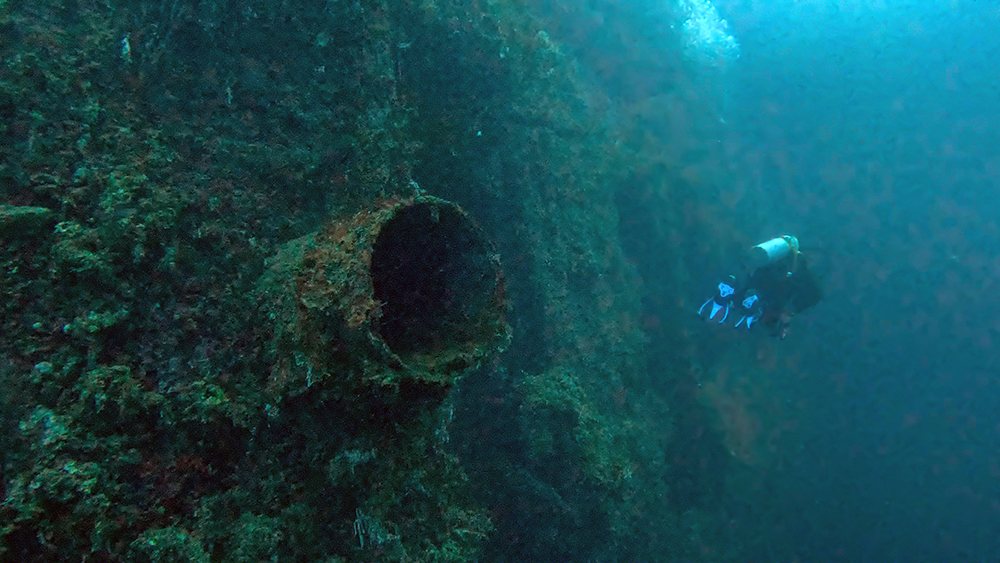
After our surface interval, we boated off to our next dive site, the Kiyosumi Maru. This was another armed merchant ship that the Japanese Navy used during WWII. She was also in Truk Lagoon recovering from three torpedo strikes when she was sunk during Operation Hailstone. Now she is lying on her port side with a maximum depth of 31 meters.
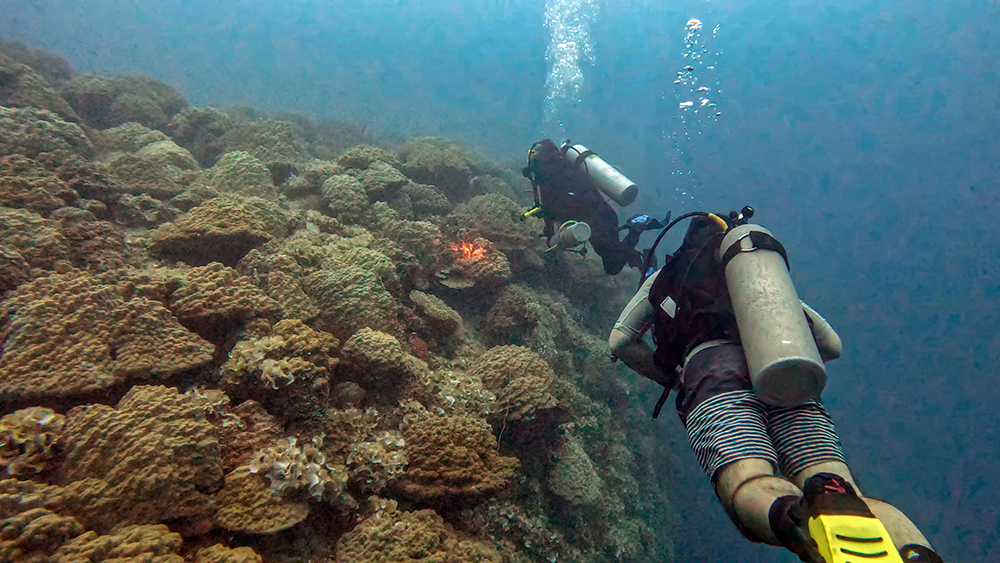
The blue skies we’d enjoyed all morning had clouded over by the time we rolled into the water at the Kiyosumi Maru. This meant visibility underwater had worsened, and I couldn’t help but feel that the ship looked somewhat ominous as we approached her near the bridge. Her hull was coated in a monoculture of lobe corals, whose yellow mounds spread out from underneath me until they dissolved into the deep blue backdrop of the sea.
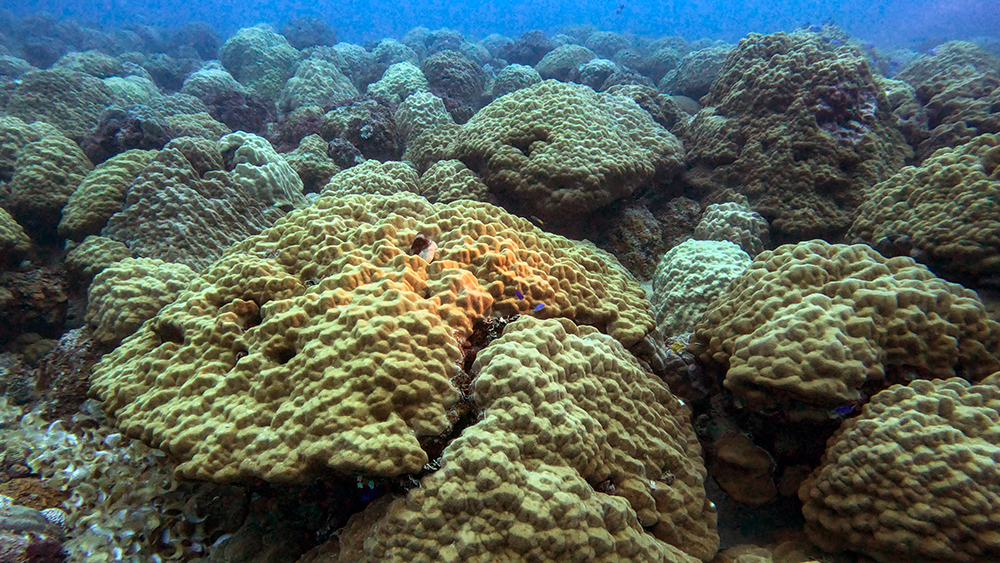
We swam above the corals until we reached the edge of the wreck and descended over the side. There, we found one of the torpedo holes, and Rio led us inside. Watching Vince swim through the chasm ahead of me completely changed my perspective on what a torpedo hole must look like. It had never occurred to me that it would be so large, and I felt dwarfed by comparison as I followed him into the opening.
The atmosphere was nothing short of haunting as we weaved in and out of a maze of metal bars in the ship’s hold. The Kiyosumi was more imposing and intimidating looking than the Fujikawa, and had significantly less wildlife. We did see a few animals like a group of anemone shrimp, an octopus, and a couple of pipefish, but the wreck itself dominated the majority of this dive, and we spent a lot of time going in and out of the ship at various penetration points.

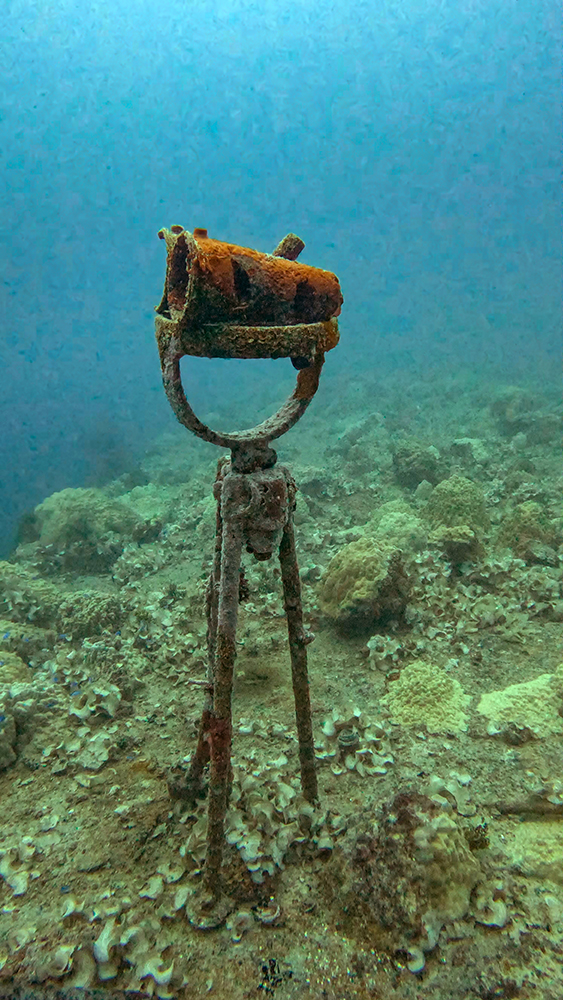
We checked out an intact bicycle in one of the cargo holds, then we started our gradual ascent back up the hull where we found an assortment of bottles that had clearly been placed there by other divers, and a set of binoculars.
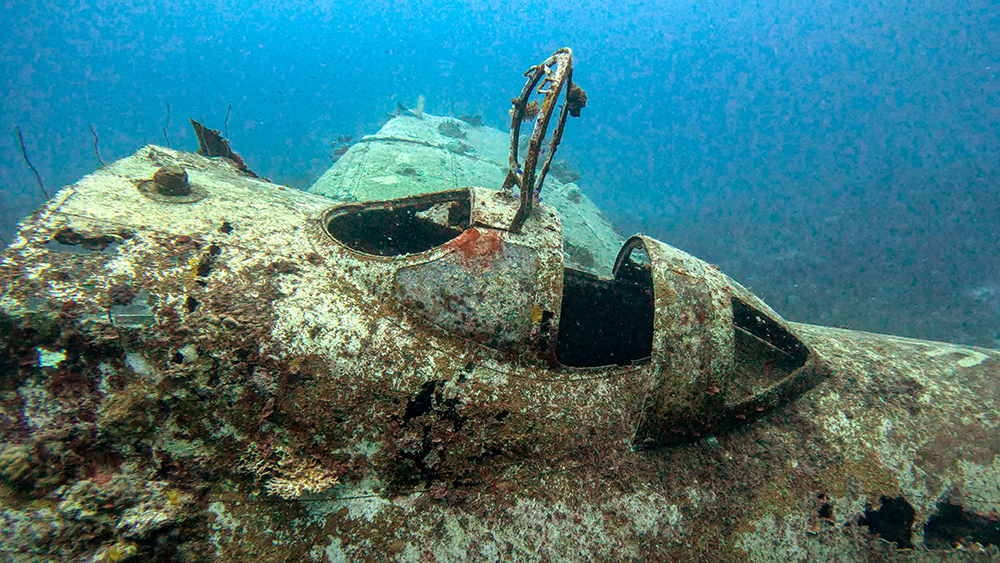
When our time on the Kiyosumi Maru was done, we sped back to the BLR for a longer surface interval, and lunch. A couple of hours later, it was time to meet back up and head out for our third and final dive of the day, the Betty Bomber. This would be a much less imposing dive after the big ships we’d seen than morning. The Betty Bomber is a Mitsubishi G4M that crash landed just short of Eten island, and is still remarkably intact when compared to the other planes that crashed in the area. The plane lies at a depth of about 18 meters, making it our shallowest dive of the day. This meant we would have a comfortable amount of air for a nice, long dive.
I saw the plane right away when we got in the water, and kept my eyes on it as we came closer and closer to the sea floor. When we reached the bottom, we approached the nose of the Better Bomber, and swam in through a hole that had been ripped open near the cockpit.
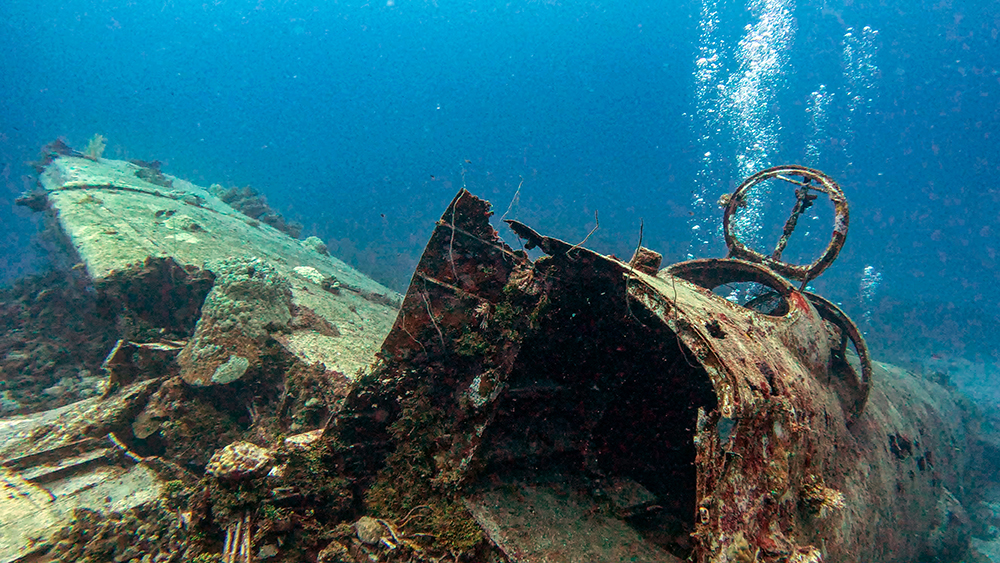
We swam through the plane in a single file line, and exited at another hole near the tail. This was such a fun start to the dive, but I began to wonder what we would do for another forty to fifty minutes at such a small dive site.
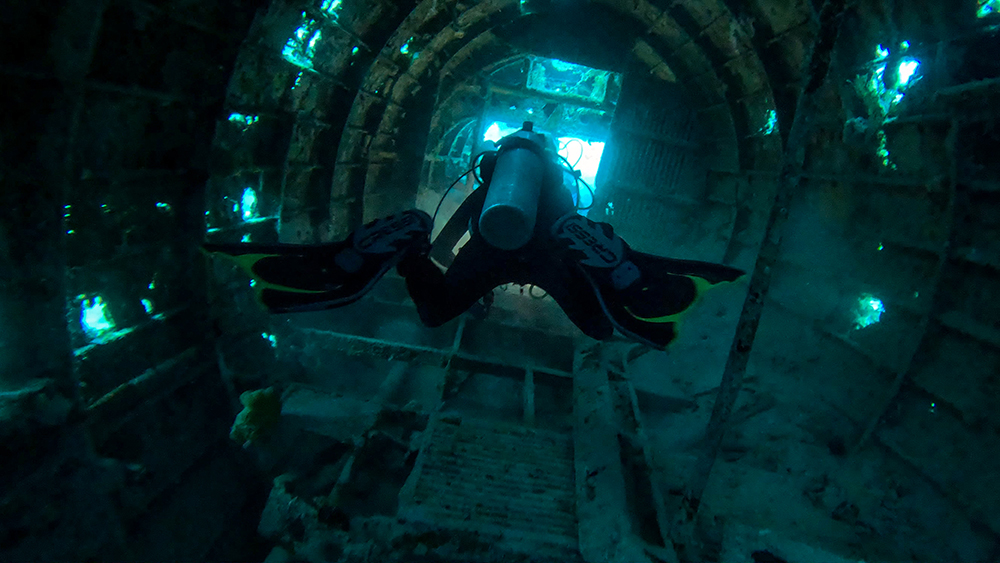
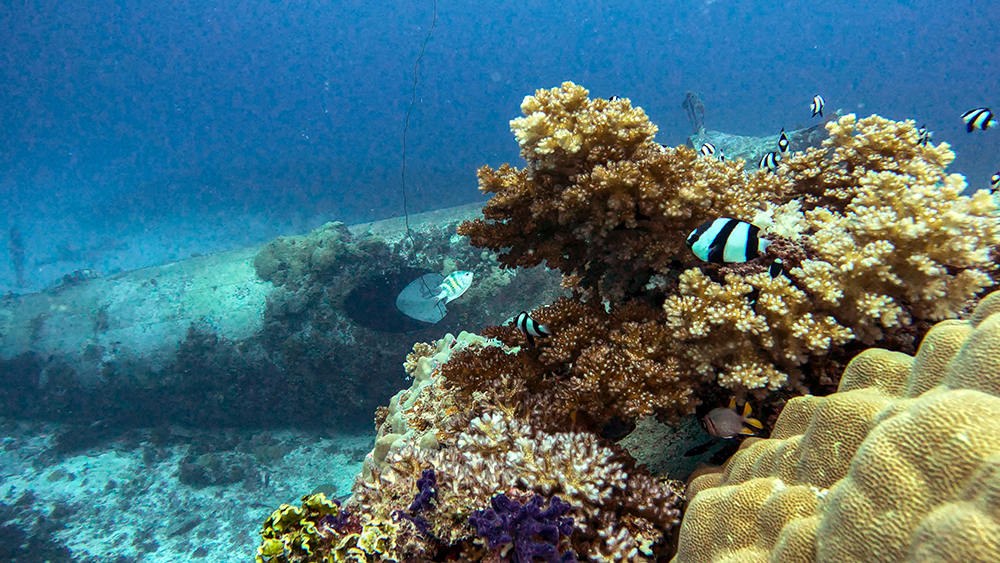
I needn’t have worried though, because it turned out there was still a lot to explore on the plane and the surrounding area. After exiting the plane, we swam back up to the cockpit to take turns sitting where the pilot would have sat. Then we made our way over to the wing to see some beautiful soft corals and schools of fish.
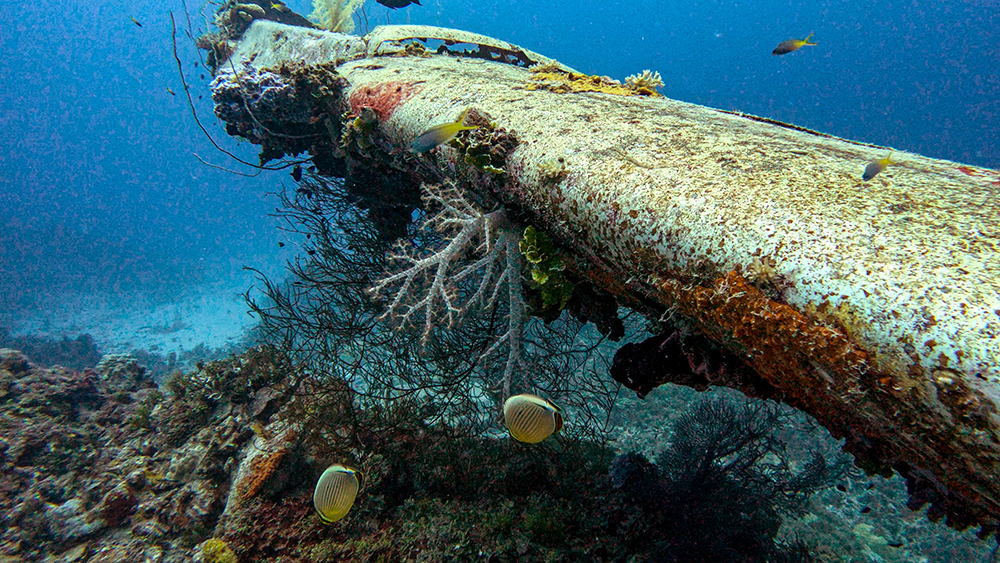
We found our second octopus of the day on our way to see the plane’s engines, which landed a short swim away from the wreck. Much like the guns on the Fujikawa Maru, the Betty Bomber’s engines were a congregating point for lots of little fish. I love watching schools of fish all move together in tandem, so I was happy to get to stay at the engines for a while, watching them.
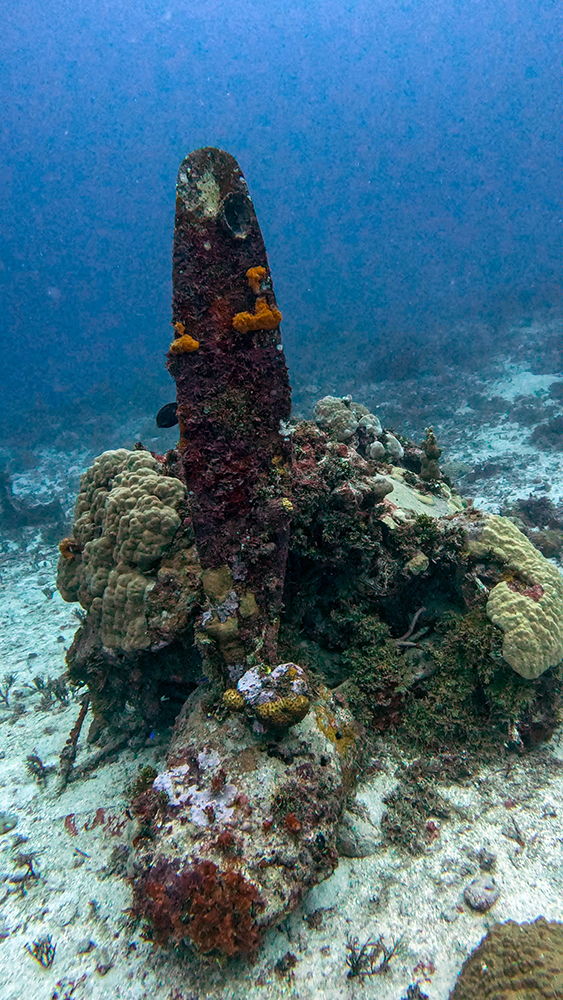
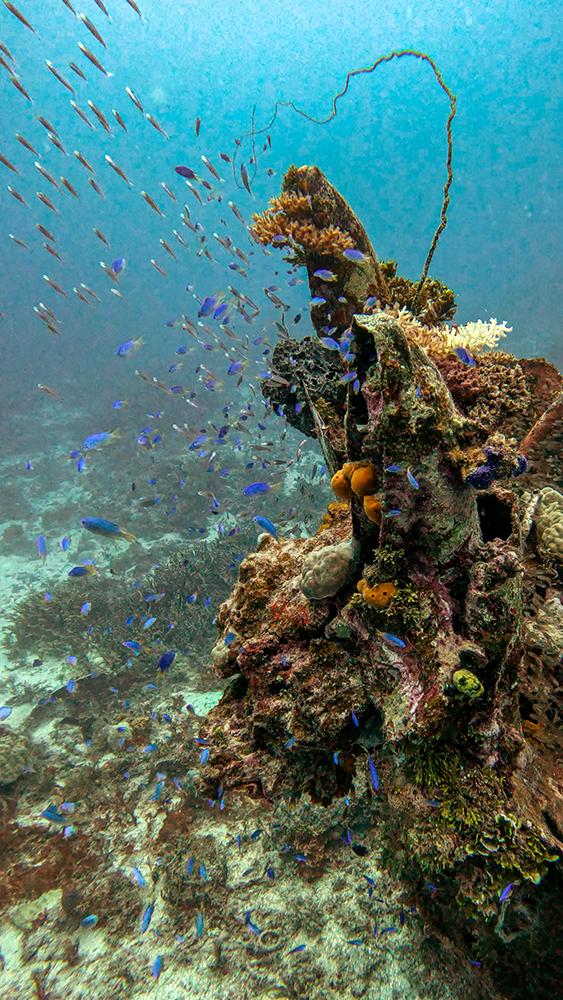
We finished the dive off by going back to the main wreck to check it out from different angles.
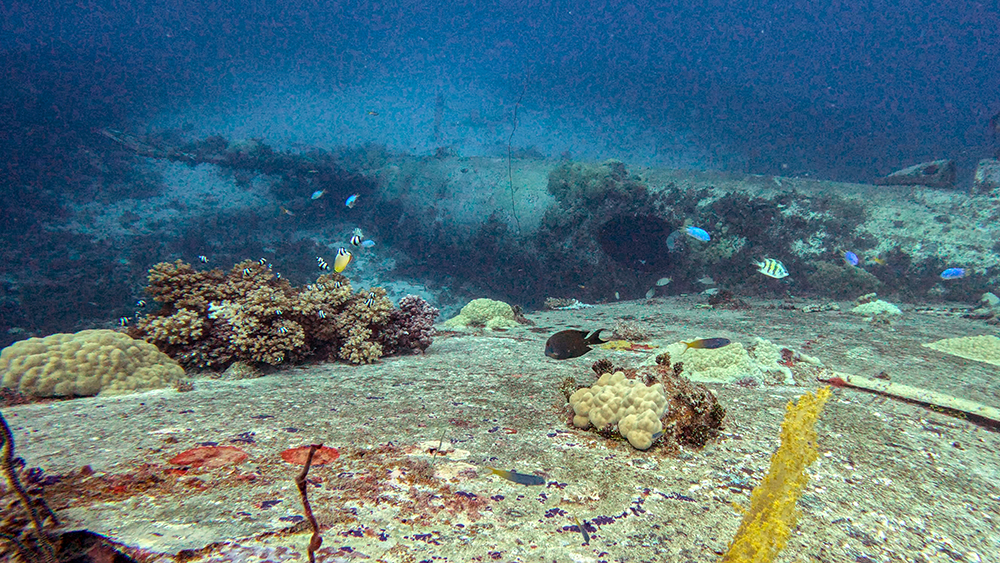
When it was time to end the dive, we swam over the top of the plane one last time, ascending from directly above the cockpit.
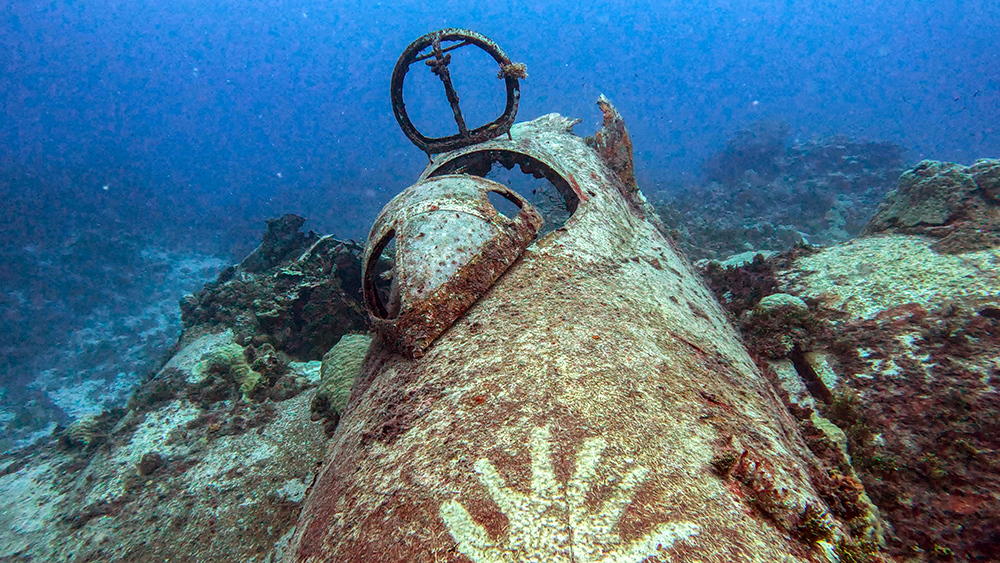
With that, our day of diving in Chuuk Lagoon was officially over. Vince and I both would have loved to spend a few more days diving and exploring more of the wrecks, but our schedule didn’t allow for it. Thankfully, we had some equally amazing things coming up on our itinerary, so we couldn’t be too disappointed to be done diving for the time being.
We met back up with Rachel and Jared when we arrived back at the BLR. They’d had an equally fun day snorkeling at some of the wrecks in the lagoon, including the Fujikawa Maru. The four of us decided to wander the resort’s grounds until sunset. Vince and Jared took the opportunity to fly their drones, and they found a couple of less historic shipwrecks nearby.

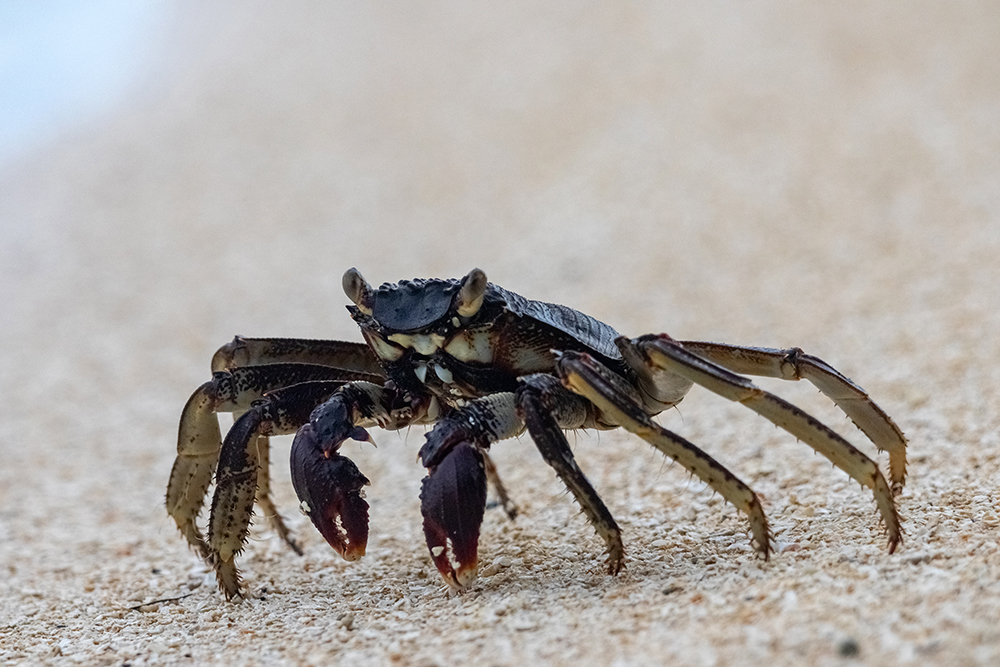
Meanwhile, Rachel and I spent the time stalking wildlife. We found several species of wading birds, and there were some vibrant little red birds flying around, but none of them stopped long enough for me to identify them, or even get a picture. Instead, I had to settle for photographing a crab on the beach, which was almost as good as photographing a bird, but didn’t quite capture the same magic for me.
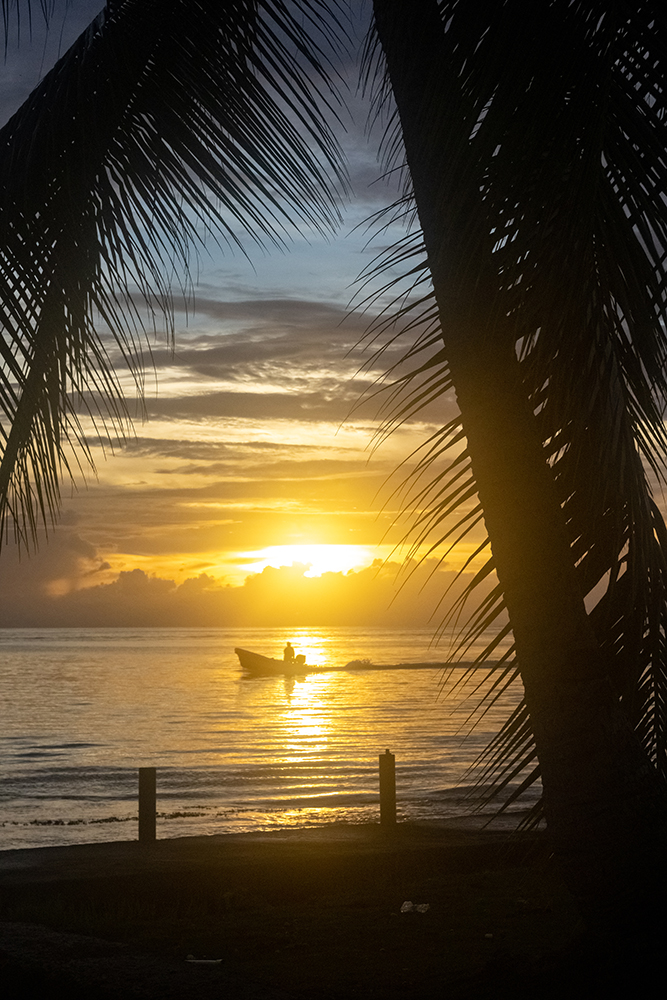
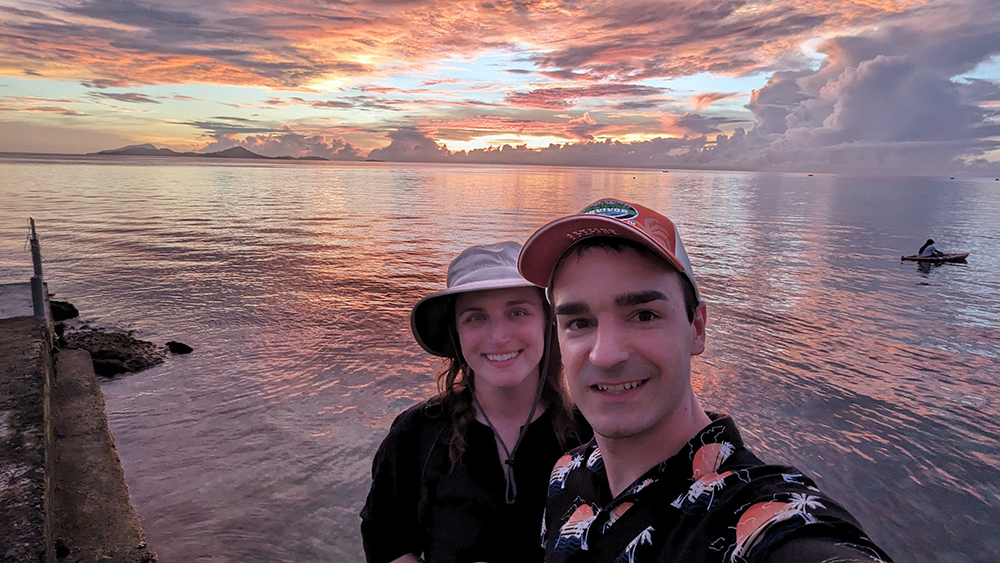
As the sun dipped lower in the sky, we all reconvened to stare in collective awe at the resplendent colors that were weaving in and out of low-hanging clouds. Rachel remarked that this was the best sunset she’d ever seen, and while I hesitate to make such bold declarations, I couldn’t help but agree that this was a uniquely magnificent sunset. We watched the sky’s colors shift from decadent orange and gold to deep pinks and purples, lingering at the waters edge to watch the after burn long after the sun sank below the horizon.
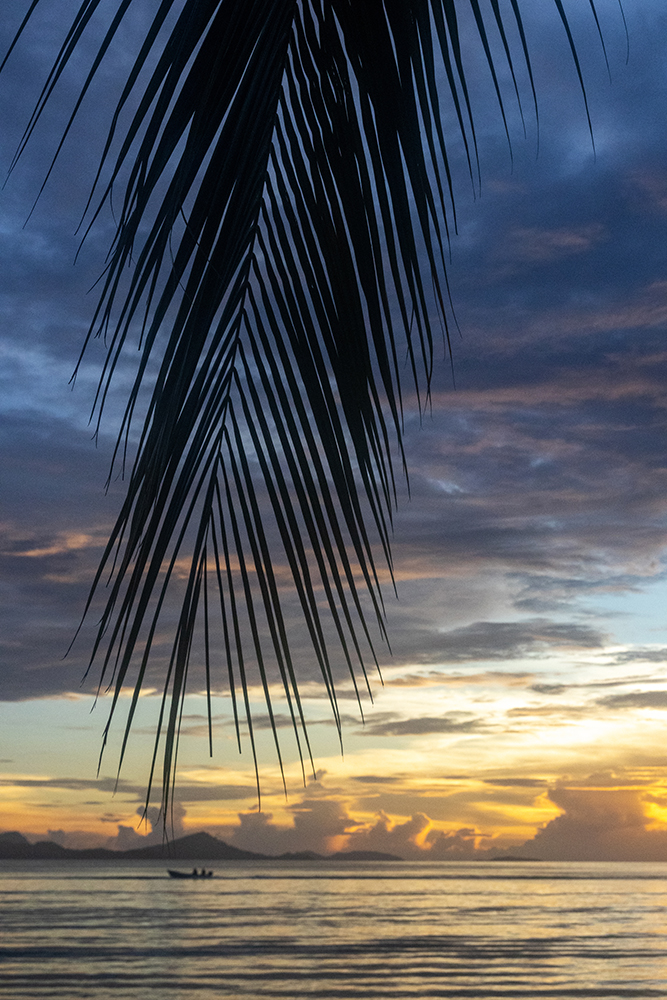
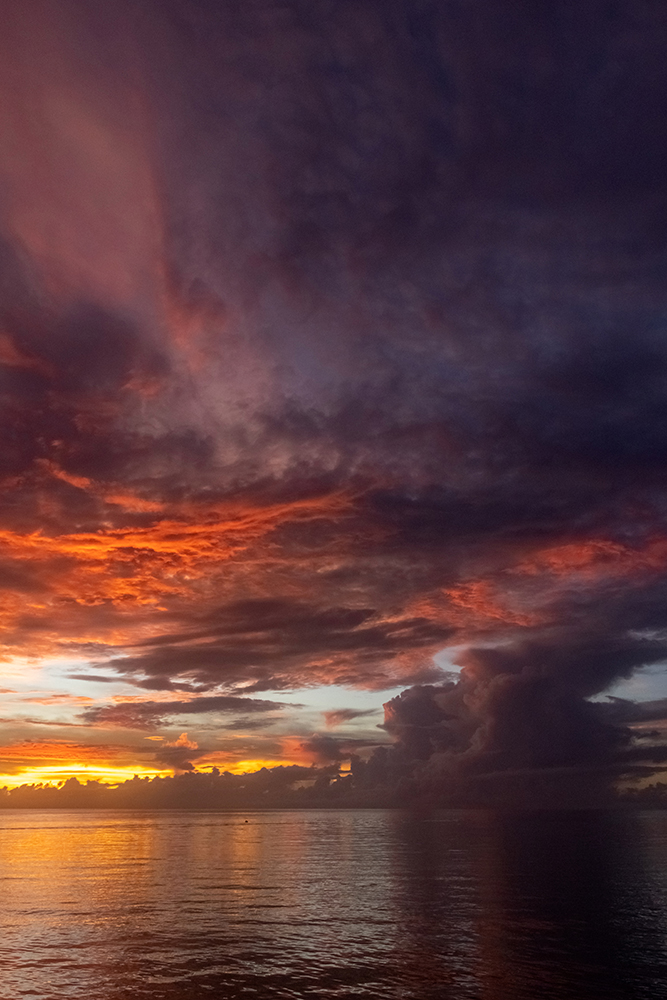
It was only when we started to feel exhaustion creep in that we conceded to getting dinner and turning in for the night. The four of us would be back together again the next morning for a full-day tour of Weno Island. I was really looking forward to the tour, despite wishing I could spend another day in the water. Little did I know that the land tour would also exceed all of my expectations. I drifted off to sleep as schools of colorful fish swam around in my imagination. I was excited about both the amazing day we’d just experienced, and all of the adventures that were still to come.


 birdsoftheairtravel.com
Thank you, Kaiti, for the wonderful update on your travel and stunning photography!
Joanna
thank-you for sharing your daring underwater activities. I shall never get to experience the wonders you’ve seen, but admire the adventurous spirit in others.