I have climbed my mountain, but I must still live my life.
~Tenzing Norgay
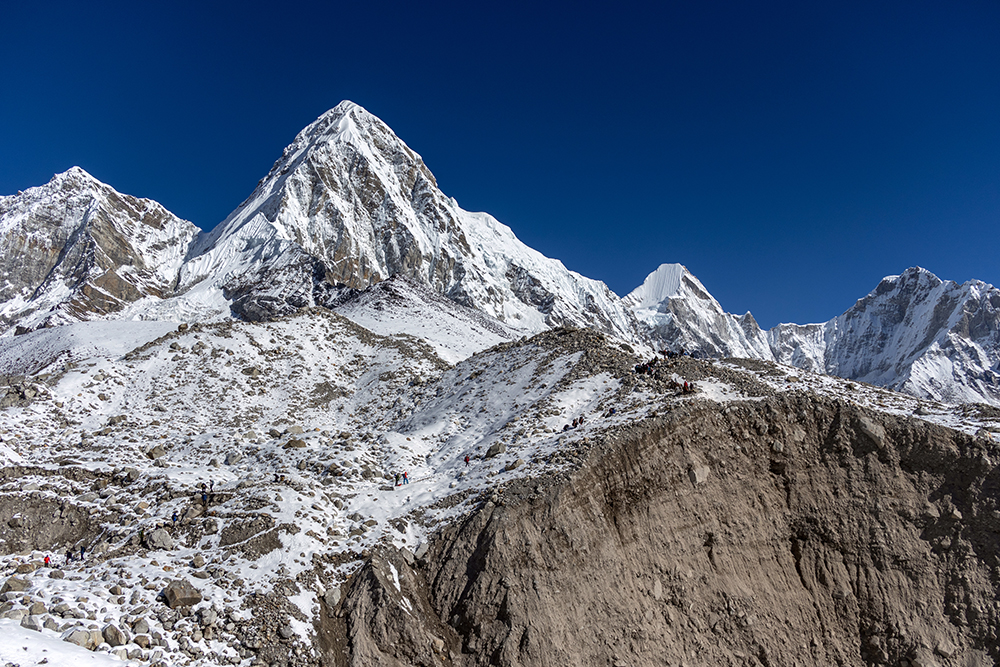
I felt no remorse as I took one last look at the seemingly modest hill that was Kala Patthar. There wasn’t a single cell in my body that wanted to be struggling up its slope into the thin air above 18,000 feet. In fact I was quite content to be heading resolutely downhill for a change of pace.
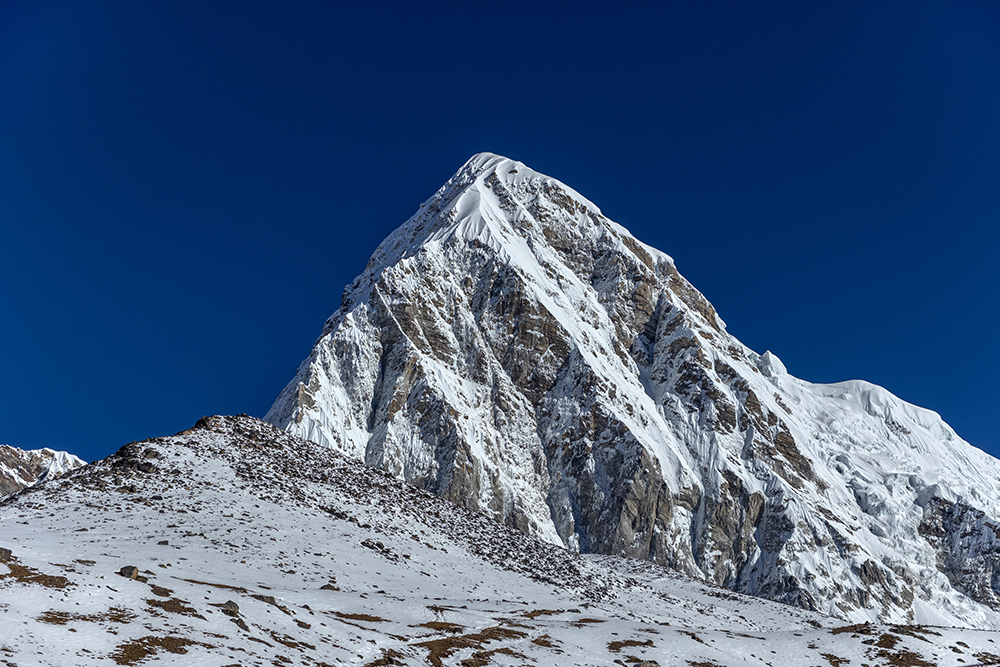
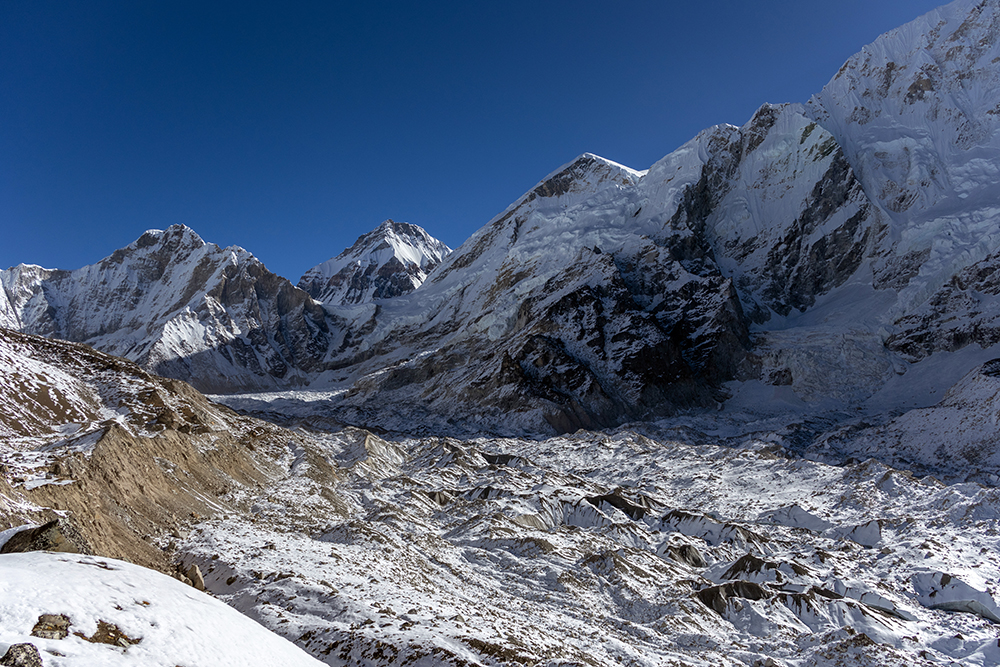
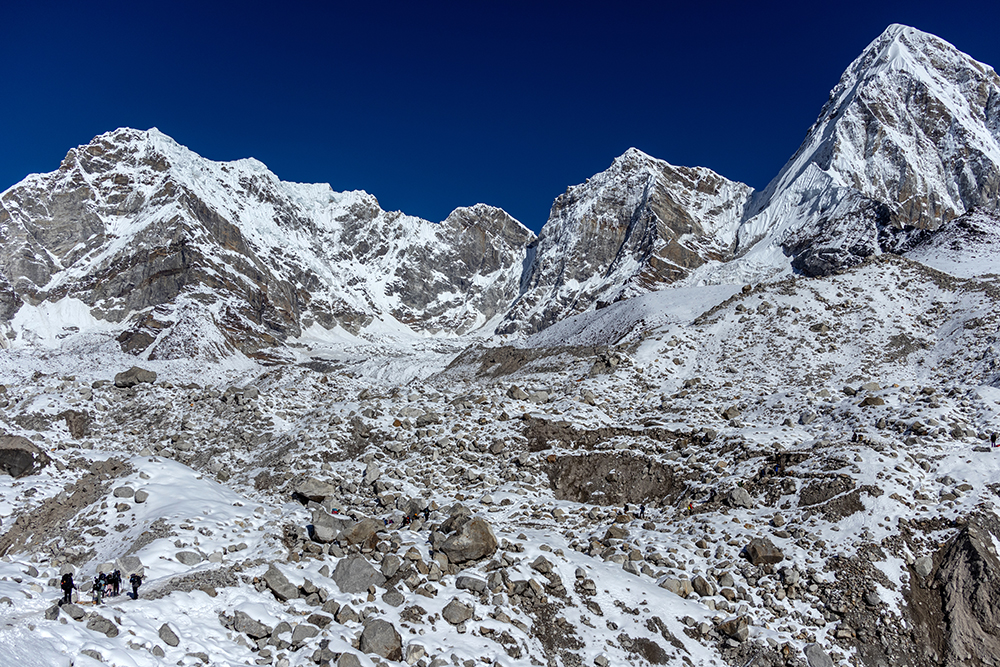
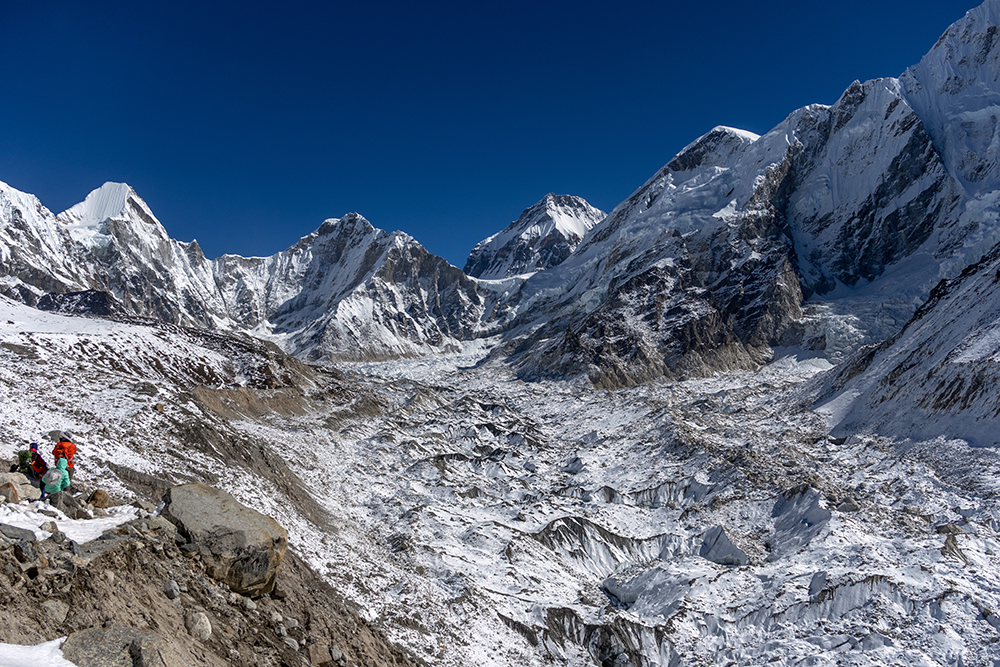
My iTrekEVEREST teammates and I had gotten some extra time to sleep that morning since we’d all agreed not to attempt Kala Patthar. By the time we left our teahouse in Gorak Shep, the sun was already rising in the sky, which meant that hiking conditions were comfortably warm as the little settlement shrunk into the distance behind us. A large part of me was relieved to be heading to a lower elevation. As it turns out, life in thin air is mildly miserable in between the highs of seeing some of the most incredible mountains on earth. Just now though, all the discomfort was fading into the background as we trekked beside the Khumbu Glacier for the last time.
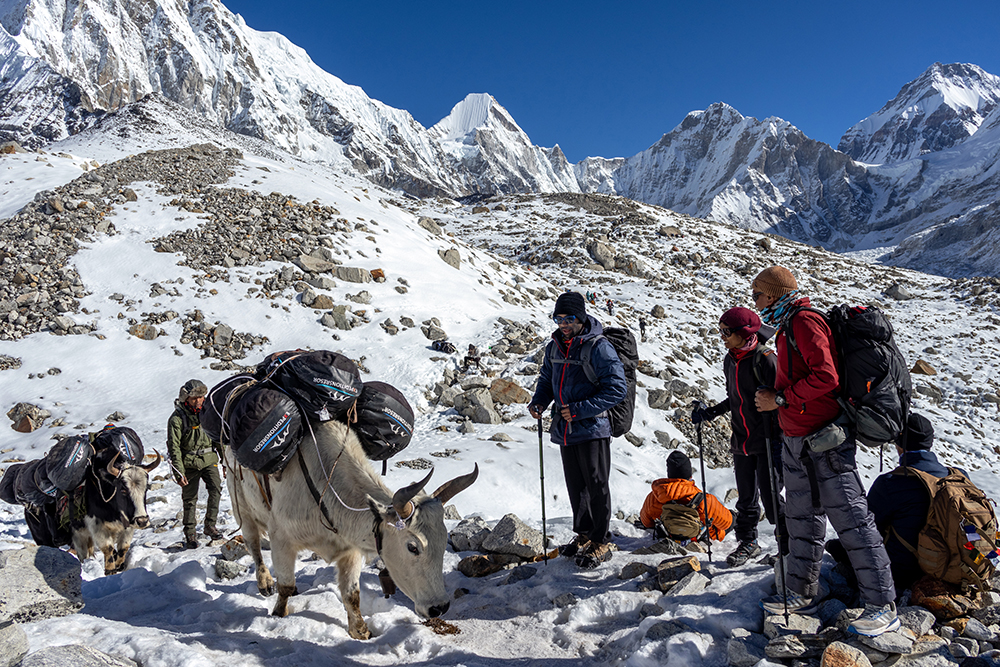
I tried to put all of the details of my surroundings to memory as best as I could. After all, it would be borderline criminally negligent to forget a place that I worked so hard to see. Just then a hollow clanging echoed through the valley, portending the approach of a yak train. Over the past week, I’d noticed that different types of animals tended to wear different types of bells. I knew it was yaks before I even saw them because of the tenor of their bell’s chimes. I pulled over to the side of the trail to let the animals pass by, and absently patted a random, fluffy dog on the head while I waited.
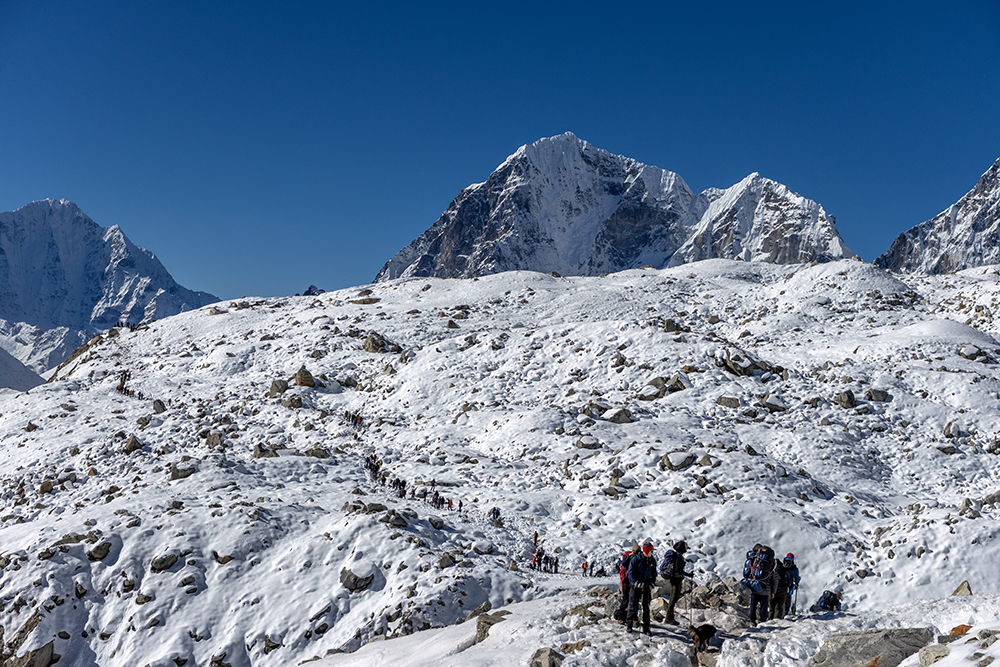
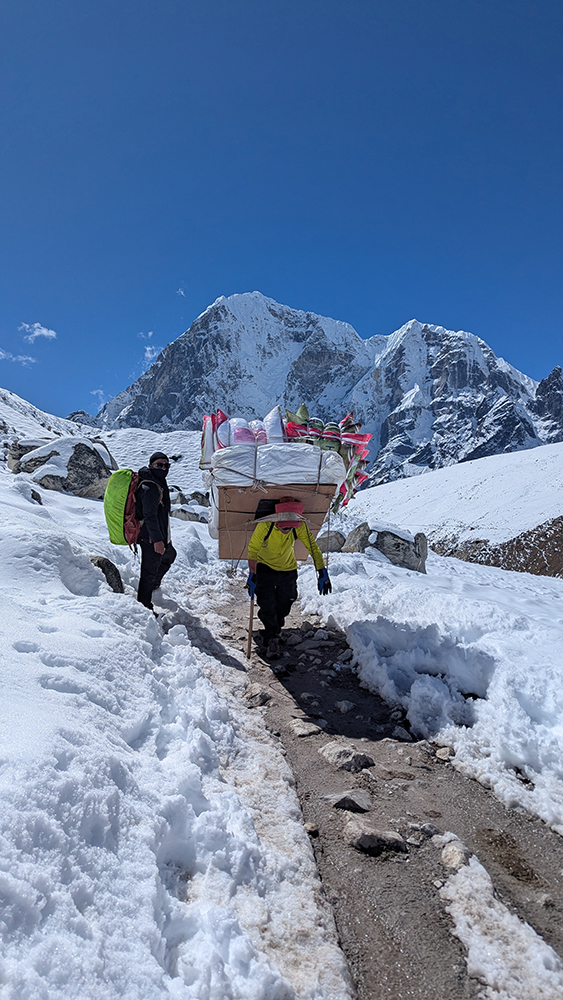
As I stood there, yaks plodding along past me, I took the opportunity to appreciate the blindingly snowy glacier below me. Strangely enough, the busy scene reminded me of Renaissance art. In the foreground, trekkers, porters and yaks mingled together in a striking pastiche where everyone was dressed in contemporary clothing, yet still transporting goods (and themselves) by foot. In the background was a glowing landscape of ice, so pristine that it should have been a painting instead of real life.
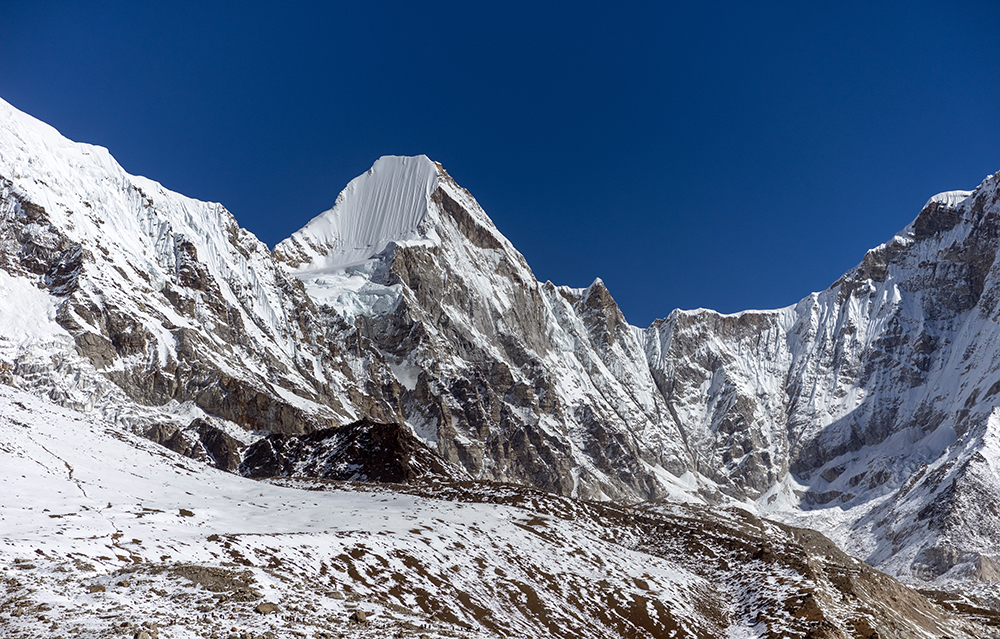
Once the yaks were through, the scene dissolved back into a line of trekkers making their way through the snow. I got back in line with them, but it wasn’t long before a loud bang shuddered through the valley and echoed off the surrounding mountains so it seemed as though the sound was coming from every direction. Nobody needed to tell me what that sound was. I may not have ever witnessed one before, but I knew deep in my gut that it was an avalanche. I turned around and after a bit of searching, spotted a cloud of snow on the side of Lingtren, a peak that sits on the border between Nepal and China.
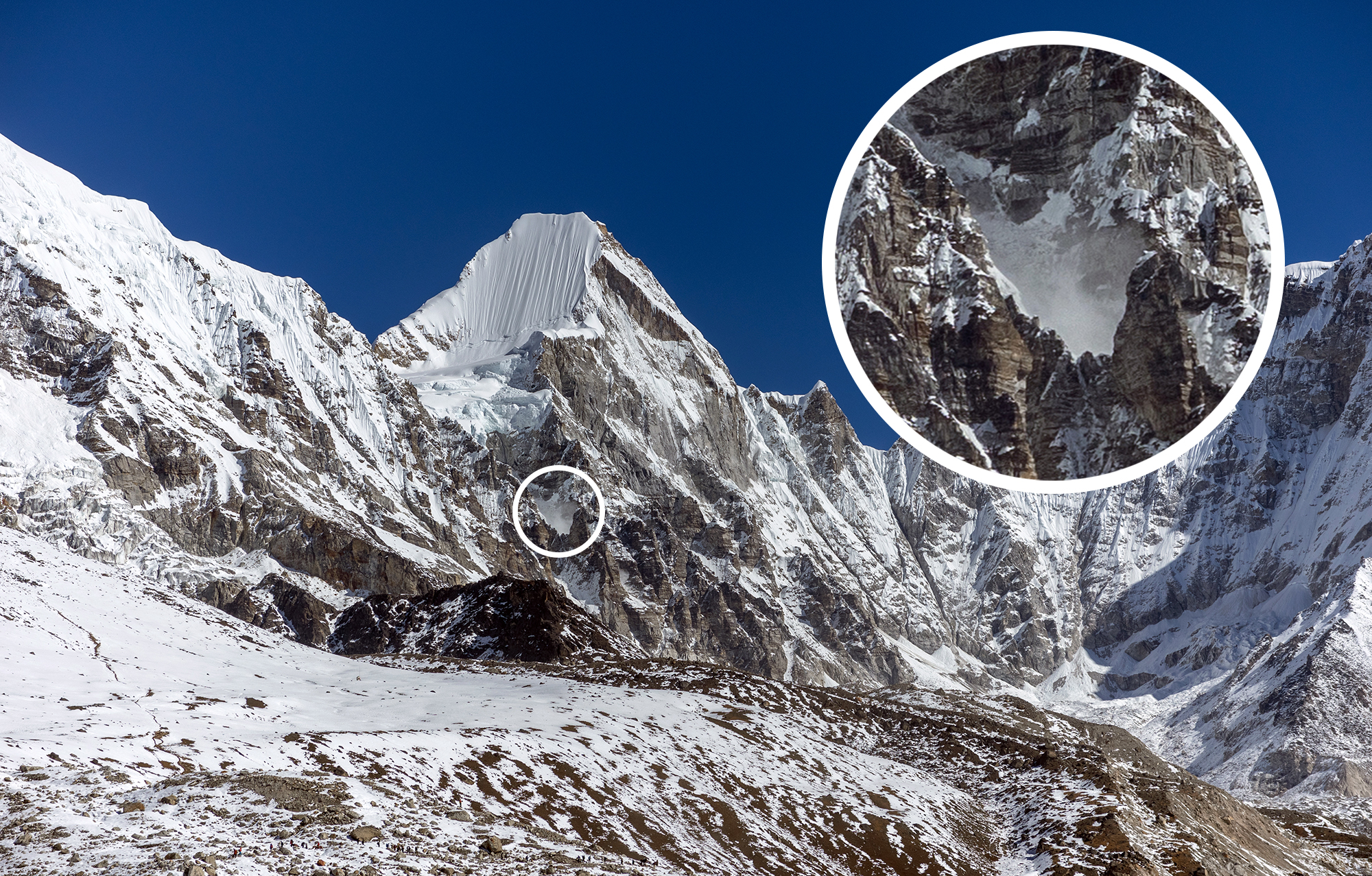
I squinted at the puff of disturbed snow that hung in the air in awe. It was so far away that I could barely see it with the naked eye, and yet it had still managed to produce a sound like a cannon blast. Just as we all turned back to the trail, and resolved to continue trekking, we noticed a familiar figure walking towards us. It was Pasang Dawa Sherpa, who we’d briefly met before leaving Dingboche a few days earlier. Now he was carrying a toddler on his back, and headed towards base Camp. As of the time that I’m writing this, Pasang Dawa Sherpa has 29 summits of Mount Everest, over 44 of Ama Dablam, and 38 total summits of 8,000 meter peaks. Only one other climber (Kami Rita Sherpa) has more Everest summits than him. I’d be lying if I said I wasn’t a bit star-struck to get to meet such an impressive mountaineer. He chatted with us for a few minutes, then the group posed for a photo with him before he and the family he was guiding returned to the trail. Later that day they arrived at Base Camp, a major accomplishment for the three-year-old child on the team.
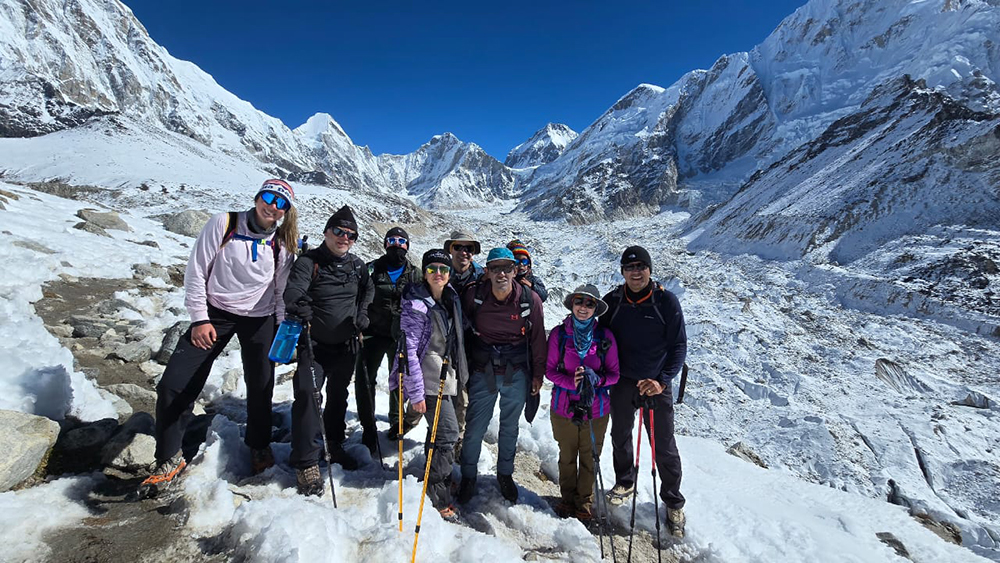
Coincidentally, the spot where we’d watched the avalanche and met Pasang Dawa Sherpa was also the last viewpoint for us to see the Khumbu Glacier. It seemed like the mountains had decided we should have a memorable send-off.
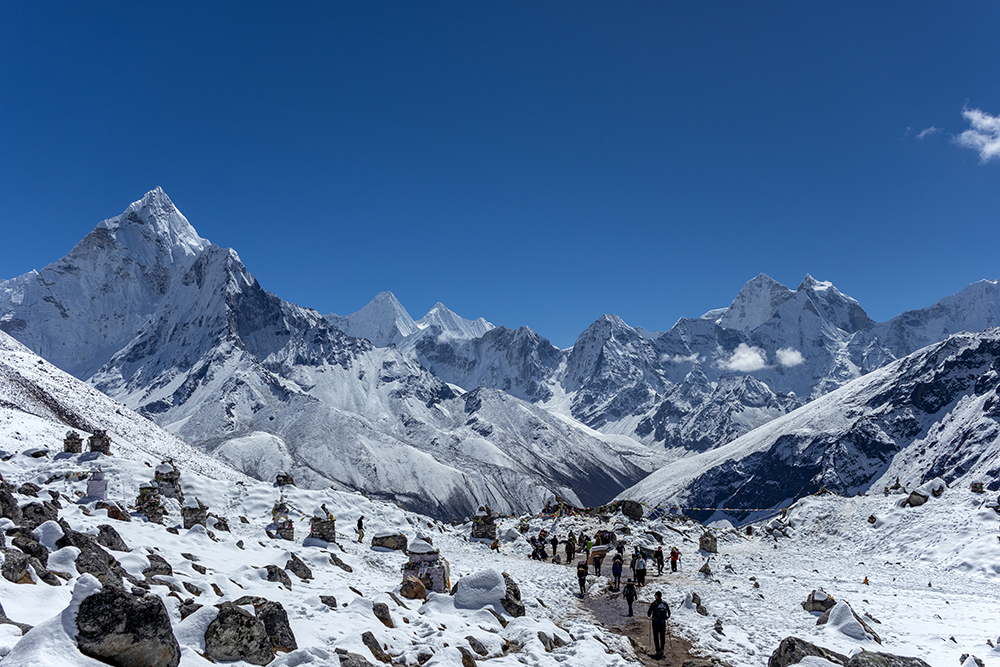
Once we left the glacier, the trail flattened out considerably, and we put our heads down and hoofed it all the way back to Lobuche. It’s amazing how much faster you can walk when you’re headed downhill at high altitude. After a quick break in Lobuche, we got back on the trail, and kept walking until we arrived at the Climber’s Memorial at Thukla Pass. By this point, I was beginning to feel gassed out. It had been about four days since I’d eaten a square meal (I’d lost my appetite completely at altitude), so my energy reserves were running very low. But thankfully, our arrival at Thukla Pass meant it was almost time for lunch.
We casually descended down the giant hill that had nearly broken my spirit on the way up, and before long, we were seated at the restaurant in Dughla. I ordered a grilled cheese sandwich and fries, and was surprised to find myself capable of finishing the meal. My appetite had finally returned now that we were losing altitude. The meal was just the fuel I needed to perk back up, and after lunch I felt like a whole new woman.
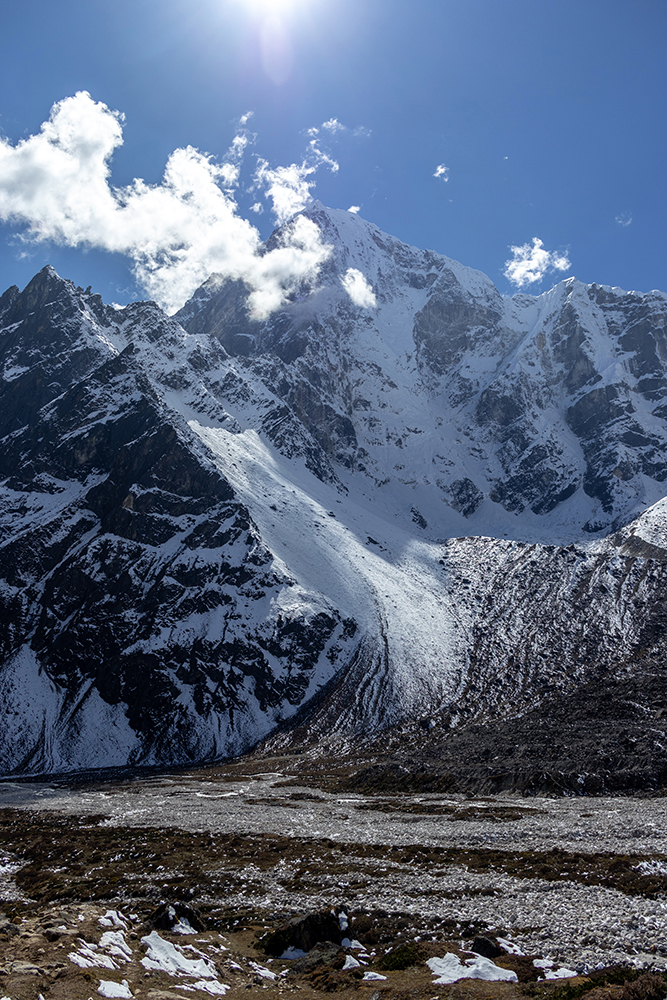
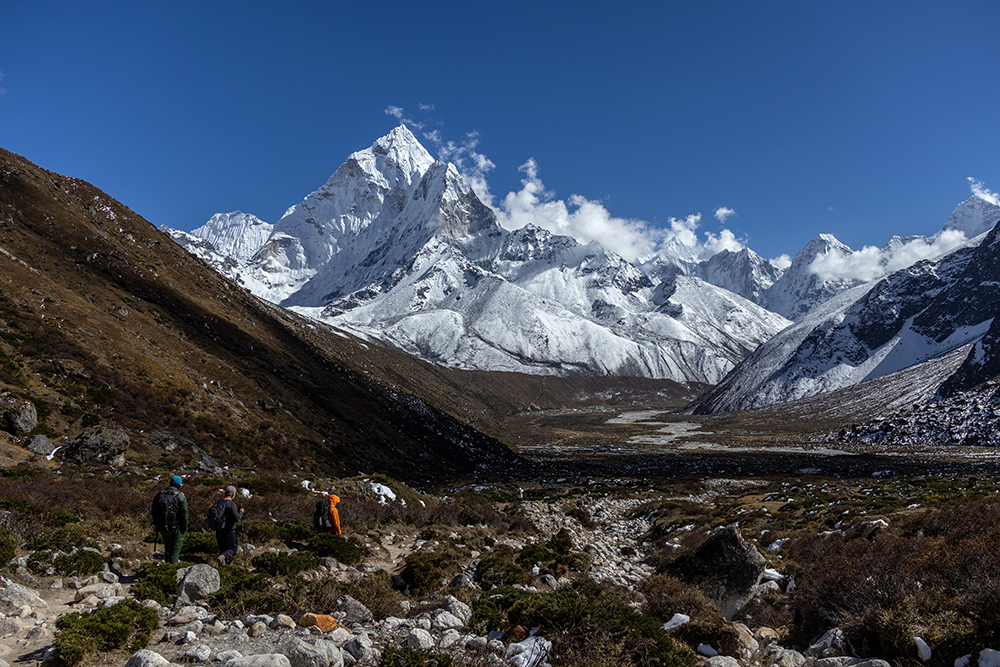
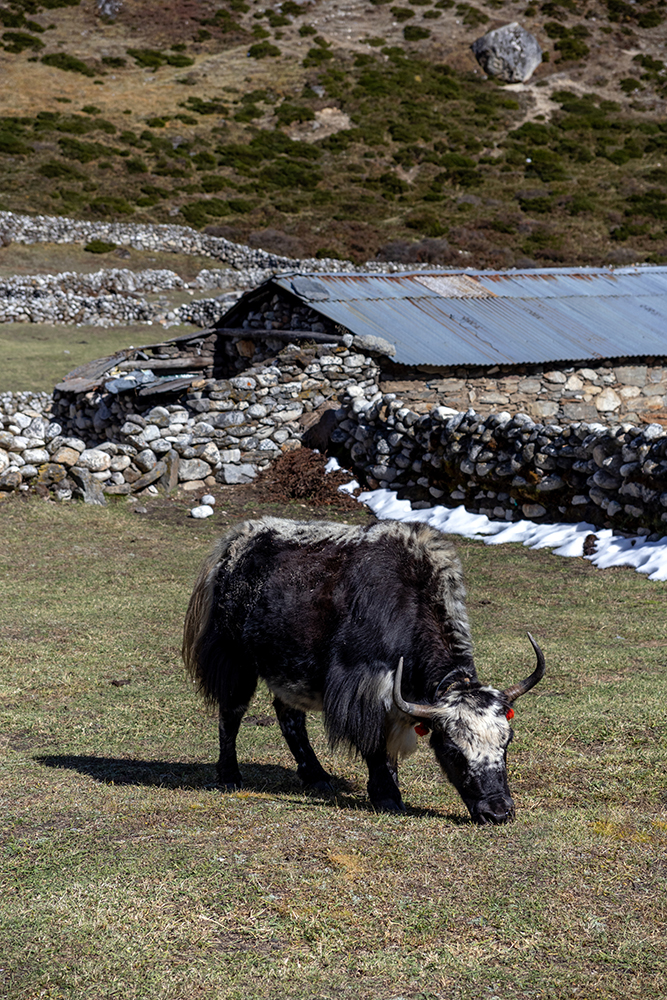
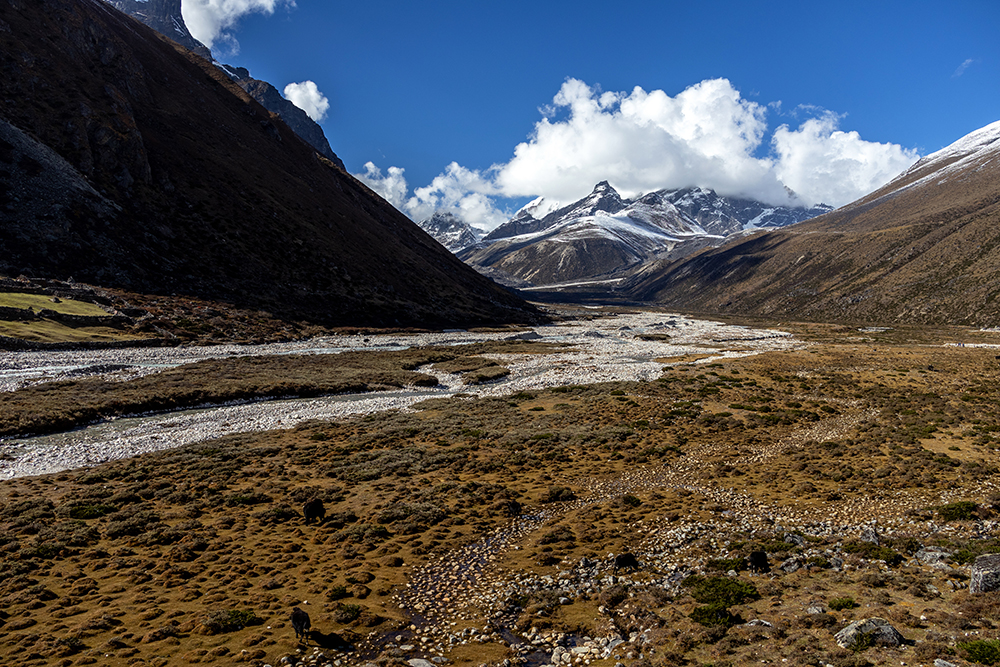
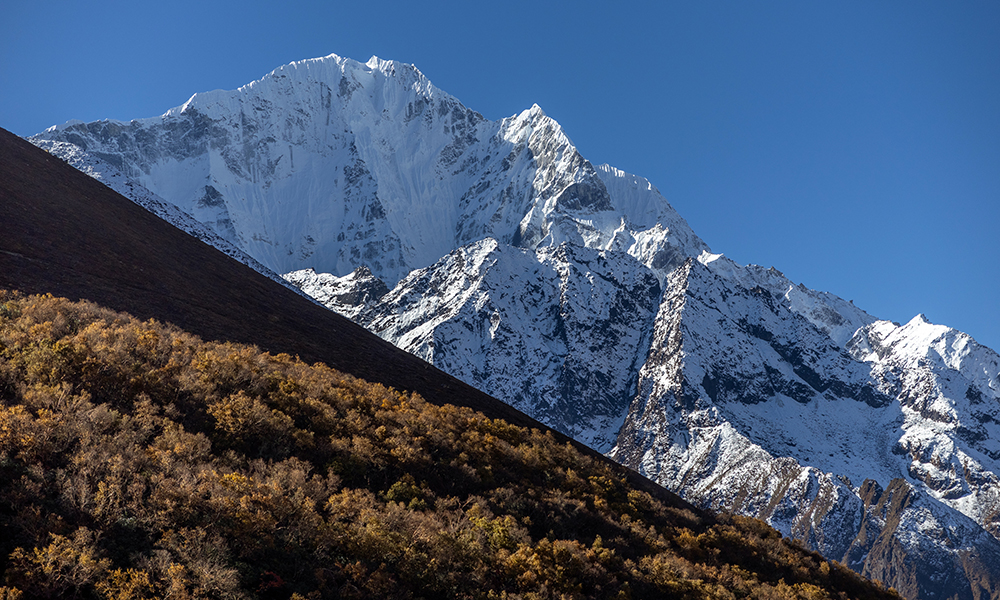
After lunch, we took a lower trail through the Pheriche Valley than we had a couple of days ago. This path cut through even more yak farms, and gave us a different perspective of Cholatse and Taboche than we’d had before.
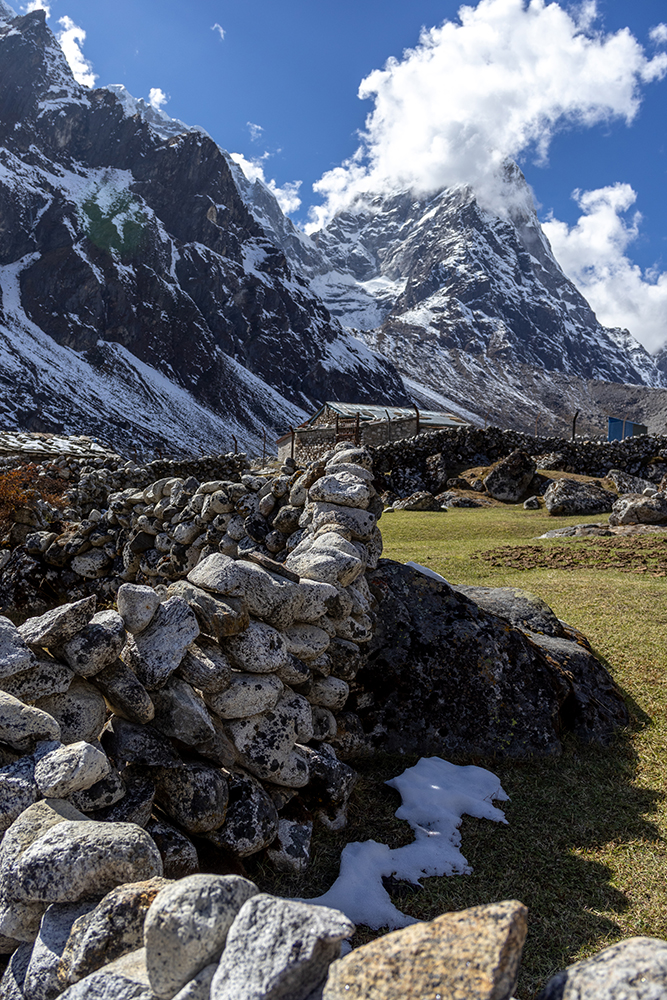
As we tromped through the valley, I noticed that I felt lighter on my feet, and all-around more cheerful than I had in days. I suppose that’s what acclimatization will do for you. The sun was shining, the valley was stunning, my stomach was full, and I was utterly content to be on a walk in the mountains.
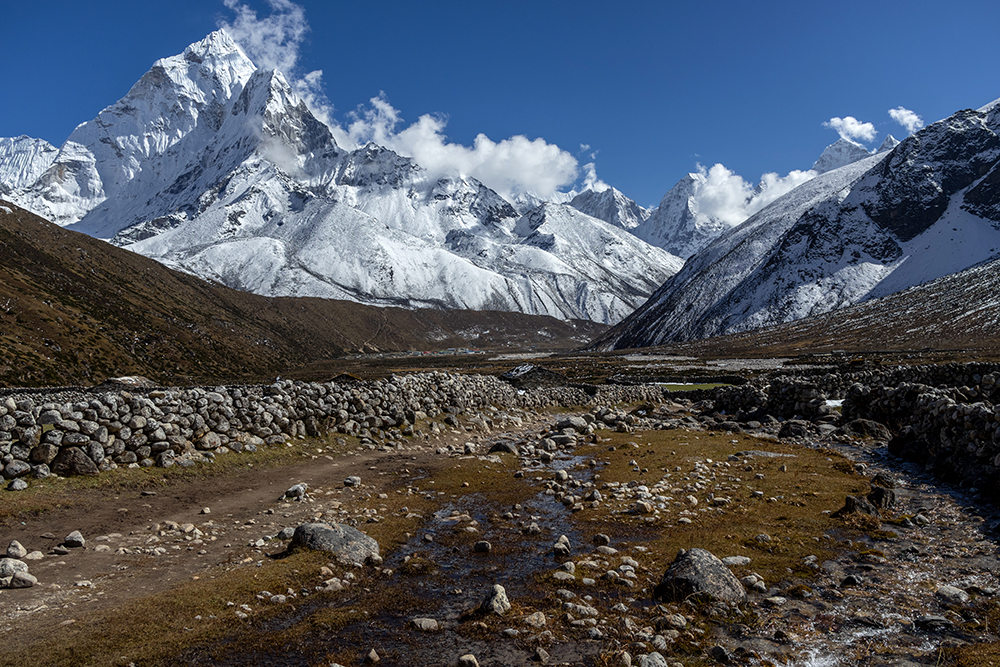
If we’d decided to climb Kala Patthar that morning, we would have stopped in Pheriche for the night. But since we’d skipped the peak, we had some extra time. So we passed right on through Pheriche and kept walking until we reached Somare, a village we’d stopped to eat lunch in below Dingboche. PG led us to a nice teahouse where we got to take lukewarm showers, and even had ensuite toilets in our rooms! This felt like the height of luxury by this point, and I was overjoyed to feel clean as I crawled into my sleeping bag that night.
The next day’s trek was mostly uneventful. Each day of our descent covered a distance that had taken us two days on the way up, and we had a lot of ground to cover in order to reach Namche Bazaar by nightfall. Thankfully the hiking felt pretty easy in comparison to struggling through ice and snow at high elevation. Even when we had to hike up steep hills, it felt magnitudes easier than it had a week ago before we’d acclimatized.
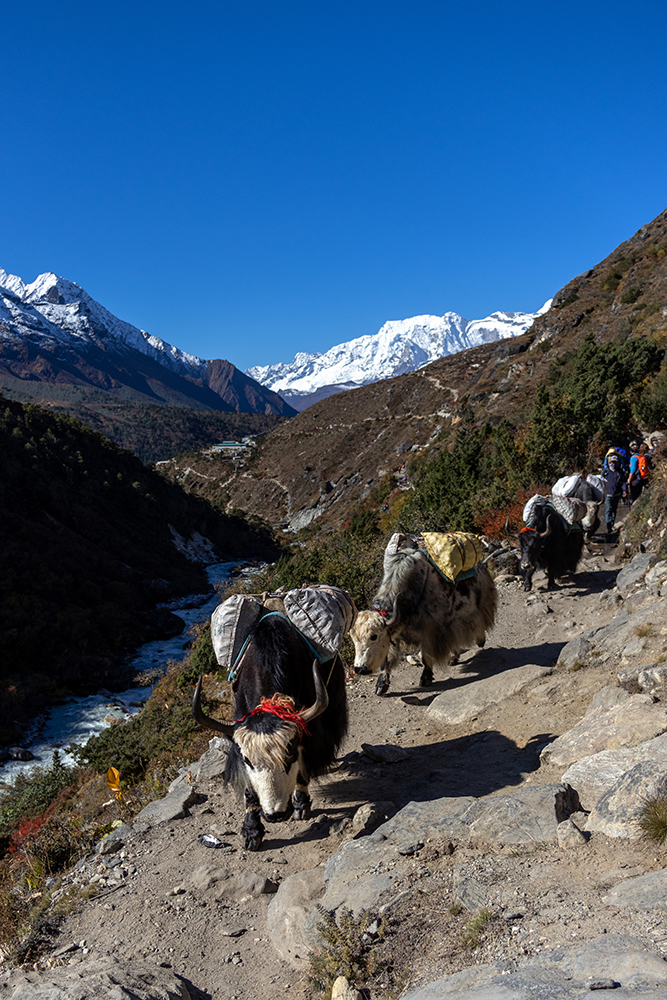
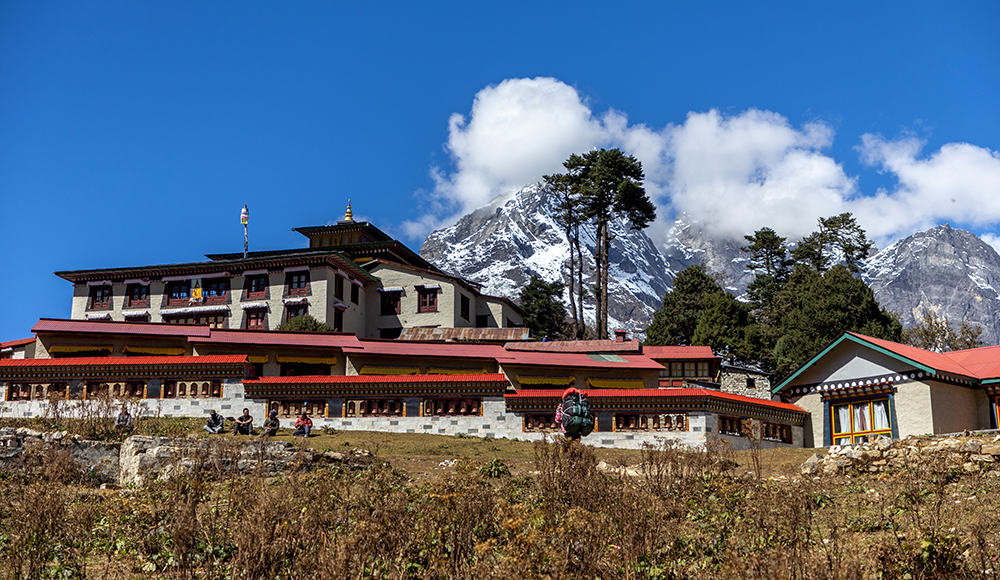
It was a perfectly sunny day yet again, and it didn’t take long for us to reach Tengboche, where we’d spent a peaceful evening on our way to Base Camp. From there, we descended all the way down to the Dudh Koshi River, stopped for lunch at the same riverside restaurant we’d eaten at before, then trekked all the way back up the other side of the river bank. We still had to stop for frequent water breaks because it was so hot out, but now the hill felt no more difficult than it would at sea level.
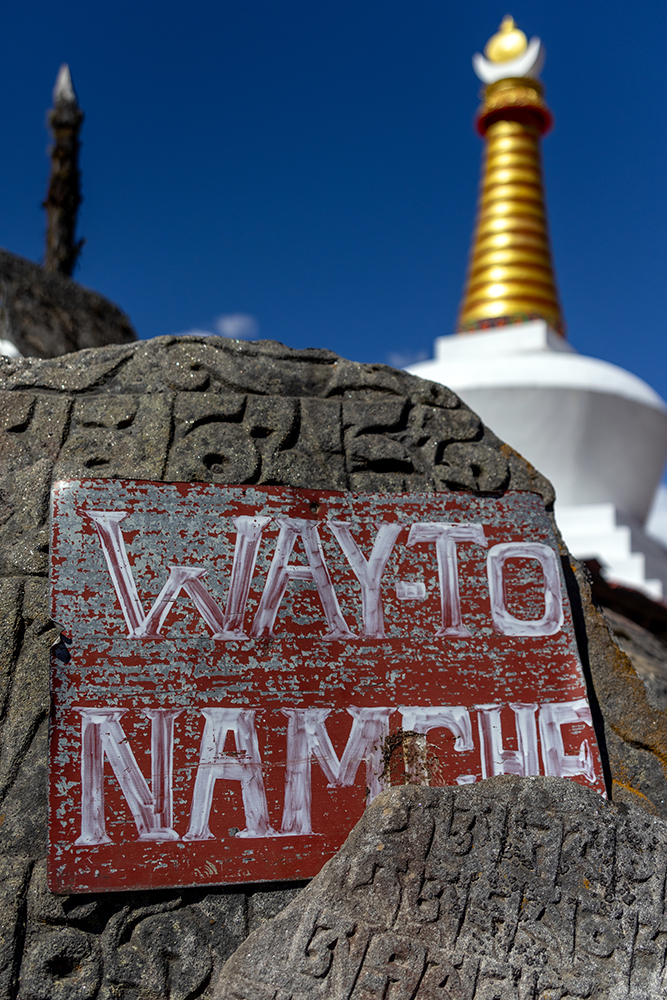
Once we reached the top, it was a relatively flat walk all the way back to Namche. Along the way, I stopped to buy a felted hat with a mushroom design for my sister-in-law, and then had to wear the hat for the rest of the hike because I didn’t want to shove it into my daypack. We also got to try some edible berries that PG found on the side of the trail. They had a very earthy, green flavor.
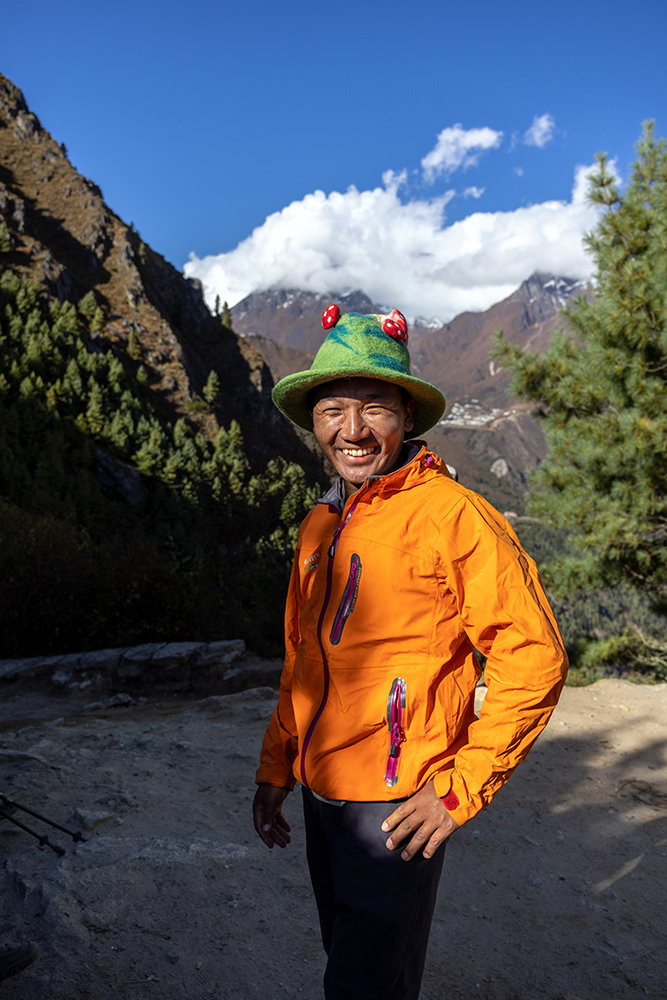
We finally arrived in Namche around sunset, and I was excited to see the bustling trading village again. I had definitely been looking forward to having a few more creature comforts at the teahouse, and I was also eager to go out into town to buy some souvenirs.
Upon our arrival at our teahouse, we learned some sad news. The owner of the teahouse had lost his father, Kanchha Sherpa, earlier that day. At 92 years old, Kancha Sherpa was the last surviving member of the 1953 British Mount Everest Expedition, in which Tenzing Norgay and Sir Edmund Hillary became the first known people to successfully reach the summit of Mount Everest. After the expedition, he continued working as a high-altitude porter for a while, before retiring and opening a trekking lodge in Namche. He was the subject of the biography, Tough and Cheerful, and founded the Kanchha Sherpa Foundation, which worked to preserve Sherpa cultural traditions. Kancha Sherpa lived a full and impactful life, and my heart went out to his family members and the local community that he’d had such an impact on.
After learning this news, we went off to our separate rooms, and I resolved to read Tough and Cheerful once I got home (I have a copy on order now). There wasn’t a ton of time for Vince and I to settle into our room, which had its own toilet and hot shower. In fact, I skipped the shower so that I wouldn’t have to face the evening chill with wet hair. Once we’d dropped off our duffels and backpacks, we headed back out into Namche.
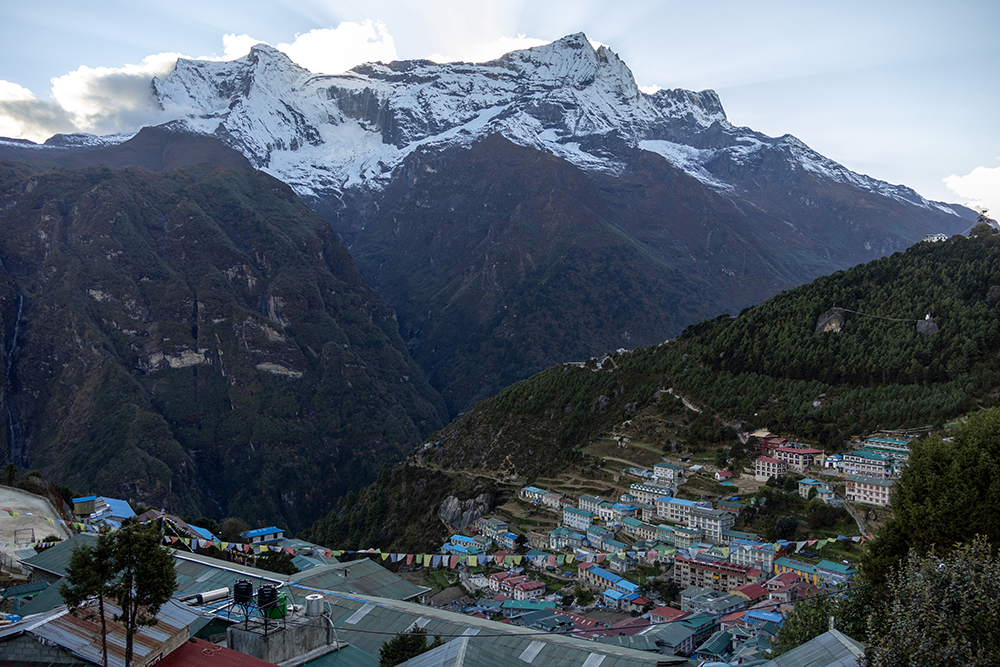
Our team had plans to meet up at the Irish Pub (the highest one in the world) later, but in the meantime there were a few things I wanted to buy, and endless stores to shop at. I started by picking up a yak bell for mom, who collects cow bells, and added a pair of little yaks made of felted yak hair and yarn to give to my cousins. Then Vince and I wandered into a Thangka shop and marveled at the intricately detailed paintings on display. I wanted to buy a Thangka to bring home, but didn’t want to risk carrying it all the way back to Lukla, so I decided to hold off on that until we got to Kathmandu. Instead we bought several bars of yak soap, and a handmade journal for Vince’s sister. After that I wanted to find a necklace (I have a tradition of buying a necklace on every trip I take), and we ended up wandering into a store with a beautiful selection of Tibetan Ghau pendants. The Ghau boxes, which are inlaid with semi precious stones like turquoise, coral, and lapis lazuli, open up like a large locket. They are meant to hold sacred items like relics and prayers. I knew immediately that this was the perfect souvenir of our time in the Khumbu Region, and I picked out my favorite design.
After that, my souvenir shopping was pretty much done because I wouldn’t be able to fit much more in my daypack. So we made one last stop into a nearby pharmacy where I picked up a package of antacids so I could stop relying on Tim, who had been kindly supplying me with his antacids for the past handful of days. We also checked our blood oxygen levels with an oximeter that was hanging from a support beam in the middle of the pharmacy. I wasn’t at all surprised to find that my blood oxygen saturation had dramatically improved since I last checked it in Dingboche.
It was fully dark out by the time we left the pharmacy, and we wandered the short distance down to the Irish Pub, where our teammates were beginning to trickle in. We all ordered hot rum punches, and toasted to a successful trek. Then we spent a couple of hours chatting, eating popcorn, and of course drinking our rum punch. I was more excited about the popcorn though, and passed my drink off to Vince when I was about a third of the way through it. We stumbled out of the bar (it doesn’t take much alcohol to get a person tipsy at 11,000 feet) in time to get dinner back at the teahouse before bed.
The next morning marked the last day of our trek, and I was simultaneously excited to be done, but also sad that it was almost over. This would be the longest distance we’d have to cover in a single day. We had to walk about 13 miles or 21 kilometers, and a lot of it would be steep downhill hiking. I knew that this could potentially be a very hard day on my knees, and sure enough, one of my IT bands was complaining by the time we reached the Hillary Bridge. This was by far the steepest and longest hill of the entire trek. It had been a real slog to get up it, and going back down was worse.
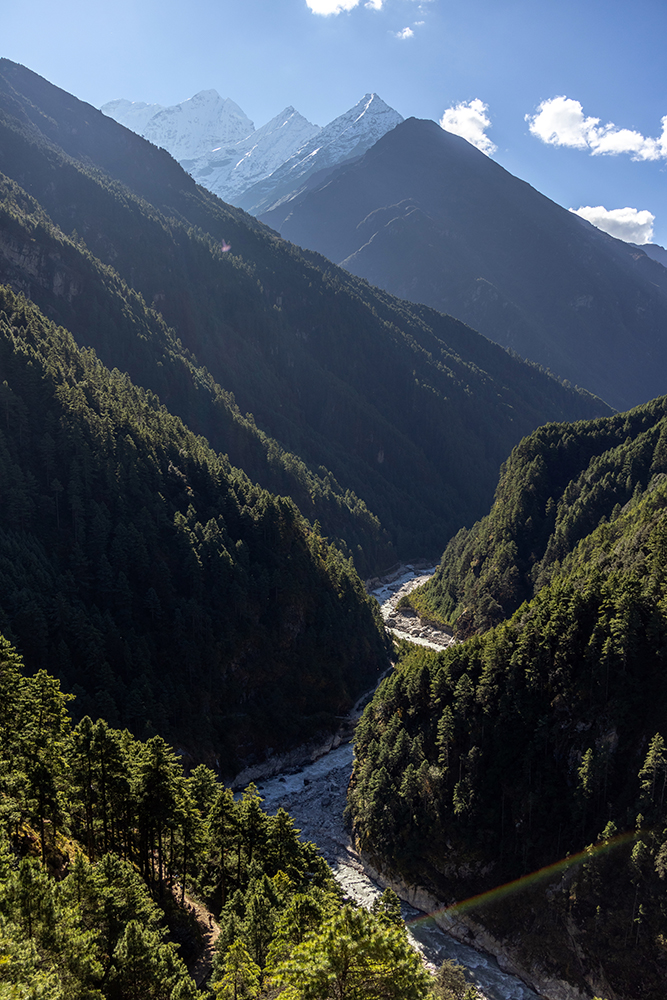
By the time we arrived all the way down at the river, I was officially in pain, and we had barely made a dent in the distance we had to cover that day. So every time we took a break, I took some time to stretch, and roll out my knees with a water bottle. This did little to improve them, but I tried anyway.
Before long, we reached the entrance gate to Sagarmatha National Park, and I felt a pang in my heart at having to leave. The shift in atmosphere was almost immediate upon leaving the park. The small mountain villages seemed like bustling cities compared to the peaceful settlements beyond the park gate. It turned out that we were hiking on the biggest shipping day of the week, so huge trains of mules dominated the road, carrying heavy loads of supplies and gas cannisters.
From the park gate onward, the rhythm of the day became one of walking a handful of meters, then stopping to let a bunch of mules pass, then walking a little ways further, then stopping for more mules. At one point we got held up at a suspension bridge, and had to wait as probably a hundred mules crossed over it. Once the last one stepped off the bridge, we hurried to claim it before any more mule trains could arrive.
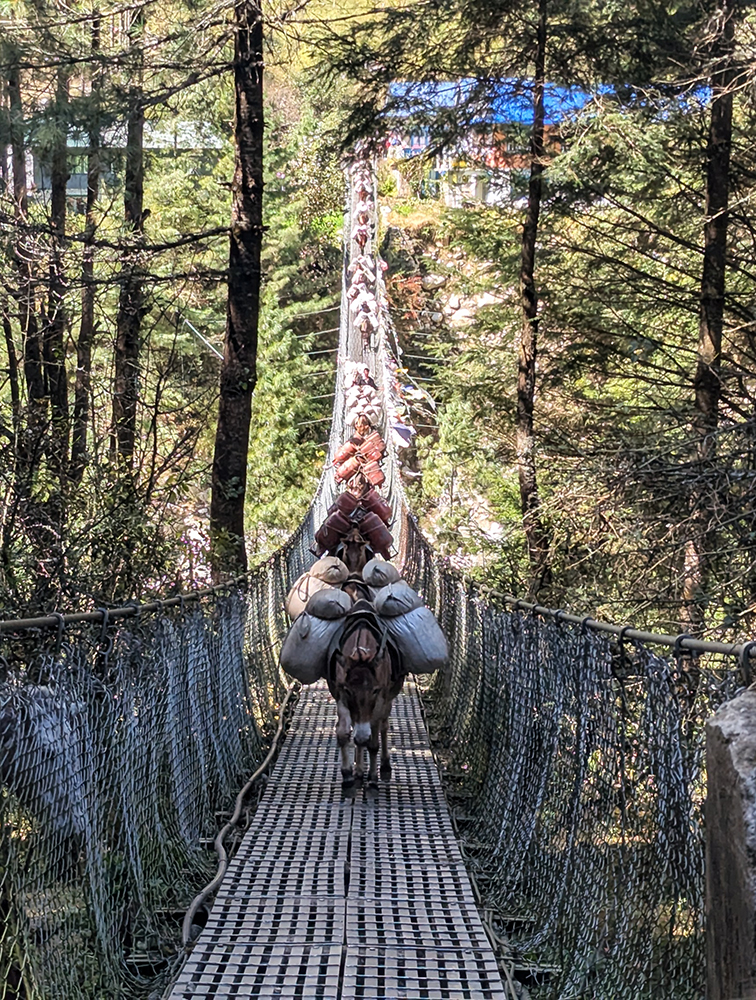
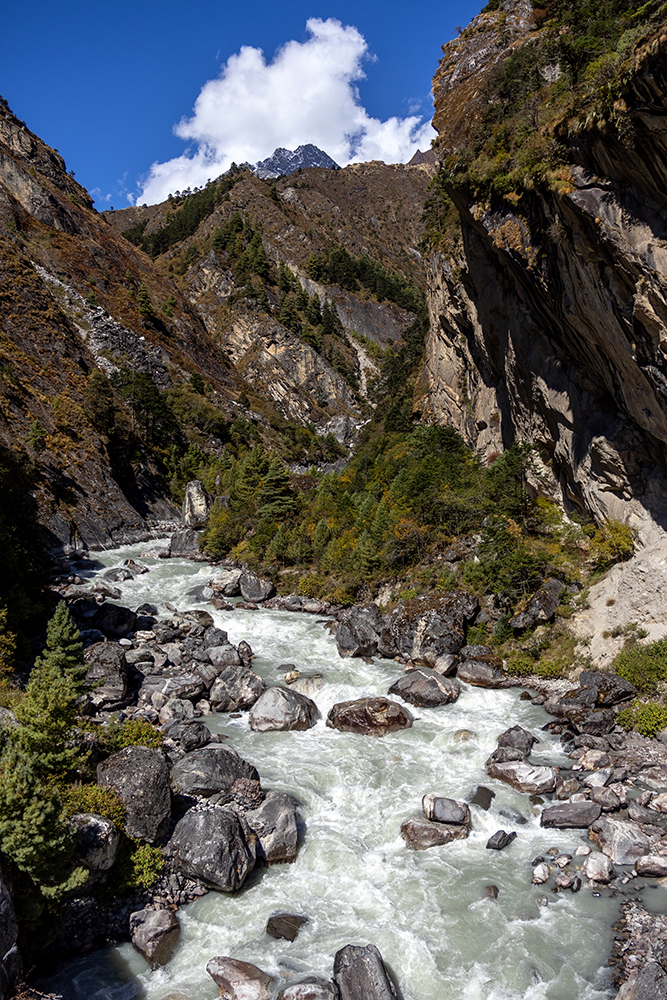
The day continued like this, as we passed by waterfalls, and wove back and forth across the river. We finally stopped for lunch at the first teahouse we’d stayed at in Tok Tok. I was beyond grateful for a break at this point, and before going inside, I peeled off my socks and added fresh athletic tape to a few nasty blisters that were forming on my toes.
For lunch, I ordered a veggie burger. It was delicious, but by now I was desperate for a real, meat burger. For the most part, I don’t even eat meat in my day to day life because I just don’t like meat all that much. I hardly ever feel a craving for it, so I took this as a sign that my body was getting desperate for protein. For now, the veggie burger would have to suffice though, because I didn’t want to risk eating meat until we got back to Kathmandu.
After lunch, the mules still monopolized the trail to the point that even the yaks didn’t seem to know what to do with themselves. We even caught one of them hiding out on the porch of a restaurant as a team of mules dominated the trail.
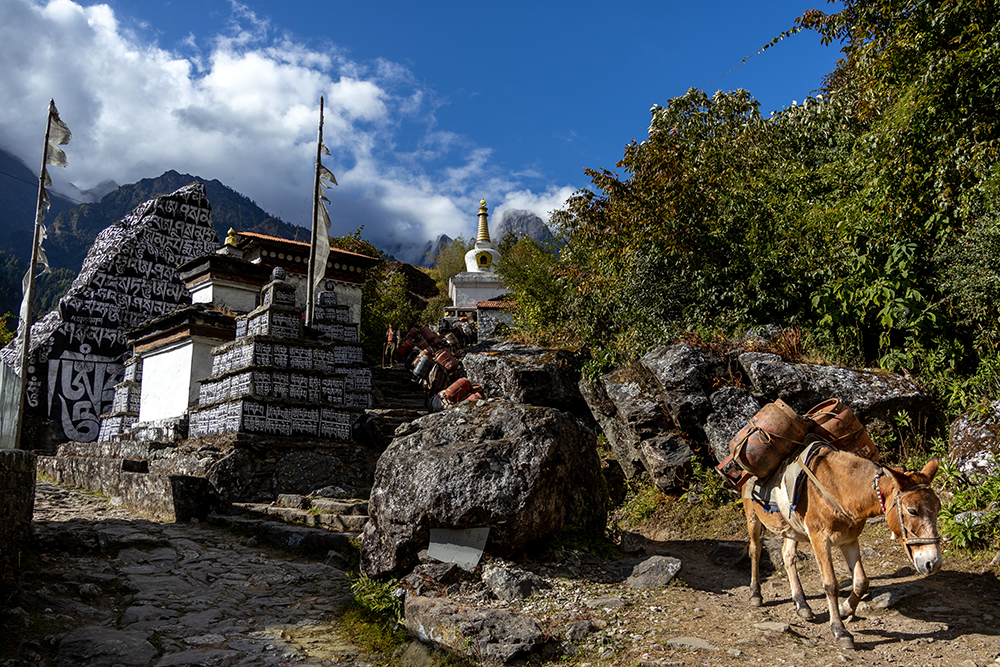
As we got closer to Lukla, we saw a bunch of mules going home for the night, with empty saddles because all of their goods had been delivered.
The day seemed to drag on and on as I struggled to keep up a good pace in spite of my aching knee and blistered feet. We finally stepped under the Pasang Lhamu Memorial Gate at the very beginning of the sunset. We had made it back to Lukla. We walked through the main street of the village, and I felt a strange sensation similar to culture shock. Loud music played from a set of Bluetooth speakers, a group of men gathered around a short table playing cards, and kids kicked a soccer ball back and forth in the street. There was so much noise, and activity. It was exciting, and overwhelming all at once as I’d grown so used to everywhere we went being slow and quiet. The busy welcome felt a bit like an exclamation mark to end the trek.
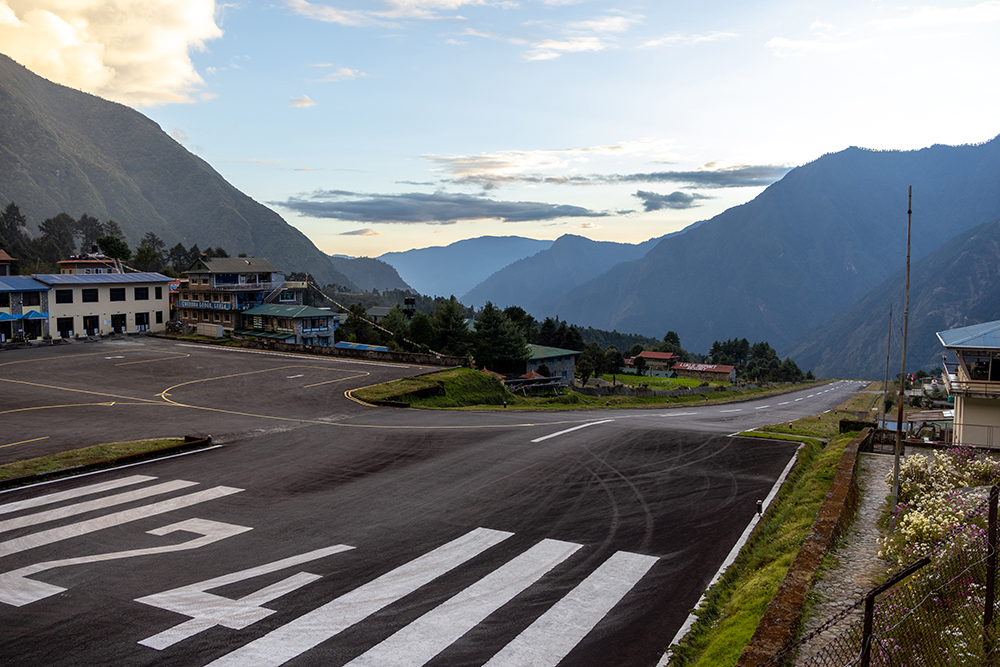
Soon, we saw the sloped runway of the Tenzing-Hillary Airport. We walked around it until we reached our final teahouse of the trek. I hobbled into its dining room, sore and exhausted, but swelling up with a warm feeling of accomplishment.
Once we got our room keys, I took the most satisfying hot shower I’ve ever had, and then rejoined the entire team in the dining room for a celebratory dinner. PG, Mahesh and our porters, Deraj, Moti, and Kamal all joined us, and we toasted to their efforts because their hard work had all made it possible for us to achieve this dream.
Vince, Thadd, and I stayed up late after dinner, and we had a little dance party with the guides and porters. They taught us some of their local dance moves, and we taught them the Cha Cha Slide. Then we all went back to our rooms to get ready for our early flight the next morning.
This time the flight to Lukla went off without a hitch. Most of the team hired a helicopter to take them straight back to Kathmandu, so Vince, Thadd, PG and I were the only ones who embarked on the flight back to the Ramechhap Airport. Once again, we managed to survive the flight, and our journey back to Kathmandu from Manthali was much shorter because the main road had opened back up while we were gone.
We finally arrived back at Hotel Lo Mustang around lunch, and found that the rest of the team had already checked in. Tim was ready to go out for lunch, and the four of eagerly joined him on an outing to T’s Your Palette, and nearby burger place with great reviews.
The reviews were right. I ordered a milkshake, fries, and a burger, which came out topped with charred pineapple. Everything was so delicious, and I swear the burger was the best I’ve ever had in my life. It was exactly what I needed after such a physically taxing vacation, and the perfect way to end an Everest Base Camp trek.
You can see more details of this amazing destination on my YouTube channel!
 birdsoftheairtravel.com
1 comment