Getting to the top is optional, getting back down is mandatory. A lot of people forget about that.
~Ed Viesturs
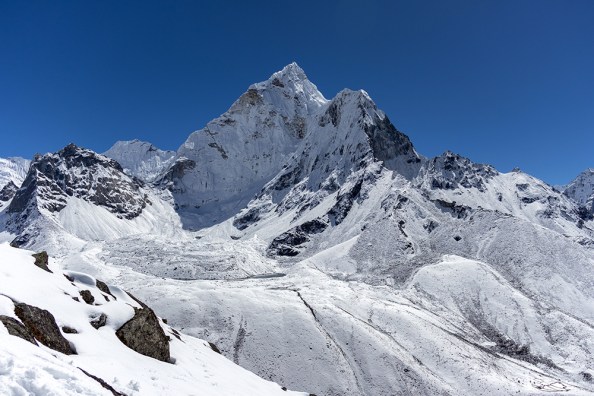
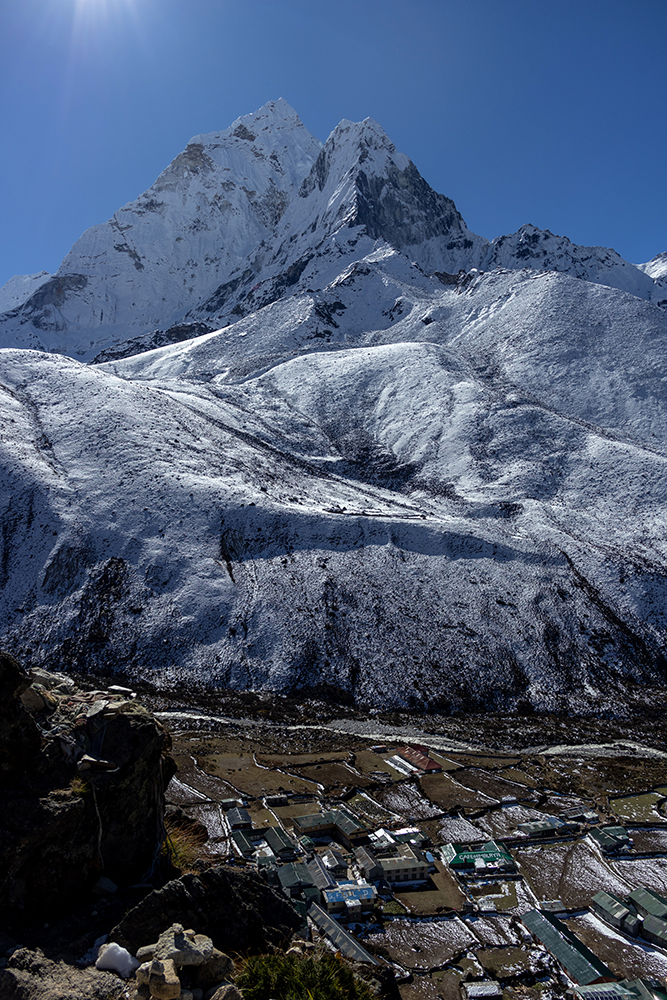
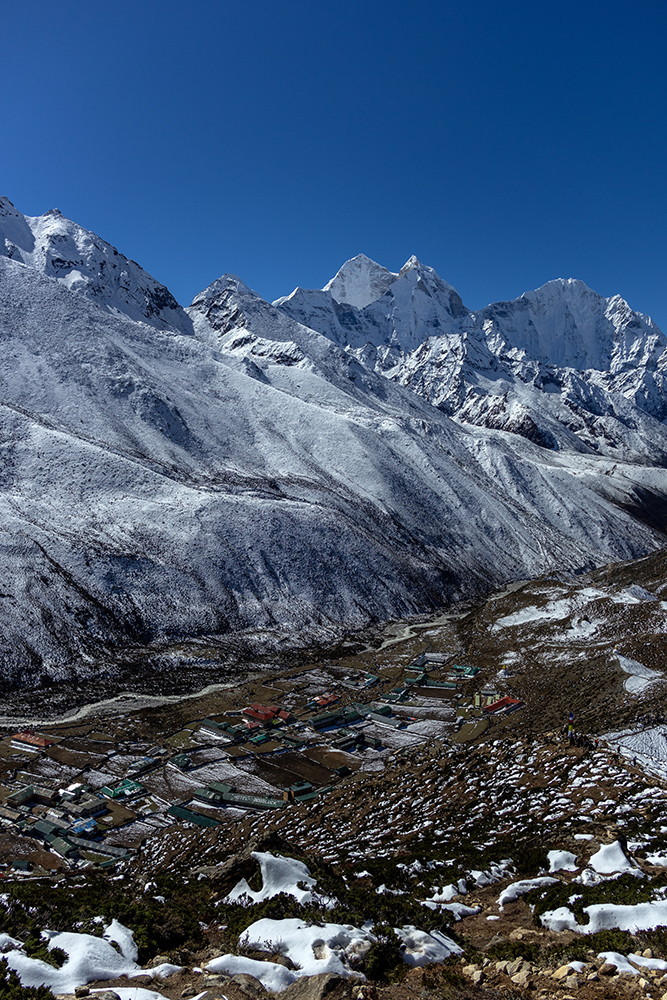
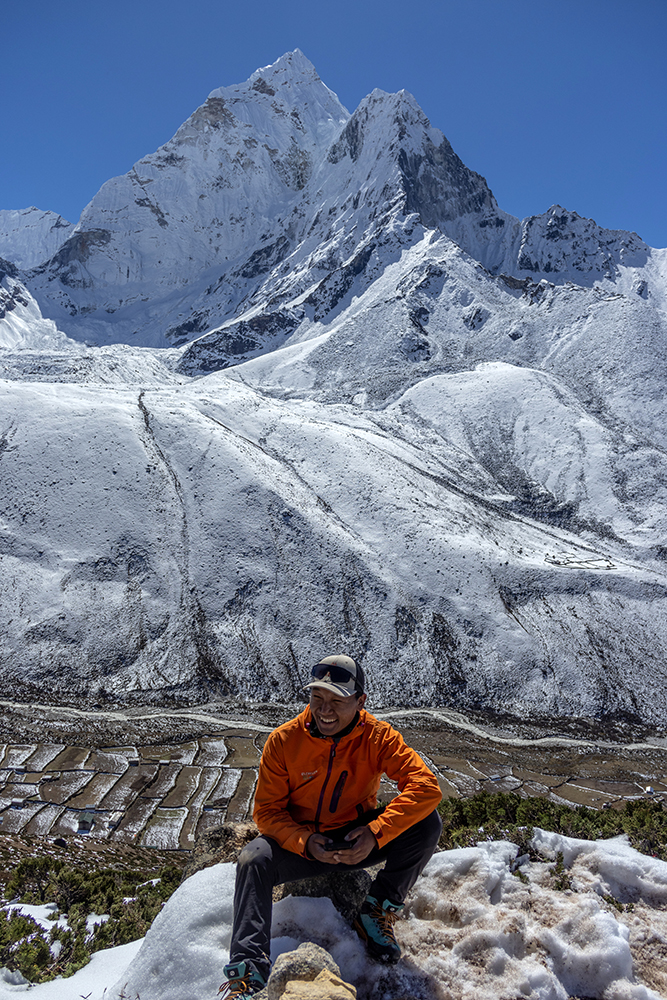
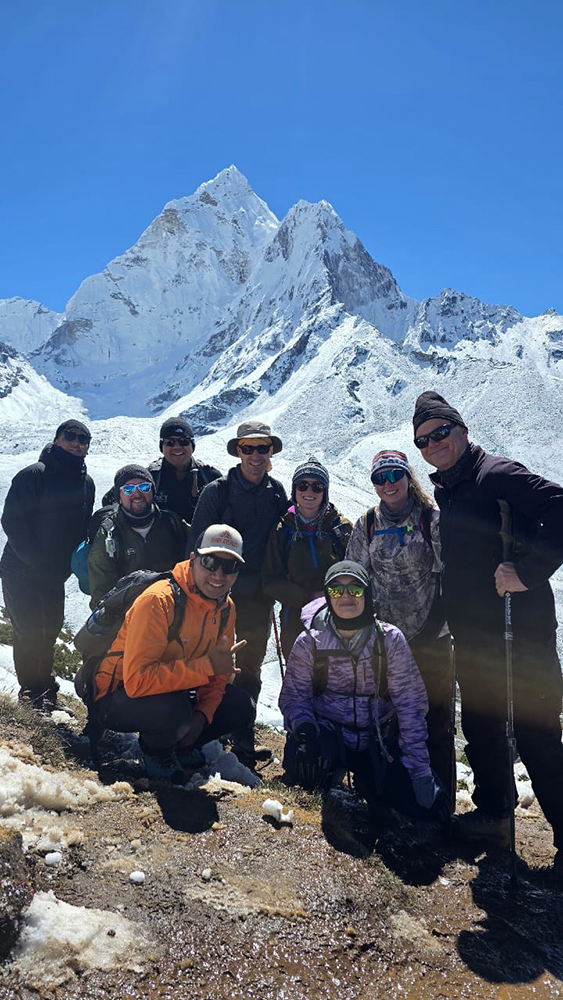
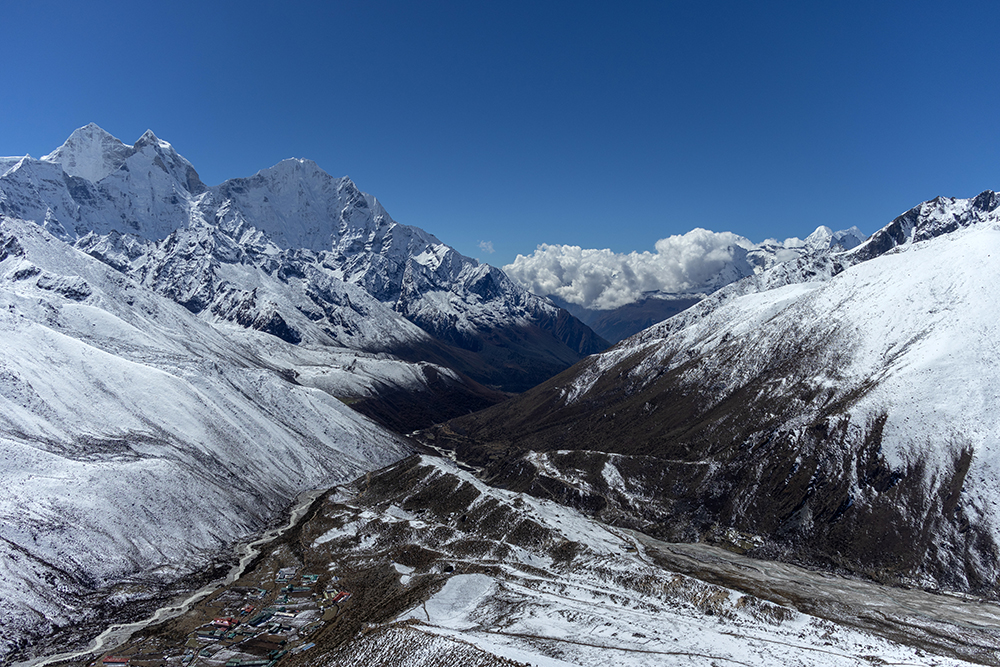
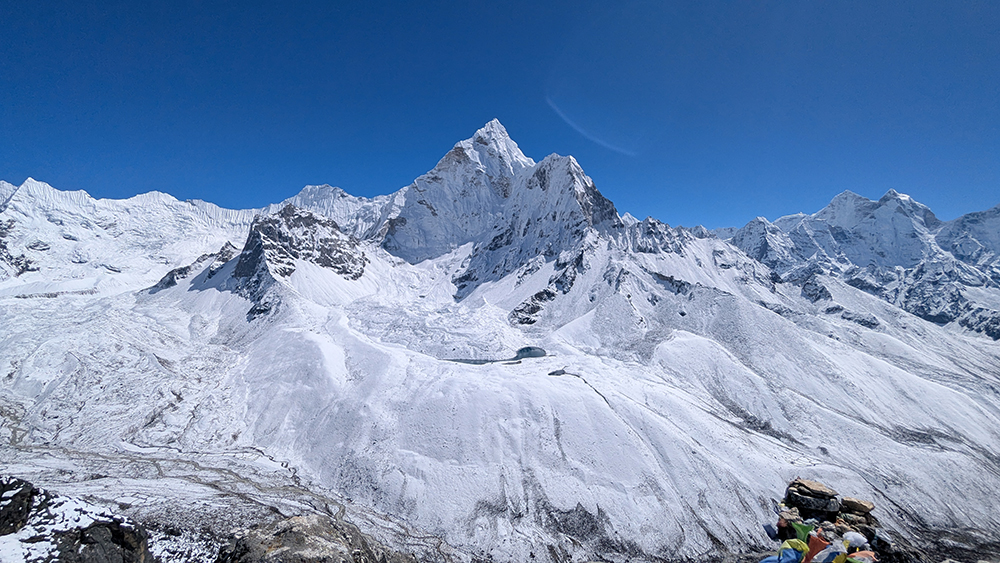
Shivering, I looked up at the looming figure of Ama Dablam. Its twin peaks seemed close enough to reach out and touch from my vantage point in the village of Dingboche, Nepal. Just a day ago, the picturesque mountain had been a mere silhouette on the horizon. But now its shadow crept over the valley where I stood. It blocked out the sun, and chilled me to the bone.

My iTrekEVEREST team and I had just spent our first night above 14,000 ft, and presently, I was in the midst of learning that altitude does indeed make life harder. It had taken an act of courage to simply crawl out of my sleeping bag that morning and face the brutal cold of the pre-dawn. After painstakingly bundling up in multiple layers of clothing, I’d stepped outside in a vain attempt to brush my teeth and put in my contact lenses at the large barrel that acted as an outdoor faucet for our teahouse. I approached the barrel, which had the words “Normal Water” scrawled across it in permanent marker, opened its nozzle, and waited. Nothing happened. The water inside had frozen solid overnight. Returning to my room, I brushed my teeth over the trash can, then rummaged around in my duffel in search of my glasses. There was no way I was putting in contacts with unwashed hands out here.
At breakfast, I struggled to choke down more than a few bites of my meal. Eventually I gave up and pushed my bowl of muesli across the table for Vince to finish.
Thankfully, the hike today should be short and sweet. The group’s plan was to get as far up nearby Nangkartshang Peak as we could. That evening we’d sleep in Dingboche again, making this the first and only acclimatization hike of our trek (we’d sacrificed a previous acclimatization day due to weather delays). Our guide, PG, had started preparing us for the idea that we might not make it to the top of Nangkartshang at our team briefing the night before. He didn’t give many details, simply saying that there was a minimum elevation we had to reach for acclimatization, but it wasn’t obligatory to get all the way to the summit at 16,700 ft (5,000).
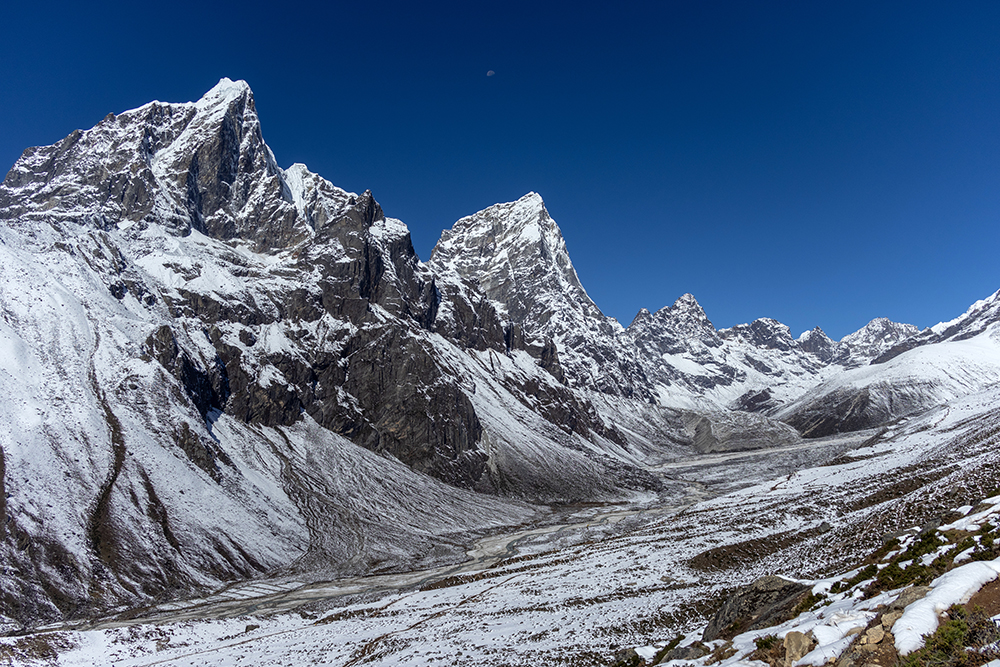
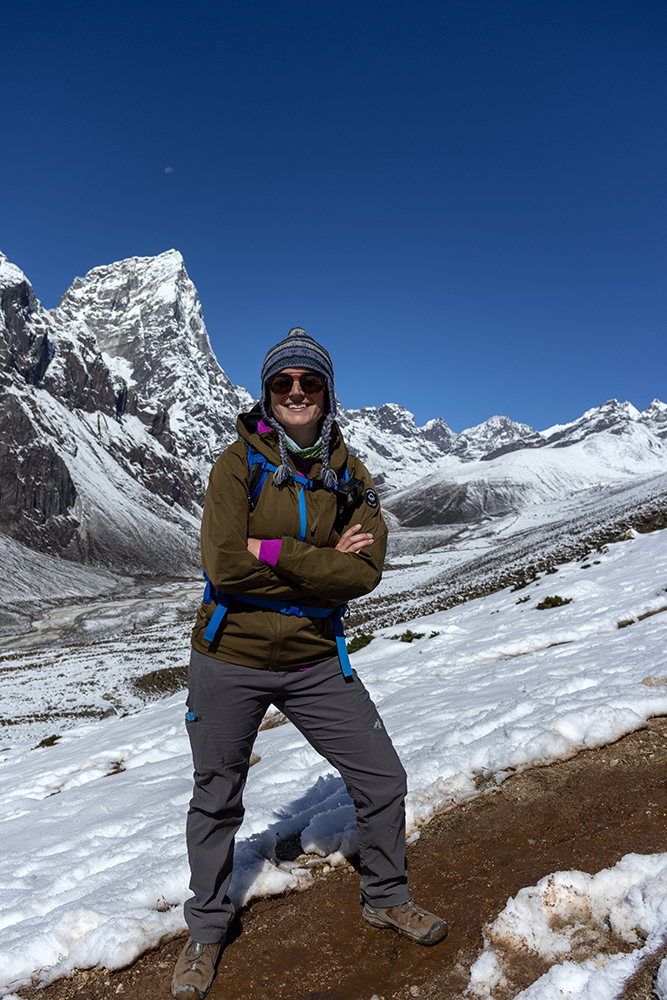
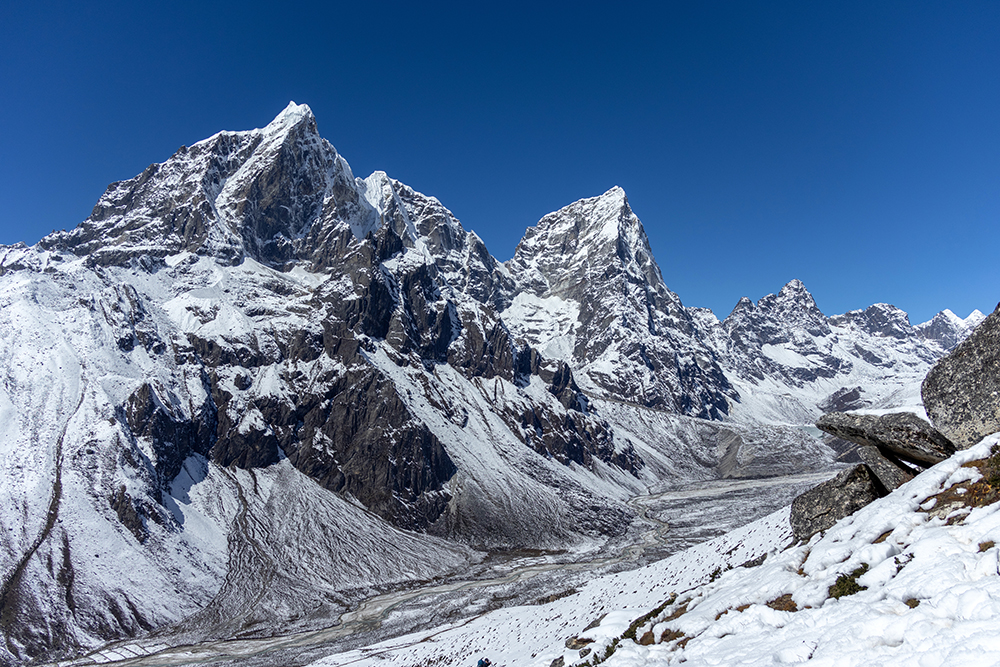
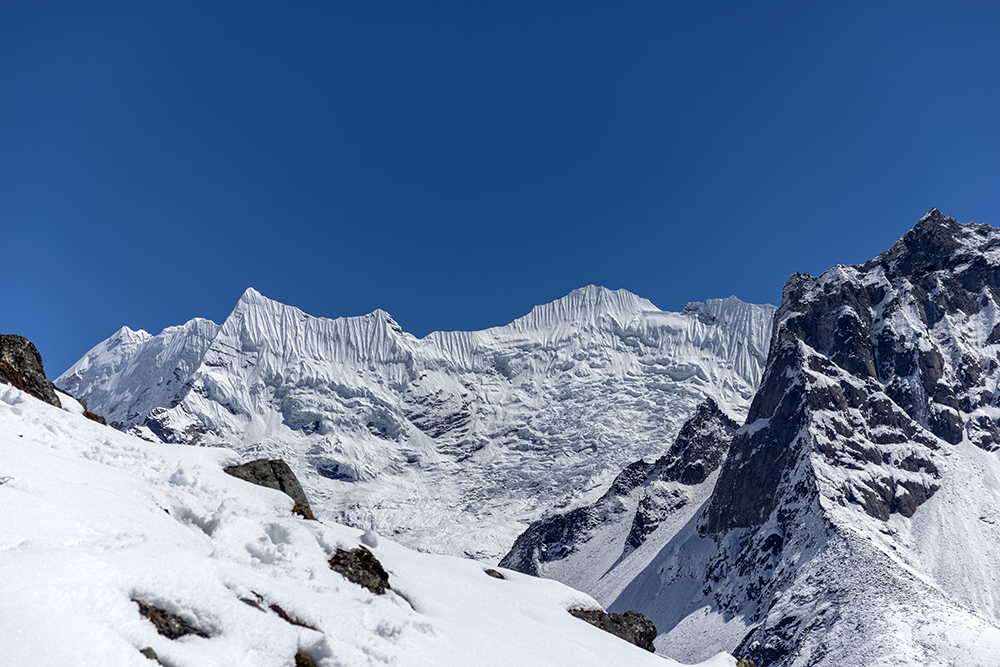
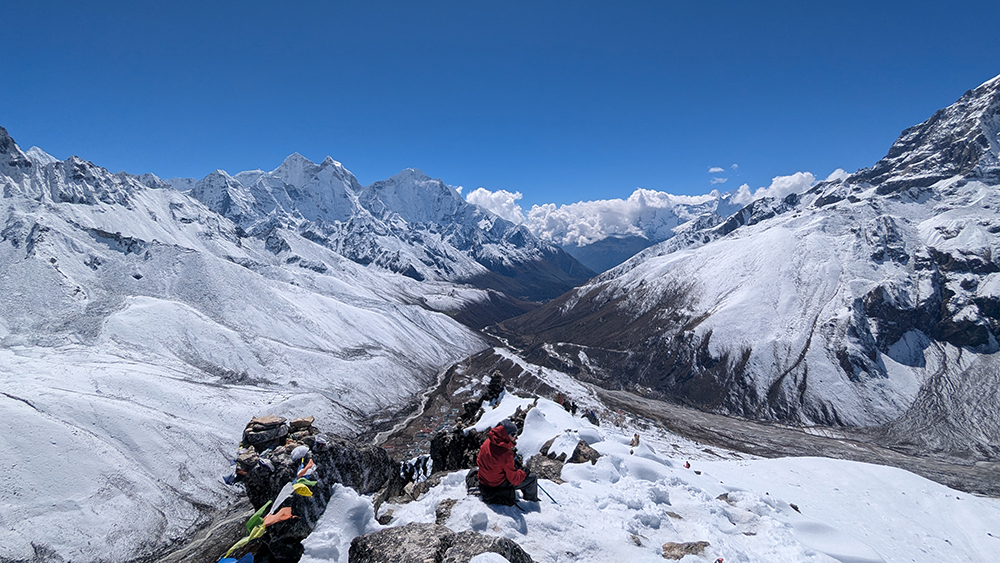
After breakfast, we got onto the trail right behind our teahouse and started climbing. The task was ostensibly simple enough. All we had to do was keep walking uphill until PG told us we could go back down. This may not seem like much, but above 14,000 ft, every step was a mountain in itself. I’d felt so strong throughout the trek so far, and I couldn’t help but feel humbled as I wheezed and stumbled my way up the side of Nangkartshang. But even as I struggled, I was still able to appreciate the unbelievable scenery that sprawled out in every direction. Of course, the sight of Ama Dablam towering over Dingboche was impressive, but my eyes were also drawn to the jagged ridges of Taboche and Cholatse, which rose above the village of Periche.
The higher we climbed, the worse I felt. I gasped for air every time we stopped for a short break, and had to will myself to start walking again when the time came. We got into a rhythm of climbing a hundred meters then taking a break, then climbing another hundred meters, then taking another break. As we went, the trail conditions began to deteriorate. Dirt gave way to mud, which gave way to snow and ice. Several trekkers on their way back downhill warned us that the trail only got worse higher up, and that they’d turned around below the peak because it was too slippery. It was now clear that this was why PG had his doubts about us summiting today. The previous week’s bad weather had left the trails above 14,000 feet buried in snow, and none of us had packed micro spikes because this isn’t typical during trekking season.
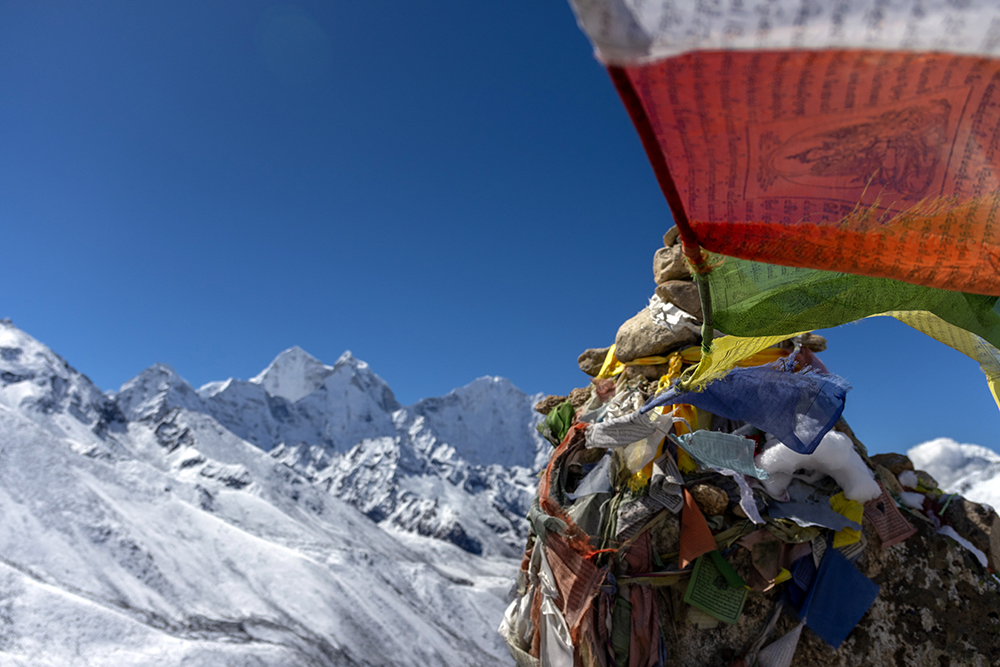
Despite having to splash through slippery mud, the whole team eventually made it up to the optional turn around point, where a large rock covered in prayer flags marked the trail. The flags rippled in the wind as PG reiterated what was to happen next. We all had to wait at the rock for twenty minutes for acclimatization. After that, he was going back down to Dingboche with anyone who didn’t want to keep climbing. Anyone who did want to try for the summit could press forward with our other guide, Mahesh.
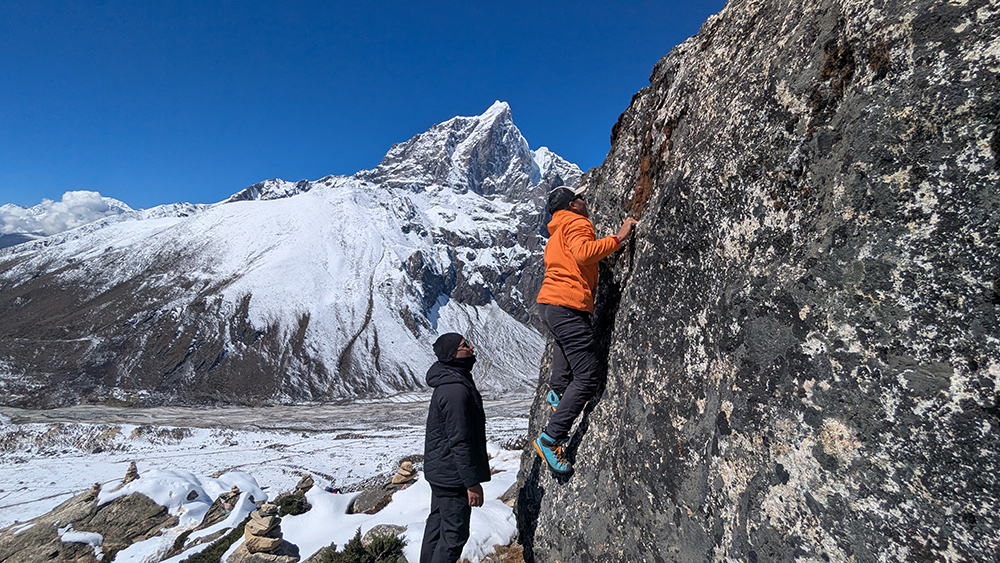
I contemplated what I wanted to do as our twenty minutes ticked by. It was clear that Vince was going to keep climbing. In fact, rather than sitting around for the break, he’d joined PG in climbing up a large boulder. He was going strong, while I was on the brink of giving up with every step. The altitude was making me feel like I had fifteen pound weights strapped to each of my ankles.
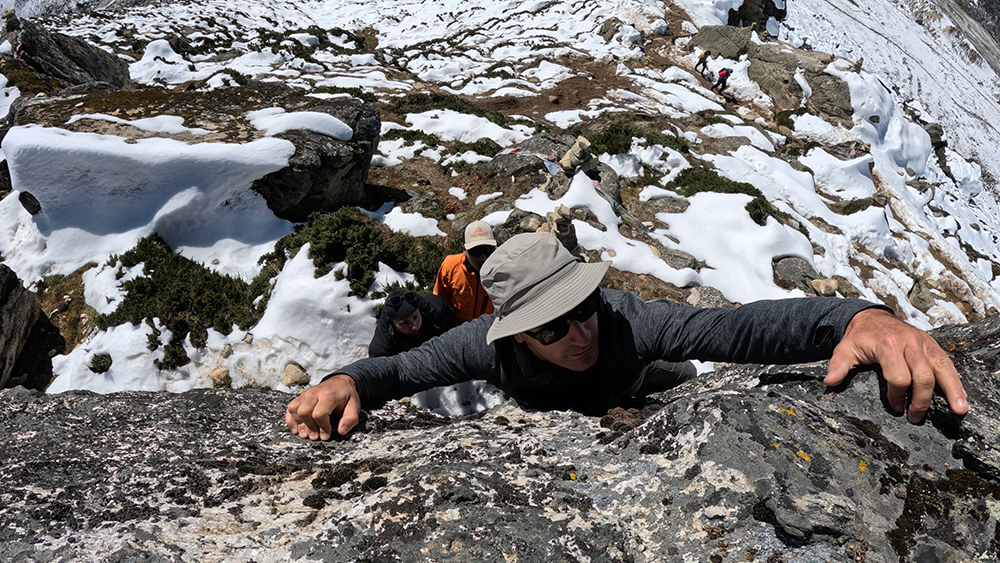
It was for exactly this reason that I decided to keep climbing when the time came for the group to split up. Nangkartshang Peak is higher than the elevation at Lobuche, the next village we’d be staying in. I felt that making it to the top would put me in a better position to make it to Lobuche the next day. So when PG and Tim departed for their return to Dingboche, I followed Mahesh uphill along with the rest of the group.
But the trail conditions continued to deteriorate as we ascended, until eventually there was no trail at all, and we found ourselves trudging upward through ankle deep snow. Climbing through the snow was challenging, but not exactly dangerous, however the idea of descending through this was starting to seem like more risk than I was willing to take on.
A hundred and fifty meters from the top, Mahesh turned around and shook his head. That was all the convincing I needed to call it and go back down. Vince was the only one dead-set on summiting. So after a brief deliberation (in which I tried to talk him out of going on alone), six of us began our descent, while Vince pressed on by himself.
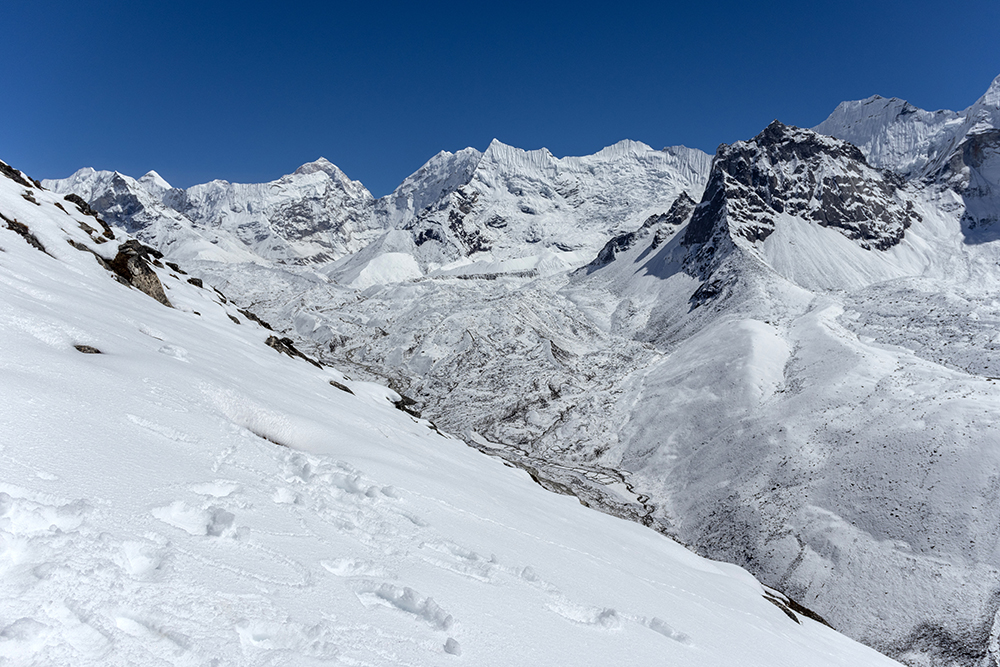
It was a slippery and precarious descent, and none of us escaped without falling on our butts multiple times. Mahesh showed us some helpful tips for how to walk through the snow, and we all made it back to the mud-soaked section of trail without incident.
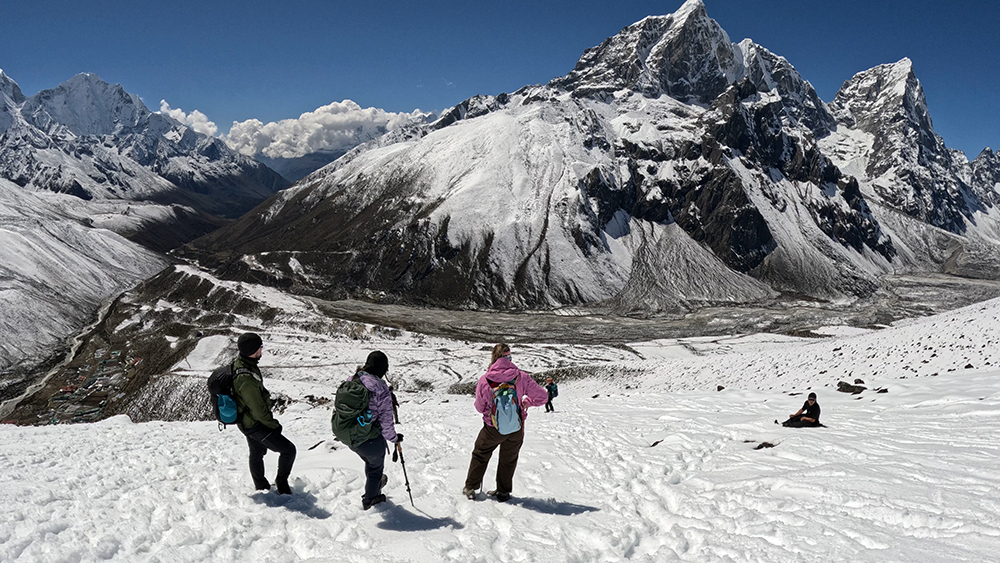
Once we were back in the mud, I escaped a couple of narrow brushes with disaster, barely managing not to slip and fall on a couple of occasions. I only had so many pairs of pants with me, and coating one of them in thick muck would have been a disappointment to say the least. By the time we made it back to dry trail, Vince sent a text saying that he’d made it to the peak.
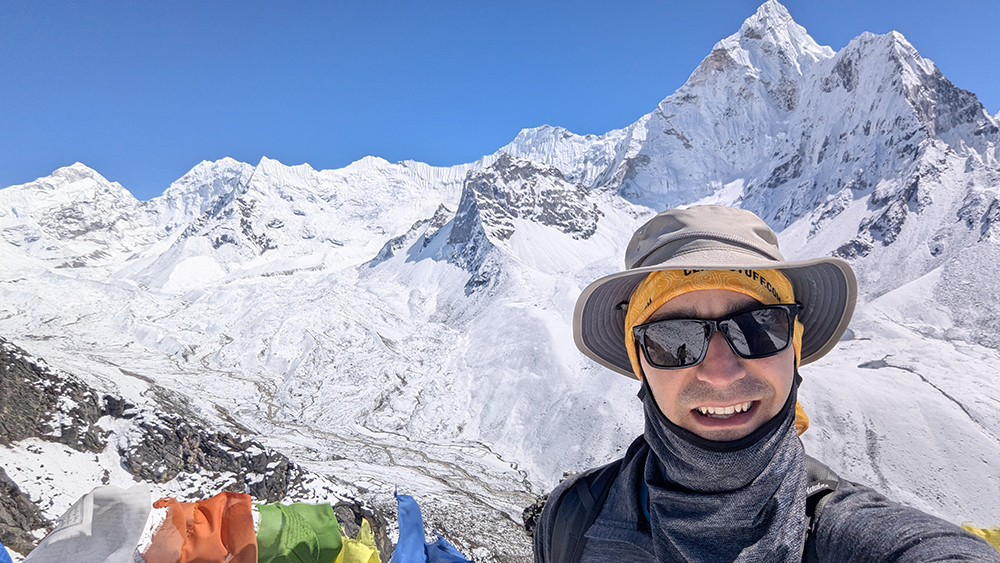
Now that I’ve had a few months to stew on this, I have some regret about not sticking with it. I know deep down, that I could have finished this hike safely. At the time however, there was not a singular cell in my body that wanted to keep climbing. Every so often, I remind myself that made a judgement call, and I did what I thought was right in the moment. It’s not helpful to keep dwelling on it.
The descent went a lot faster now that we were back on dry land. My legs felt like wet noodles by the time we arrived in Dingboche, where I gratefully collapsed into a chair in the dining room of our new teahouse. Enough rooms had come available at a more comfortable teahouse, and PG had gotten our whole group moved. Our lunch was ready a few minutes later. The veggie fried potatoes I ordered were delicious, but just like breakfast that morning and dinner the night before, my appetite was not big enough to accommodate the portion size. I saved a healthy portion of my meal for Vince, who’d missed his chance to order lunch. He arrived about a half hour later, and cleaned my plate for me.
After lunch, the whole group went into town to watch a documentary that was playing at a local bakery. While we waited for the show to start, we checked our blood oxygen levels (everyone was still doing okay), drank some tea, and bought micro spikes so that we would have some traction heading into Base Camp in a couple of days.

The movie started playing around dark, and it ended up being Sherpa, which is about the avalanche that tragically took the lives of sixteen Sherpas in the Khumbu Icefall in 2014. The film follows the disaster, and everything that happened in the weeks afterwards, culminating in a cancellation of the Everest climbing season. As I am slightly obsessed with Mount Everest, this was not my first time watching this film, but it felt more impactful to see it again now that I was just two days of walking away from where the events in the documentary happened.
After the movie ended, we walked back to the teahouse in a more somber mood than we’d been in a couple hours before. As I lay in bed that night, I contemplated the tragedy of the avalanche, and how many friends and family members had been affected by the loss of those sixteen Sherpas. Up until today, life on the trail had been idyllic. Waking up every morning to be met with stunning scenery and friendly people had almost made me forget that we were headed into a harsh environment where life and death can be decided by random chance. Looking back, I view our trek in three distinct segments: Below Dingboche, Above Dingboche, and After Base Camp. The “Above Dingboche” section had already proved itself challenging, but I still had no idea of the physical and emotional journey I’d be embarking on over the next couple of days.
You can see more details of this amazing destination on my YouTube channel!





 birdsoftheairtravel.com
2 comments