Everest for me, and I believe for the world, is the physical and symbolic manifestation of overcoming odds to achieve a dream.
~ Tom Whittaker
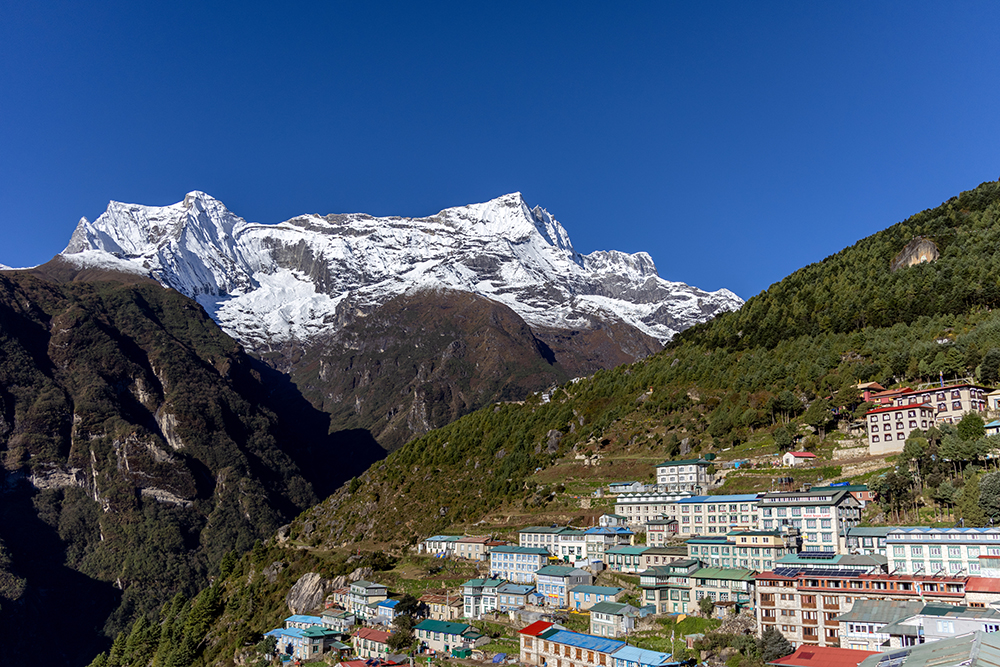
The first thing on my mind when I woke up in Namche Bazaar was the view. Clouds had already settled over the surrounding mountains by the time we arrived in the Khumbu Region’s most important trading hub the previous afternoon. Now I wanted to see what Namche looked like in the brilliant sunlight that was shining through the window of me and Vince’s room. So after breakfast, Vince and I spent a few minutes on our tea house’s rooftop terrace.
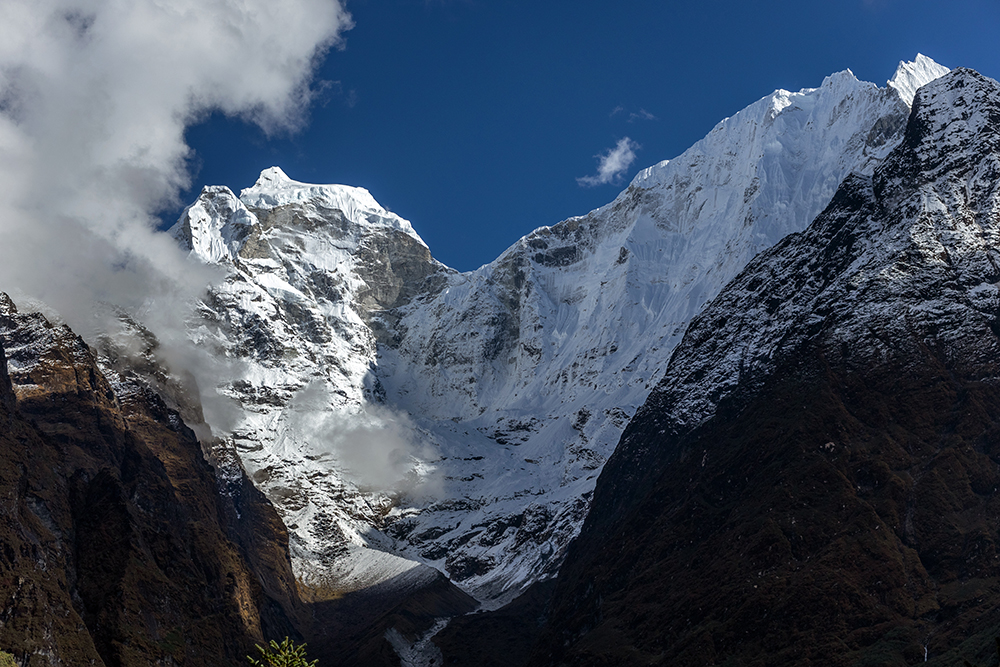
As expected, the view was incredible. There was a huge, snowy mountain just on the other side of the valley from Namche. Its icy peak glowed in the sun, a magnificent backdrop behind the colorful roofs of the village.
The landscape was so beautiful in fact, that I felt a bit disappointed that we wouldn’t be spending another day here. We were originally scheduled to do an acclimatization hike to the Everest View Hotel, and then descend and spend one more night in Namche, but recent monsoons had changed our plans. Because our flight to Lukla had been delayed by a day, our team voted to skip acclimatization and push on to Tengboche instead. A couple members of the group would miss their flights home from Kathmandu if we didn’t get back on schedule. While acclimatization is a crucial part of every Everest Base Camp journey, I wasn’t too concerned about missing this hike. Vince and I had climbed two 14,000 foot (4,267 meter) peaks in Colorado just a month before, so I felt confident that I would adjust well to the altitude, at least until we reached Dingboche, which is just a bit higher than 14,000 feet. I just wished we could stay in Namche a little longer because it is such a fun village, and there is a lot to do there.
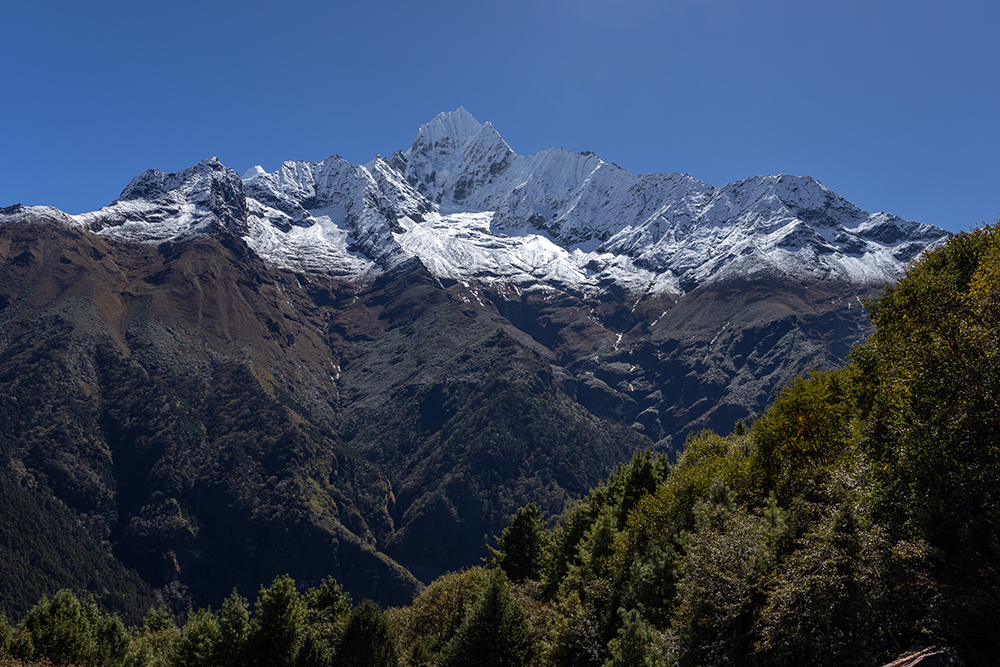
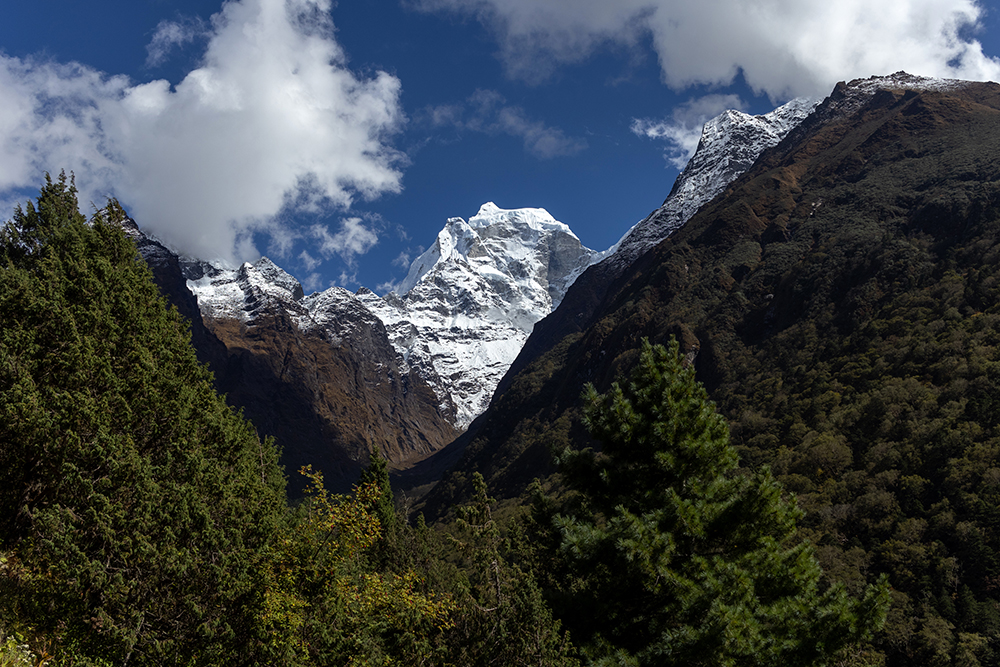
But as unique and beautiful as Namche is, there would be plenty of amazing places to experience as we ascended higher through the Khumbu Valley, and after breakfast we started walking, bound for Tengboche. The trail climbed uphill until we reached the outer limits of Namche, where we got one last sweeping view of the village before continuing along a relatively flat path. This was a welcome break from hill climbing, and we could also see some impressive peaks on the other side of the valley.
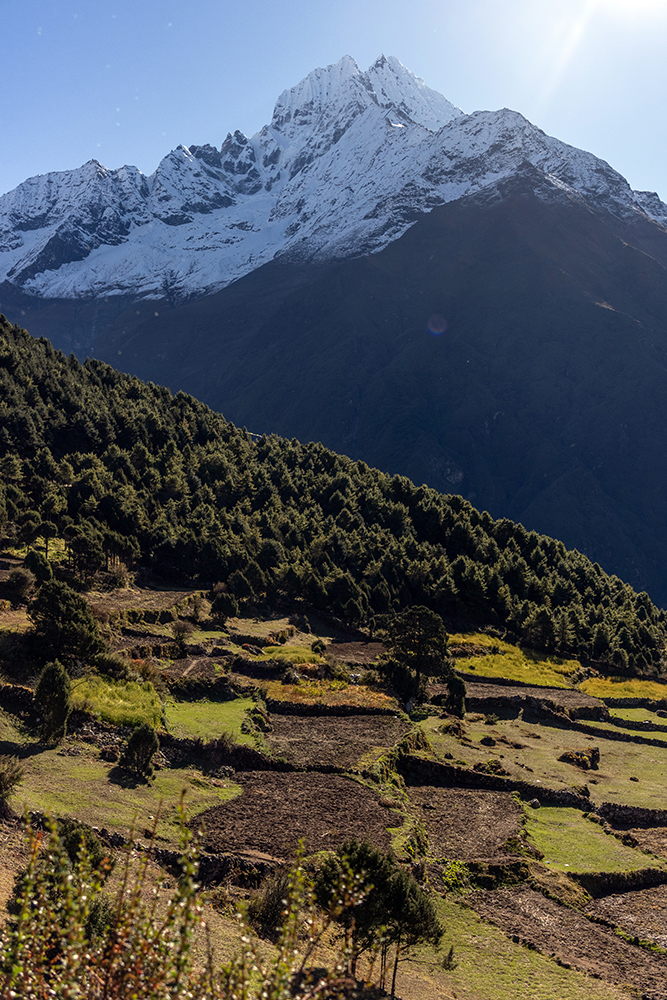
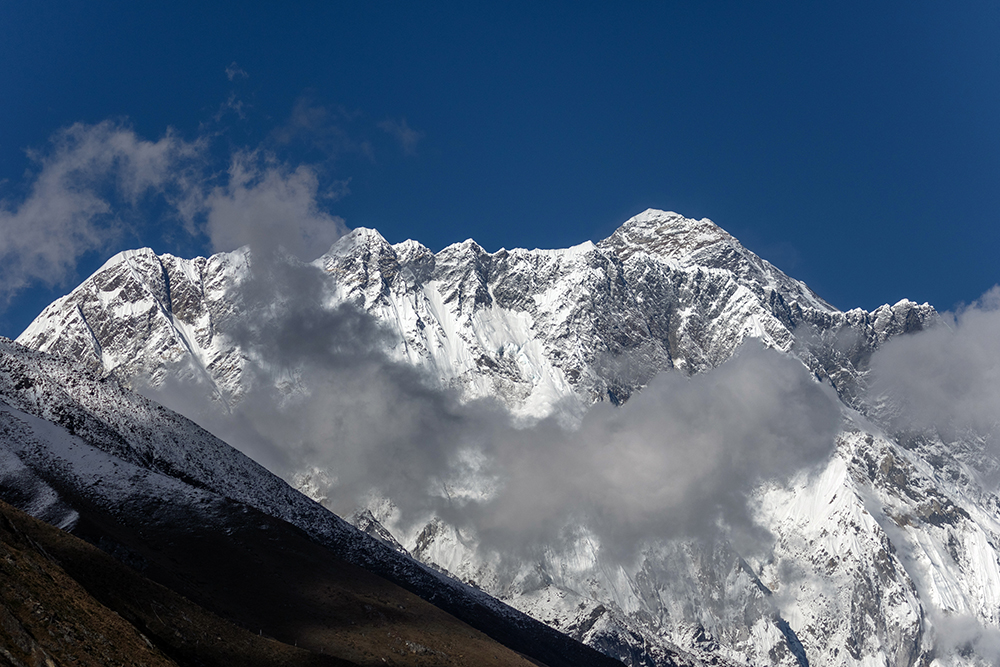
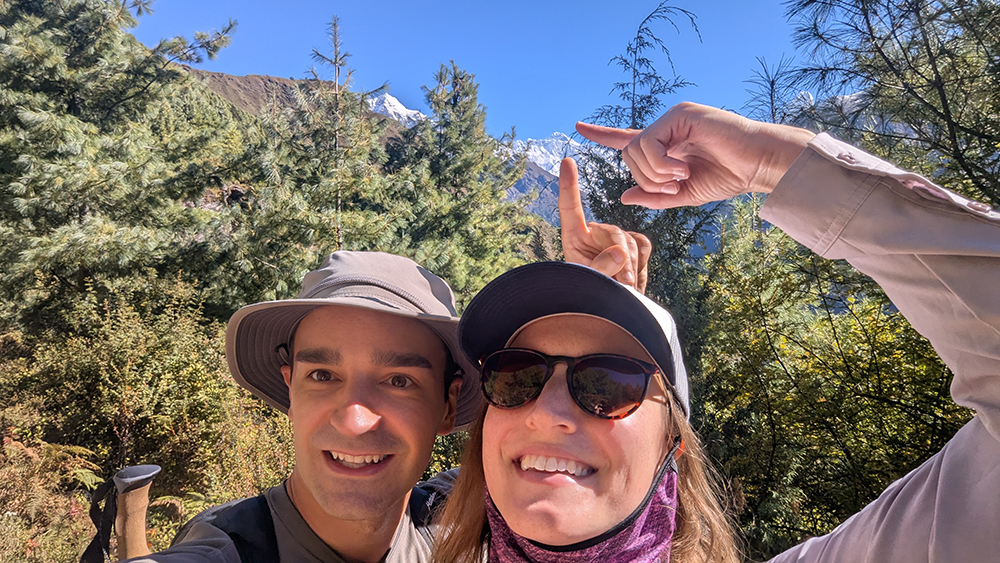
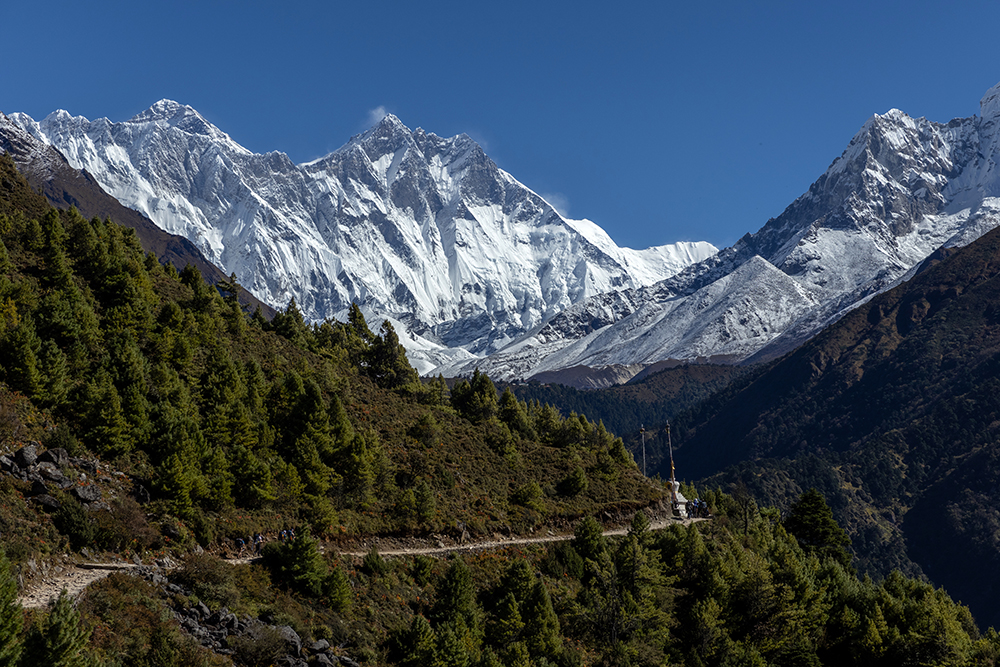
The mountains felt more immediate than they had on our first two days of trekking. They’d seemed so far away before, but now they loomed over us, and before long, PG (our guide from iTrekEVEREST) stopped us and pointed at a snowy ridge far off in the distance. From our vantage, we could see the picturesque, swooping slope of Ama Dablam, the jagged summit of Lhotse, and behind the ridge rose the imposing figure of Mount Everest, the mother of all mountains.
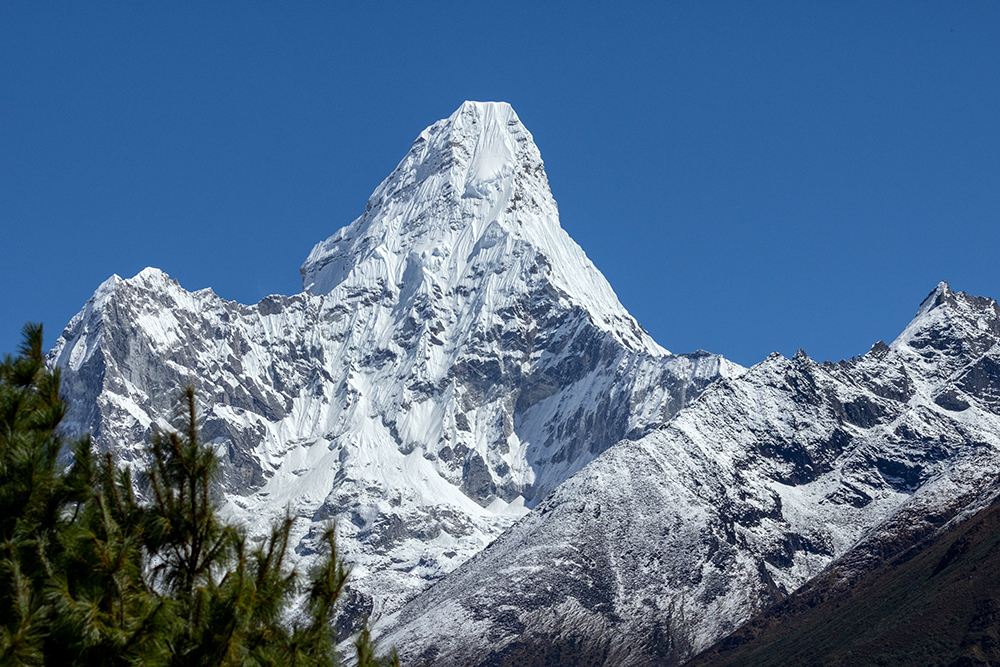
A breath caught in my chest when I first laid eyes on Everest. In many ways, it was less elegant than its picturesque neighbor, Ama Dablam. But there was something more about Everest. Something about knowing that the snow I could see wafting from the summit was in reality, a raging and deadly wind storm. The other mountains are beautiful, and savage, but Everest is more than a mountain. Everest is an idea as much as it is a pile of rock and ice, ineffable and eternal.
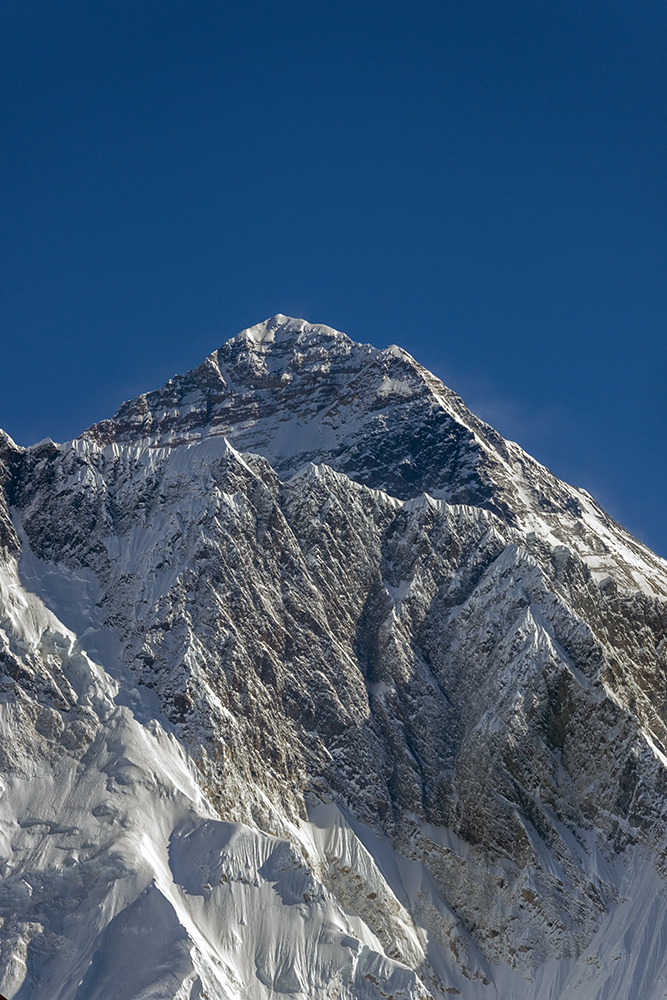
This first glimpse of Everest injected me with a level of enthusiasm I hadn’t experienced yet on our trek. There was just something electrifying about being able to see the goal with my naked eyes. It was still four and half days (and over 6,000 vertical feet) away, but it was there, and we were coming for it.
Continuing along the flat path, I felt more energetic, and I began to notice that the ecosystem around us was changing. We’d spent much of the previous day in a deep and wet forest, but now that we’d gained some elevation, the trees were much shorter and less densely populated. In another day’s time, we would leave the shelter of the tree line entirely, and enter a landscape of rocks, mud and snow.
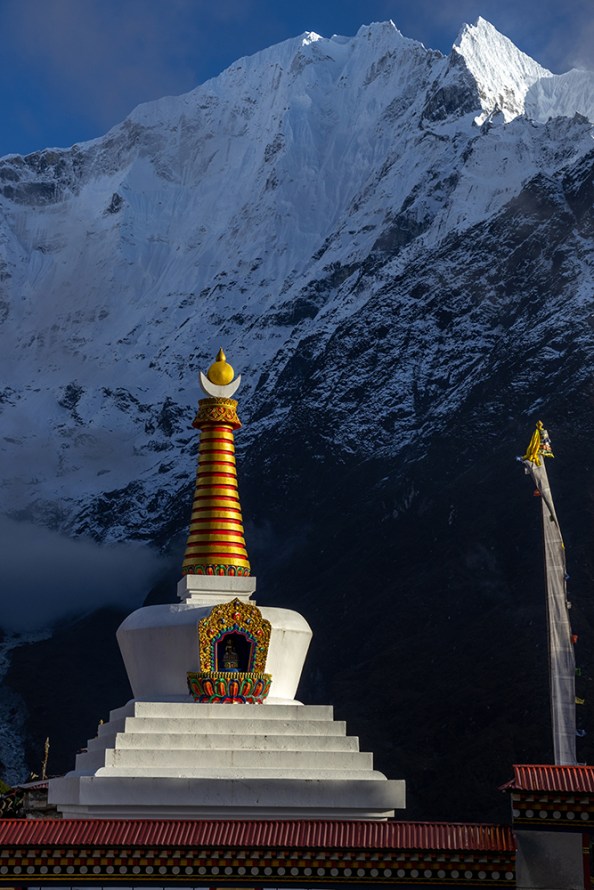
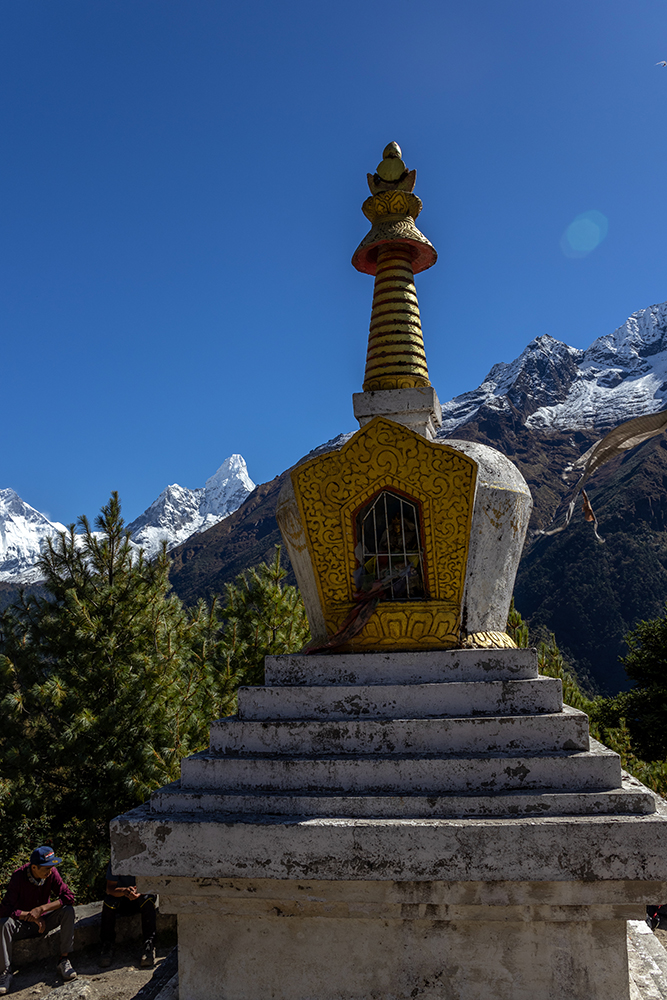
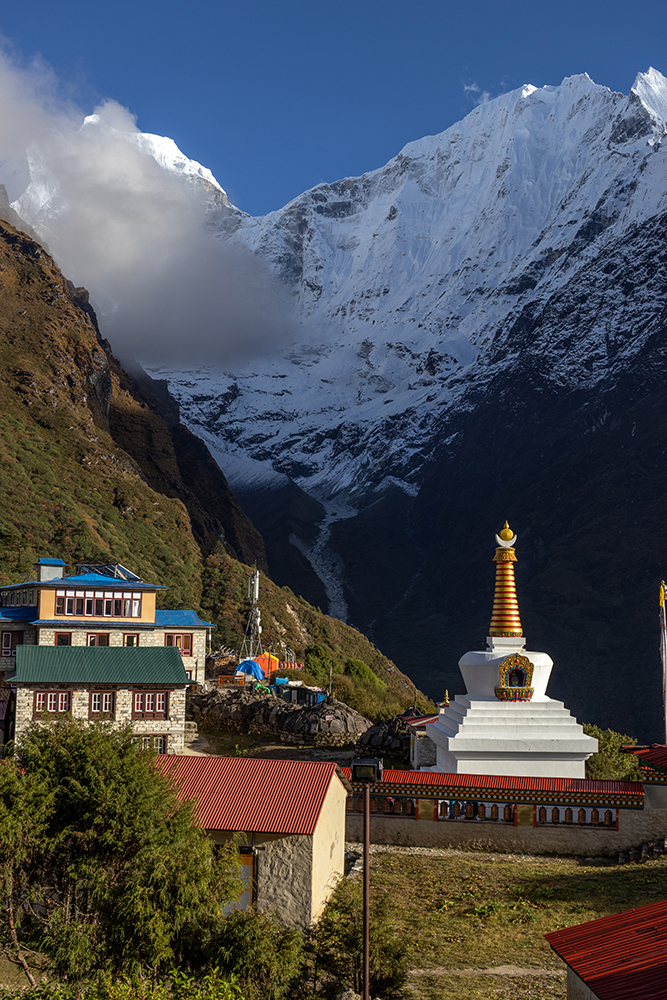
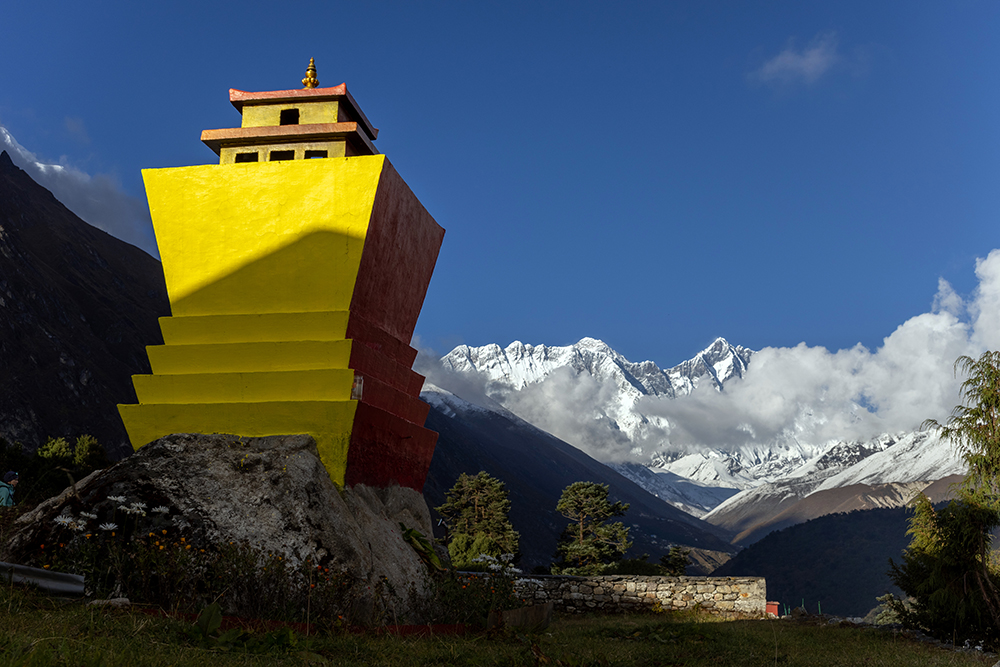
The shorter trees also meant that we had more consistent views of the mountains for this portion of the day. Ama Dablam and Lhotse were particularly visible, and every once in a while, we would round a bend to see that there was a beautiful Stupa up ahead, silhouetted against the high peaks.

Each time we approached one of these Stupas, we made sure to pass by it on the left side (clockwise), because this is the more respectful and auspicious direction to walk around a Buddhist holy object.
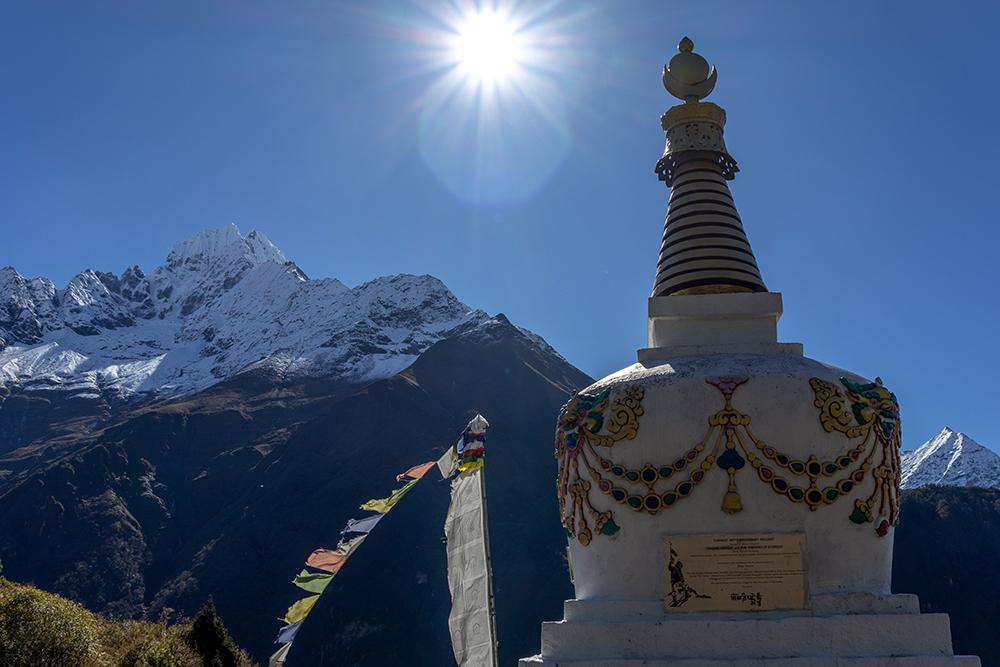
By late morning, it was time to stop for tea, and we did so at a very busy restaurant with lots of outdoor seating, and a perfect, panoramic view of the surrounding mountains. I sipped on a cup of masala tea, as PG pointed to a hill just across the valley from us. We could just make out a cluster of buildings that were in fact, the village of Tengboche. That’s where we would spend the night, but PG explained that we would have to descend back down to the river, and then climb all the way back up the other side to reach the hilltop village. But hey, what was one more giant hill climb at this point?
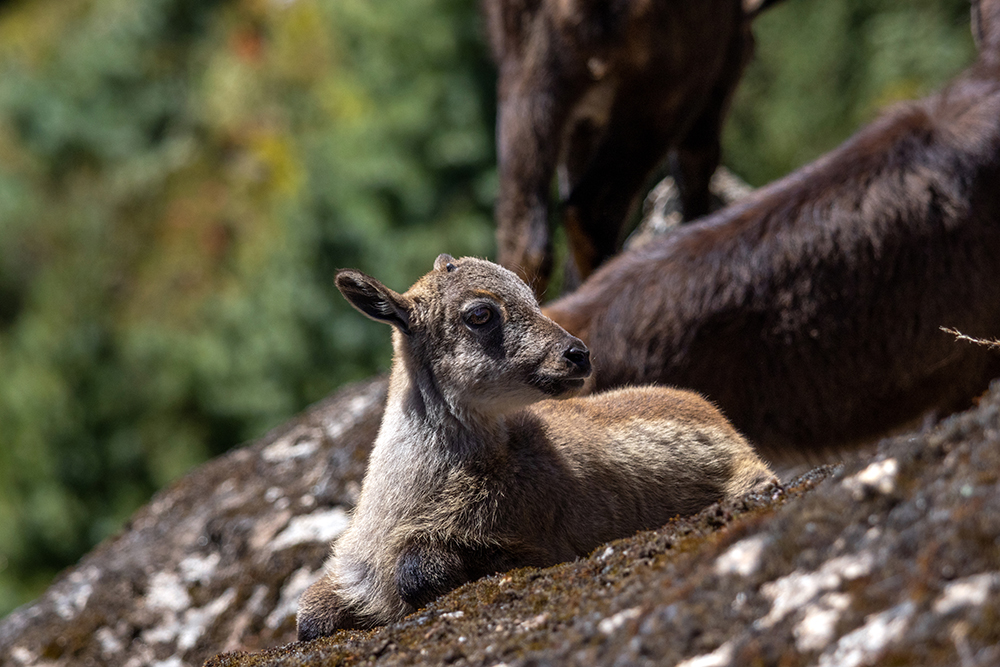
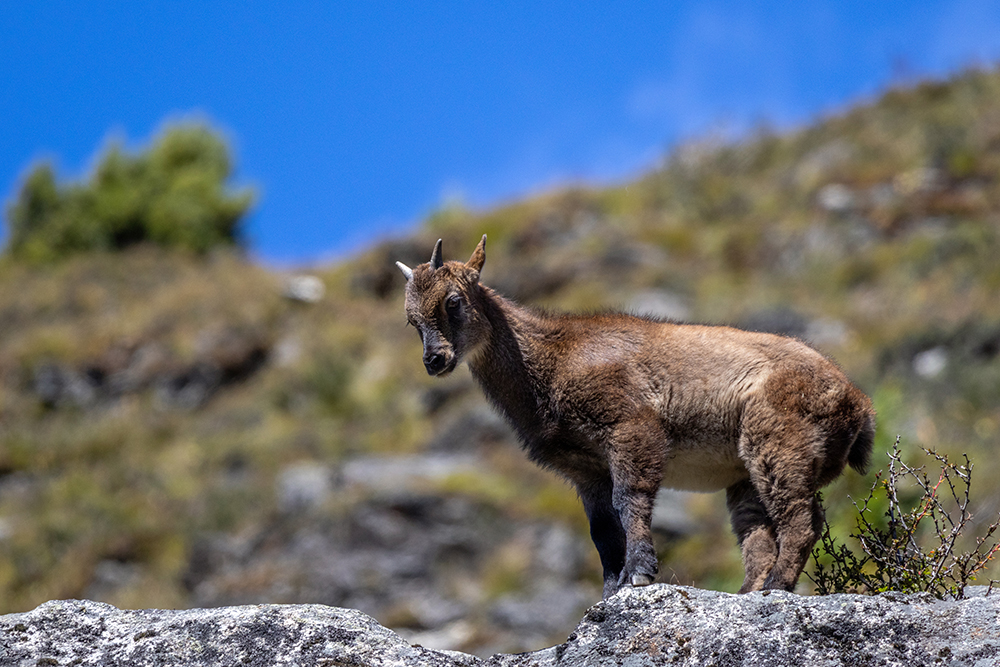
When we’d all finished up our tea, we got back to walking, and before long, Mahesh stopped in his tracks, and pointed up ahead on the trail. There was a brown goat standing on top of a huge boulder just above the trail, and Mahesh simply said, “Himalayan goat.” Immediately, I slung my backpack from my shoulder, and fished my zoom lens out, quickly attaching it before hurrying to get a bit closer.
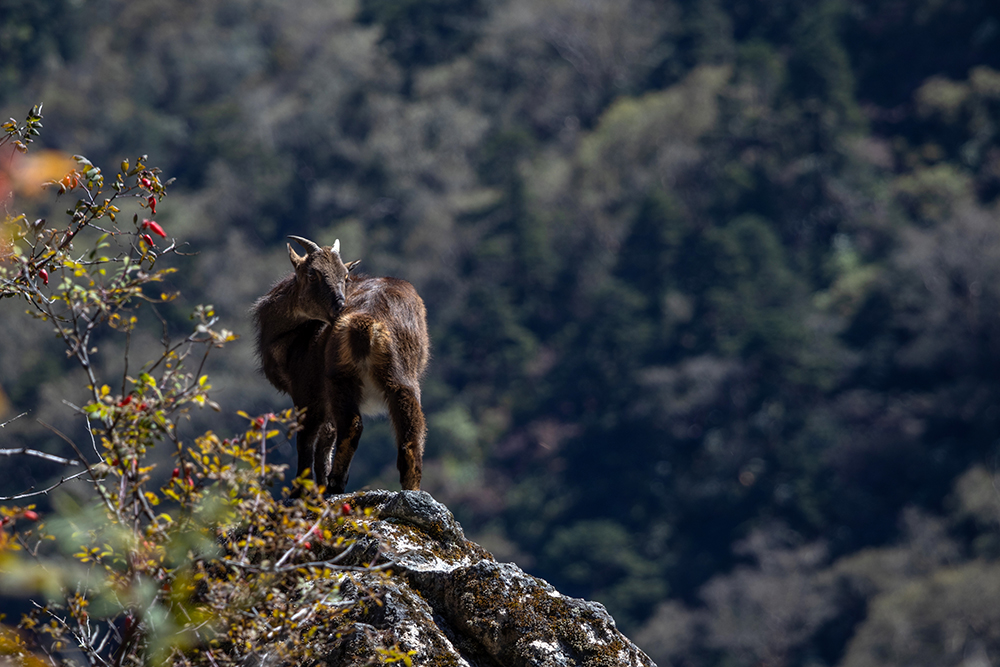
As I neared the goat (or Himalayan Tahr), I realized that it was actually an entire herd of ewes and kids, and they were grazing on either side of the path.
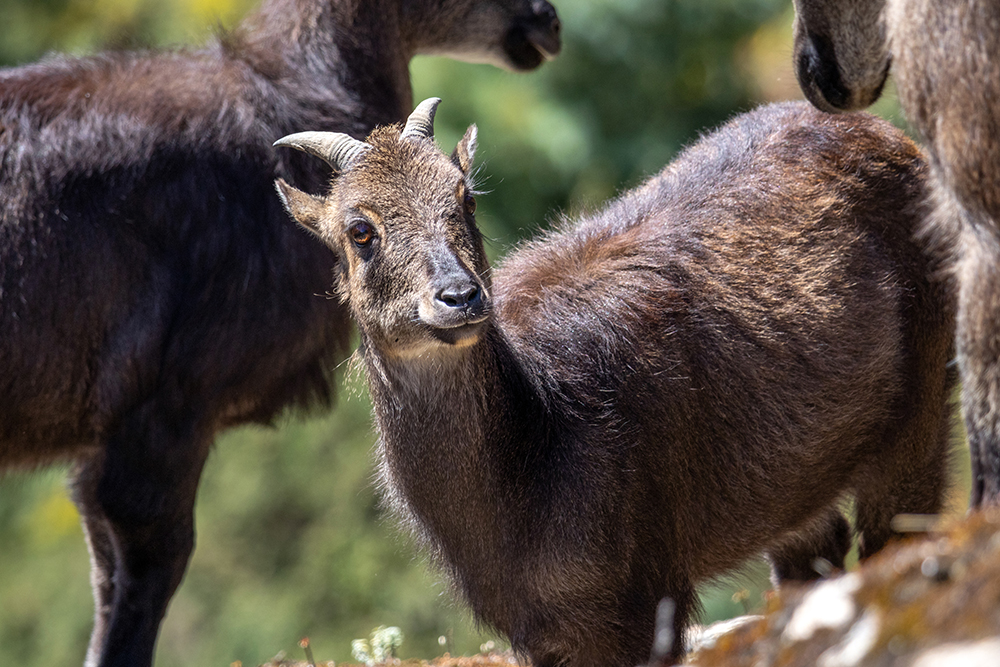
Himalayan Tahr are native only to the Himalayan mountain range, and they reminded me greatly of the bighorn sheep that we find in the mountains of North America. Their coat is shaggier and more of a chestnut brown though, and their horns don’t have as tight of a curl as bighorns’. Of course, I was overjoyed to get to see some wildlife, and I especially liked the playful and fluffy kids.
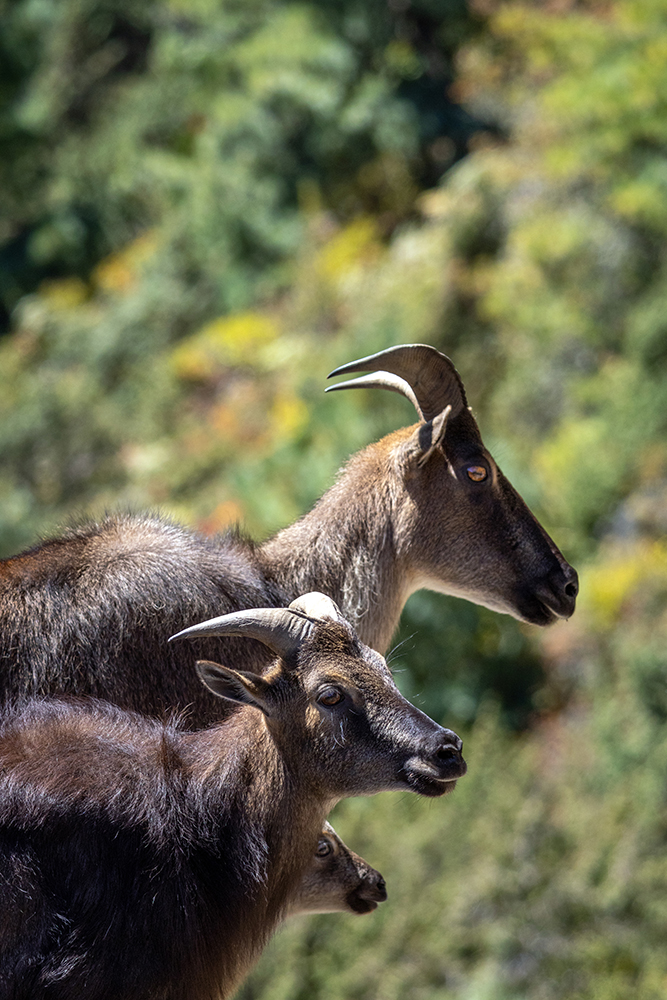
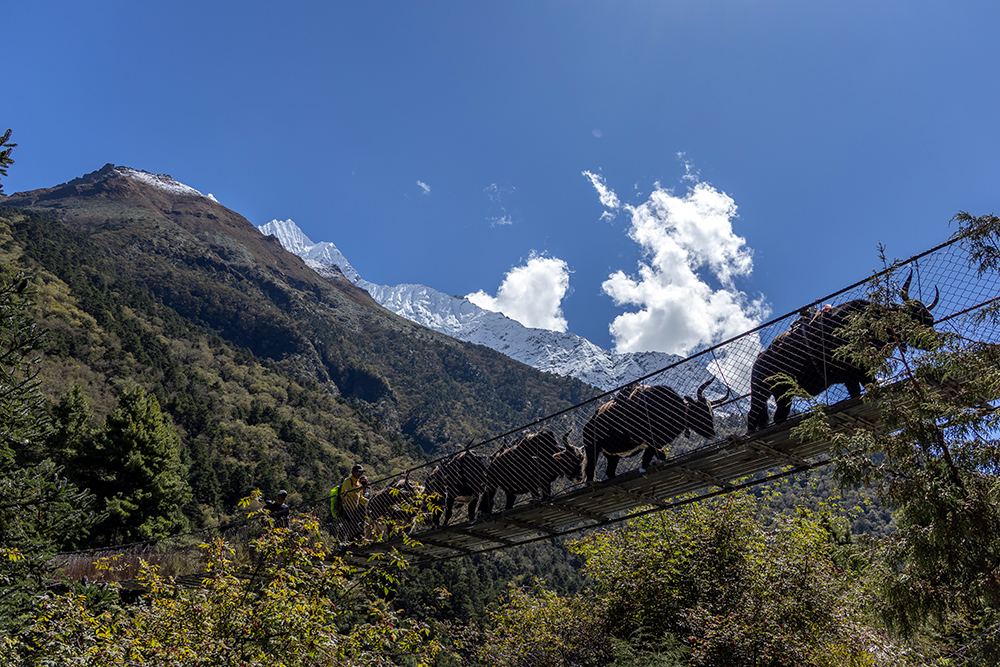
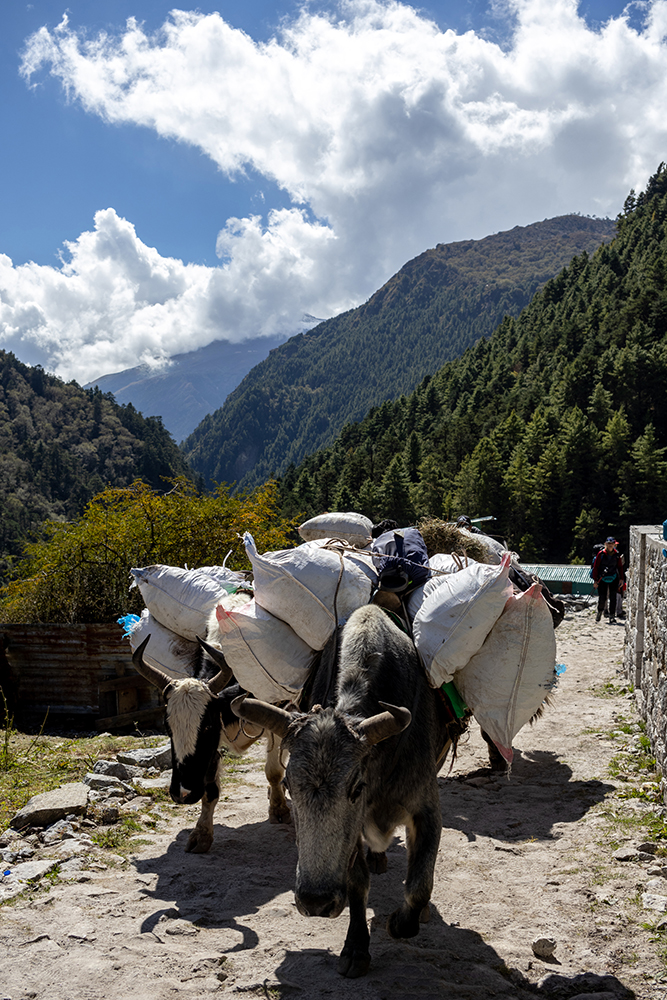
Unfortunately, we couldn’t keep watching the goats forever because we still had a lot of distance to cover. PG and Mahesh got us all moving again once we’d had plenty of time to snap some photos, and soon it was time to descend down to the river. To be completely honest, it felt a little tragic to have to lose all of that hard-won elevation. The descent was steep, which implied that the climb on the opposite side of the river would be steep as well. We did however, get to see our first full yaks at the bottom of the hill. These were much fluffier (and therefore cuter) than the yak hybrids we’d encountered until this point, and I told myself that this made the hills worth it.
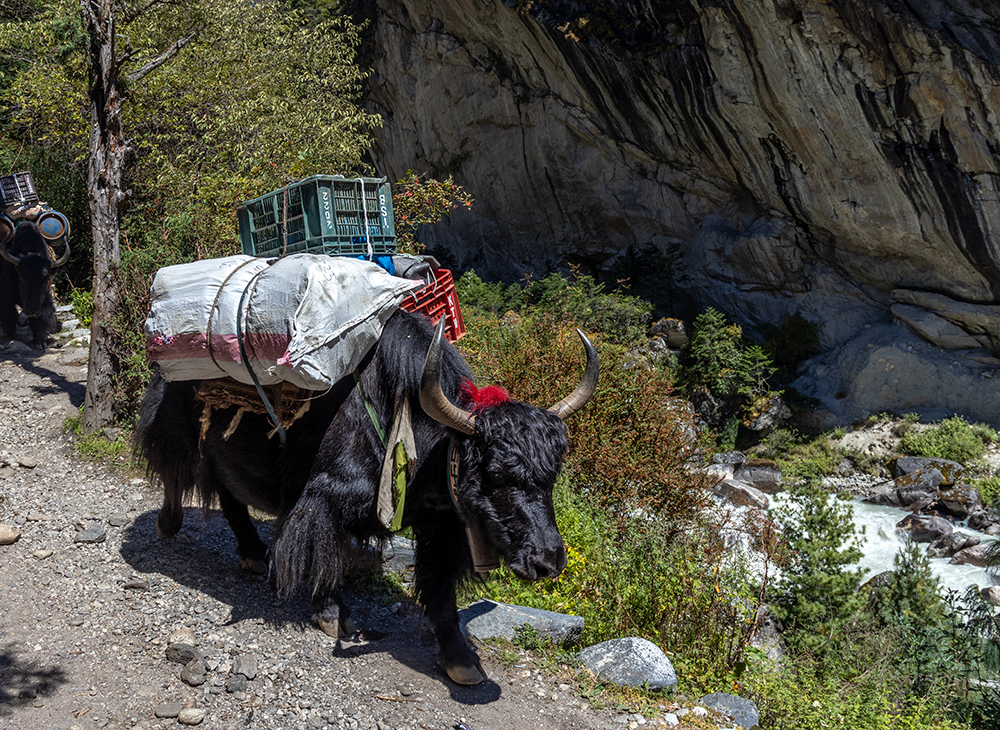
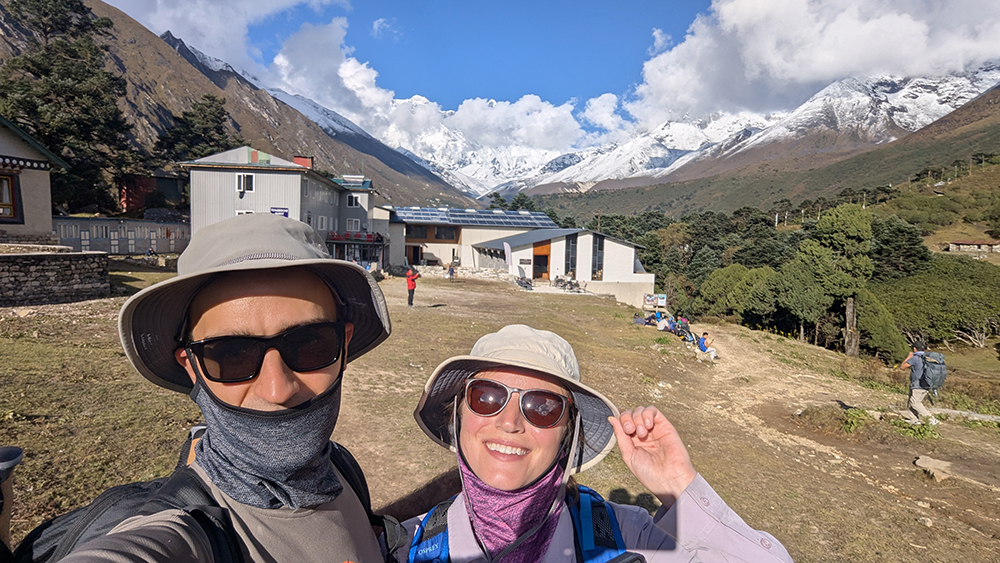
We waited for a yak train to cross the suspension bridge that spanned the river, and then took out turn. We stopped for lunch on the other side before undertaking the climb up to Tengboche. From here on out, it was just a long, uphill slog. We kept putting one foot in front of the other, stopping to drink water every 100 meters of elevation gain. The day continued like this until we suddenly ran out of hill. We’d finally arrived at Tengboche, and we entered the village through a gate lined with small Prayer Wheels.
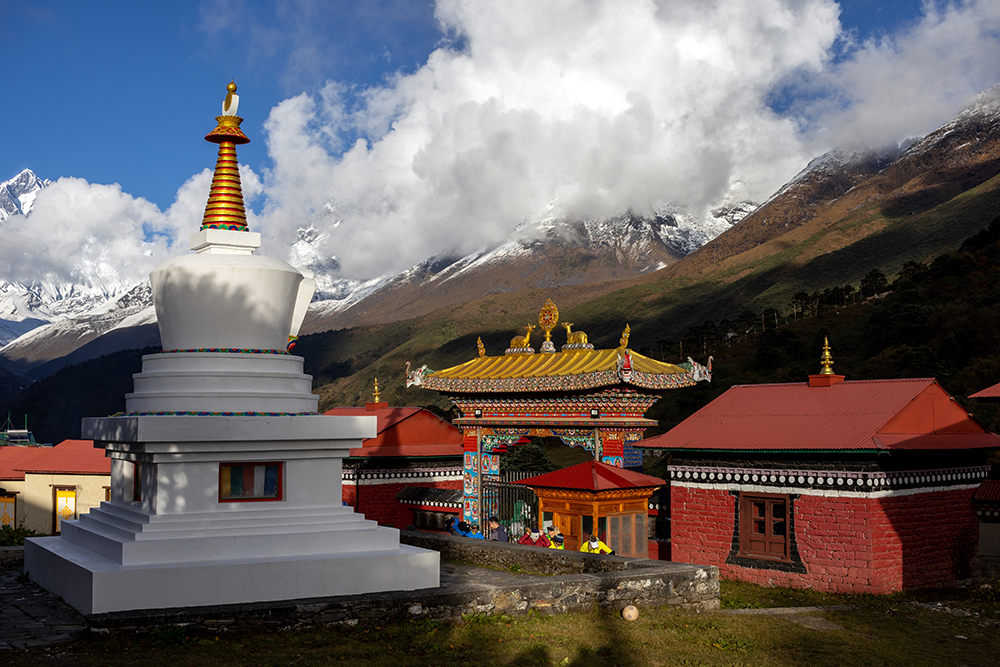
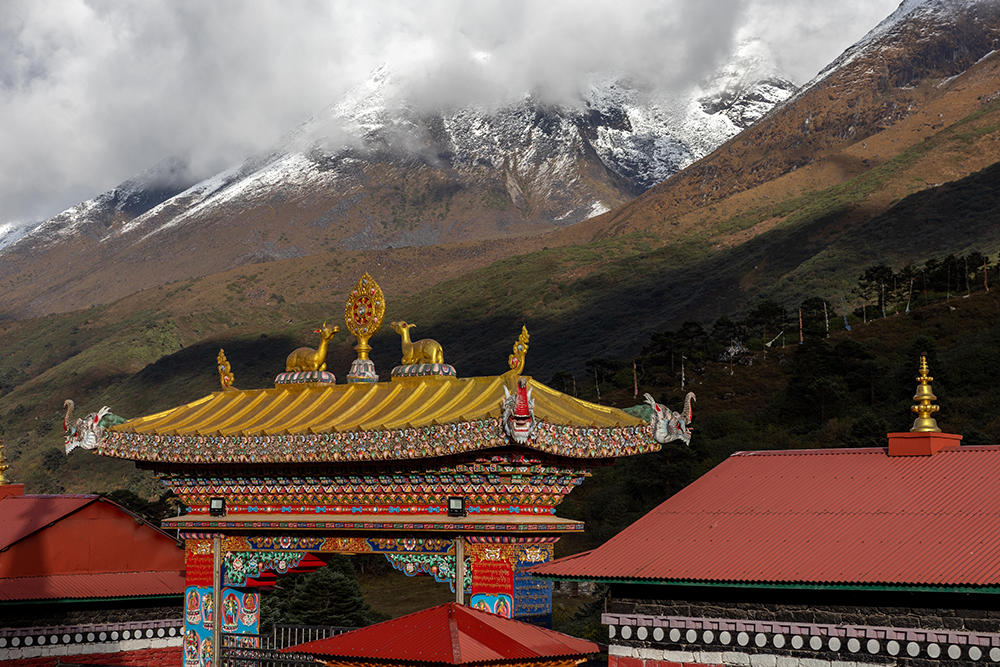
A feeling of peace settled over me the moment I caught my first glimpse of Tengboche. The village itself was just a handful of buildings surrounded by a landscape of the most beautiful mountains I’d ever seen. But despite the dramatic surroundings, the focal point of Tengboche was its monastery. Decorated in intricate carvings and bright gold and red paint, the monastery’s gate intrigued me as we walked passed it on the way to check into our tea house. Thankfully there was still plenty of time to go back for a visit after we dropped off our bags.
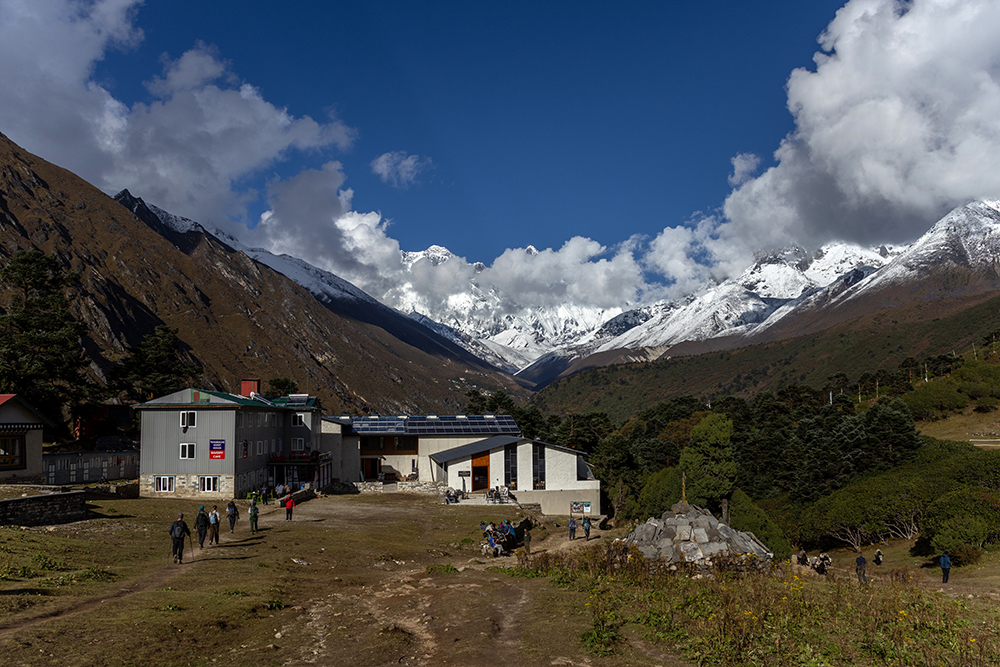
PG led us all to the Tengboche Guest House, a tea house owned by his brother-in-law, and we collected the keys for all of our rooms. Vince and I were lucky enough to get a third-floor room with an ensuite toilet and its own hot shower-a real luxury along the trail. This was also the only tea house where we had one queen bed instead of two twins, but the comfort of the room seemed like just an added bonus after I cracked open our window to take in our fantastic view of Mount Everest, Lhotse, and Ama Dablam. This was undoubtedly the best view we’ve ever had from a hotel room. Cotton ball clouds were settling in front of the mountains, and they would be invisible by nightfall. I shut the window, knowing that I would get to see the mountains again early the next morning. For now, Vince and I wanted to make it over to the monastery before it closed for the night.
We ditched our day packs and settled all of our things for the night, then we headed back downstairs to visit the monastery. We ran into Sandy along the way, and the three of us walked together. Stepping under the grand entrance gate, I was overcome by a feeling of peace. October is the busy season for trekking in the Khumbu, and there was also a bit of extra traffic during our journey because so many people were delayed by the late monsoon. But even though the monastery was full of visitors, it was still very quiet. I had the sense that everyone there was feeling the same way I was, which was awe at our surroundings, and appreciation and respect for the monks of the monastery sharing their culture with us.
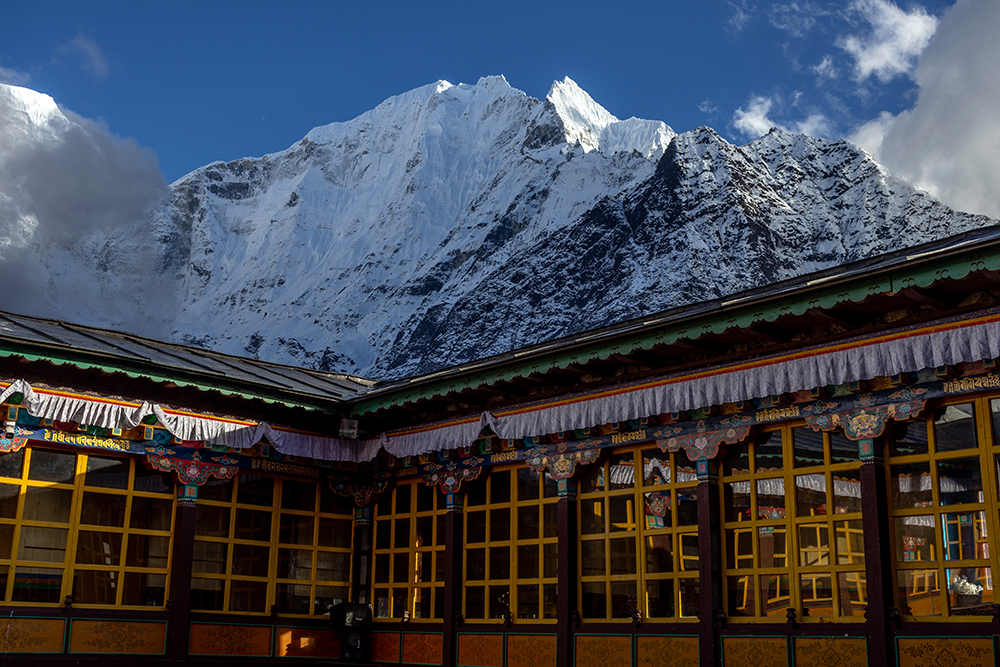
The early evening light cast a soft glow over the surrounding mountains, and really brought out the monastery’s bright colors. As a photography enthusiast, this was a dream location for me, and I wasted no time in capturing the majestic scenery as we made our way through the complex.
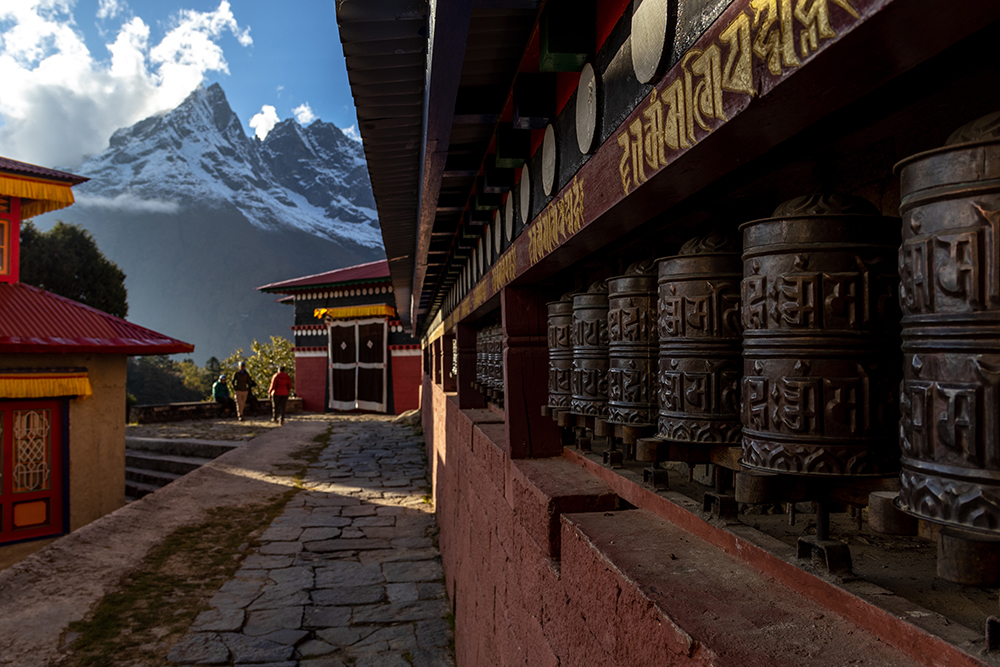
The Tengboche Monastery was originally constructed in 1916, although it has been rebuilt twice since then because it was destroyed by an earthquake, and later by a fire. It’s the largest Buddhist spiritual complex in the Khumbu region, and is a scared pilgrimage site, and also a spiritual gateway for people venturing into the mountains.
There was one spot that was off-limits for photos, and that was inside of the monastery. So when we got a chance to go inside, I removed my shoes, tucked away my camera, and tried to put the intricate details of the monastery’s interior to memory. There were a handful of monks inside, and a lot of other trekkers. Vince and I had never been inside of a Buddhist monastery before, so we watched what other people were doing and followed suit. We got in line behind some trekkers who were waiting to receive a blessing from one of the monks. When it was my turn, the monk spoke a few words and tied a piece of red string around my neck. PG later explained to us that this blessing is for luck, and meant to be worn for a week.
After this, we joined a line of trekkers who were sitting on floor pillows along the wall. We sat in silence for a while as I reflected on what an incredible day we’d had, and how grateful I was to be in this exact moment. These are all memories and experiences that I will treasure for years to come, and being in Tengboche felt very special to me.
We emerged from the monastery in time to do one last lap around the complex with Sandy before heading back to the tea house for dinner.
I ordered potato momos for dinner, which ended up being my favorite Nepali dish. They reminded me of pierogi, but with some added spices. After dinner some of us stayed up to play a round of Yahtzee before heading off to bed. As I drifted off the sleep, I again thought about how happy I was to be trekking in the Everest region. I was excited for the next day’s trek, but slightly apprehensive about anything beyond that. We were headed to Dingboche next, which would be just a bit higher than the highest elevation Vince and I had ever hiked to before. In my mind, Dingboche would be a threshold of sorts. I knew I was prepared for anything up to that altitude, but beyond that, I had no idea how difficult things would become. The only way to find out was to keep pushing upward.
You can see more details of this amazing destination on my YouTube channel!
 birdsoftheairtravel.com
this post has brought back many wonderful memories, as I had walked through this area and visited the monasteries you mentioned. A special place full of special people.