A rhinoceros is not burdened by the weight of his own horns.
~Nigerian proverb
We were up well before dawn the morning that we left Maputo, bound for Kruger National Park via eSwatini. The rest of the trip would consist of early mornings like this, which seemed as exhausting a prospect as it would be rewarding. Vince and I groggily made our way down to the lobby of the Hotel Cardoso, luggage in tow, to meet up with our driver, Alphainho (Alpha), from Tours Maputo.
The tour company had sent two vans, one for our luggage, and one for all twelve of our group of friends. After we all scrambled onboard, Alpha pulled the van out onto a dark street, and I proceeded to fall asleep almost immediately, napping all the way to the border of eSwatini.
I became aware of my surroundings as the van came to a full stop, and I blinked open my eyes to see that we’d arrived at the Mozambique exit station. Following Alpha’s instructions, we all gathered our passports and visas, and lined up inside the small building to officially leave Mozambique. With new stamps in our passports, we walked a short ways through no man’s land before lining up at the eSwatini entrance desk to get one more stamp. As the border agent stamped my passport, it dawned on me that I had just entered my 50th country!
eSwatini was formerly called Swaziland util 2018, when the country’s name was officially changed commemorate its 50th anniversary of independence from British colonization. This was a return to the country’s pre-colonial name which translates to Land of the Swatis. We still heard a lot of people in Mozambique and South Africa using the name Swaziland, and certain businesses within eSwatini still use Swazi instead of Swati in their marketing. For the sake of clarity, I’m going to be using eSwatini and Swati throughout this post unless I’m referring to the name of a business.
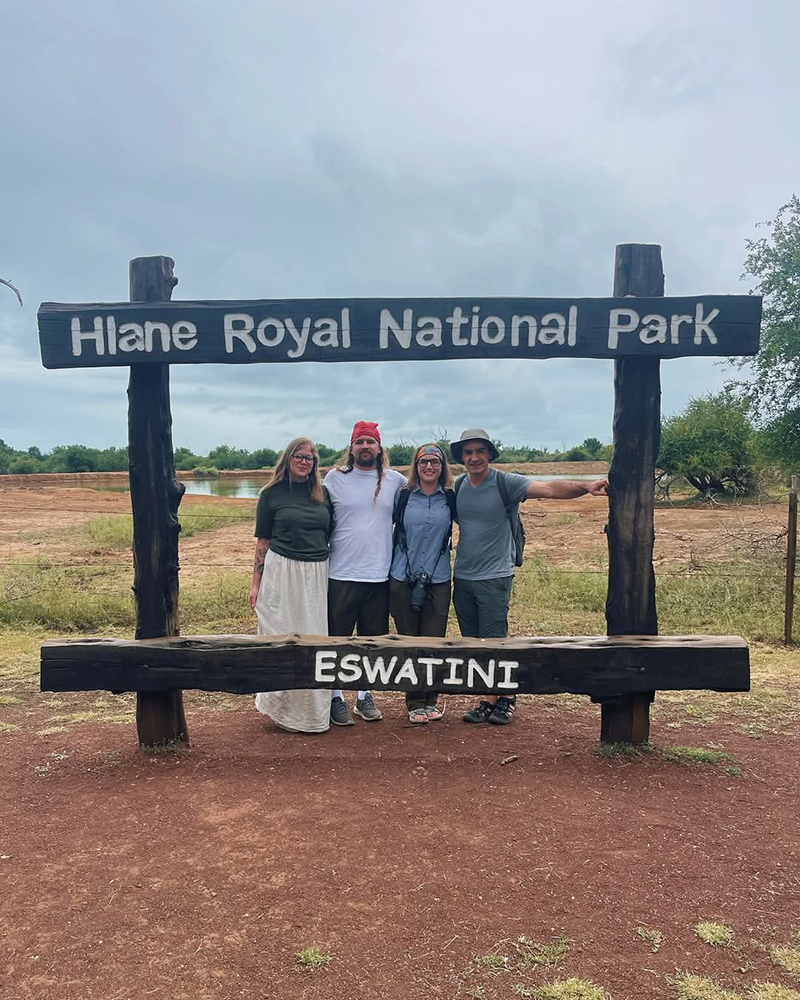
eSwatini is a small (only 6,704 square miles), landlocked kingdom that shares borders with South Africa and Mozambique. Despite its small size, it is packed with outstandingly beautiful nature. I would have loved to spend a few days exploring its mountains, but we only had a single day to see as much of eSwatini as possible, so Alpha made sure to keep us on schedule. After crossing the border, we had to drive a ways further to reach our first destination of the tour, which was Hlane Royal National Park. Beautiful scenery rolled by outside of the van window, and the landscape became hillier the further into the country we travelled. Soon, we reached the entrance gate of the national park. There was a visitor center, restroom, and game viewing area inside of a fenced in area, and we all got out of the van to check if there were any rhinos in sight from the viewing area.
There was a pond just outside of the fenced in area, and we could see a couple of hippos mostly submerged in its murky waters. A couple different kinds of antelope grazed on a small slope behind the pond, but there were no rhinos in sight. A light rain started to fall as we walked back to the van, and I felt slightly crestfallen that we hadn’t managed to find a rhinoceros. It had been seven years since I saw my first southern white rhinos in Pilanesberg National Park, and I’d really hoped that we’d finally get to see another one in eSwatini, which is one of the best places left on earth to see them.
But my disappointment didn’t last long. Once we all packed back into the van, Alpha announced that he was going to drive into the park a bit further to continue our search. There was still hope! We drove a short distance, rambling along a dusty road. All the while, I had my face practically plastered to my backseat window, as I craned my head at odd angles to try to scan as much of the landscape as possible.
It was Alpha who ultimately ended up spotting a couple of southern white rhinos, and we all excitedly looked out of our windows, vying to catch a glimpse of the Goliath creatures from the awkward vantage point of the cramped van. My gaze finally locked on a rhino, and I noticed that there were a couple of tall giraffes ambling around nearby as well. Giraffes are one of my all-time favorite animals, so I was happy to see them, but I knew we would see plenty more of them when we got to Kruger National Park.

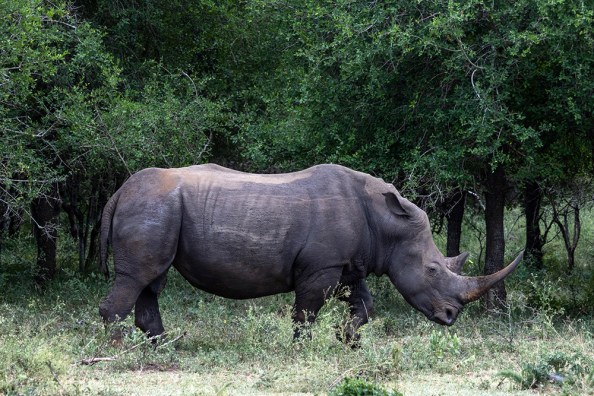
In this instance, my priority was seeing and photographing the rhinos, a task that was proving difficult. I had taken the seat in the very back corner of the van that morning, and had a very limited view outside of my small, darkly tinted window. Shooting through the glass was yielding terrible results, even in the moments when I did have sight of a rhino. Apparently I wasn’t the only one facing this frustration because someone a couple rows up finally went rogue and opened the sliding door so that we could all get a better look. At that moment, a majestic rhinoceros tromped across a grassy clearing. I crept up to the door from my claustrophobia-inducing back seat just in time to snap about three pictures before its face was obscured by tall grasses. Thankfully those three shots were enough for me to get a couple of frames that I was pleased with under the circumstances.
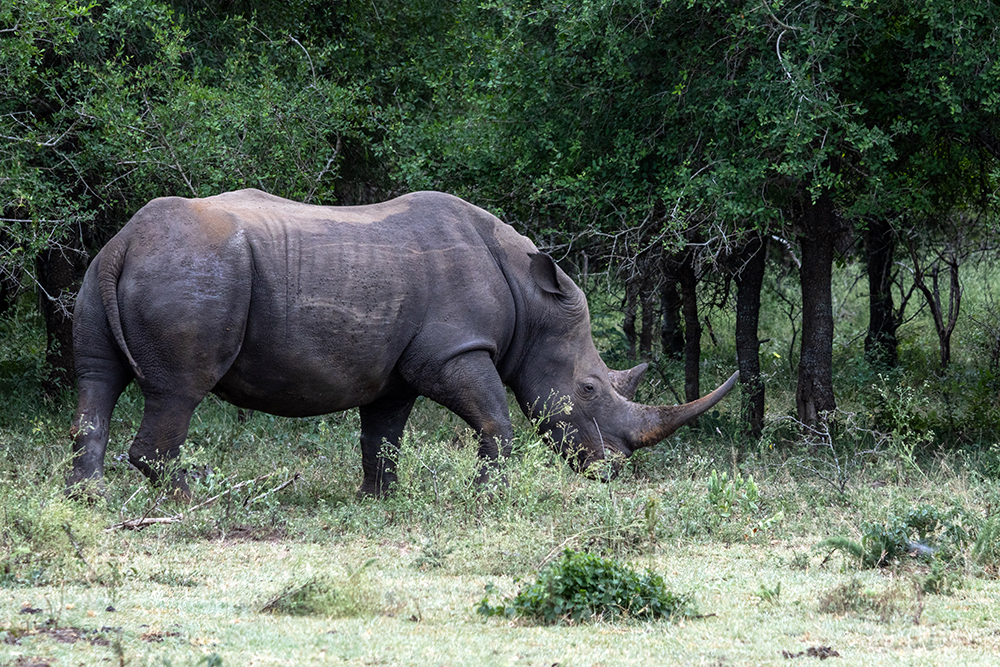
This rhinoceros was an absolute beauty, and a testament to what a good job eSwatini has done at protecting its rhino population. As we would later learn, the rangers in Kruger have de-horned all of their rhinos in an effort to discourage poachers from hunting them, but the rhinos in Hlane still have their full-length horns, an impressive sight to be sure. It was a real treat to get to experience this short moment with such a spectacular animal.
We watched as the rhino melted into the forest and disappeared from sight. Then it was time to move on to our next destination. This time we made a game of looking for more wildlife along the road as Alpha drove. We managed to see a handful of zebras and a few types of antelope, along with domestic goats and cattle. Eventually the hilly landscape gave way to craggy mountains with sheer peaks as we entered the Mantenga Nature Reserve and Cultural Village. This would be the longest stop of the day, and would include three activities, starting with a tour of the cultural village.
The village was surrounded by a boma, an enclosure made of tall sticks. As we approached, a man dressed in traditional Swati clothing met us at an opening in the boma, and taught us a traditional phrase to call out to request entry into the village. On the count of three we all shouted “eKhaya!” and then heard a call of welcome echo back at us from beyond the wall.
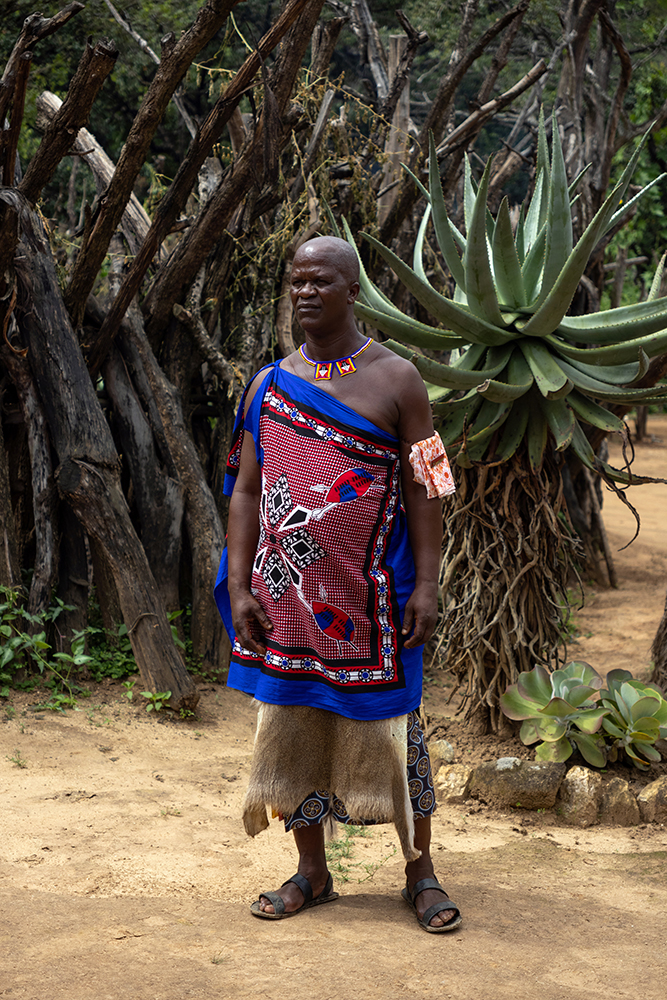

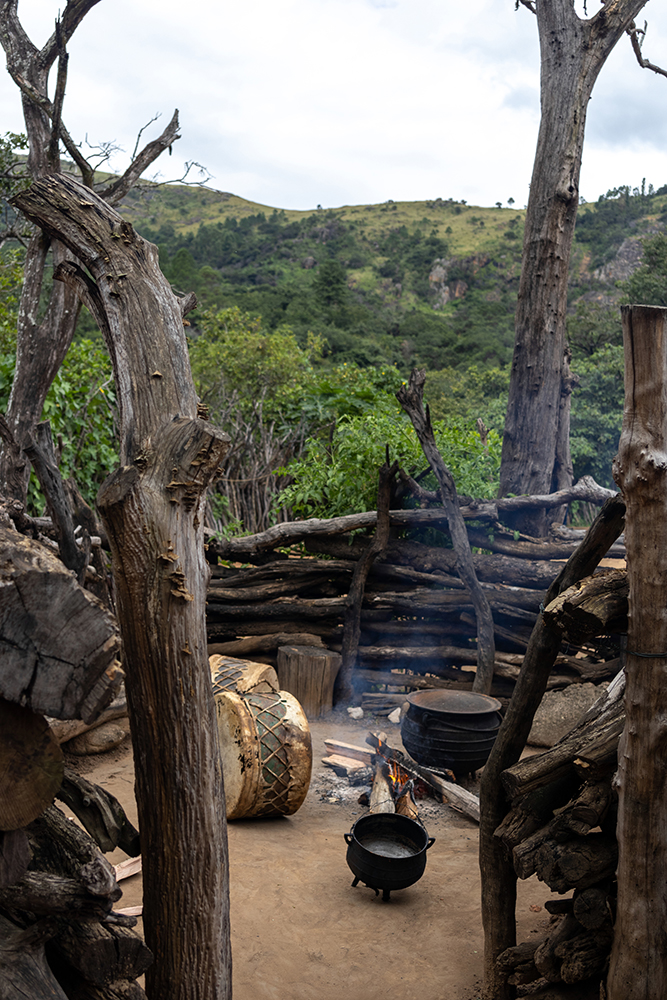
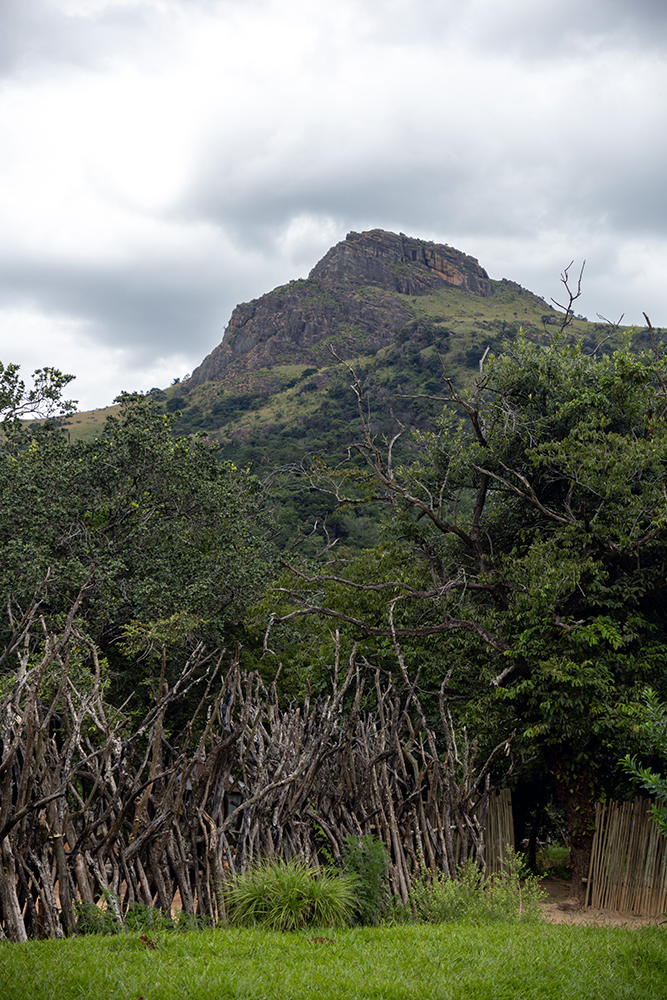
Now that we had our official invitation to enter, we followed the guide through the boma and into the model village, which was built to give visitors a glimpse at what life was like for Swati people of the mid 1800’s. The warm smell of cooking fires wafted on the breeze as we walked between domed grass huts. A striking cliff towered above the scene in the near distance. Our guide explained that the cliff was once used as an execution rock. People who committed serious crimes were forced to jump from the top.
“But now, ladies and gentlemen, we don’t do it,” he continued reassuringly, “we just put you in normal prison.”

As we continued through the village, we had to opportunity to duck into several of the grass huts to check out the inside. The guide explained what each hut would have been used for because each one had its own unique purpose. He said that one of the most important huts was the grandmother’s hut. When we were inside of it, all of the men had to stand on one side of the hut while the women stood on the opposite side. He also explained all of the traditional clothing he was wearing, and told us a lot about the social structure of the Swati culture of that time.
The village tour was very interesting and informative, and once it was over, our guide led us to a nearby pavilion for a cultural performance that would feature traditional Swati music and dancing. I allowed Vince to pick where we sat because, in his words, “This spot will be too inconvenient for them to pick me for audience participation.” For context, Vince frequently gets targeted for audience participation. His face just gives off a “I’m a good sport” vibe. And he is a good sport, so people definitely read him right.
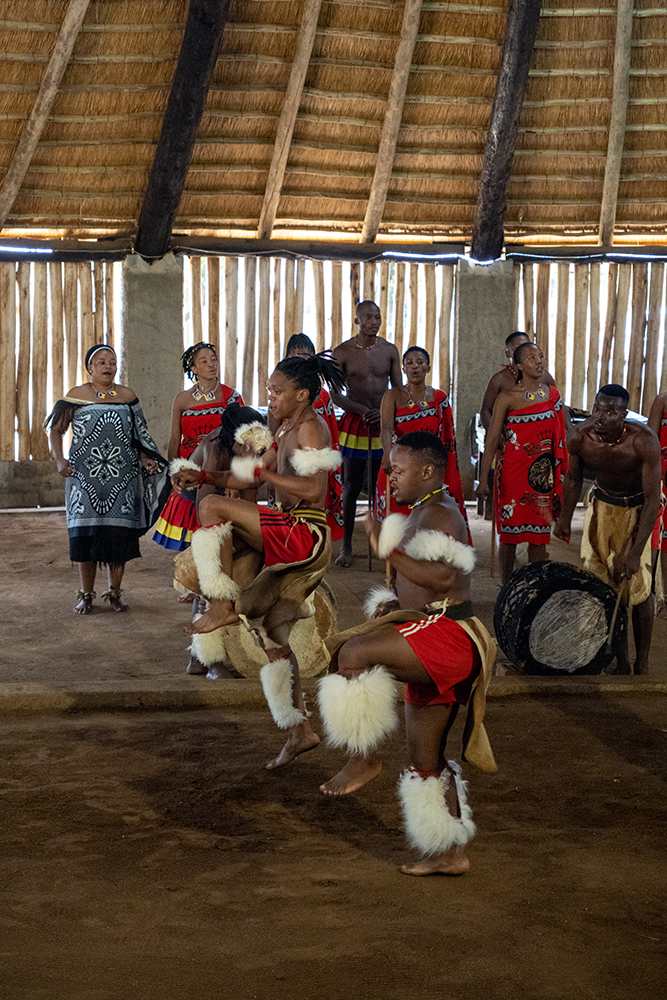
When the audience was settled in, an announcer came out to explain what songs would be performed and what each song meant, and then the soft sound of singing began to waft in from outside of the pavilion. The performers entered the building, already singing in beautiful harmony and dressed in traditional clothing. Someone among them was excellent at whistling cheerful sounding bird calls, which was a nice accent to the music. Over the next half hour we sat back and enjoyed the show, which featured dance, drumming, and some impressive physical feats by the performers.
Of course, towards the end of the show, the dancers came into the crowd to grab some audience members for a final dance. Vince was right about one thing, they zeroed on him immediately. But the seat that he so carefully selected did nothing to save him from getting dragged onto the floor. Of course, he was a good sport about it, and put his all into keeping up with the dancers until the song was over.
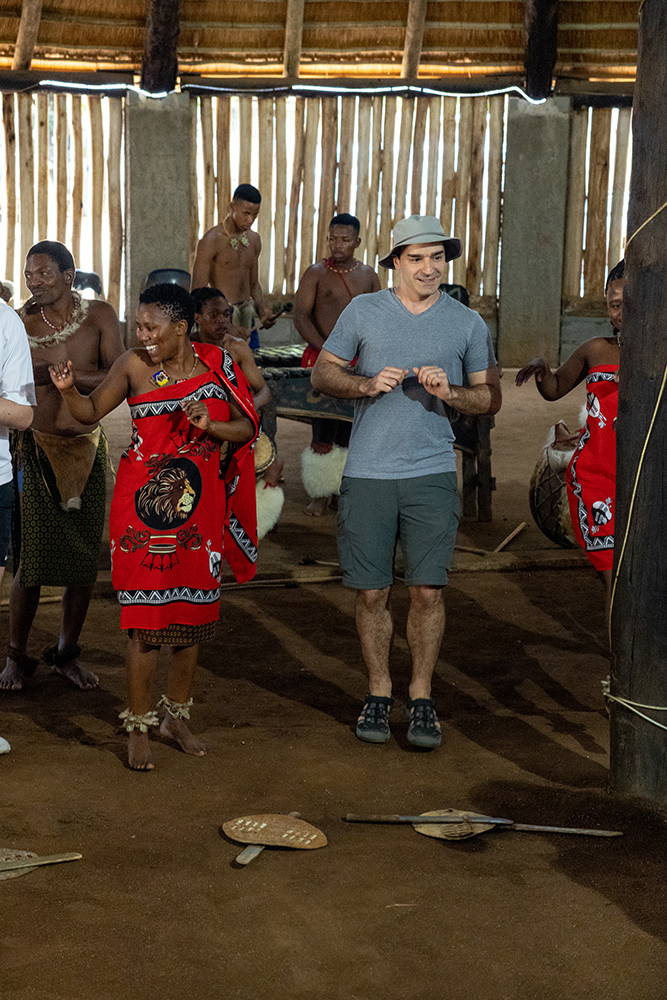
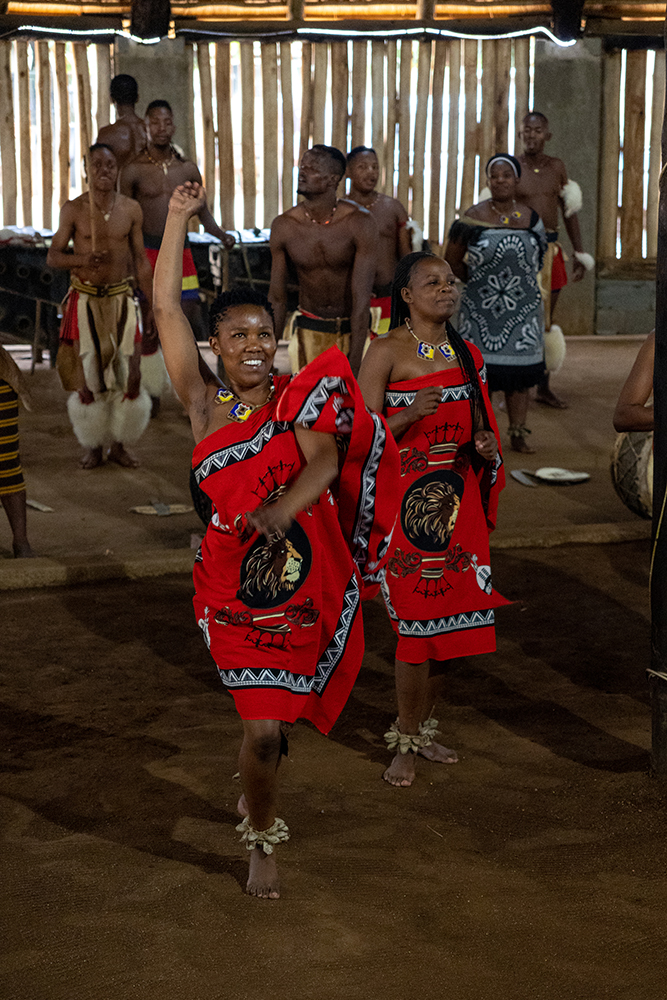
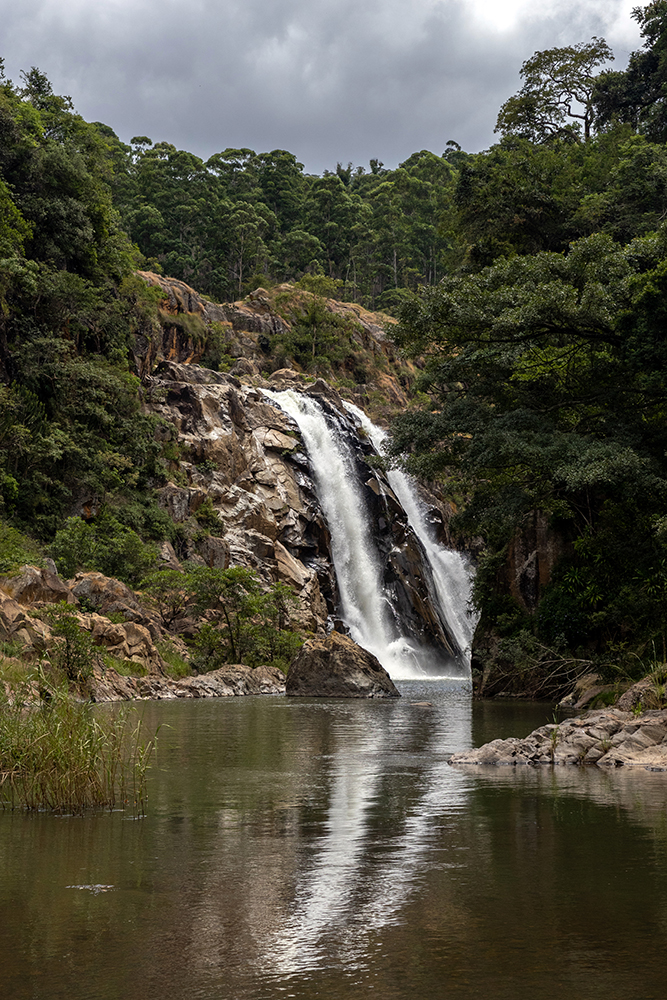
Then Vince was released back into the crowd, and the performers sang one more song as they left the pavilion. With that, it was time to head over to one more stop in Mantenga Reserve. We took a short drive to a trailhead and then hiked downhill until we reached a viewpoint of Mantenga Falls. This is the largest waterfall by volume in eSwatini, and it was flowing powerfully since our visit was during the rainy season. We couldn’t spend much time at the waterfall, but we stayed long enough to really enjoy the view before walking back uphill to the van.

At the rate we were going, we’d arrive in Kruger well after dark, but there were still a couple of things left to do before we had to leave eSwatini. Next, we drove to Swazi Candles, where colorful candles are handmade in the shapes of any safari animal you could want. Alpha led us inside the building and past tables filled with vibrantly patterned, animal shaped candles.
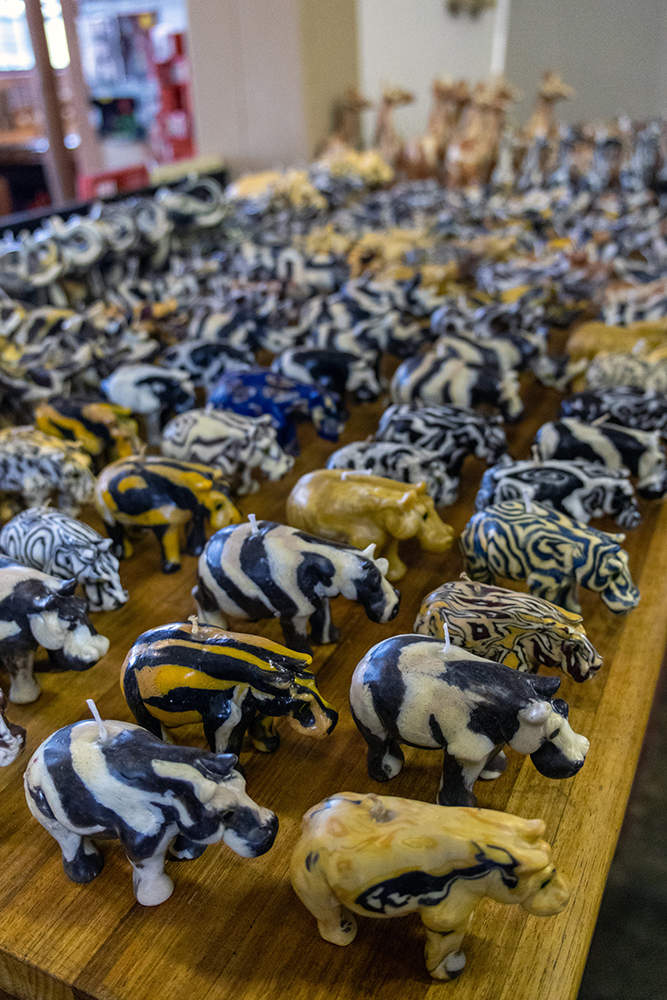
I knew I’d be buying some of these candles before we ever even left on this trip, but when I saw a price list, I knew I was going to buy more than I’d anticipated. Everything was priced very reasonably, especially for handmade items like this, and I was already mentally shopping when a craftsman from Swazi Candles introduced himself, and then gave us a demonstration of how he could make an elephant candle in less than five minutes. He explained where they source their wax, and how they warm it up to make it moldable. He also passed around a sample of warm wax for us to hold as he began to knead and slice a larger piece that he was working with. As he worked, the blob of wax transformed into an adorable elephant in no time at all.
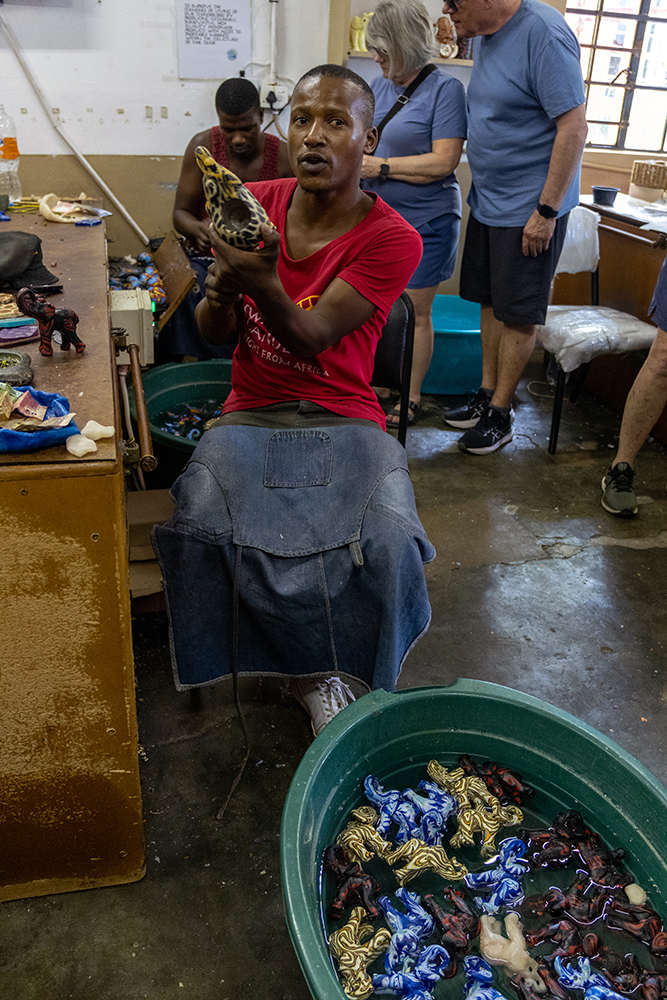
After the demonstration, we had some time to shop, and everyone in our group left with a bag or two of candles to bring home. I bought a giraffe and an elephant to keep, and a couple of votive style candles and a bar of handmade soap to gift to some family members back home.
Once everyone was checked out, we drove to a nearby restaurant where we enjoyed a peaceful, late lunch (linner?) followed by fantastic ice cream sundaes for dessert. Then it was time to hit the road for the long drive to Kruger National Park. Along the way, I admired the landscape of eSwatini, and thought about how I would love to come back someday and spend some more time here. We crossed the border into South Africa just as the sun was setting behind the mountains, and eventually arrived at the Crocodile Kruger Safari Lodge well after dark. This would be our home-base for the next couple of days, which we would spend on full day safari drives in hopes of finding all of the big five. It would be another early morning the next day, but I was beyond excited for it!
You can see more details of this amazing destination on my YouTube channel!




 birdsoftheairtravel.com
1 comment