
Cross the river in a crowd and the crocodile won’t eat you
~West African Proverb
When I awoke on the day after Caleb’s dramatic accident in the Kirindy Forest, all I wanted was to go back to sleep. It would be hours and hours before we’d actually get to do anything today, and after all of the excitement yesterday, I could have used a few more hours of shut eye.
But I wouldn’t get my wish because we had to get to the airport for a morning flight back to Antananarivo. So after a rooftop breakfast overlooking the Mozambique Channel, our group of thirteen said goodbye to Morondava and took off for Madagascar’s capital. When we landed, Ghislain from Tsiky Tour was waiting for us, and we all filed back onto our big tour bus for a long drive to our next destination.
The four hour journey took us through winding roads up into some highlands, where the landscape was mountainous and unbelievably green. We passed through the mountains and continued on until we finally arrived at the Relais de Mantadia, a beautiful mountainside resort where we would be staying in chalets that were scattered on a tall hill.
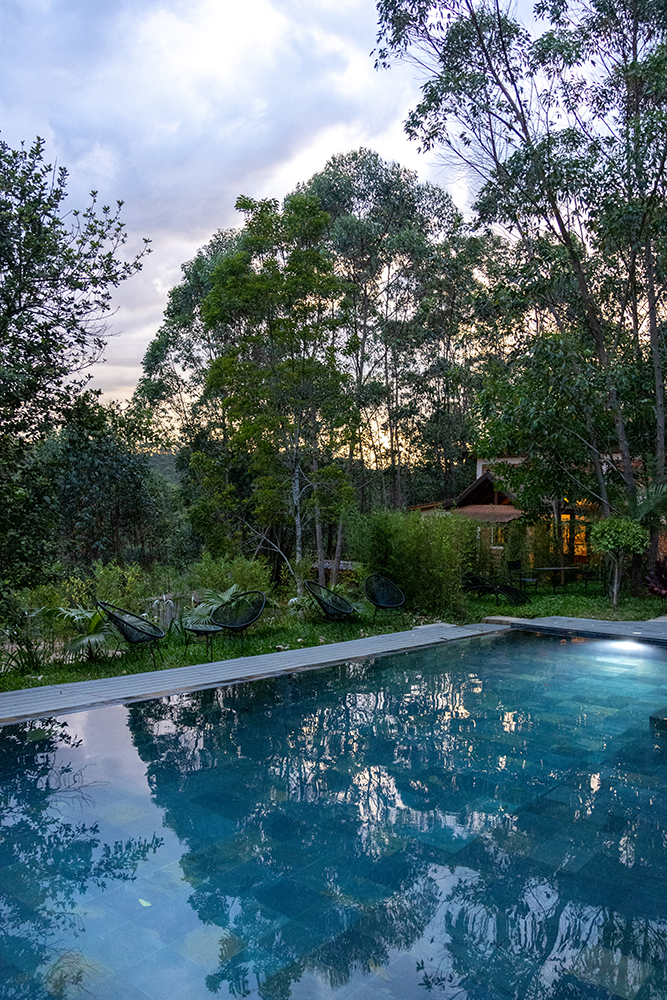
Vince and I had to walk through the forest and up a tall set of steps to get to our chalet, where we unpacked our bags and got ready for our scheduled night hike that was coming up. Then we met the rest of the group downhill at the hotel’s gorgeous infinity pool. Lighting flashed behind some distant hills as the sun went down, its golden light reflecting on the surface of the pool.
At dusk, we made our way down to the bus, and took a short ride into the boundaries of Andasibe Mantadia National Park. There were two local guides waiting for us as we stepped off the bus. They introduced themselves as Bernadette and Pascal, and explained that they’d be guiding us on both this walk and our hike the next morning.
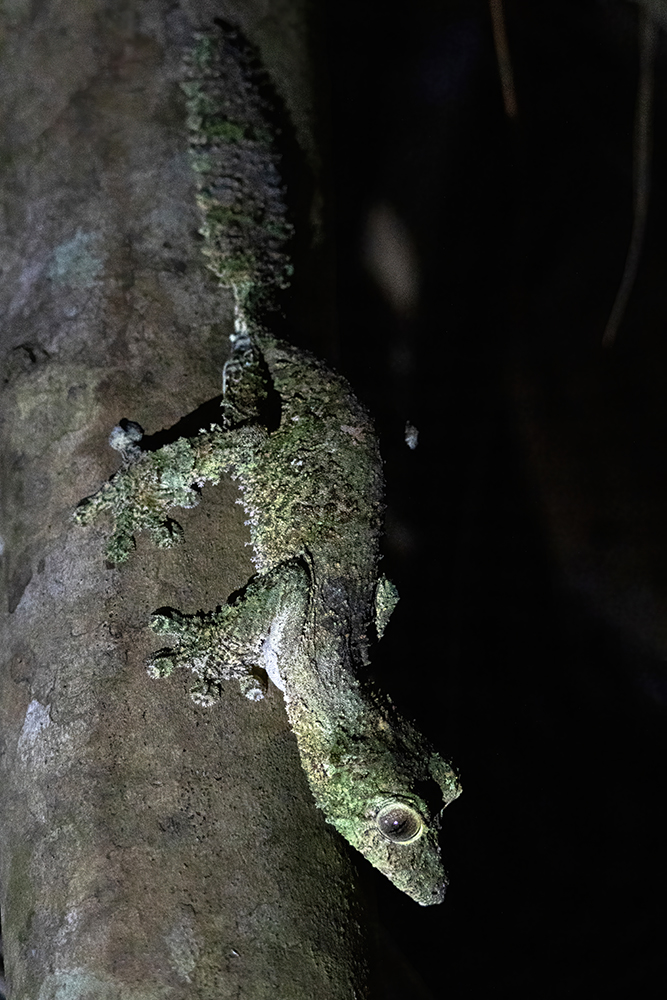
Tonight, we’d be looking for nocturnal animals, and the guides found a super amazing creature almost immediately. They pointed out a mossy leaf tailed gecko. This camouflage expert is endemic only to Madagascar, and is active during the night time. Since we’d found it after dark, this gecko was awake and alert, but it was easy to see how this fascinating creature would be able to blend in seamlessly with its surroundings if it flattened itself out on a tree trunk.
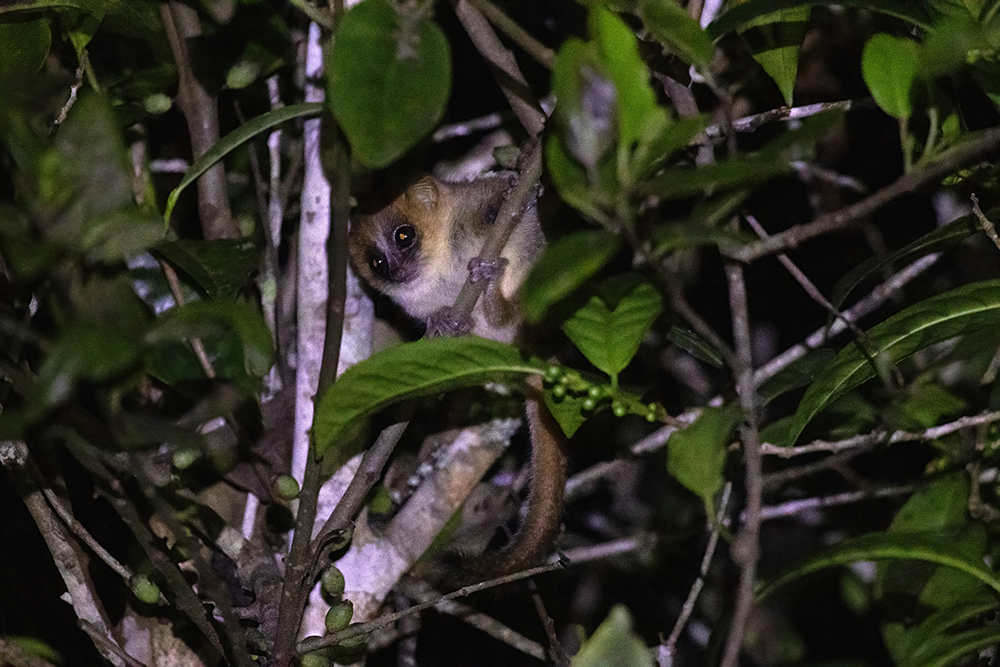
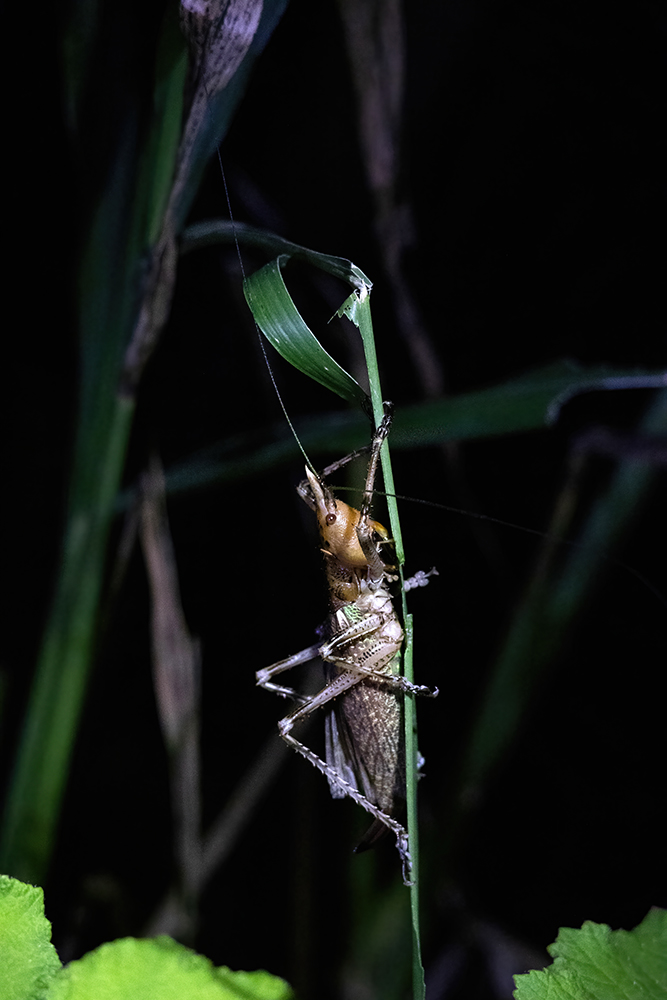
The night was alive with the roaring sound of thousands of chirping night bugs, and as we walked further, the two guides pointed out frogs, lots of interesting insects, and countless goodman’s mouse lemurs. These were even smaller than the gray mouse lemurs we’d seen in the Kirindy Forest. Their mature weight is only about 45-48 grams!

But the highlight of the night was seeing a dwarf lemur, another species of nocturnal lemur that’s a lot bigger than the mouse lemurs.
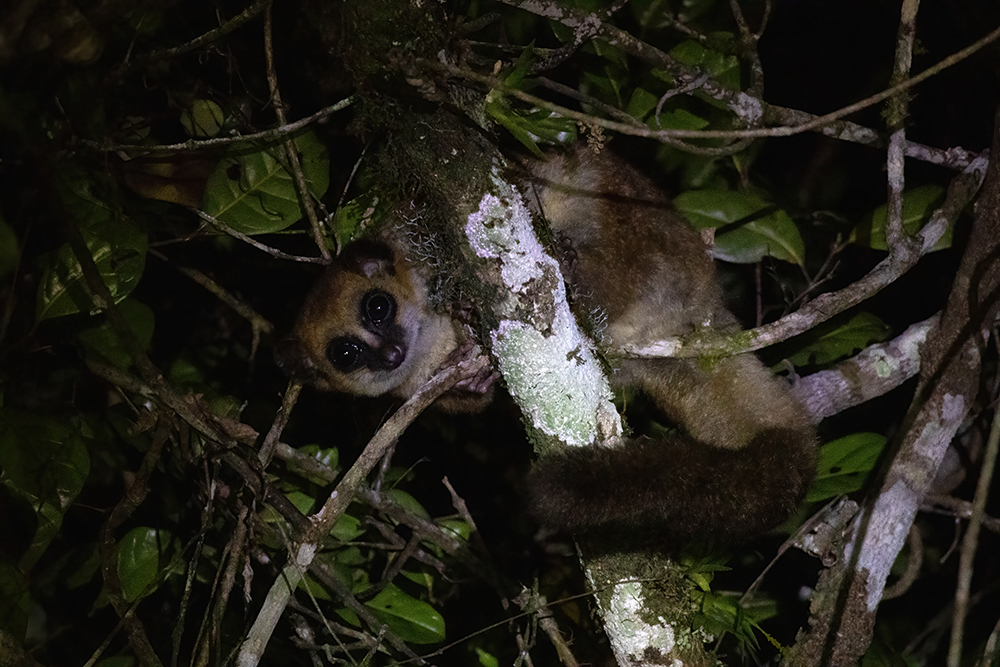
By the time our walk ended, I was more than ready for dinner and sleep back at the resort. It had been a long day of travel, and we had another day jam-packed with activities ahead of us, so I had no problem falling asleep almost as soon as my head hit my pillow.
The next morning I woke up to the soft glow of sunlight streaming into me and Vince’s chalet. I popped out of bed, eager to get started on what was sure to be one of our most exciting days in Madagascar. After breakfast, our group met down at the bus, and drove a short distance to the Andasibe Mantadia National Park entrance station where Pascal and Bernadette were already waiting for us.
They showed us a map of the trails that we could choose to walk and explained that we’d be searching for two lemur species on our hike, and would maybe find a third species if we were lucky. The two main lemurs that we were looking for were the diademed sifaka and the indri indri, the latter of which is the largest extant lemur left on earth.
We chose a trail, and then Pascal led us on our hike, while Bernadette disappeared into the rainforest to act as our spotter. Rainforests always have a wealth of interesting plants and insects to see and this was no exception. We passed through a patch of forest that was dominated with a species of bamboo endemic to Madagascar. Here, Pascal stopped to look for bamboo lemurs with no luck. But we did find a bridal veil mushroom, and inhaled the sweet aroma of yellow ginger flowers along the side of the path.

Soon we came to a steep hill, which we trudged up, passing by several large vakona plants along the way. Pascal also showed us some plants to avoid because of their deadly poison. Just like it had been the night before, the forest was alive with the sound of insects. The din was loud enough to be deafening, but somehow it faded into the background of mind as I got used to it. There was one sound in particular that we wanted to hear, and that was the haunting call of the indri indri.
Pascal scurried up a nearby tree and swung down on to a vine, demonstrating the indri’s call as he swung from it. And just as he was doing his best impression, a similar sound began to echo down from the trees. His silliness immediately stopped and he dropped from the vine with a serious look on his face. He motioned for everyone to be quiet and then said he would find the indris and then come back and get us. And just like that, he walked away from the group, melting into the trees.
Everyone stood there in silence, listening to the eerie sounds, and a few minutes later, Pascal had returned. He excitedly motioned for us to follow him, and we all started power walking off trail and into the forest. I tried my best to avoid those poisonous plants from earlier as I rushed to keep up with Pascal, and within a few minutes, he pulled up under a tree and pointed upwards. My gaze followed the tree trunk up to where the strangest looking lemur we’d yet seen stared back at me.
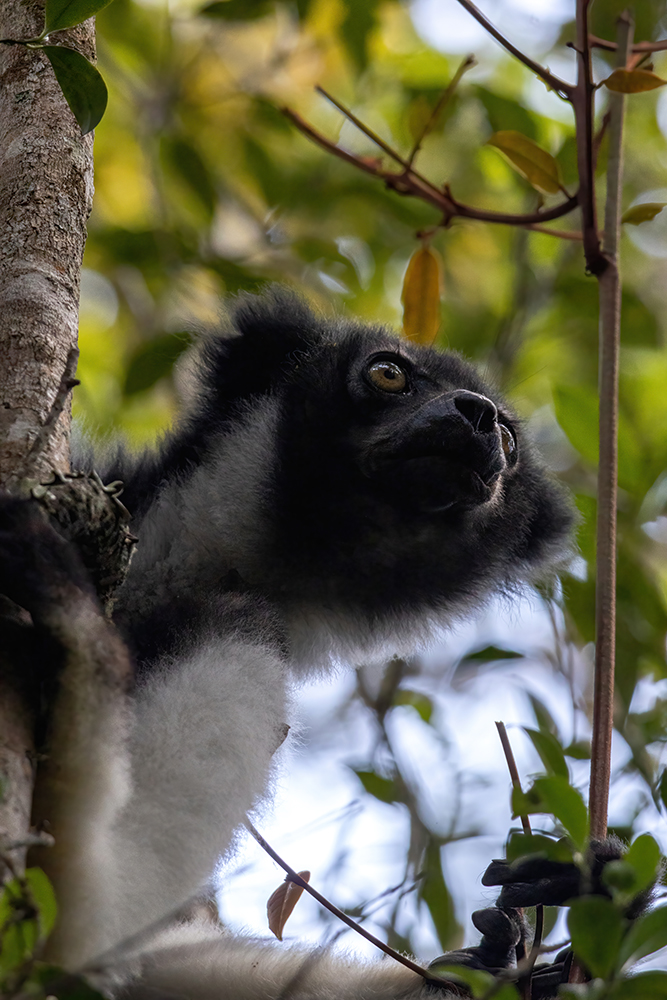
The indri indri had fluffy ears that made it resemble a teddy bear, except that it had hands and feet instead of paws, and had a lanky, somewhat awkward stature. It was also tailless, which only made it look even more bizarre to me. While the indri indri is the largest surviving lemur species, there actually used to be lemur that were much larger, similar in size to male gorillas. Indris are a relative of these extinct giants, and as I watched the family we’d encountered flinging themselves from tree to tree, I tried to picture a Harambe sized indri indri.
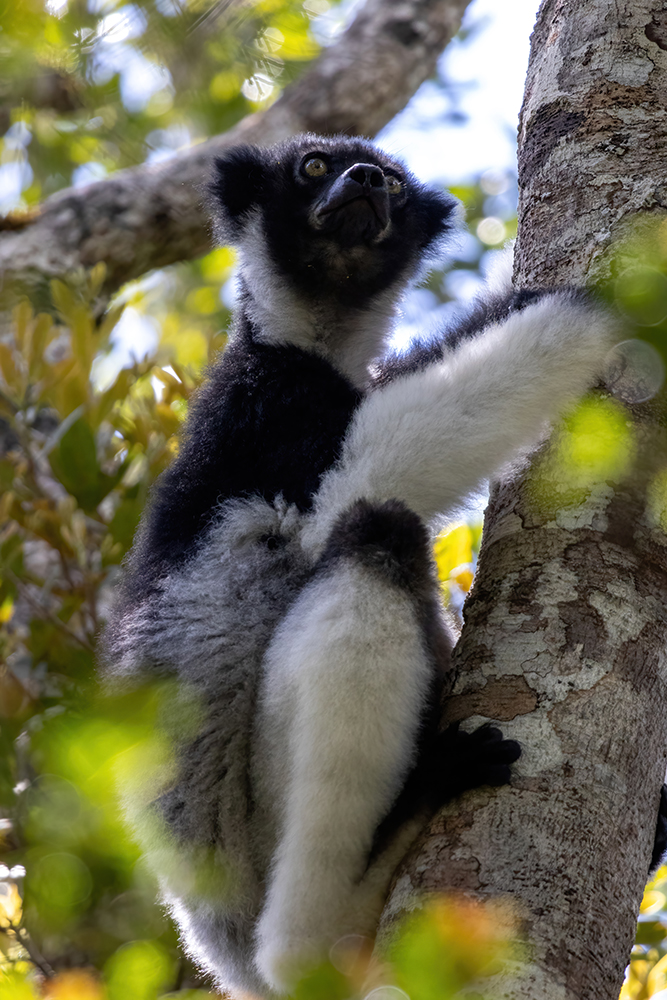
There were a handful of members of this troops of indris, but even though we could easily find them in the canopy above us, they were exceedingly difficult to photograph. I spent most of our time with them trying my hardest to get a sharp shot that showed any of their faces. Every time I thought I had a shot framed, the lemur would move, or a branch would get in the way. Before I knew it, it was time for us to move on and I had exactly two usable photos. But two is better than none. I was happy to have seen the indris, and excited about our upcoming search for diademed sifakas.
We returned to the trail and resumed our search, hiking deeper into the rainforest. Every so often, we would stop to listen and look up at the tree tops, but it was Bernadette who ultimately found the sifakas. We hadn’t seen her since the trailhead, but eventually, Pascal received a call and told us Bernadette had found the lemurs and was waiting for us at their location.
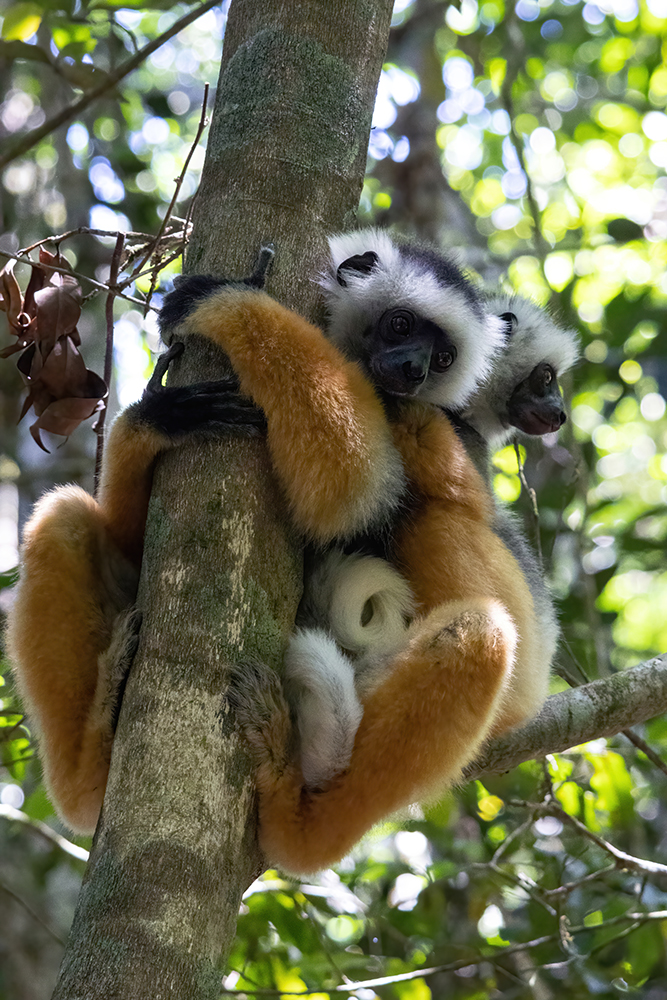
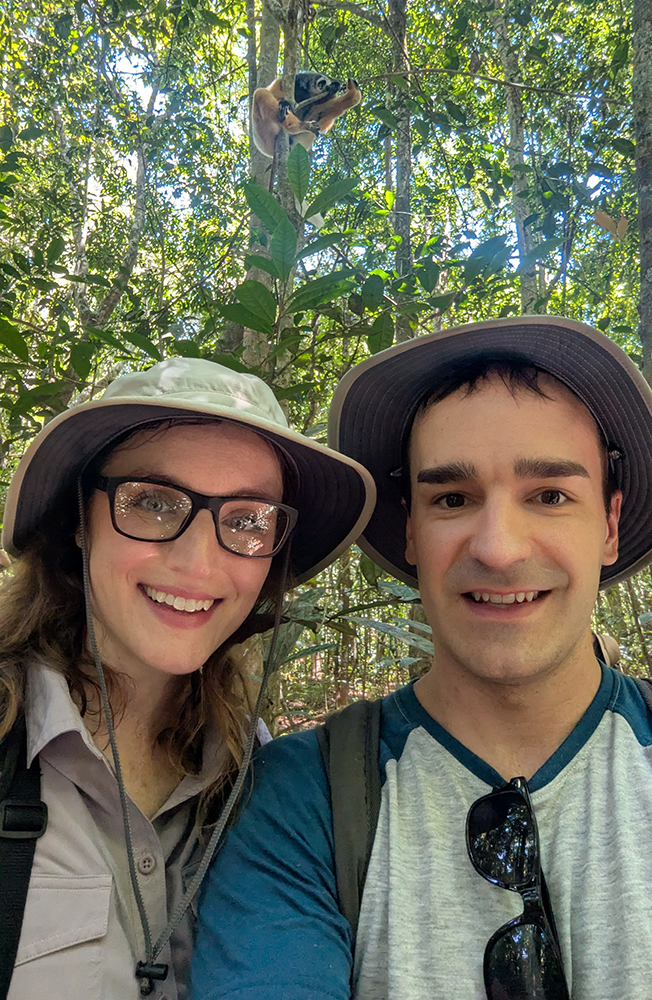
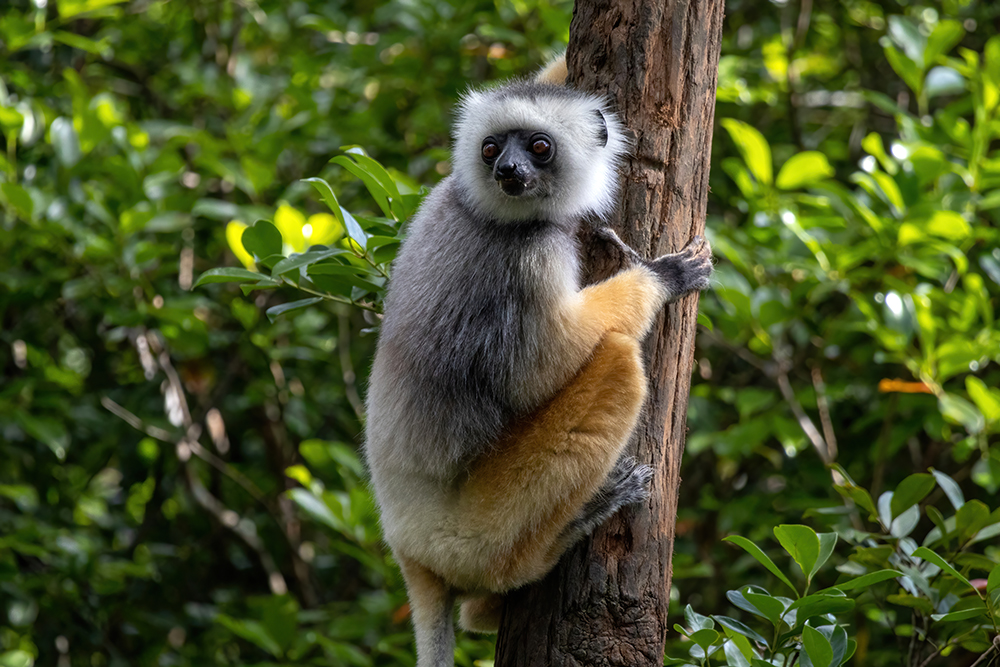
Our slow and careful walk turned into another sprint through the jungle until we met Bernadette in the forest and she pointed out the lemurs. This troop was much closer to the ground than the indris had been, and therfore much more visible. They were also enjoying a midday nap, so they were mostly staying quite still. We crept up closer to the trees that they were lounging in and marveled at their beautiful silky coats of fur. Their arms and legs were a lovely golden color, and the white ring that gives them their name crowned their heads.
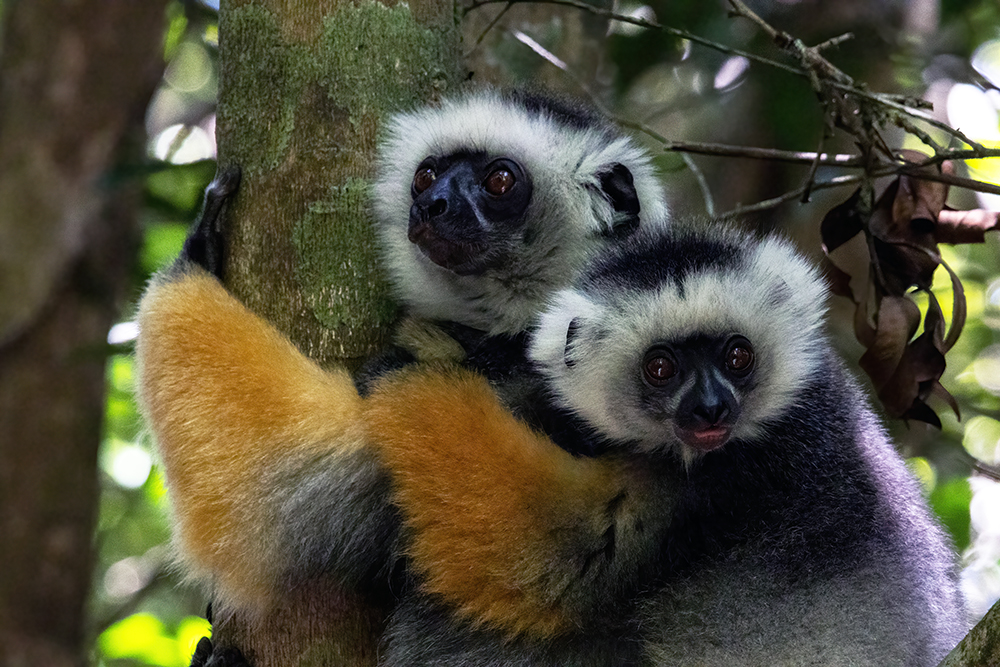
Like the Verreaux’s sifakas we’d seen two days ago, the diademed sifakas only means of travel on the ground is by jumping. They are much more comfortable in trees because of this. They live in female-dominated groups of up to ten individuals and will fight to defend their territory from rival troops of sifakas.
While there were several members of this troop, I kept gravitating back to this mother with her baby clinging to her back. Young diademed sifakas stay with their mothers for about two years, and this one was probably about a year old because the babies will cling the their mother’s bellies for about a year before switching to her back.
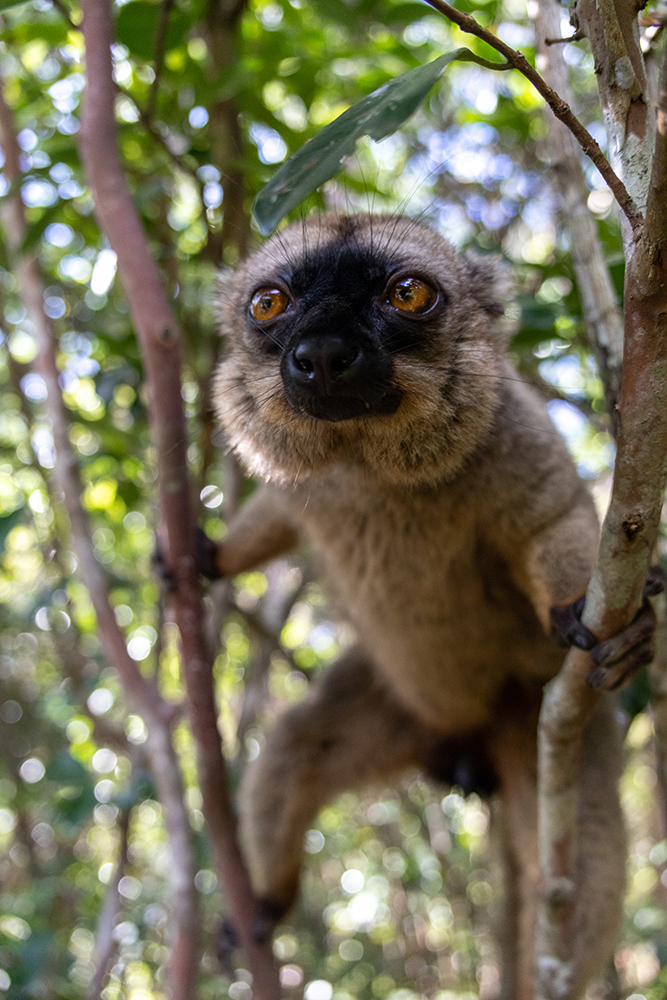
After a good, long time with the sifakas, we had to hike back down to the park entrance. Of course, we still kept our eyes out looking for more wildlife along the way, and as we passed back through the stand of bamboo, we got a surprise sighting of a gray bamboo lemur.
These small lemurs love to eat bamboo, which made this one even more difficult to photograph than the indris had been. It was nearly impossible to focus between stalks of bamboo, and the lighting was horrible even if I had managed to lock onto the lemur. But as the rest of the group hiked on, bored with the bad view, I hung back for a few minutes. Eventually the lemur leaped out onto an exposed branch for a split second and I managed to get a shot.

Once we left the bamboo lemur, our hike was basically over. We said goodbye to Bernadette and Pascal, and then stopped for lunch at a restaurant overlooking a tranquil river that was full of fish. After lunch we set off for our afternoon tour of the Vakona Reserve. This private reserve is a refuge for lemurs that have been rescued from the illegal pet trade, and to nile crocodiles, which are kept in a separate section of the property.
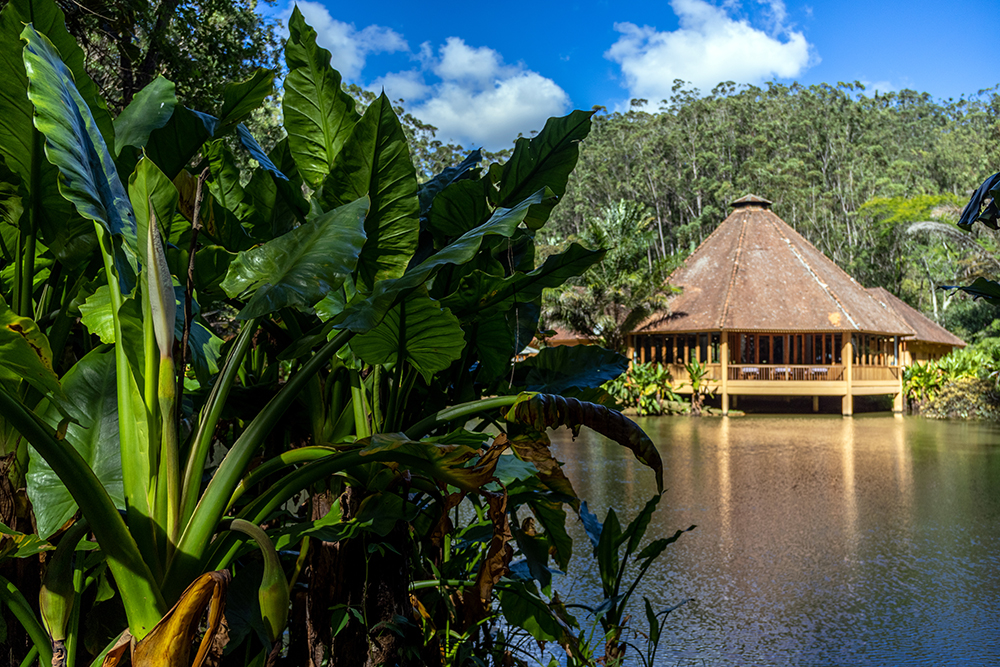
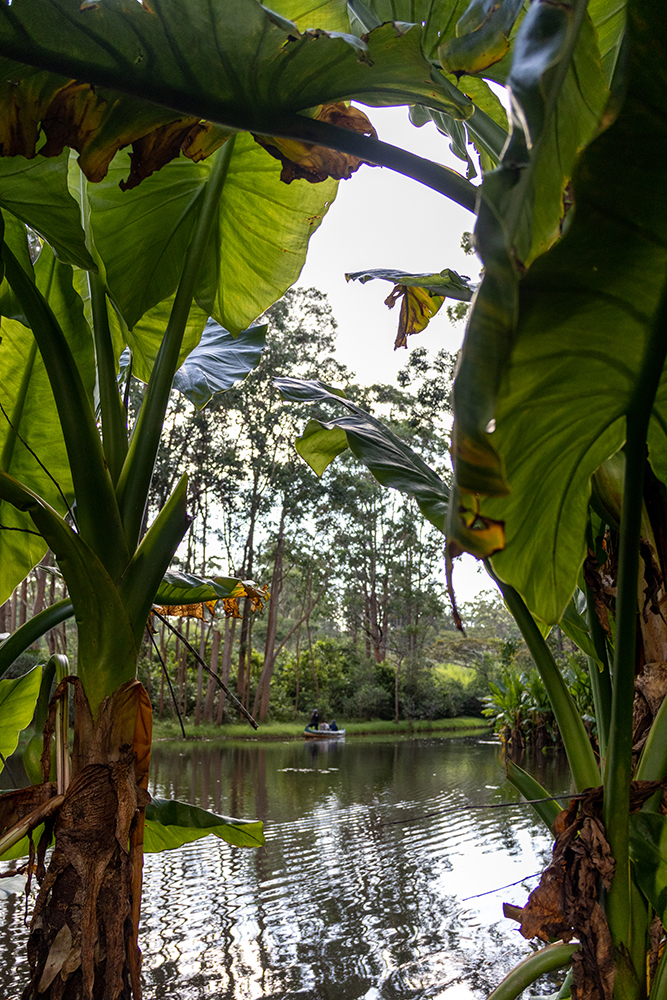
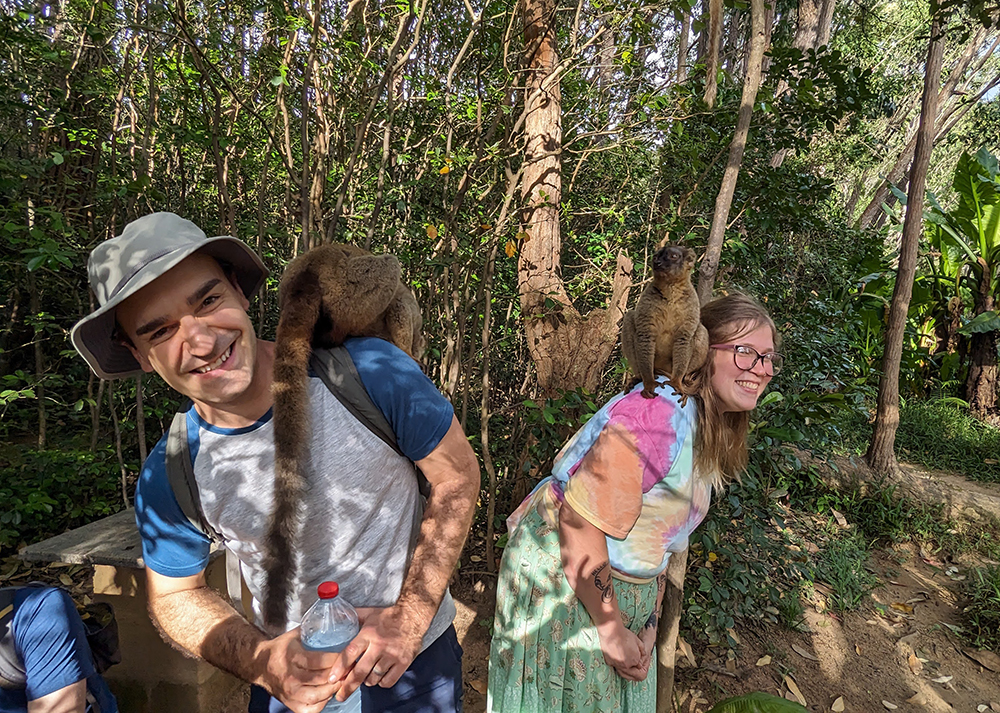
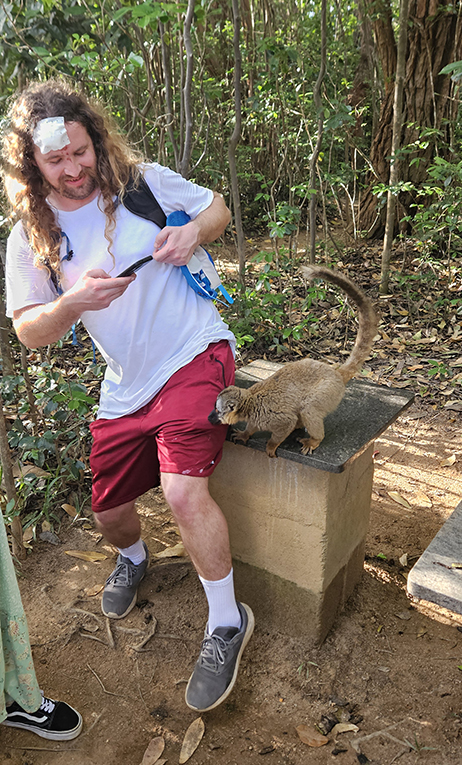
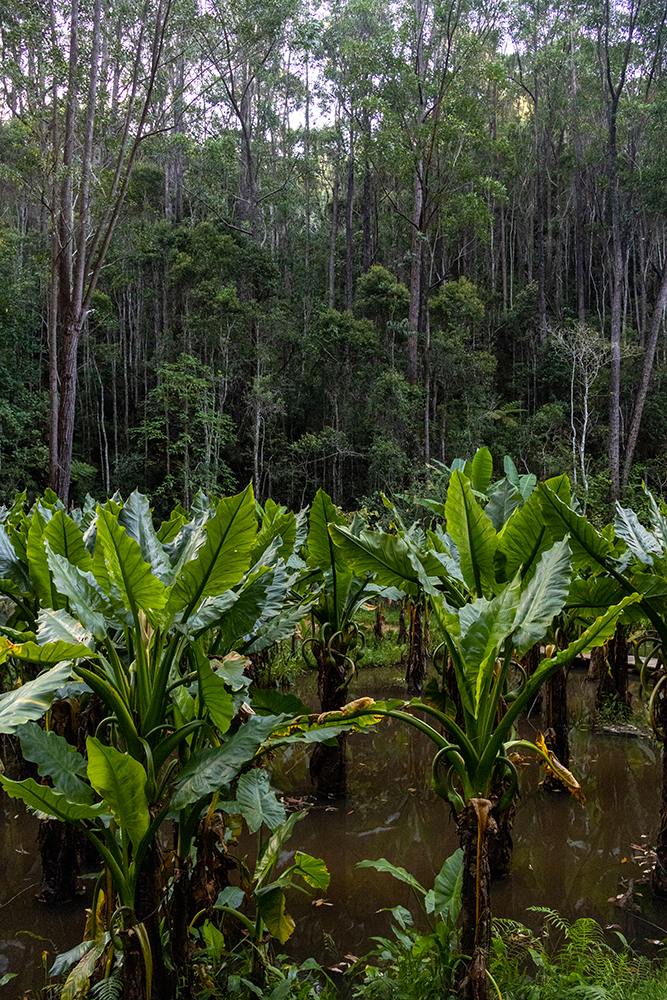
There is a river that runs through the Vakona Reserve with several small islands in the middle of it. Lemurs won’t cross water, so they can be kept on these islands and live in relative safety while still getting a close approximation to living in the wild (except with all of their needs met by caretakers). Lemur island was the first stop on our tour of the reserve, and we had to take canoes across the shallow river to reach it. Once we were onshore, we found a troop of brown lemurs waiting for us. Clearly they knew where their food was coming from and they were eager to see if we had anything to offer them. They made cute little grunting sounds as they traipsed after us along a well-worn trail.
They followed us around wherever we went and weren’t shy about trying to investigate our pockets, and backpacks when we weren’t paying attention just in case we had some food on us. Our guides would smear some banana onto a tree trunk, and then the lemurs would leap across the trail to get to it. One flew right in front of my face at one point. They were also bold enough to jump right up onto to our shoulders to travel over to the banana trees like this one did with me (We weren’t allowed to touch the lemurs, but they were allowed to touch us).
There were even a couple of adorably playful babies, and it became difficult to tear ourselves away from the brown lemurs so that we could search for more species. But eventually we walked far enough down the trail to arrive at a viewing station that looked across the river.

There was a stand of trees with bare trunks, and as we waited and watched, we began to see shapes catapulting through the trees. It was more diademed sifakas, and these ones were nimbly jumping from tree to tree as though it were as easy as walking across a room. As they grew closer, the guides began tossing pieces of banana onto the ground across the river, and the sifakas hopped down from their perches to eat the fruit. Once on the ground, they had to jump, giving us an incredible display of their dancing behavior!
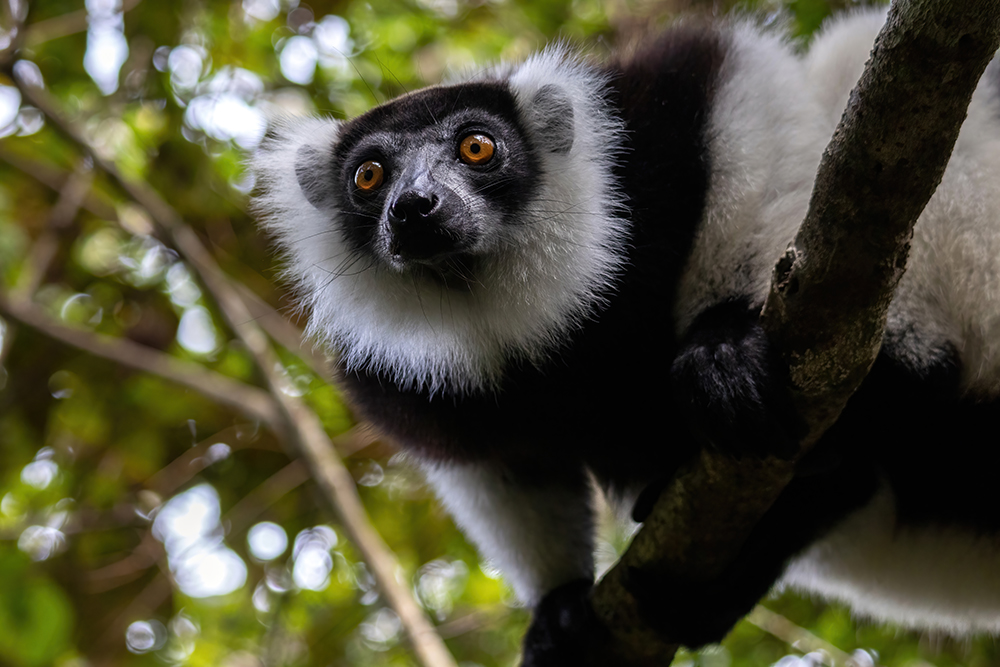
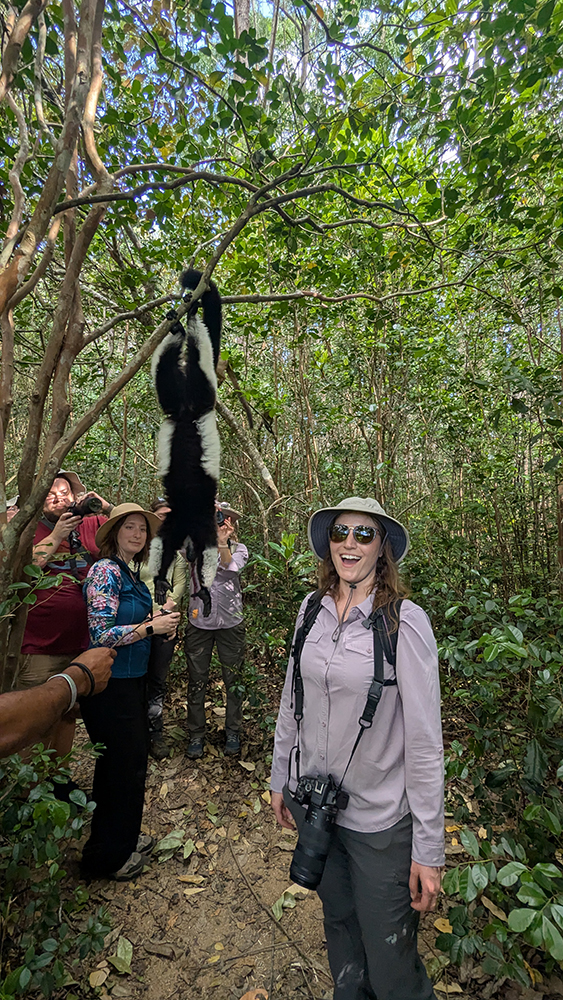
The brown lemurs were still underfoot as we watched the sifakas, but they didn’t follow us when we went into the forest a little ways to look for more species. Within a few minutes, we were able to attract a couple of black-and-white ruffed lemurs who were also eager to accept pieces of banana, which the guides held out for them on sticks. This method coaxed them down from the trees so that we could get a really good look at them as they hung from branches by their hind legs.

Black-and-white ruffed lemurs are really beautiful, with striking, long coats. They can be found in the wild in Andasibe Mantadia National Park, but they are more difficult to find than the other species we’d encountered that morning.
In addition to the black-and-white ruffed lemurs, Vakona also houses red-ruffed lemurs, and when we returned to the viewing station by the river, we could hear one of them calling. It was much more shy than the other species we’d seen so far, and it wouldn’t come any closer to us. We got some decent views of it jumping through some far away trees. We could just make out its striking, bright red fur as it retreated into the forest.
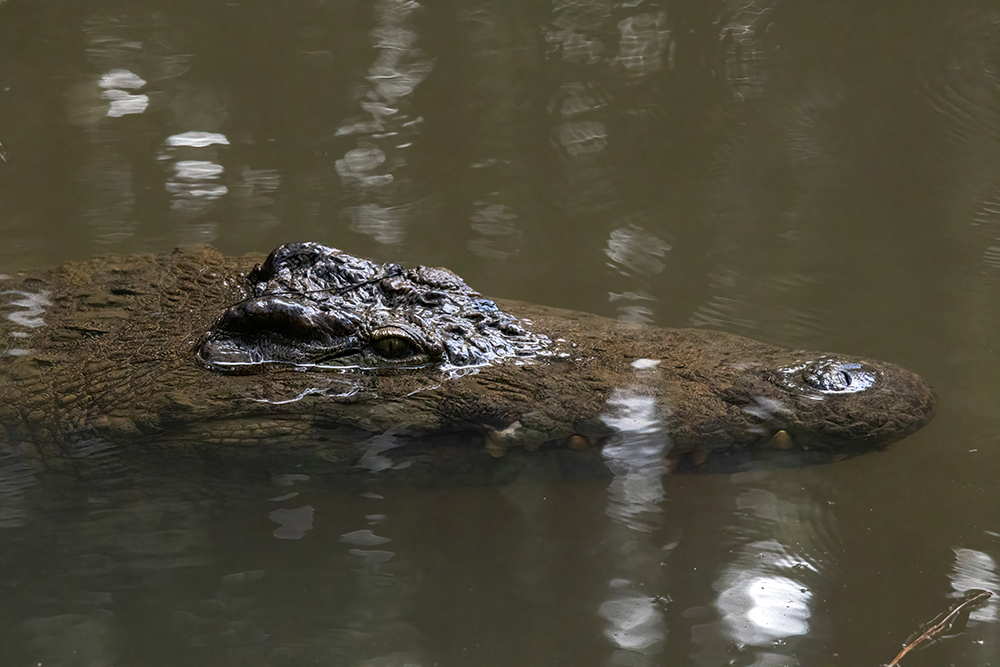
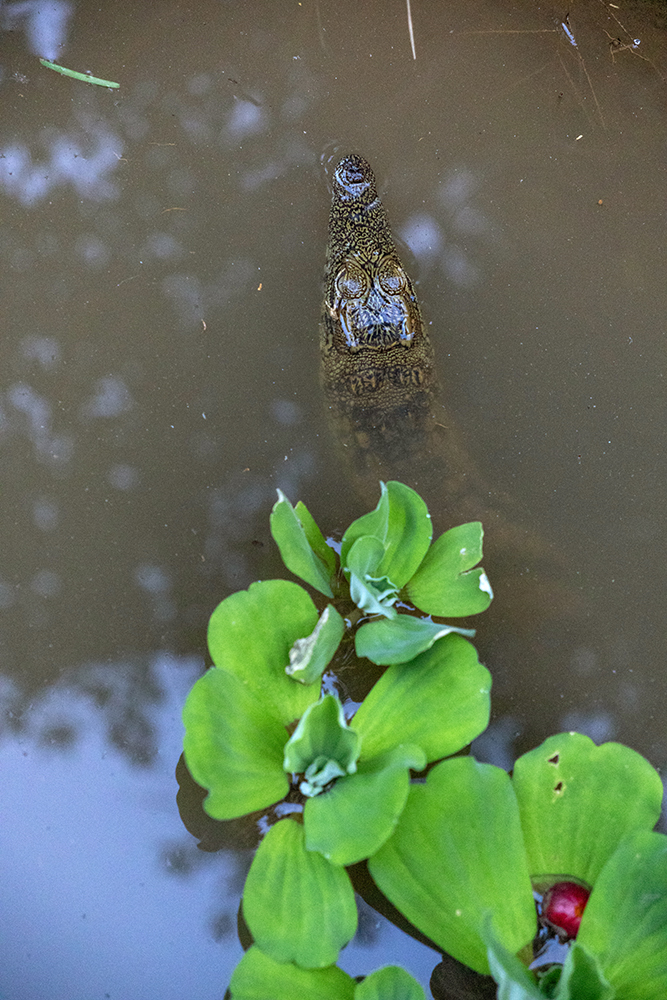
We waited around for a bit, hoping the red-ruffed lemur would return, but it never did. In the meantime, the brown lemurs, and black-and-white ruffed lemurs kept us company until it was time to return to the canoes and cross back over the river and visit the crocodile reserve. This section of the reserve was bigger and we started by walking along the side of a steep hill that led down to the river. Crocodile lounged on the banks of the river below us, and I was happy that they were further away than the lemurs had been.

The crocodiles in the reserve are Nile crocodiles, the same kind found on the African continent, and I heard a couple of competing stories of how Nile crocodiles came to be endemic to Madagascar. I was told that they were on the land that is now Madagascar whenever it split off from Africa. But I also heard that they swam over to Madagascar across the Mozambique Channel. Whichever story is true, Madagascar did once have its own species of crocodilian called the voay, which is now extinct.
We passed croc after croc as we walked along the river, and eventually we came to a long swing bridge that led to the other side. Only two people could cross at a time, and Vince and I went together. Of course, he made sure to jump and rattle the bridge just as a massive crocodile swam underneath us.

On the other side of the river, there were a couple of reptile houses where we searched for more mossy leaf tailed geckos, and an aviary with various species of ducks and guinea fowl. To my amusement, there were a handful of mallards among the collection. I couldn’t believe I’d come all the way to Madagascar, and now I was looking at a species of duck that I see every single day in the park near my house. Then again, someone from Madagascar would probably think the same thing if they visited the US and saw a chameleon in a zoo.
After the aviary, the last stop of our tour was to see the area where baby crocodiles are kept. This was a series of pens that housed young crocodiles in various stages of growth. They lay in piles, lounging with each other, and swam in shallow pools that were provided for them.

By the time we hiked back to the bus, it was nearly nightfall. We’d managed to fill the entire day with so much excitement that I hadn’t even noticed how hungry I was getting. We rode back to the resort, and everyone took a swim in the pool before dinner, even though it was already dark outside. Then we dried off, ate, and retired to our chalets for the night. I went to bed thoroughly happy with our amazing day, but in the back of my mind, I knew that our time in Madagascar was nearing an end. We only had one day left of our tour, and I wasn’t ready to leave yet. I drifted off to sleep, equal parts excited for our last day, and sad that we couldn’t stay longer.
You can see more details of this amazing destination on my YouTube channel!









 birdsoftheairtravel.com
1 comment