
It was the best of times, it was the worst of times…
~Charles Dickens, A Tale of Two Cities
It was a brilliantly sunny morning in the Kirindy Forest of Madagascar when I awoke to the first trickling rays of light filtering into me and Vince’s cabin. I peeled away our bed’s bug net, and quickly prepared myself for a long day outside. I was ready for breakfast before Vince, so I stepped outside to enjoy a few moments of quiet solitude, inhaling the earthy scent of the forest, and listening to the sounds of insects chirping, unseen, all around me. Deep in my gut, I felt that this was going to be the best day of the trip so far. Little did I know that this prediction would somehow simultaneously be right and also dead wrong.
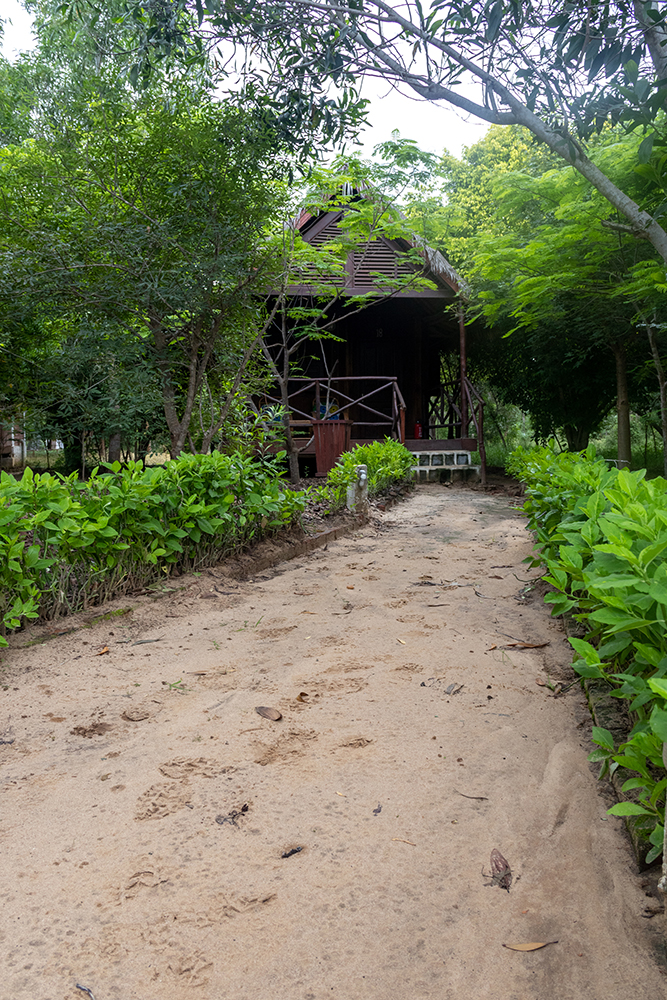
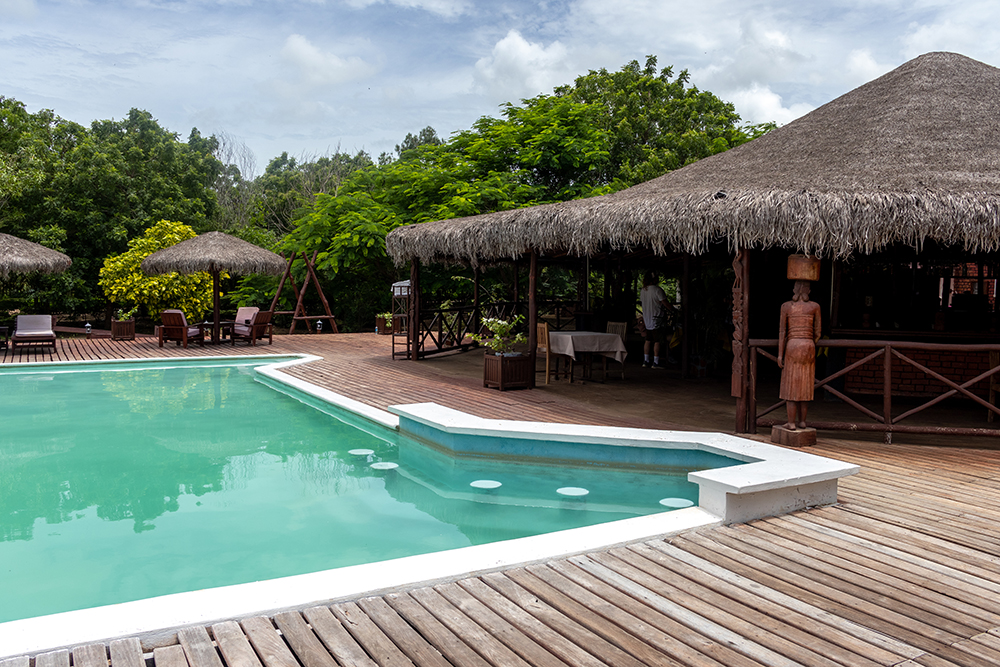
My brother, Caleb, and his girlfriend, Anna, had the cabin right next to hours and they emerged for breakfast around the same time that Vince joined me on our porch. The four of us walked over to our lodge’s open-air dining room together, and placed our orders. Then we all sat down at the long dining table that overlooked an inviting pool and comfy looking lounge chairs.
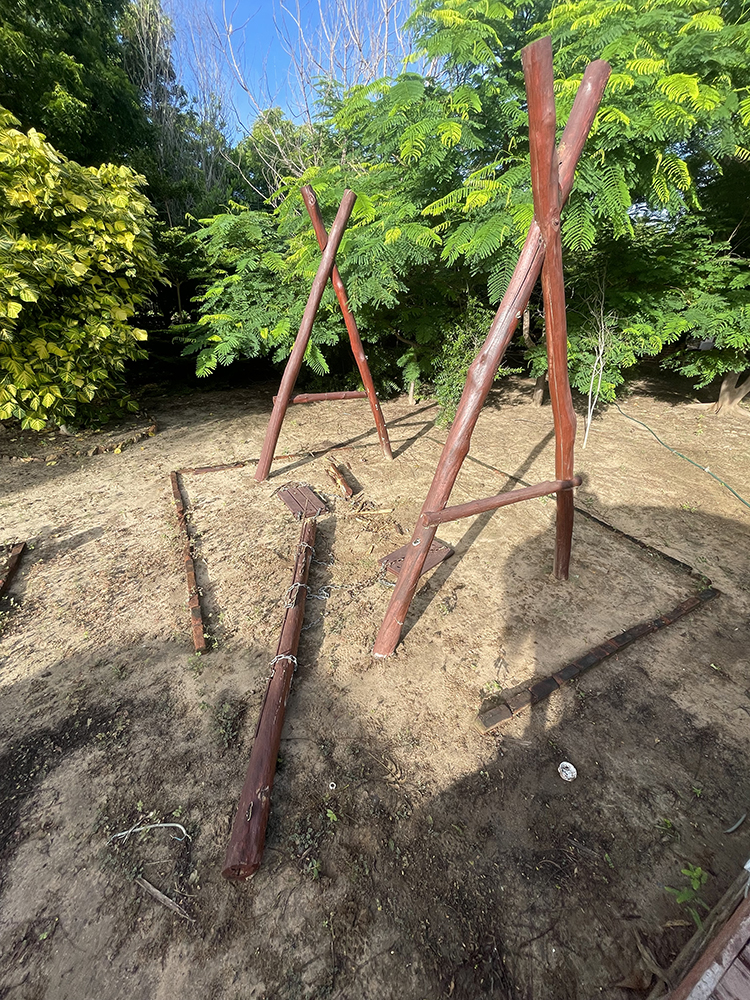
“Woah, this place has a swing set?” Caleb’s enthusiastic observation hardly registered with me; I felt too relaxed to care about the small, wooden playground that sat next to the pool deck. But Caleb has always loved swings.
He and Anna rushed off to get some time in on the pair of wooden swings before our food arrived, and Vince and I chatted animatedly about what we were looking forward to that day until a waitress arrived carrying plates full of fresh fruit and delicious looking pastries. We thanked her as she set the meal in front of us, and then I reached for a honey-drizzled croissant, blissfully unaware that I would never get to taste it.
As I was lifting the croissant to my mouth for a bite, a loud, dull cracking sound ripped through the quiet of our peaceful morning. Reacting on instinct, I dropped the pastry back to my plate, stood up, and whirled around to look for the source of the noise.
My heart began to pound in my ears as I realized the swing set that Caleb and Anna had been sitting on moments ago had collapsed, and I couldn’t see either of them from my vantage point inside the restaurant. As I ran out to the pool deck, Vince on my heels, I told myself they were probably fine, shaken up maybe, but fine.
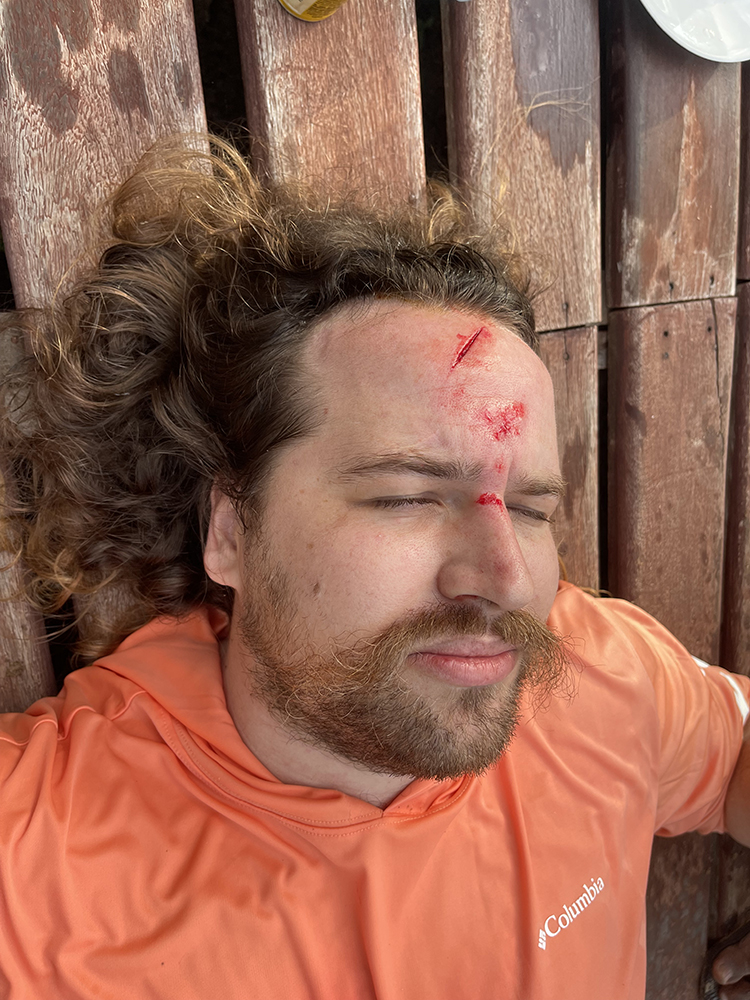
But as I reached the edge of the pool deck, they both awkwardly stood up from where they had fallen onto the ground. As Caleb rose to his feet, I could see that his face was completely covered in bright red blood, and a trail of it had poured from an open wound on his forehead all the way down the front of his shirt and pants.
My vision tunneled for a moment and a wave of nausea overcame me. This was by no means the first time I’d seen one of my brothers bleeding from the head. We spent a lot of our time running around outside when we were kids, and all three of us managed to get ourselves into situations that required stitches from time to time. But that was always within a safe distance from home where the uninjured siblings could run and get mom to save the day. Suffice it to say, this was the first time I’d ever seen my brother hemorrhaging from the head in a remote forest in a foreign country where the nearest hospital was a three hour drive away down cyclone-flooded, dirt roads. The oldest sibling handbook that came pre-installed in my brain never told me what to do in a situation like this. So I just stupidly stared for a few moments, my eyes wide and my jaw dropped.
By the time I snapped out of my stunned daze, Caleb was lying on his back on the pool deck and a few of the lodge’s employees were hovering around him. Someone had brought a water bottle and a bottle of iodine, and they were working on cleaning all of the excess blood off his face. When they’d rinsed him off a few times, we could finally get a good look at the cut, and it looked just about as bad as I would have expected based on the amount of blood it was producing.
Around this time Caleb, who had remained utterly calm through the entire ordeal, asked me, “Have you been getting footage of this for the vlog?”
Who does he think I am? I thought, Logan Paul?
Out loud I said, “NO I haven’t been filming this, Cale!”
But with his insistence that he wanted the experience documented, Anna and I started taking pictures and videos of him.
*If you want to see a picture that Anna took of the cut, you can follow this link, but if you don’t like seeing blood, I’d skip it.
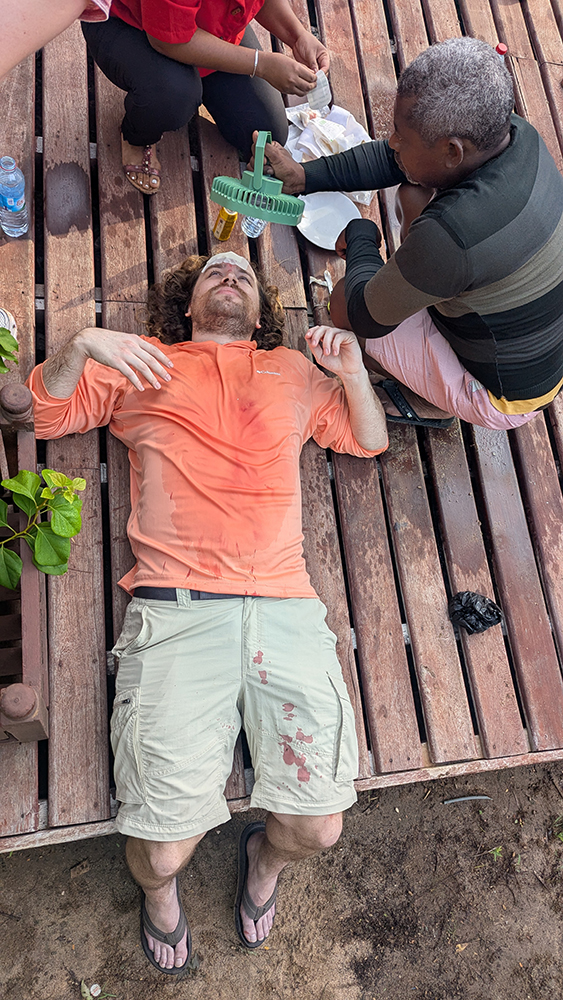
As the lodge’s staff continued to work on Caleb’s wound, trying out increasingly large bandages until they settled on one they could wrap all the way around his head, Vince and I got the story of what had happened from Anna. She’d been taking pictures of some fungus growing on the swing set while Caleb sat down and got right to swinging. She set up her phone to get a video of the two of them, but after she sat down and began to swing, the rotting wood strained, and cracked under the weight of two grown adults.
Presently, Anna noted that the falling beam has hit the top of her head too, so I checked it out for her and applied some iodine to a small abrasion just under her part line. Caleb, ever the gentleman noted, “I’m glad it was me that got really hurt and not you,” as he reached out to hold her hand.
He also took this moment to announce that he still wanted to proceed with the day as planned, and visit the hospital after our scheduled arrival back in Morondava that night. In my mind, I’d already been planning to get on the road back to civilization as soon as his head was passably bandaged. It did not occur to me that we might still attempt to go hiking first. By now, a couple of our 4×4 drivers had also come to help out, and Zu, who spoke English, said he could call ahead to the hospital and let them know we’d be coming in late after we finished up the day’s itinerary. While, I had my misgivings about this plan, Caleb is a grown man, and he wasn’t concussed, so this was his decision to make.
He decided he still wanted to go for it, so he got back on his feet and had a few bites of his breakfast before it was time to head out for our morning hike. Unfortunately he’d also lost his crown off of his front tooth (which he originally cracked in half by falling off his bike in grade school), so he’d have to live with that until he could see his dentist back in the US.

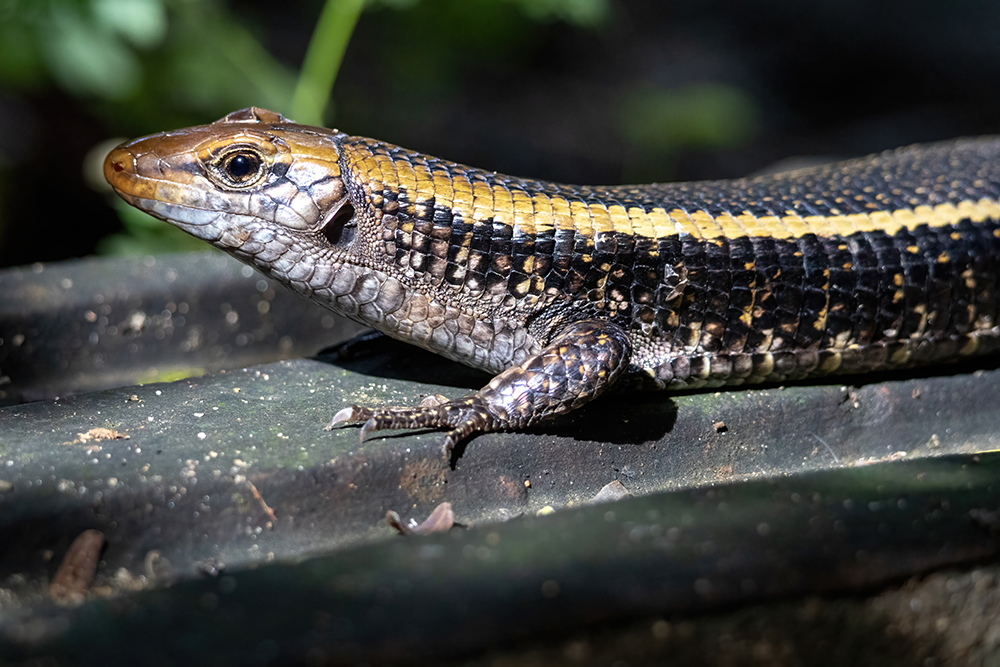
With our plan of action settled, we joined the rest of our friends at the 4×4’s, and set off on a short drive to the Kirindy Forest Reserve, which is a privately owned reserve that protects forty-eight square miles of highly threatened ecosystem. We scrambled out of the vehicles once they were parked at the reserve’s entrance, and we started finding wildlife almost immediately. There were a couple of chameleons carefully walking across shrub branches on the border of the parking lot, and a handful of skinks basked in patches of sunlight.

A forest guide, and a spotter joined us once we’d all had our fill of looking at the reptiles. They led us down the flooded roadway until we veered off onto a trail that led into the dense underbrush of the forest. From there, the spotter disappeared into the trees. His job would be to go out and search for lemurs, and then relay their locations to the guide. In the meantime, the guide brought us on a fascinating hike through the forest, and gave us a lot of information about various plants and insects along the way.
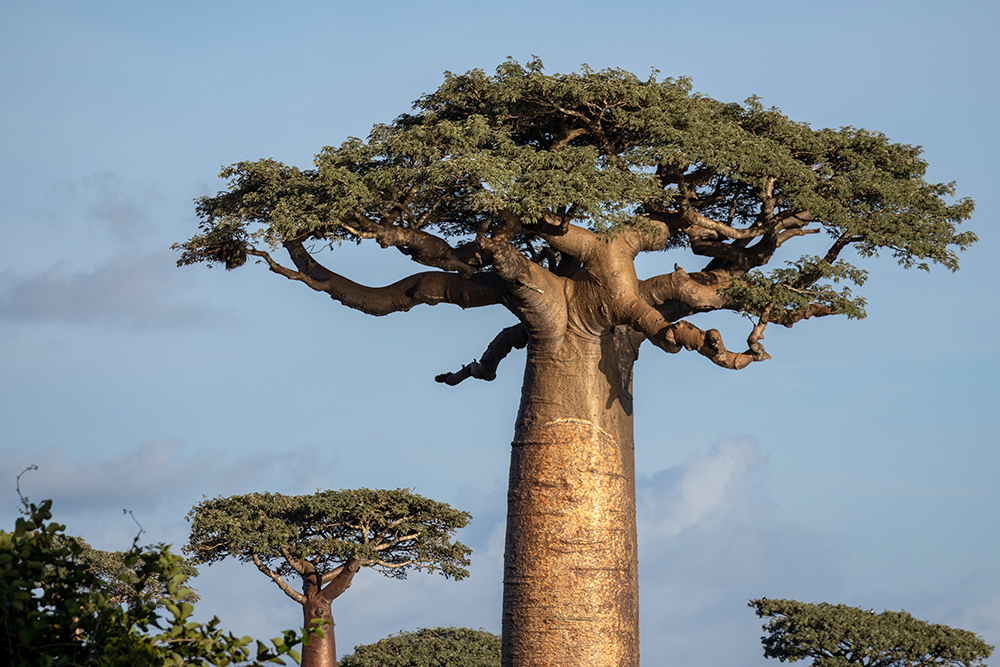
He explained that much of the forest in the area was cleared out to make room for planting crops. This explained why we saw so many expansive fields with no trees on them except towering baobabs during yesterday’s drive out to the Kirindy. In fact, the baobabs themselves only escaped being cut down because their wood is spongey and useless as a building material, and their trunks hold so much water that when the surrounding forests were slashed and burned, the baobabs survived the fires. We noticed several baobab trees alongside the trail as we walked. Unlike at the Avenue of the Baobabs, the only part of them we could see clearly was their thick trunks. Their branches towered above the rest of the forest canopy, and were obscured by the leaves of other trees. It struck me that this was what the Avenue would look like if the forest remained intact.
Our guide taught us that there are only two seasons in kirindy, dry and wet. Our visit took place during the wet season. Because the area was experiencing seasonal rains, the forest was green and overgrowing with plant life. The upside of this is that it’s more scenic in the wet season and there are more different species of wildlife to be found since many animals hibernate in the dry season. But the tradeoff was that our chances of seeing any fossa, madagascar’s largest carnivorous mammal, were very low. They are easier to spot in the dry season when there’s not a lot of plant life to conceal them.
But our goal that day didn’t include looking for a fossa. We were trying to find two different species of lemur, the Verreax’s sifaka and the red-fronted brown lemur. Everyone trained their eyes on the tree branches above us, searching for any sign of the furry primates. It was our guide who made the first lemur sighting. He excitedly pointed up to a hollowed out tree where the globe-like eyes of a third species entirely looked down at us.
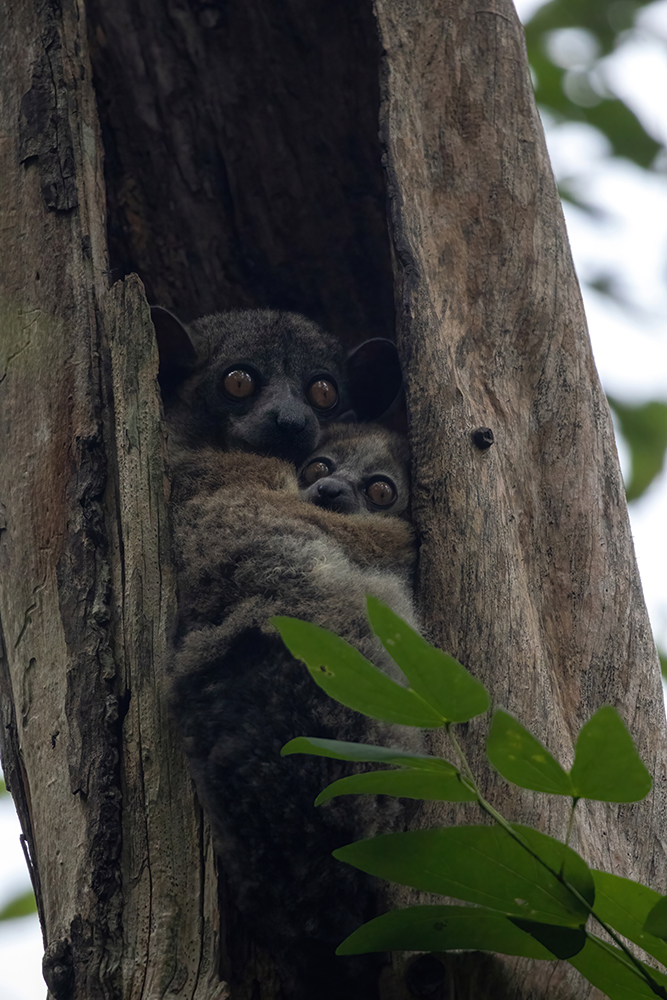
He’d found a mother and baby red-tailed sportive lemur. These are nocturnal lemurs, and judging by the looks on their faces, the duo seemed to be regretting their choice to be awake in broad daylight. They blinked down at us with their wide, brown eyes, wearing expressions that looked a bit startled. Their actions however, told a different story. They lazily groomed each other, and popped in and out of their hole a few times, leading me to believe that the looks of surprise were a result of their uncannily round eyes, and not their emotional state.
A little ways down the trail, our guide pointed out another sportive lemur. He was tucked away in another hollow tree and sleeping, so all we could see was a ball of brown fur. Sportive lemurs live and travel as mated pairs, and are rarely very far for each other, or very close to another pair. That meant this was probably the original lemur’s mate.
Now we’d seen two different species of nocturnal lemur, but had yet to find any diurnal species. As we hiked deeper into the forest, a surreal feeling overcame me. It was a little hard to believe that I was actually in Madagascar, searching for wildlife that’s found nowhere else on earth. This had been a dream of mine for years, and so far it was living up to my expectations (head injuries notwithstanding). I couldn’t believe how lucky we’d been with our wildlife encounters thus far.
Along the trail, we stopped to look at termite mounds and ant holes-the ants in Kirindy lived in holes in the ground with openings slightly bigger than the diameter of a golf ball. We also came across a lot of unique plants like ebony trees, and vanilla orchids, which grew on tree trunks like vines. While vanilla isn’t a native species in Madagascar, the country is widely known for producing the best vanilla in the world, and it’s the nation’s second largest export.
Before long, we heard a signal call echoing through the forest. It was our spotter alerting us that he’d located some lemurs, and we should meet up with him. Our guide called him to confirm his location and then relayed some exciting news. The spotter had found both of the lemurs we were looking for, and they weren’t far away from each other. So we sped through the underbrush, following our guide off-trail until we ran into a troop of red-fronted brown lemurs.
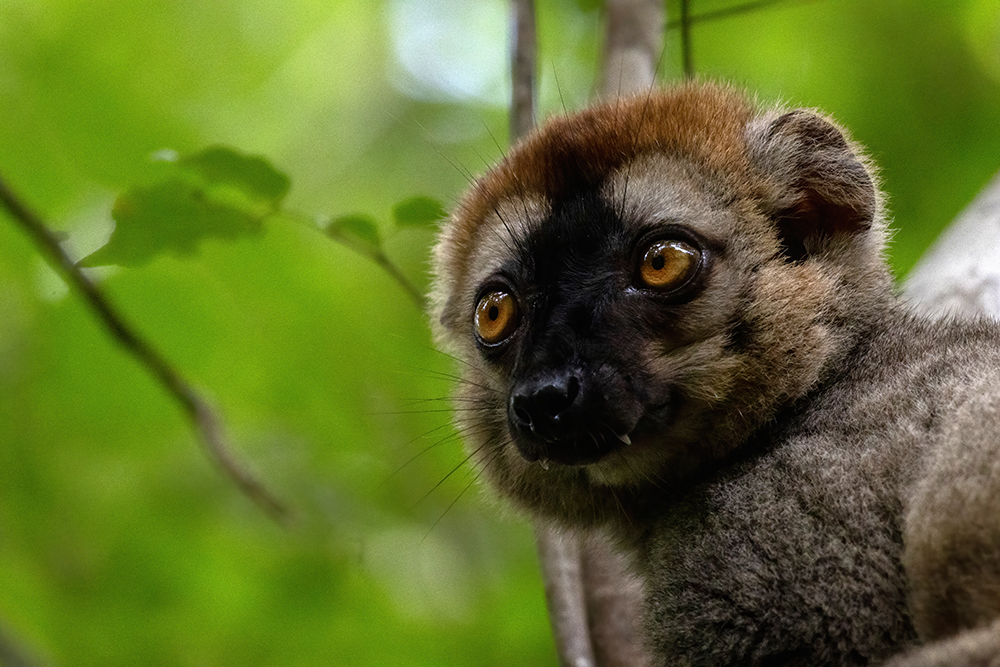
This was officially our diurnal lemur species of the trip, and I could immediately tell that these lemurs weren’t shy. Brown lemurs are highly social and live in groups of up to around eighteen individuals. They are known to huddle together for warmth during cold times, and they bond through grooming. There were several of them erratically climbing through the trees above us. Every so often, one of them would get daring and cautiously approach a member of our group, only to spook at the slightest noise and bounce a few feet higher into the trees.

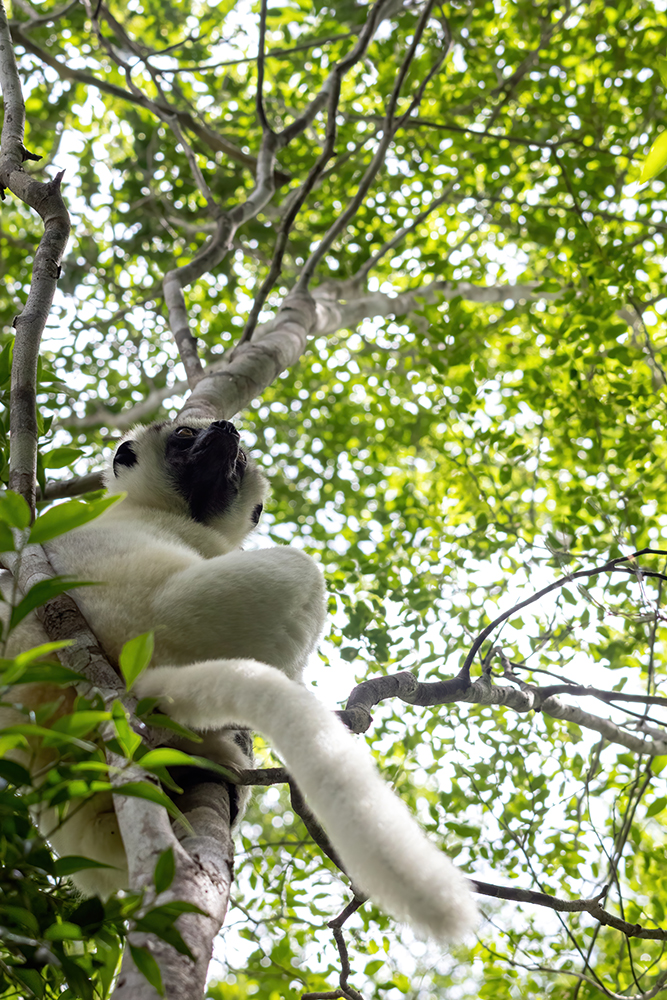
Since the lemurs were happy to keep hanging out around us, we were the ones who eventually had to decide to leave in search of the next species, and we found a handful of Verreaux’s sifakas a short distance away. These critically endangered lemurs are highly arboreal. They leap from tree to tree with ease, but if they ever find themselves on the ground, their only means of moving is by jumping. Because of this unique behavior, sifakas are often referred to as dancing lemurs, and we would get to witness this phenomenon a couple of days later.

But this group of sifakas was happy to stay high up in the trees. They seemed much more suspicious of us than the brown lemurs had been. They were willing to stick around as we watched and photographed them, but they showed no interest in climbing down to investigate us.
Now that we’d spotted both the sifakas, the brown lemurs, and had the bonus sighting of the sportive lemurs, it was time to hike back to the parking lot and then return to our lodge for lunch. We did see a few more interesting critters as we trekked back to our vehicles though.


Back at the lodge, we had plenty of time to pack our bags, take a swim in the pool, and then enjoy a relaxing lunch before it was time to check out and begin the long drive to Morondava.
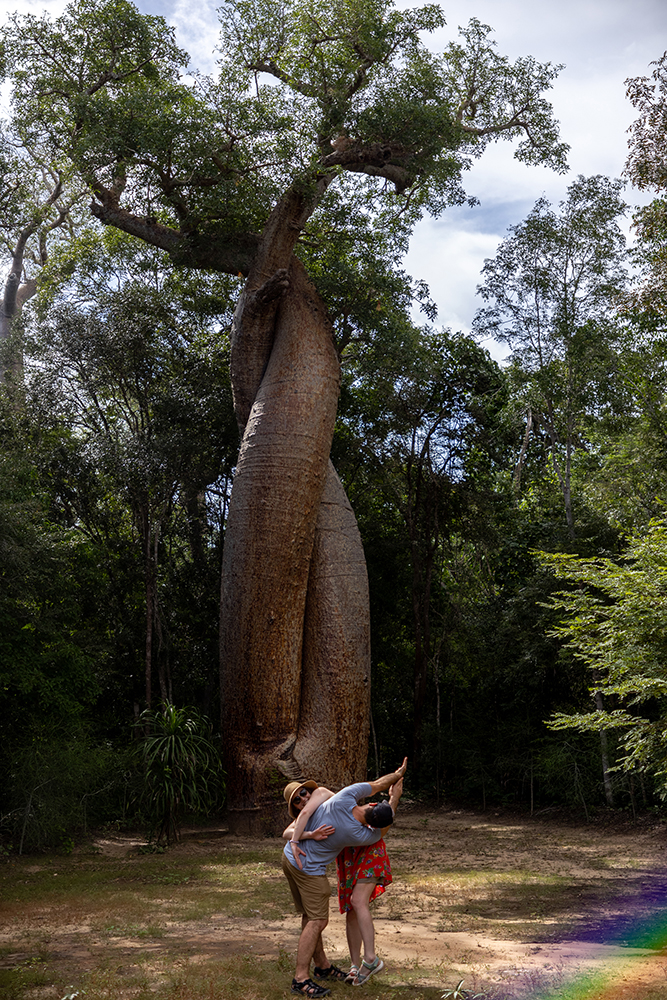
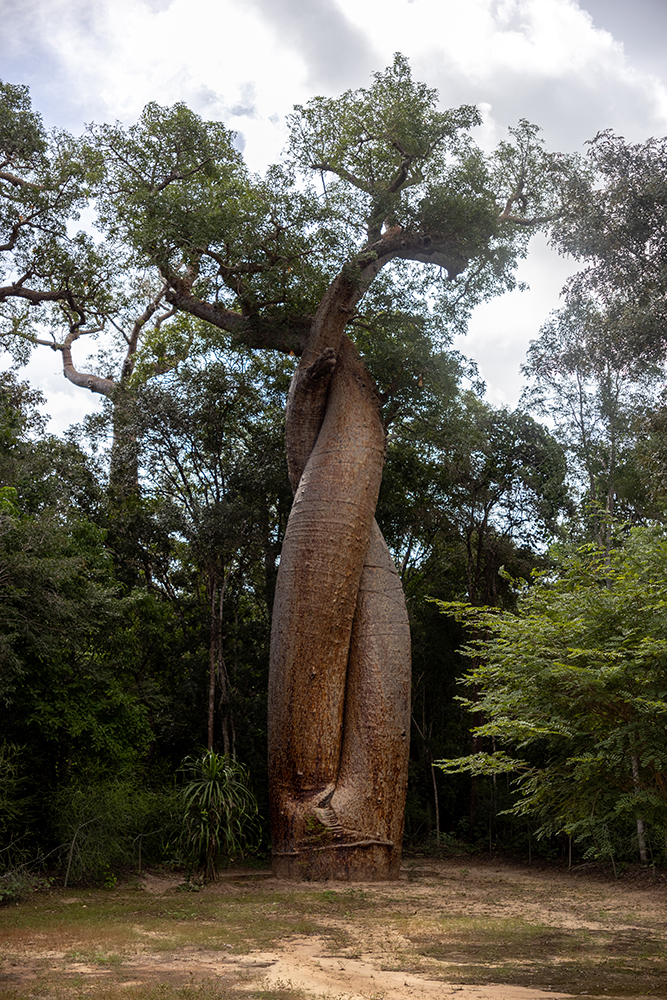
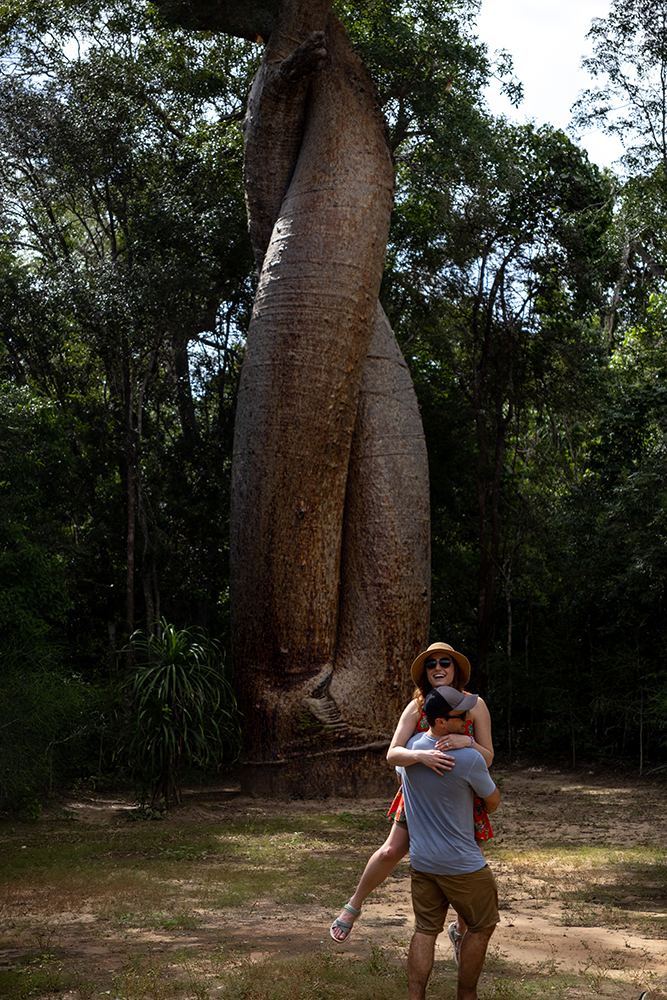
It was slow going once we were back on the flooded roadway. We plowed through headlights-deep puddles and chugged our way through thick mud. At one point, the 4×4 my family was riding in got very stuck in some deep mud. All four of us got out to help gather sticks to put under the tires for traction, and eventually our driver managed to free the vehicle as we all cheered from the side of the road. Our drivers also brought us to a couple of points of interest along the road, including a Sacred Baobab and the Baobab Amoureux, or Lovers Baobabs. This pair of trees entwined together as they grew, creating an iconic shape.

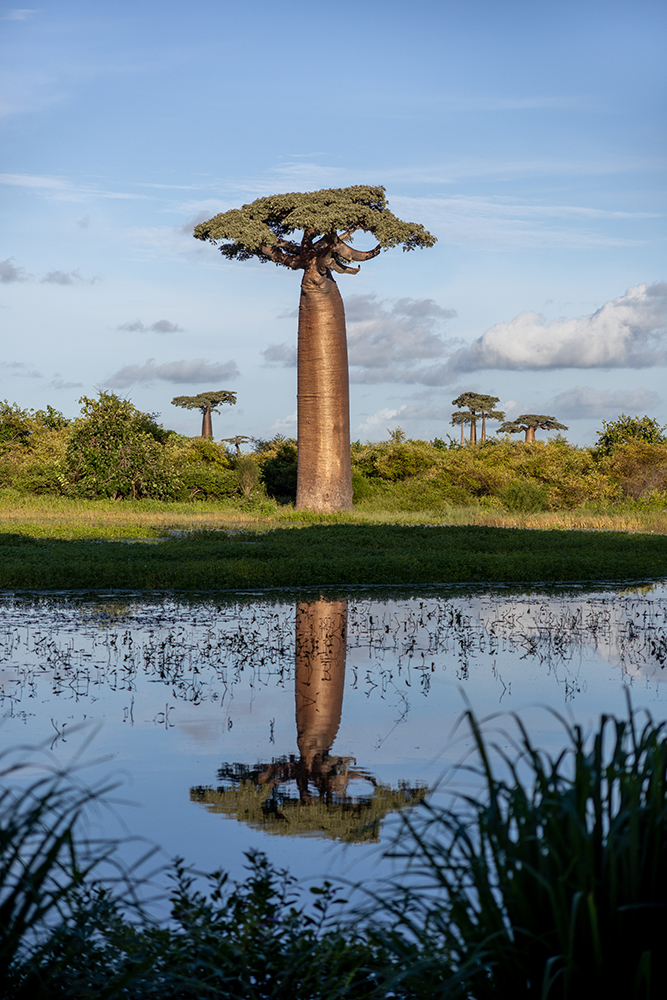
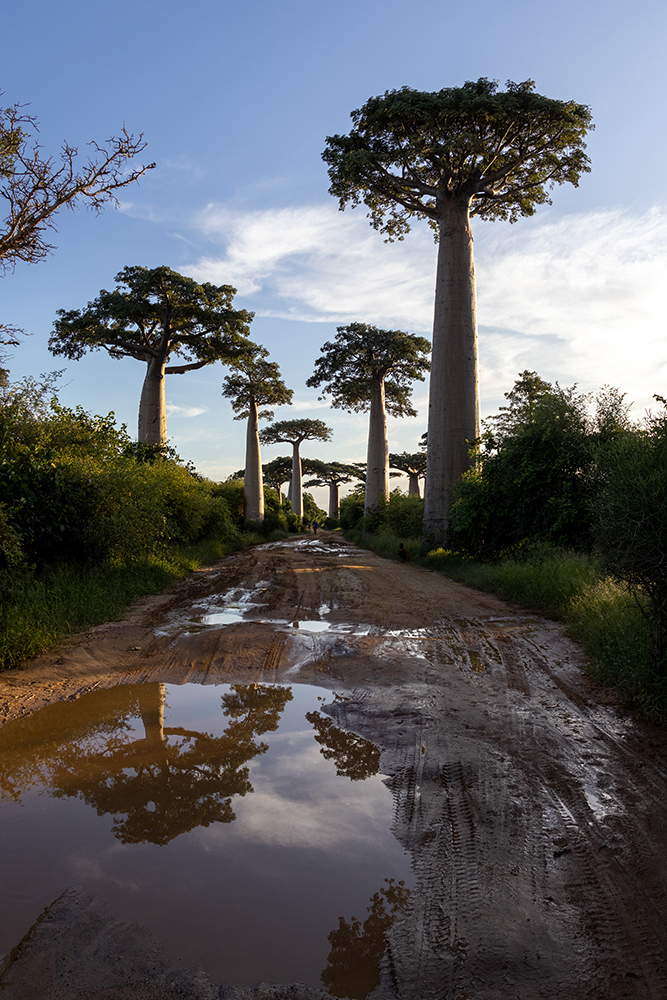
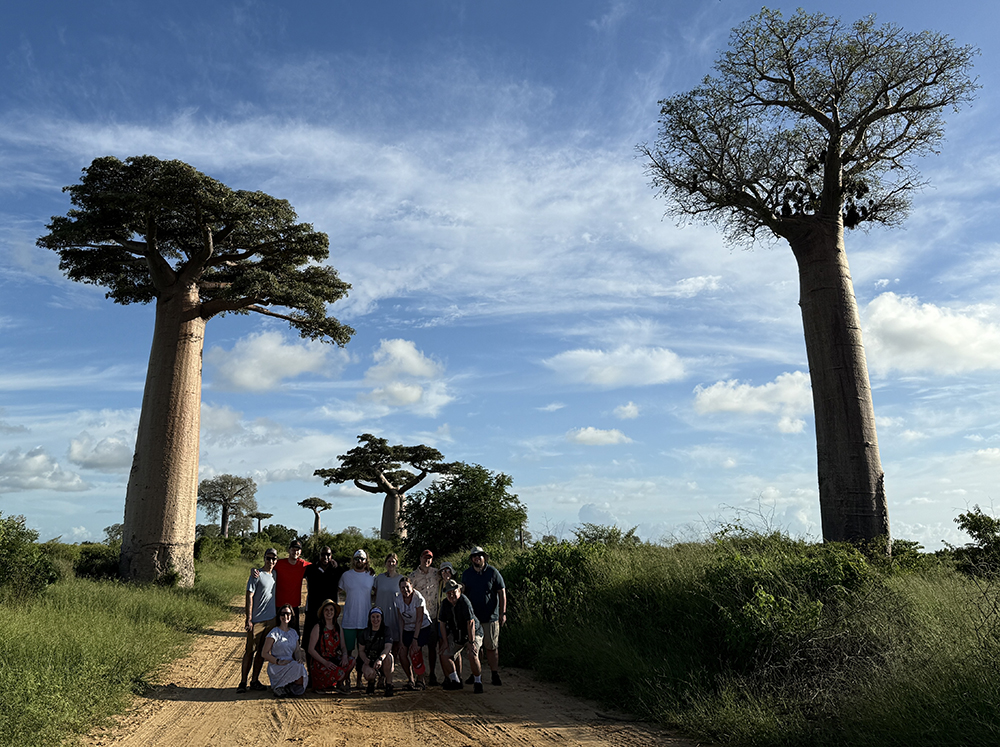
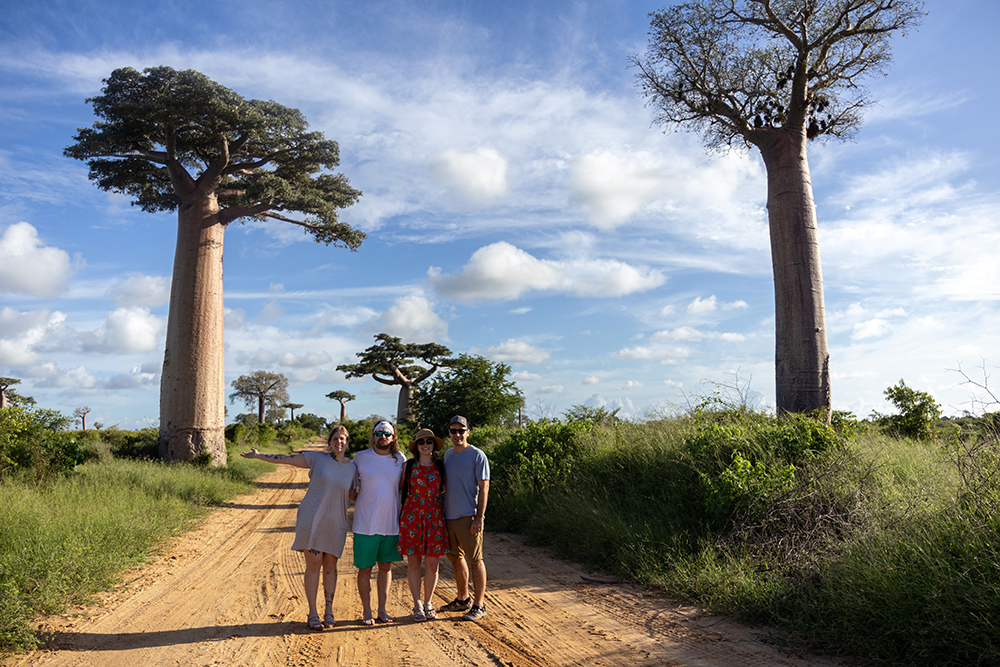
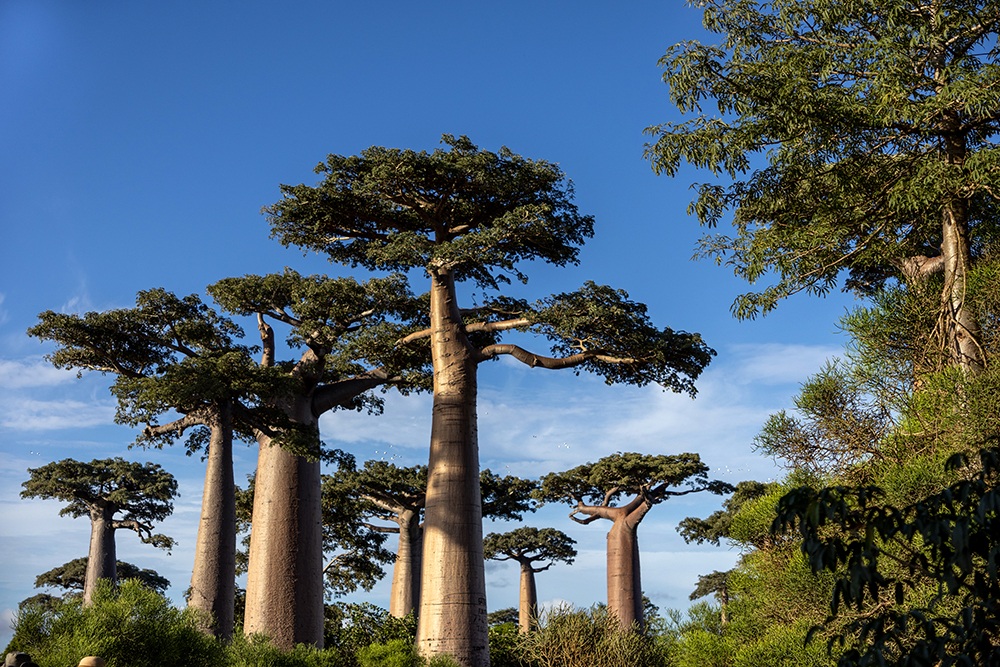
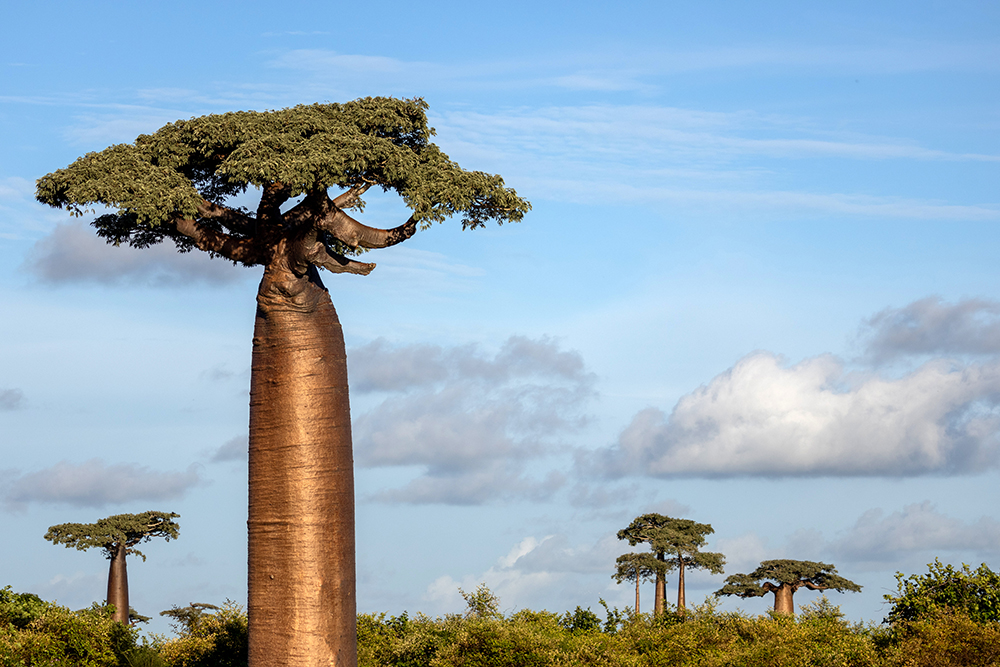
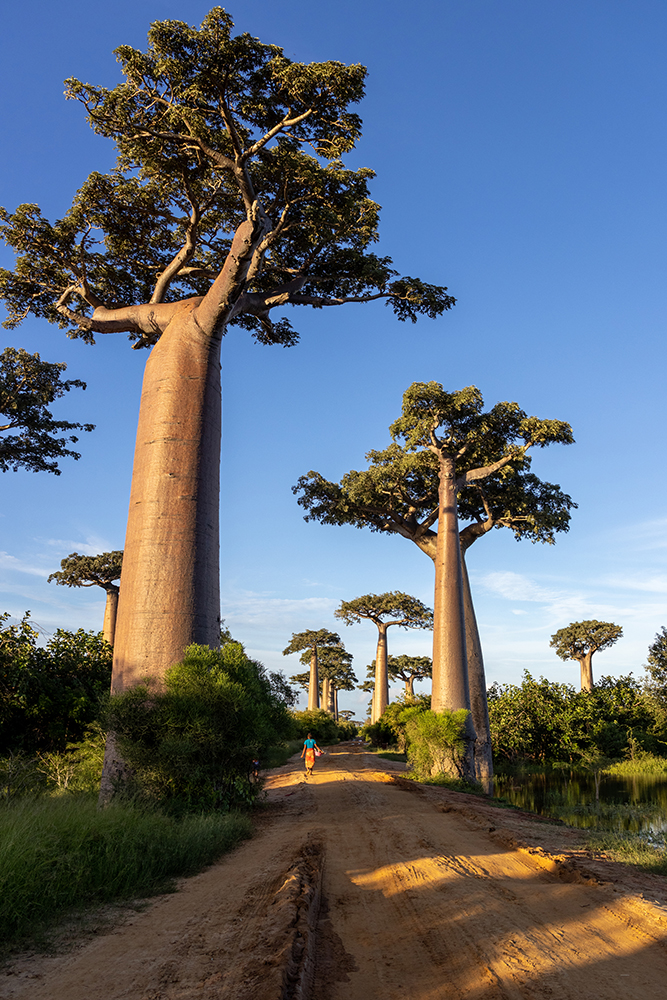
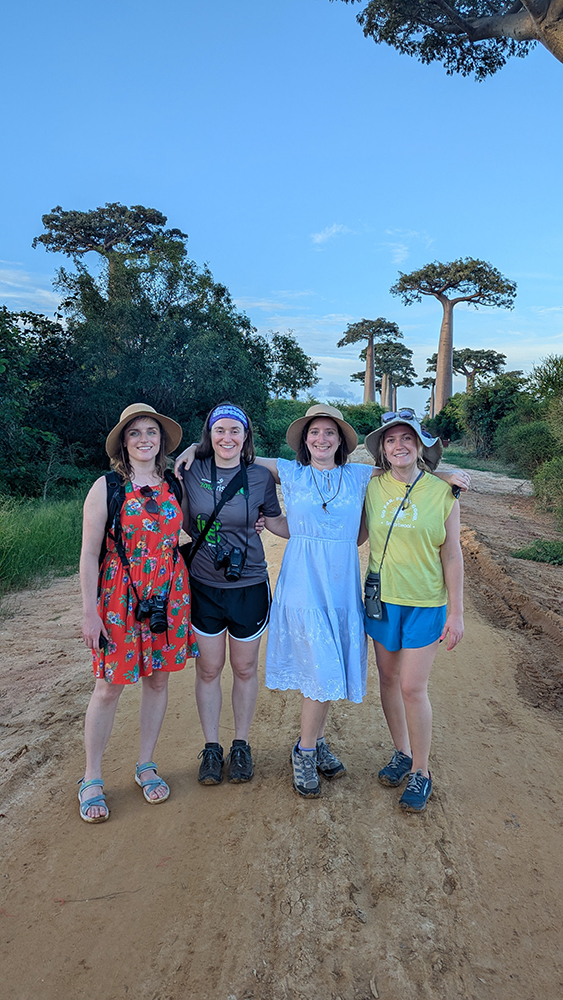
Eventually we made it back to the Avenue of the Baobabs, which looked a lot different than it had on our short visit the previous evening. The light quality had changed drastically, and was a lot more favorable for photography, and there were also fewer other tourists, which made for a more peaceful visit. Instead of watching other get pictures, we were able to slow down and enjoy the experience of standing under some of the most incredible tree in the world.

There are only eight species of baobab in the world. Madagascar has seven of those eight species, and six of those seven are endemic only to Madagascar. The Morondava area is home to three different baobab species, but the iconic ones lining the avenue are primarily grandidier’s baobabs, which is the biggest of the six species found in Madagascar.
Standing beneath these giants would be enough to make any person feel minuscule, and I felt a deep appreciation to get to take my time strolling up and down the Avenue between them. We weren’t on as strict of a schedule this evening, so there was also plenty of time to relax at pond-side café where we enjoyed the reflections of baobabs rippling in the water as we sampled the tart and refreshing flavor of baobab fruit ice cream.
As sunset grew closer, a few of us wandered over to a nearby village where people were selling baobab seeds and seedlings. Of course, we can’t bring home seeds when we travel, so we were unable to buy anything, but a bunch of kids from the village came out and started dancing when they saw us. This gave David an idea to start a game. The next thing we knew, all of the kids had joined in, and everyone was trying to jump as far as they could across a pair of lines that David had drawn in the sand. After everyone had jumped, he would expand the lines to make the jump more difficult.
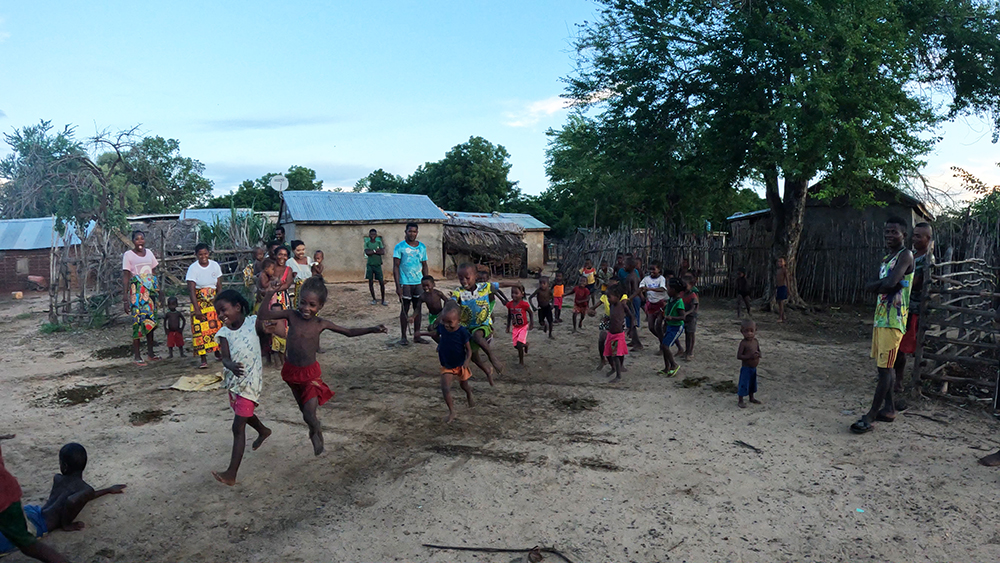
This was an unexpected, and very fun way to cap off the evening, but by sunset it was time to head out and get serious about getting Caleb to the hospital. We rode back into the city as the sky melted into pink and purple hues to our west. It was a truly outstanding sunset, but in the back of mind, I was still worried about Caleb. Would the hospital actually still be open when we arrived? Would they be able to numb his forehead before stitching him up? And how serious was his risk of infection? All of these questions and more circled my mind as we rode into town.

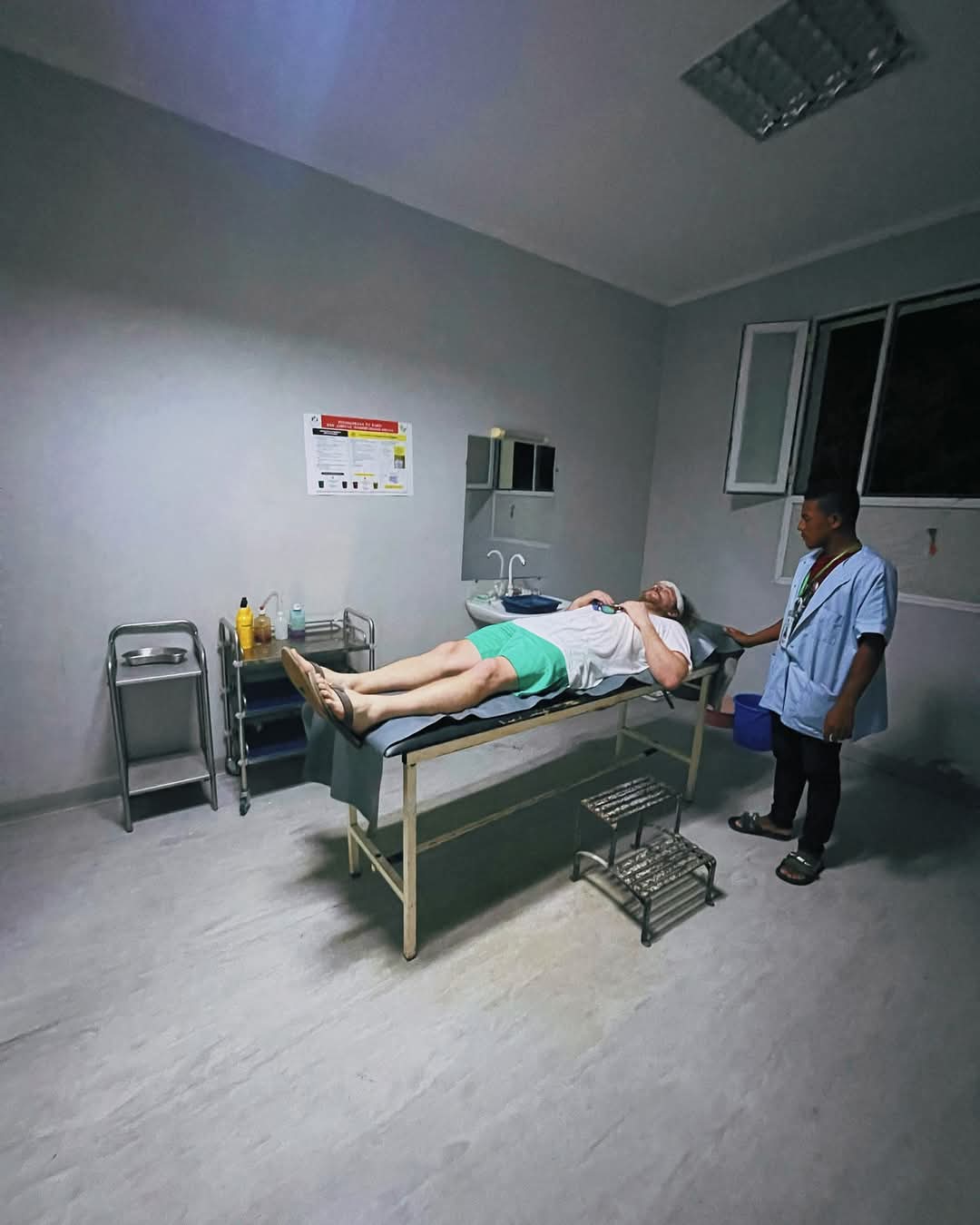
We arrived at the hospital after dark, and it didn’t look open. The doors were unlocked so we went inside and wandered through the halls until we found a doctor. Thankfully, Zu had come with us to translate, and he was able to relay information back and forth between us and the doctor. At first, the doctor thought the wound would only need to be cleaned and bandaged. He sent Vince to a nearby pharmacy to buy iodine, surgical gloves, and bandages, then started cleaning. Once he’d wiped the blood from Caleb’s forehead, he realized that the cut was deeper than he initially thought, and would need stitches. So Vince went back to the pharmacy to get all the necessary supplies. A few minutes, and three stitches later, Caleb was all set. The doctor gave us a prescription for antibiotics and some basic care instructions. The whole visit cost about twenty-three USD.

Zu drove us to a nearby pharmacy and then on to the hotel that overlooked the Mozambique Channel. After checking in, we met up with all of our friends for a delicious dinner at a nearby restaurant called L’Etoile. Then we ended the evening with a walk along the beach before turning in for the night.
It had certainly been a long and eventful day, in both good and bad ways. As I drifted off to sleep, I felt grateful to everyone at the Relais du Kirindy, and our drivers from Tsiky Tour for taking such good care of Caleb, and making sure that he got to the hospital. I was also thankful that we still had our full day of experiences from seeing incredible wildlife, to marveling at the baobab trees, to laughing and jumping with the kids in the village. It had been a day packed full of adventure and wild emotions, and I was utterly exhausted from it, but I was also ready and excited to see what the next day would bring!
You can see more details of this amazing destination on my YouTube channel!












 birdsoftheairtravel.com
What fantastic places you visit. Thanks for the wonderful images of Madagascar, flors, fauna and Caleb. I’m sure you will encounter more experiences of a human-kind with your brother around. I hope he leas well, and gets is tooth fixed soon. A memory, that’s for sure.
Thank you! Caleb’s tooth is fixed, and he definitely has a scar, but it’s healed up well!