Words are like the spider’s web: a shelter for the clever ones and a trap for the not-so-clever.
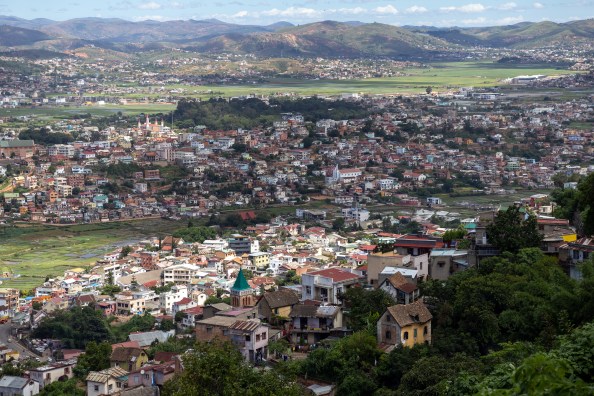
I had no idea what to expect when I woke up after a short sleep in Madagascar’s capital city, Antananarivo. We’d checked into Hotel Le Louvre at around four in the morning and then gotten to crash for a few hours before it was time to wake up and get ready for our upcoming day tour. Even though our friend Jared from Percussive Tours had planned this entire trip, I’d still done my fair share of research beforehand so I would know what to expect, but Antananarivo (or Tana for short) did not seem to be Madagascar’s pre-eminent tourism destination by any stretch.
Even though I didn’t know what was in store for us that day, I was still eager to start our tour when our guide, Ghislain, from Tsiky Tour met us at the hotel. As we stepped out onto the sidewalk, we were surprised to see a small parade of students proceeding down the street as upbeat music played. We cheered along as the paraders passed by us, and crossed the street to get to our bus once they were gone.
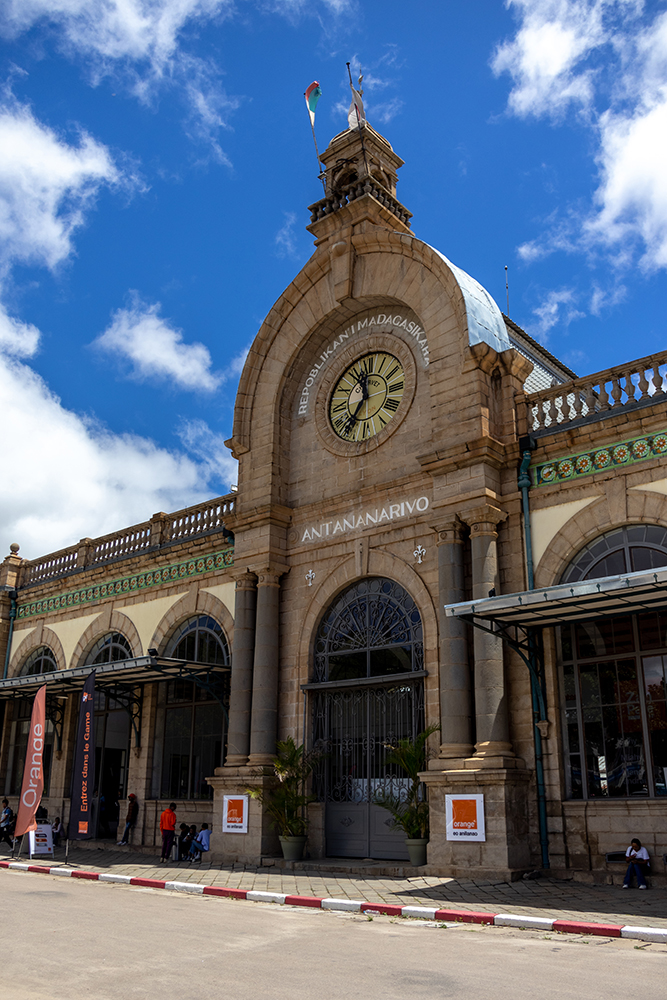
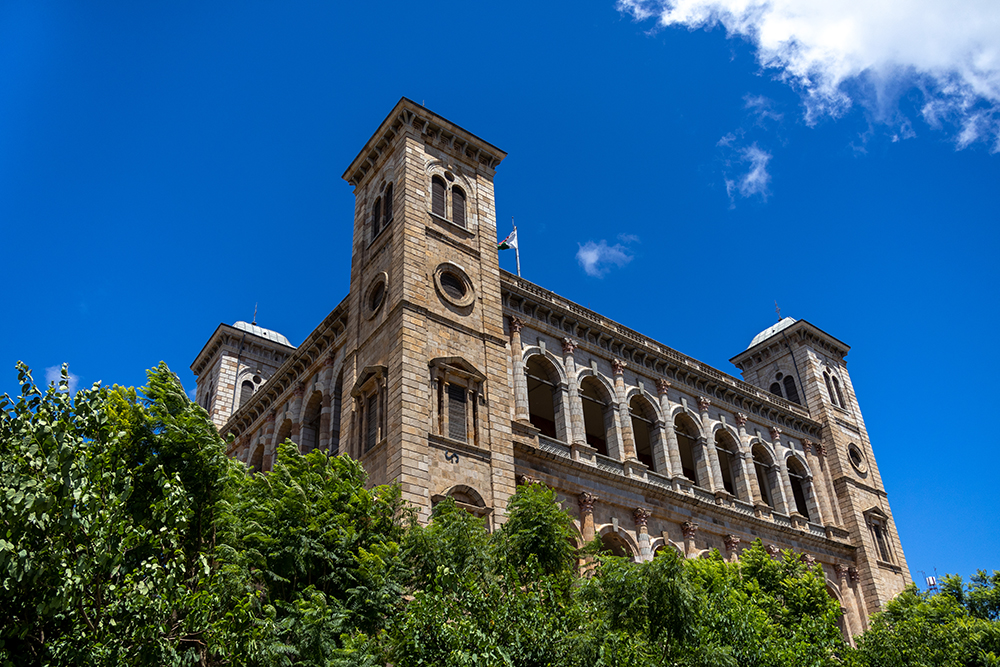
Our driver pulled out onto the busy street, and I enjoyed watching the city from my window until we stopped at our first point of interest, Antananarivo Railway Station. This station was built in the early 1900’s during the French colonial period of Madagascar. Today, it no longer serves as a train station, but instead houses a shopping center and office space.
We didn’t have time to go inside the station, and soon we were back on the bus, ascending uphill along a winding road of switchbacks and sprawling views of the city.
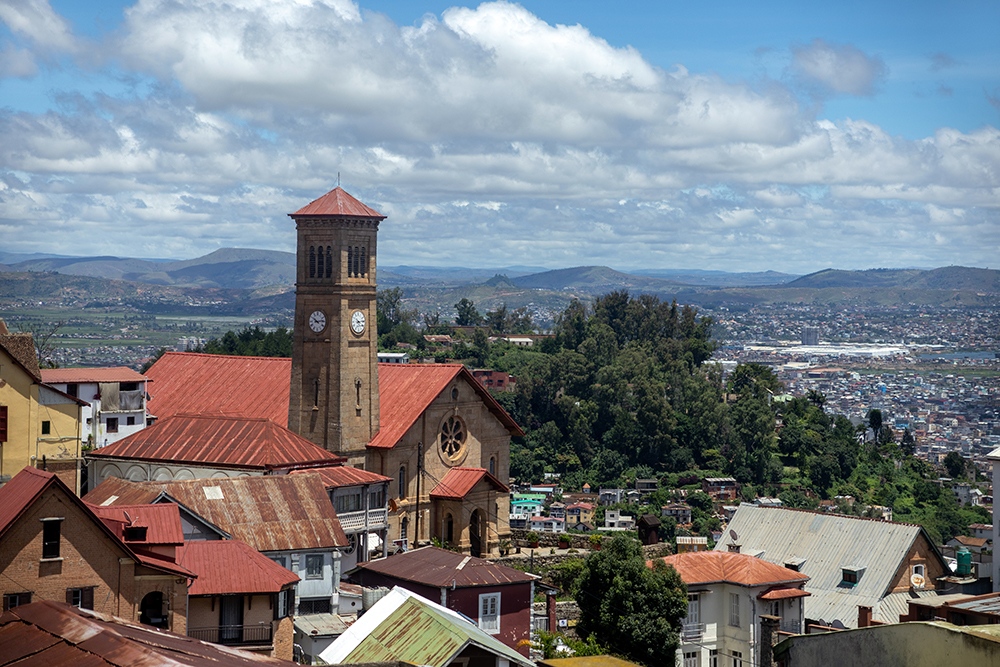
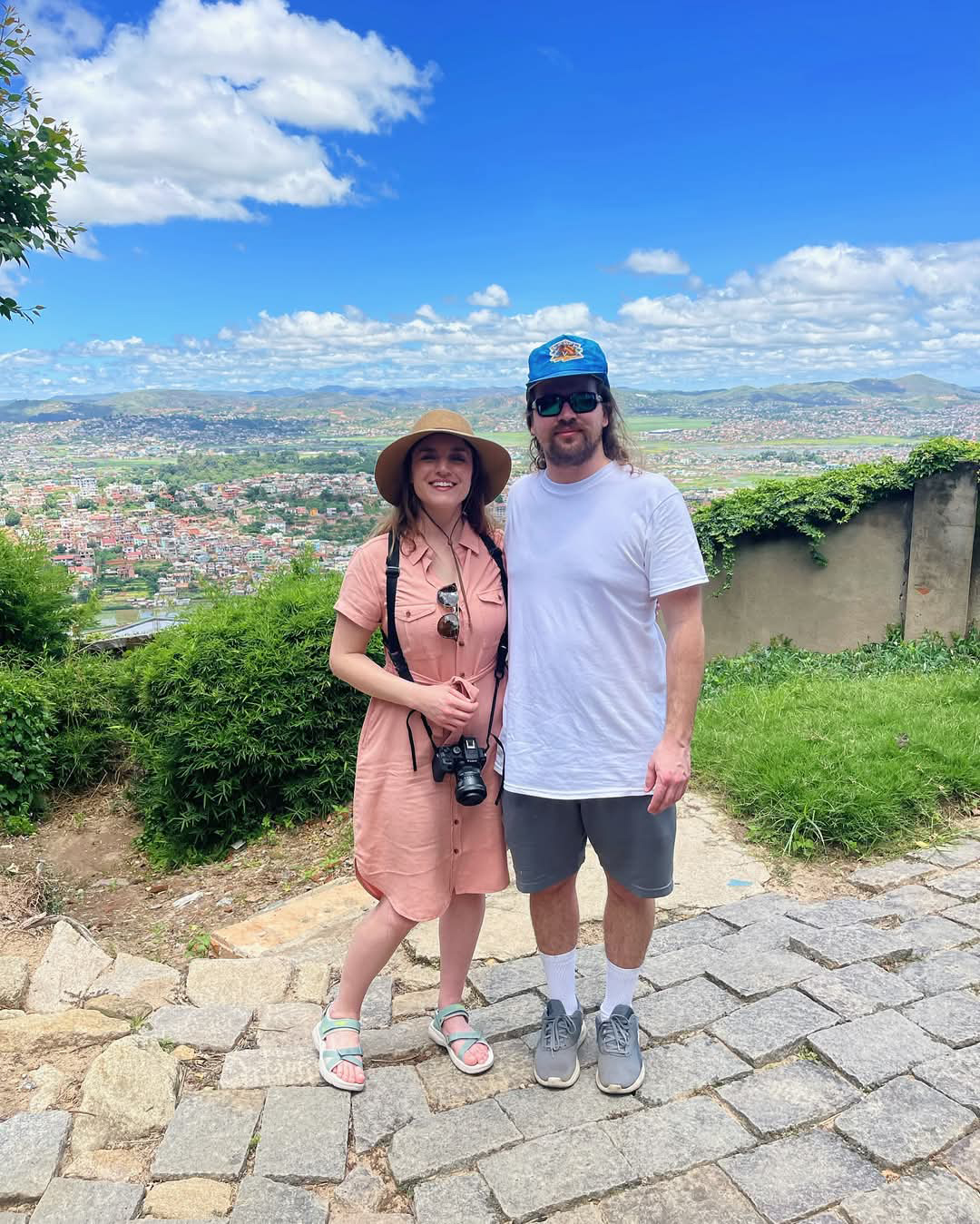
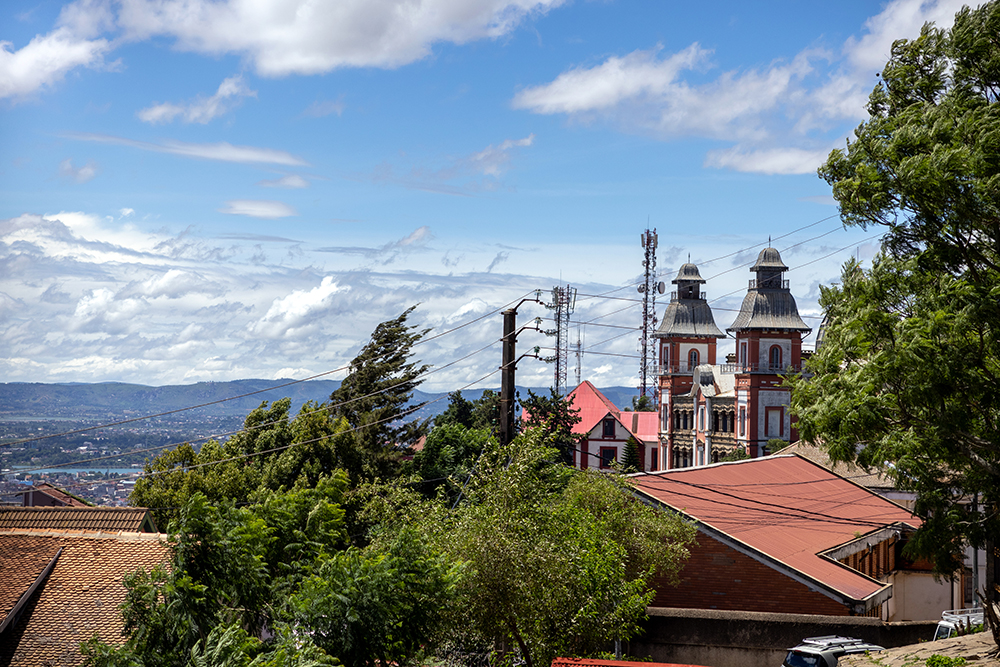
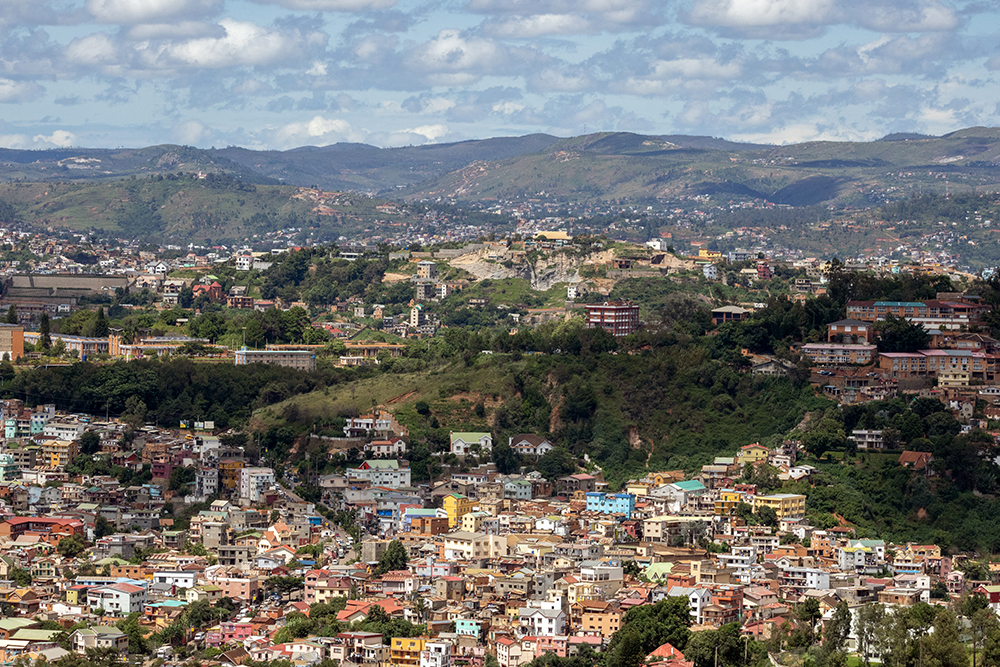
One particular viewpoint had a large parking pad, and we were able to get out of the bus for our first really good look at the city scape, which seemed to melt into towering mountains in the far distance. Wind swept through my hair as my eyes scanned the horizon, trying desperately to memorize the sight of orange-roofed houses sprawling towards a valley checkered with rice fields.

As we enjoyed the view, we were soon surrounded by the bright, tinkling sound of men playing the valiha, which is a stringed instrument that’s traditionally made from an endemic species of Malagasy bamboo. Of course, this was a sales tactic to try to get our group interested in purchasing the unique instruments, and it worked. Several of us bought one or two of them, and when we re-boarded the bus, a cacophony of significantly less skillful notes filled the cabin.
The bus carried us even higher uphill as we plucked away on our valihas, and soon we arrived at a Protestant Temple, perched at the very top of the hill. Ghislain explained that this temple was built to commemorate the first Christian martyr of Madagascar.

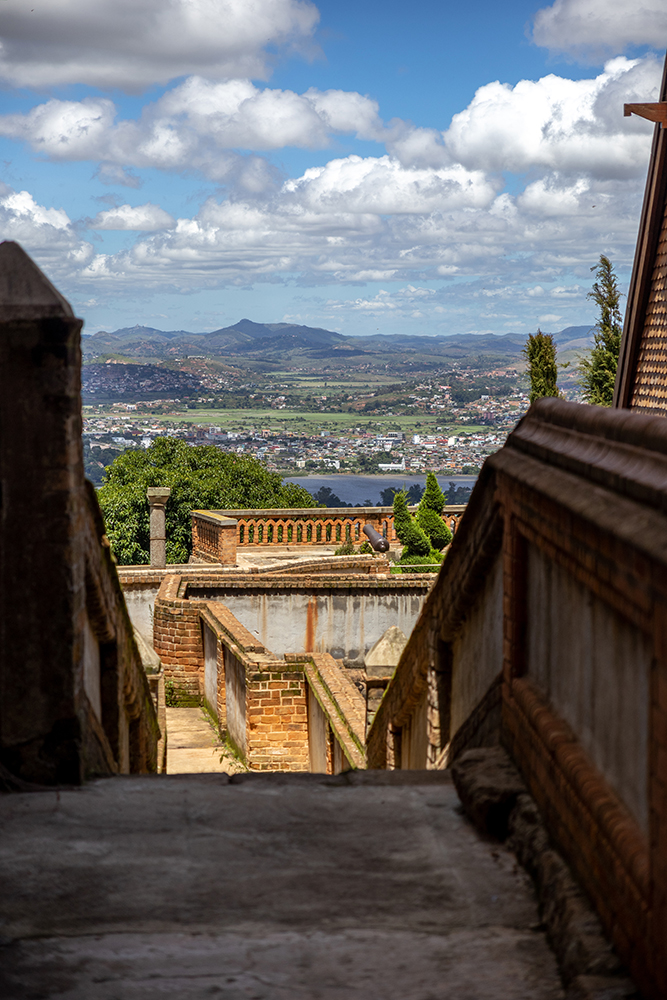
Ghislain then led us along a cobbled road behind the church where we found another viewpoint that overlooked more of the city, bordered by placid rice fields and towering mountains. The watery rice fields were closer this time, giving us a better view, and the mountains also seemed more immediate.

When we arrived back at the tour bus, we found a group of locals reenacting the story of the Christian girl who was martyred on the orders of Queen Ranavalona I, who had forbidden the Malagasy people from practicing Christianity. As the story goes, the woman was thrown over the edge of the hill we were standing on and fell to her death.

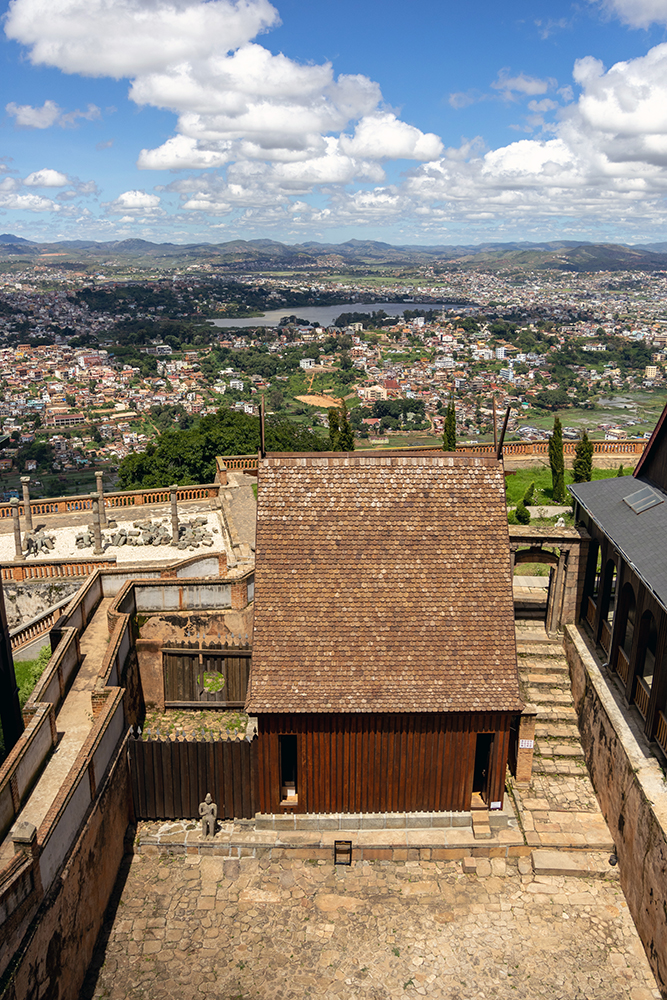
After seeing this reenactment, it seemed even more fitting that our next stop was at the Queen’s Palace, which was just a little ways downhill. We went inside to explore the grounds of the palace complex, and visit the exhibit halls that now occupy the main palace. The palace was the seat of Malagasy royalty from the early 1600’s until the collapse of the monarchy in the 1890’s. Throughout its 200 plus years of use, the complex saw many changes and additions until 1897 when France seized control of Madagascar, ushering in a colonial period that lasted until Madagascar won its fight for independence in 1960.
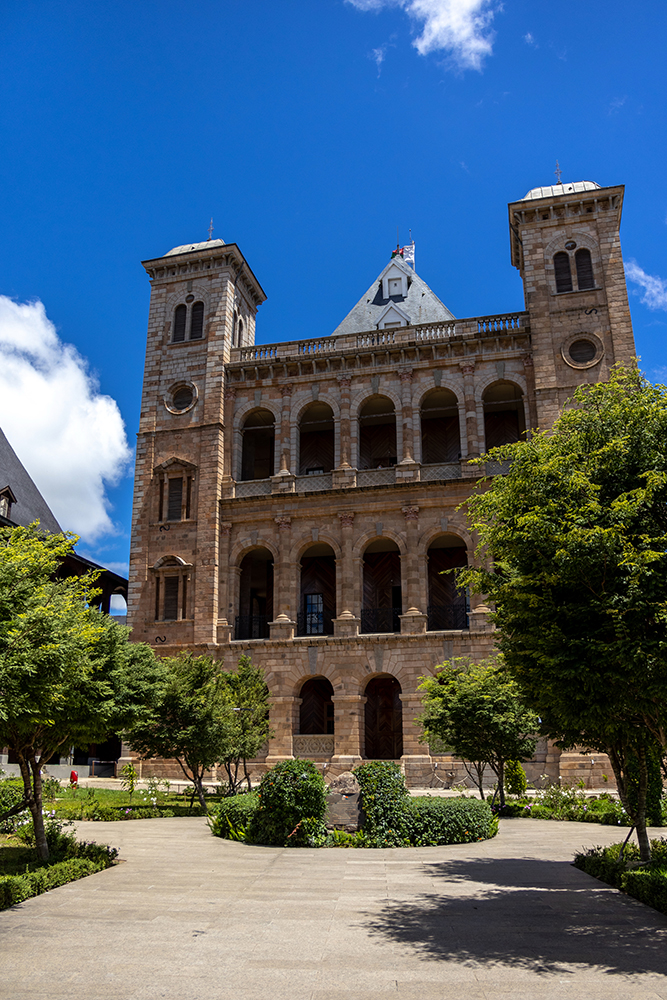
The palace had two floors of exhibits with artifacts and information about the Malagasy monarchy, a third floor library, and a surrounding garden that was manicured to perfection. There were breathtaking views of Tana from all around the palace complex, and we spent at least an hour strolling through the gardens and admiring the surrounding landscape.

One unique feature was a spherical rock a bit bigger than a human head. Ghislain said that a person could only join the royal army if they could lift that rock, and while several of us gave it a try, none of us turned out to be up to the task.
By this time, we’d already been at the palace for a while, and everyone was starting to think about moving on. That’s when someone yelled out that they’d seen a chameleon. Everyone within earshot rushed over to see, and sure enough there was a colorful panther chameleon underneath a large bush!

At this point I was sure my day had been made. I’d had no expectations of seeing wildlife at this stage of the trip, and to already get to see one of the animals that Madagascar is best known for was so exciting!
But now that we were alerted to the presence of cool creatures, we began to spot more things in and around the same bush. A couple of smaller lizards sucked out of sight, and then we found a few red-legged golden orb weaver spiders sitting on their large and intricate webs.
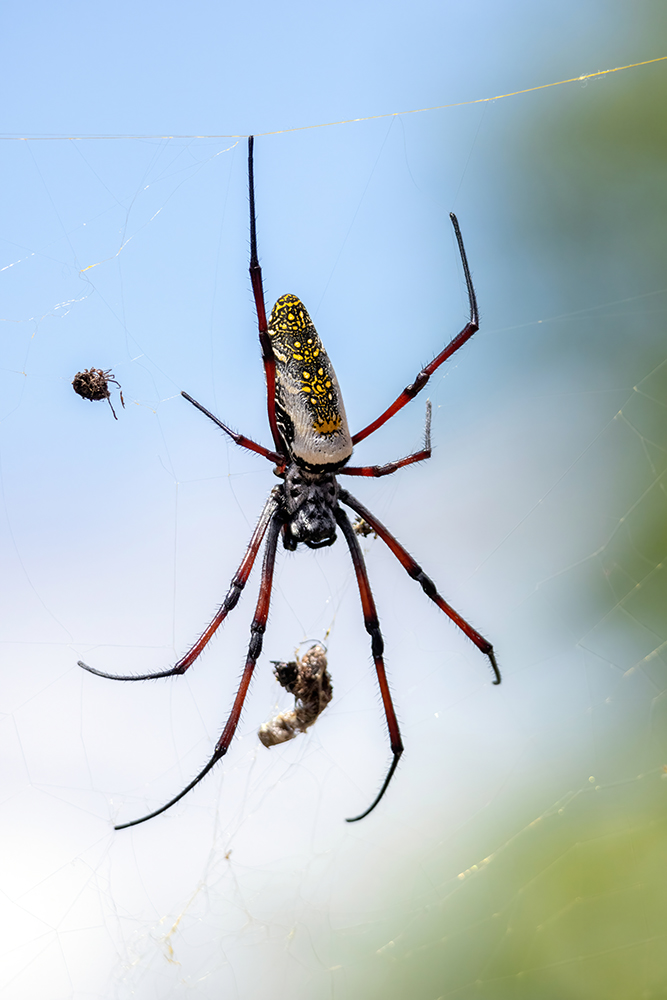
As we were all gawking at the colorfully patterned, humongous spiders, Ghislain gently scooped one off of her web and asked if any of us wanted to hold her. Orb weavers are really beautiful spiders, and although they can look intimidating because of their large size, they are harmless to humans. They exhibit extreme sexual dimorphism, which is how we could tell that one Ghislain was holding was a female. We’d seen a male next to a female on another web, and he was so tiny that I couldn’t even spot him with my naked eye. Only a look through my zoom lens got me a glimpse of him.
As Ghislain held up the spider, a few members of our group squeamishly accepted the opportunity to hold her, cringing and squealing as she crawled across their arms. I was excited when it was my turn, and Meagan passed her off to me. Her legs felt slightly prickly as she settled into a comfy place on my arm, and I marveled at her intricate patterning.

I passed her off to Anna after a minute, and once everyone who wanted a turn holding the spider got one, Ghislain returned her to her web. Then we left the palace in search of a local treat called koba, which is a sweet that’s made from peanuts, sugar, and rice flour, and wrapped in banana leaves then boiled until it congeals into a cake-like patty. It didn’t take long to find a roadside shop selling koba, and we ordered a couple of thick slices of it to split amongst the group. I took a chunk of it and gave it a try. I quite liked it, but if you are allergic to, or dislike peanuts this would not be the snack for you. I am peanut butter-obsessed though, so this was right up my alley.

After sampling the koba, we took a lunch break before driving down a long highway with watery rice fields on either side of it. Eventually, we reached a souvenir market on the bank of the Ikopa River, and Ghislain set us loose to shop. The stalls of this market seemed to span on forever, and I definitely got carried away with shopping. The market had a really fun atmosphere, which made it too easy to get sucked into the negotiation game. All the vendors were ready to make a deal, and before I knew it, I had a bag full of souvenirs to bring to family back home (and just a few things for myself too).

When we were done shopping, we noticed a little boat that ferries people across the river. David asked the “driver” if he would take us to the other side and back for a dollar a person, and he agreed. Something told me this typically wouldn’t cost nearly a dollar a person, but it was a small price to pay for an utterly pointless, yet fun activity for us. A couple of local women were laughing hysterically as we clumsily stepped into the boat, laden with bags of souvenirs. I couldn’t blame them one bit, we totally looked ridiculous, and we all laughed along with them.

There was a rope strung all the way across the river and tethered to either bank, and the driver maneuvered the boat by pulling on this rope. When we reached the other side, the women disembarked and were replaced by some men, and we all rode back over to the market and rejoined the rest of our group.

After that, our day tour was over, and when we arrived back at the hotel, we spent the evening relaxing in the pool and packing up for the next days departure for Morondava. Most of the group ended up going out for a bit, but I was still tired from all of the air travel and decided to turn in early.
After a full night’s sleep, I felt rejuvenated and totally adjusted to the time zone. Now I was ready for another long day of travel that would bring us to Morondava, and eventually the Kirindy forest. This would mark the beginning of the nature-centered portion of the trip and I couldn’t have been more excited. But first, we got to spend one more morning in Tana, exploring a local market.
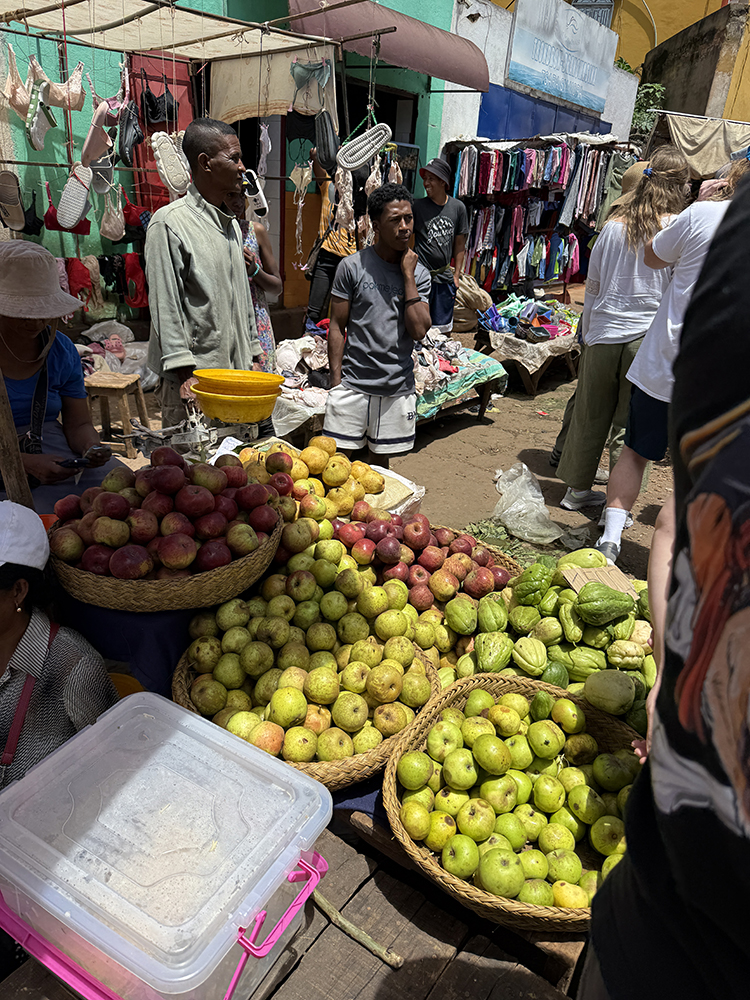
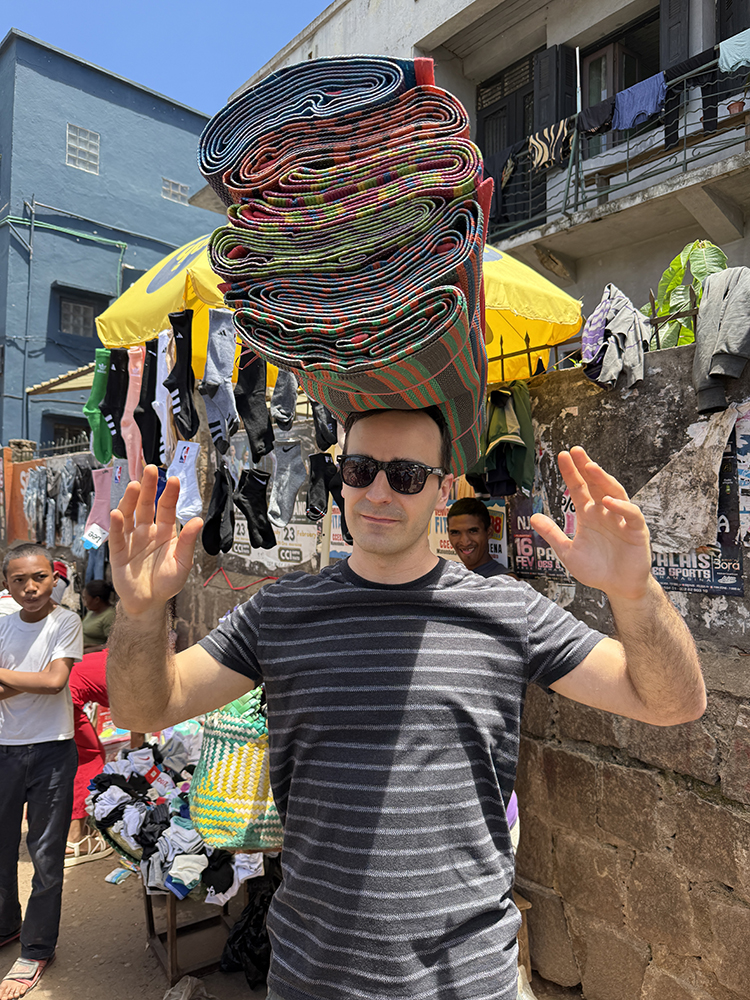
Unlike the market from the previous evening, this one was not for tourists, and sold mainly food from meat to fresh fruit, to cassava, which we got to try our hands at grinding. We also met a couple of women carrying large loads of goods on their heads, and Ghislain asked them if we could give it a try. This ended up being way more difficult than they made it look, and once again, they cracked up as we each tried to balance items to varying degrees of success.

We left the market around lunch time, and Ghislain dropped us off at the airport for our short flight to Morondava. Domestic flights in Madagascar are known for being somewhat unreliable, which has led to some locals calling Air Madagascar “Air Maybe,” but luckily for us, we only experienced a forty minute delay before boarding. We landed in Morondava about an hour after we took off, and there were four drivers with 4×4’s waiting to pick us up. We would need these vehicles to get out to our lodge in the Kirindy Forest. The long, unpaved road out to the forest had been flooded by a cyclone a few days before we arrived, so we knew we were in for an interesting journey.
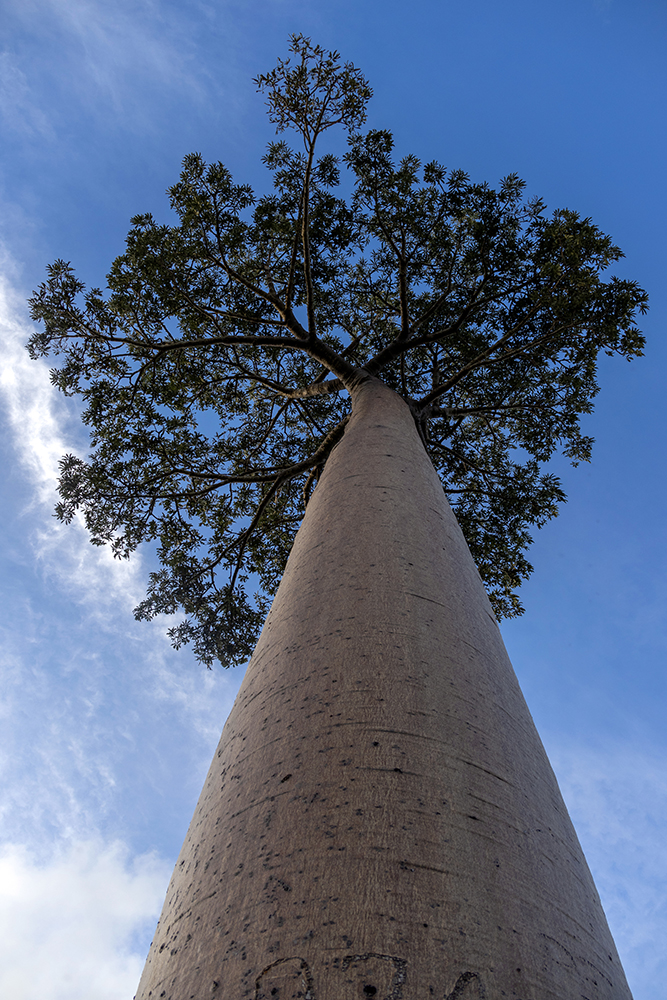
At first, the roads seemed fine, but as we left the city, the paved roads gave way to dirt, and before long we were bumping around in the backseat as we rode passed herds of zebu cattle, and splashed through puddles. Soon we began to see one of the attractions that this area is famous for: baobab trees!
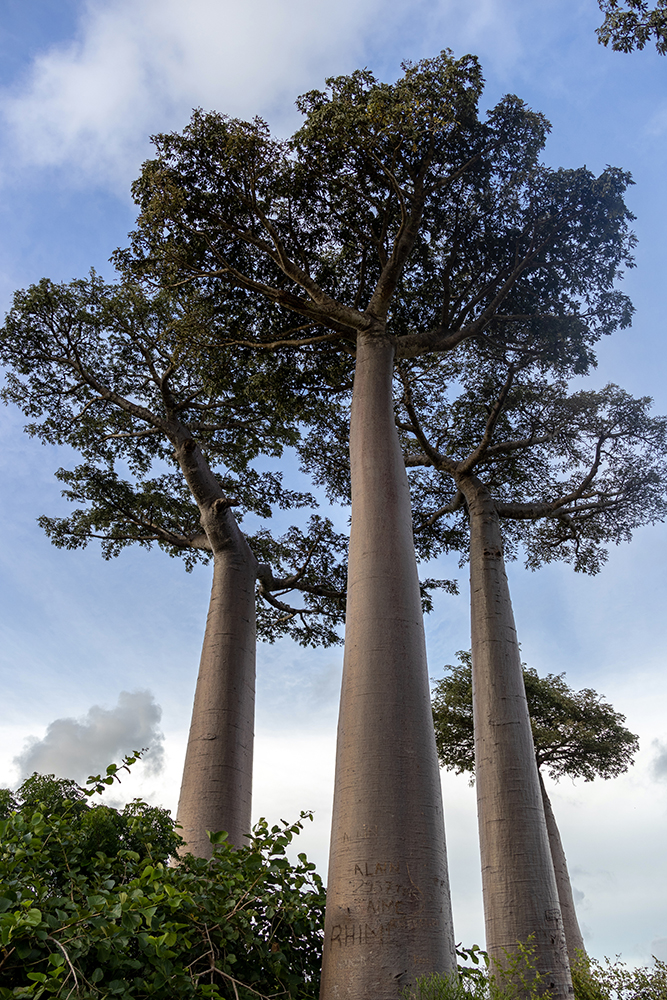
Within a half hour, we had arrived at one of Madagascar’s most well-known destinations, the Avenue of the Baobabs. This evening we would just get a quick preview of the Avenue because we still had a long drive ahead of us to reach our hotel. Our drivers let us out of the vehicles, and we got to take a stroll down the Avenue, as the iconic trees towered above us. I’ll write a lot more about these amazing trees in my next post, because we got a much longer visit, and learned more about them the next day.
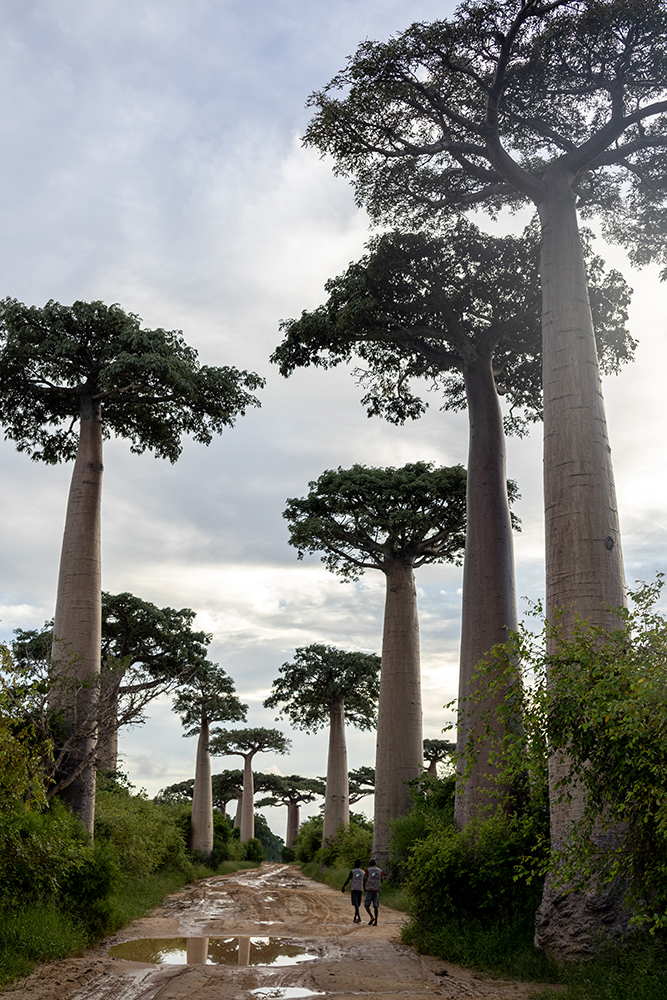
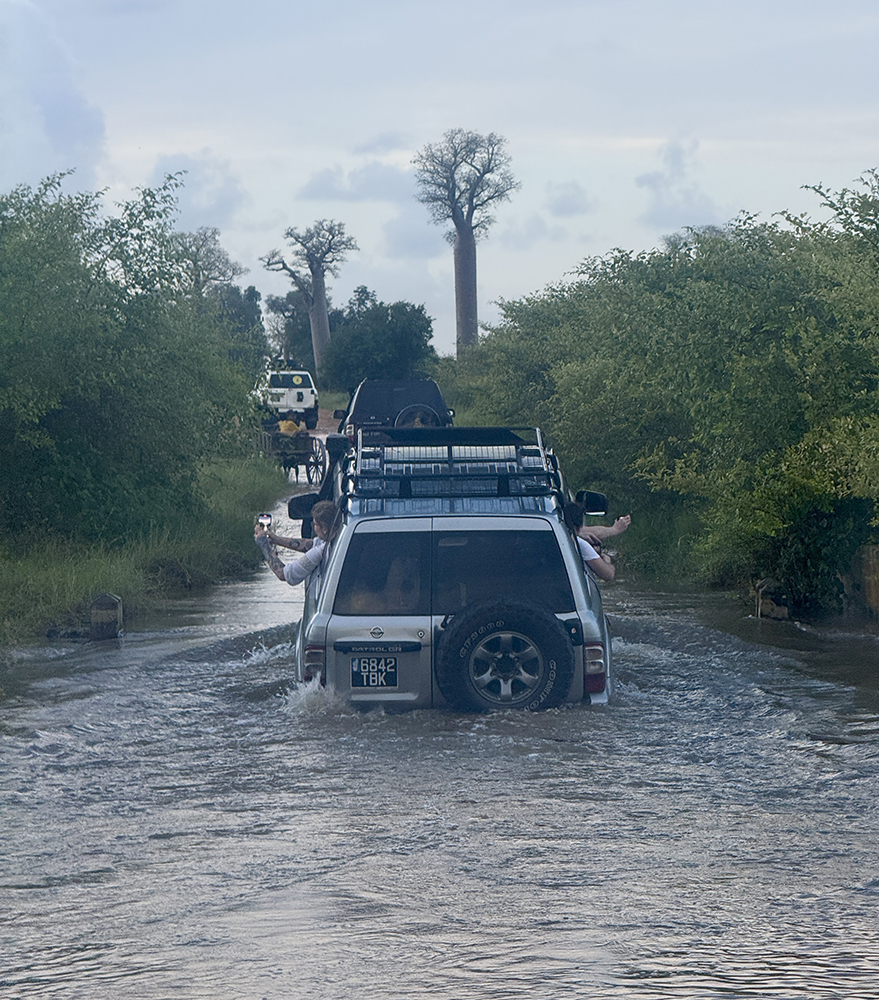
We joined back up with our drivers a ways down the Avenue, and then continued the bumpy ride down an increasingly flooded roadway. The puddles we’d splashed through before seemed insignificant as we took on sections of flooding so deep that the 4×4’s headlights were completely submerged. There were places that I worried we’d get stuck, but our driver handled every obstacle with precision and ease. We passed by a vehicle that seemed hopelessly stuck, as several people worked to dislodge it from the mud. We also saw many goat and zebu herds, wading through the flood waters along the way.
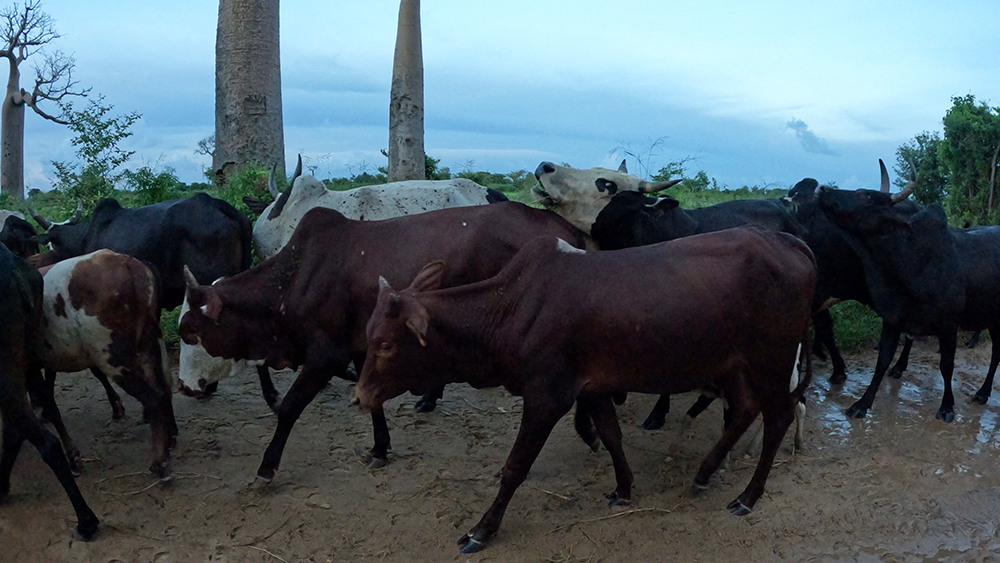
I cannot overstate how significant zebus seem to be in Madagascar. Every menu we encountered had zebu burgers or zebu steak on it, so they are a major food source throughout the country (and most people we asked, said that zebu is their favorite food). But beyond that, they are used for transportation, and agricultural work, and even used as dowries in many communities. The zebus have a lot of cultural and financial value in Madagascar, and are one of the best investments, especially in rural areas, in the country.
Sunset gave way to nightfall, and by the time we finally arrived at the Relais Du Kirindy, the forest was engulfed in darkness. Insects sang a loud chorus as we toasted with a round of welcome drinks, and washed our sweaty faces with fresh towels. We placed our dinner orders, and then collected our keys so we could find our cabins and unpack for the night while our food was being prepared. On the trail out to me and Vince’s cabin, I discovered the first of many giant land snails we would see that night (shortly after this I would find in our room).

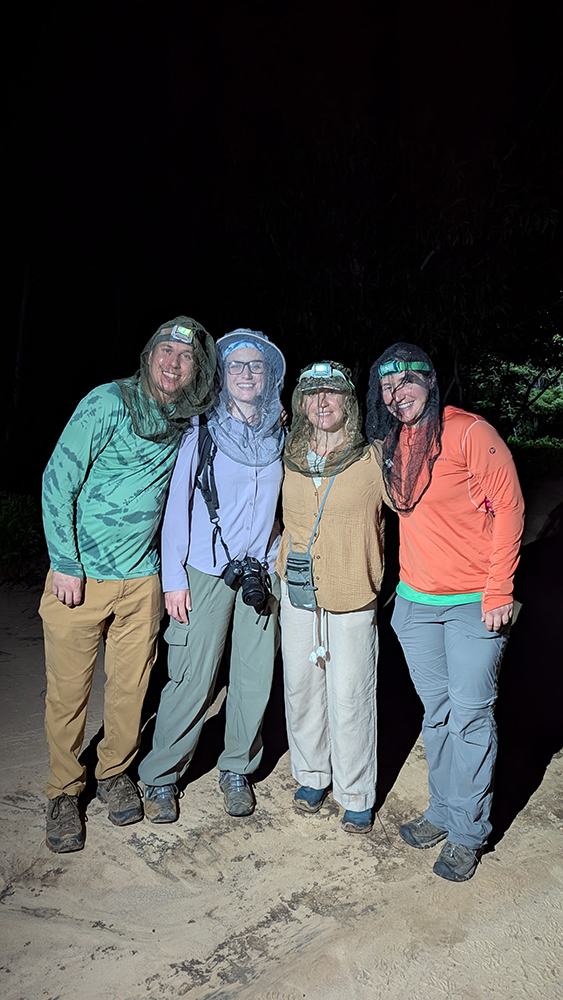
The discovery of the snail had me itching to go outside and look for more night creatures, and during dinner, a handful of us hatched a plan to go out and look for bugs after we’d finished eating. We all met up in the parking lot, and set off into the forest. At first, all we found were more snails, some geckos, and a variety of insects, but soon one of the lodge’s staff members noticed us, and gathered up some more people to help us look for mouse lemurs.
Prior to this, I didn’t think we’d stand a chance of spotting mouse lemurs, which are known for being tiny, so it was with rejuvenated enthusiasm that we began to scan the trees, looking for the reflections of the little lemurs’ eyes. As it turned out Caleb was amazing at spotting them and he saw one right away.

And not long after that a couple of the lodge’s staff members found one that was even closer to the ground!

These are gray mouse lemurs, a nocturnal lemur that is grouped among some of the smallest primates in the world. Gray mouse lemurs max out at a weight of around sixty-seven grams, but even they are not quite the smallest primate. That title is held by the Madame Berthe’s mouse lemur, which grows to only half that weight at around thirty grams.
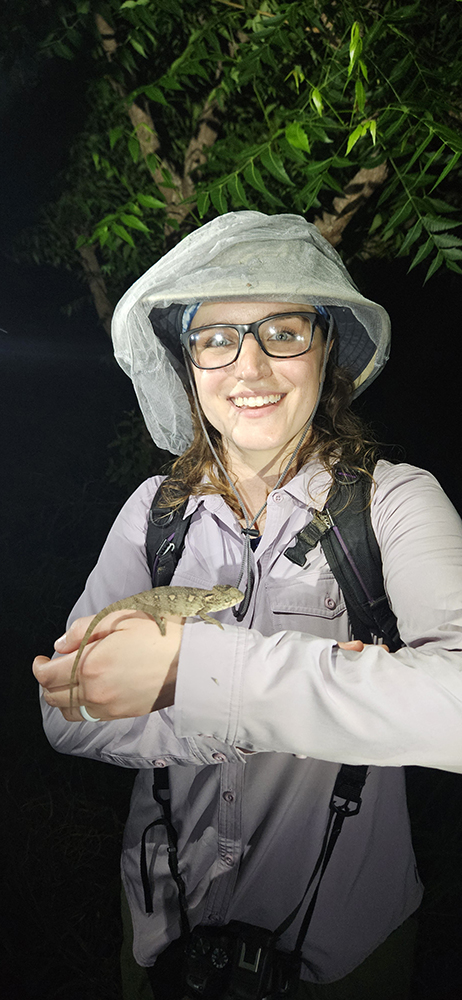
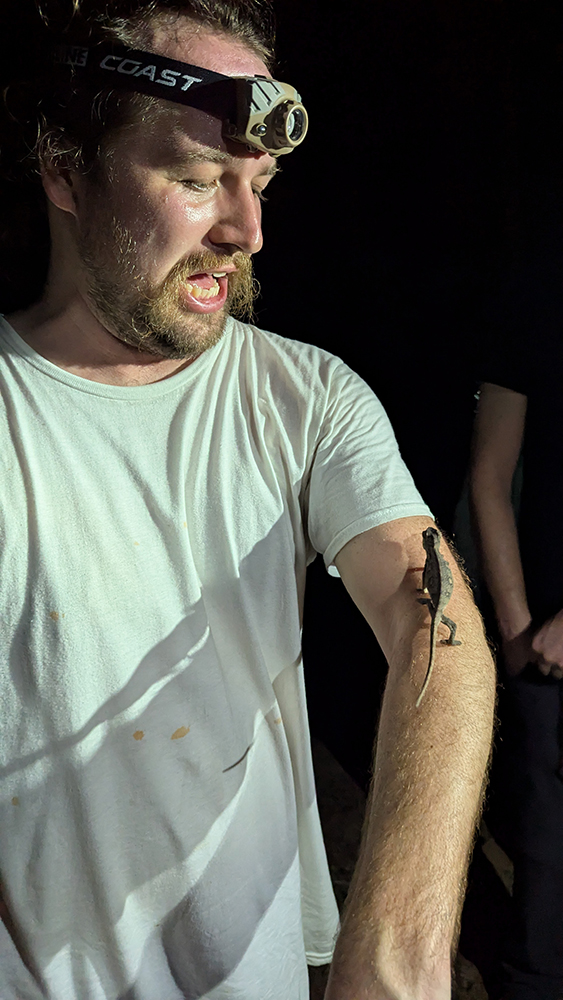
In total, we managed to find seven mouse lemurs and our second chameleon of the trip before returning to our cabins to get some rest.
I truly couldn’t believe that we’d already managed to see some of Madagascar’s incredible wildlife before we’d even officially gone on our first guided hike. It was clear that this was already shaping up to be an amazing trip, and it was still just getting started. I went to sleep that night feeling happy, and completely sure that the next day was going to be even more amazing. Little did I know that the morning would start off with one of the most dramatic events I’ve ever experienced while traveling….
You can see more details of this amazing destination on my YouTube channel!









 birdsoftheairtravel.com
2 comments