You are sharp
Like the sand
You Withstood in the desert.
…
I feel you everywhere
Like sand in the wind.
–Sand Storm, Mark Turbyfill
It was late evening when we arrived in our last city on our nine day tour of Algeria. We’d spent the day exploring the fascinating historical sites and jaw-dropping vistas of Oran before making the long drive to our final accommodation of the trip, the five star, Renaissance Hotel in Tlemcen. Abdou, the owner of Izelwan Travel, had surprised us with an upgrade for our last night in Algeria, and as I stepped through the grand entryway of the Renaissance, my eyes opened wide to take it in.
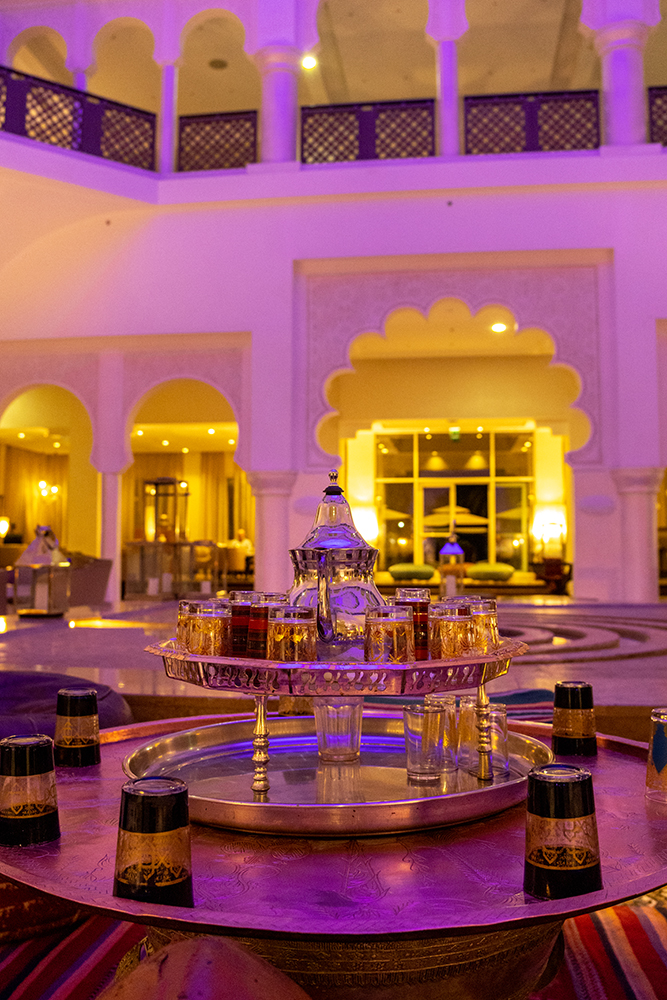
In the center of the lobby was a plush seating area in a wide, domed atrium that was open to the many floors of the hotel. At this late hour, everything was lit with purple mood lighting, and a tea service sat next to a couple of extravagant couches, ready for us to refresh ourselves with a warm herbal tea as we waited to check in.
I was ecstatic to get to stay at such a beautiful hotel for the night, and I was even more ecstatic to fall into our cloud-like bed when Vince and I dropped our bags off in our large and comfortable room. It had been a long day. I was so exhausted that I groaned as my stiff muscles sank into the fluffy mattress. All I wanted in that moment was to go immediately to sleep. Forget washing my face, brushing my teeth, or changing out of my dusty clothes, I was ready to crash.
But it’s not every day that I get to enjoy such an upscale accommodation while traveling, and it would be a shame to miss out on enjoying it during our short stay. So I begrudgingly rolled out of bed, freshened up a bit, and then Vince and I left the room to meet up with the rest of our friends for a late dinner. The Renaissance had two dining options that were open at the time, a buffet and an Italian restaurant. We opted for Italian food because we wanted to have a plated dinner for our final evening in Algeria.
The restaurant was as lavish as the rest of the hotel, with a cream and white color scheme and modern decorations. We all ordered our food (I got lasagna), and the dishes came out with care and attention paid to the presentation. By the end of the meal, and with stomachs full of pasta, we really were done in for the night. It was getting increasingly difficult to keep my eyes open, and after paying our bill, we retired to our rooms for the night, where I fell asleep the instant I crawled into bed.
The next morning, we enjoyed a buffet breakfast, and opted to sit outside on the restaurant’s open-air balcony. It was a bit colder out than I would have expected, but the Renaissance does sit on top of a tall plateau, so I initially chalked the chill up to elevation. Then I glanced off to the western sky, and saw what I thought was a storm cloud hanging over the plateau. To the east, the sun was still shining, so I put the cloud out of my mind as I sipped some tea to finish off my breakfast.
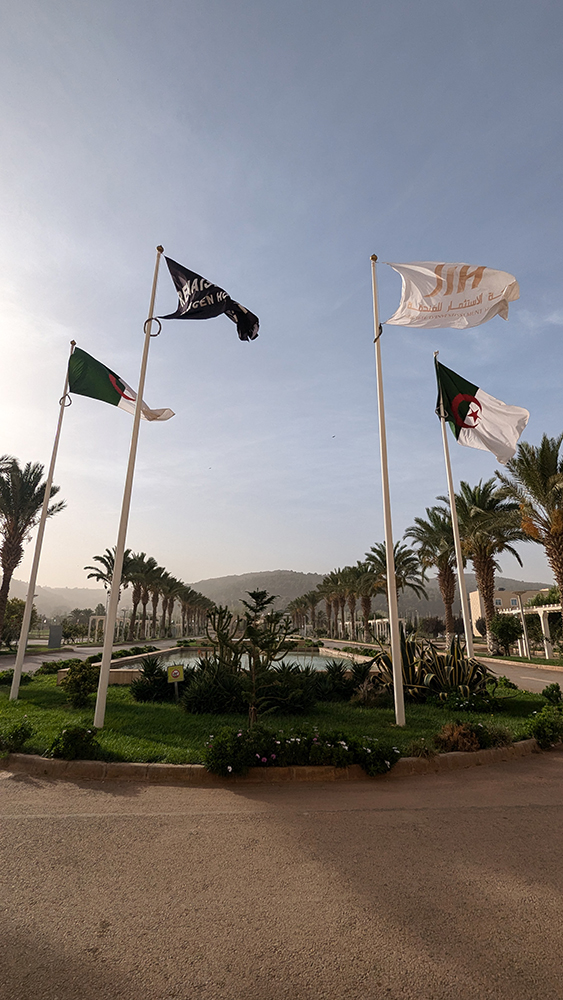
At check out time, the sun was still shining, but a strong wind tore at a quartet of flags that stood outside of the front doors. We all gathered up our luggage and then got into the waiting sprinter van for our last day tour of the trip, and I eagerly watched from my window as we drove across the plateau and began descending into a densely forested road.
As we lost elevation, the forest was suddenly engulfed in what looked like a thick fog. Perhaps I’d been wrong that the storm I’d seen from the veranda would fizzle out. I continued to watch the tendrils of fog weaving through the trees as our guide explained the day’s itinerary. First, we’d be stopping at Tlemcen’s art museum and calligraphy museum. Then we would visit the Mansourah mosque, followed by a cable car ride back up to the top of the plateau for a panoramic view of the city. Then he teased that if we had time leftover, we would get to stop at a surprise location. Jared and I exchanged a conspiratorial glance at the last item. We were both sure we already knew what the surprise would be, but only time would tell if we were right.
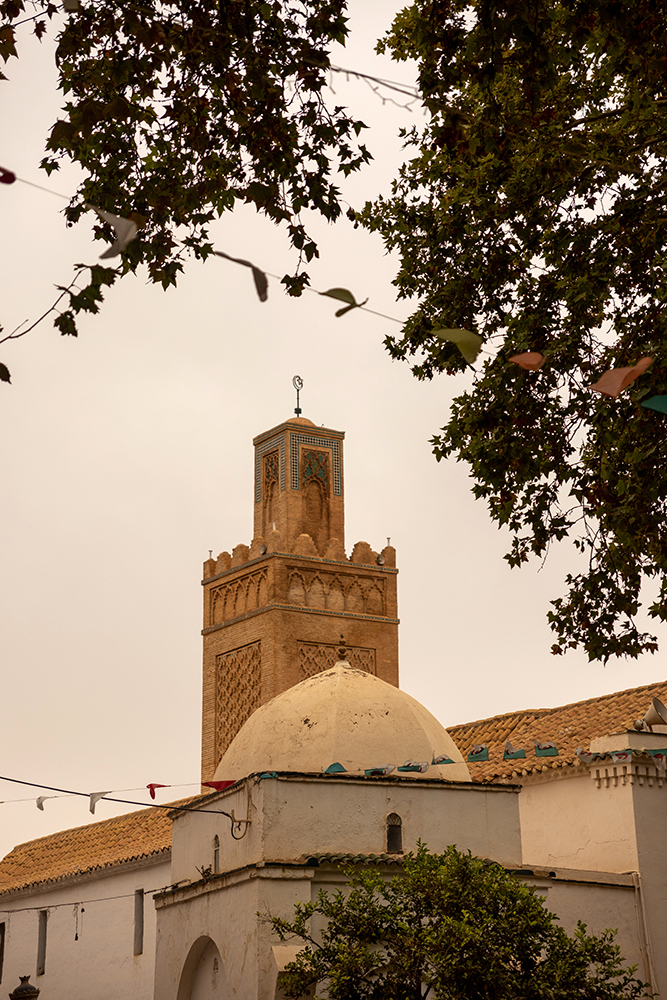
Within fifteen minutes, we’d arrived in downtown Tlemcen, and our driver dropped us off at a busy, cobblestone square full of mature trees and pigeons. Our guide led us over to the Museum of Art and History, but a guard at the door informed us that the museum was closed for the day. So we walked through the square and over another block where we arrived at the Islamic Calligraphy Museum of Tlemcen. It was apparent that this museum was once a mosque because the building’s minaret still stood tall above the bustling street. We approached the museum, only to find out that it was also closed. But our guide talked to one of the attendants for a bit, then came back and informed us that they would temporarily open up to let us tour their collection.
Inside, there were display cases filled with beautifully penned manuscripts and Qurans. The intricately carved plaster walls of the old mosque contained enlarged examples of Quranic verses so that we could examine several different styles in detail. A site guide from the museum led us around the room on an in depth tour, explaining all of the different calligraphy techniques on display. He also taught us about the history of the Sidi Belahcen Mosque, which dates back to 1296.

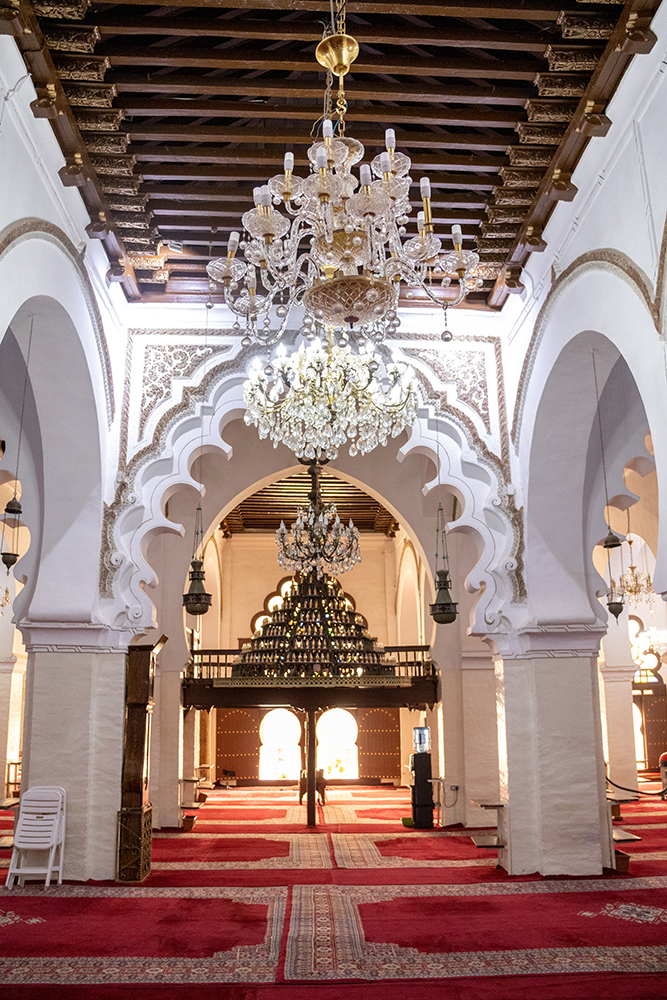
After we’d toured the whole museum, our site guide surprised us by inviting us to visit the Great Mosque of Tlemcen. We followed him back outside and down the street a short ways. The air quality outside had deteriorated rapidly, and there was a chill in the air as we walked toward a towering minaret that rose above the buildings that surrounded it. When we arrived at the entrance to the mosque, an attendant greeted us, then produced a trio of scarves for Rachel, Bonnie, and I to use. We’d left our own scarves packed away in the van since we hadn’t been expecting the visit a mosque that day.
Once the three of us had our scarves on, we all took off our shoes and entered the mosque. We got the chance to admire its detailed architecture, complete with resplendent chandeliers, and to get a better look at its tall minaret.
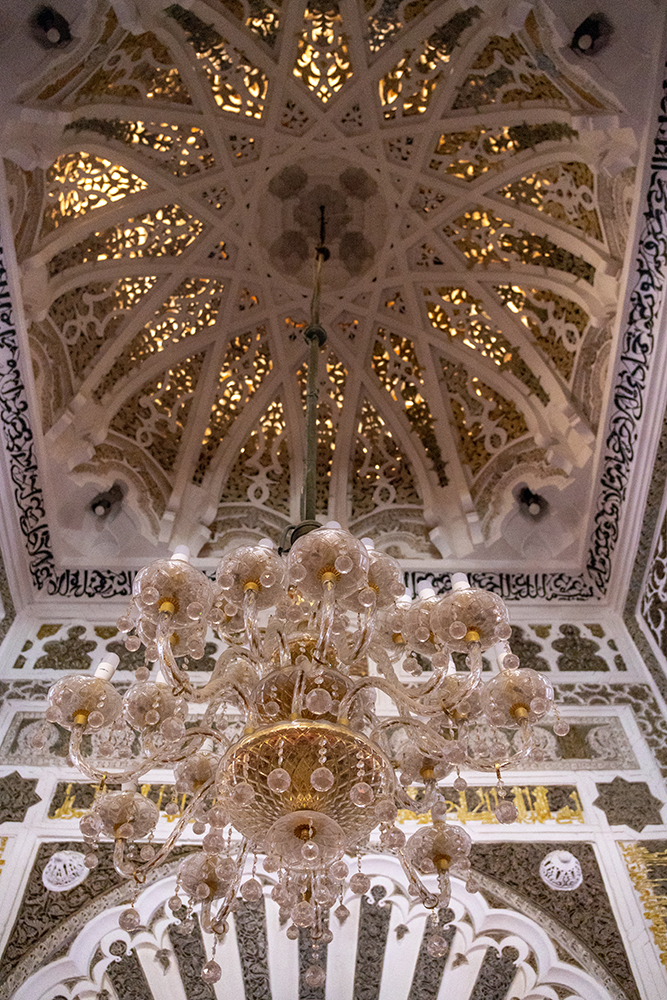
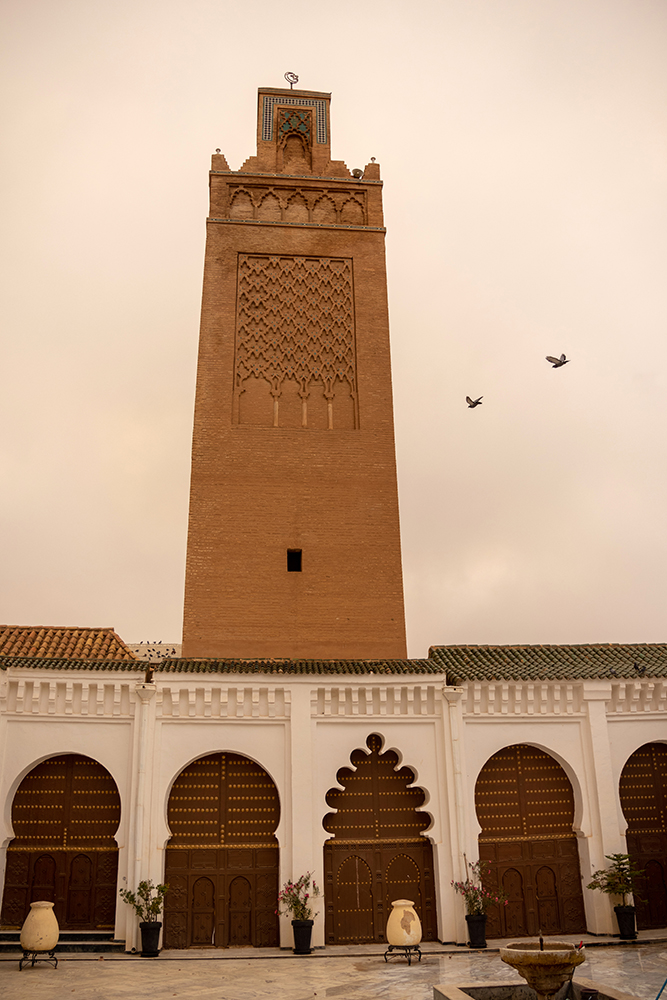
When we exited the Great Mosque, we thanked the site guide profusely. We were so grateful that he’d taken the time to give us such an in-depth and extensive tour when the Calligraphy Museum wasn’t even supposed to be open!
Next, our driver collected us and we rode a short distance to El Mechouar Palace, which was…closed of course. But as with the Calligraphy Museum, our guide spoke with the palace guards and they agreed to let us inside for a tour. By now it was clear that the bad weather had developed into a dust storm. We walked along the inside of the palace wall, climbing a sloped ramp up to the top of the wall where we could have a bird’s eye view of the palace on one side, and the city streets on the other. Both scenes were tinted with a yellow hue that I didn’t quite believe. I kept blinking my eyes to make sure that what I was seeing was real, until Jared confirmed that he saw the strange shift in atmosphere too.


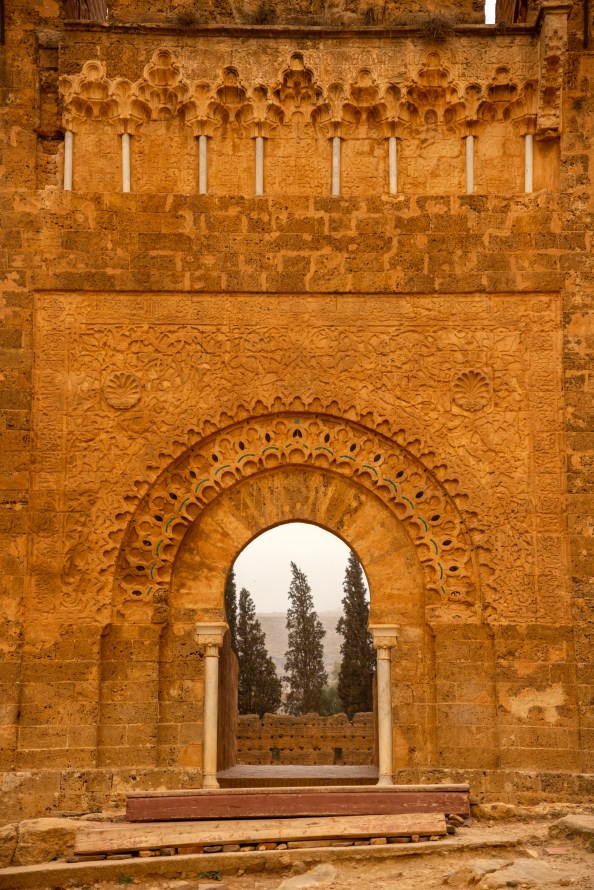
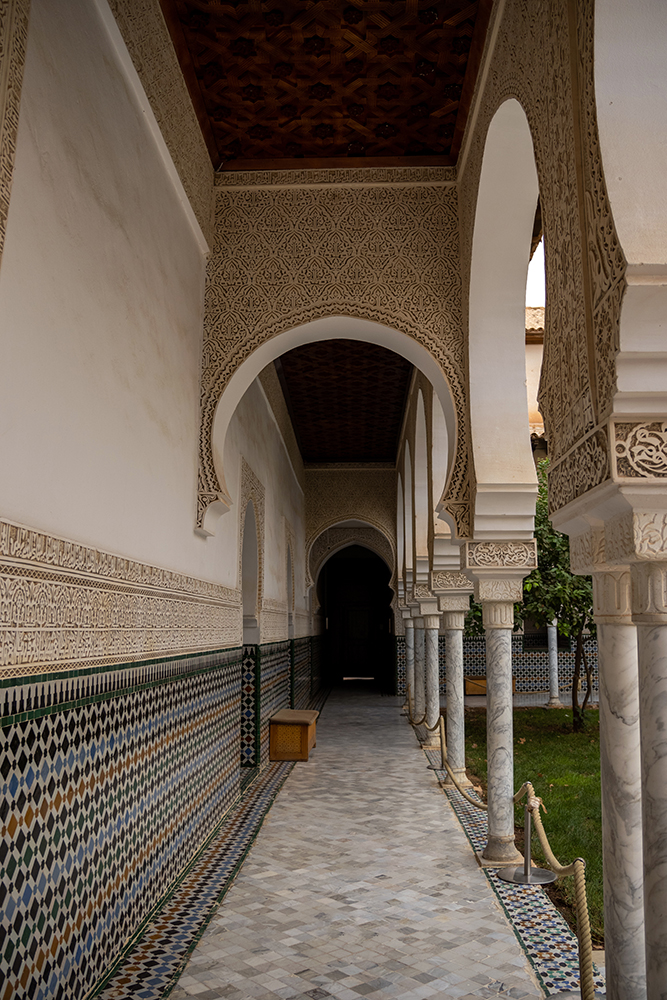
As we all quietly discussed how strange the skies looked, a palace site guide approached and introduced herself. She was extremely friendly and knowledgable, and we were all excited to start the tour. We followed her back along the wall, and then into the palace itself where she explained the site’s history as we moved from room to room, gawking at the 12th century Moorish architecture. My favorite features of El Mechouar Palace were its courtyard lined with carved plaster arches, and the heavily decorative plaster carvings inside its many chambers.
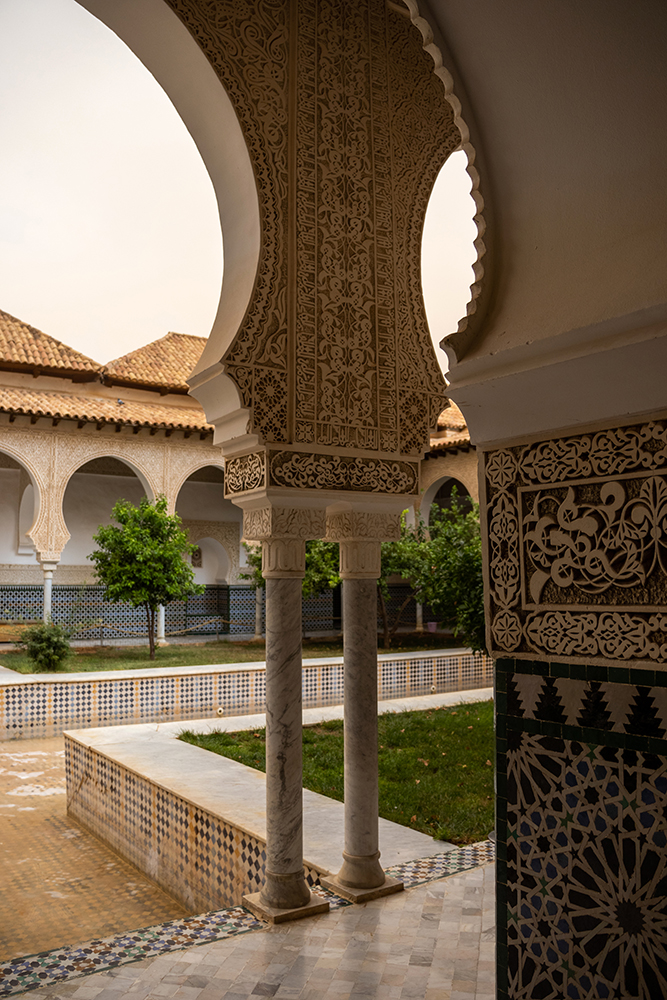
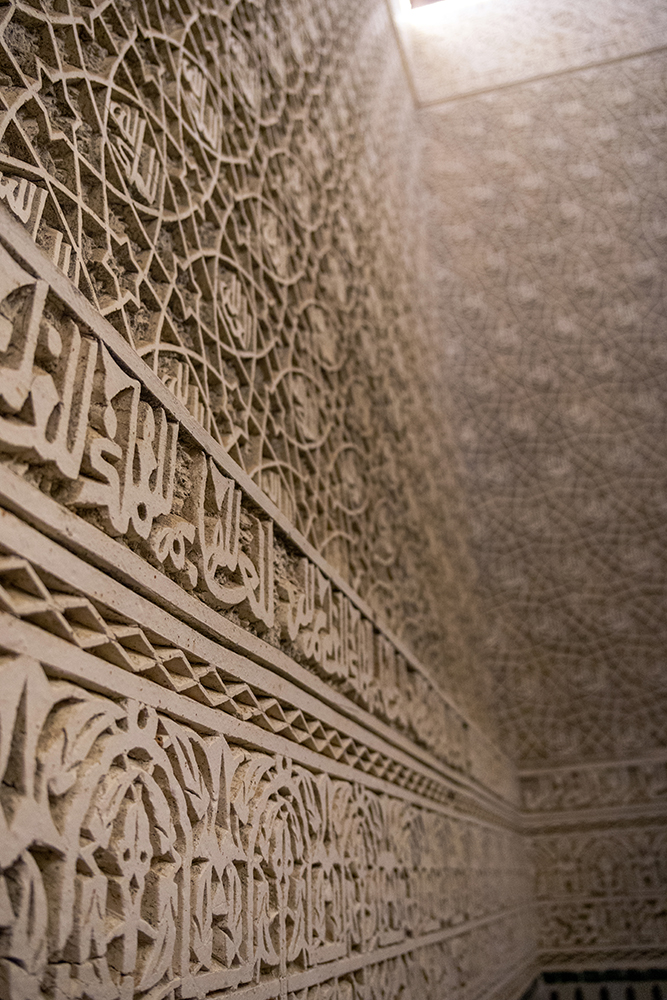
Once again, we were beyond grateful that we’d been able to tour such a fascinating location even though it was closed for cleaning, and we thanked the site guide before setting out for our next destination. The dust storm had only intensified during our visit to the palace, and by the time we reached the Mansourah Mosque, the atmosphere had grown downright apocalyptic.
The Mansourah Mosque must have been spectacular in the early 1300’s when it was built by the Marinid sultan, Abu Yaqub. All that remains of it today though, is its massive minaret and crumbling sections of its exterior walls. Our guide explained that the ancient mosque was destroyed by earthquakes before setting us free to wander around the interior of the site at our own pace. The skeletal minaret towered ominously above us in a sepia haze as we marched up a wide set of steps towards the ruined mosque.
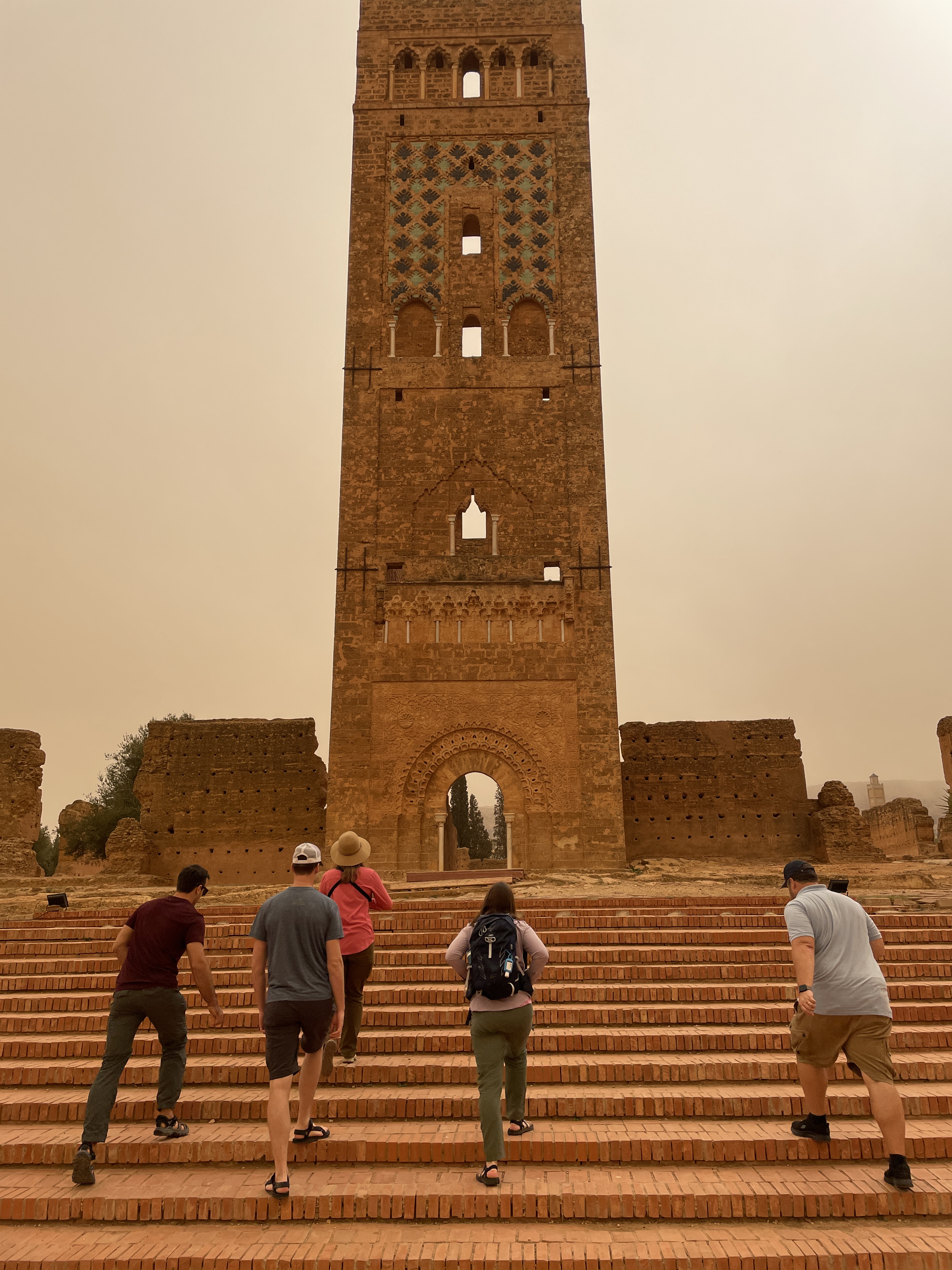
Once inside, the site looked even more dystopian. The back side of the minaret was gone completely, leaving its hollow center visible to us. All around us was a wide open field of packed dirt, surrounded by eroded walls. A single tree grew off to the right of the minaret, it’s branches perfectly framing a missing section of wall. The dust particles that hung in the air leeched every color from the scene, save for browns, yellows, and oranges. It felt like we’d stepped into a film that had been intentionally color graded to give the viewer a sense of foreboding. I loved it.

After we’d all had our fill of wandering through the old mosque, we exited back through the minaret’s door, ready to move on to the viewpoint from the top of the plateau. It turned out that the cable car that runs to the top of the plateau was closed though (shocking, I know), so we rode back uphill in the van instead. When we reached the viewpoint, we found another sepia scene.
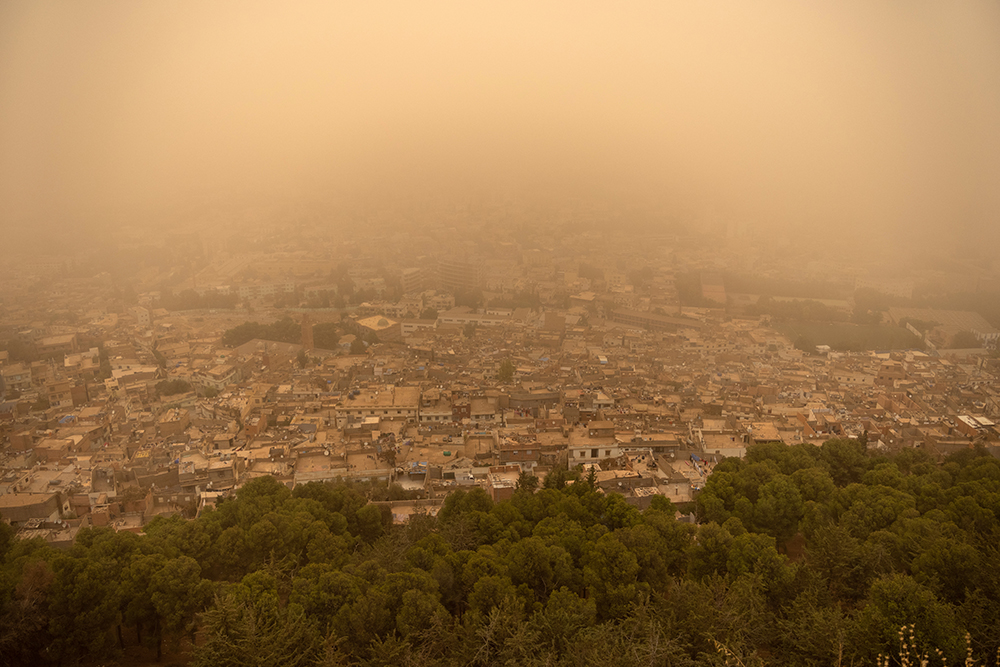
Dust was everywhere at this point. I could feel it coating my teeth and sticking to the back of my throat. I had to blink fine granules of it out of my eyes, and wipe off my camera’s lens every few seconds. Ostensibly, we should have been able to see a sprawling view of Tlemcen, bordered by neighboring mountains. In reality, all we could see were a smattering of buildings at the foot of the plateau. The shapes of the city faded into the haze until everything disappeared entirely, completely engulfed in orange dust.
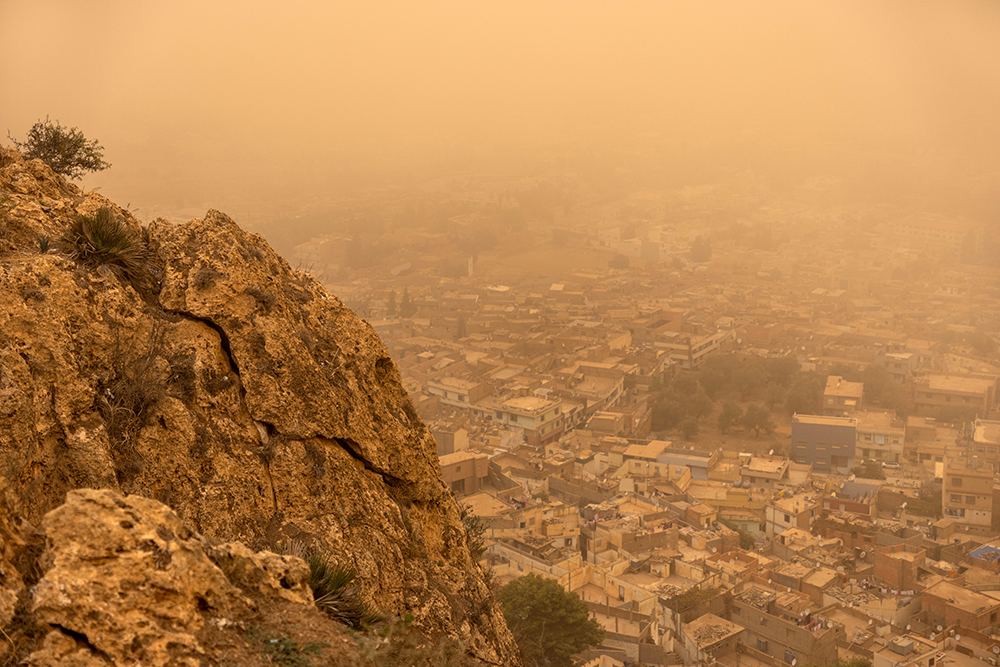
No, this was not the view I’d been expecting when I woke up that morning. But the way I looked at it, I’d seen a lot of mountains, and I’d seen a lot of cities. Never in my life had I seen the inside (or outside for that matter) of a dust storm before that day in Tlemcen. So rather than feel disappointment, I instead felt grateful to have the chance to experience something completely new to me.
Since there wasn’t a whole lot to see, we didn’t linger at the viewpoint for long. We were all eager to find out what the surprise stop was. We piled back into the van, and our driver took us on a route that went away from the city. This all but confirmed mine and Jared’s suspicions about what the secret stop would be, and my excitement grew as we got further from town.
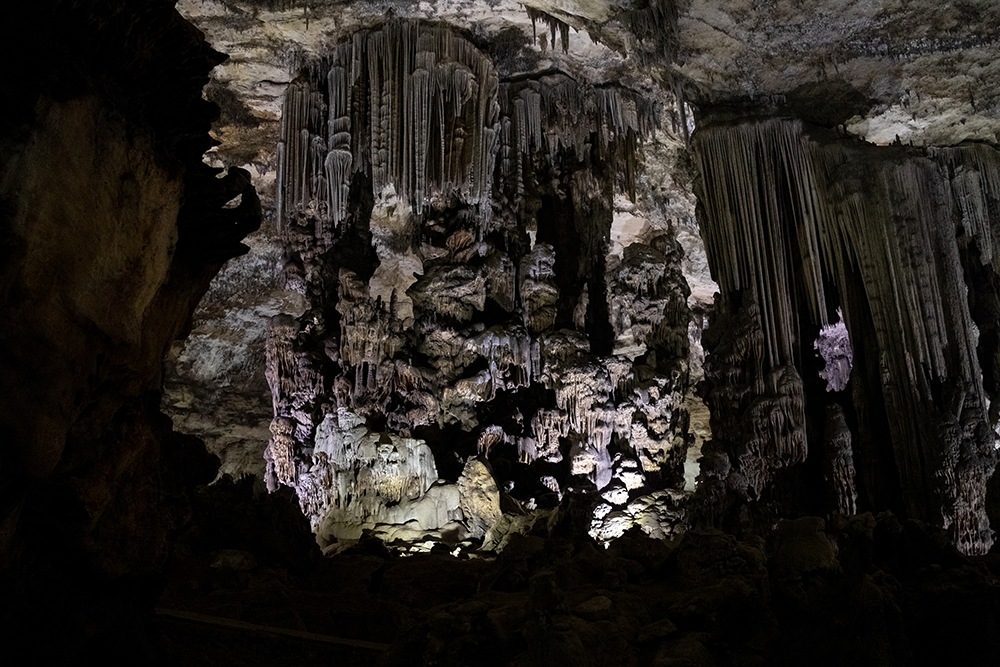
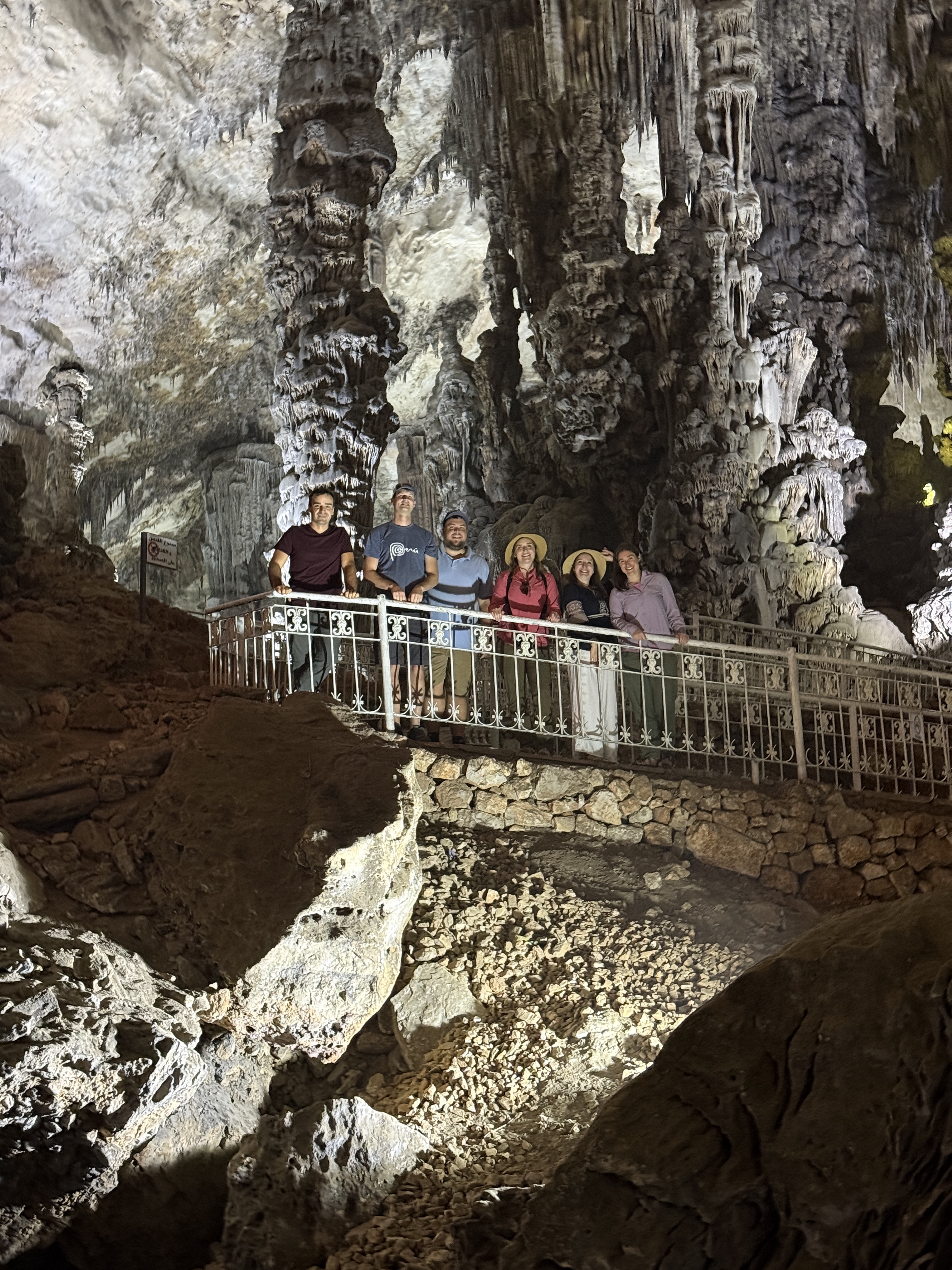
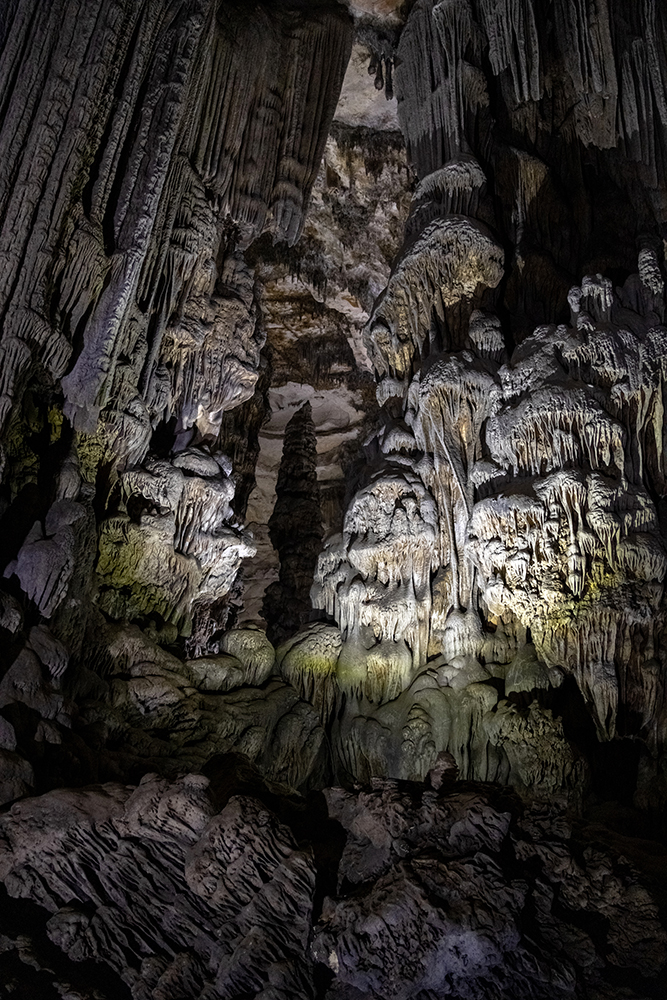
A half hour later, we arrived at the entrance to Les Grottes des Beni Add, a vast cave that is rumored to connect to Morocco. A strong wind was blowing through the orange air as we jumped out of the van, but the storm couldn’t follow us down a steep set of stairs that led into a yawning opening in the earth. When we stepped through the cave’s entrance, the wind and dust vanished entirely, and we were met instead, by the sight of thousands of delicate stalactites dripping from the ceiling.

It’s safe to say that the jaws of our group collectively dropped. The main chamber of Beni Add was dizzyingly large, and full from floor to ceiling with pristine stalactite and stalagmite formations. Even our guide was impressed, although he’s been to the cave many times. He explained that Beni Add is usually packed so full of tourists that you can barely move, and consequently it’s often very loud and chaotic inside. Looking around, I could only see two visitors besides our group inside the cave. Our guide said that it felt like he was seeing it for the first time because he’d never experienced it like this before.
With no crowds to contend with, we were able to move around freely and spend as much time as we wanted marveling at all of the cave’s chambers and formations. This was without a doubt the highlight of our day in Tlemcen.

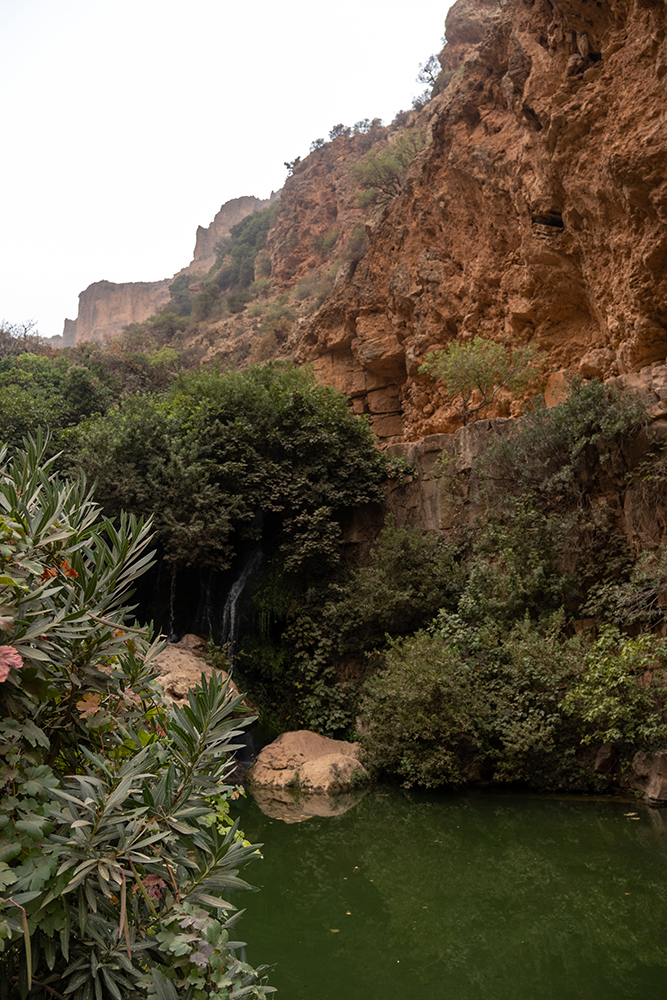
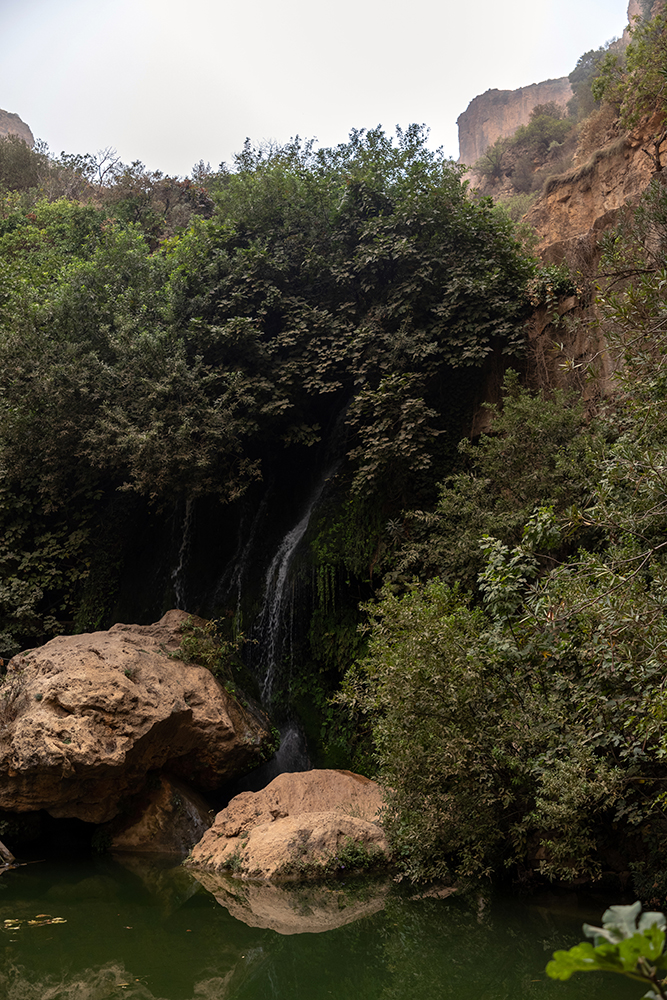
We spent a long time inside the Beni Add Cave, and when we finally climbed back into the orange haze of the outside world, our day tour was nearly at its end. Our guide brought us to one last location along the drive back to Tlemcen. We got to stop and follow a short path to go see El Ourit waterfalls. The waterfall’s flow wasn’t very strong at the time of our visit, but we enjoyed a few minutes admiring the small fall and tranquil pool at its base.
When we left El Ourit Waterfall, it was time to begin our long journey home. It was hard to believe that our time in Algeria was over. It felt like we’d been there for much longer than nine days because we got to see so much of the country, and explore so many different periods of its fascinating and complex history. This was such an amazing trip, and I feel extremely lucky to have gotten to visit Algeria, a country that I never thought I would get to visit in my wildest dreams!









 birdsoftheairtravel.com