
I stepped down from a set of airstairs on the small plane we’d boarded in Ghardaïa early in the morning. As my feet hit the tarmac, I found it difficult to believe that we were back in Algeria’s capital city of Algiers after nearly a week of exploring some of the most breathtaking cultural and historical locations that I’ve ever visited. Now our trip was quickly approaching it’s finale. We still had three more days left before we would officially board our flight back to the US, but with this return to Algiers, the first city we’d visited, I was beginning to feel the impending end of the holiday looming in the not-so-distant future.
Algiers was not our final destination of the day. By evening we would be in the Mediterranean city of Oran, but with several hours left before our flight, we had enough time to go out and see some attractions that we hadn’t visited on our first day in the White City. So we collected our luggage, and then exited the airport where we found our Driver, Nadir, and Izelwan Travel’s owner, Abdou, waiting for us. I may have been exhausted when I’d woken up before the sun that morning, but I instantly perked up upon greeting them, and soon we were all comfortably seated in the Mercedes Sprinter for a short drive into the city.
There were three points of interest on our itinerary for the day, and all of them were located very close to each other. We started with a monument that we were already familiar with because we had caught glimpses of it on our first tour of Algiers.
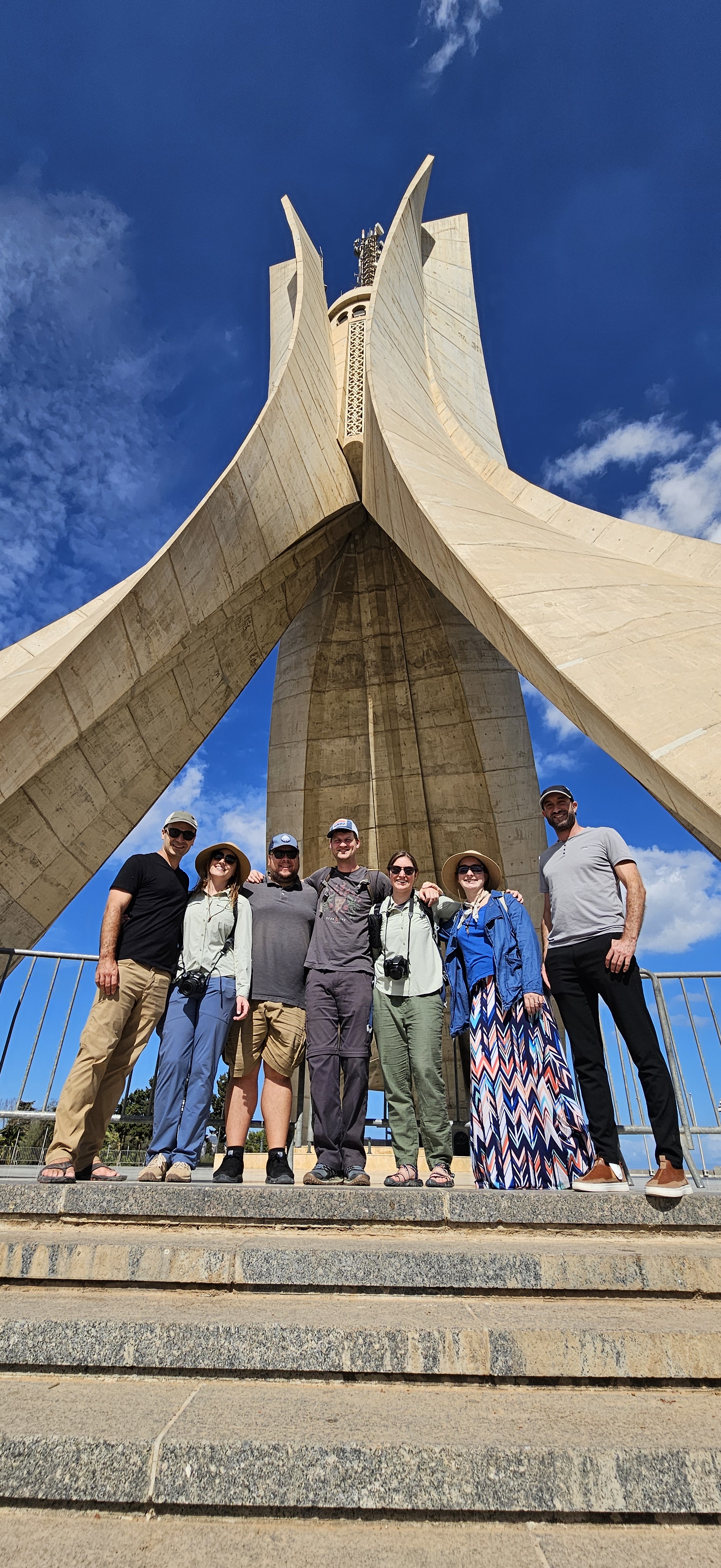
The Maqam Echahid, or Martyr’s Memorial, sits on a prominent hilltop that towers above the city, and demands attention even from miles away. Now that we were finally able to see the 92 meter tall, concrete monument up close, I had a new appreciation for how big it was. I glanced up at the monument as I stepped down from the van, but was immediately distracted by a surging crowd of young men, all dressed in white and red and waving matching flags. They were singing and clapping, and our guide explained that they were fans of the Oran football team, and were in town for a match against Algiers later that evening.
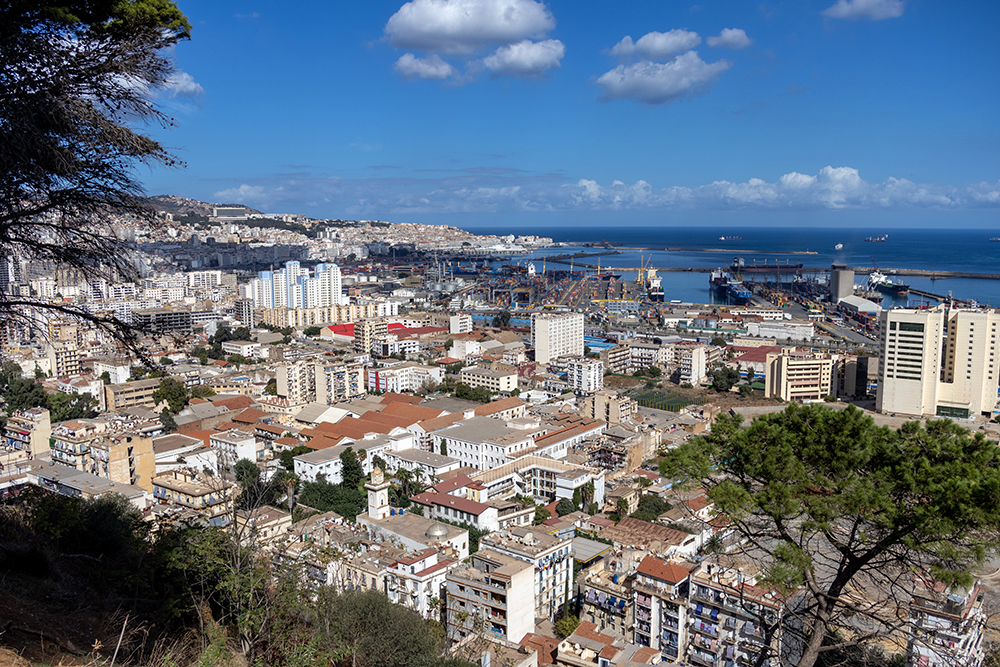
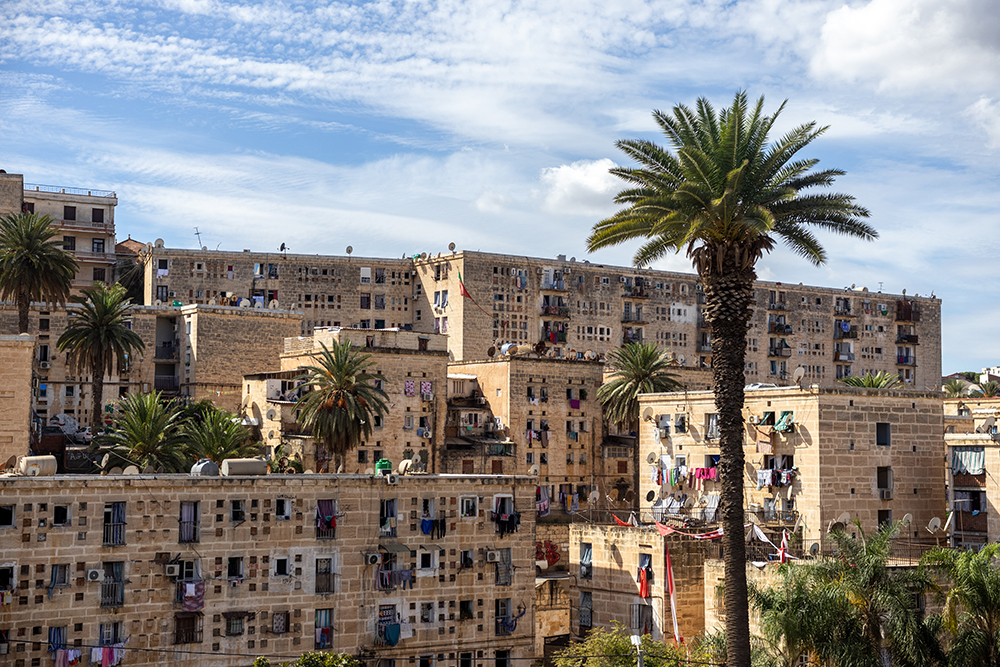
Before explaining more about the memorial, he led us over to a guard rail at the edge of the hill, where we could see a sprawling view of the city, along with what would be our next stop of the day, a 79 acre botanical garden in the heart of Algiers. This view was quite different from the one we’d seen in the Casbah earlier that week. The white buildings were more modern, and the man-made forest of tropical trees dominated half of the landscape.

We continued to enjoy the scenery as our guide gave us a run-down of the agenda for the day, and then he led us into the shadow of the Martyr’s Memorial. The structure was made of three tall fins of concrete that fan out near the ground and then swoop upwards towards each other at the very top. On the base of each of each of the three columns was a statue of a soldier, each meant to represent a different stage in Algeria’s fight for independence from France. Our guide told us that there is an eternal flame lit inside the top of the monument, but that visitors can only view the structure from ground level. So we made a wide circle of the memorial, admiring the simplicity and balance of its architecture, until we were back where we’d started.

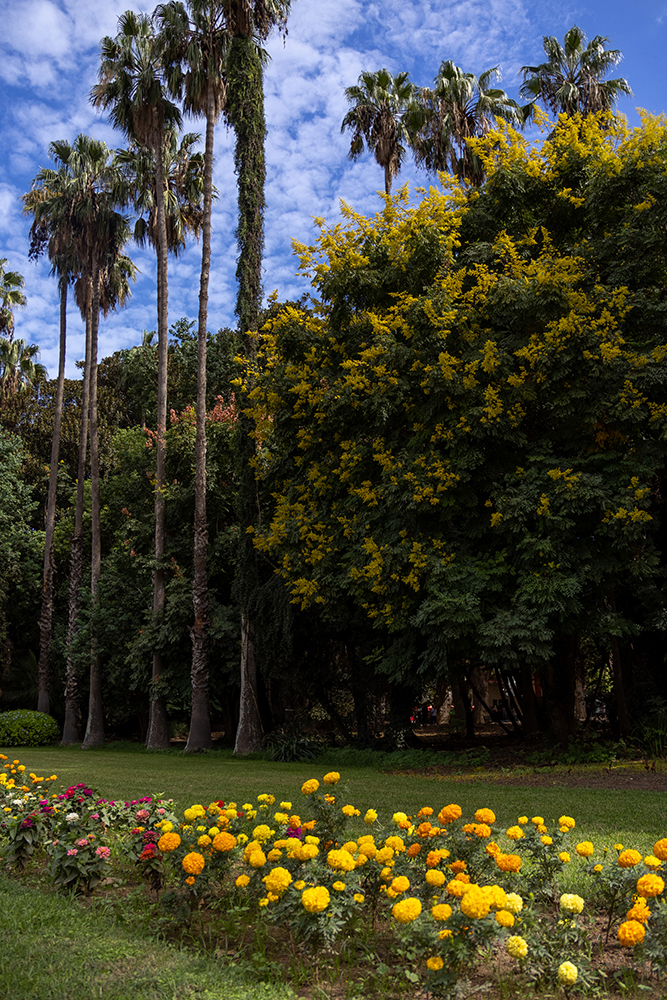
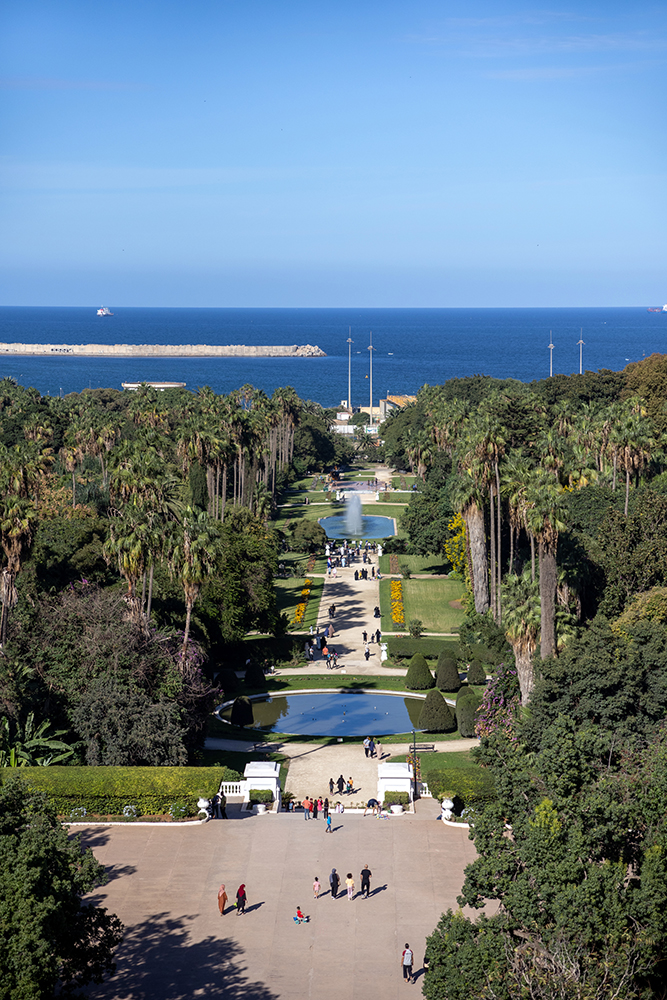
From there, we were ready to head downhill to the Botanic Garden of Hamma, but we wouldn’t be traveling by van or by foot. We lined up to board a short cable car that would take us down to the street below, and enjoyed the view of treetops flying by under our feet until the car stopped to let us out. The entrance gate to the garden was across the street from the cable car, so we took the short walk over and went inside. Immediately it felt like we’d been transported out of the city and into a perfectly manicured European estate. There was a grand staircase leading down to a hedge-lined path with fountains in its middle. On either side, palm trees reached towards the sky, the only clue to give away that we hadn’t somehow teleported to Versailles.


The garden looks European because it was planted during the French colonial period of Algeria. The project began in 1832, and was originally designed to be a model farm, and used to grow and study imported plants for medicinal purposes. This is why it’s also known as the Test Garden of Hamma.
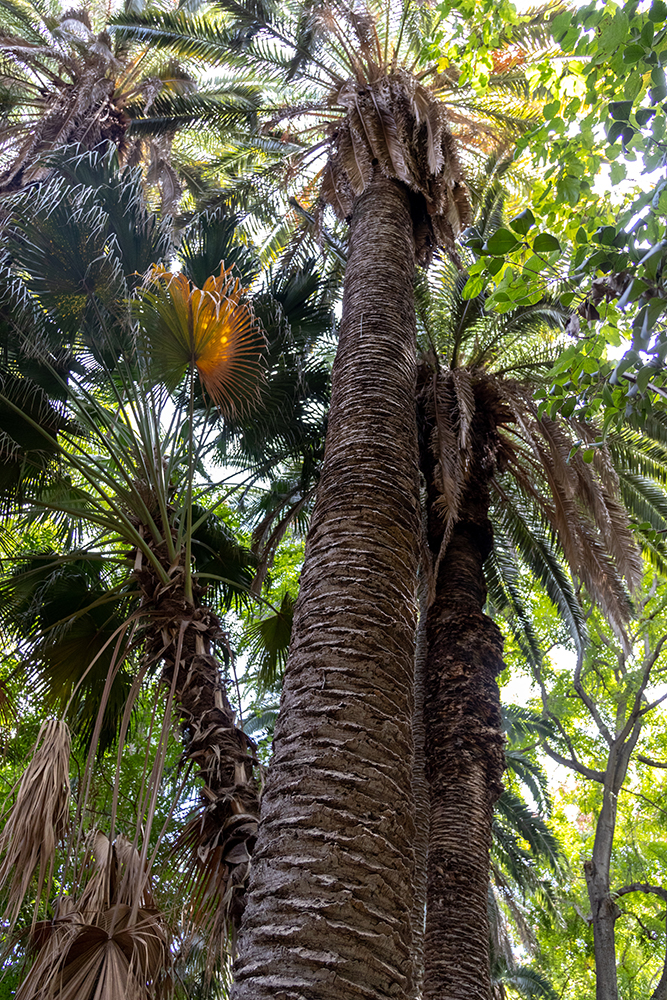
Our guide told us that the grand entryway is known as the French section of the garden. He then veered off onto a trail that led into a veritable jungle of exotic trees and plants, and said that this wilder area is known as the English section. We followed him into the forest, and I swiveled around to find huge, buttressed trees on either side of the path, and a canopy of towering palms far above my head. I couldn’t believe that this dense and luscious forest was right in the middle of Algiers. Inside of the garden, it felt more like the Amazon Rainforest than a bustling capital city.
It was lunch time now, and our guide said we’d be dining at a restaurant inside the forest. So we followed him along the path, passing by more impressive plants, and a beautiful intersecting trail that was lined with two rows of straight-trunked plane trees.

Not long after that, we arrived at a restaurant called L’auberge du Dragonnier (The Dragon Tree Inn). They weren’t open when we arrived, but they were kind enough to allow us come inside and order lunch anyway. I ordered a fantastic curry, and a Schweppes lemon mint soda, which had quickly become my favorite beverage choice of the trip (I wish I could find these somewhere back home). By the time we were finishing our meals, the restaurant was open for real, and we moved to an outdoor table to have dessert and coffee underneath a grove of palm trees while a few skittish kittens hovered around our feet.
After lunch, we walked deeper into the garden. We strolled alongside a pond that was lined with marshy plants as several varieties of duck swam in its tranquil waters.

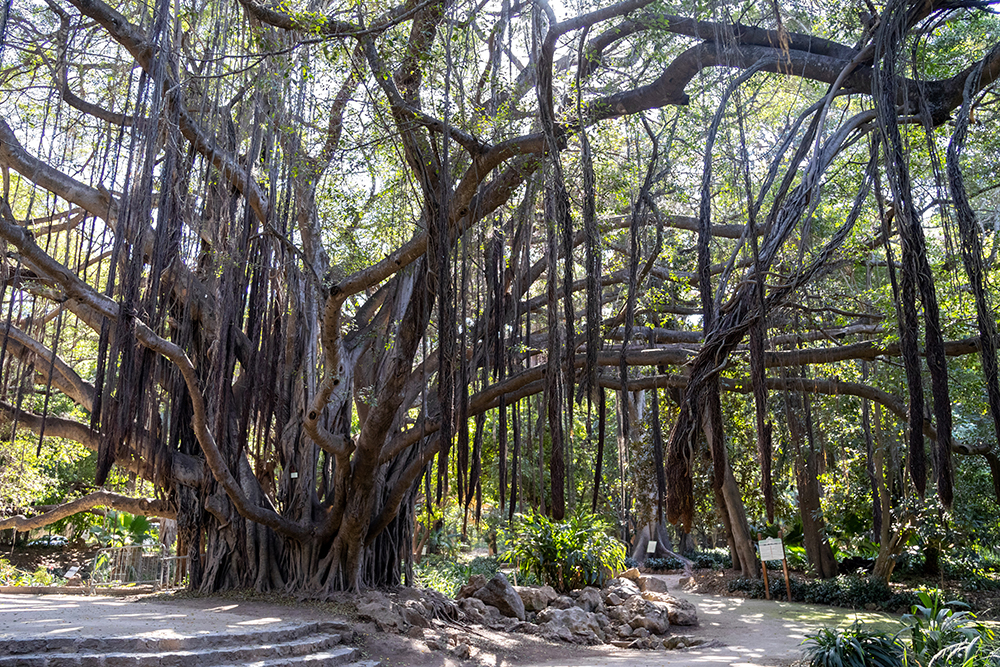
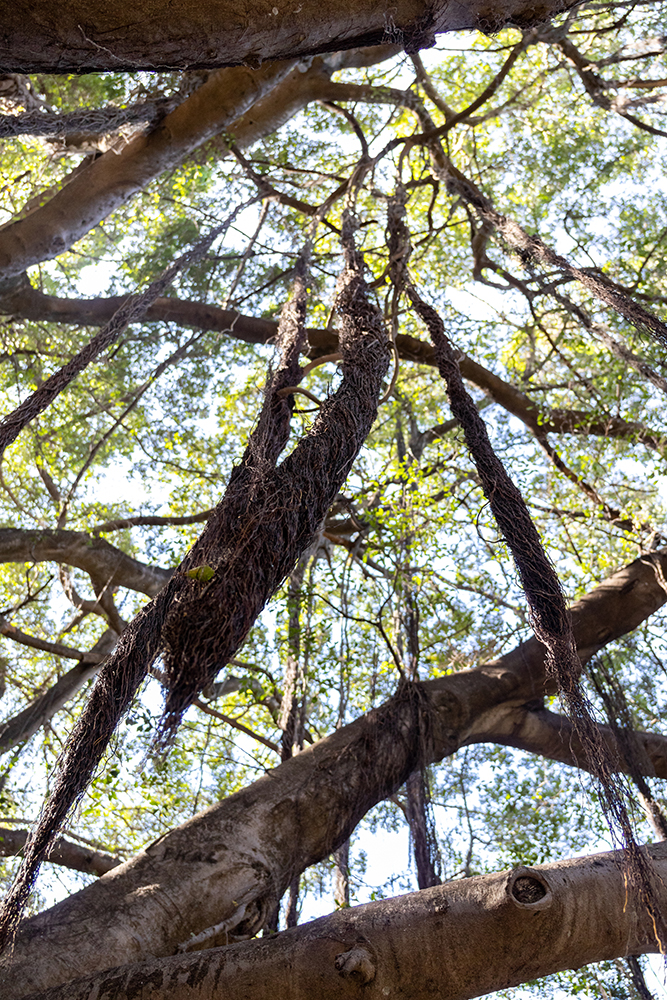
We continued down a series of avenues that were each lined by a specific type of tree. One trail was lined with bamboo, and another figs. Climbing over a tangle of large buttress roots, we came upon a monstrous banyan tree with vines hanging down from its web of twisting branches. Known as the Tarzan Tree, this is one of the oldest trees in the Garden of Hamma. It also has an interesting history. The Tarzan Tree was used as a set in the 1932 film Tarzan the Ape Man. This was one of the highlights of our visit to the botanical garden, and we took some time to walk underneath it, staring up at its wild branches as warm sunlight filtered through them.
Another highlight came as we made our way back towards the entrance of the garden. We got to walk beneath a tunnel of dragon trees as their wavy branches reached towards each other in a tangled embrace above the path.

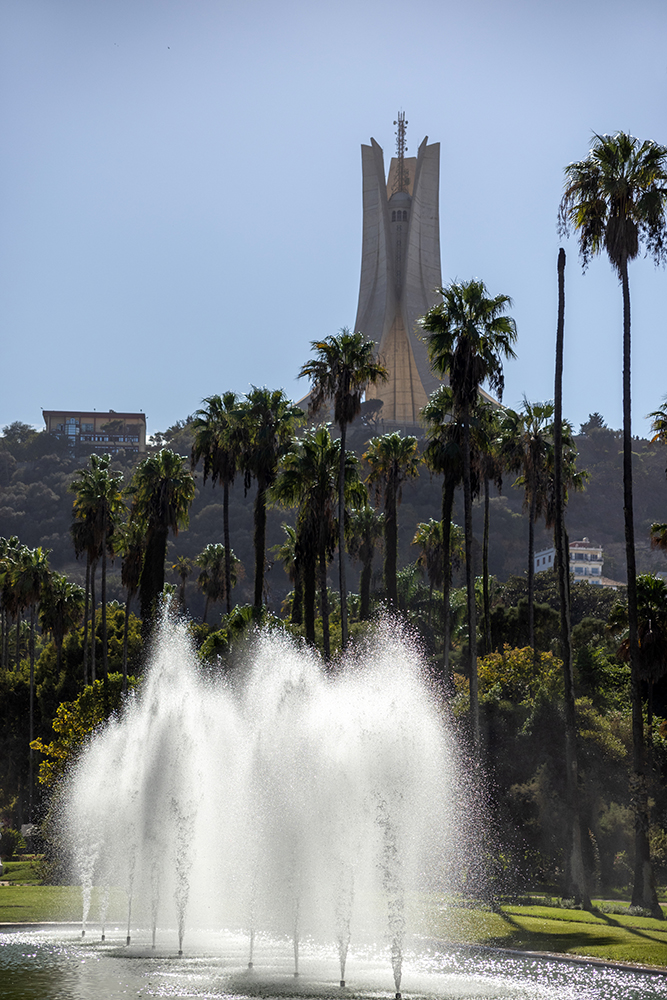
When we arrived back at the French section of the garden, the fountains were running, and rainbows had formed in their mist. We went around to the end of one of the fountains to get another amazing view of the Martyr’s Memorial on the hilltop behind the plumes of water. Then it was time to leave the garden so we could visit one more location before catching our flight to Oran.
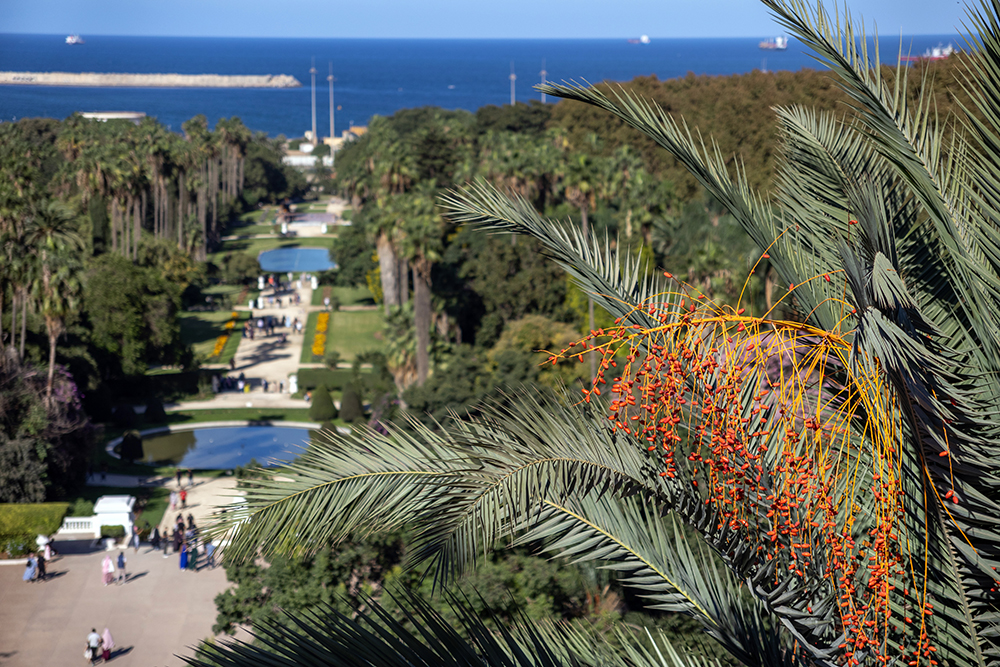
The National Museum of Fine Arts of Algiers sits right across the street from the botanical garden’s entrance, and we got to go inside and tour several floors of exhibits that were filled with thousands of artworks ranging from paintings to sculptures, to furniture. We also got to step out onto a couple of rooftop verandas where had a fantastic view overlooking Hamma Garden, and the Mediterranean.
After that, we were off to the airport to board our short flight to Oran. We said our goodbyes to Abdou and Nadir, who would not be joining us for this portion of the trip, then went to the gate to board our flight. The sun was setting as we took off, and within an hour, we had landed in Oran. Our first order of business upon arrival, was finding somewhere to eat dinner. Everyone in the group agreed that pizza sounded good, so after we’d collected our bags and met up with our driver, we took a short ride into town to look for a pizzeria.
Stepping from the van onto the street, I was shocked by how different Oran felt to many of the other locations we’d visited so far on the trip. The city was buzzing with activity as people walked along the sidewalk, and gathered at open air restaurants. Children ran from table to table as their parents enjoyed pizza, and vendors were selling light up toys on the side of the road. Our guide picked out a restaurant for us and we got to enjoy a dinner of delicious wood fired pizza before retiring to Le Palme Hotel for the night.
Originally, our itinerary had us spending two nights at Le Palme, and leaving for our last destination of Tlemcen early on the morning of the final day of our tour. Our plans had changed, however, because Abdou had surprised us by booking us a night at the Renaissance Hotel, a five star hotel in Tlemcen. So when we turned off the lights and went to sleep at Le Palme, we knew this would be our only night in this location.
The next morning, I woke up to the noises of emerging traffic on the street below our room, and I opened up our window to get a look at the city coming to life in the morning light. It was early because we had a long day of touring Oran ahead of us, and then a two hour drive to Tlemcen in the evening. Vince and I met up with the rest of the group for breakfast, then we all finished packing our bags and went down to the lobby to check out and meet up with our driver.
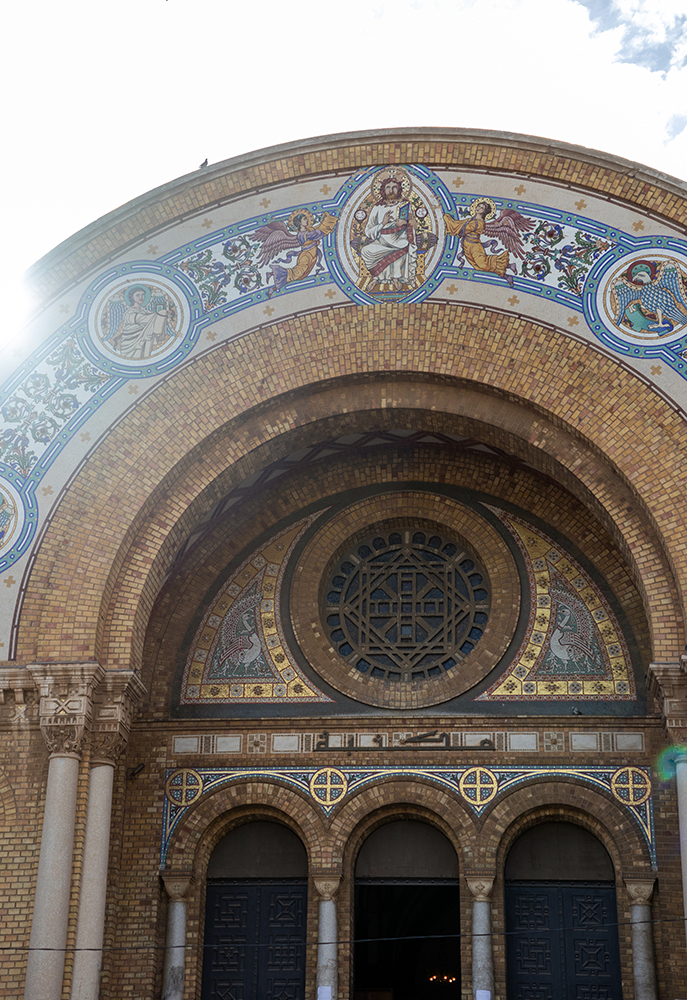
We rode a short distance to the Sacred Heart Cathedral of Oran, where we met our local guide for day, Faïza. She explained that construction of the church began in 1903 and finished in 1913. It was converted into a regional library in 1984, and it has been a public library since 1996. Faïza gave us some time to look at the beautiful decorations on the outside of the cathedral, and then led us inside to see the library.

When we entered the cathedral, we saw people seated at large tables, reading books they’d borrowed from the many shelves that lined the sides of the old cathedral, all underneath the original domed ceilings that crowned where the altar would have stood. Faïza spoke quietly, explaining some more of the library/cathedral’s history, but a cat nearby let out a series of loud wails, shattering the silent atmosphere. Looking around, I spotted a tiny, black kitten. We beckoned it over to us and it wound between our legs, happily accepting pets until it was time for us to move on.
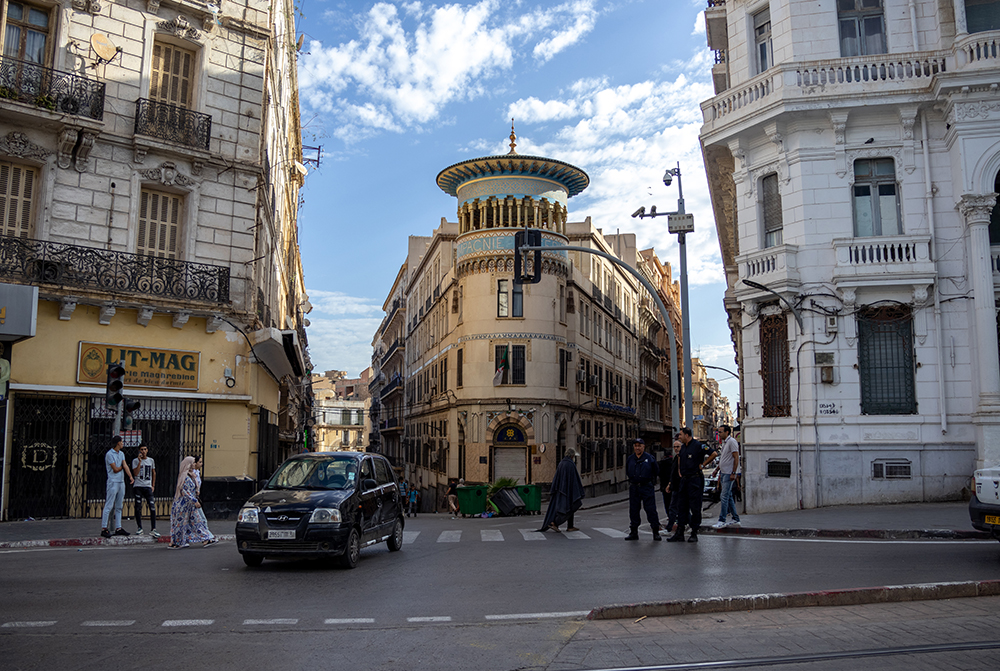
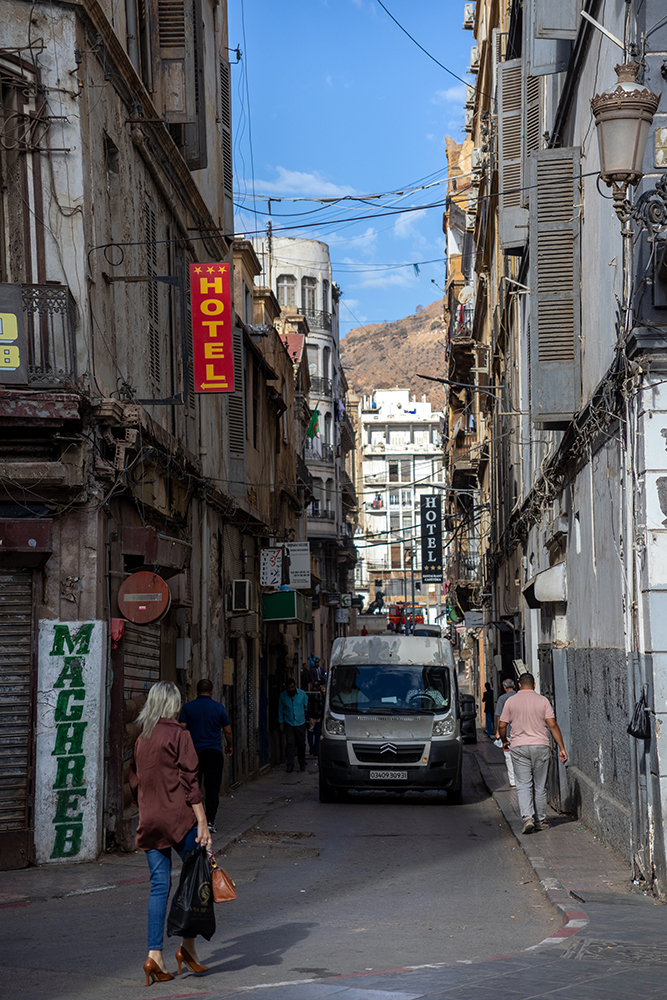
Back outside, we walked a couple of blocks along city streets lined with French colonial style architecture. We stopped at a corner where and unassuming building was wedged between two narrow streets. A sign above its door read “Edition Disco Maghreb,” and a large model of a cassette tape hung above the entryway.

Faïza explained that this building was a record label and store that started in the 1980’s, but has since closed down. The record shop popularized Raï music, a type of Algerian music that dates back to the 1920’s. The Disco Maghreb appeared in DJ Snake’s music video for his song of the same name. In the video, you can see the inside of the record store, which is still decorated and fully stocked with cassette tapes.
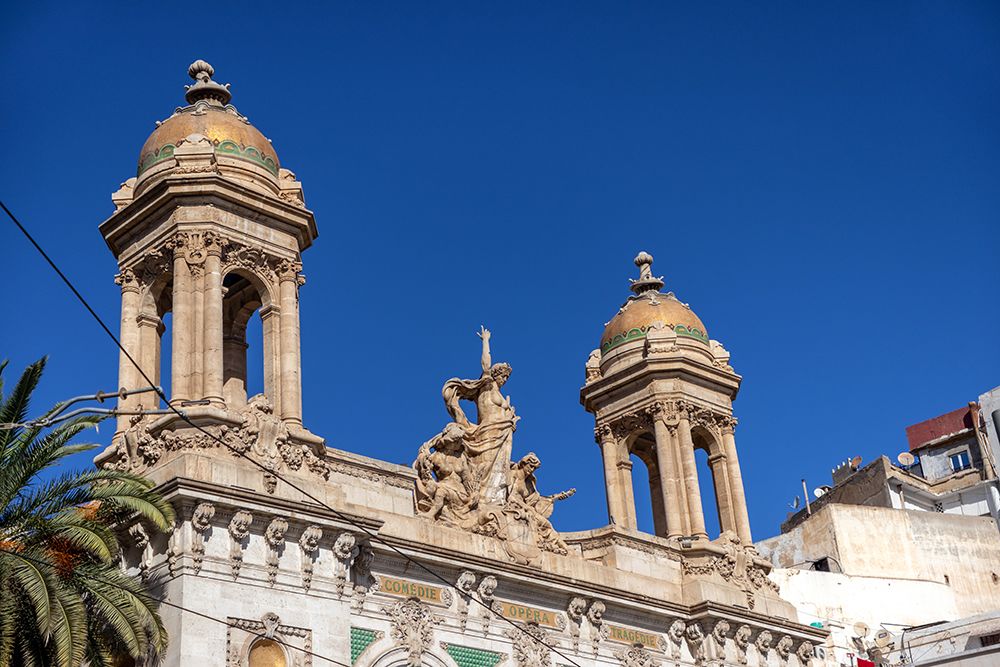
Moving on down the street, we next stopped at Place du 1er Novembere, a large square surrounded by historic buildings with intricately decorated exteriors. Our favorite of these buildings was the Regional Theater of Oran, an opera house with a façade of beautifully sculpted stone.

Not far from the square was another historic building, the Abdellah Ben Salem Mosque. This mosque was formerly an Orthodox Jewish Synagogue when it was constructed over a period of 38 years starting in 1879.
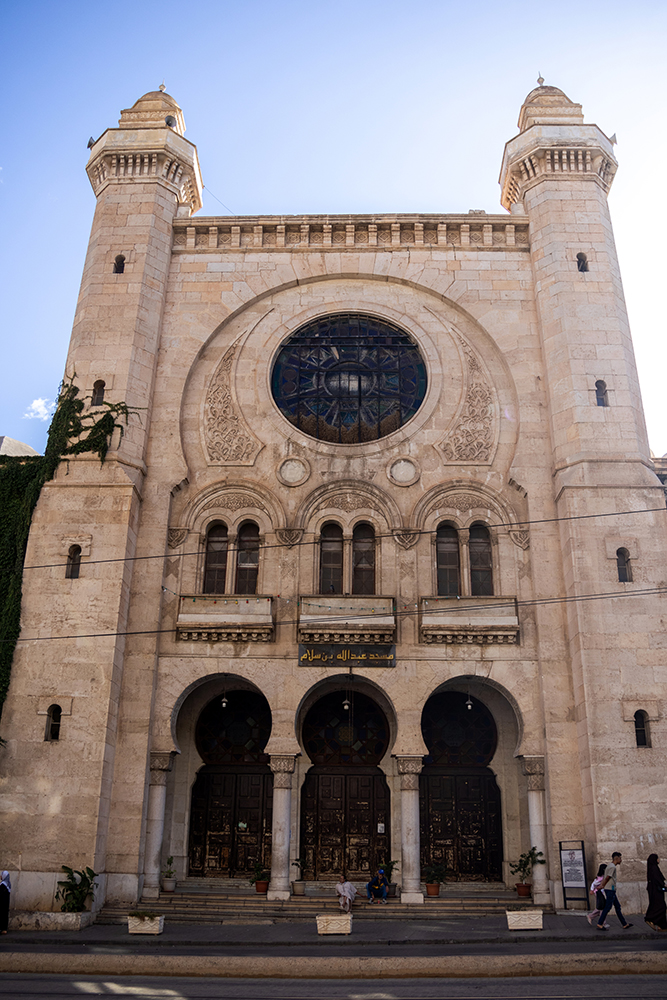
After a quick stop to view the exterior of the former synagogue, we continued our walk until we reached a tall, stone wall. Stepping through a gateway in the fortification, we left the city streets behind and emerged onto a dusty hilltop. To our west we could see a distant fort built on the top of an even taller mountain. I recognized the structure immediately as the Fort of Santa Cruz. It’s one of the most iconic points of interest in Oran, and we would get to visit it later on in our tour.
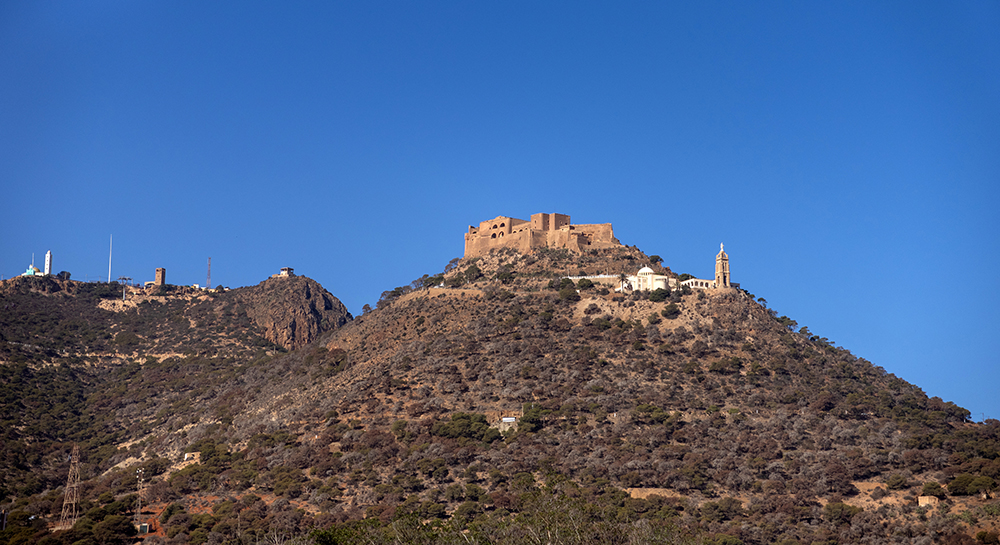
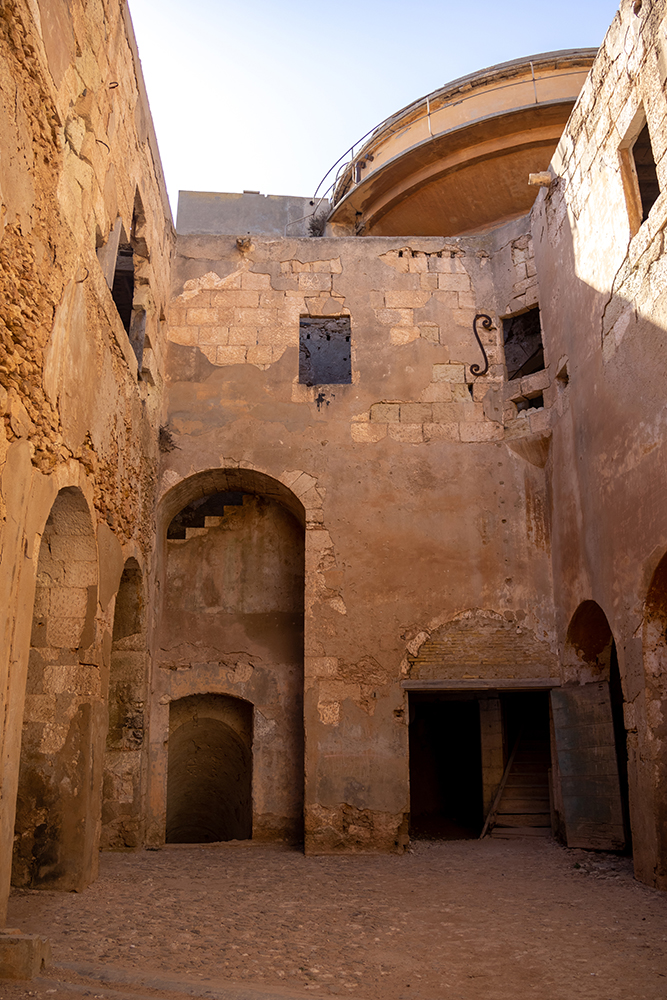
For now though, we’d come to explore the Bey’s Palace, which was built during the Ottoman period in the 18th century. The stone gateway we’d entered through was part of the palace’s citadel, and we got to explore its chambers, tunnels, and stables. There was something new to discover around every twisting corner in the citadel, and we were all very impressed by the acoustics in a domed, stone room that we entered. We could stand on opposite ends of the dome from each other, and whisper secrets that would then echo around the space, amplified by the stone ceiling.

We followed Faïza through the maze of the citadel, using our phones as flashlights whenever we entered a dark chamber. She led us into the dungeons, which had heavy, metal doors. Hardly any light penetrated down from narrow slots in a high ceiling, and I shuddered to think of what it would have been like to be imprisoned in such a dismal cell.
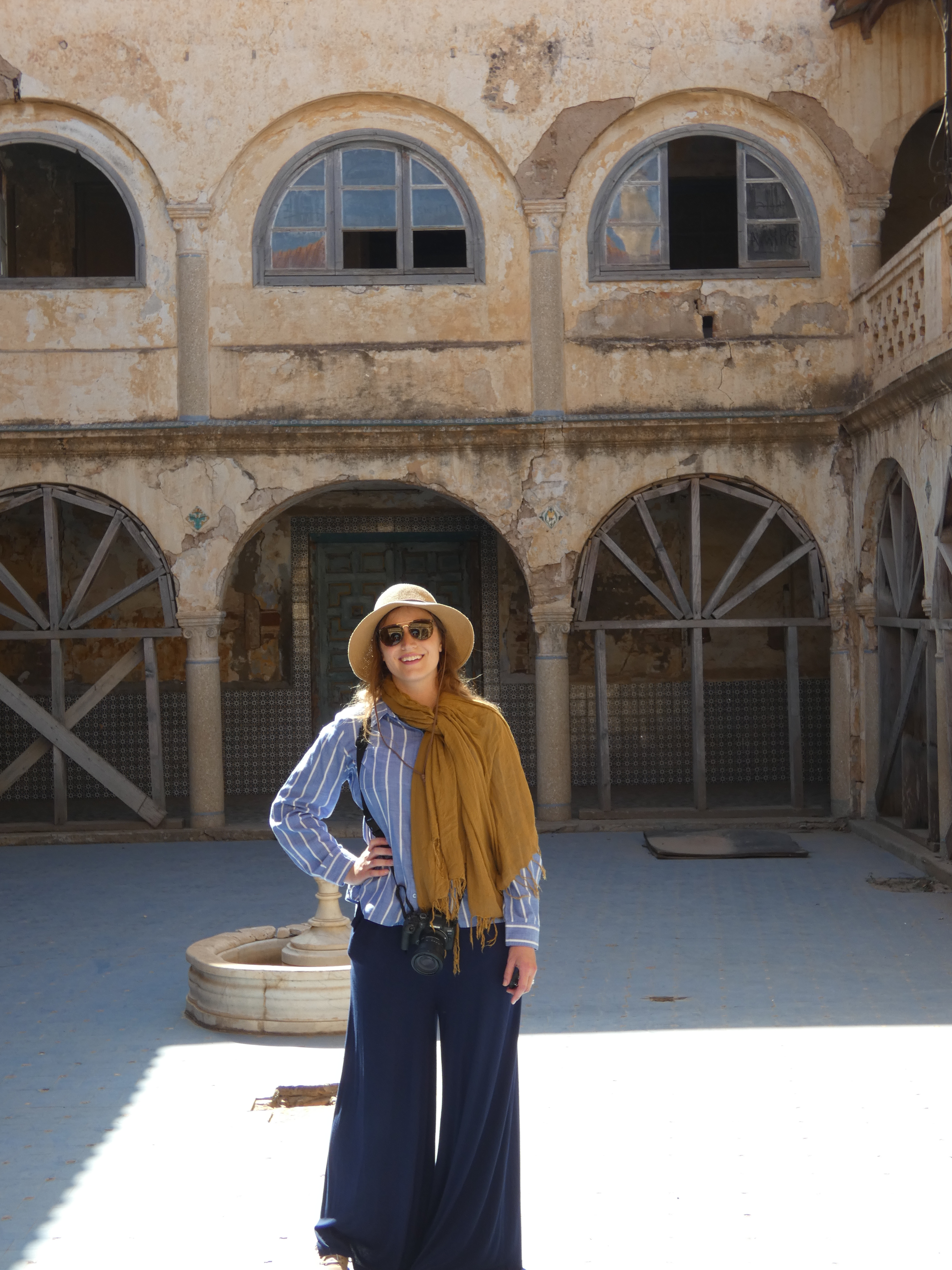
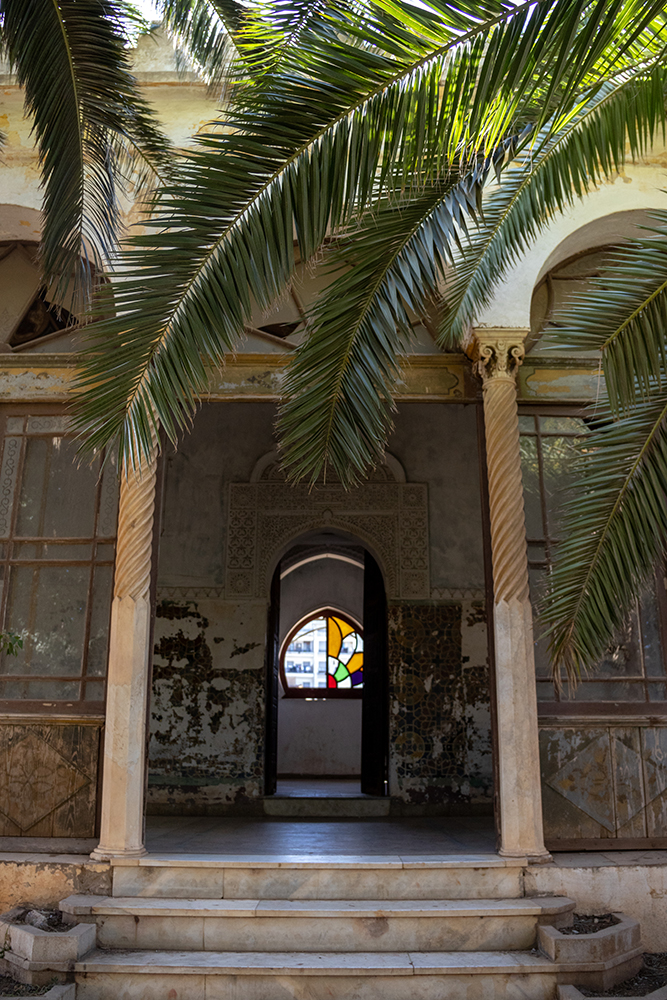
Upon emerging from the dungeons, it was time to visit the palace. We entered the grounds through a courtyard filled with greenery, a stark contrast to the unforgiving stone of the citadel. The palace was undergoing renovations during our visit, so there were certain chambers that we could only look at through open windows. Peering into the rooms, we could see the beautifully decorated tile-work typical of Ottoman palaces. But the walls were crumbling in places, and boards were missing from the hardwood floors. Rather than detract from the experience, I felt that the disrepair gave me a better sense of the time that has passed between the Ottoman Empire and today.
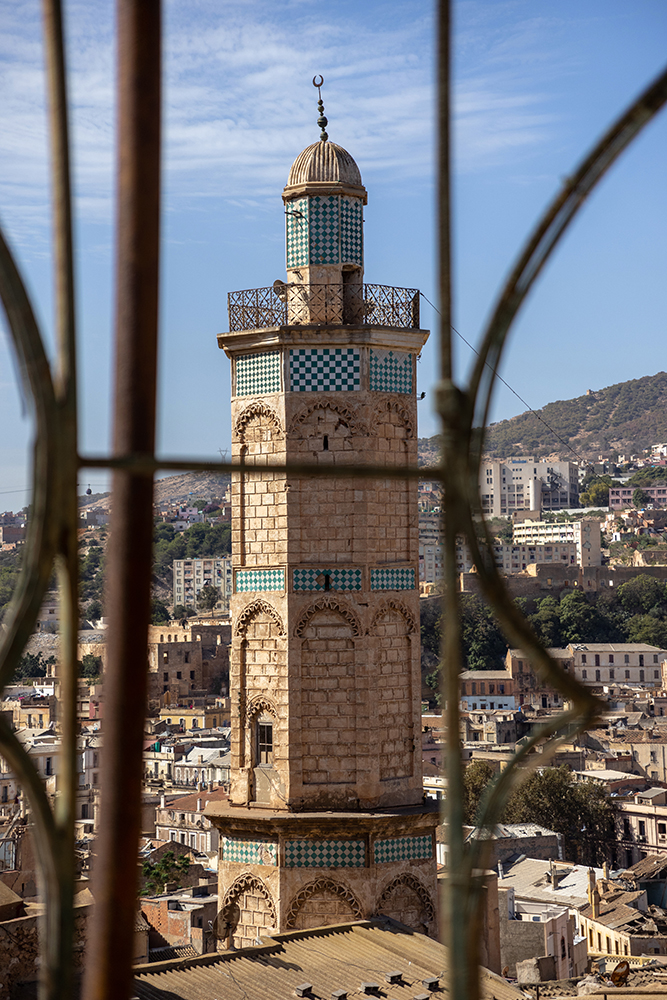
We strolled through another courtyard, and then came to a set of chambers that we could enter. Their decorative tiles and plaster-work were just as beautiful, and a window in one of the rooms gave us a wonderful view of a nearby mosque.

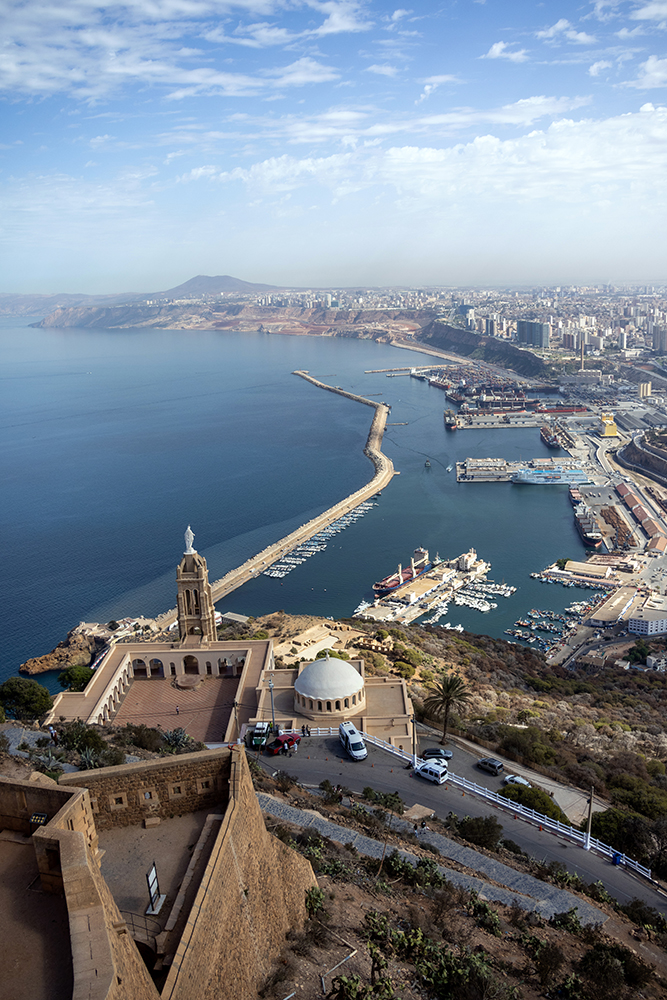
When we left the Bey’s Palace, it was officially time to drive up the mountain and visit the Fort of Santa Cruz. I’d been looking forward to this all day, and I eagerly watched the scenery through the van window as we climbed higher and higher up the hillside. The Mediterranean’s waters grew ever further away as we progressed, and eventually we came to a stop in a small parking lot next to the brilliantly white, domed roof of the Santa Cruz Chapel.
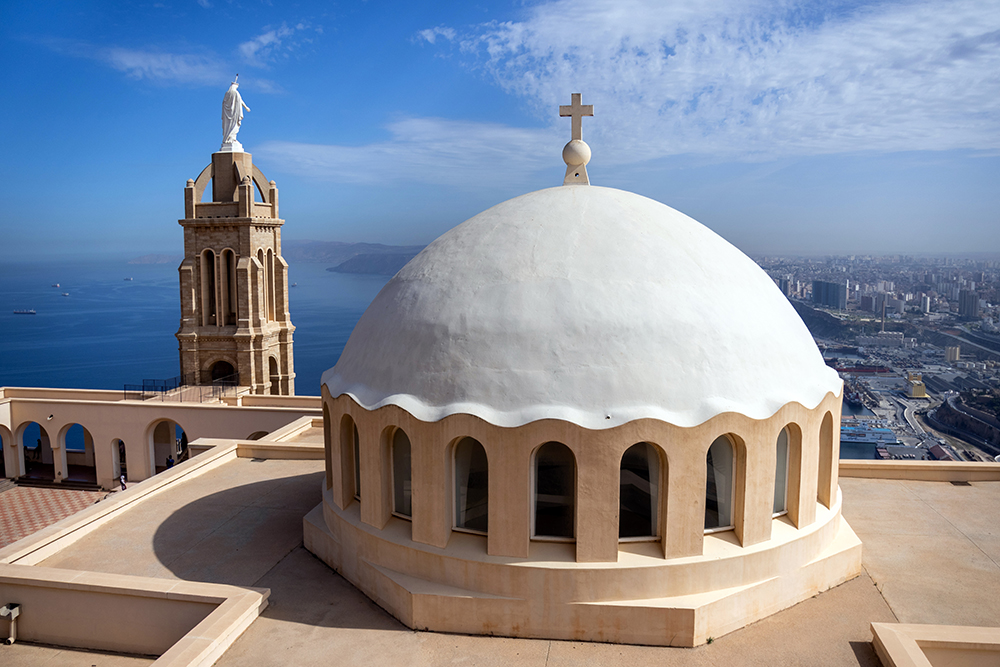
I snapped a few photos before Faïza got our attention and started leading us up a steep hill toward the fort. Along the hike, she explained that Oran had a few periods of Spanish control that are still evident today in the Spanish language influence on the local dialect. The Fort of Santa Cruz was built by the Spanish from 1577 to 1604, and was eventually occupied by the French in 1831.
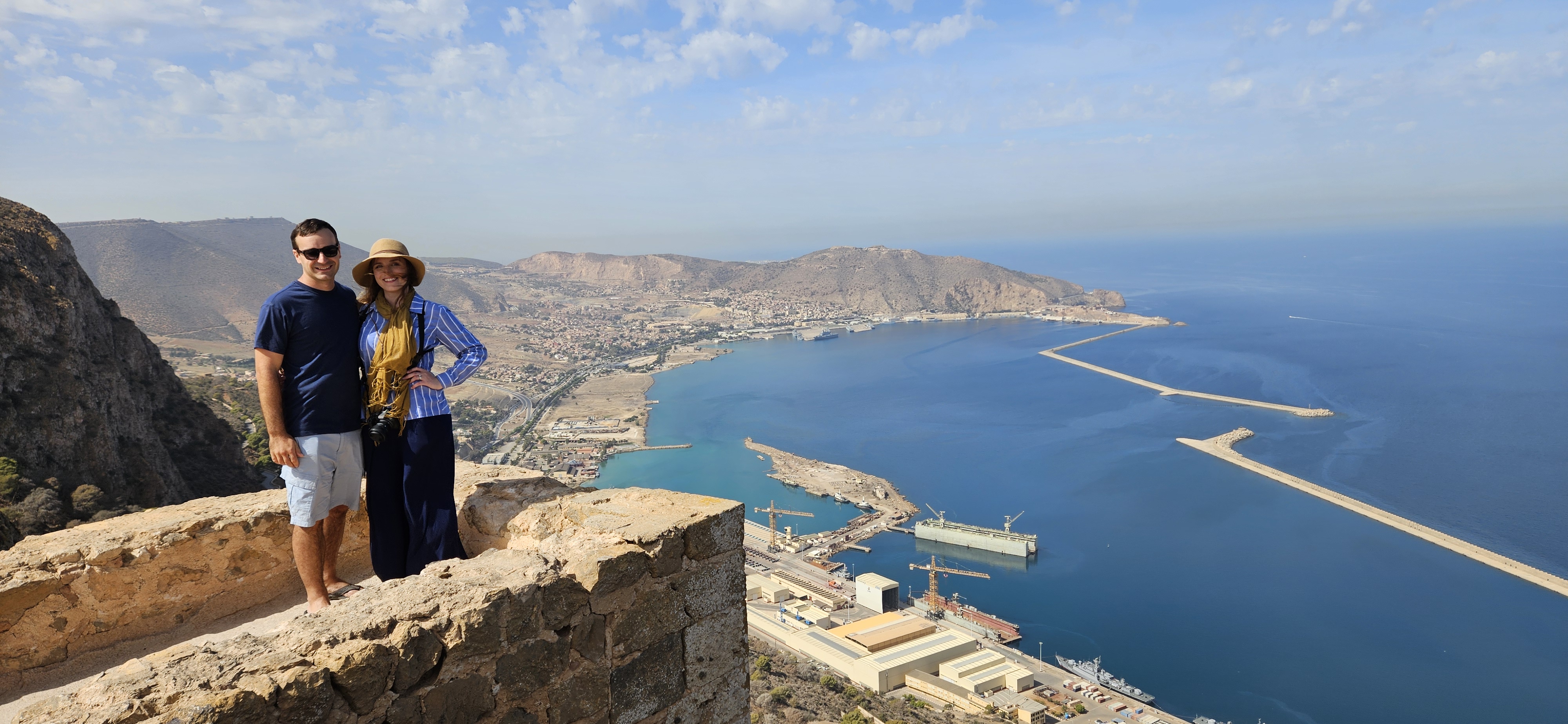
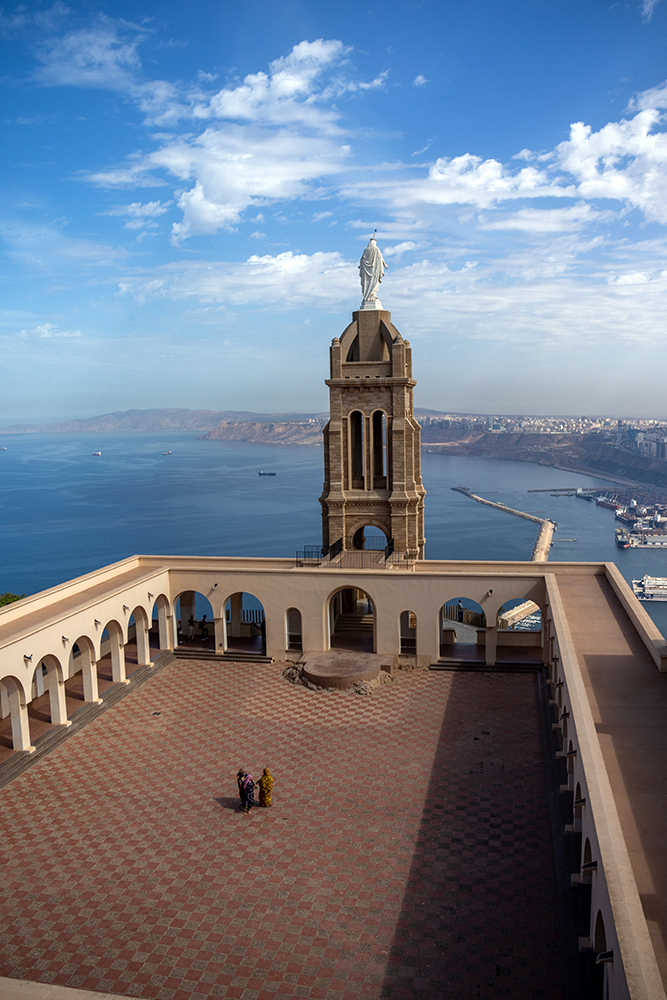
Once we reached the gate of the fort, we stepped inside and continued our climb, stopping to explore various chambers as we made out way towards the very top of the rampart. When we finally stepped out onto the roof, we were met with a strong breeze, and the most beautiful view overlooking Oran and the sea. From this vantage point, it was easy to see why Oran is sometimes called “The Radiant City.” Thousands of buildings melded into the landscape below us, as a Statue of the Virgin Mary looked out over the city from her perch atop the Santa Cruz Chapel.
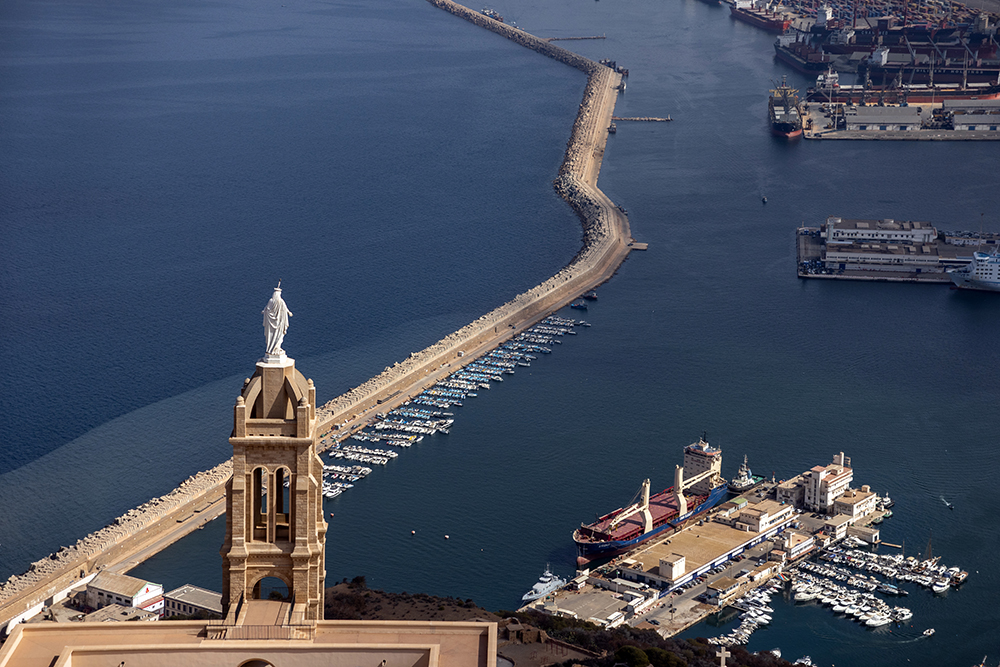
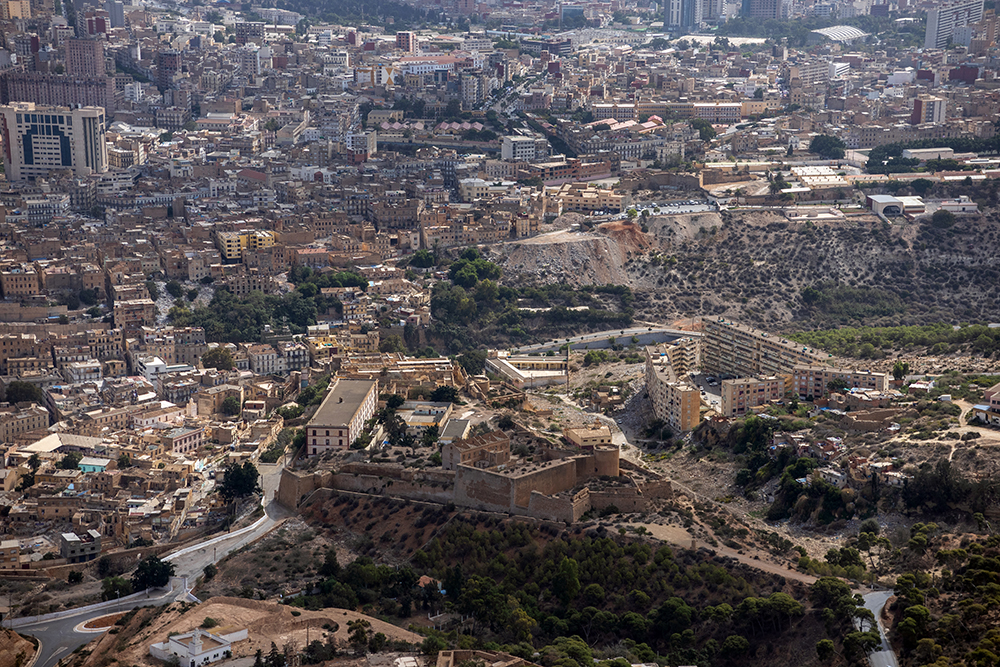
As we stood at the edge of the fort, enjoying the view, a sound began to echo up from the city. The call to prayer had started, and it was emanating from mosques all around Oran. The call blended together from dozens of different mosques to create one haunting song rising up to meet our ears. This was sush a cool moment to witness and goosebumps rose on my arms as I listened.
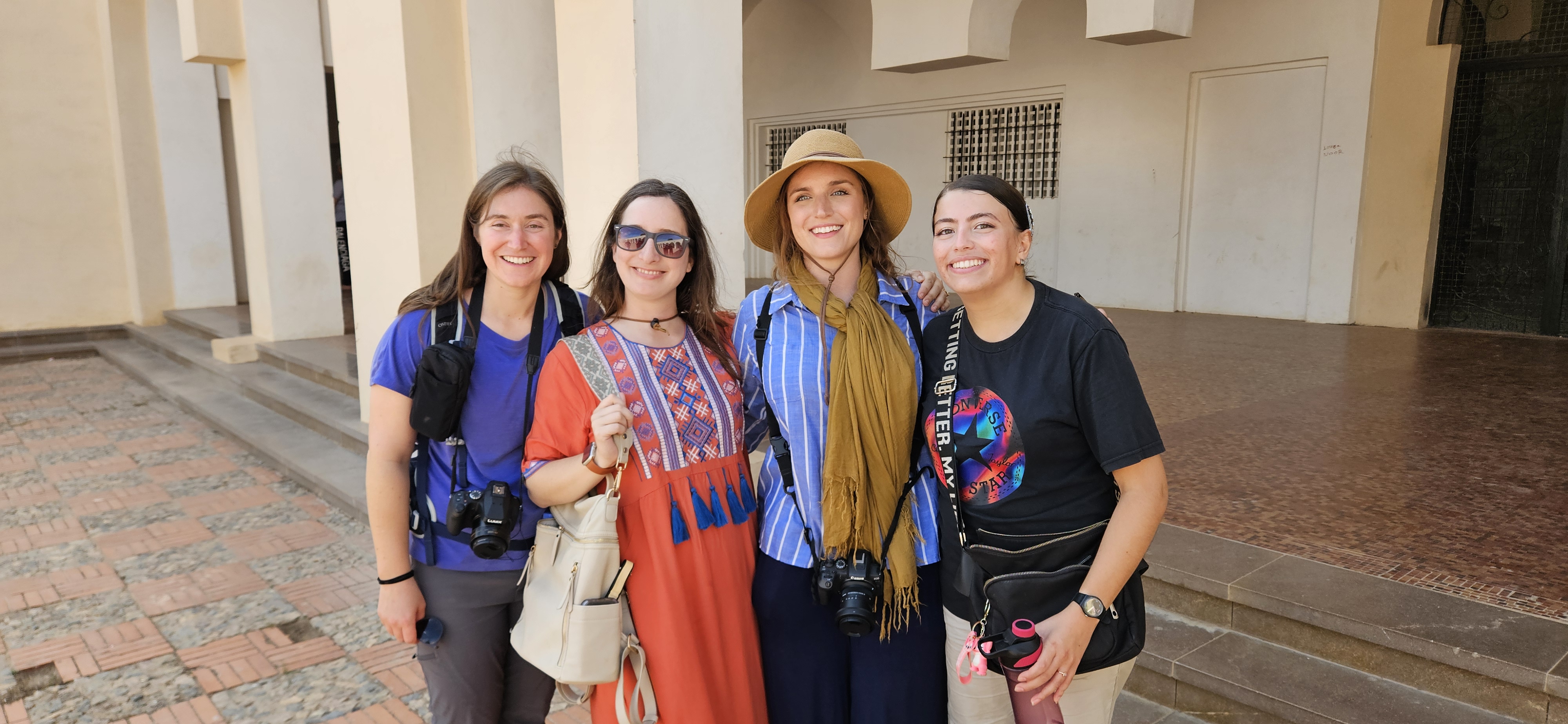
Eventually we began the hike back downhill, and when we arrived at the bottom, we got a chance to visit the chapel. There was a church service in session, and a security guard allowed us to quietly slip into the back of the sanctuary to catch the last song. Once again, goosebumps rose on my arms as the melody echoed from the chapel’s domed ceiling, which was painted in bright colors depicting scenes from the story of Jesus’s birth.


After the service ended, we returned to the van and drove back into Oran to get a local specialty for lunch. I’m referring of course, to Karantika, a dish that was first introduced by the Spanish in the 16th century. Karantika was supposedly invented during the Ottoman siege of Oran when dried chickpeas and chickpea flour were the only foods that were easy to come by. Faïza picked out a Karantika shop, and translated the different options for what we could order. I ordered the size of sandwich I wanted, then the shopkeeper scooped a pile of an eggy, custard-like substance onto a baguette, and added harissa and cumin for some extra spice. I also got a cup of house-made lemonade, which was very refreshing after our walk up to the fort. The Karantika was a very unique dish, and it was perfect to fill me up enough to get through the rest of the day.
When we’d finished eating, we said goodbye to Faïza, and then spent a couple more hours in Oran. We walked the corniche, ate dessert, and did a bit of souvenir shopping before it was time to depart for Tlemcen. Later that evening, we arrived at the lavish Renaissance Hotel. This would be the last night of our trip, but we still had one more fascinating day to explore Tlemcen before our time in Algeria would come to an end!







 birdsoftheairtravel.com
It’s very nice to take a peek at places I’m never like to see, and share your experiences. Exotic and beautiful place that they are.