
Mille viae ducunt homines per saecula Romam, A thousand roads lead men forever to Rome.
~Alain de Lille, Liber Parabolarum
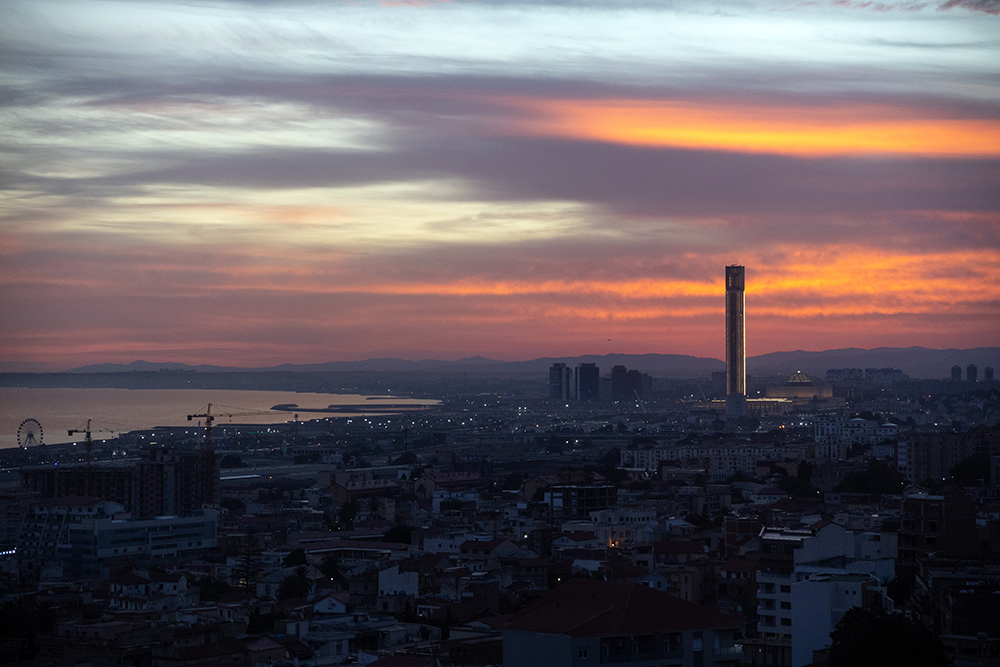
I should have felt excitement when I first caught sight of the distant pile of crumbling stone nestled in a valley surrounded by rolling mountains. Our driver, Nadir, from Izelwan Travel pulled over to the shoulder of the winding road we’d been traveling, allowing our group of six friends to hop out for a first look at the ancient Roman ruins of Djémila. This was one of the sites on our itinerary that I was most anticipating, so it would stand to reason that I would feel something at least slightly profound knowing that we were mere minutes away from setting foot in the stone city. But the only emotion I could muster was relief as my feet relished the solid ground of the roadside. We’d been driving since sunrise, leaving Algeria’s bustling capital city behind us as a pink daybreak glowed on the horizon. Most of our journey through the Kabylie mountain range had been scenic and uneventful, but within the past half hour or so, I’d become increasingly nauseous as we gained elevation and wound around tight switchbacks in our fifteen passenger Mercedes van. Eventually I’d admitted defeat, accepted a jar of peppermint oil to smell from Rachel, grabbed a plastic bag, and moved to the front seat next to Nadir. I was beyond ready to take a break from driving, and walk off this random bout of car sickness.
It was with a sense of consternation that I re-boarded the van to complete the short drive to the site entrance. Every minute of the drive dragged on as I valiantly staved off sickness by sniffing the peppermint oil and staring resolutely at the horizon. Finally, Nadir parked the van, and I tumbled out of the door as fast as I could, grateful that I would get a few hours break before we had to re-embark. My head quickly cleared as we started walking, following our guide through the site’s entrance gate and down a small hill to its museum.
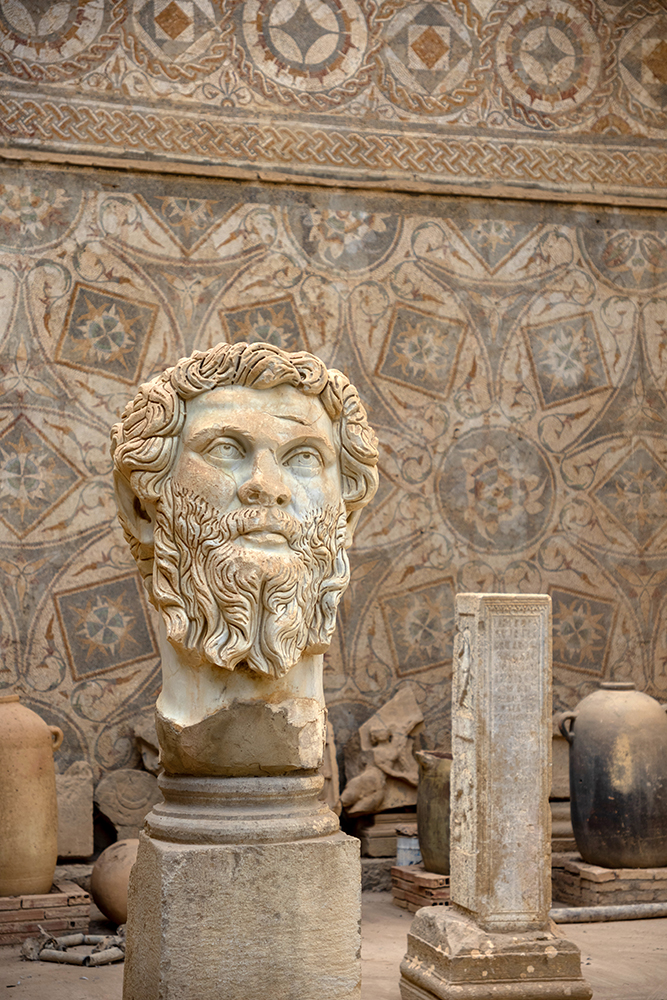
The museum looked unassuming from the outside, but as we stepped over it’s threshold, my jaw dropped open in amazement. Every inch of the gallery’s floors and tall walls was covered in mosaic tiles. We’d seen Roman mosaics in the other museums we’d visited so far on our trip, but this put them all to shame. I craned my neck upwards, scanning the intricate tilework until my gaze reached the ceiling. Then I spun around in a slow circle, taking it all in. The others were following suit, and I noticed Nadir smiling at our awed reactions.
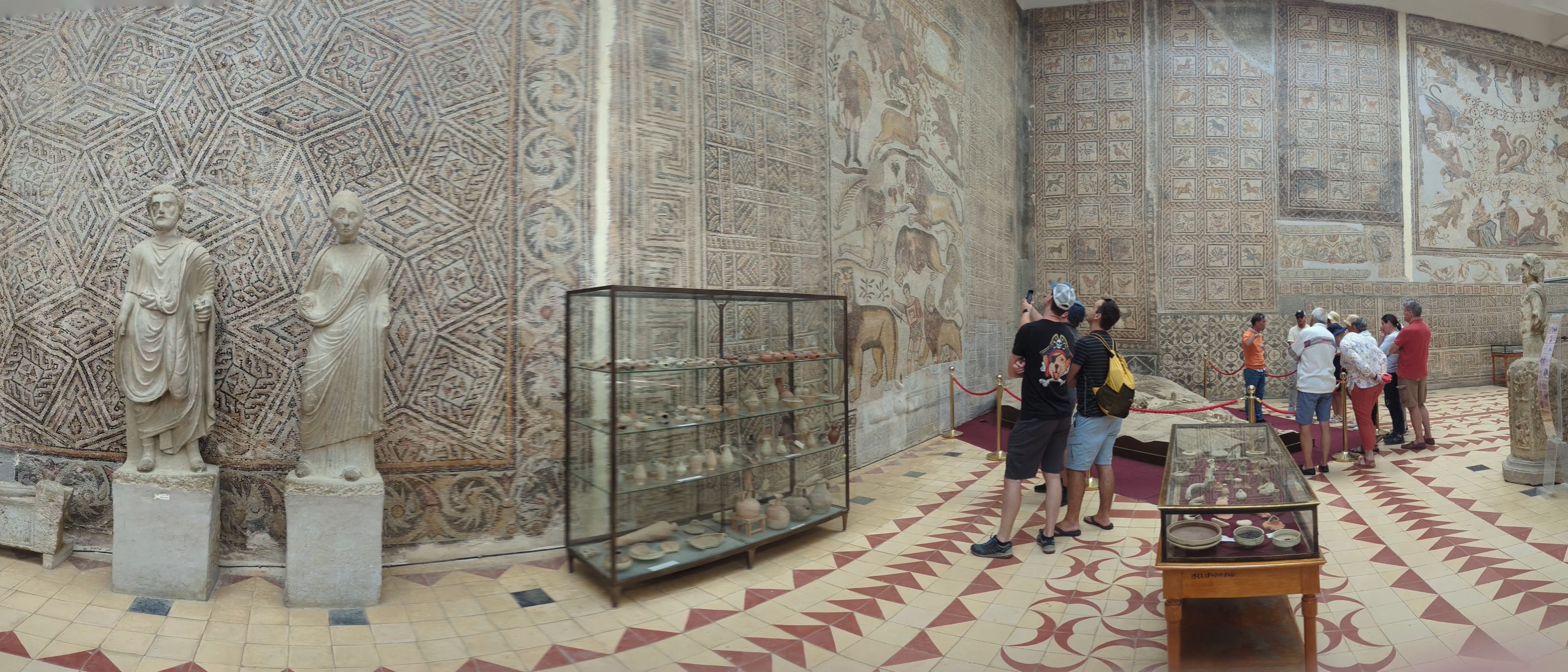
After gaping at the scene before me, I approached a wall and started to look at the details of all of the mosaic images. People, plants, animals, and Roman gods all seemed to weave together in an endless stone tapestry. Of course, I had no idea what most of the images meant, but luckily a site guide joined us as began to interpret some of the mosaics for us. He pointed out a depiction of the legend of Dionysus and a large hunting scene. The guide had a wealth of information about the religious and historical meanings behind all of the mosaics and explained where some of them used to be located in the ancient city before they were removed and placed in the museum during the French colonial period of Algeria.


Once we’d walked through each room of the gallery, we followed the guide outside where we stopped for a moment to take in a view of the city before walking between two perfectly aligned rows of trees towards the crumbled remains. The museum had been fantastic, but even so, it couldn’t compare to the sight of the sprawling ruins that stood in defiance of the surrounding mountains. The city, originally named Cuicul, was built in the 1st Century AD. Today it is known by the very fitting name, Djémila, which is Arabic for beautiful.
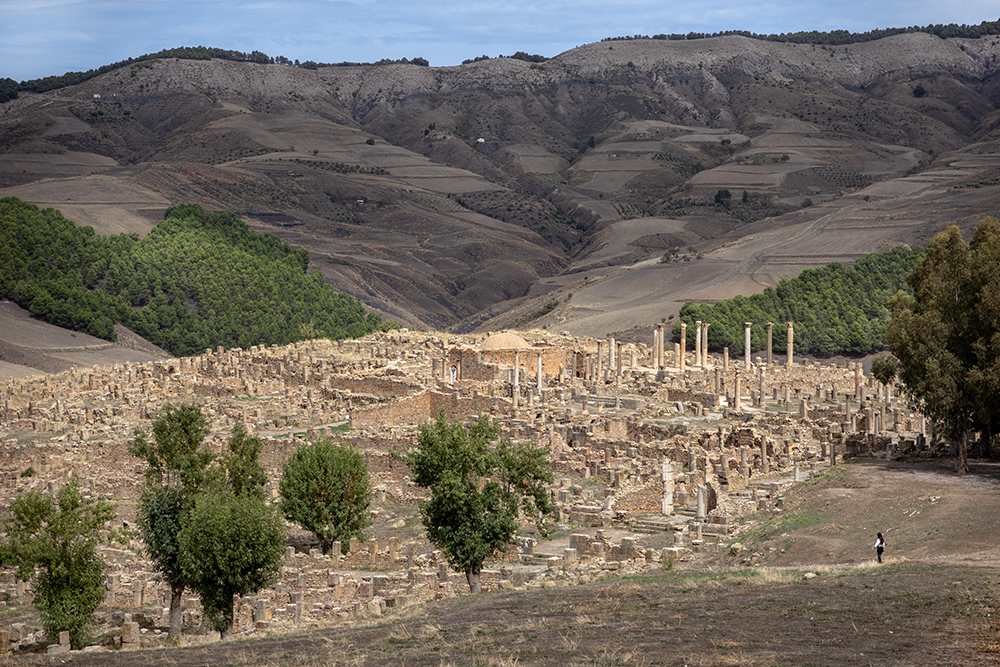
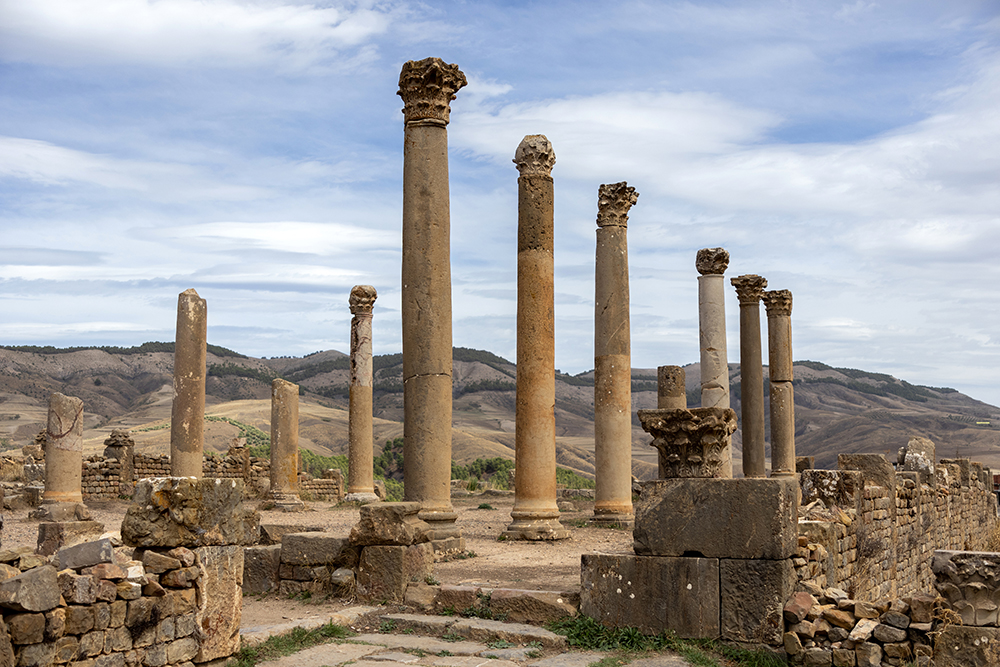
The views became more and more beautiful as we neared the city, and soon we were surrounded on all sides by a cacophony of bricks and pillars. The site guide led us over to a church complex where we got to peer inside of a baptismal that dates back to the late 4th Century AD.

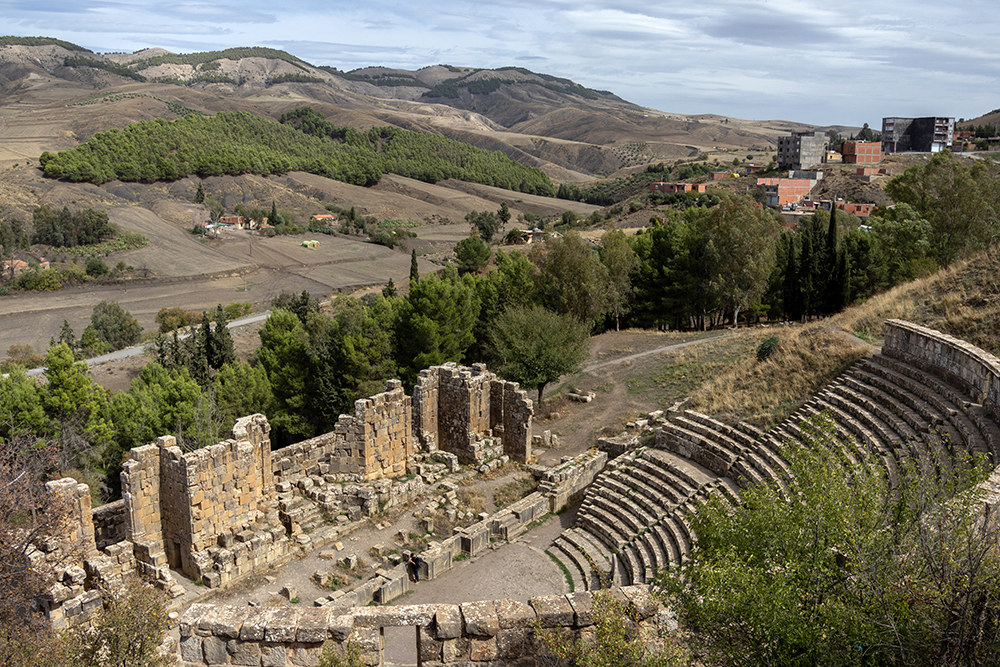
Next our site guide led us over to the edge of a steep hill. I looked downward to see an impressive amphitheater, which was still in fantastic condition.
From there, the site guide left us to return to the museum, and the rest of us continued onward to explore more of the ruins. As we walked, our Izelwan guide taught us about some of the ingenious ways the Romans were able to adapt their architecture to fit into this mountainous environment. He showed us a pillar that had been placed inside of a hole in the ground, with a couple inches of space left around it’s perimeter. The negative space in the hole gave the pillar wiggle room to move without breaking during earthquakes, which are frequent in Algeria.
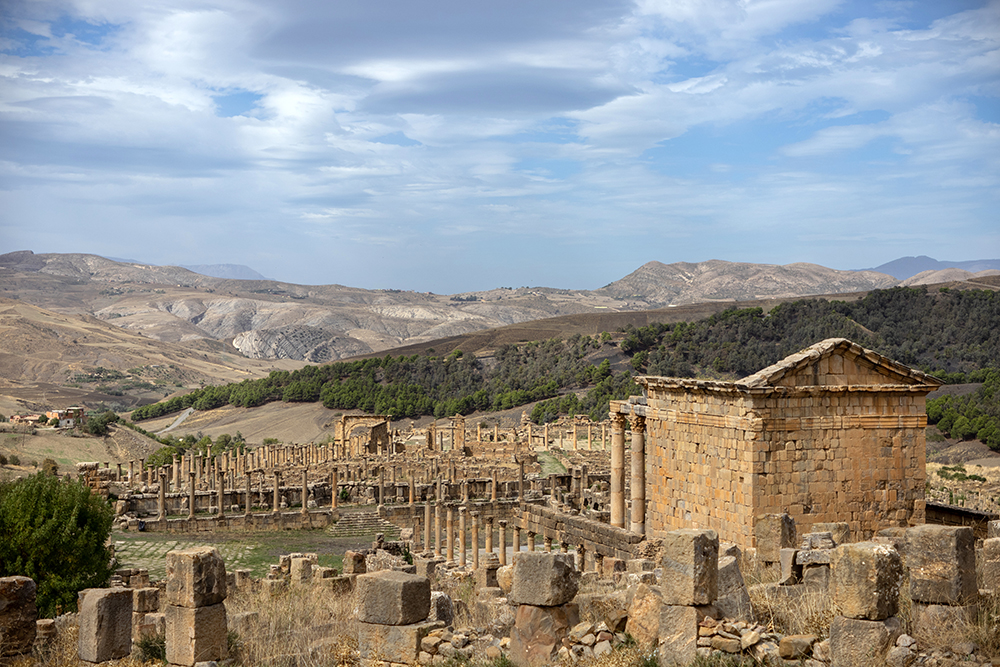
No matter where we were in the city, one building stood out from the rest. From the back it just looked like a large box in the very center of the site. But the simple shape was so imposing that it drew my attention at every turn.
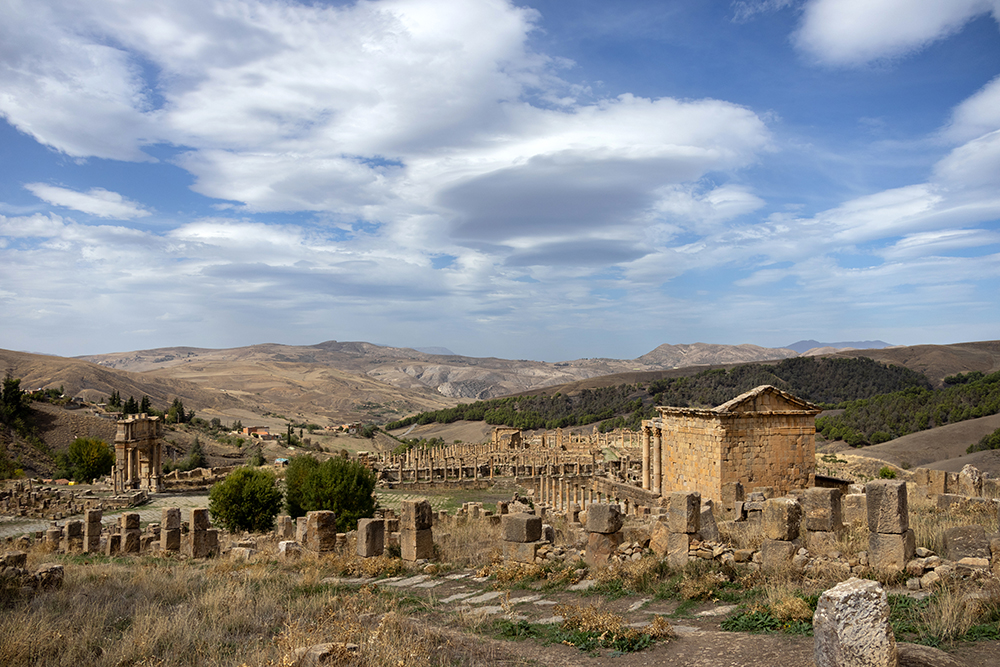
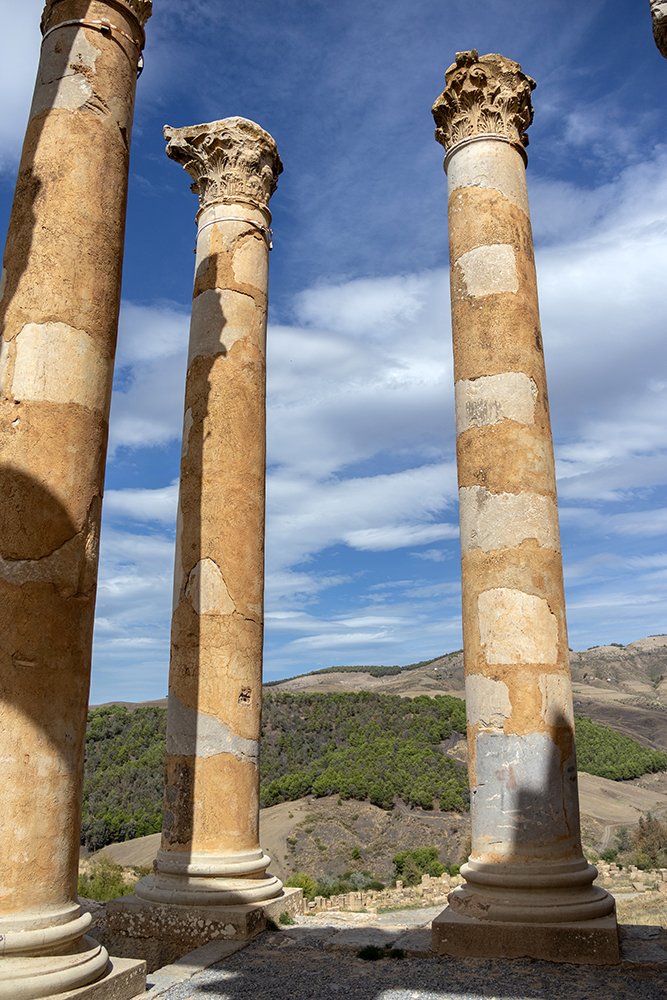
Although our guide showed us a lot of interesting little details along the way, I couldn’t help but keep looking up to the large building, and I was delighted to notice that we were slowly but surely making our way towards it. Finally, we rounded to the front of the building where tall pillars reached for the sky despite the centuries of exposure to earthquakes.
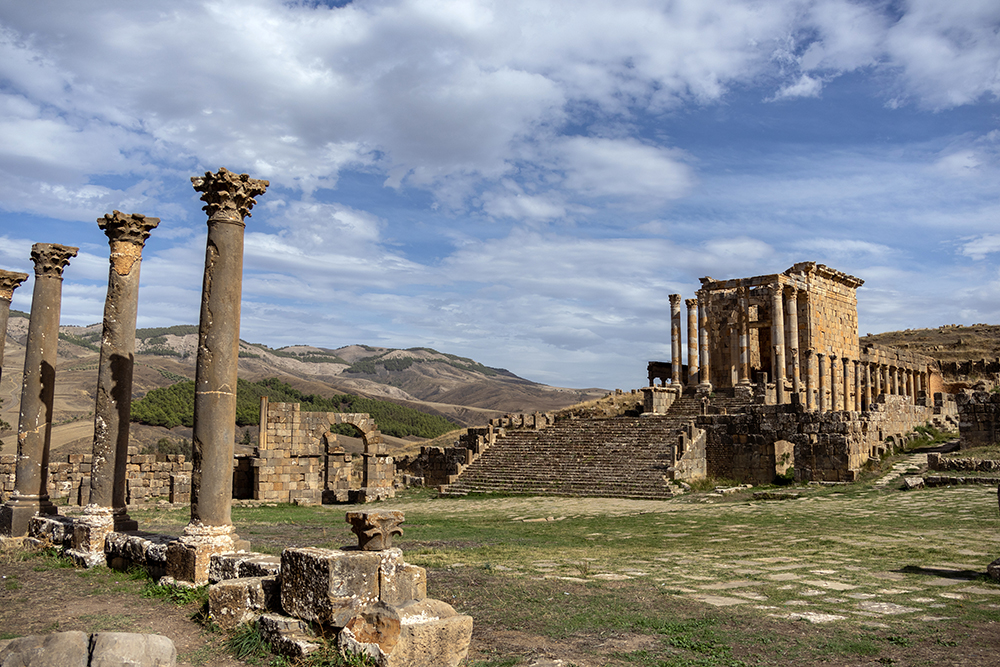
We climbed the grand staircase that led up to the impressive Severan Temple, which was built in the 3rd Century AD and dedicated to the gods Jupiter, Juno, and Minerva.
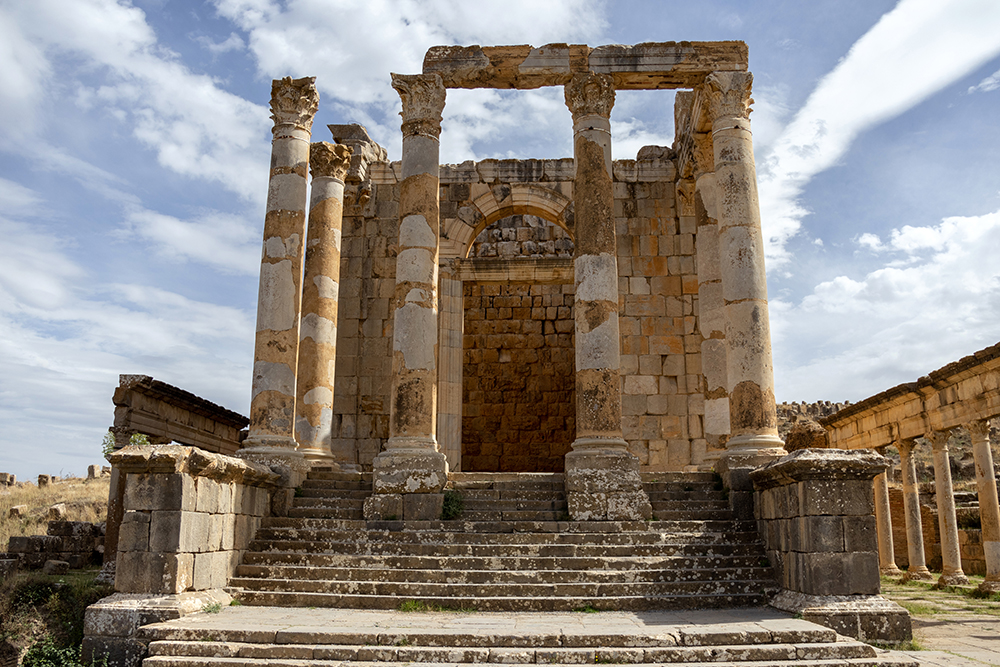
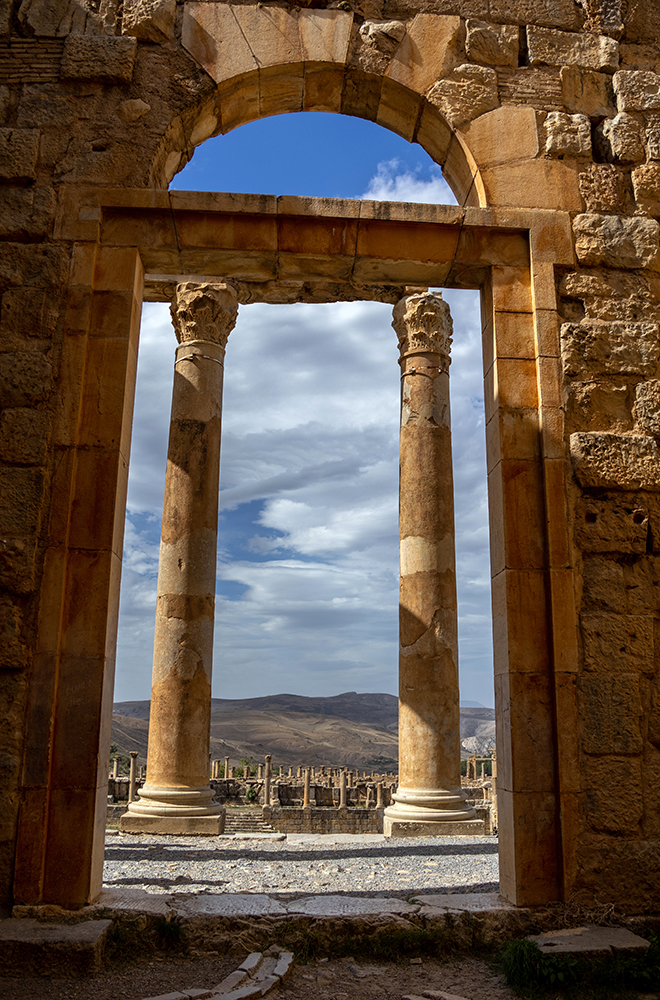
Not only was the temple itself hauntingly beautiful, but its vantage point also offered a wonderful view across the forum to the magnificent triumphal arch. A light breeze played with my hair as I looked out across the site in wonder, trying to imagine what it would have been like to live there in its heyday. It was then that I noticed how utterly quiet Cuicul was. We’d seen a couple of other visitors since we’d arrived, but they were easy to lose track of whenever they disappeared behind a wall or into a building. Looking out over the forum now, it felt as if our group were the only living souls in the city. I took a moment to reflect on how incredibly special that was. Having an ancient ruin of this caliber basically to ourselves is a rare experience, and I made sure to appreciate the peace and solitude as I followed the others back down the temple steps.
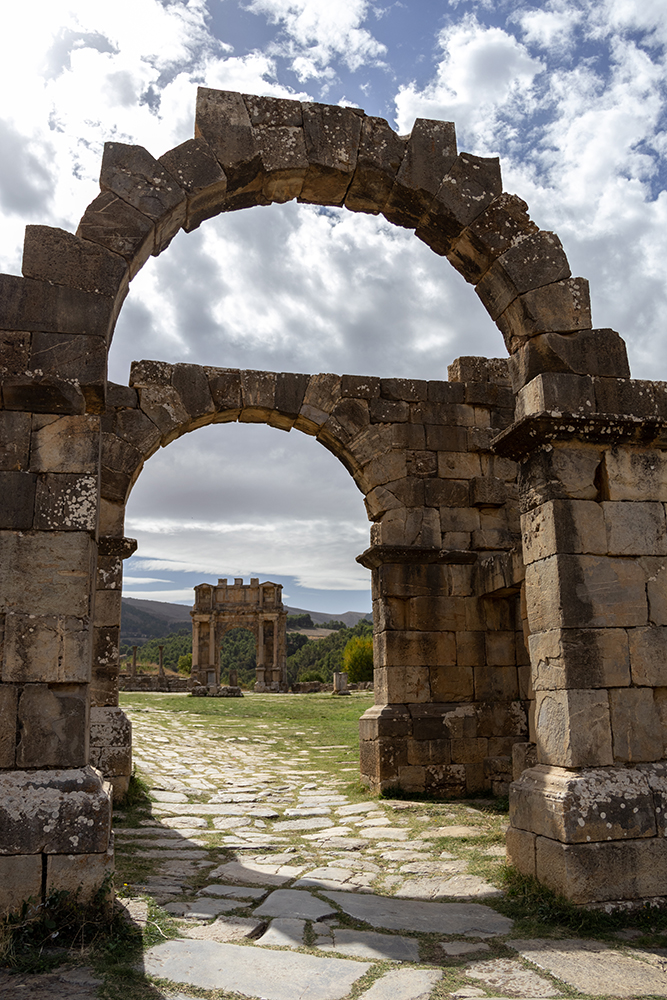
We crossed the forum and exited under a pair of double arches, where our guide showed us one of the best angles for photography in the entire city. From here, we could see the Severan Temple, and the triumphal arch framed behind the double arches we’d just passed under.
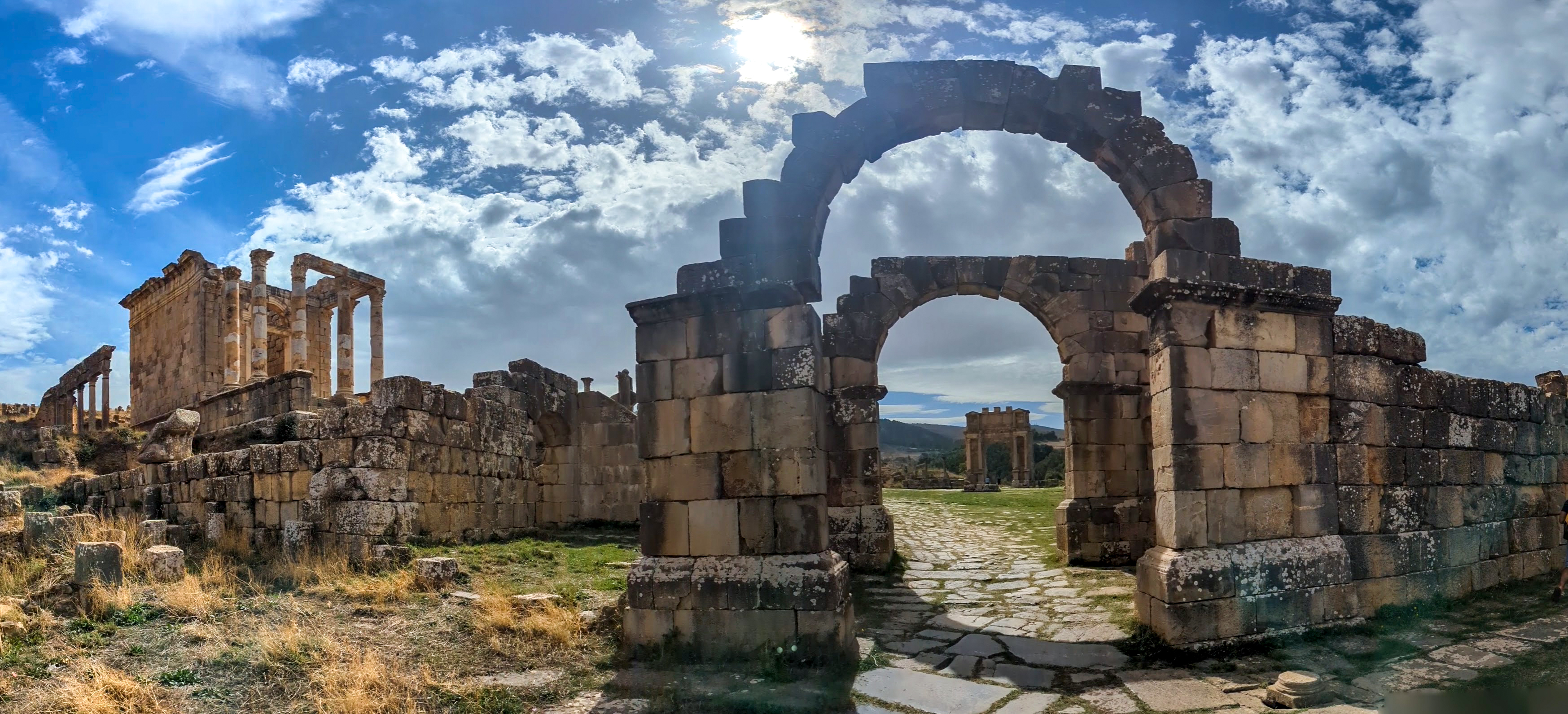
From here, our exploration of the site would teach us more about daily life in ancient Cuicul. We stopped at its market, that looked a lot like markets still do today. There were massive stone tables where vendors would have sold their goods, and a system of vats to measure items like grains. We also passed by a brothel, and explored some dark passageways before walking along a road made of huge blocks of stone back to the forum. Our guide warned us to keep to the outsides of the road because there was a hollow aqueduct running directly under the center.
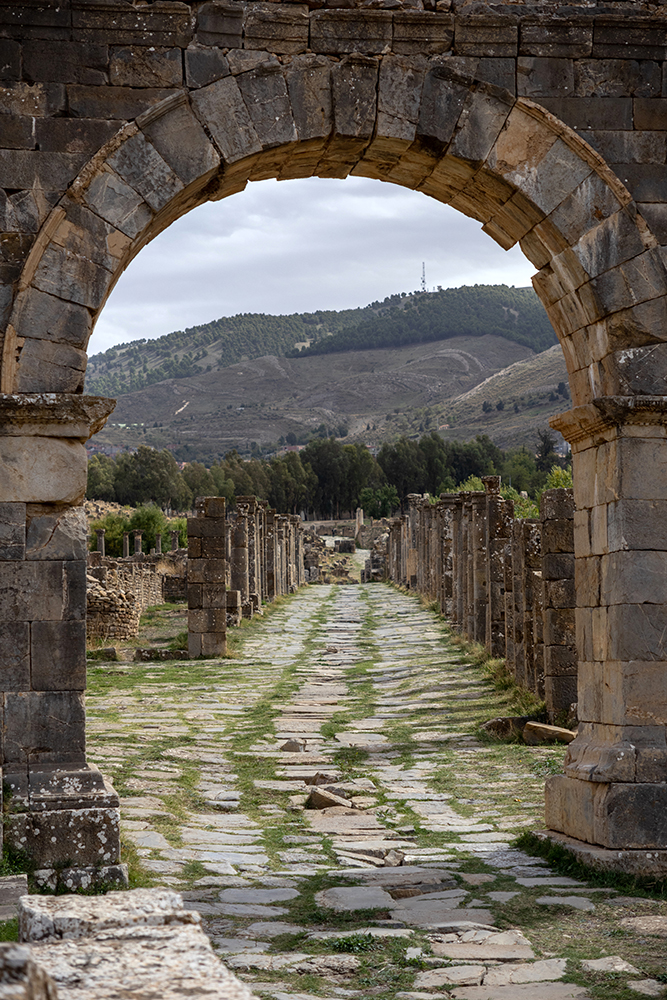
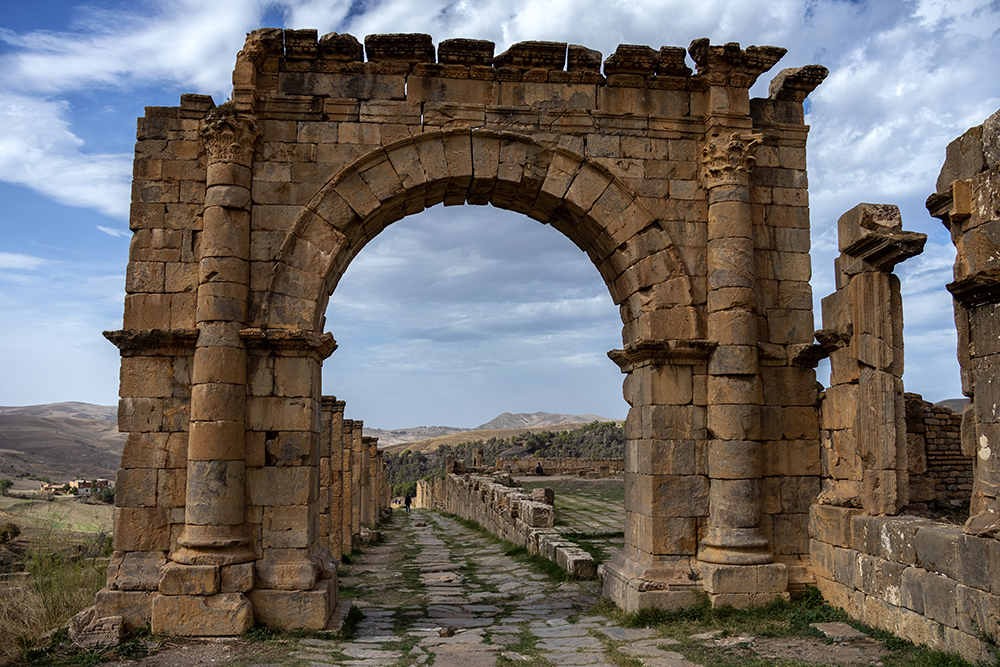
When we reached the forum once again, we got some more incredible views of the Severan Temple, and this time we walked over to visit the triumphal Arch of Caracalla. The temple was perfectly framed behind the arch when we stood on its outside, and the afternoon lighting illuminated the scene perfectly.
If history had taken a different path, the Arch of Caracalla might not even be in its original place anymore. In 1839, the Duke of Orléans, Prince Ferdinand Philippe, saw the arch, liked it, and decided France should have it. So he made plans to transport the arch to Paris, and have it inscribed with the phrase “L’Armée d’Afrique à la France.” Thankfully, this plan was scrapped after his death, so the arch still stands exactly where it should be, in the mountains of Algeria.

Everyone made sure to get pictures in front of the triumphal arch before we continued uphill, slowly making our way out of the site. On our way back to the entrance we stopped to see the city’s fountain and the Roman baths. The baths were built with three different rooms called the frigidarium, tepidarium, and calidarium, which would have been kept at three different temperatures. We could also see some remnants of the mosaic tile floors still in place in the bathhouse. Our last stop on the way out of Cuicul was the public toilet, which had plumbing, and veritable thrones for toilet seats. It was so cool to see how advanced Roman technology was thousands of years ago.
I was sad when we finally left the site. I turned around at the top of the hill and took one last look at the beautiful ruins before we had to return to the van. With all of that exploring, we’d all worked up an appetite, so we stopped for a delicious local lunch in Djémila before embarking on the next leg of our long drive. It would take a couple more hours to arrive at our destination for the evening, and Nadir played us some of his favorite Algerian music as we drove towards Constantine.
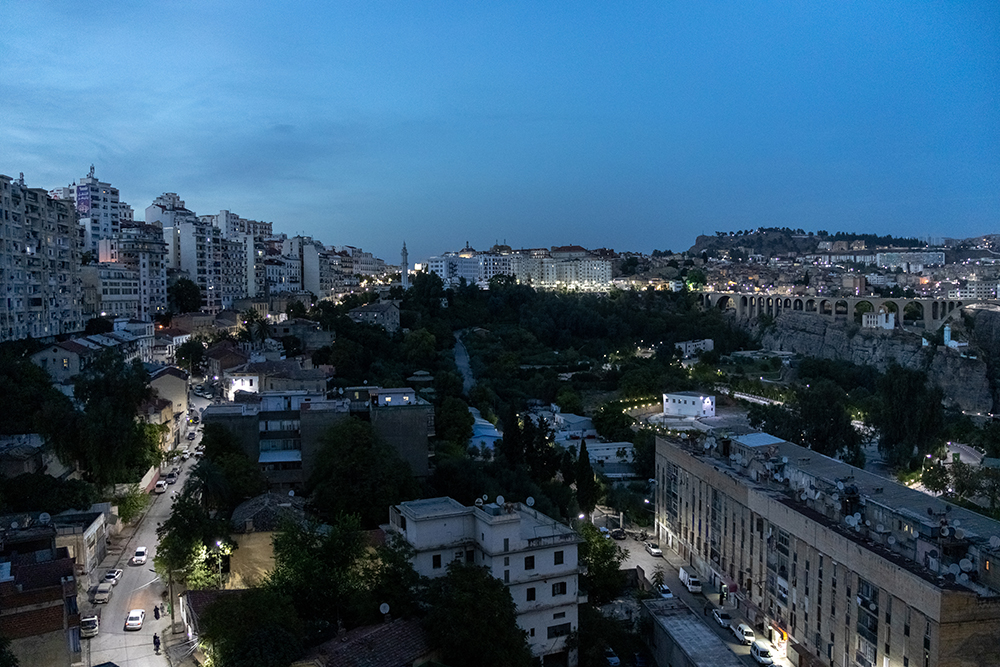
We arrived at dusk and checked into the Protea Hotel, where we had just enough time to drop our bags in our rooms, freshen up a bit, and gawk the fantastic view from our rooms before heading back out for dinner. All of our rooms faced a steep gorge where some Constantine’s famous bridges spanned across the landscape.

I almost didn’t want to leave again for dinner, but by now I was learning that I really did not want to miss out on any of the food on this trip. So our guide arranged dinner for us at a small restaurant where we were the only customers. We sat at low, gilded tables and enjoyed a three course meal, followed by tea and pastries. My favorite dishes at this meal were the bourek, which was stuffed with potatoes and onions, and the vegetable soup. Later, all six of us crammed into me and Vince’s hotel room to catch up on the latest episode of Survivor before going to sleep.
The next morning we were back in the van, traveling to yet another ancient Roman ruin called Timgad. Along the way, we made a quick stop at Medghacen, an ancient Numidian mausoleum that was built in the 3rd Century BC. It’s domed, circular structure was similar to that of the Royal Mausoleum of Mauretania, a site we’d visited a couple of days earlier. But Medghacen is a few hundred years older than the Mausoleum of Mauretania. It’s an excellent example of how different cultures in the area informed each other’s building techniques. The columns of the tomb seemed influenced by Greek architecture, while its stepped dome was similar to the pyramids of ancient Egypt.
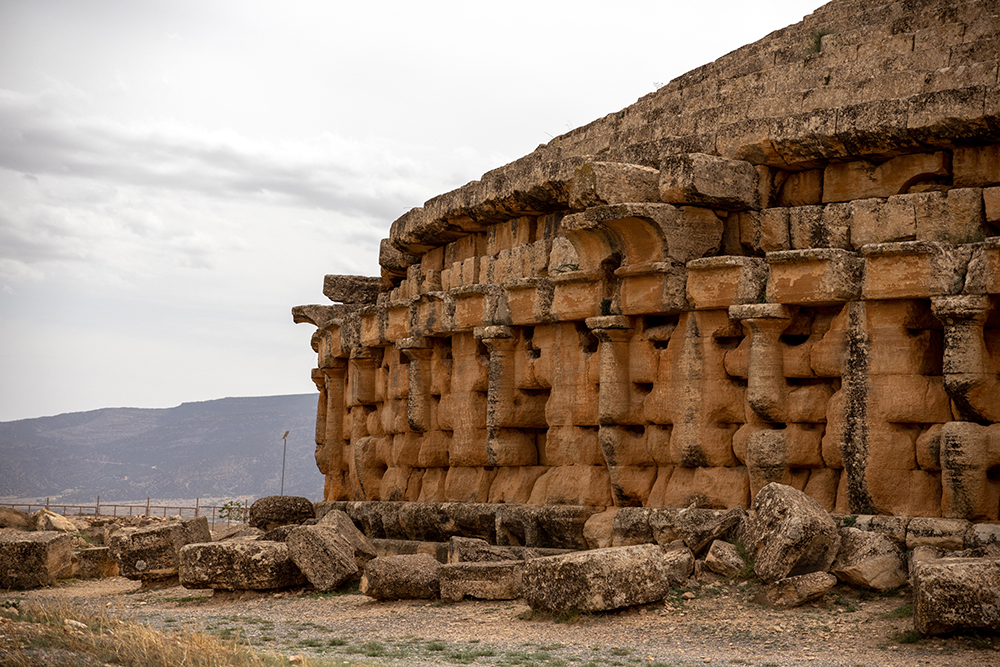
We walked in slow a circle around the tomb and then we were on our way, our next stop being Timgad. We arrived at the site within a couple more hours. As was becoming routine, we ducked into the site museum immediately after passing through the entrance gate. This museum was full of mosaics and household objects that had been recovered from the city of Colonia Marciana Ulpia Traiana Thamugadi, which was founded sometime around 100 AD by Emperor Trajan. It was originally used as a military colony and occupied mostly by Roman veterans and colonists, and much of their pottery and coins were displayed in cases in front of the mosaics removed from the city’s floors.
Once again, the mosaics were my favorite part of the museum. I was particularly interested in one mosaic that used much smaller tesserae than than the others. It’s colors were also especially vibrant, and the smaller stones were able to capture a much finer level of detail than any other mosaic we’d seen so far. One of the attendants from the front desk approached me and told me that this mosaic was Greek instead of Roman, which explained the difference in style.

Then she asked me if I knew of the Mona Lisa. I replied that I did, and the attendant led me into the museum’s largest room and pointed to a mosaic face of man (I thought he might have been Neptune) with wild, gray hair that hung just under the ceiling. The man glared down at us with a piercing gaze, and the attendant told me to walk across the room and keep my eyes on his. As I traversed the space, the mosaic eyes seemed to follow me, just like the Mona Lisa!
Presently, a site guide arrived to lead us out into the ancient city. The road away from the museum was lined with gravestones that had been excavated from the site, and the guide explained different symbols on the stones as we walked passed. Soon we came to the entrance of Timgad, and stepped onto the broad, stone road that led into the heart of the ruins. The path was lined with tall columns, and there was a channel carved into a short curb on the lefthand side of the road. Our guide explained that this channel was an aqueduct that once carried water throughout the city.

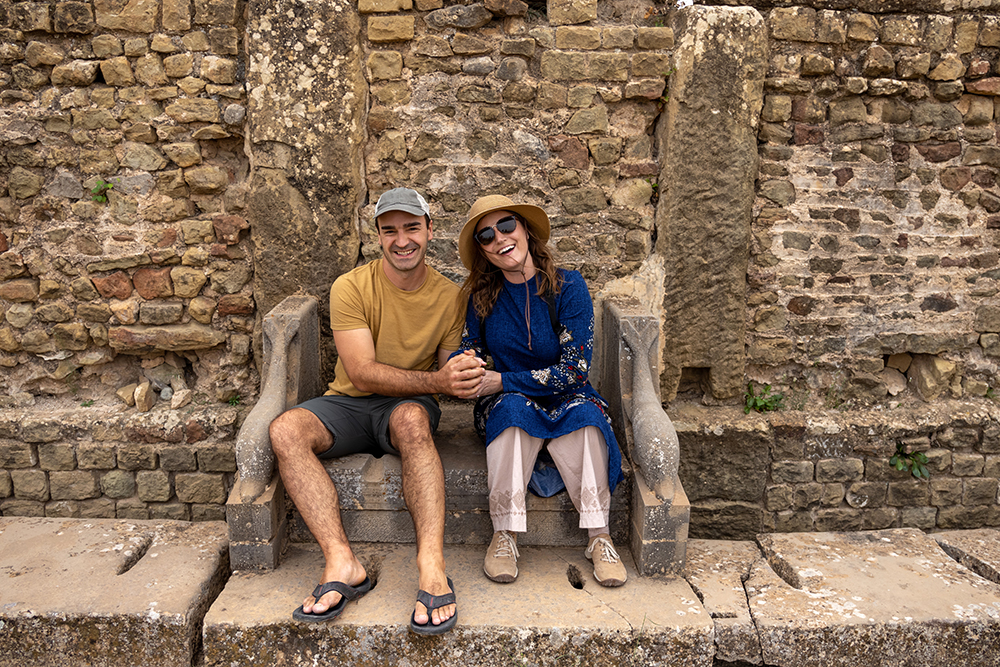
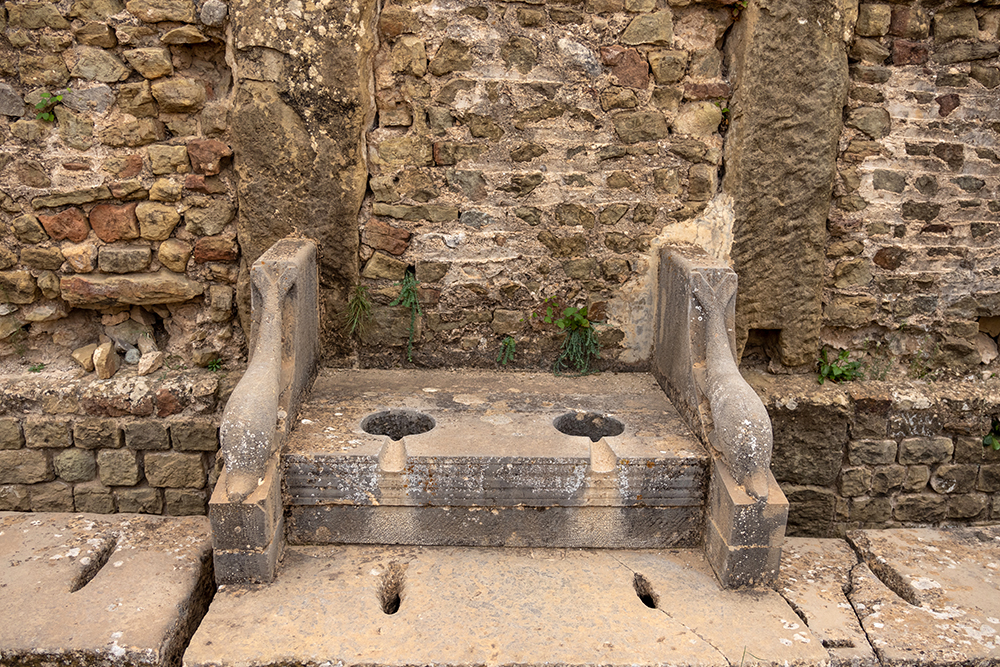
Although they’d been our last stop in Djémila, the toilets were our first stop upon entering Timgad. Somehow these ones were even more impressive than the ones we’d seen yesterday. They came complete with carved armrests, and oddly, they were also built in pairs. Each seat had two holes in it, and we joked about being able to use the toilet with all of your friends and family.
We left the toilets, still laughing, and made our way to the center of the city, where our site guide showed us a group of notches carved into the ground. He picked up a handful of pebbles and tossed them at the notches, while explaining that this was a betting game. We all tried our hand at throwing pebbles at the notches to see how many of them would land inside.
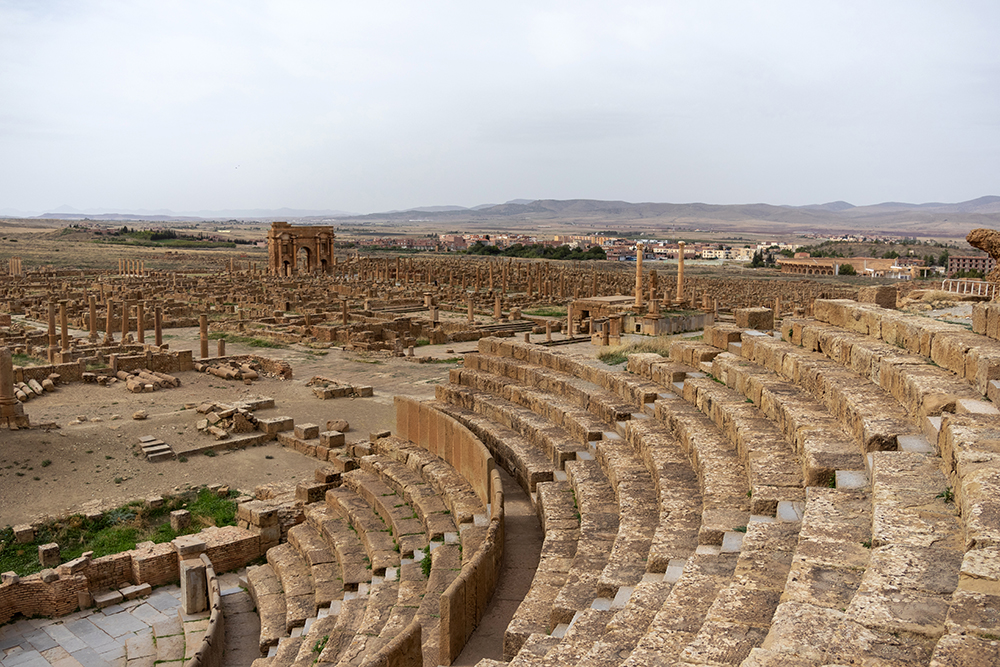
Once we’d all had a turn, we walked over to the nearby amphitheater and stood at it’s center. There was a small arrow in the stone floor that pointed to a little hole. When we stood exactly in that spot, our voices were projected outwards and amplified so loud that it was like speaking into a microphone. This was a fountain of entertainment. Half of us took turns speaking while standing in the spot, while the other half jogged up to the top row of seating to see how well they could hear from all the way up there. It turned out, they could literally hear a pebble drop.
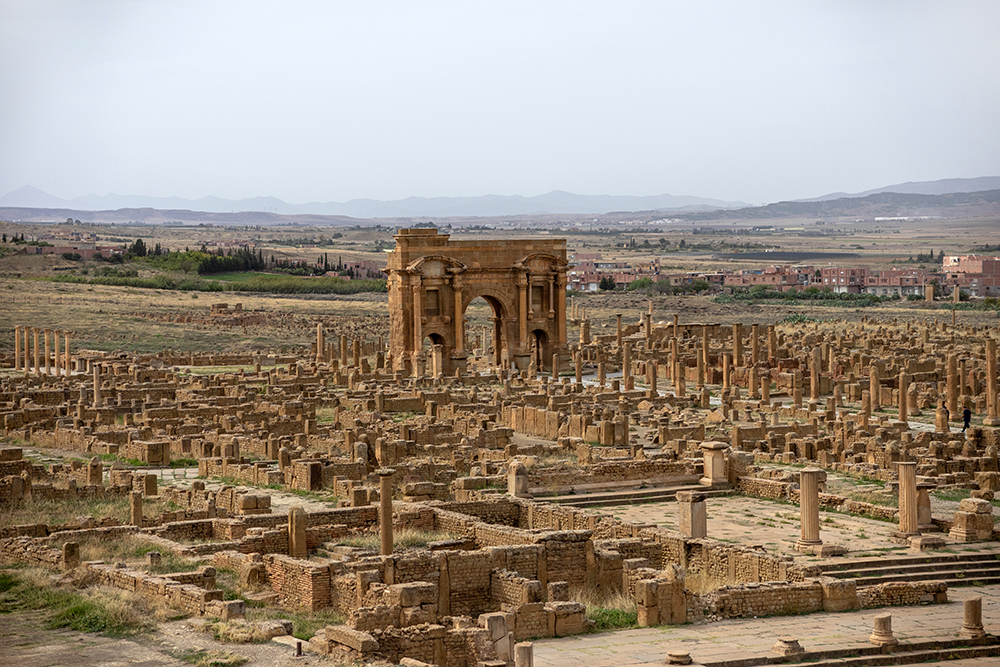
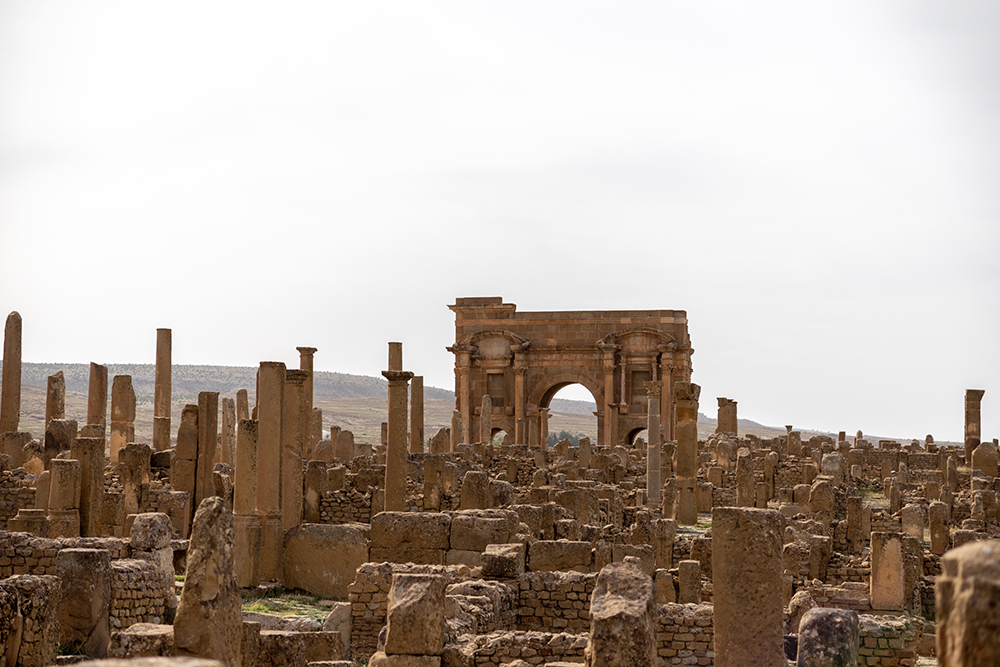
After participating in an impeccable performance of Y.M.C.A, I dashed up to the top row of the theatre, where I found a fantastic view overlooking the crumbling city of Timgad, as our next destination stood proudly in the distance.
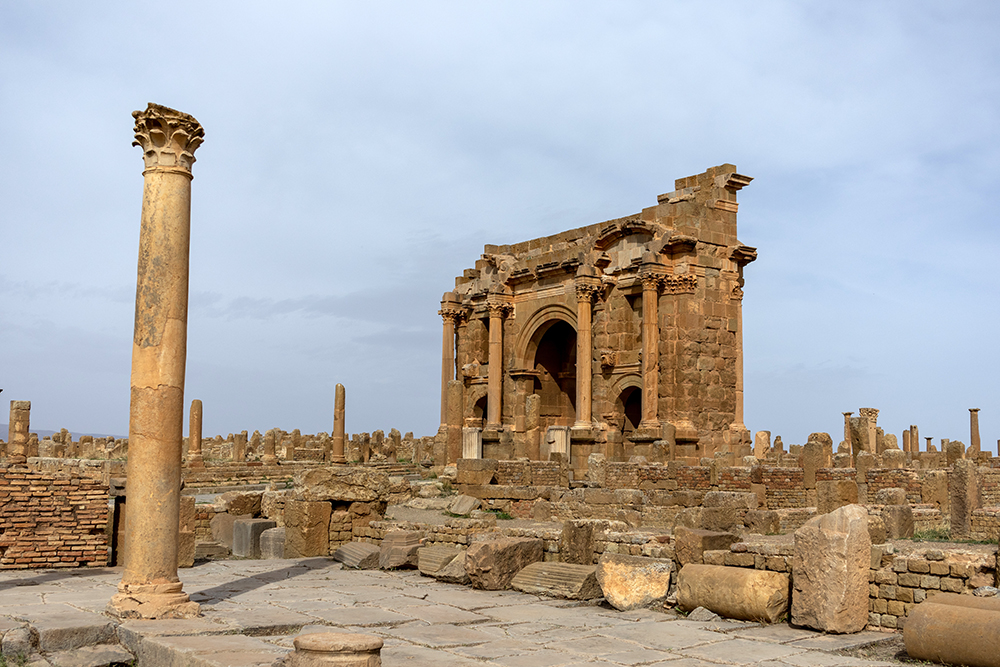
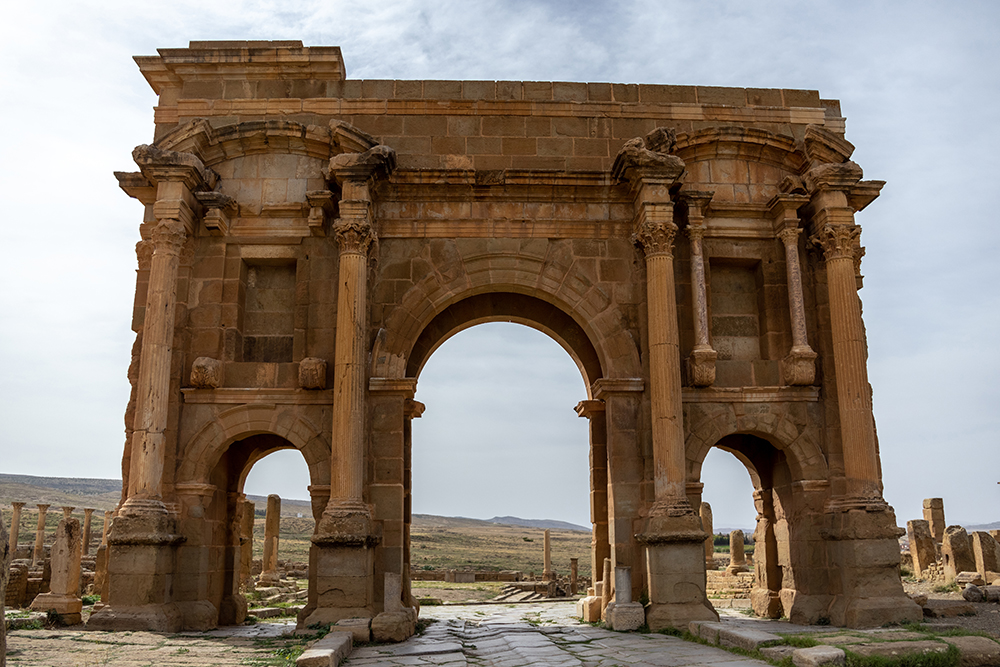
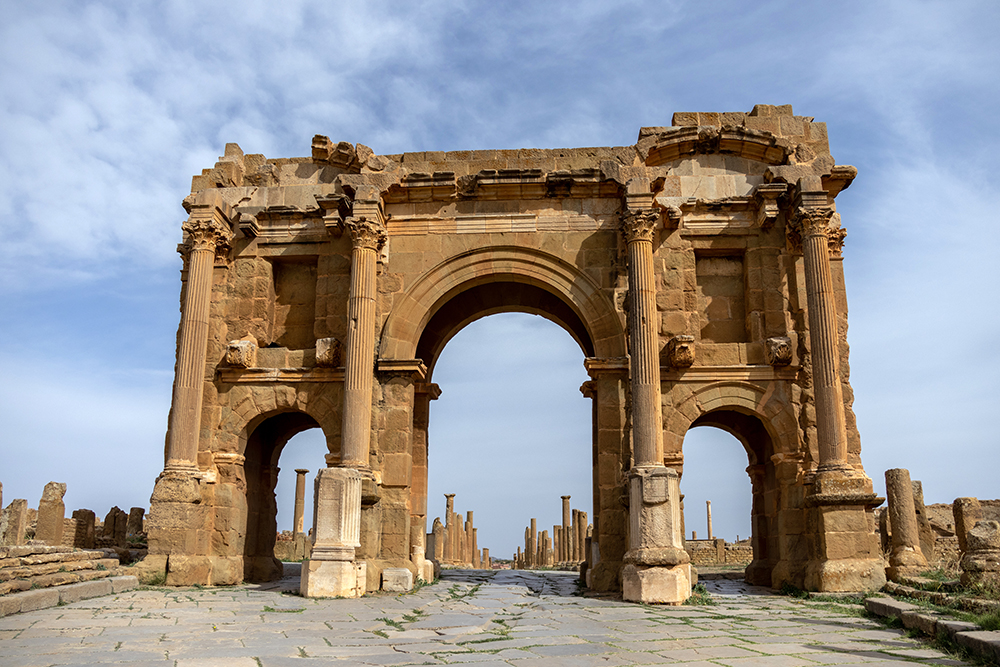
Reluctant to leave the view behind, we descended back to the ground where we followed our guide to what is possibly the most distinctive feature of Timgad, Trajan’s Arch. This arch had three seperate gateways, a large one in the middle for carriages to pass through, and a smaller one on each side for foot traffic. This was a really beautiful piece of architecture, and a wonderful spot to get some photos. Once again, we had the ancient city mostly to ourselves, so we didn’t even have to queue up to have our pictures taken.

Just outside of Trajan’s Arch was the city’s market, the final point of interest on our tour. Much like the toilets, this market was somewhat grander than Djémila’s. The stalls here were separated by stone dividers that had intricate cravings depicting what each individual vendor sold.
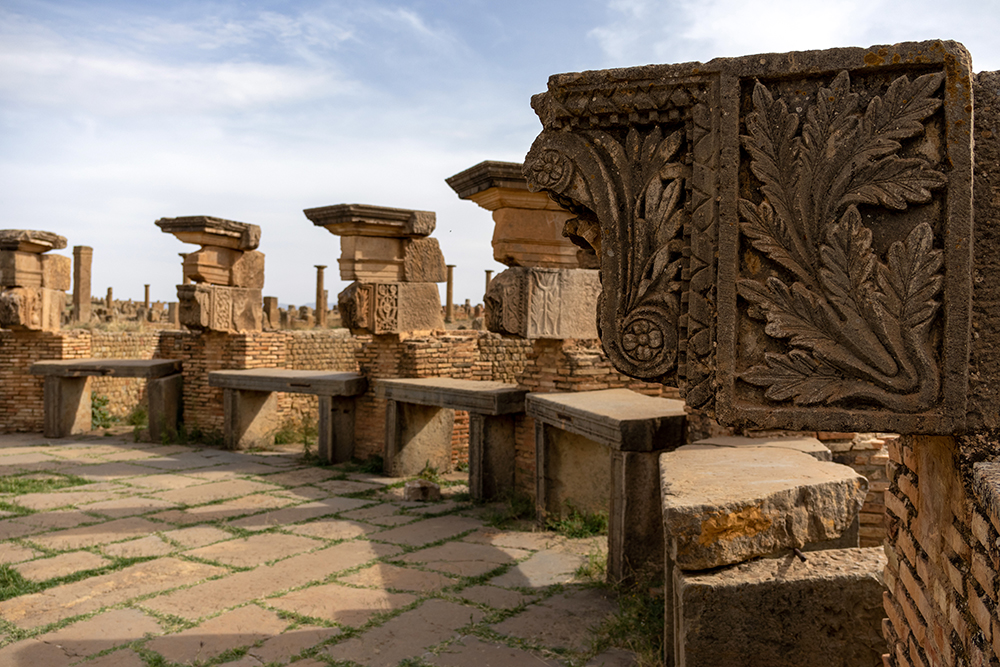
I walked along the semicircle of stalls, inspecting each individual carving, so fascinated that I ended up falling behind the rest of the group. I jogged to catch up with them, and we retraced our steps back out of the city to the entrance gate. From there, it was back in the van and time to stop for a late lunch. We ate quickly because we had one more destination left to cover that day.
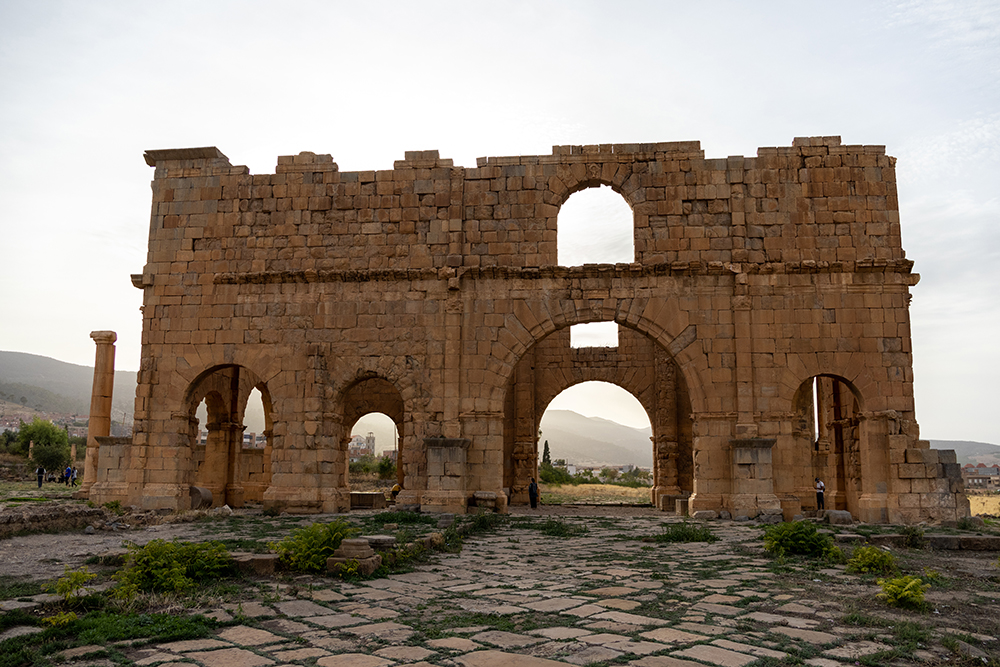
The sun hung low on the horizon when we arrived at the archeological site of Lambaesis, just next to the modern village of Tazoult. our guide had warned us that we might not find this site very interesting after spending the day in Timgad, but I instantly loved the skeleton of the ruin, which was bathed in the atmospheric, golden glow of sunset.
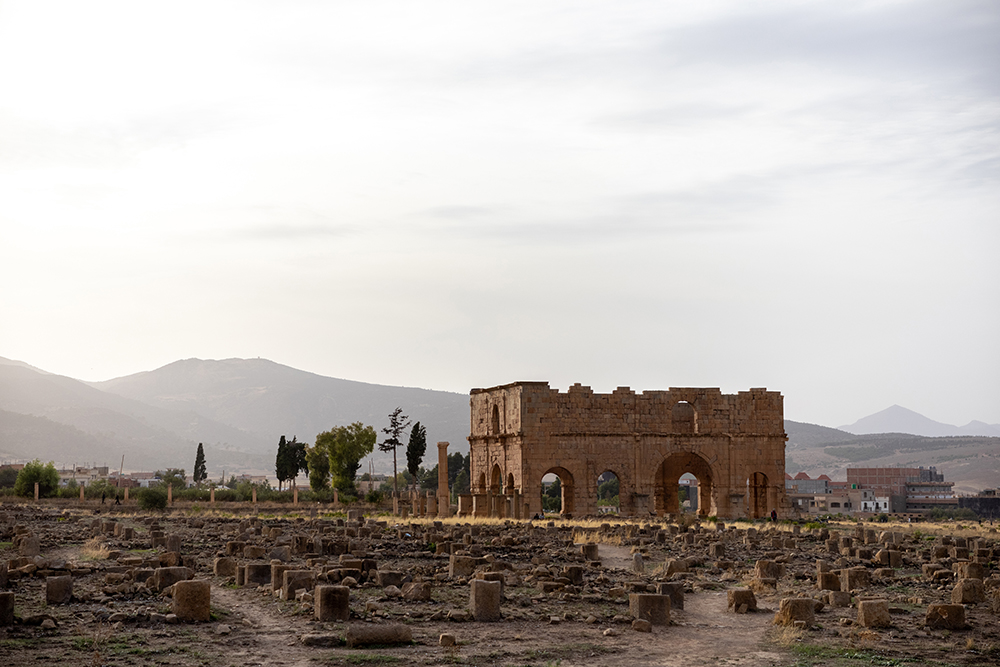
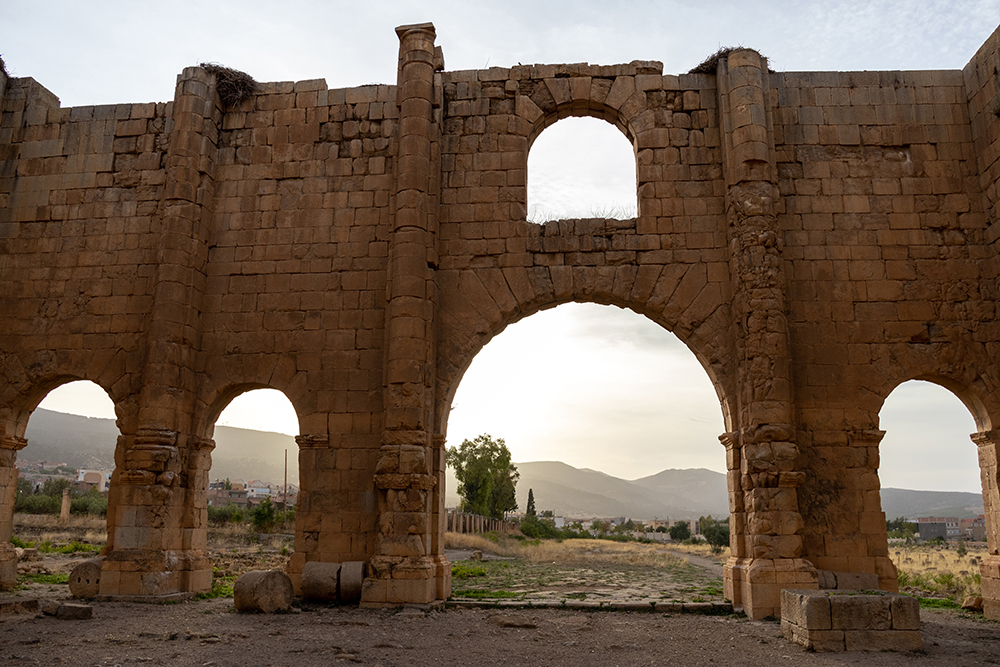
Lambaesis was founded in the 120’s AD, and was once a Roman military base. We walked over to the largest, boxy building, wandering underneath its gaping archways. The site felt very quiet and peaceful, and I wandered around the building, basking in the sun’s last warm rays of the day.
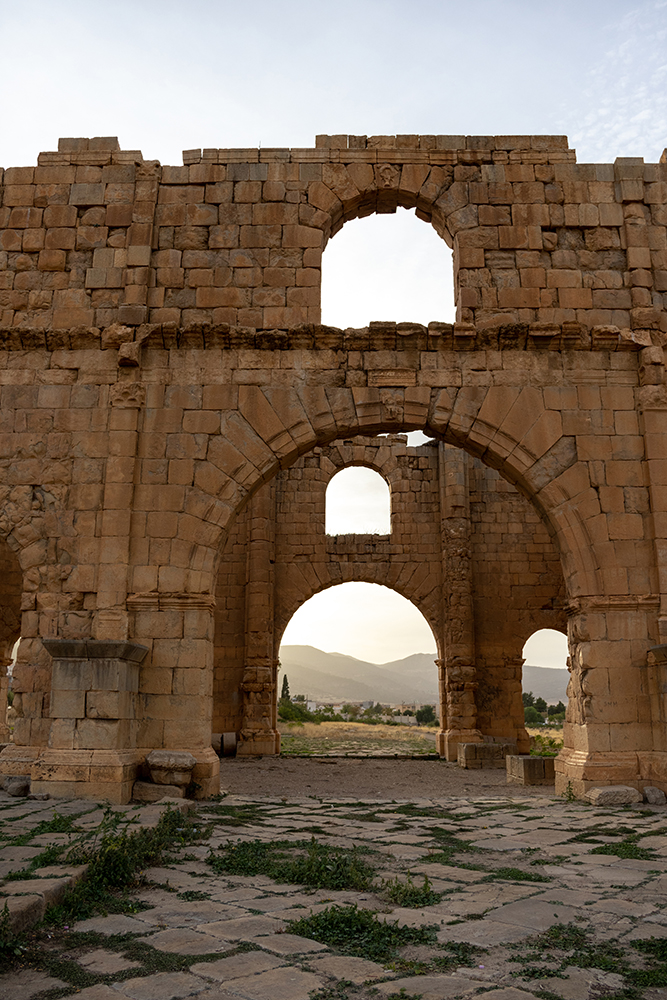
We didn’t stay at Lambaesis for long, and this time when we clamored back into the van, it was time to return to our hotel in Constantine for one more night. The next day would be the busiest one of the whole trip, and we decided to skip dinner in favor of getting to bed early. We’d need to be well-rested for our eventful day of exploring the “City of Bridges.”









 birdsoftheairtravel.com
Wow, it looks like a spectacular Roman City and one of the world’s most amazing archaeological sites. It’s also incredible how much there is to see and do inside the museum. Thanks for sharing, and have a good day 🙂 Aiva xx
It always impresses me who many amazing Roman cities there are spread over their large empire. This one definitely looks worth a visit. Maggie