Algeria is not a country I ever imagined I would get to visit, even in my wildest dreams. Although it’s a fascinating country steeped in thousands of years of rich and diverse human history, the tourism visa process always seemed too difficult and complicated to pursue. In the recent past, it would have involved an expensive flight to New York for an interview, and mailing in my passport in the hopes of my application being accepted. And yet, just last month I had the pleasure of walking the same stone roads that ancient Romans walked two thousand years before I even existed, and learning how the people of the M’Zab valley collect and store flood water so that they can survive ten years in the Sahara without rainfall.
My group of friends and I were able to do this thanks to our new friends at Izelwan Travel, and to Algeria’s somewhat newly relaxed visa requirements that allow for visas on arrival for travelers visiting the Sahara region of the country. And of course, our friend Jared from Percussive Tours put in a ton of research and work to figure out how to make this dream a reality as well. Izelwan did all of the hard work of arranging our visas for us, so that when our flight arrived in capital city of Algiers, we only had to wait for about an hour for our visas to be processed before we were on our way to the Lamaraz Hotel.
We did have some hiccups on our journey, which caused us to miss our scheduled flight from Paris to Algiers. Namely, Air France needs approval from a manager to allow passengers with VOA’s to board their flights. Whoever that person is, was not answering their phone when we approached the gate for our 2 pm flight. Lesson learned: go talk to a gate agent as soon as possible if you have an Algerian VOA. So after a valiant effort by the gate agent, we were rebooked on the 10 pm flight, and finally stepped into our hotel rooms around 2:30 the next morning. After a few hours of much needed sleep, we were begrudgingly awake, but wholeheartedly excited to explore Algiers.
Our Izelwan guides picked us up from the hotel after breakfast. We all had a rough outline for the day in the itinerary that Izelwan had provided, so I knew we’d be visiting a couple of museums to kick off the morning. In fact, there were a somewhat daunting amount of museums listed on the itinerary. Museums in the US and Europe can take an entire day to tour all by themselves, and it was hard for me to fathom how we were going to fit in a museum or two on most days of our trip and still have time for anything else. But when we arrived at the National Museum of Antiquities and Islamic Art, I began to understand.
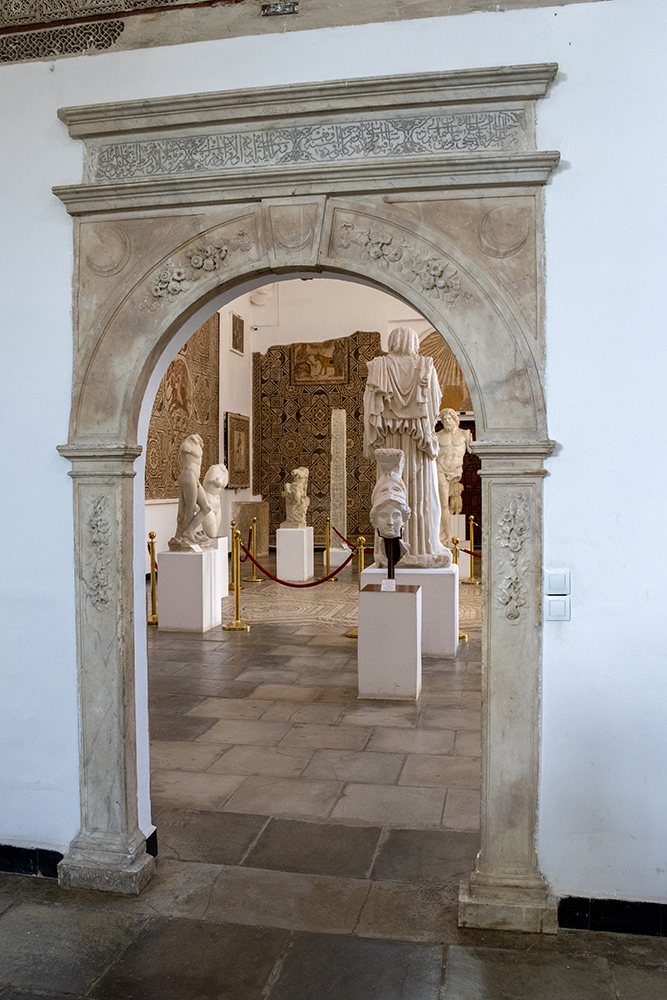
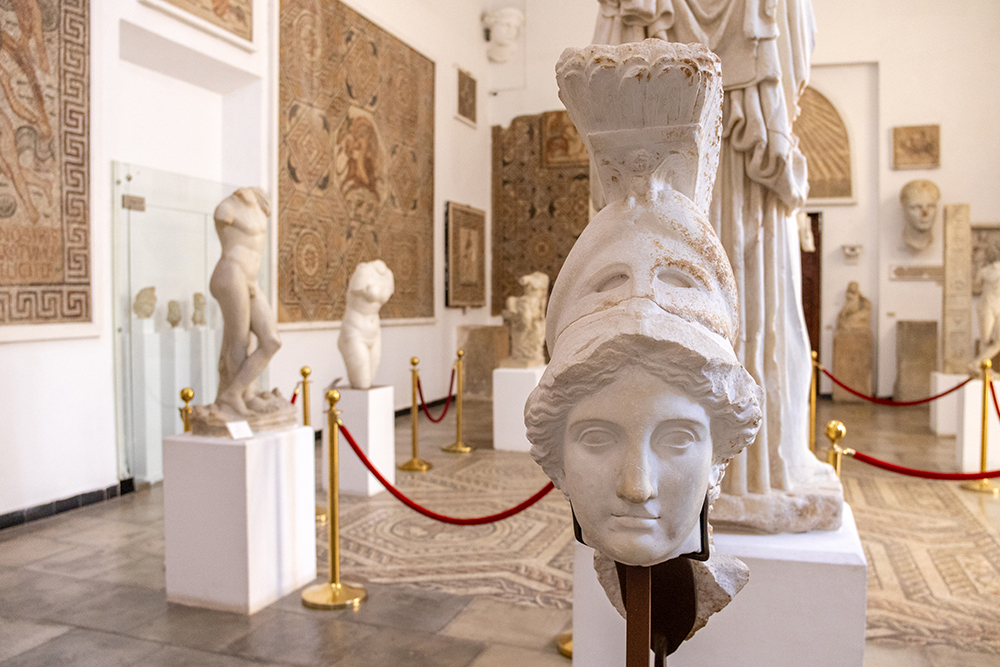
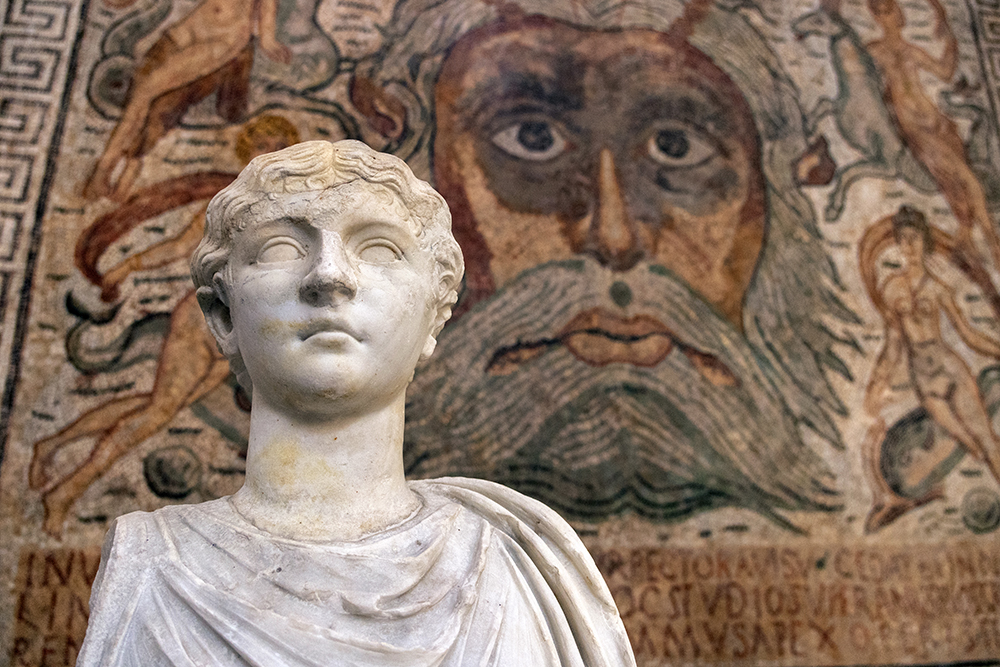
It was a small museum divided into two separate buildings with different themes. We began in the Antiquities building, and when we walked inside, I felt my jaw drop as I took in the collection. Ancient Roman statues in amazing condition stood tall throughout the gallery and the walls and floors were covered in intricate mosaics that once adorned the floors of Roman colonial cities. My favorite artifact in this section was a sarcophagus that appeared (to my untrained archeological eye) to depict the story of Hercules.
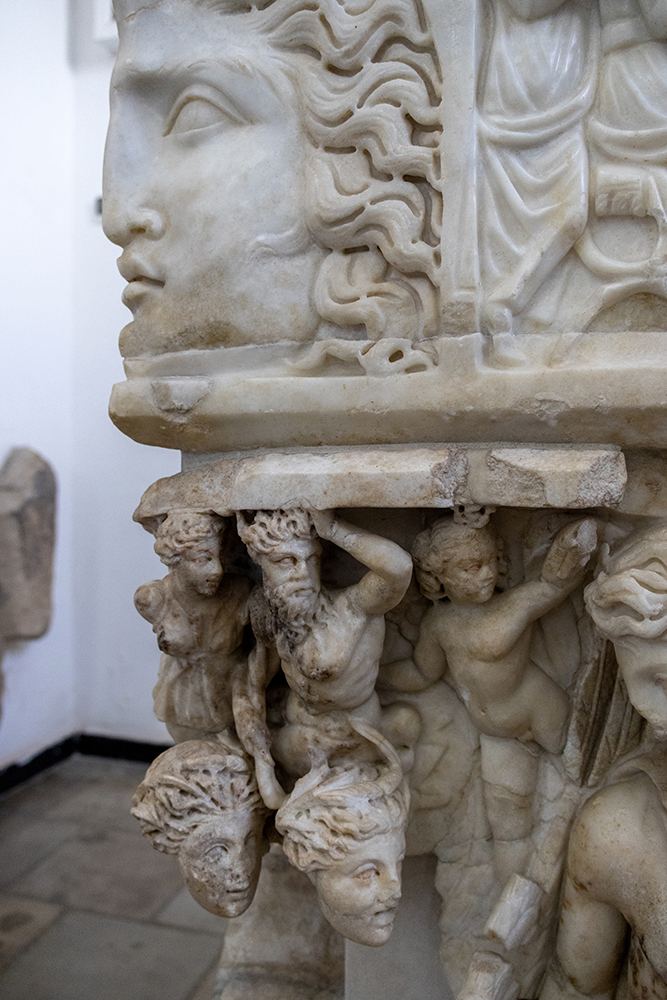
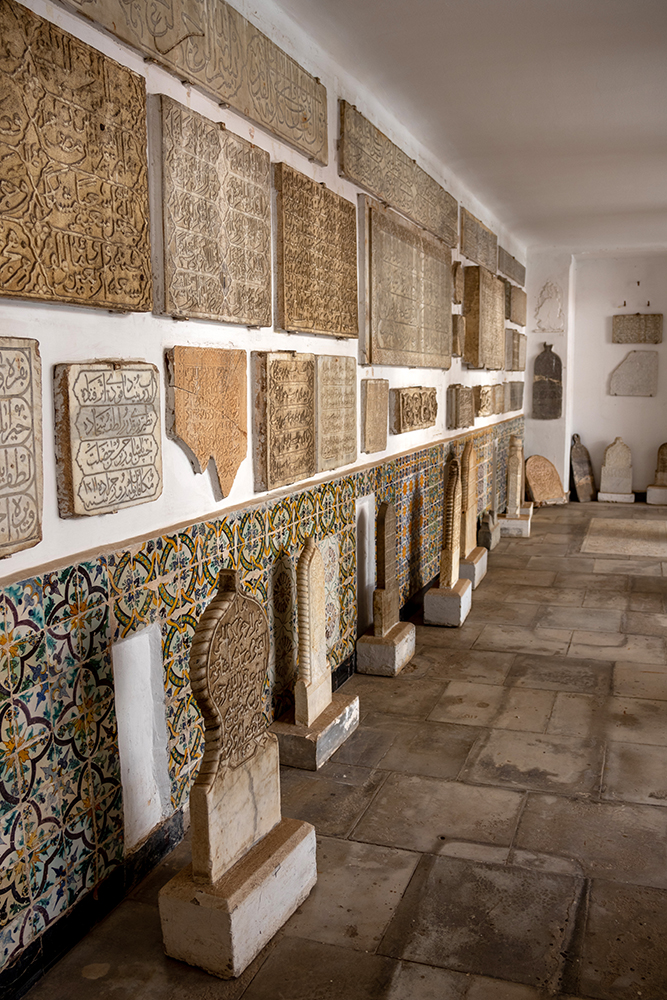
Next we walked over the the Islamic Arts building where we got to see a collection of both Algerian and Ottoman artifacts that ranged from jewelry to well-preserved clothing to weaponry. Within an hour, we’d managed to tour the entire museum, and were very impressed with both of its collections. As an added bonus, none of us were feeling the fatigue that can come after a long day of wandering through a larger museum. In fact, we were all eager to get to our next stop of the day, the Bardo museum.
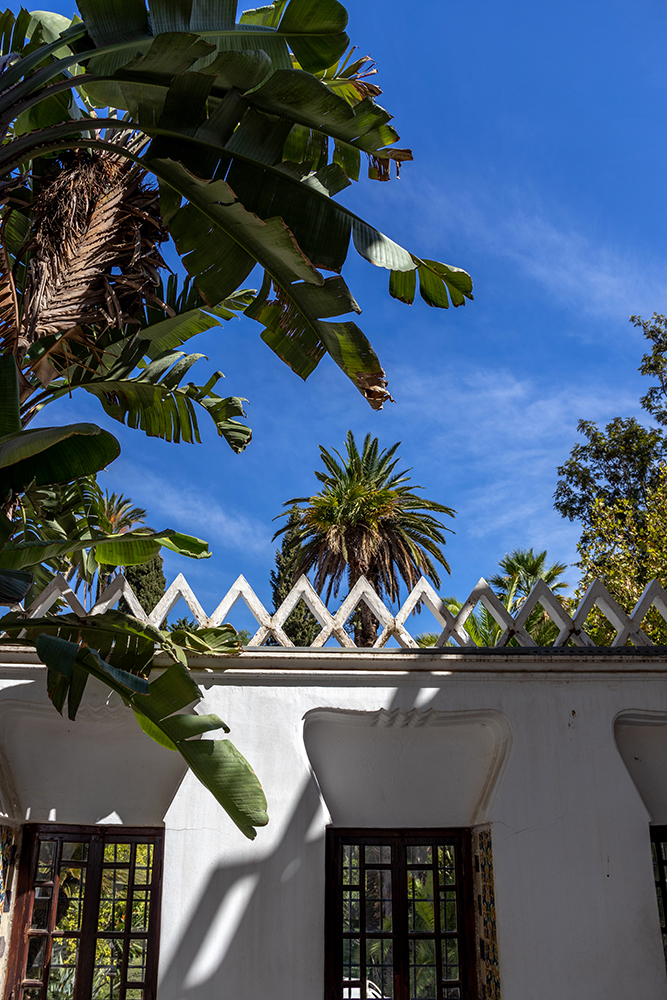
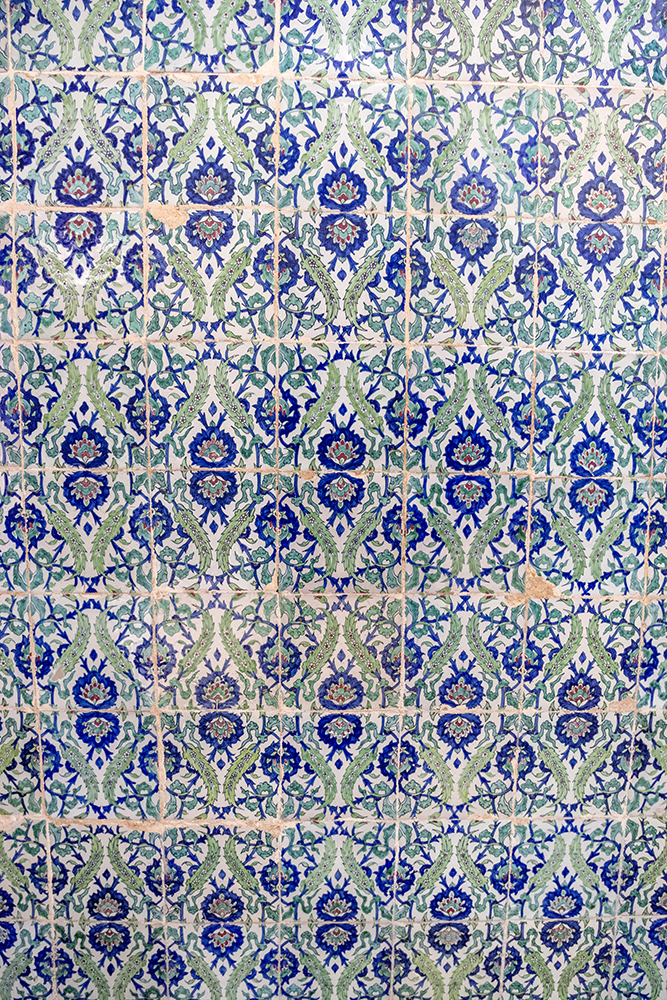
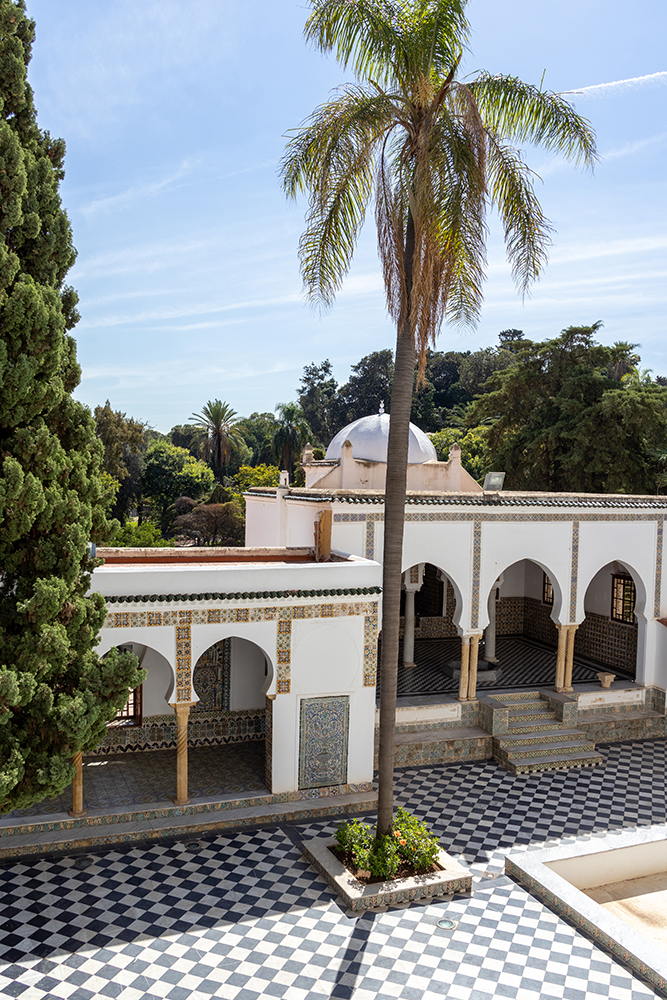
The Bardo Museum is housed in an 18th century Moorish palace. We walked through a corridor dedicated to African arts, particularly musical instruments from around the continent, and prehistoric fossils. At the end of the exhibit was a staircase covered in beautifully pattered tiles. We walked up the stairs and emerged into blinding late morning sunlight in the courtyard of the old palace.
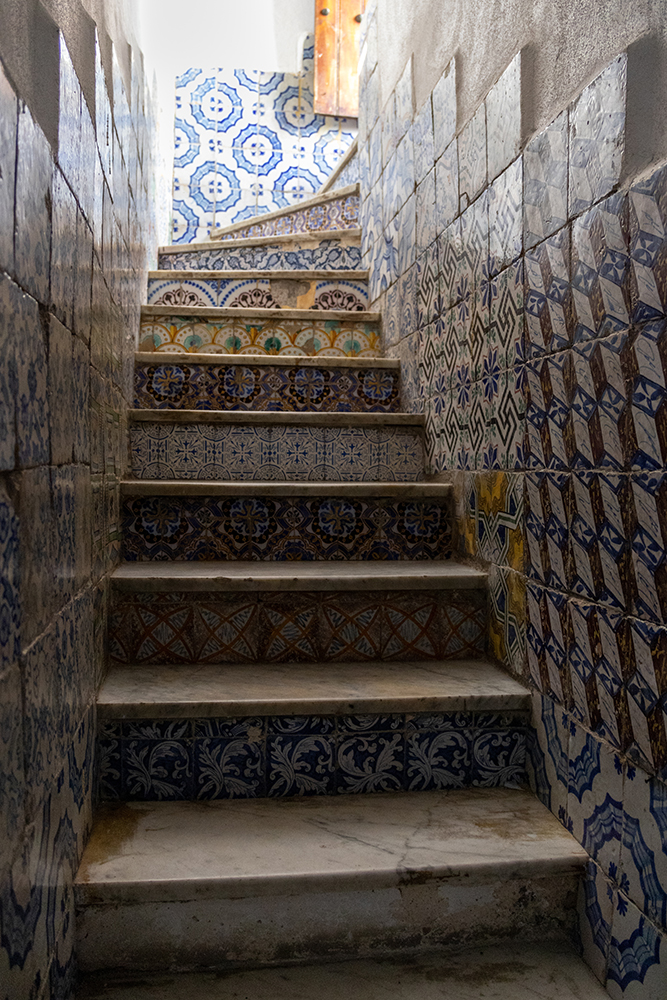
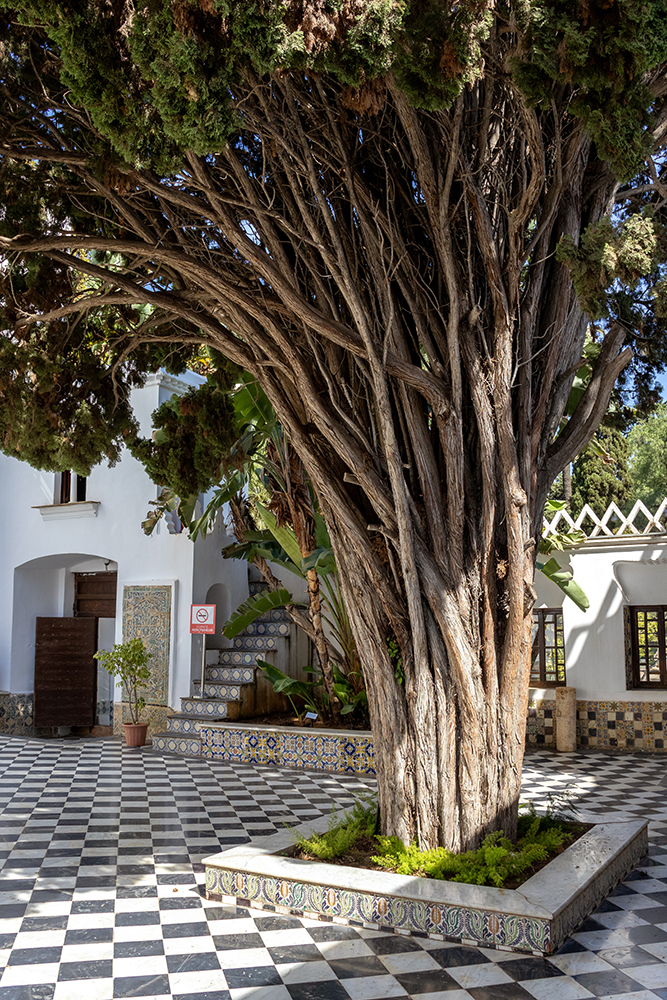
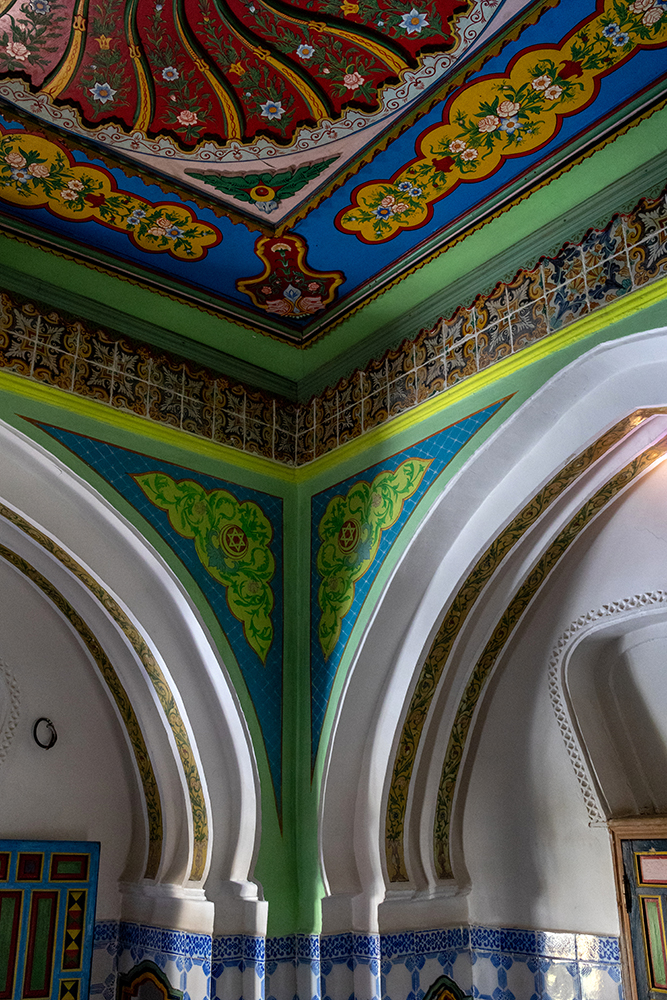
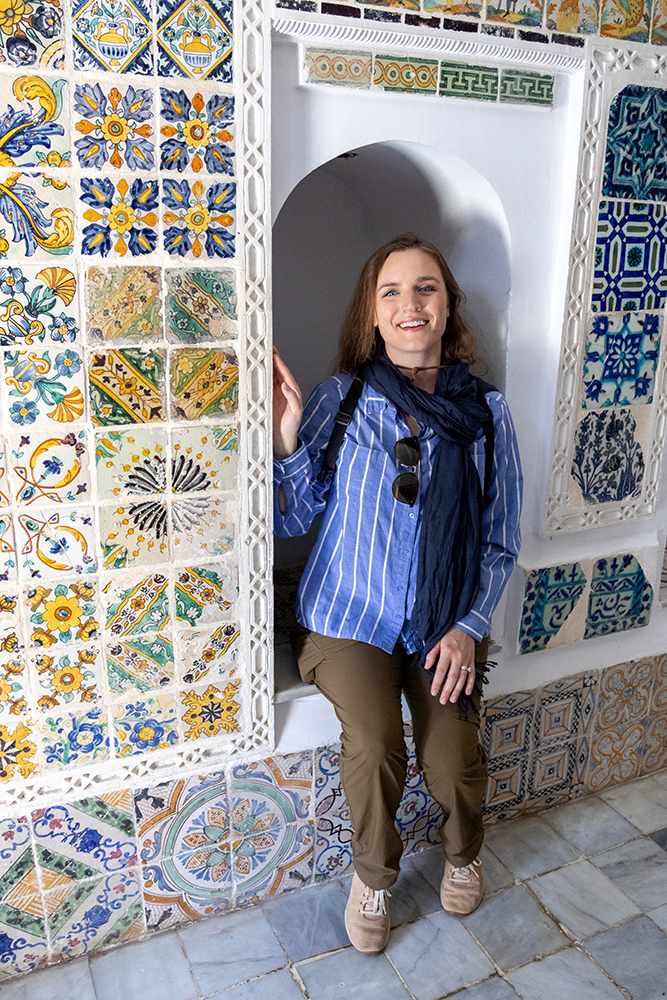
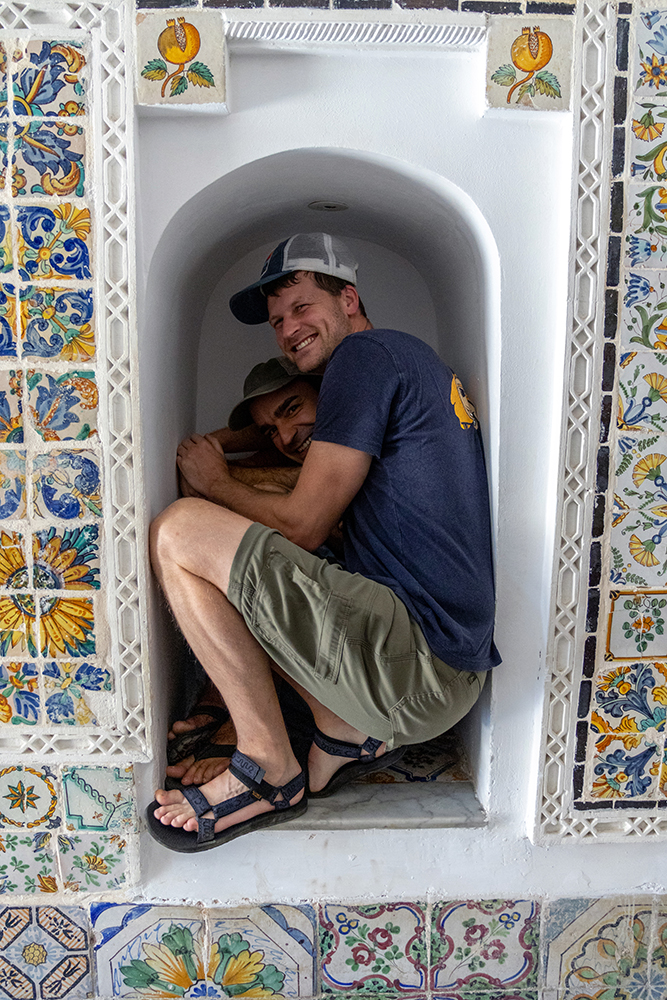
The remainder of our visit to the Bardo Museum was dedicated to exploring the palace’s lavishly decorated rooms and corridors. These elegant accommodations were decorated with paintings and more resplendent tile work, and gave us a glimpse into what life would have been like for the palace’s 18th century occupants.
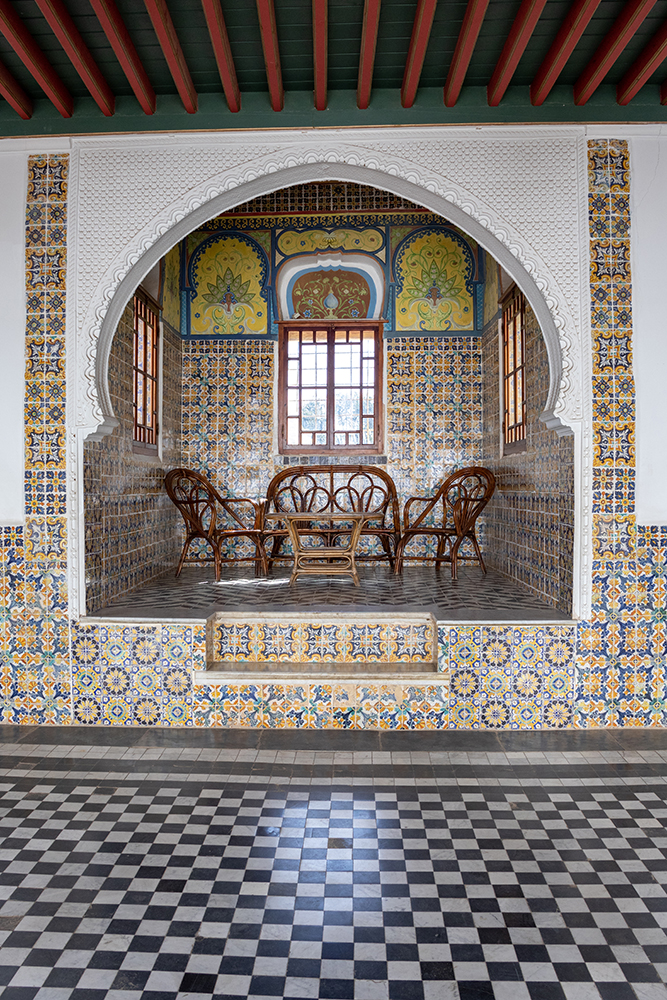
After we left the Bardo Museum, it was time for the highlight of the day, a walk through the Casbah of Algiers. This walled city is a UNESCO world heritage site due to its historic mosques and palaces, along with its traditional architecture.
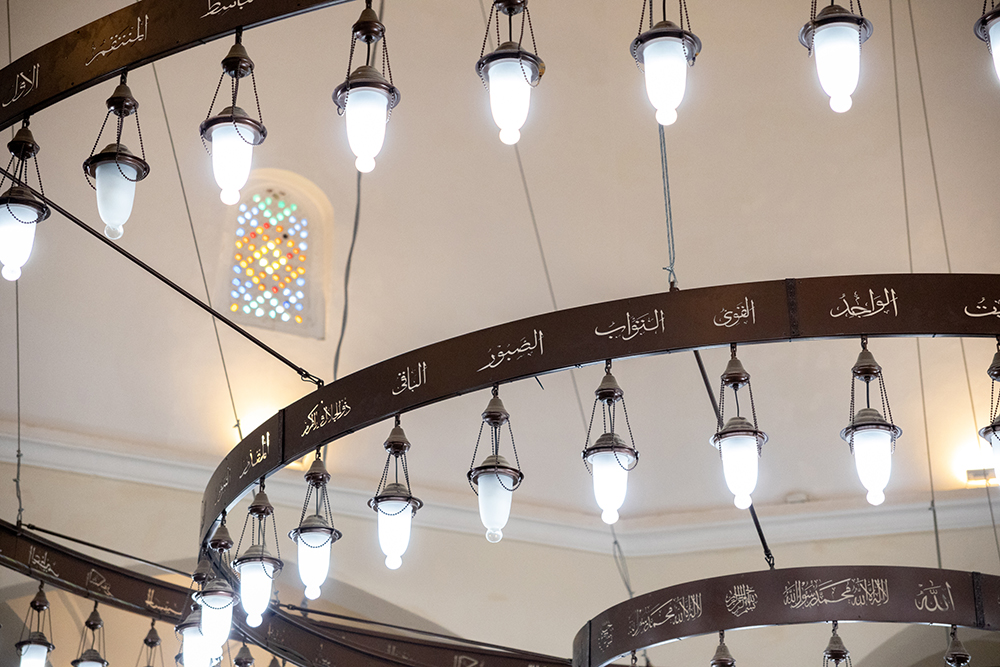
An Algerian flag rippled gently overhead as we crossed under an arched entryway into the old city, where we started our tour with a quick stop at fortress that was once used for the production and storage of gunpowder, and a visit to a palace to see its mosque. Here we saw a large lamp decorated with carvings of the ninety-nine names of Allah.
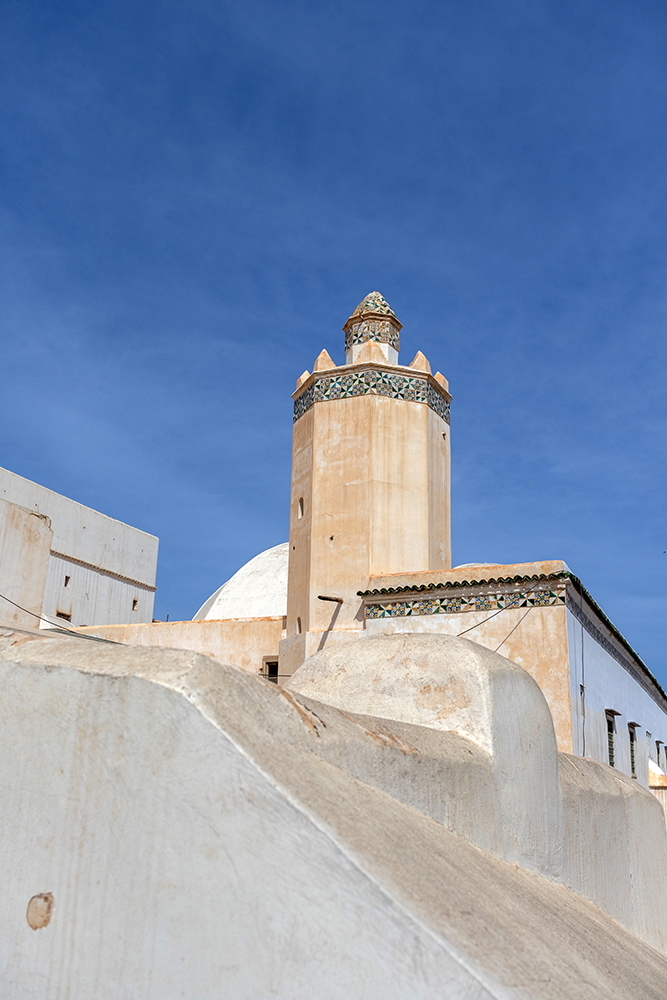
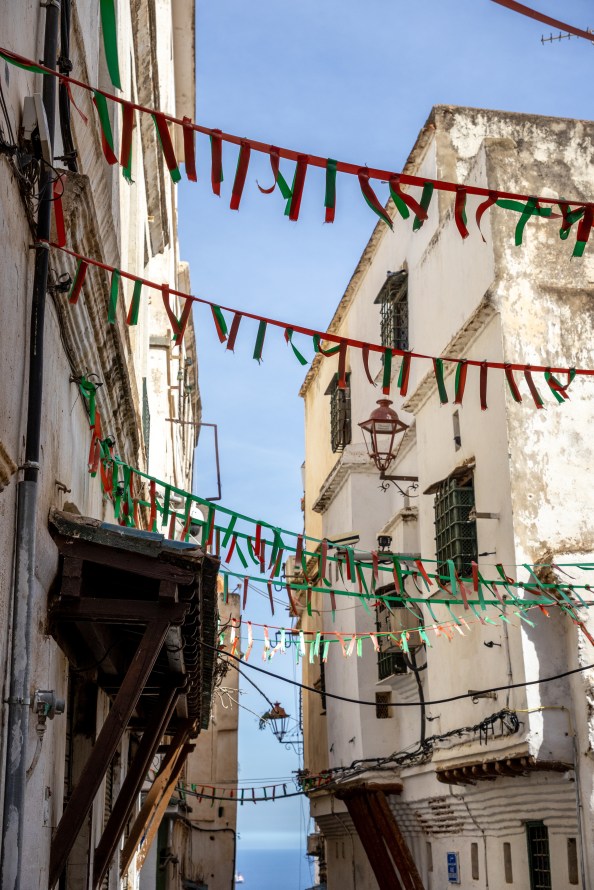
But the highlight of the Casbah for me was walking its busy, narrow streets. I loved peering into every vacant side-alley as we made our way downhill amidst a crowd of people. All of the buildings in the Casbah were in shades of white, accented by the red and green of Algerian flags, and the colors of the local soccer team. The simple color scheme made for a harmonious atmosphere.

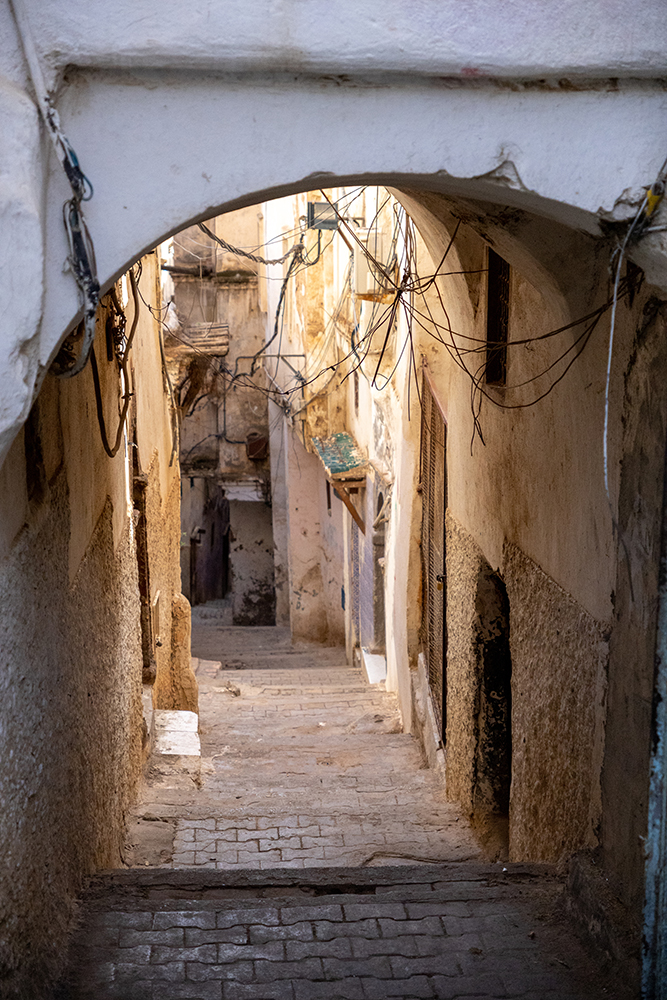
As we walked we grew ever closer to the Mediterranean Sea, often catching glimpses of it when we turned down streets that had a clear view all the way down to the corniche. It was now midday, but none of us were feeling up to a full lunch, so instead we stopped for tea and pastries at a little shop on the main street. We sat on low stools around a short, hammered metal table with intricate design work, and enjoyed a pot of hot tea as a steady stream of pedestrians flowed past us. The tea was refreshing, and we also enjoyed a sampling of a variety of pastries, each picking our favorites from the spread (mine was a custardy lemon confection).
Afterwards we all felt rejuvenated and headed over to an old woodworking shop that houses one of the most beautiful viewpoints in the walled city. We met the owner of the shop before heading up a steep set of stairs built around a series of triangular open-air balconies that looked down to the main floor. After a few sets of stairs, we emerged onto the building’s rooftop, where we got to see a panoramic view of Algiers in front of the Mediterranean Sea.
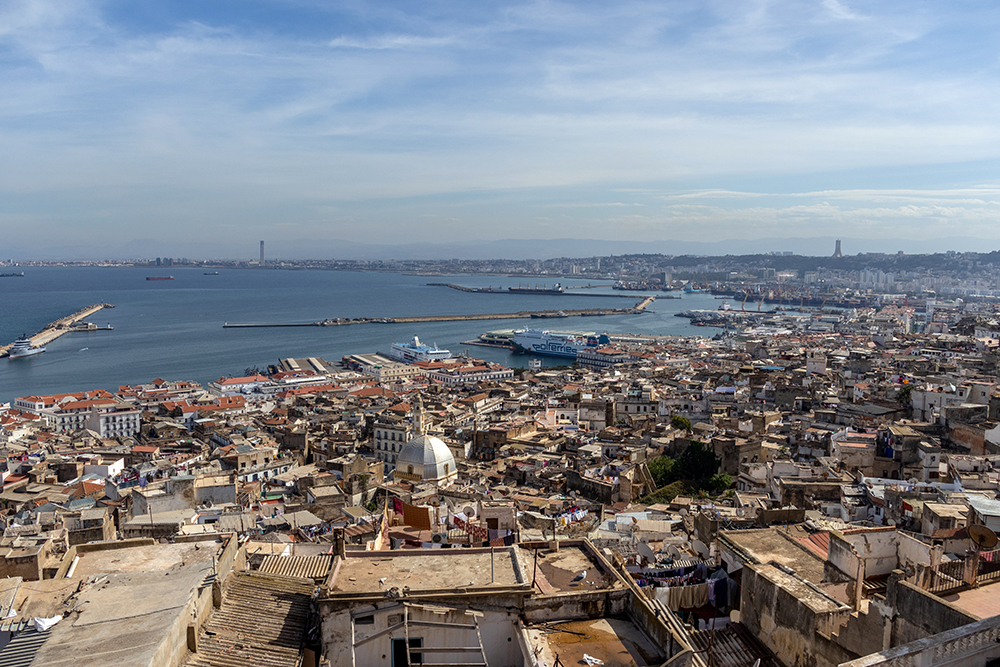
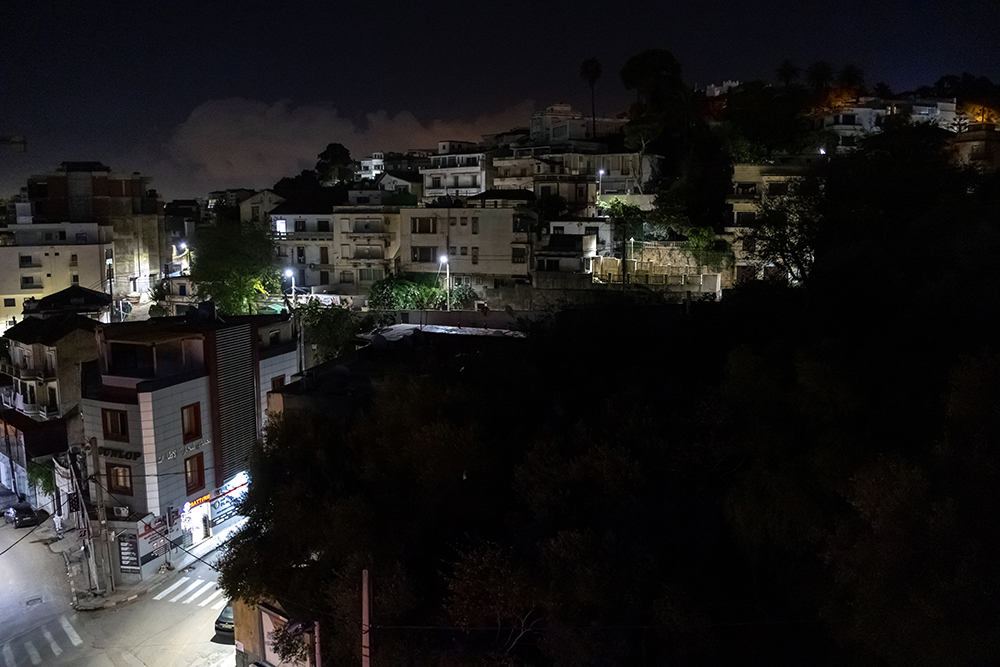
Our guide had mentioned the night before that Algiers is known as the White City, and that we would find out why once we got to the Casbah. A sea of white washed buildings gleamed in the afternoon sunlight as my eyes scanned across the sprawling expanse of city below me. It was certainly apparent how Algiers got its nickname. The shining, domed roofs of mosques interrupted the pattern of flat rooftops, and in the distance, the minaret of Djamaa el Djazaïr, the Great Mosque of Algiers, towered above its surroundings.

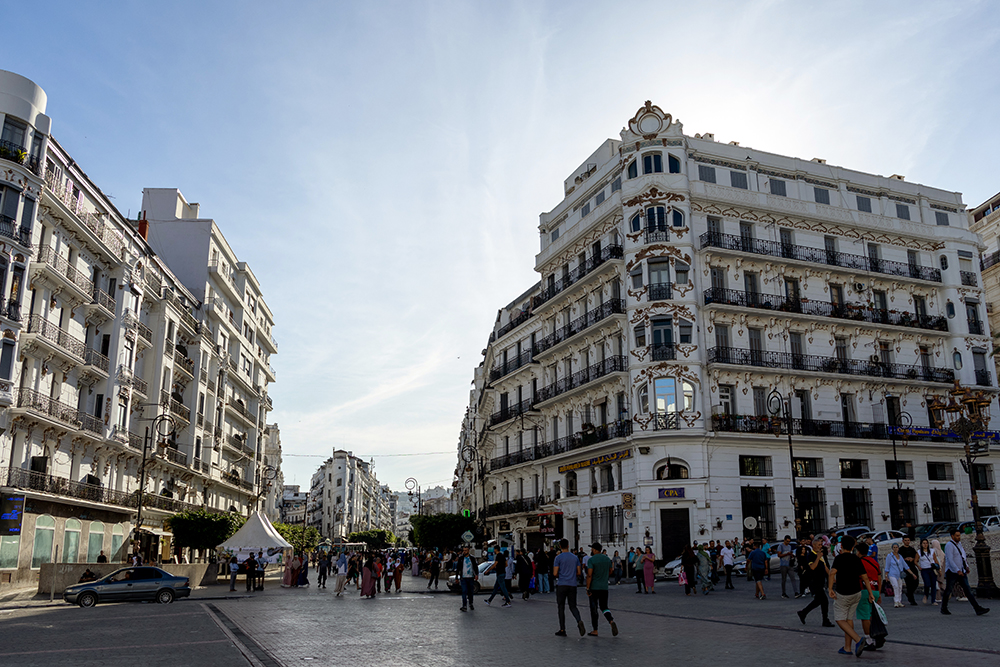
We lingered at the viewpoint for a while, watching the bustle of the city below us, and when we finally descended back to the street, it was time to make our way out of the Casbah. So we continued downhill, and as we got closer and closer to the sea, the architecture of the city began to change. We emerged onto a street lined with French Colonial style apartment buildings where each unit had a satellite dish attached to its balcony making for a chaotically compelling scene.
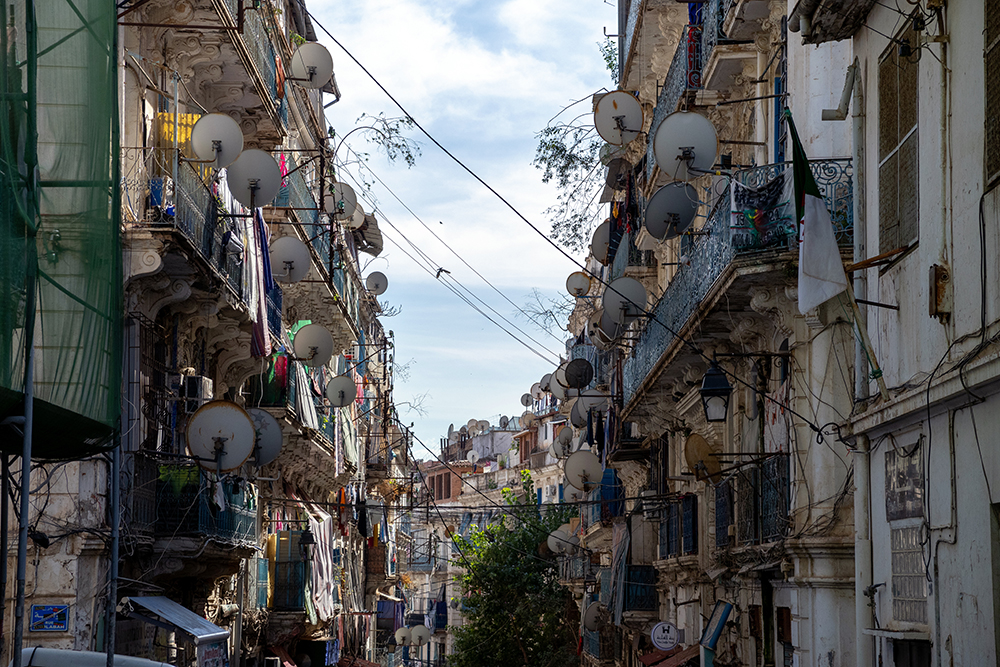
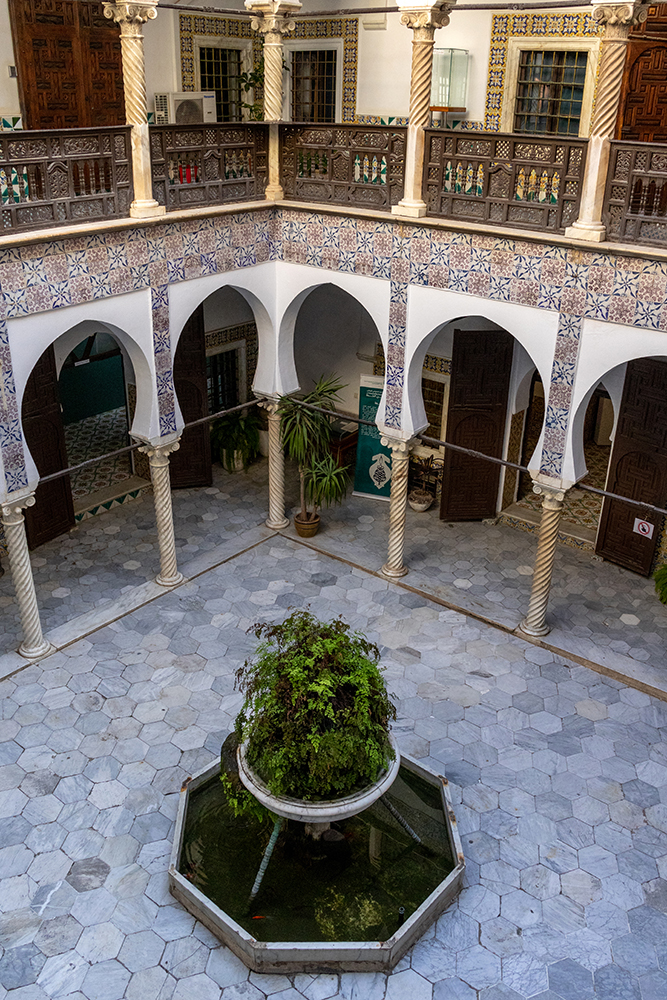
There was a shop selling different kinds of flatbread nearby, and we tried a variety of different flavors of mahdjouba, or flatbreads stuffed with different ingredients. One of them tasted like pepperoni pizza, while another was stuffed with melted cheese, and another with onions. We snacked on the breads as we made our way over to another palace, where we ducked inside to see its lavish courtyard, which was decorated with hexagonal floor tiles, and twisting plaster columns. In the center of the courtyard was a fountain which housed lush greenery and a few colorful fish.
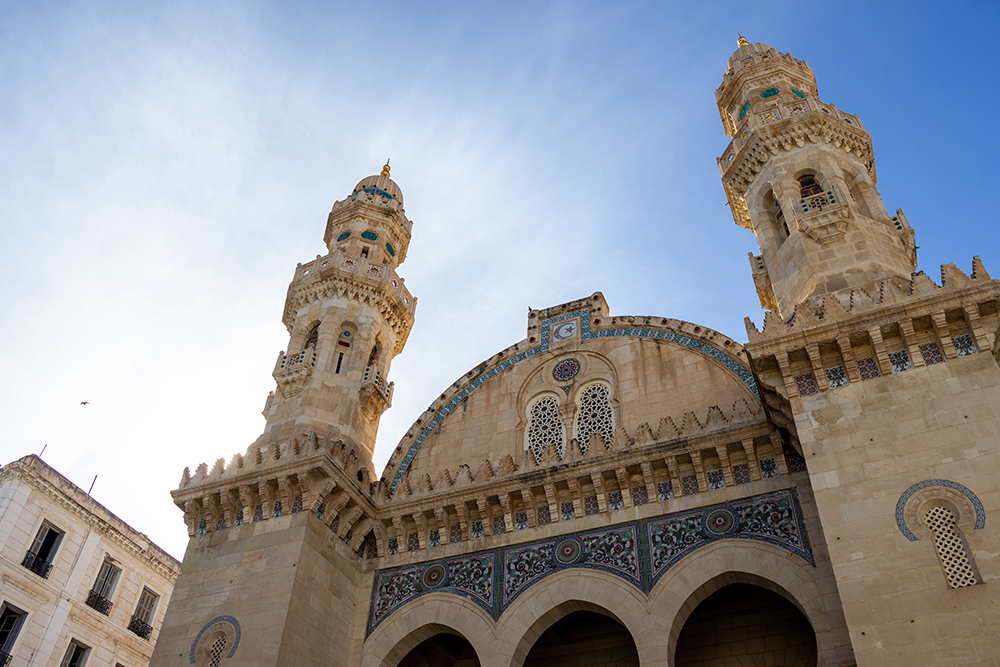
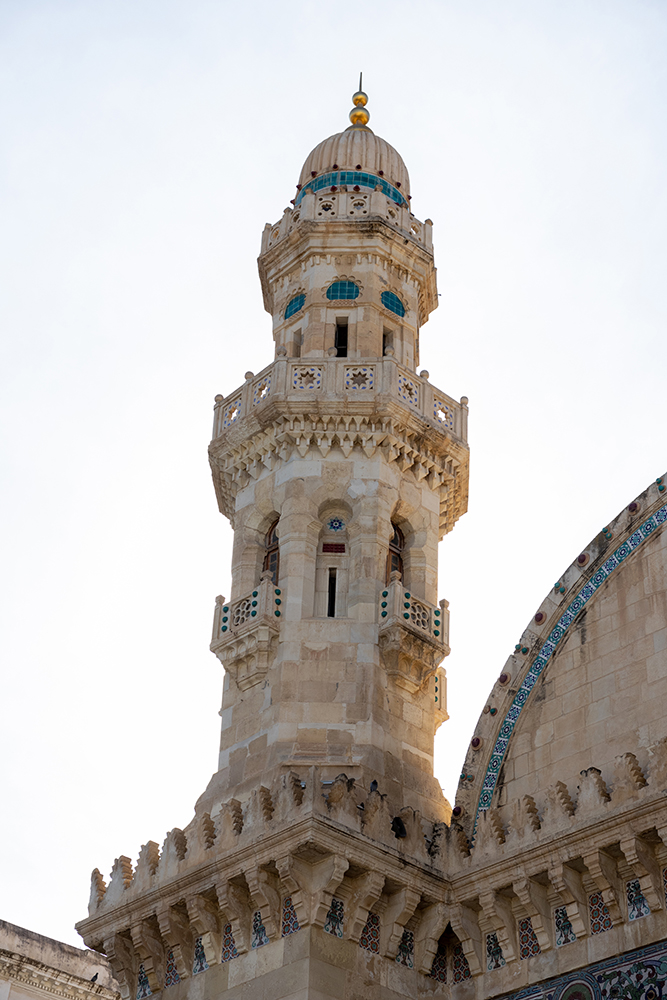
After emerging from the palace, we walked passed by the beautiful Ketchaoua Mosque. We weren’t allowed to enter this mosque, but we got to admire the detailed stone and tile work on its twin minarets before finishing up the short remaining walk to Martyr’s Square and the seaside corniche.
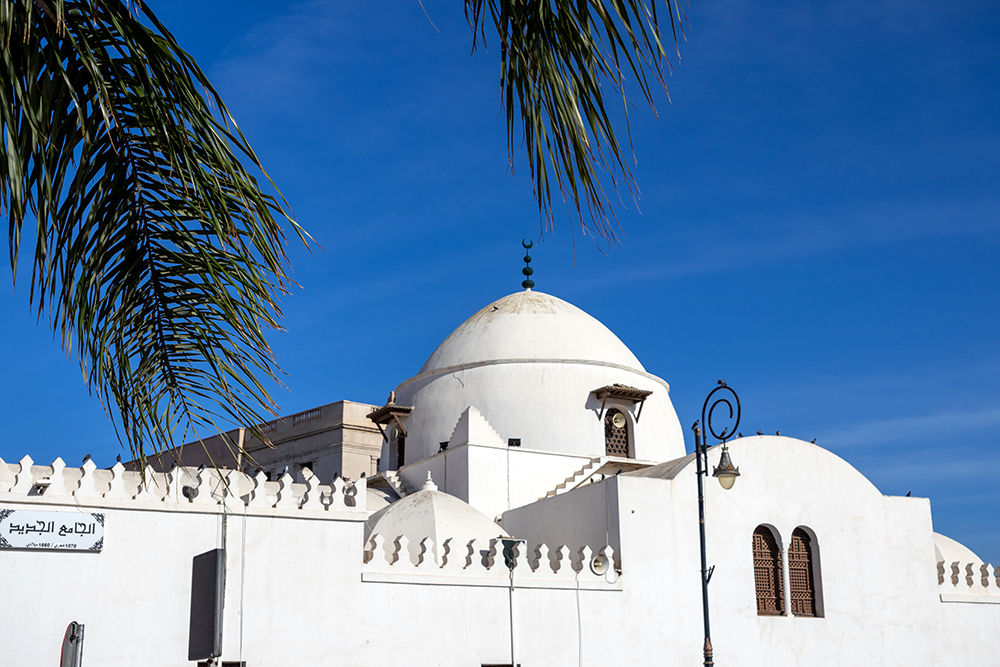
Pigeons flocked around us when we reached Martyr’s Square, where we got to see the bright white exterior of Djamaʽa el Djedid, a mosque that was built in 1660.
After that, we took a pleasant walk along the seashore, where an impressively long line of Algerian flags whipped in the breeze. Our guide explained various buildings and murals to us as we walked, and eventually we made it to a more modern section of the city that was busy with both car and pedestrian traffic. Here we got to admire the Neo-Moorish architecture of the Grand Post Building, and see a statue of Emir Abdelkader, a 19th century leader of the Algerian fight for independence from French Colonial rule, and the founder of the Algerian State.
We stopped at an outdoor cafe for smoothies and tea before before making a quick stop back at the hotel to freshen up before dinner. A couple hours later, we went back into the city to experience our first full Algerian meal. Between the six of us, and our two guides and driver, we practically ordered everything on the restaurant’s menu. We got our first taste of hmiss, chakchouka, and Algerian couscous, and by the end of the meal I was completely stuffed. This dinner would be the first of many fantastic meals of local food.
After we finished eating, we returned to the hotel for some much-needed rest. Our first day in Algeria had been jam-packed with so many beautiful sights, and fascinating historical information. I couldn’t wait to see what was in store for us on the rest of our trip!

 birdsoftheairtravel.com