Of all the fire mountains which like beacons, once blazed along the Pacific Coast, Mount Rainier is the noblest.
– John Muir
Whenever I visit the mountains, I try to remind myself that they have their own weather, and it isn’t going to bend to my wishes. For instance, when we went on safari in Amboseli National Park in Kenya, we saw Mount Kilimanjaro on two brief occasions during the two days we spent there. The rest of the time, it was so thoroughly hidden behind clouds that it was as if Africa’s largest mountain didn’t exist at all. The first time we visited Oregon, we had a similar experience with Mount Hood. The mountain only made an appearance on our very last day there. Still I always hope that we will get lucky enough to see these hidden giants when we visit areas like this. So far the weather had been exceedingly clear during our latest trip to the Pacific Northwest, but as Portland faded into the distance behind us, an ominous wall of clouds hung low in the sky in front of us.
Vince and I were enroute from Portland to Seattle, and we had a timed entry ticket to stop at Mount Rainier National Park along the way. Since this was a rather short trip, we’d had to pare down our extensive Washington wishlist to just a few short stops, and we only had a half day to spend at Mount Rainier. I knew this was a risk, but it was one I was willing to take because it was the only way I could make a visit to the park work with our condensed itinerary. Now it seemed that my risk would not be rewarded.
As we drew ever closer to the park entrance, the heavy cloud cover seemed to grow ever thicker. By the time we arrived at the Paradise entrance station, it was evident that barring some sort of miracle, we would not get to see Mount Rainier that day. Still we knew we had to make the best of the situation. Bad weather was always a possibility, and I was determined to have a good day in spite of it.
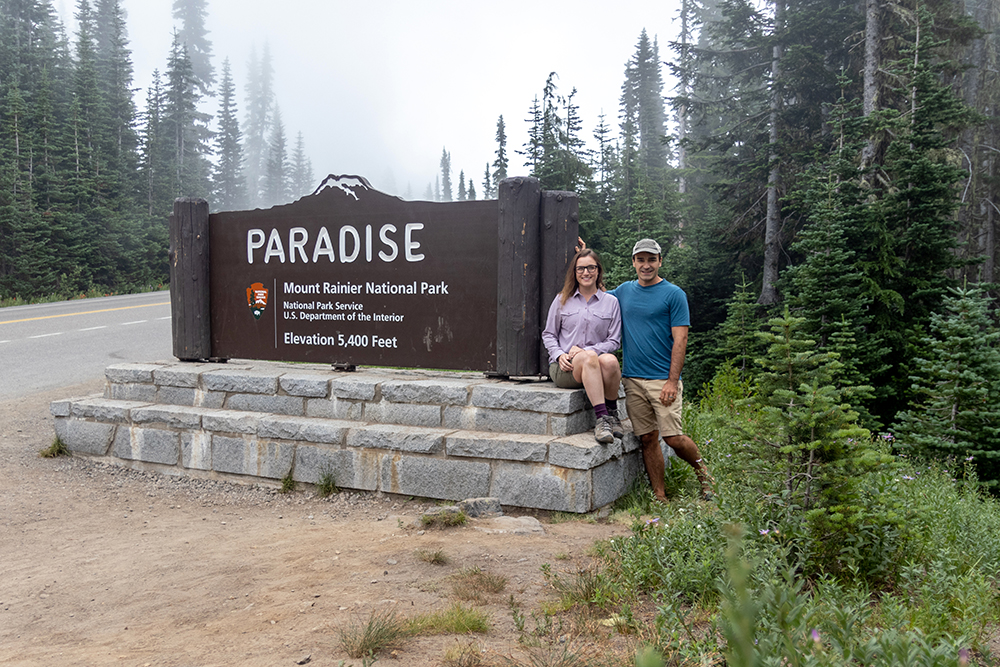
We drove up a winding road lined with tall pines trees that intermittently gave way to views of the crashing Nisqually River. Eventually we arrived at the Henry M. Jackson Visitor Center and Paradise Inn, where we searched in vain for a parking spot. Normally I like to arrive in a national park before it officially opens for the day, but we would have had to leave Portland at 4 AM if we wanted to make that happen, so now we had to deal with late morning crowds. It didn’t take long for us to give up on the parking lot, and drive down the road a ways until we found a roadside parking spot about a half mile from our trailhead.
I began to shiver as I stepped out of the rental car. The fog had made the day cold, so I shrugged on a rain jacket before tossing my day pack over my shoulders. It was time to get moving.
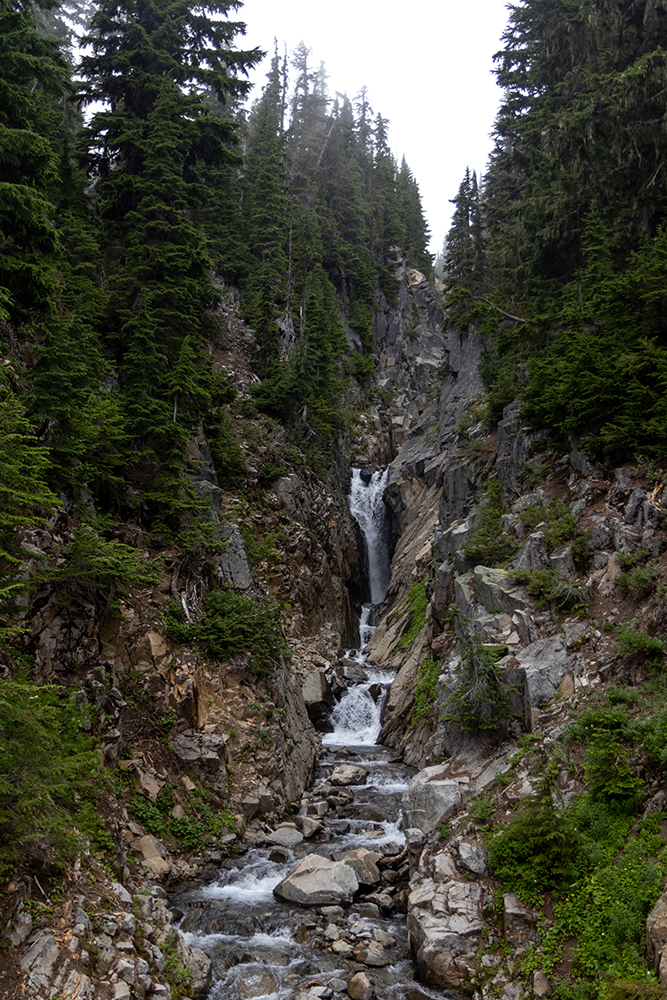
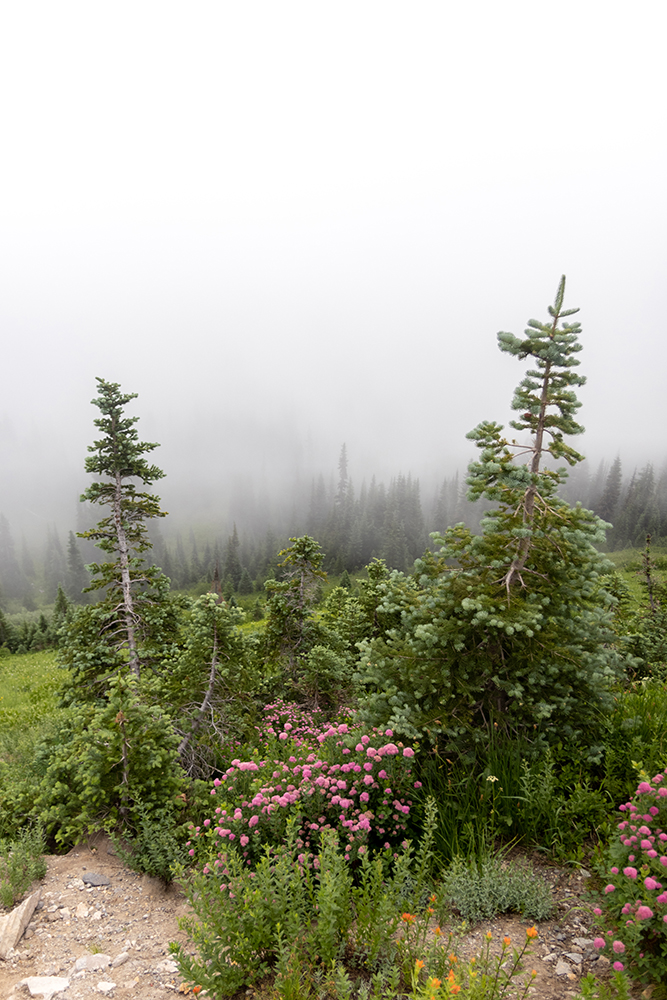
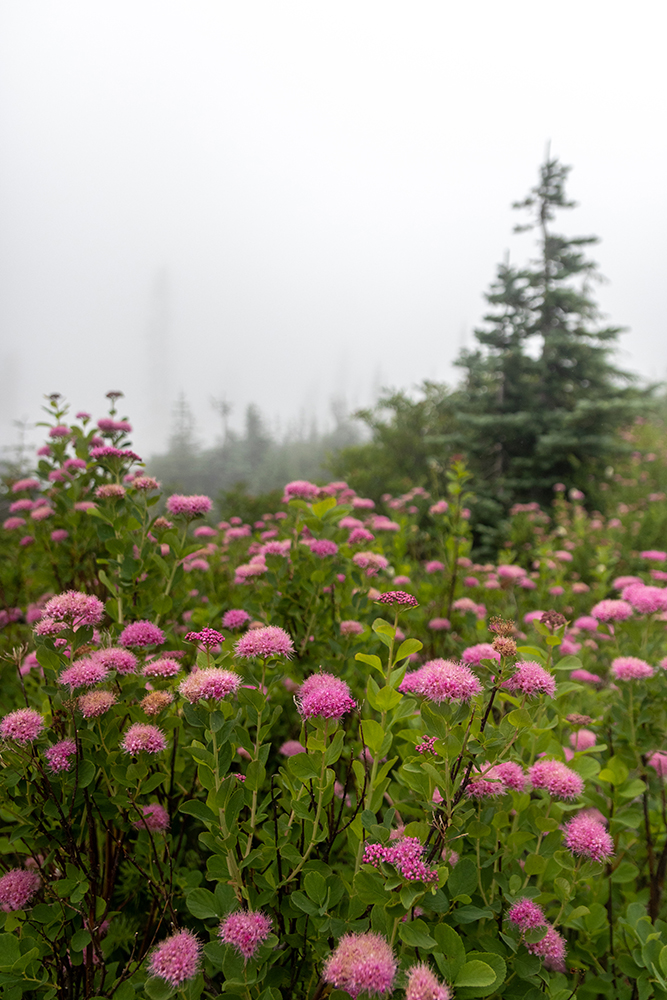
As it turned out, the half mile walk to the visitor center was actually quite beautiful despite that fact that we were on the road the whole time. Wildflowers blanketed the hills on either side of us, giving way to the soft outlines of evergreens in the mist. We even got to see Edith Gorge Falls tumbling down from the invisible mountain.

Once we reached the visitor, we followed a couple of short trails to join up with the Nisqually Vista Trail. I’d picked this trail because it offers incredible views of the mountain, and it would be a nice, quick walk to do under our self-imposed time crunch. Of course, I was hoping we would actually get to see Mount Rainier when I selected the hike, but we would just have to appease ourselves with examining wildflowers in the haunting haze instead.
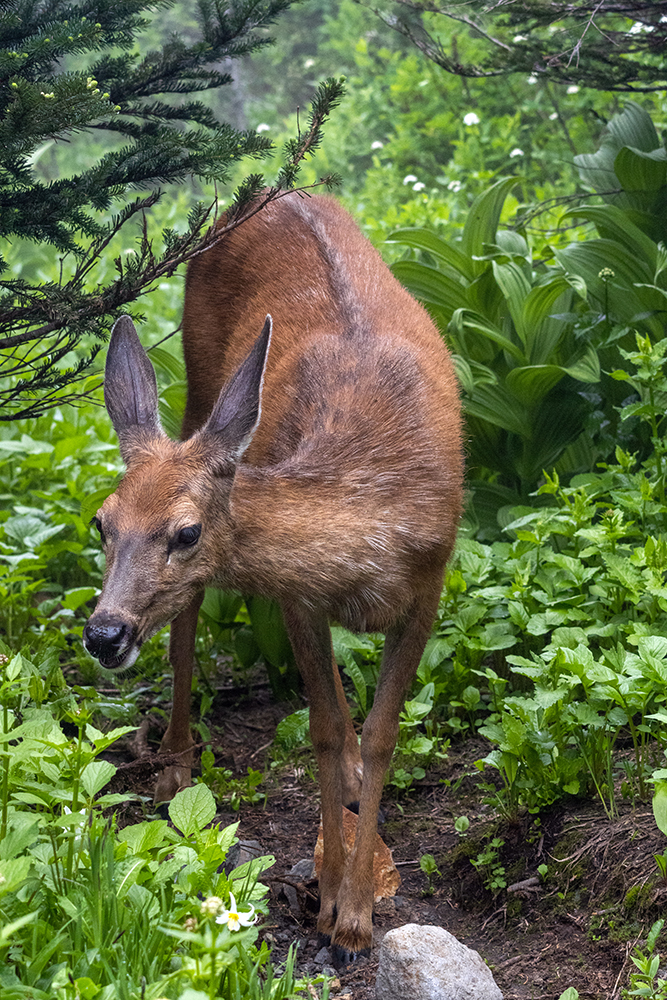
We’d only walked a few yards along the path when we encountered a black-tailed deer grazing in a field of luscious greens. Black-tailed deer are a subspecies of mule deer that range along the Pacific coast from Northern California to Southeastern Alaska. I’ve seen many mule deer during my travels in the Colorado and Wyoming, and countless white-tailed deer over a lifetime of living in Michigan, but for some reason I was still excited to see by first black-tailed deer. It looked very similar to the deer I see almost every day on my morning commute, but its tail was black instead of brown, and much less fluffy than a white-tail’s. We watched the deer grazing for an inordinate amount of time. After all, it’s not like we had any spectacular mountain vistas to rush off to see.
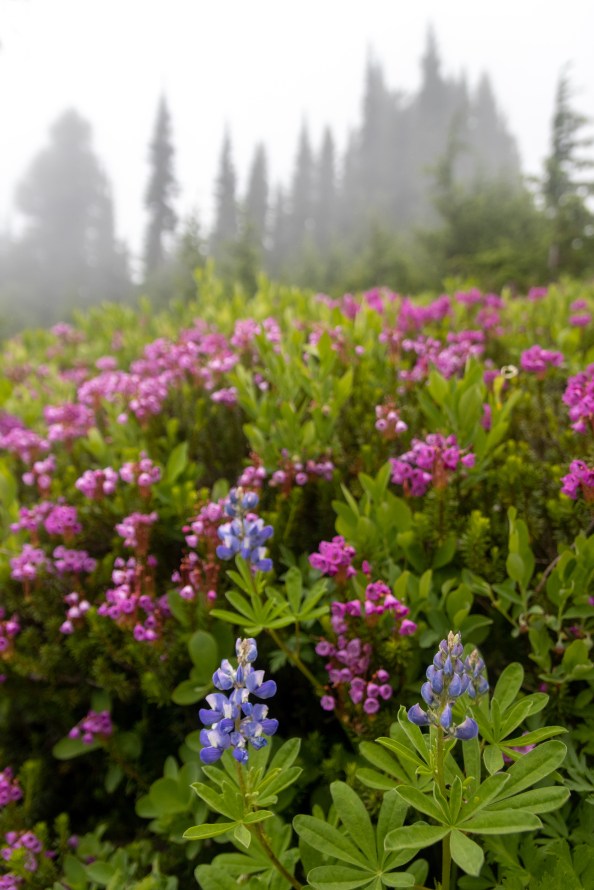
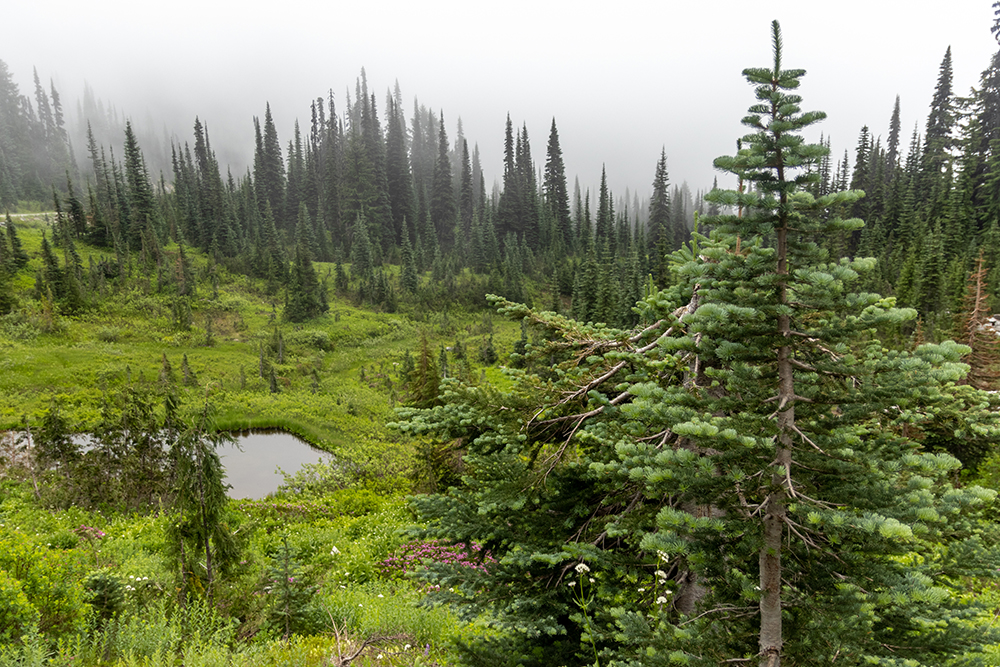
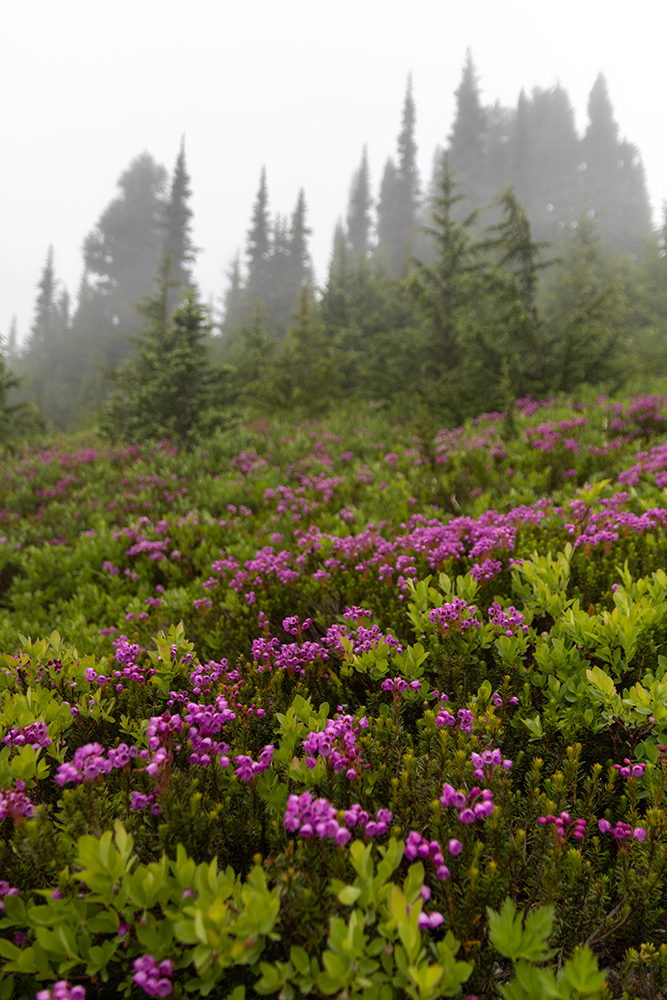
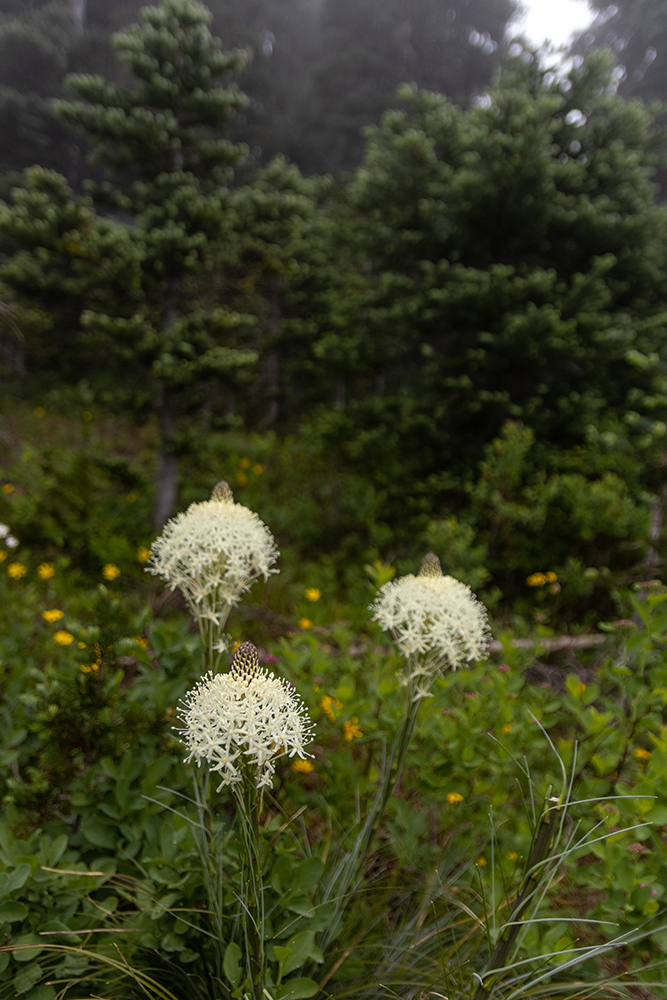
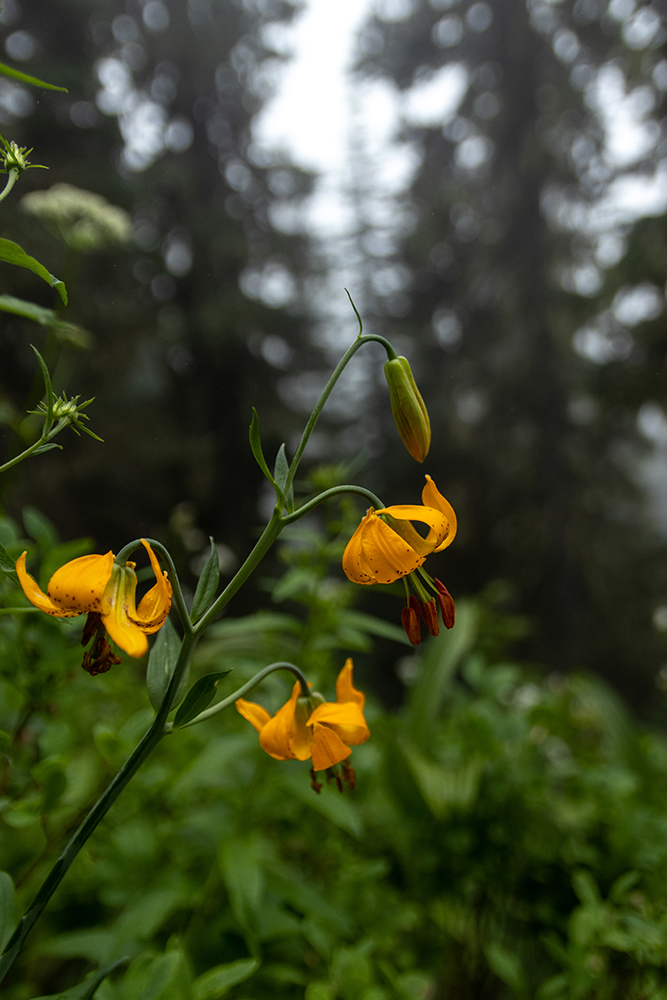
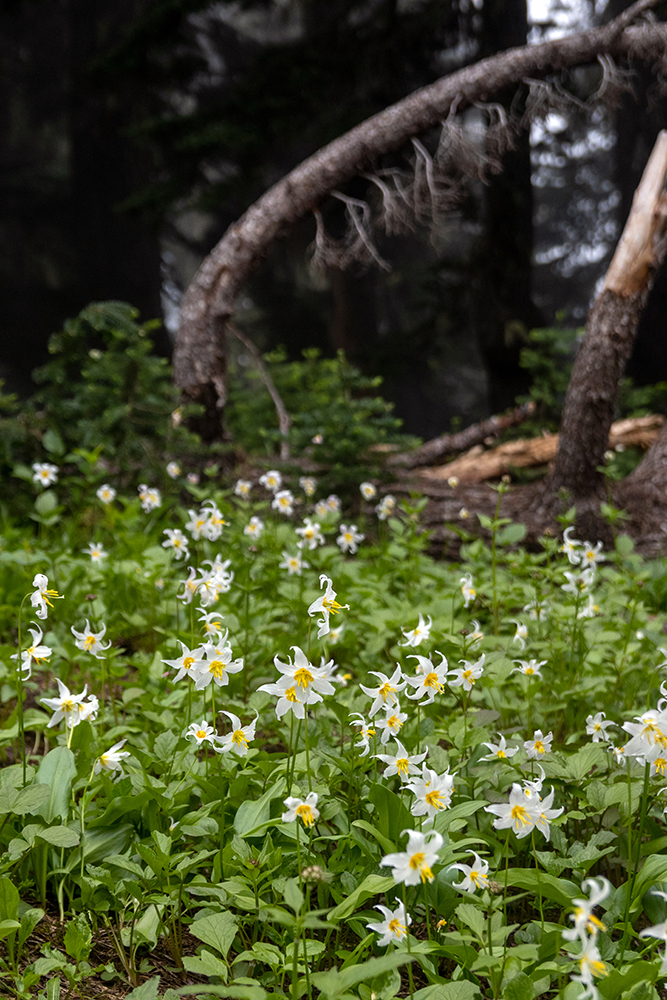
When the deer ate her way deeper into a stand of trees, we decided to keep hiking. The biggest attraction along the trail on this foggy day was by far the wildflowers. Rosy Spirea and pink mountain-heather lined the path, speckled with smaller patches of magenta and scarlet paintbrushes, tiger lily, broadleaf lupine, and bear grass. But my favorite flower was the avalanche lilies. These delicate, white flowers would blanket an entire clearing, almost giving the illusion of fresh snowfall on the meadows.


The forest felt particularly mysterious in the fog, and I enjoyed seeing the way the trees seemed to dissolve in the atmospheric, misty veil.

Before long, we’d finished the short loop trail. We decided to head back to the car and start the drive to Seattle. We’d still make a couple more stops in the park, but with no mountains to see, we thought it would be better to get to our friends’ house in Seattle earlier in the evening and have more time to spend with them.
So we started driving the winding road back to the Paradise entrance station. Along the way, we stopped to check out Christine Falls, a double drop waterfall that is framed by a picturesque historic bridge.
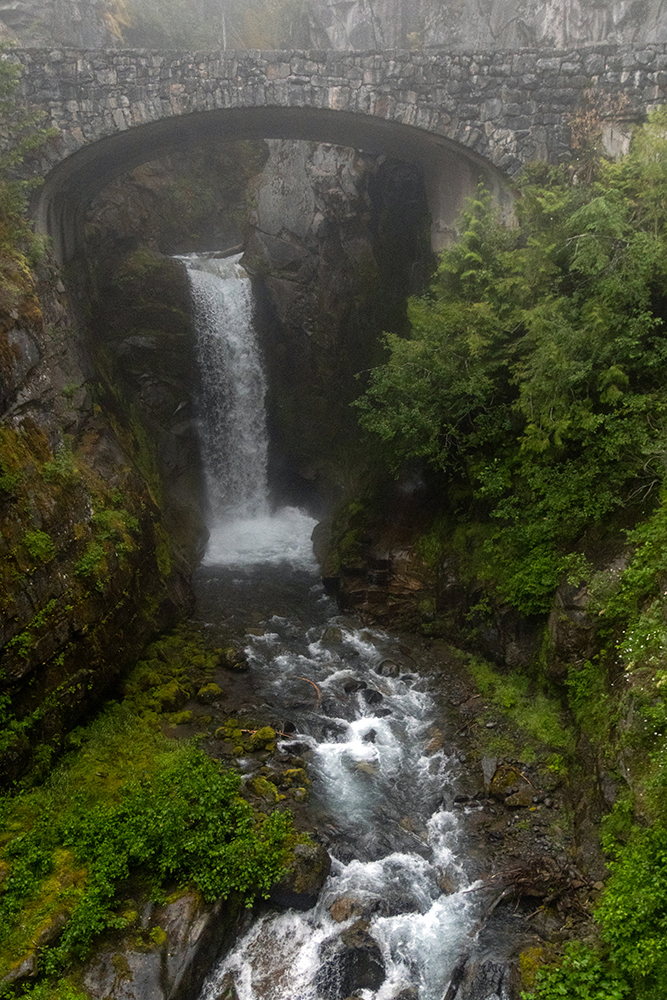
The cascading waterfall flowing through a lush and foggy forest made for a perfectly moody setting. It almost felt like a scene plucked straight out of a Twilight movie. I could easily picture Kristen Stewart’s Bella Swan moping about on the old bridge, desperately pining over Robert Pattinson’s Edward Cullen. But I must admit that Twilight had already been on my mind since we would be visiting Bella’s hometown of Forks in just a few short days.
We followed a short trail along the stream and found another smaller waterfall, and a moss-covered gorge. This landscape looked like it was designed for the fog, which made the forest look deep and mysterious.

After Christine Falls, we made one last little detour to the bank of the Nisqually River. Here, we walked across a landscape of gray stones, that led us to the edge of a gray river. One the other side was the base of a gray hill, that dissolved into a thick shroud of gray fog. If it weren’t for the occasional reddish brown rock here and there, I would have thought we’d stepped into a black and white photograph.
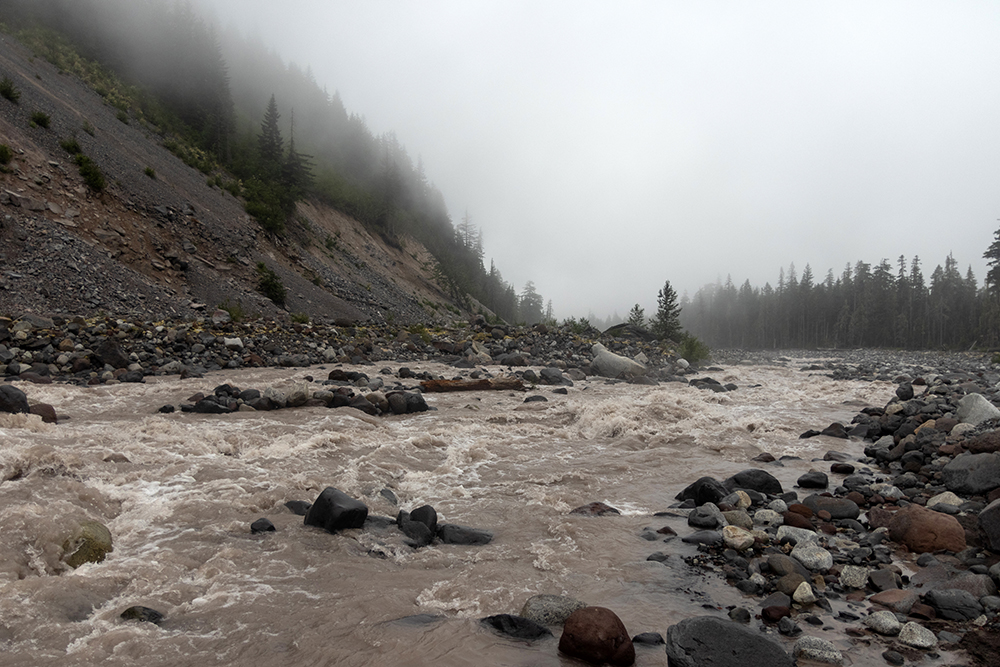
We watched the river’s rapids fly past us for several minutes before returning to the car and starting our drive to Seattle. Mount Rainier is a definitely a place that deserves a lot lot more time than we were able to give it on this trip. It was undeniably beautiful despite our weather woes, and I sincerely hope to go back someday and allot a few days to spend on some longer hikes there.
As Mount Rainier National Park faded into the rearview, I couldn’t wait to get to Seattle and see our friends, Sarah and Mike. It had been almost a decade since the four of us hung out together (Sarah and I have gotten together more recently), so we were really eager to catch up with them after so many years. It took a few more hours of driving, but eventually we saw the Seattle skyline on the horizon, with iconic buildings like the Space Needle standing out immediately. We arrived at Mike and Sarah’s house around dinner time, and we all walked to a nearby restaurant where we started to catch up over amazing food and drinks.
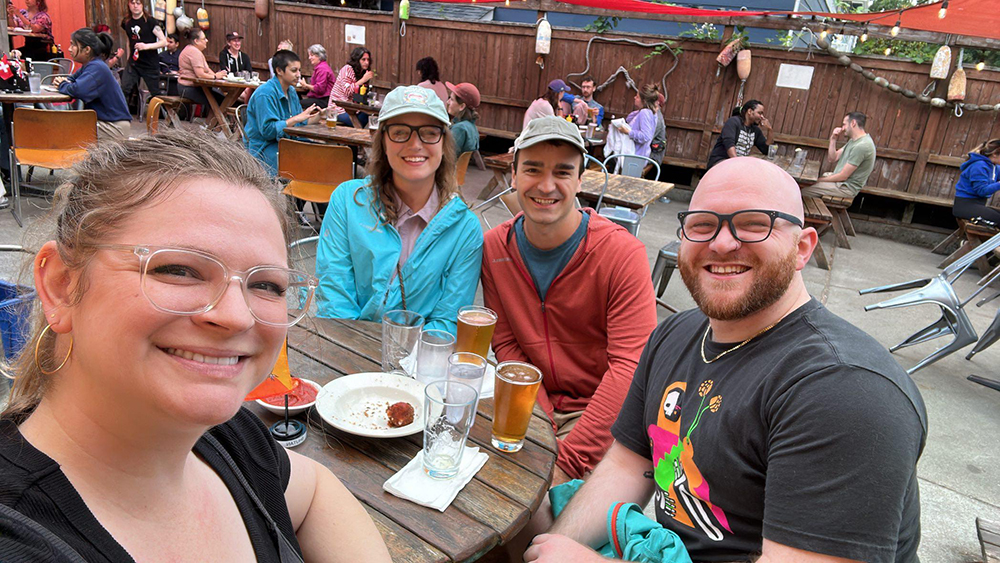
Later that evening we watched a terrible movie together, a fun pastime that we all enjoy, and then discussed the next day’s plans before turning in for the night.
The next morning we got up bright and early because we had to drive up to Edmonds for a day of whale watching on Puget Sound. My biggest hope for the day was that we would see orcas. Of course, I really hoped we would see all sorts of animals, but orcas were definitely the highest on my list.
After arriving in Edmonds, we joined a line of other passengers who were waiting to board Puget Sound Express’s newest vessel, the Swiftsure. The line filed past a marina filled with sailboats, and we looked for crabs and jellyfish in the water under the docks as we waited. Once we were boarded, the catamaran’s on-board naturalist explained how to spot the different whale species that live in the area as our captain steered the boat out of the marina and onto the sound.

During the naturalist’s presentation, my attention was torn between his helpful slideshow, and a perfect view of Mount Baker from the catamaran’s window. By the time the talk was done, I was eager to head outside onto the boat’s wrap-around to deck to look at the incredible scenery of the Puget Sound while trying to spot whales. The weather was cold out on deck, so I bundled up in a jacket as I watched the Cascade range towering in the distance.
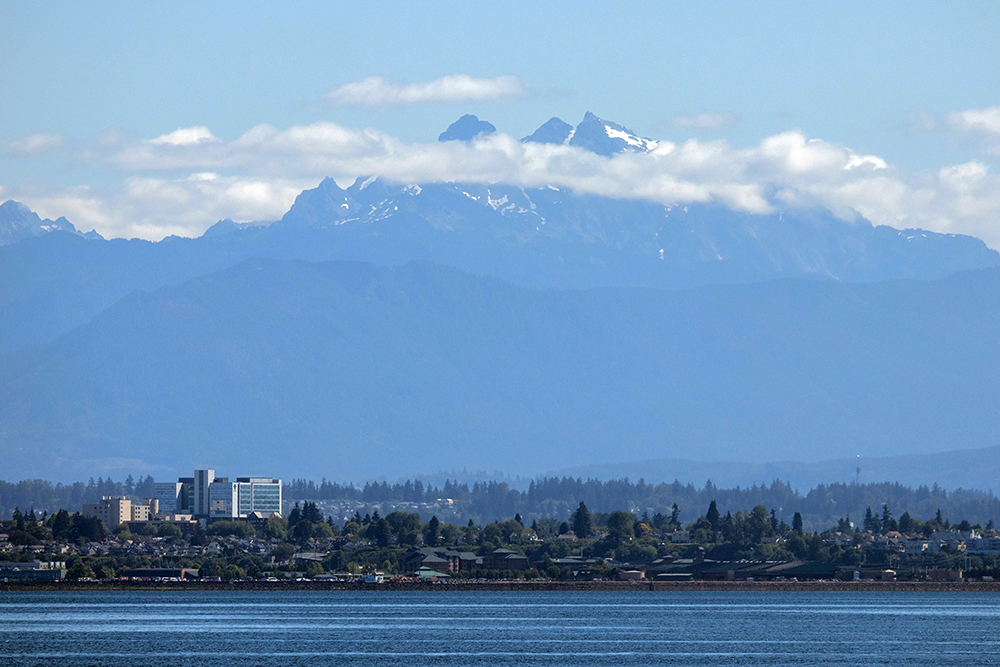
The four of us had elected to buy souvenir bottomless coffee mugs from the Swiftsure’s cafeteria, and we sipped coffee, tea, & hot cocoa, and tried some fresh-baked blueberry buckle cake as we scanned the horizon for any signs of blow spouts. Much like hiking in the mountains, whale watching is an activity that is highly dependent upon luck, and apparently the luck that had missed on Mount Rainier, was saving itself for our day on Puget Sound.
Within twenty minutes of our departure, our captain spotted a humpback whale. He raced the boat towards the sighting, and then abruptly slowed down to a halt. A few moments later, a familiar spout shot up from the water and hovered as a mist in the air. Then I saw the signature dorsal fin of the humpback.
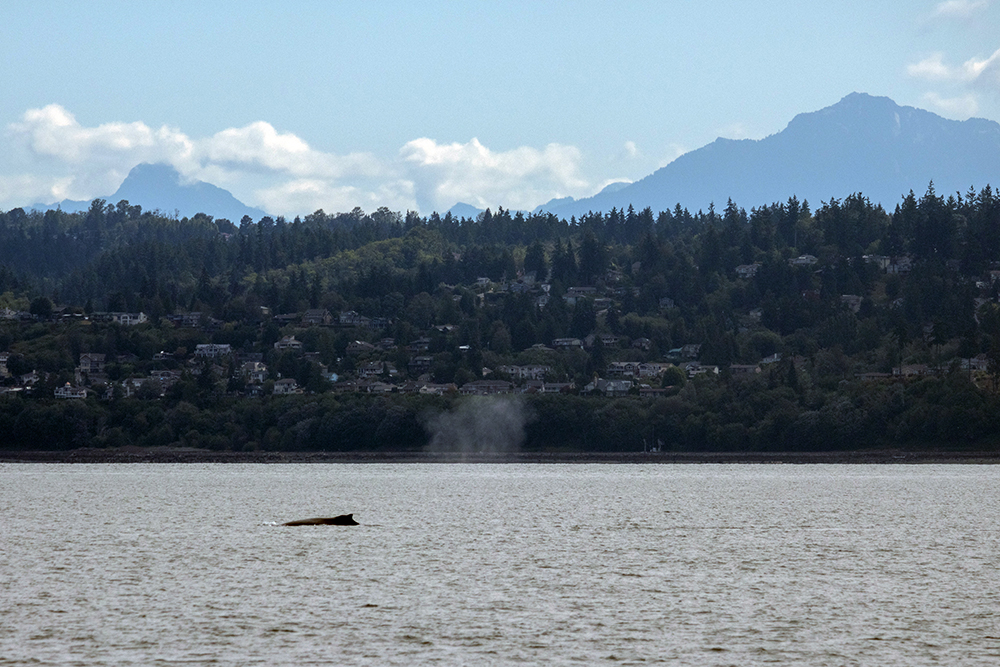
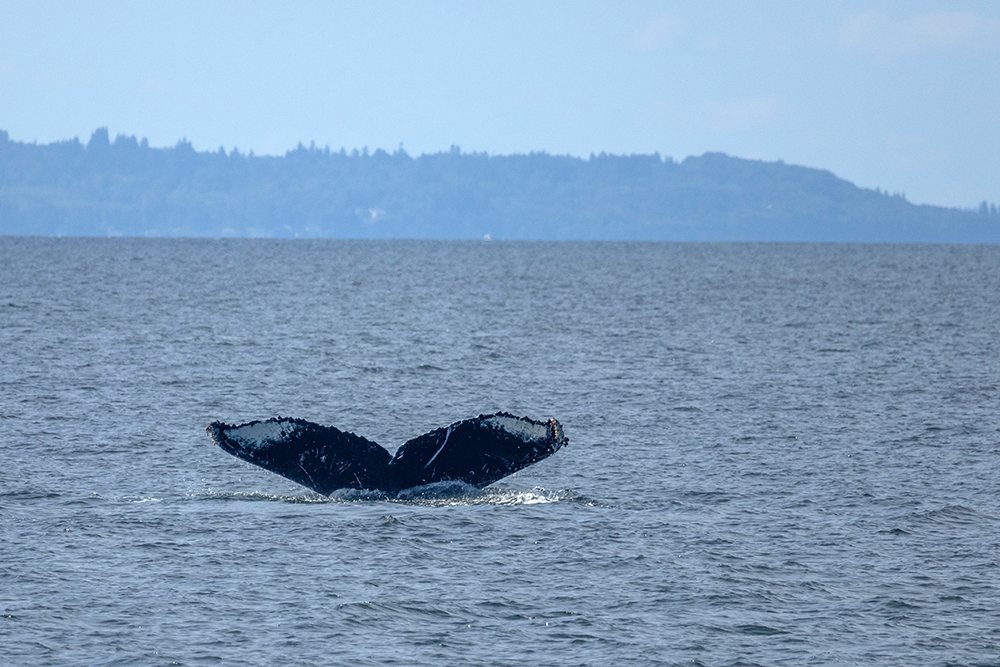
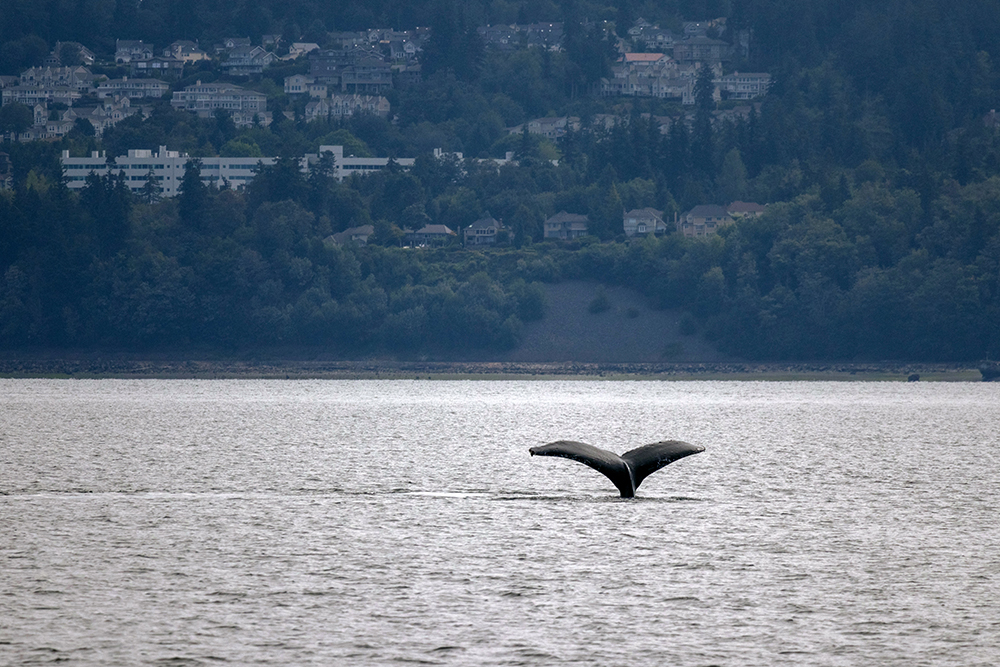
After cruising with humpbacks around the Antarctic peninsula last year, I was already familiar with their patterns of movement. The humpback’s swimming pattern involves a series of shallow dives, each followed by an exhalation blow. After exhaling, the whale’s back becomes visible bit by bit, until you see the dorsal fin that the humpback is named for. After a handful of similar appearances, the whale will go on a deeper dive, rising further out of the water, and waving its fluke or tail before finally disappearing into the depths for several minutes. Eight to ten minutes later, another exhalation blow will reveal how far the whale has travelled on its breath hold.

This whale came very close to our boat a couple of times, leading to many exclamations of awe onboard. We got to stay to watch it fluke several times before our captain declared that it was time to move on and look for another species.
As the boat peeled off deeper into the sound, I felt very excited that we’d already seen our first whale of the day, but I was still hoping to find some more species that I haven’t seen before. We stayed on deck for a while, but it took a lot longer to find our next species. The wind outside was cold and bitter when the boat was in motion, so eventually we retreated indoors to warm up. Of course this meant getting more rounds of hot drinks while we waited. We also got to hold an orca tooth and a piece of gray whale baleen.
Eventually an announcement crackled over the boat’s intercom. The captain had spotted a second species! We rushed out onto the deck to find a tall, black dorsal fin rising from the water near a rocky shoreline. Then a few more fins appeared, and a juvenile’s white-eyed face popped over the surface. It was a pod of orcas!

I was beyond thrilled to get to see wild orcas. I’ve always been fascinated by them, but I’ve only seen them in the wild on a technicality when some birders spotted a pod through their scopes when we were in Antarctica. I couldn’t spot them with my naked eye, but later when I examined my pictures, I could just make out the grainy outlines of their dorsal fins. This orca sighting was the real deal. The pod was traveling slowly along the shoreline, and we spotted six distinct dorsal fins, which surprised the captain because apparently this pod was thought to be smaller.
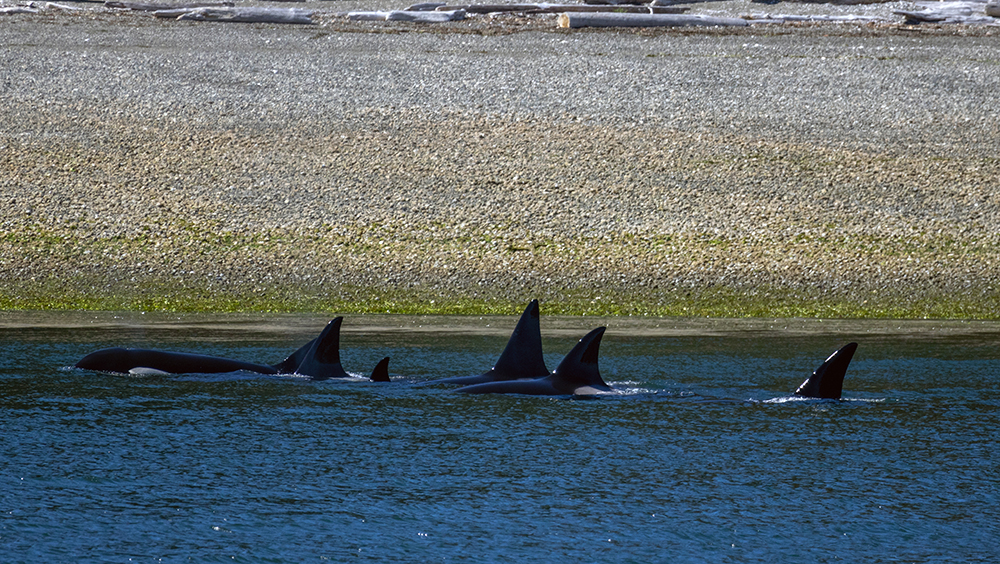
There are two types of orcas that can be found in Puget sound. Residents, who live in the area year round and hunt salmon, and transients who migrate to the sound in the summer months and subsist on other marine mammals like seals, porpoises and even whales. This was a transient pod, also known as Bigg’s orcas. I think it’s extremely interesting how orcas have cultural groups with distinct hunting styles, dialects, and behaviors, and I felt very lucky to get to observe such amazing animals in their wild habitat.
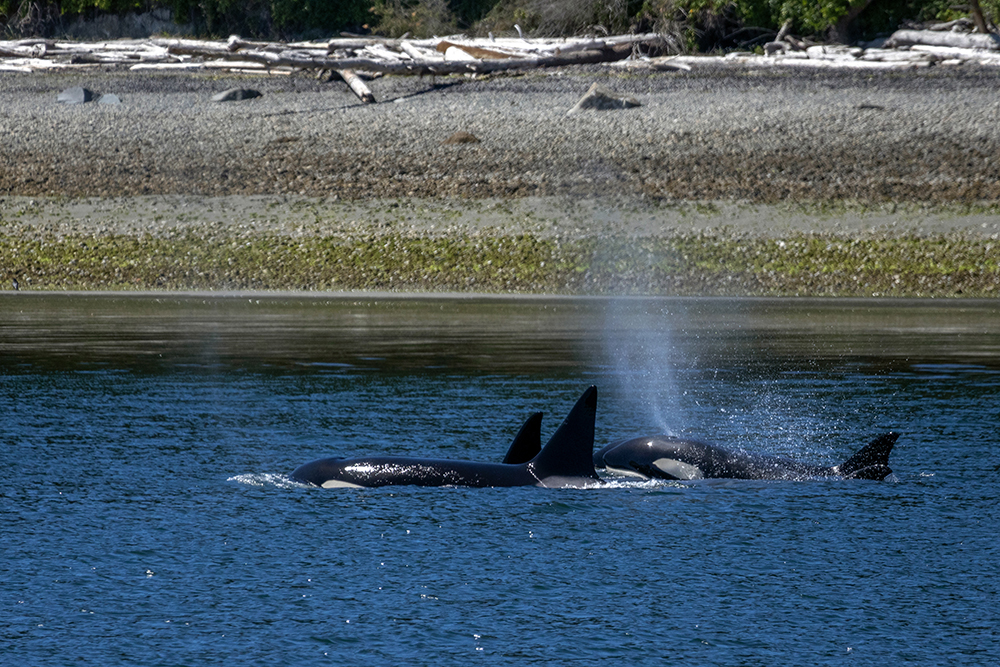
We were able to stay and watch the pod swim along the shore for a long time. At one point some people on shore noticed them, and raced to the water’s edge to watch them swimming by. It was fun to see the beachgoer’s reactions, and our naturalist said that seeing orcas from shore like this is very rare, even in a place where they are so common.

At this point our tour could have ended and I would have been ecstatic to have seen two major cetacean species in one day, but our captain announced that we would be moving on, and we were going to try to get a third species in before returning to port. So I retreated inside to wait out the windy ride until we arrived at a river delta where gray whales are known to feed. More jagged mountains loomed on the horizon as we scanned the water for any signs of whales.

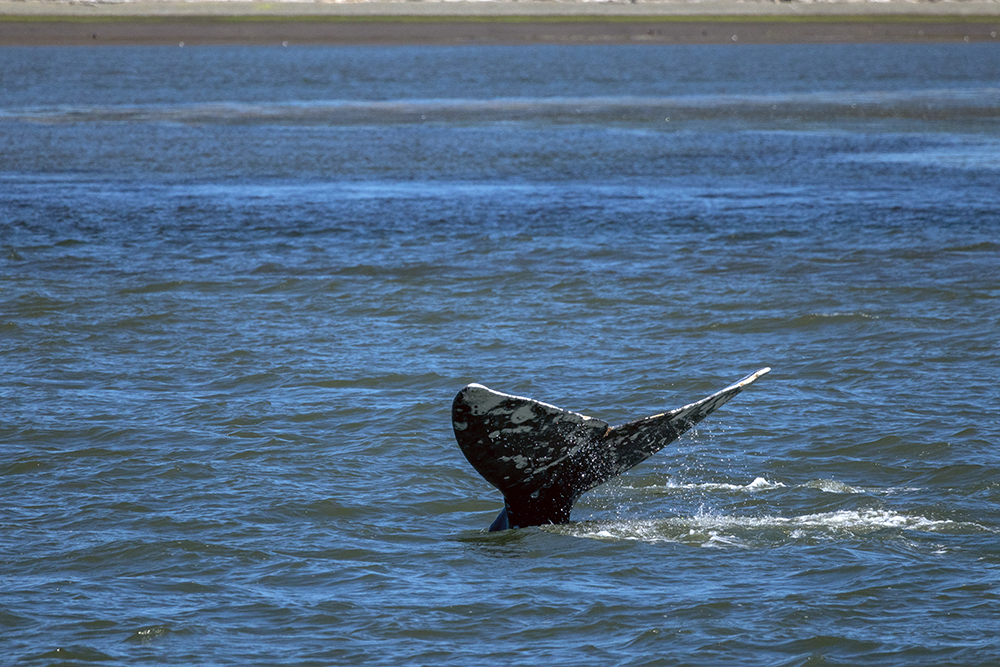
Before long, an exhalation blow broke the surface of the water, and then a whale’s gray, barnacled back rose from the waves. Our third species of the day was another first for me. I’d never seen a gray whale before this, not even on a technicality like with the orcas. In fact, it turned out that there were two whales in the area. At first they were far away from each other, but we watched as they moved closer together until they eventually joined up to swim side by side.
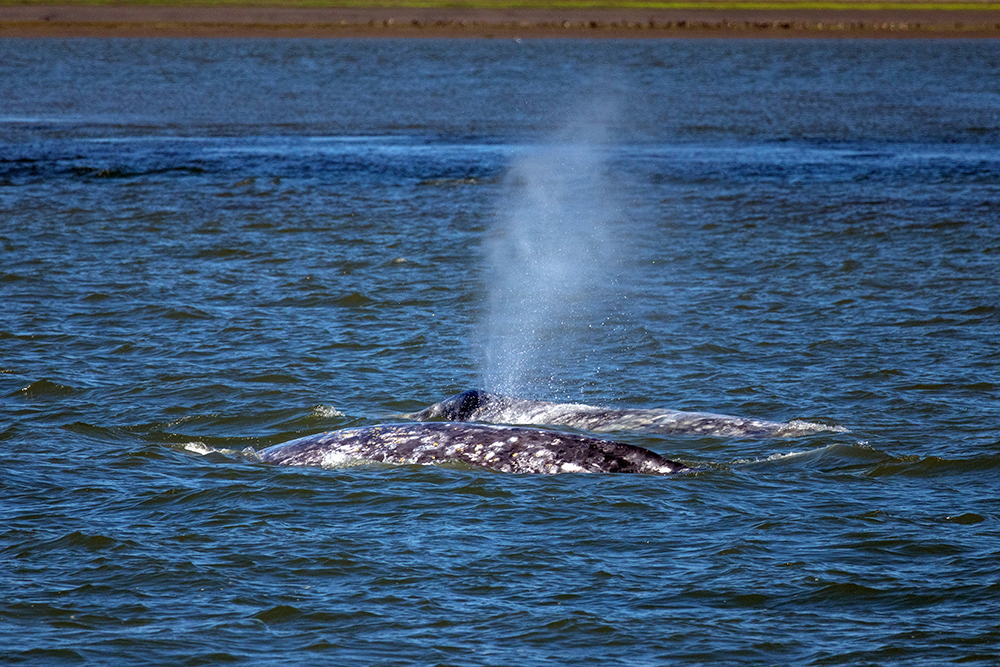
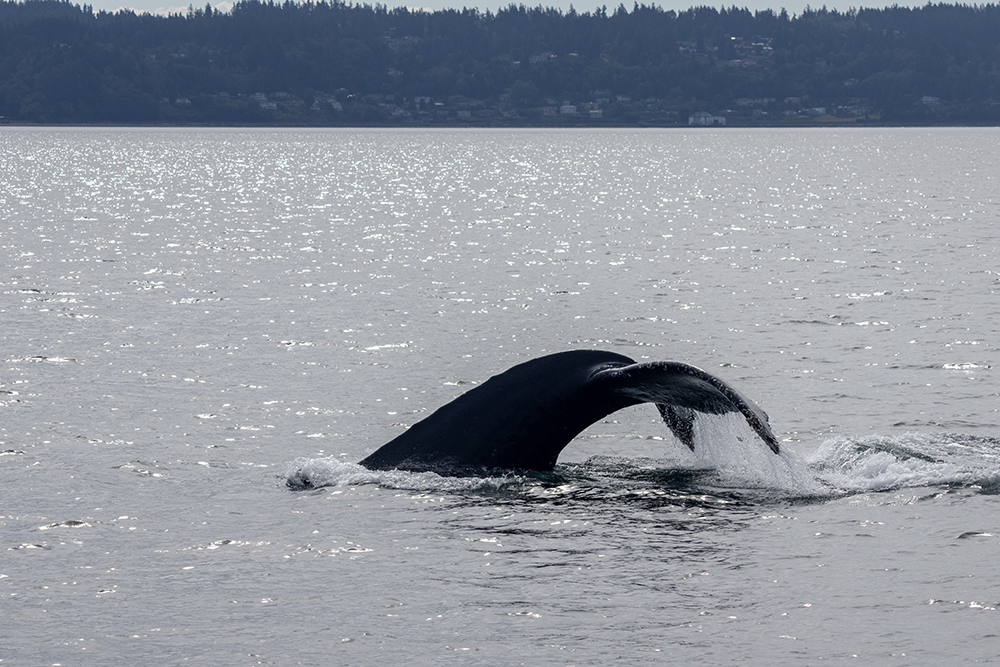
The gray whales’ swim pattern was a bit different from the humpback’s. They seemed to linger at the surface a bit longer, and would partially expose their flukes, even in shallow dives. But they still did big fluking motions to mark the start of a deep dive, splashing up water as they did so.
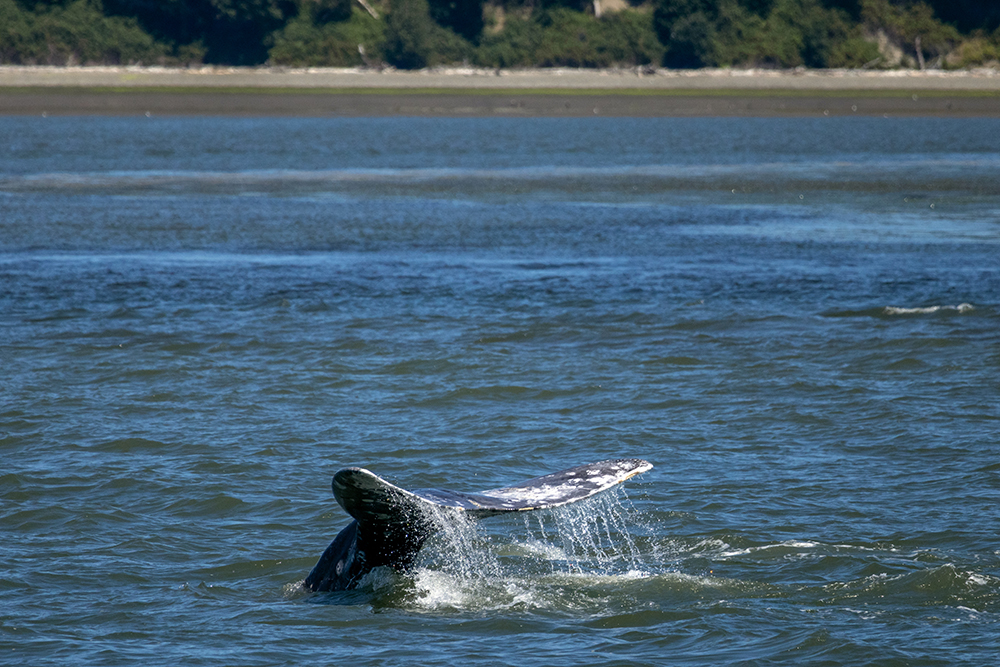
Once again, our captain gave us plenty of time in the presence of these beautiful giants, and we got to learn a little more about them as we watched. The naturalist taught us that gray whales feed off of the bottom of the ocean, swimming on their sides along the sea floor to scoop food into their mouths. This is very different from the humpback’s bubble net and lunge feeding strategies that are both done at the surface of the water.
Eventually, our captain announce that it was time to return to Edmonds. We’d already been out on Puget Sound for five hours, but it was so action-packed, that I felt like it could have been five minutes. We rode back to port, and when we arrived on shore, we made the half hour drive back to Seattle.
Sarah and Mike wanted to make sure that Vince and I got at least one good view of Rainier during our trip, so they brought us to a neighborhood with good viewpoint of the mountain. We walked down a narrow street lined with opulent homes and colorful gardens until we reached a dead end. The road gave way to a steep hillside overlooking the city, and hills beyond it. Towering over all of it was the imposing form of Rainier. I couldn’t quite believe how big it was. I’ve seen 14,000 foot mountains before, but never one that was free-standing like this. This is because Rainier is a volcano so it formed differently than the Rockies which were created by plate tectonics and glacial erosion. The sight of Rainier dwarfing everything around it took my breath away. I was so glad that we got to see the mountain after all, even though we’d missed it the previous day.

By the time we left the viewpoint, we were all feeling very hungry, so we found an Ethiopian restaurant near Mike and Sarah’s house, and discussed our plans for the next day as we feasted on a delicious dinner. It would be another early morning because we were all going to head over to the Olympic Peninsula. This was the portion of the trip that I was most looking forward to, and I couldn’t wait to explore the snow-capped mountains, mysterious rainforests, and rugged coastlines of Olympic National Park. After a long day of excitement, I fell asleep as soon as my head hit the pillow, eager to continue our adventures the next morning!








 birdsoftheairtravel.com
1 comment