Lazily rocking on ocean’s breast,
-To a Sea-Bird, Bret Harte
Something in common, old friend, have we:
Thou on the shingle seek’st thy nest,
I to the waters look for rest,—
I on the shore, and thou on the sea.
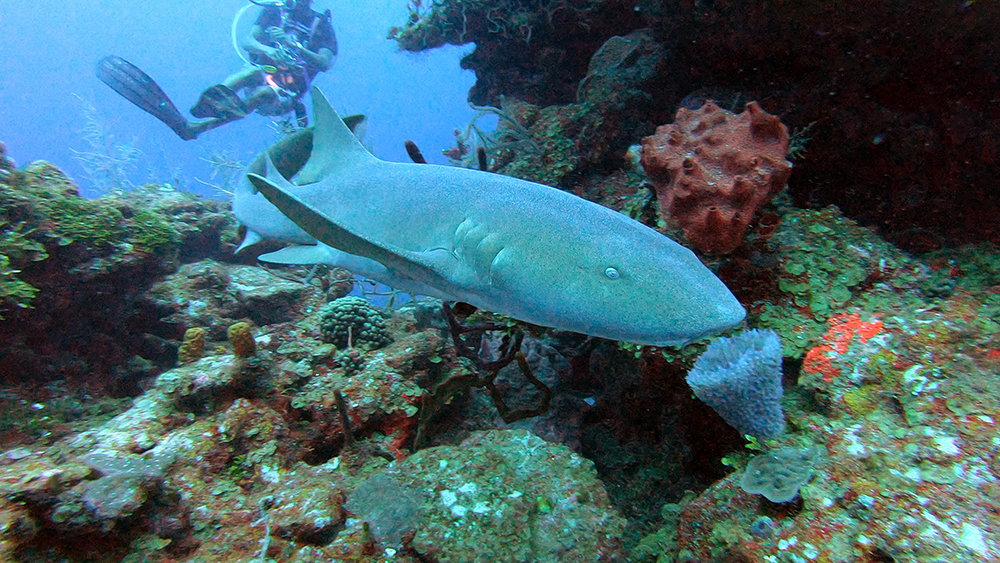
Steep canyon walls closed in on me as I followed Vince through a narrow corridor, with just enough space for us to pass through without touching the wall on either side. I slowed for a moment to allow Vince time to duck underneath a narrower restriction, then I followed through after him, nearly crawling over the sandy ground to fit beneath the obstacle. Beyond the narrow passage, the canyon opened up into a wide artery were Vince and our dive master, Esrom, were waiting expectantly right alongside a nurse shark who was performing graceful pirouettes around the perimeter of the group.
I checked the computer on my wrist. One hundred and ten feet underwater. A glance upward revealed my own exhaled bubbles rising through the fathomless depths that stood between me and the surface. My eyes crinkled into a smile as I turned to the others and waved a quick shaka at them, which they echoed back at me in return.
Our PADI coursework was officially finished (for now at least), which meant we were now in the middle of the first strictly fun dive of our Belizean vacation, and I was loving it. We’d returned to Bottom Time, the same dive site where Vince and I had completed our first deep dive a couple days before. This time Esrom let us try out some easy restrictions along our path, which was great buoyancy practice, and also a lot of fun.

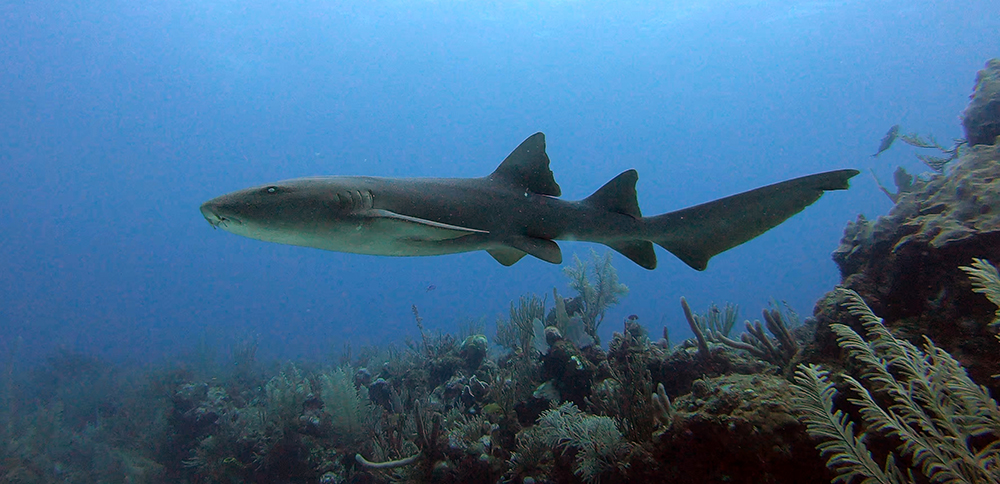
We didn’t stay at depth for long, but took the ascent slowly, meandering through the canyon as the nurse shark swam along with us, circling around, always curious about what we were getting up to.
As we gradually made our way upwards, the colors around us shifted until we could once again see the vibrant reds and purples that had been filtered out and replaced with dark greens and blues at depth. I peered into little holes and crevices along the way, looking for smaller sea creatures, until we finally reached the mooring line where our dive boat was waiting for us on the surface. We would take a long safety stop-eight minutes-to give extra time for nitrogen bubbles to dissolve out of our systems before surfacing. These eight minutes were spent idly holding onto the mooring line while scanning the sea around and below us, keeping an eye out for any last-minute wildlife sightings.
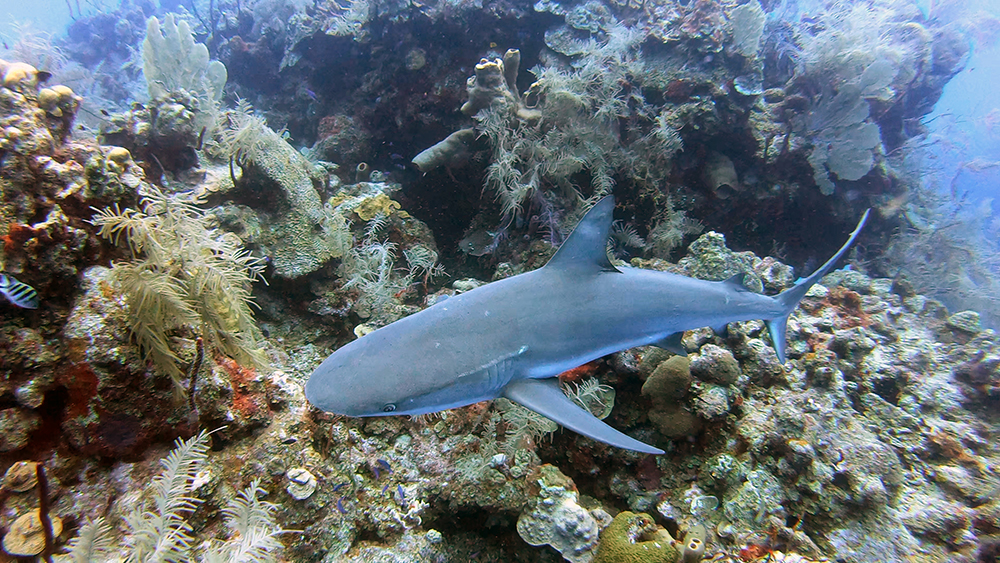
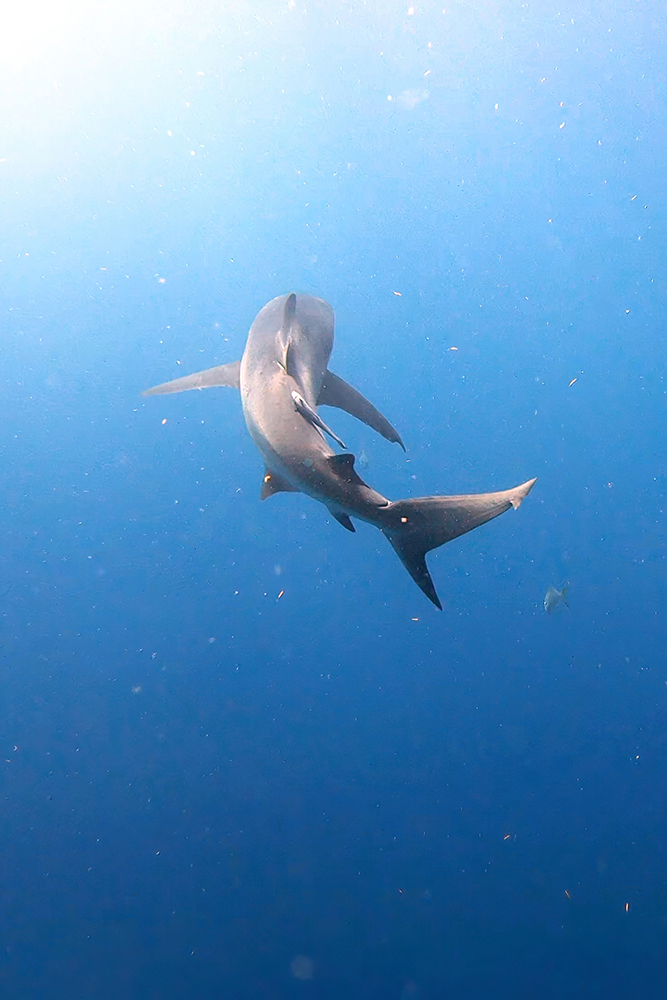
This vigilance was rewarded with a reef shark encounter, and Esrom motioned us away from the mooring line to get a closer look at the graceful shark as it glided through the water with ease. As I floated in place watching it soar upward into a patch of brilliant sunlight, I thought I could probably swim with a thousand sharks and still never tire of them.
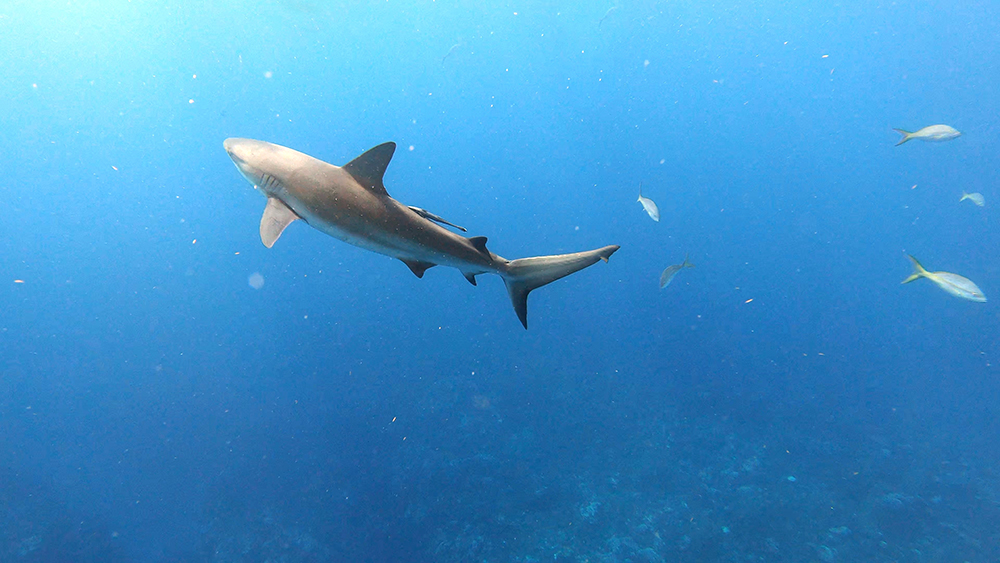
Once the shark had melted back into the blue, we resurfaced and climbed into the dive boat, chattering about what a great dive this had been to start the day. And our day really was just beginning-we still still had two more dives and a snorkel left!
Surface intervals with SCUBA School and Family Dive Center are spent back at the dive shop since the reef is so close to the shores of the Island of Amergris Caye. So we sped back to the dock where there was watermelon waiting for us, the perfect snack to rehydrate and reenergize between dives. After an hour’s break, we boarded the boat once again and returned to the reef, this time with MJ as our divemaster, and a larger combined group of divers.
Every diver waited their turn to back roll into the water, and we descended in a group until we reached the reef at sixty feet. There were a lot of colorful reef fish swimming around, and I was particularly drawn to a juvenile stoplight parrotfish because it had a beautiful pattern of red, black, and green scales.
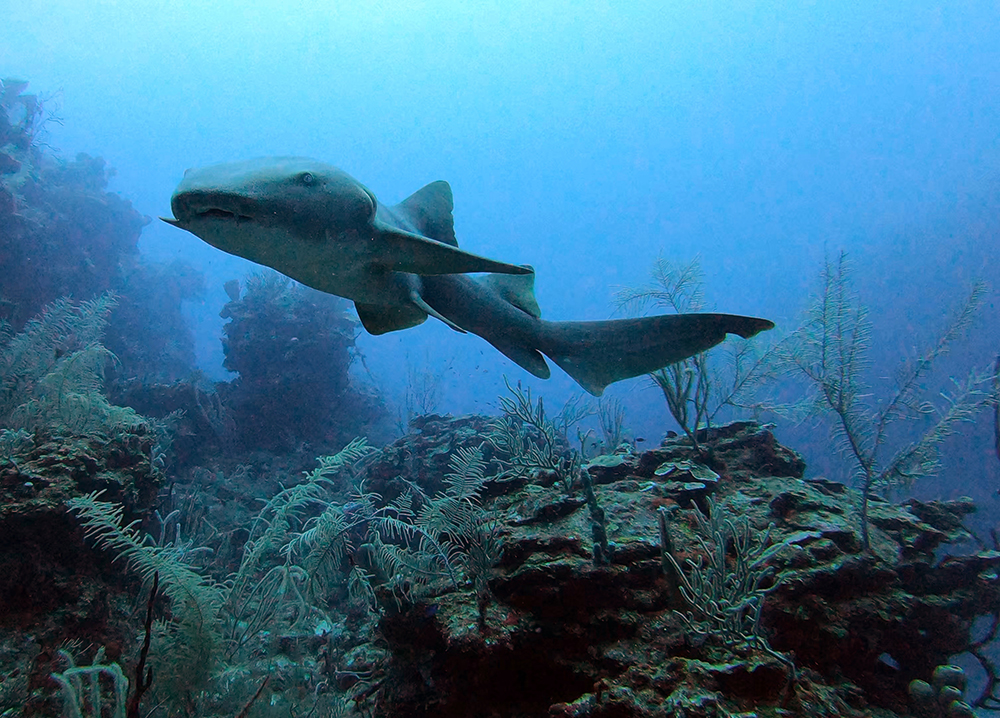
It seemed that no dive on the Belize Barrier Reef would be complete until a nurse shark noticed us and started tagging along, and this time we ended up with two of them swerving alongside us and dancing around each other. One of them had an identifying scar on its nose, and the other was unmarked. These two seemed to be missing any need for personal space and there were a handful of moments where I was convinced that they might actually run head on into my GoPro, only for them to change course at the last second before impact.

They also swam directly underneath me several times, giving me a close up view of their skin which is made up of dermal denticles, a hard substance that it actually very similar to their teeth, and would feel rough to the touch (I did not touch them to find out because it’s generally not a great idea to go around touching sharks). From a distance, their skin looks like a uniform gray or brown, but up close I could see that the denticles actually formed a mottled pattern of gray, black, white, and a couple of shades of brown. It was wild to learn on the spot that shark skin is so finely detailed. Although I knew they were covered in scales, I had no idea that each one would be a different color that combines to form the illusion of uniformity.
These two extra-curious sharks made this dive a lot of fun for me. Watching them snake around between divers to check us all out, I could clearly see why they’ve earned the nickname “sea puppies.” Their high energy and borderline playful curiosity gives them a very dog-like vibe. Of course they also have vacuum cleaner mouths full of tiny, but sharp teeth, so it’s still important to treat them with respect and avoid actually coming into contact with them.
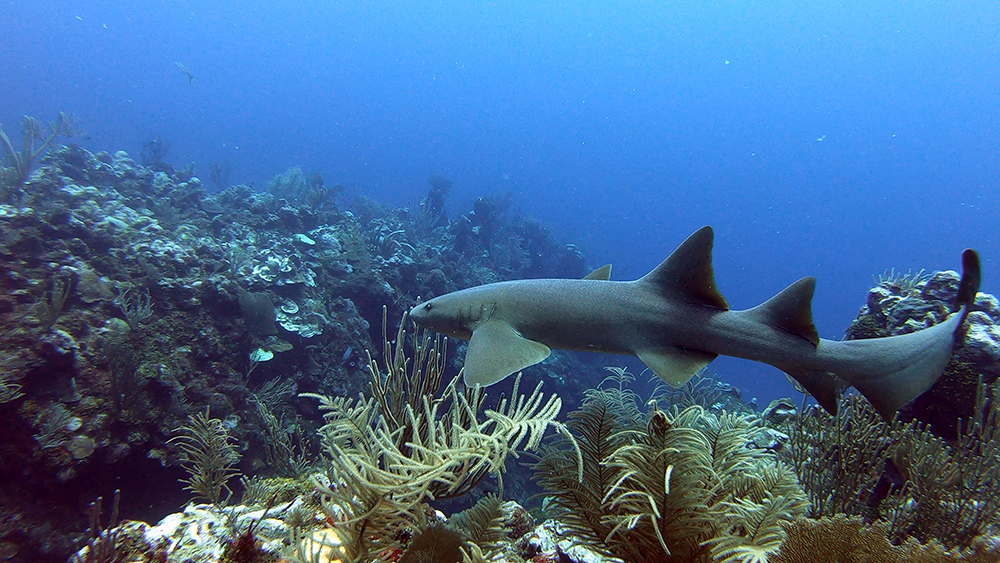
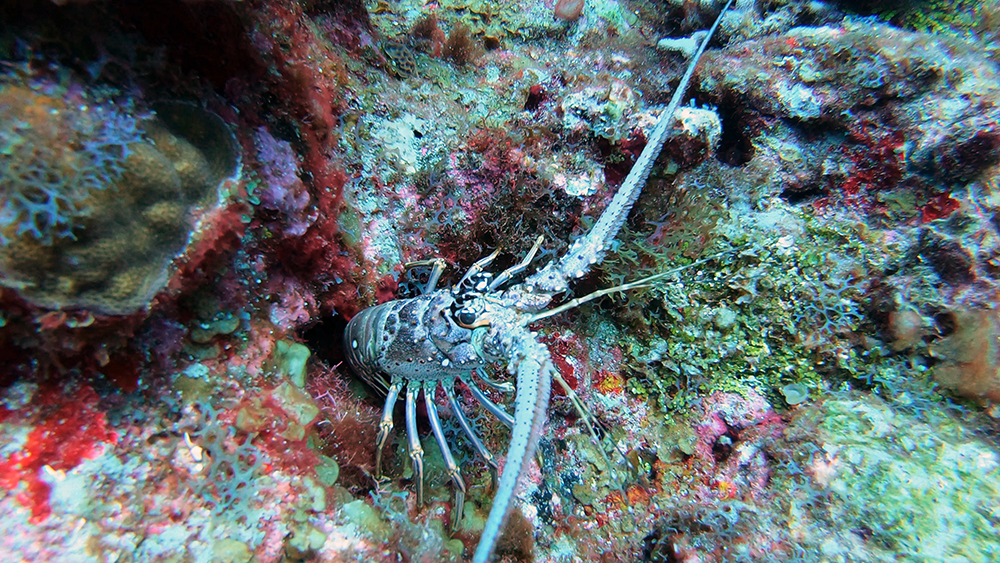
Towards the end of the dive, MJ found a spiny lobster tucked into a little crevice in the reef and the scarless shark crowded in alongside each diver as we took turns getting a close look at the lobster. The shark was clearly hoping that one of us might dislodge the lobster and offer it up as a snack. When it was my turn to see the lobster, the shark approached me head on, and then swerved back to the lobster as though it was trying to show me where to look (or hinting that an individual with ten fingers might be a big help in fishing that lobster out of its hideaway).

I was bummed to leave the sharks behind at the end of the dive, but looking forward to our upcoming afternoon tour. We had just enough time to get lunch at a restaurant a buildings over from our hotel before getting back on the dive boat for an excursion out to Hol Chan Marine Reserve, a heavily protected area that spans about three square miles. Hol Chan means “little channel” in Mayan, a reference to a shallow, sandy channel that cuts through the reef.
Hol Chan is so shallow in fact, that there were areas where we could see coral extending up above the surface of the water. One woman on our boat mistook a protruding piece of coral for a shark fin, and Esrom had to do quite a bit of convincing to get her to believe that it was just coral. The shallow water and cloudless day combined turned the water the quintessential shade of turquoise blue that Caribbean vacationers dream about.
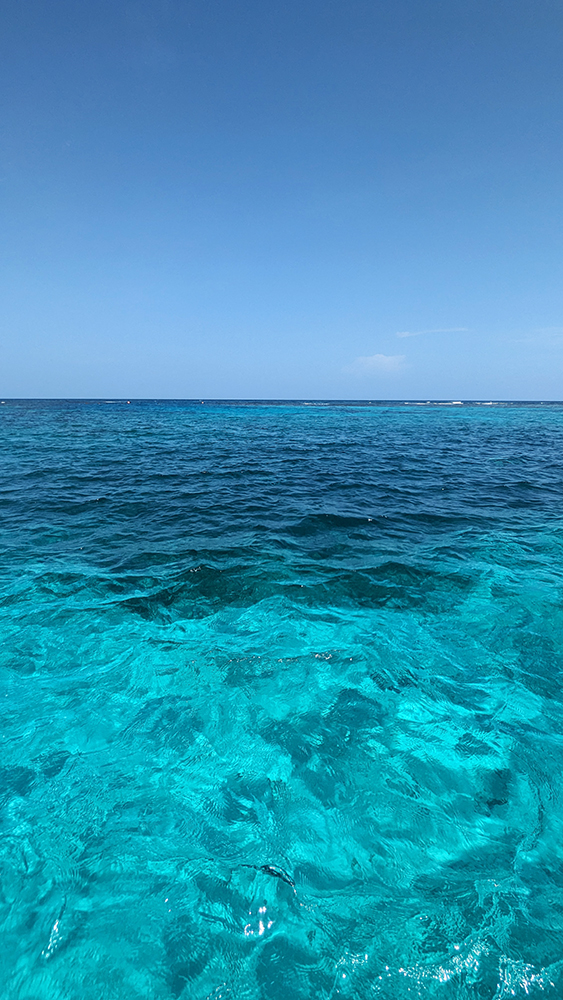
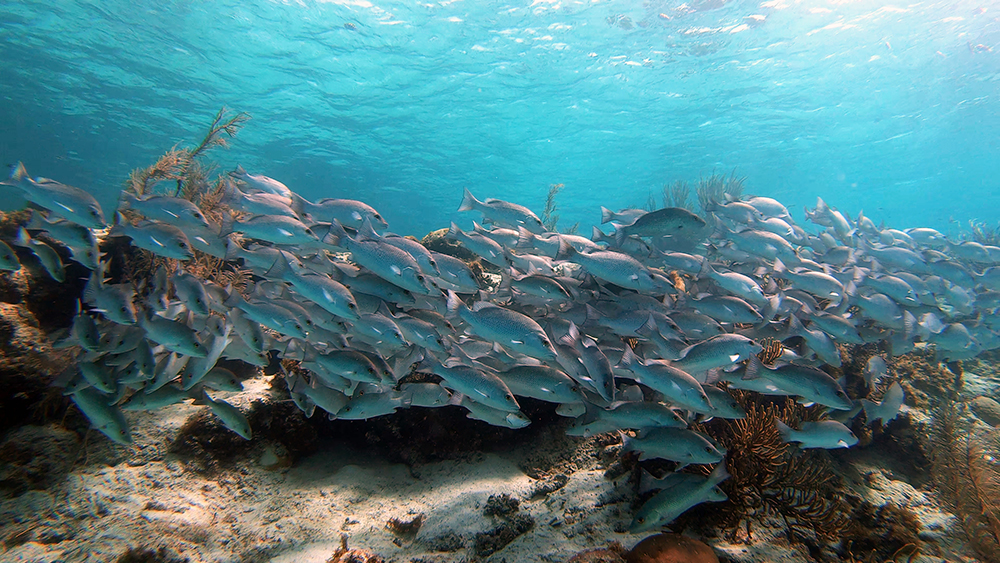
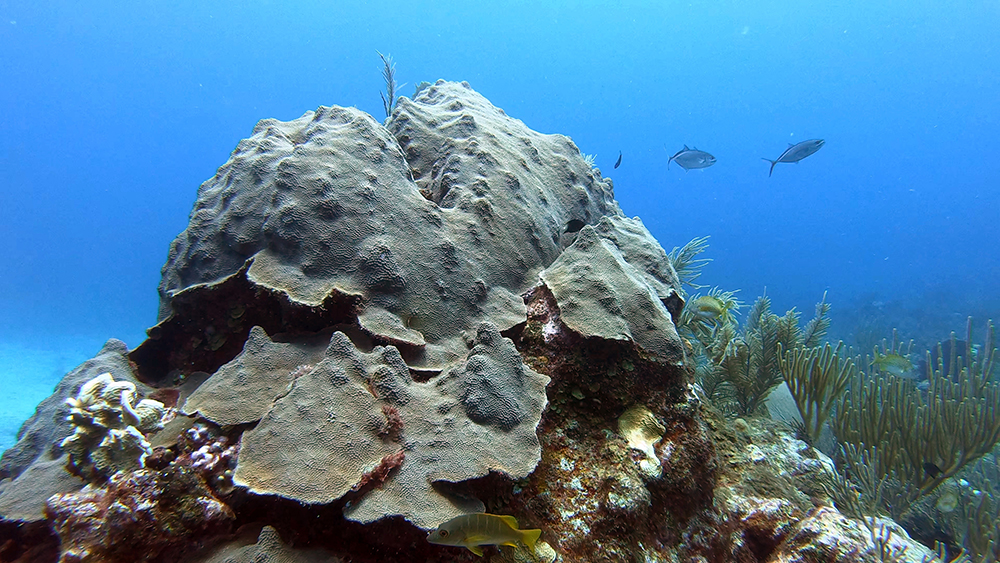
There were enough divers onboard the boat to split up between two divemasters, so we rolled into the water with our designated groups and descended to the ocean floor at a shallow ten feet. Over the next hour we saw a spotted eagle ray, a tailless southern stingray, a hermit crab, and a couple of flounders, but the main attraction for me lay in the reef itself and in some large schools of snappers.
Because the dive site is so shallow, I was able to get much clearer video with my GoPro than usual. Not having that extra fifty extra feet of blue water between me and the sunshine meant that the fish and corals looked extra vibrant.
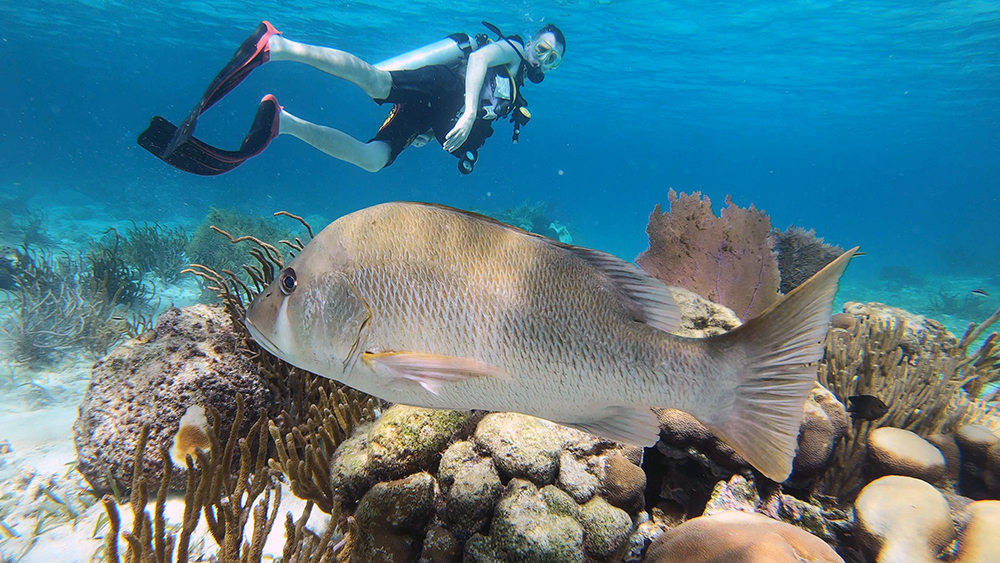
I also love seeing big schools of fish because the way they all move in tandem makes them seem like one big amorphous organism rather than hundreds of individuals.
Just as we were getting back around to the boat, I spotted a couple of nurse sharks sleeping on the sea floor, so I took a few seconds to get some footage of them. Not only was this adorable, it was also a demonstration of a pretty neat shark trivia tidbit. Many people are aware that sharks need to keep constantly swimming in order to move oxygen through their gills. This is called obligate ram ventilation, and while certain species like whale sharks and great white sharks do have to keep moving in order to oxygenate their bodies, this actually isn’t true for most of the world’s 500 shark species. Species like nurse sharks are able lie still like this because they are able to intake oxygen using a method called buccal pumping (obligate ram ventilators don’t have buccal muscles). Nurse sharks can use their buccal muscles to pump water through their mouths and over their gills, eliminating the need for constant motion. Still some other sharks are able to use a combination of ram ventilation and buccal pumping, although some of these species may find themselves less adept at staying still than those that are able to achieve full buccal pumping.

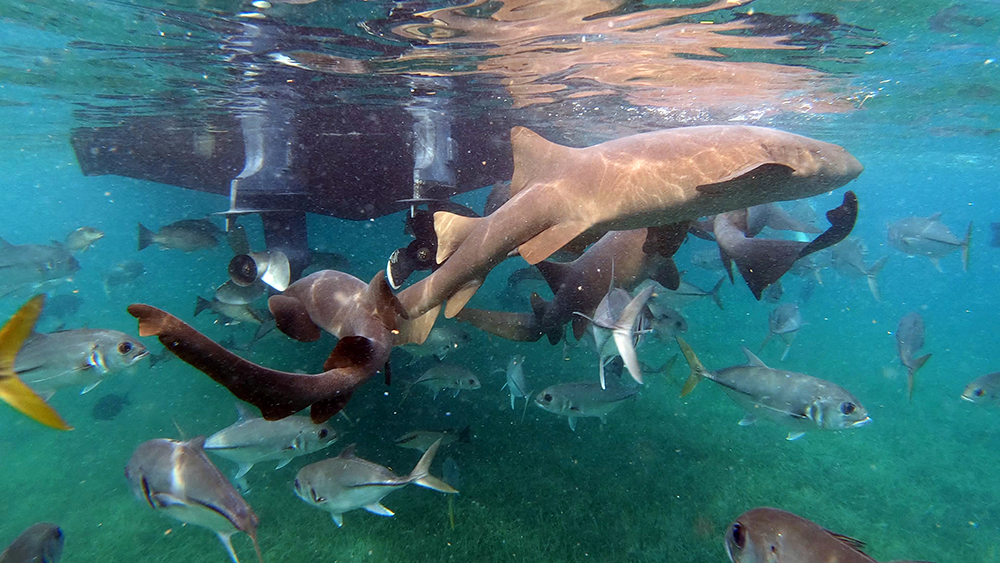
After I left this pair of sharks, the dive was over, but it was time to get ready for a snorkel. We zipped over to Shark Ray Alley, a sandbar within Hol Chan that is known for attracting nurse sharks and southern stingrays. Esrom explained that lots of tourist boats chum the water once they arrive at shark ray alley, but SCUBA School does not. He said that we should get in the water a quickly as possible when the boat stopped because the sharks would be drawn in by the sound of the engine, but they’d lose interest once they realized we weren’t chumming.
So when Esrom gave the signal, we all started jumping overboard. I plunged into the water, instinctively take a deep breath upon impact. I was so used to scuba diving by this point that inhaling upon entering the water was ingrained in my muscle memory. Anyway this ended in a mouthful of saltwater and now I think I might need to have my snorkeling privileges revoked.
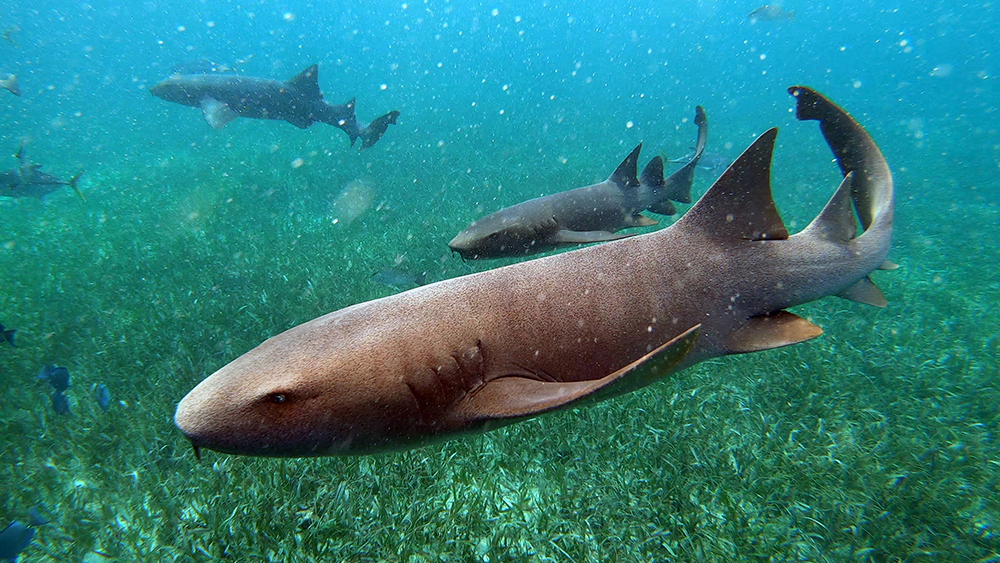
But I didn’t have much time to float there and choke because the sharks weren’t going to stick around for long. I pulled it together and swam over to the hoard of sharks in time to see them, and it was indeed quite a spectacle. Sharks swarmed in, briefly wriggling together in a large mass before quickly dispersing and vanishing into the blue, just as Esrom had promised. After the brief spectacle, we were left to hang out with straggling tangs, jacks, and the occasional ray.

Eventually another boat pulled up and started chumming the water, so we did get to see a comparison of how the sharks act when they are being fed. As I watched the surging pile of sharks all vying for food, I couldn’t help but think that the scene before me seemed like the perfect concoction to get a person bitten by what should ostensibly be one of the safest shark species to swim with. Actually at one point, I thought I was about to witness an incident. A snorkeler swam right into the chum zone to adjust her fins, only to immediately be approached three hungry sharks. When she realized what was happening, she started flailing her arms and legs at the sharks faces in a bid to escape, and thankfully she managed to make it out of the shark’s path before any blood was shed.
After watching the swarm for a bit, I got a somewhat tired of it, and instead went off on a mission to find more rays. I was met with success, and spent the rest our time freediving to try to get closer to them.
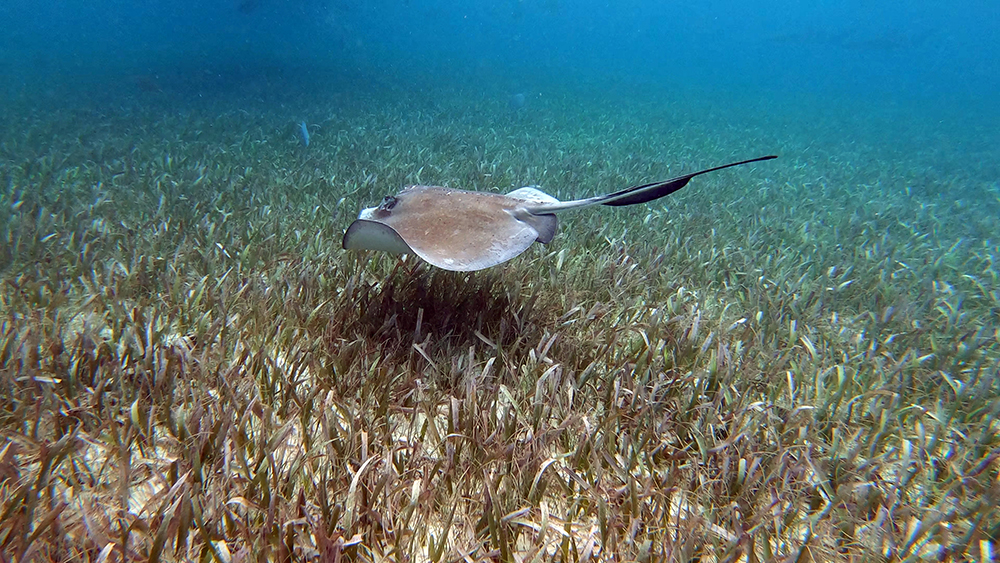
I came away from shark ray alley feeling like its value was mostly in the spectacle. Seeing a bunch of sharks in one place was cool, but it honestly wasn’t as fun as having them follow you around a dive site, displaying more natural behaviors. The experience of watching them mindlessly pursue chum, just wasn’t the same as swimming along beside them.
Later, back on shore, we grabbed dinner and then turned in for the night. We had an early wake up call the next morning for our full-day trip out to the famous Great Blue Hole and Lighthouse Atoll!
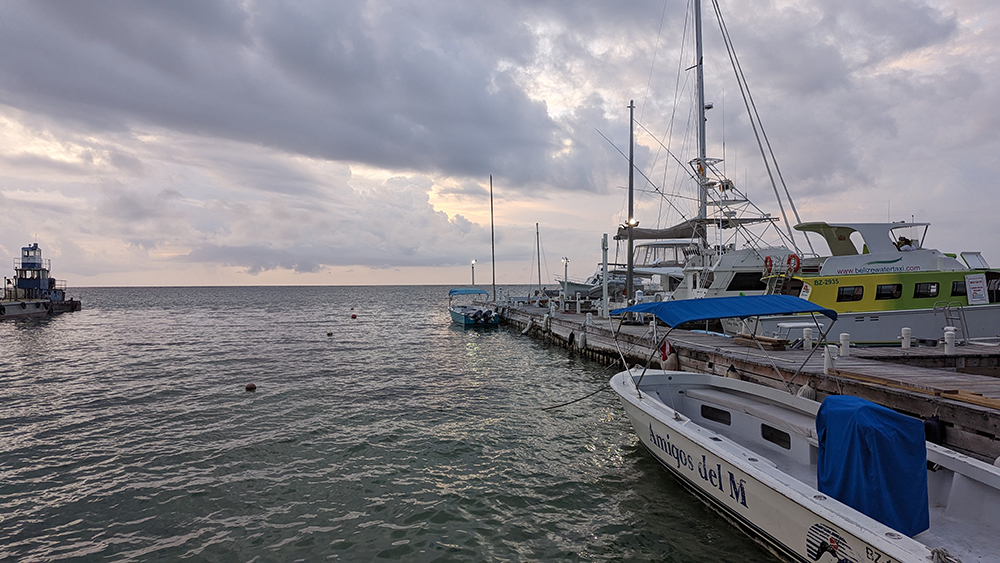
Since we got so much sleep, I had no problem hopping out of bed at four a.m. and throwing together a dry bag filled with everything I’d need throughout the day. Once our group of four was ready, we walked down the beach to meet up at Amigos del Mar, the dive shop that SCUBA School had arranged to take us out to the Blue Hole.
Amigos del Mar provided breakfast and then we boarded their large, comfortable boat just as a golden sunrise broke through the gathered clouds of a nighttime rainstorm. It would take two and a half hours to reach the Blue Hole which left me with plenty of time to imagine how my experience would turn out (and to work up some solid nausea). The question of gas narcosis still loomed in my mind. I hadn’t noticed a difference in cognition at 100 or 110 feet, but we would be diving all the way to 130 feet in the Blue Hole, the bottom limit for recreational diving. Perhaps this would be the time that I finally felt narced.
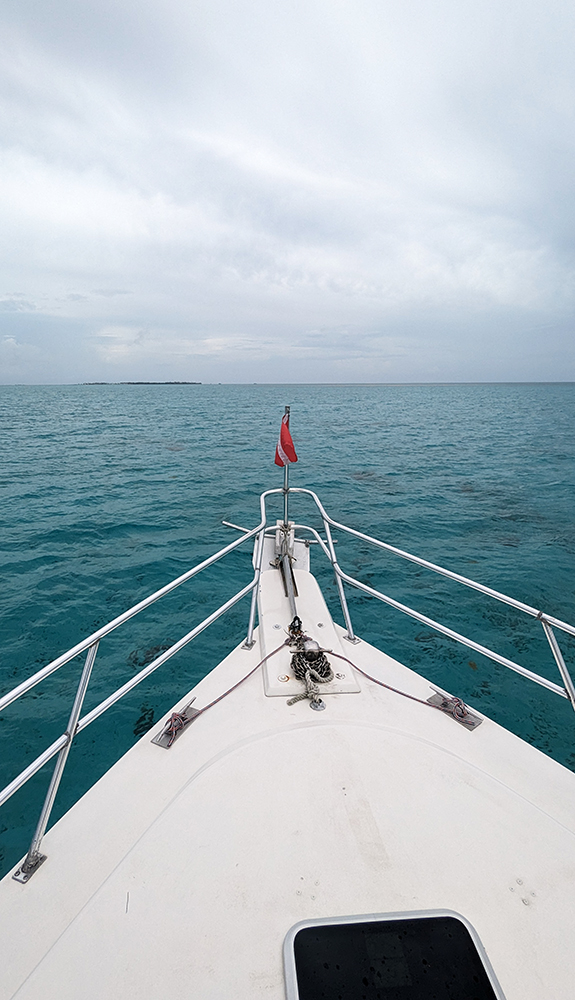
When we finally made it to the Blue Hole I felt relieved that my nausea would soon subside once I was off the rocking boat, but also a bit apprehensive about diving into the bottomless blue abyss of the hole. “Bottomless” is obviously a hyperbolic descriptor. The actual bottom of the sinkhole lies under 400 feet of water though, deep enough that you can’t see any end to it, just a dark, foreboding chasm. My nerves were high as we jumped into the water, and divemasters circled around to make sure that everyone in our group of fourteen was ready. Then we descended into the hole, passing over a sandy edge and into the fathomless column.
Leaving the sandy ledge was visually intimidating. One moment there was solid ground directly beneath me, but I could see the divers in front of me dropping into the hole. Then suddenly, the ground wasn’t below me anymore and I was sinking straight downward into nothing at all. The water was so still that it felt like how I would imagine moving around in space feels. That is to say, it almost felt like nothing, but the temperature change reminded me that I was floating through water, not suspended in zero gravity.
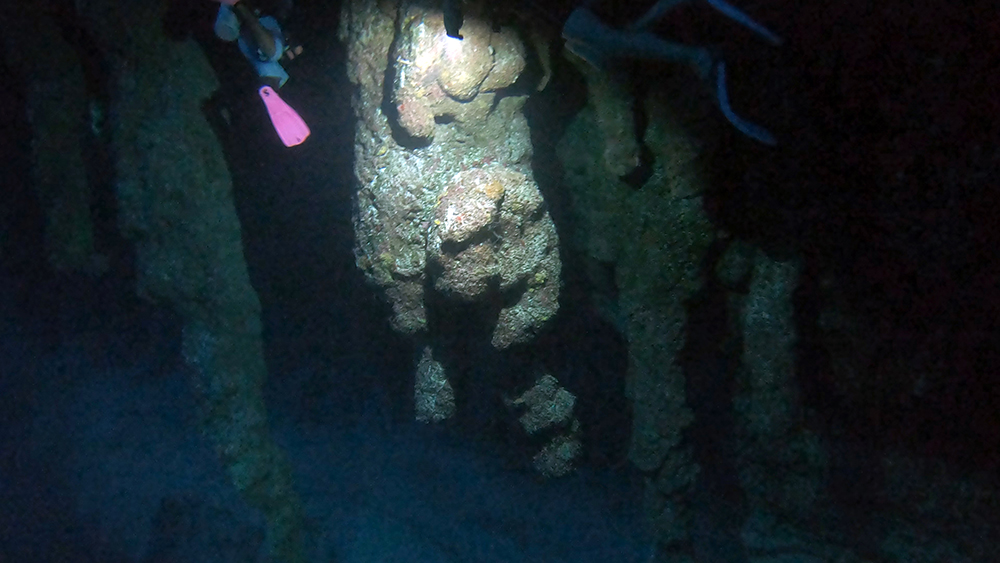
The water got darker and colder as we neared our maximum depth of 130 feet and our divemaster led us into a recessed cave in the side of the hole. We followed him through a maze of huge stalactites, and my gas narcosis worries faded away as I realized I didn’t feel noticeably different than I have on any other dive…except for maybe a bit colder than usual.
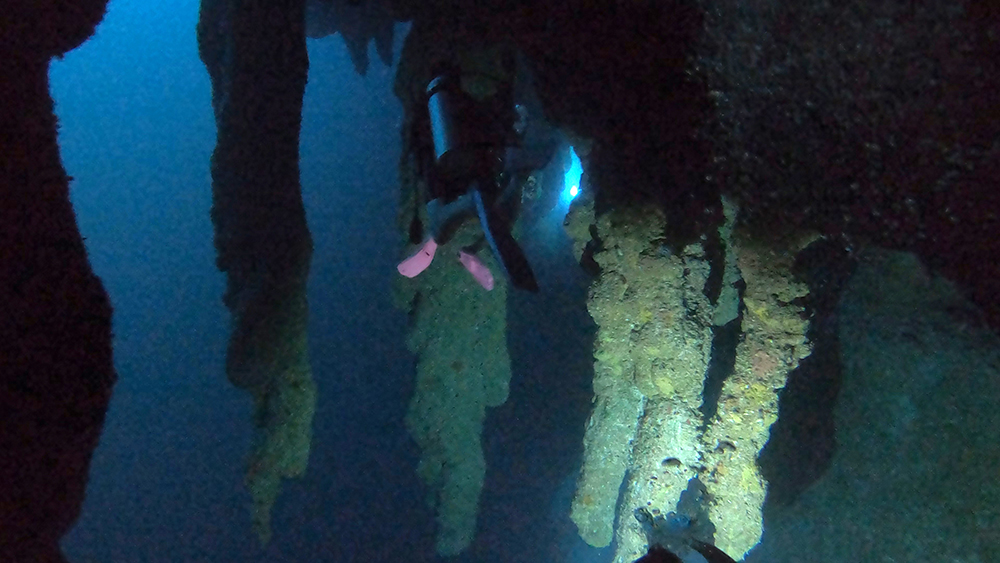
The time in the cave felt very short, because it was. I did my best to appreciate the feeling of swimming between the gargantuan stalactites because I knew that it wouldn’t last for long, but despite my best efforts, I felt like the dive passed me by in a whirlwind. It had only been about eight minutes since we hit the water when we started our ascent because we couldn’t stay at depth for long without increasing our risk of decompression sickness.
Altogether the dive lasted twenty-eight minutes, and about half of that time was spent on our safety stop. Basically the whole thing felt like it was over once it had barely started, and we all returned to the boat having experienced one of the world’s most famous bucket list dives.
But the most exciting dives in my opinion were yet to come. The Blue Hole has certain mystique about it, but my personal interests lie more in wildlife, and Lighthouse Reef Atoll is known for having some of the best persevered reefs in Belize.
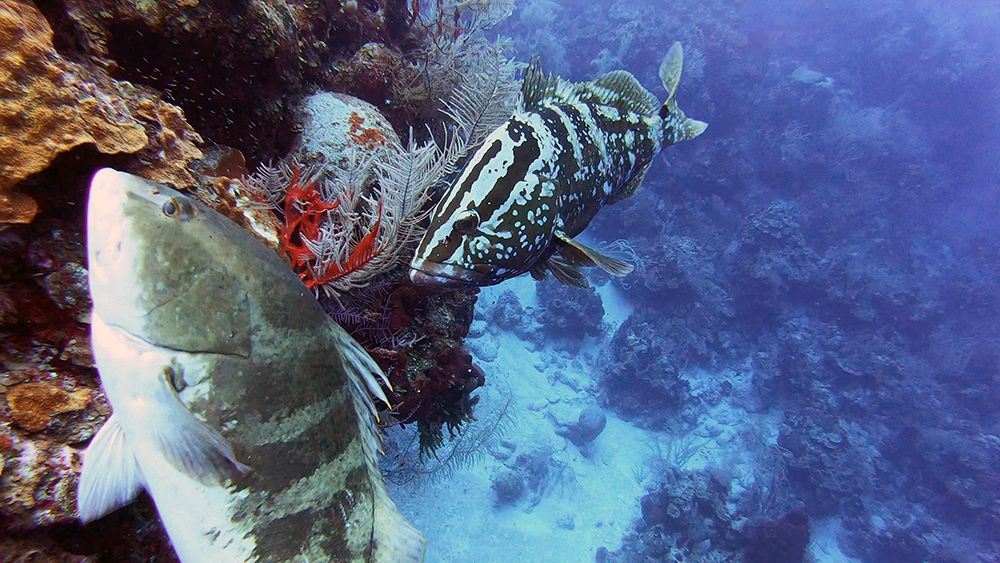
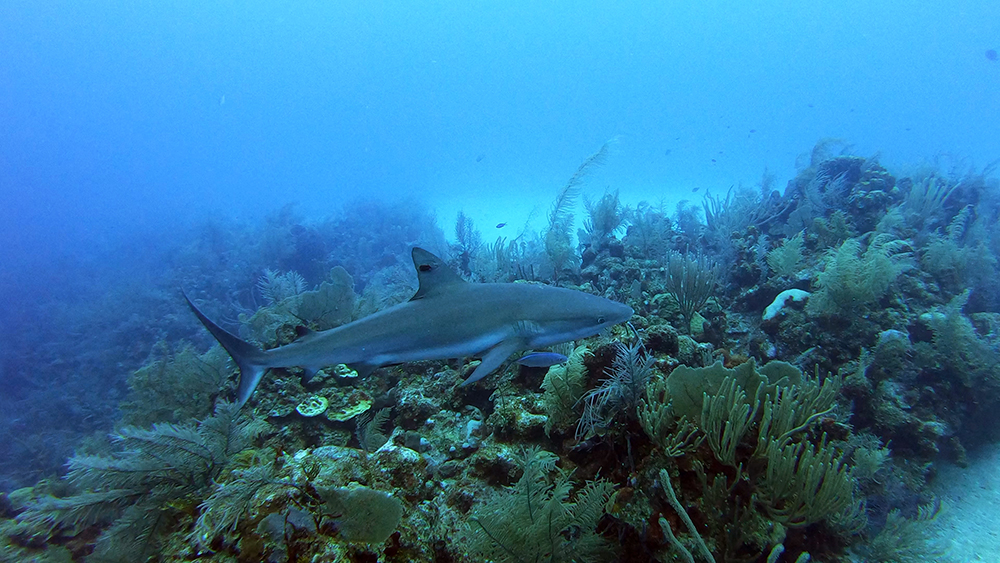
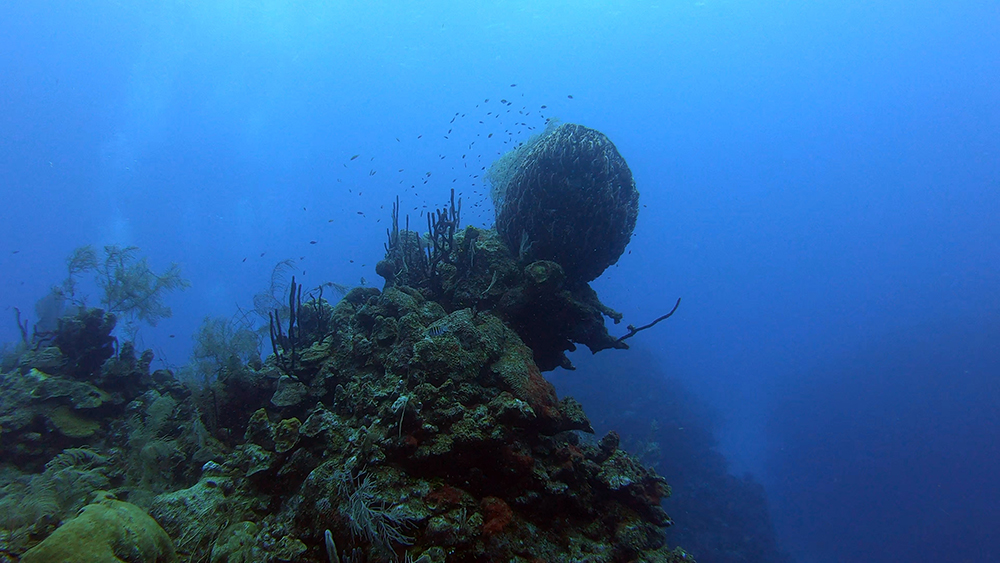
The reef at our next dive site, Half Moon Wall, more than lived up to these expectations. For starters, there was a lot of healthy coral, which in turn means a lot of colorful fish. Huge barrel sponges clung to the wall, and Nassau groupers tagged along beside us, but my attention at the beginning of the dive was dominated mostly by sharks. Reef shark after reef shark cruised along the wall. I felt like my head was on a swivel, and every time I turned around, another shark was nearby.

Once the shark parade subsided, I was able to pay more attention to the groupers, who were following us curiously, much like the previous day’s nurse sharks. At one point our divemaster found a lionfish in a little hole, and showed it to one of the groupers. The fish looked back and forth between the divemaster and the hole a few times, sizing it up before wiggling inside to get a closer look at the lionfish. Of course, it couldn’t actually eat the lionfish because they are invasive to the Caribbean and nothing there has adapted to be able to hunt them due to their poisonous spikes, but the grouper was nonetheless happy to investigate. I thought it was a really cool sight, to see a human communicating with a fish. I’ve had a handful of “wow” moments in my life where an experience with animal intelligence has has profoundly affected the way I see other species. I have to admit that I never would have predicted that “Nassau grouper” would be the next species to join those ranks.
This dive really kept on giving up until the very end when I got the closest encounter I would have with a reef shark on the whole trip. GoPro images don’t do a great job of conveying how close an animal is because the fish-eye lens makes everything look farther away than it actually is. As this beautiful shark swam passed me, I was able to see the details of its eye. It was a breathtaking moment-although not literally because the first rule SCUBA diving to always keep breathing.
Back on the surface, we stopped at a nearby island, Half Moon Caye, for lunch. The food prepared by Amigos Del Mar was delicious, very impressive for a buffet prepared on a dive boat, but I scarfed it down quickly because I wanted to use as much of our limited time on the island as possible to explore it hiking trails.
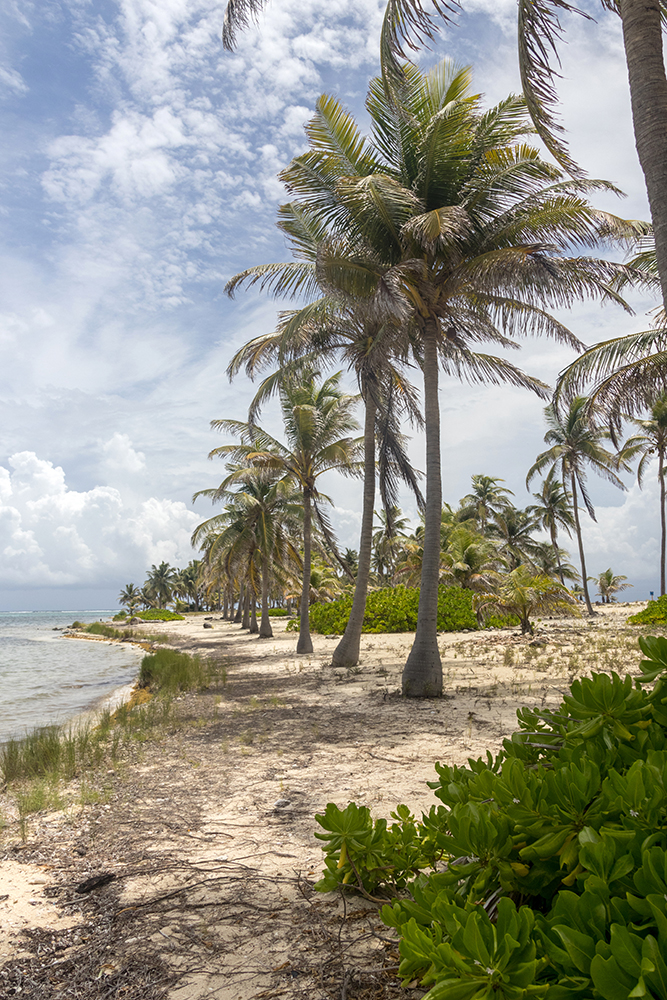
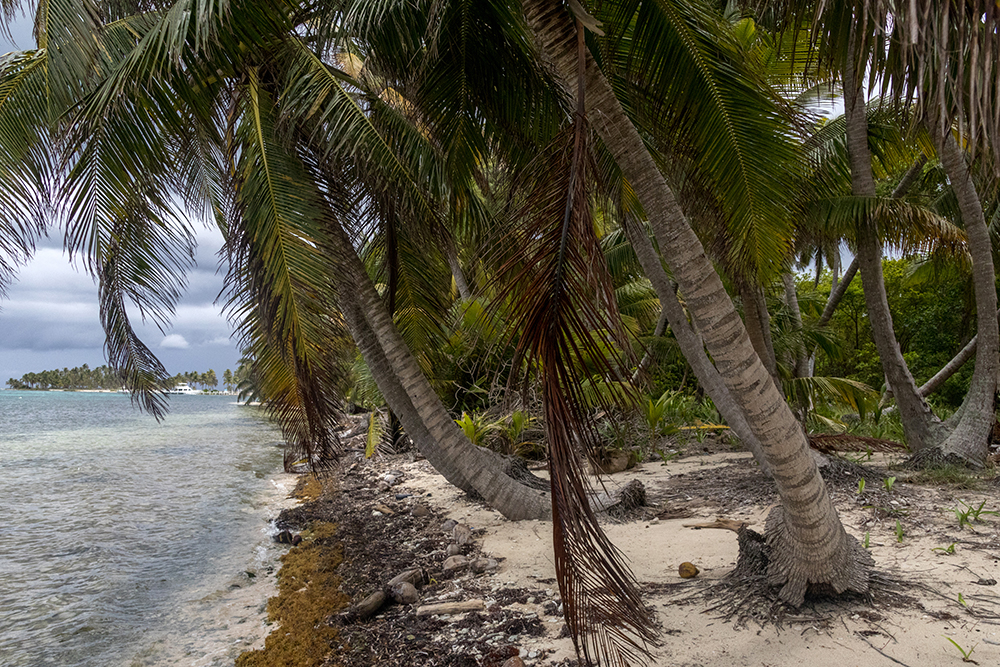
Half Moon Caye is Belize’s oldest wildlife protection area, first established as a bird sanctuary in 1924. It is a picture perfect paradise for birds and humans alike, and its tall, swaying palm trees look like they have been plucked straight out of a postcard.
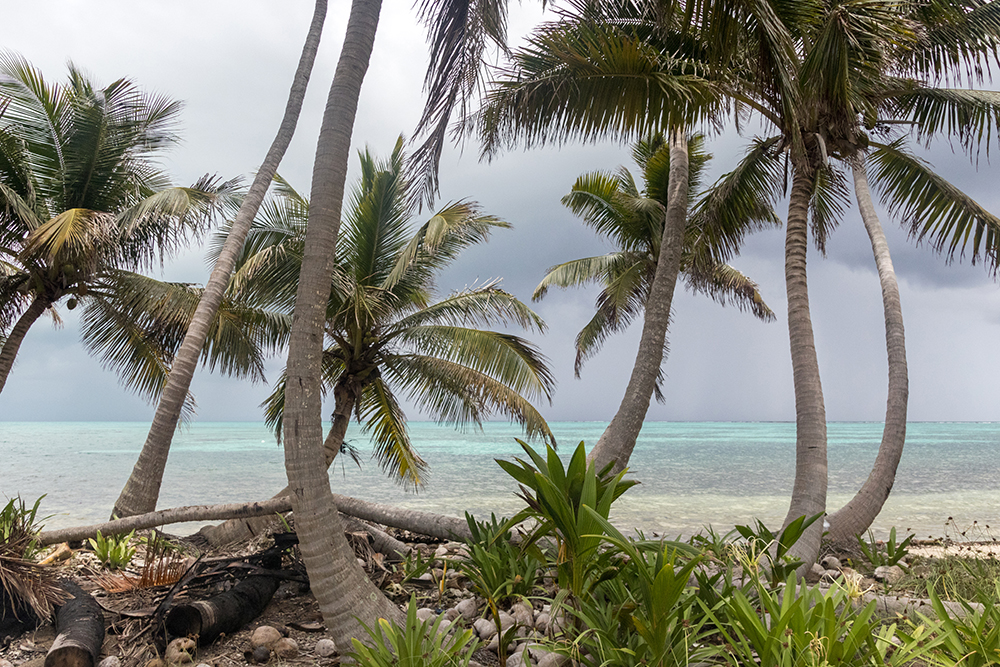
The island has pristine hiking trails through an inviting forest, and a campground for anyone lucky enough to have a couple of nights available to camp out. I ran ahead of Vince and our friends, Bonnie and David, as they took their time eating lunch, but they caught up with me when I got distracted by some of Half Moon Caye’s shyest residents.

Hermit crabs scuttled across the sand once I entered the forest. There were so many of them that I had to vigilantly watch my step for fear of crushing them. I was easily diverted by the crabs, crouching in the sand to watch them duck in and out of their shells until the others arrived and got me back on task.
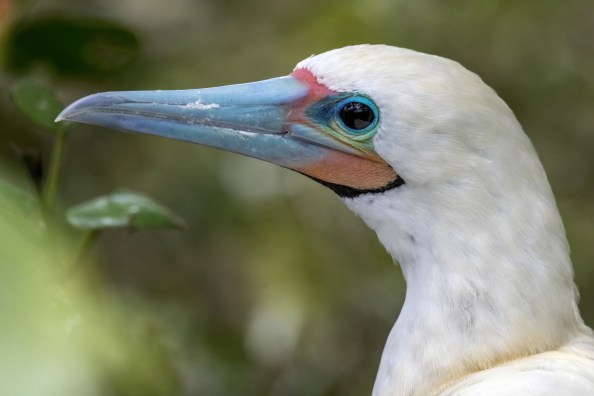
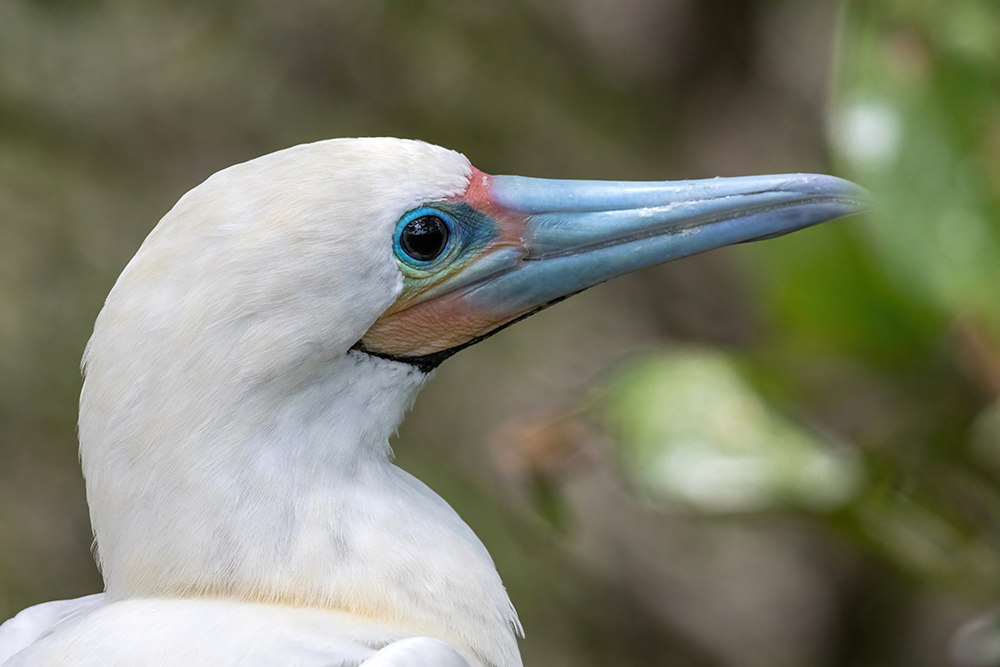
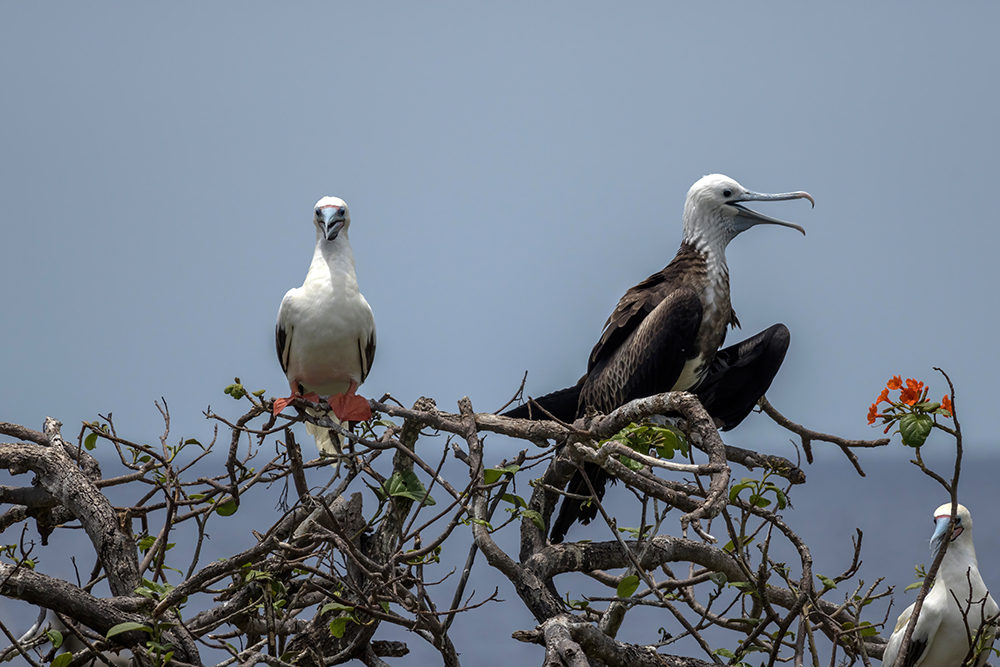
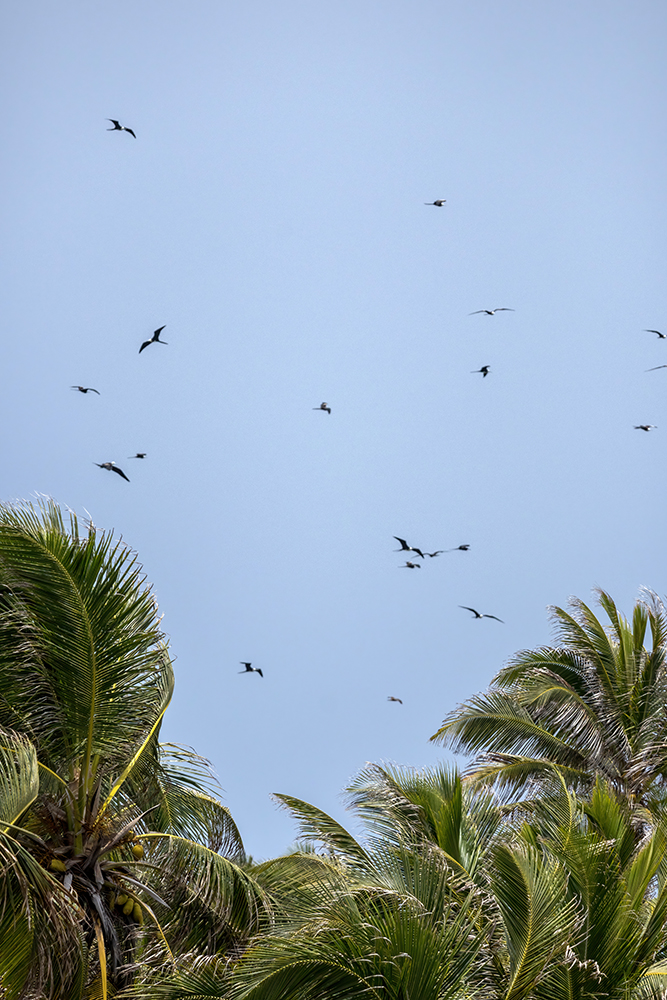
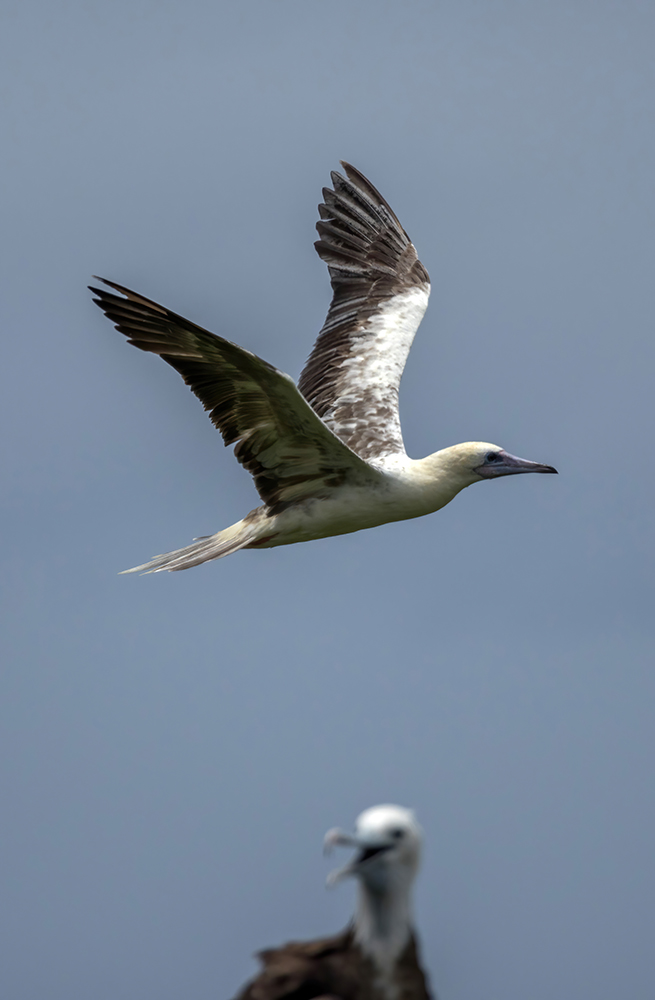
Although the hermit crabs were a lot of fun, we hadn’t yet reached the highlight of the trail. Half Moon Caye is famously home to a colony of red-footed boobies, and there is a birding tower in the middle of the forest, perfectly situated to get an up-close view of the boobies and frigatebirds. I was sweating by the time we reached the tower, and I was sweating even more after climbing its stairs and stepping above the treetops into the beating sun, but seeing the boobies was worth braving the heat. They had uniquely beautiful beak coloring in pastel pinks and blues that perfectly matched the color of the sea.
The frigatebirds were cool too. I’d never gotten such a good look at frigatebirds before because I’ve always seen them soaring high up in the air. Up close, I could see their necks quivering as they struck threatening poses any time a booby dared wander too close.
Eventually Vince managed to pry me away from the birding tower, but it was difficult not to dawdle on the hike back to the boat. We spent more time looking at hermit crabs and taking in the beautiful views of palm-fringed beaches, but eventually we realized we only had about five minutes until the boat was scheduled to leave. We ended up flat out sprinting the rest of the way back, and made it within a minute of our departure time. I was definitely sad to leave the island, but I was glad that we still had one more dive before our day at Lighthouse Atoll was over.
Dark clouds gathered in the sky as we rode back out to sea, and by the time we reached our next dive site, rain was pouring down on us. That doesn’t really matter when you’re planning to be underwater for the next hour, so we jumped right in and began our final dive of the trip.
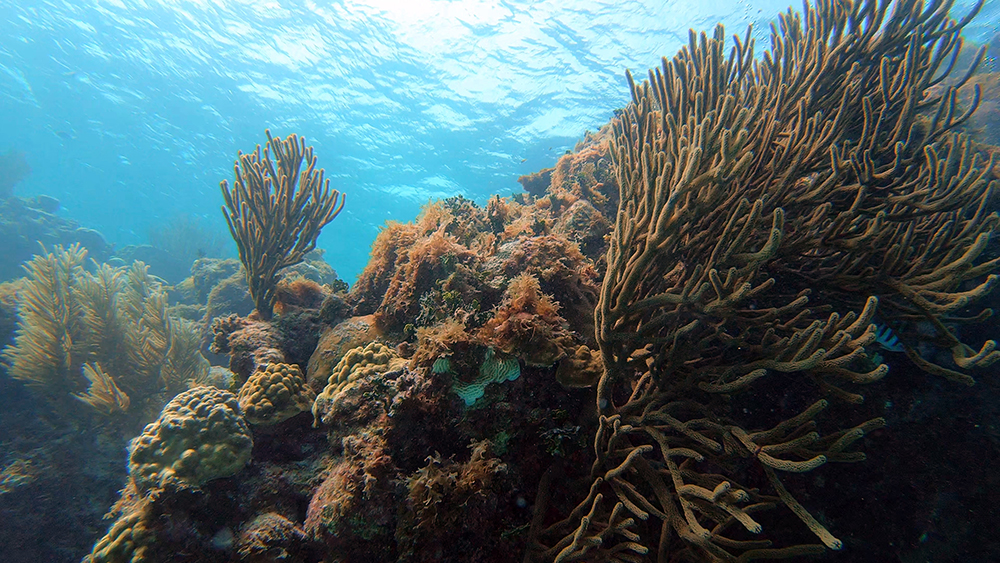
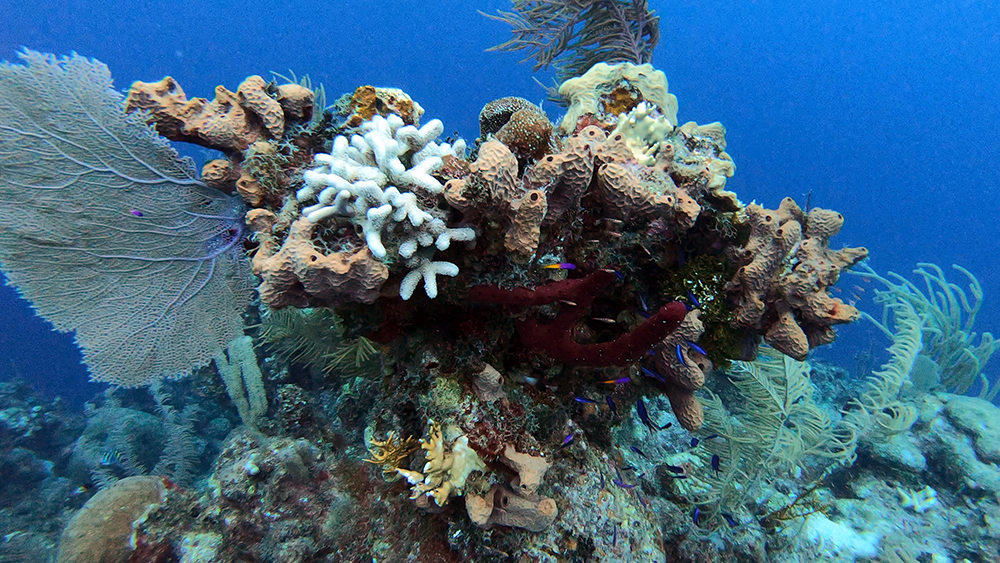
This dive site was called the Aquarium, and I would venture to say it is the most beautiful reef (in terms of coral) that I have seen in the Caribbean. I could hear crackling sounds coming out of the reef in the shallower areas, which is a characteristic that I’ve come to associate with reef health. There were also so many kinds of tropical fish that I gave up keeping track of them, and we even ran into a small school of jacks, which is always a fun sight.
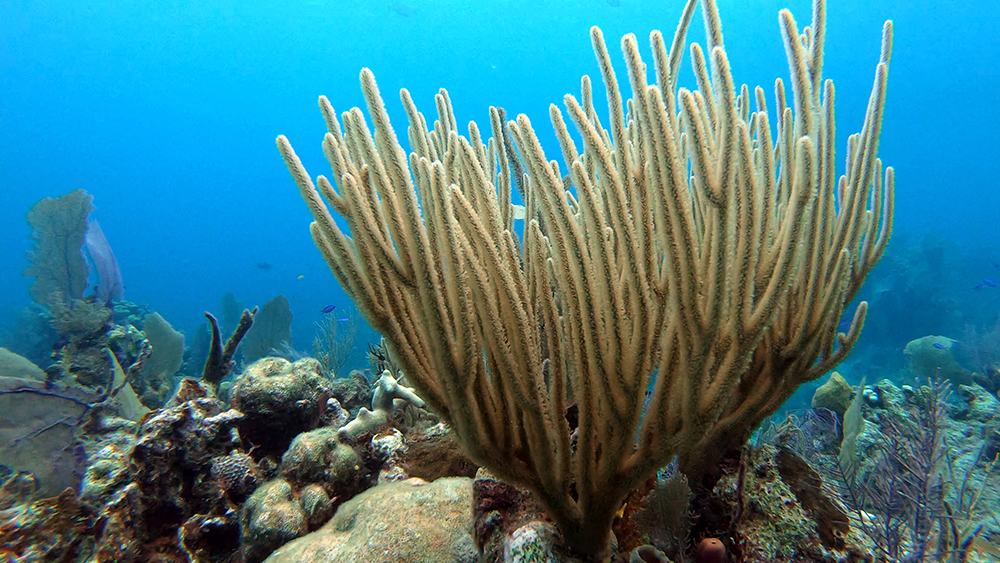

At the end of the dive, we spent our safety stop surrounded by a school of chubs, and then resurfaced for the final time.
Our dive time was over, but the long ride back to San Pedro was a lot of fun. The four of us laid out on the boat’s bow the whole way back, and soaked in the views as we passed through Turneffe Atoll. We watched tiny flying fish gliding out from the wake of the boat as we enjoyed rum punch provided to us by the crew. It was a nice bit of relaxation after a week of diving.

I found myself anticipating the next half of our trip as little islands came into view and then faded into the distance. We may have finished our adventures at sea, but that did not mean our vacation was over. I was beyond excited to return to the mainland the next day and start exploring the rainforest!











 birdsoftheairtravel.com
Thank you, Kaiti, for your wonderful post about your underwater trip, and all the pictures of sharks and other creatures you met. Thank you again!
Joanna